Buyer Fit Snapshot
| Best fit | Custom Subscription Boxes With Inserts That Reduce Damage projects where brand print, material claims, artwork control, MOQ, and repeat-order consistency need to be specified before quoting. |
|---|---|
| Quote inputs | Share finished size, material target, print colors, finish, packing count, annual reorder estimate, ship-to region, and any compliance wording. |
| Proofing check | Approve dieline scale, logo placement, barcode or warning zones, color tolerance, closure strength, and carton packing before bulk production. |
| Main risk | Vague material claims, crowded artwork, missing packing details, or unclear freight terms can make a low unit price expensive after revisions. |
Fast answer: Custom Subscription Boxes With Inserts That Reduce Damage should be specified like a repeatable production item. The safest quote records material, print method, finish, artwork proof, packing count, and reorder notes in one written spec.
Production checks before approval
Compare the actual filled-product size with the drawing, then confirm tolerance on folds, seals, hang holes, label areas, and retail display edges. Reserve space for logos, QR codes, warning copy, and material claims before decorative graphics fill the panel.
Quote comparison points
Review material grade, print process, finish, sampling route, tooling charges, carton quantity, and freight assumptions side by side. A quote is only useful when the supplier can repeat the same color, closure quality, and packing count on the next order.
Custom Subscription Boxes With Inserts That Reduce Damage are not just attractive mailers with a logo on top. They are a shipping system built around the realities of transit, and transit is never especially polite. If a monthly box rattles, crushes, leaks, or arrives with one broken item, the brand pays for it twice: once in replacement cost and again in the customer's lost confidence. I have seen that happen enough times to say it plainly: custom subscription boxes with inserts matter most for curated brands that ship repeat orders, fragile products, or kits with multiple SKUs packed together.
From a packaging buyer's point of view, the job is simple to describe and surprisingly hard to execute: keep products in place, make the unboxing feel deliberate, and avoid extra labor at the packing table. The right Custom Subscription Boxes with inserts handle all three. They also support branded packaging, product packaging, and package branding, which matters more than many teams admit. People remember the box they open every month, and they remember the box that arrives damaged even faster.
Because of that, the conversation should not start with decoration. It should start with structure, fit, shipping risk, and the real product mix inside the shipment. If you compare structural styles in a packaging catalog like Custom Packaging Products, you'll usually find that the best subscription format is the one that protects the product first and sells the experience second. The two need to work together, not compete.
What Custom Subscription Boxes With Inserts Actually Do
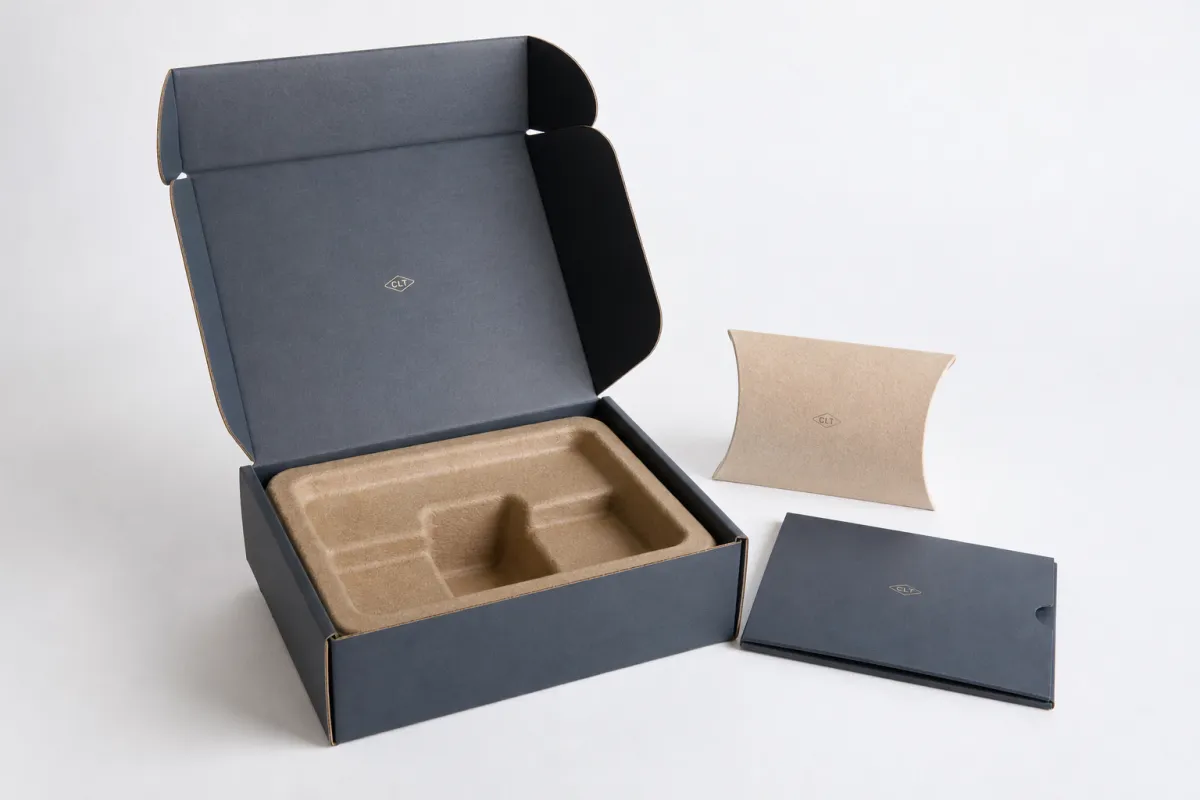
Custom subscription boxes with inserts do one practical thing better than almost any plain carton: they stop product movement. In transit, movement is the enemy. Even a half-inch shift can lead to scuffed labels, broken seals, bent corners, or cracked components once a parcel has been stacked, dropped, and handled by more than one carrier network. A custom outer box by itself helps, but the insert is the part that turns a good carton into a controlled shipping system.
Think of custom subscription boxes with inserts as two layers working together. The outer box sets the dimensions, protects the shipment, and carries the brand story. The insert creates the exact interior layout so each item has a home. That layout can hold a candle, serum bottle, snack pouch, card, sample, or accessory in a precise order. For subscription brands, that order matters because unboxing is part of the product. A monthly reveal that feels random or messy weakens the experience even when the items themselves are fine.
This is one of the places where recurring product packaging differs from standard e-commerce packaging. One-off retail packaging can sometimes tolerate a little hand adjustment on the fulfillment line. A subscription program usually cannot rely on that. If the box ships 5,000 times, the packout needs to be repeatable 5,000 times. Custom subscription boxes with inserts reduce the chance that a worker needs to add void fill, tape a loose item, or guess where a product should sit. That is not a minor operational detail. It is the difference between a packaging design that scales and one that turns into a labor sink.
There is also a retention angle that gets ignored too often. A single damaged shipment may cost less than a month of customer churn, but it creates a bigger problem than the replacement item itself. In practice, the customer often judges the entire membership by that one box. When custom subscription boxes with inserts are designed well, they protect both the contents and the recurring relationship. That is why brands selling beauty, wellness, snacks, collectibles, and premium accessories tend to treat the structure as part of the offer, not as an afterthought.
"A pretty insert that cannot survive parcel handling is not premium packaging. It is an expensive decoration."
Custom subscription boxes with inserts also support consistency. That sounds ordinary until you run a monthly program and discover how quickly variation becomes expensive. If the products shift around, every packer has to improvise. If the insert locks each item into place, the build stays predictable. Predictable packaging is easier to train, easier to audit, and easier to budget. In a business with recurring shipments, those advantages compound fast.
For brands comparing formats, it helps to name the actual functions the insert serves:
- Protection: reduce collision, abrasion, and compression damage.
- Presentation: guide the reveal order and keep the layout neat.
- Speed: reduce packing guesswork and manual adjustments.
- Consistency: keep every customer's box looking and performing the same.
That is the core value of custom subscription boxes with inserts. They are not only nicer-looking custom printed boxes. They are a structure designed around protection, presentation, and repeatable fulfillment.
How Custom Subscription Boxes With Inserts Work in Practice
In practice, custom subscription boxes with inserts start with the product set, not the artwork. A box designed around three lightweight items behaves very differently from one carrying two glass bottles, a metal tool, and a folded insert card. The outer carton holds the general footprint. The insert pins down the actual contents. Once those two pieces are matched correctly, the package can survive shipping vibration, stacking pressure, and the sort of minor impacts that happen on every parcel route.
There are several common insert styles, and each one serves a different kind of job. Paperboard partitions work well for lighter kits and neat compartmental layouts. Folded corrugated systems add more structure and usually make sense when the contents are heavier or the shipment needs more crush resistance. Molded pulp is often chosen when a brand wants a recyclable, fiber-based protective format with a stronger environmental story. Foam still appears in some applications, especially where precise cushioning is needed, but many brands now prefer paper-based options when the product risk allows it.
For custom subscription boxes with inserts, the reveal sequence can be just as important as the material. A box that opens to the most important item first creates a different experience from one that hides everything in a pile. Designers often think about lift-away lids, layered compartments, printed cavities, pull tabs, and room for inserts like welcome notes or promo cards. That extra attention to sequence is part of package branding. It tells the customer, "Someone planned this."
Fulfillment teams care about a different detail: speed. When the insert is properly designed, packing becomes repetitive instead of improvised. The worker places each product in the same cavity every time, closes the lid, and moves on. That saves minutes per case, and minutes matter when the monthly volume climbs. It also reduces the odds of mispacks, which can be expensive when the wrong item goes to the wrong subscriber.
Here is a simple way to compare insert options for custom subscription Boxes with Inserts:
| Insert Type | Best For | Protection Level | Typical Cost Impact | Operational Notes |
|---|---|---|---|---|
| Paperboard insert | Light kits, cosmetics, samples, gift sets | Light to moderate | Often adds about $0.10-$0.25 per unit at mid-size runs | Fast to pack, easy to print, good for clean presentation |
| Folded corrugated insert | Heavier product sets, fragile items, mixed-SKU shipments | Moderate to high | Often adds about $0.18-$0.40 per unit depending on board and cut complexity | Strong structure, good crush resistance, slightly more material bulk |
| Molded pulp insert | Eco-minded programs, bottles, jars, protective nesting | Moderate | Usually pricing depends on tooling and order size; setup can be the bigger variable | Recyclable fiber story, good fit for sustainable product packaging goals |
| Foam insert | High-fragility products, electronics, specialty items | High | Can be cost-effective in some programs but often less attractive for recycled-content goals | Excellent fit control, but less aligned with many retail packaging sustainability targets |
That comparison is not a universal rulebook. It depends on product weight, shipping lane, and whether the box travels through a parcel network or a gentler distribution channel. Still, the tradeoff is consistent: the more protection you need, the more structure or material you usually have to add. Custom subscription boxes with inserts are always a balancing act between damage control and cost discipline.
If you are sourcing options now, the Custom Packaging Products catalog is a useful place to compare structural styles side by side before you commit to a single format. The key is not to fall in love with the first drawing. It is to test whether the structure can survive the way your actual subscribers receive it.
Process and Timeline for Custom Subscription Boxes With Inserts
The production path for custom subscription boxes with inserts usually follows a clear sequence, even if the timeline changes from project to project. First comes the product audit: dimensions, weight, fragility, count per shipment, and any special handling needs. Then comes structural planning, where the box style and insert style are matched to the product set. After that, the dieline is created, graphics are applied, a sample is approved, and production is scheduled. Freight comes last, but it should be discussed early because the warehouse date is only useful if the inventory arrives on time.
The biggest schedule variable is often the insert itself. Simple paperboard inserts can move faster because they are straightforward to cut, fold, and sample. Molded pulp or more complex multi-piece structures often need more development time, more testing, or in some cases tooling. Custom subscription boxes with inserts that include multiple cavities and tight tolerances can also require extra revision cycles if the product line changes after the first fit sample. That is often the point where many brands lose days, sometimes weeks.
Sampling is usually the bottleneck because the sample reveals the truth. A design can look excellent in a render and still fail in the hand. Maybe the bottle is too tall for the cavity. Maybe the lid rubs against the compartment wall. Maybe the insert is strong enough, but the closing depth forces the top panel to bow. Custom subscription boxes with inserts are unforgiving in that way. The package either fits the products and the packout flow, or it does not.
From an operations perspective, three things shape lead time as much as the design itself:
- Printer or converter capacity: a busy line may need extra queue time before your job starts.
- Material availability: the board, coating, or fiber grade must be in stock or reserved.
- Freight method: air, LTL, and ocean each change the arrival date dramatically.
For brands that want more technical discipline, shipping tests matter. The ISTA test family is useful because it focuses attention on how packages perform under actual transit stress, not just on a desk. A sample that survives a single drop in the office is not the same thing as a package that survives a full parcel network. That distinction matters a lot for custom subscription boxes with inserts, because the insert is only valuable if it still holds shape after handling.
Lead time also depends on how many approvals happen between concept and production. A team that changes the outer box size, print finish, and insert geometry in the same round will almost always move slower than a team that locks the product dimensions early. The fastest projects are usually the ones with disciplined inputs and fewer surprises. Custom subscription boxes with inserts reward that kind of discipline because every small change can ripple through the whole structure.
As a rough planning range, simple programs can move through sampling and production faster than complex ones, but even then the total timeline often includes design approval, sample revision, manufacturing, and freight. Once a brand adds specialty finishes, multi-part inserts, or tighter tolerances, the calendar stretches. The smartest move is usually to build in enough cushion that the box arrives before the next subscription cycle, not during it.
For teams also planning branded packaging campaigns or seasonal refreshes, the safest approach is to freeze measurements early and allow the design team to work around them. That keeps custom subscription boxes with inserts from becoming a moving target.
Cost and Pricing for Custom Subscription Boxes With Inserts
Pricing for custom subscription boxes with inserts is driven by a handful of visible variables and a few hidden ones. The obvious ones are box size, board grade, insert material, print coverage, and finishing. The less obvious ones are die complexity, assembly labor, sampling rounds, and freight. If you ask for one lump-sum price without separating those components, it becomes hard to compare quotes. A lower number can hide a thin board choice, a simplified insert, or a freight plan that will not work for your warehouse calendar.
MOQ has a direct effect on unit cost. At lower quantities, setup costs, cutting prep, and proofing are spread across fewer units, so the per-box price climbs. At higher quantities, those same costs are diluted. That is basic economics, but subscription buyers sometimes still underestimate it because they focus on monthly box economics instead of production economics. Custom subscription boxes with inserts often look expensive at 1,000 units and much more manageable at 5,000 or 10,000, assuming the structural spec stays the same.
The insert itself is frequently where budgets shift. Brands may budget for the outer carton and then realize the interior structure adds another layer of cost. That does not mean the insert is a waste. It means the insert should be measured against the damage it prevents. If a more exact insert drops breakage, reduces customer service tickets, and eliminates replacement shipments, the math often improves quickly. In subscription work, the real cost is not only the box. It is the box plus the downstream damage created when the package fails.
For custom subscription boxes with inserts, ask suppliers to break pricing into separate lines:
- Outer box structure
- Insert structure and material
- Print and finish
- Sample setup or prototype cost
- Freight to the fulfillment location
That separation helps you compare apples to apples. It also reveals which part of the quote is actually driving the total. A glossy outer carton may add less than a complex insert. A stronger insert may cost more upfront but lower monthly replacement rates. This is where packaging design becomes a business decision rather than a purely visual one.
There is also a sustainability angle that can affect pricing and positioning. Brands sourcing from FSC-certified fiber streams often pay attention to both material sourcing and consumer perception. The FSC framework is useful because it gives buyers a clear reference point when they want to support responsible paper sourcing. That does not automatically make custom subscription boxes with inserts cheaper, but it can make the package story easier to defend in retail packaging conversations, investor decks, and customer-facing claims.
One more pricing trap deserves attention: assembly complexity. A structure that looks economical on paper can get kinda expensive if it slows packing. If a carton requires awkward folds, extra taping, or precise manual alignment, labor cost rises every month. In recurring programs, that labor cost can overtake the material savings. So when you compare custom subscription boxes with inserts, do not evaluate only the board price. Evaluate the full system.
Honestly, this is where many brands miss the mark. They ask, "How cheap can the box be?" when the better question is, "What is the lowest total cost that still protects the product and supports the customer experience?" Those are not the same thing. A box that saves four cents but creates one damaged shipment per hundred units is not a bargain.
Step-by-Step Guide to Designing the Right Insert
The best custom subscription boxes with inserts begin with a product audit that is more detailed than most teams expect. Measure every product, not just the largest one. Record height, width, depth, and weight. Note whether the item is glass, plastic, metal, coated paperboard, or something irregular. Count how many pieces ship together and whether any of them must remain upright. If the box includes liquids, soft goods, or accessories with sharp edges, call that out early. The insert cannot solve a problem the team never described.
Next, choose the insert based on use case instead of trend. A premium beauty box may look better with a folded paperboard presentation insert, especially if the goal is an elegant reveal and crisp print. A heavier accessory set, by contrast, may need corrugated strength. Custom subscription boxes with inserts that carry fragile jars, devices, or bundled products should favor fit and protection over purely decorative structure. The product is what earns the subscription fee; the package supports it.
Then decide how the box should open emotionally. That sounds soft, but it has real operational consequences. What should the customer see first? Should the hero item sit on top, or should the box lead with a card or sample? Is there room for a welcome insert without crowding the protective cavities? Custom subscription boxes with inserts work best when the reveal sequence is planned instead of accidental. A well-choreographed reveal can make a simple product mix feel more premium than a costly box with no structure to the story.
A useful design workflow for custom subscription boxes with inserts looks like this:
- Measure the actual product set, including tolerances.
- Choose the structural format for the heaviest and most fragile item.
- Map the reveal order and packout sequence.
- Prototype with real samples, not stand-ins.
- Check the loaded box for closure pressure, scuffing, and movement.
Prototype testing should use the real products whenever possible. A placeholder bottle can hide a fit issue that appears immediately once the actual closure is installed. A charger brick, jar, or glass bottle may have a slightly different shape than the mockup, and that small difference can make the cavity too loose or too tight. Custom subscription boxes with inserts are designed for exactness, so exactness should be the test standard too.
It also helps to think about the insert as a specification document, not just a drawing. The final package should include cavity measurements, board grade, finish, orientation notes, and any assembly instructions that the fulfillment team needs. That documentation is what lets a packaging partner reproduce the job reliably. Good packaging design does not depend on memory. It depends on a spec that can be built the same way month after month.
For brands balancing branded packaging with practical protection, this is where the strongest projects usually land: the insert protects the product, the printed surface carries the brand, and the fulfillment team can still pack efficiently. That combination is the real goal of custom subscription boxes with inserts, not one feature at the expense of the others.
Common Mistakes Brands Make With Subscription Packaging
One common mistake is overfitting custom subscription boxes with inserts to a single product size and forgetting that shipping is a rough environment. A box that looks ideal in a controlled sample room can fail once it faces vibration, humidity shifts, and stacking pressure in transit. If the tolerance is too tight, small dimensional variation becomes a problem. If it is too loose, products move and scuff. That middle path is narrower than many teams expect.
Another mistake is choosing presentation before protection. I see this often with teams that start from the visual mood board and only later ask about crush resistance. The result can be a beautiful box that arrives dented or a delicate insert that bends under load. Custom subscription boxes with inserts should protect first, then present. If the structure can do both, great. If it cannot, protection wins every time. A damaged package is bad retail packaging no matter how nice the print looks.
Too much empty space is another quiet problem. Some brands think extra room makes packout easier, but it usually does the opposite. Loose space creates rattling, seal failures, and a sloppy first impression. Custom subscription boxes with inserts should feel intentional when the customer opens them. Empty space can be useful if it supports a reveal or adds breathing room for a premium item, but dead space without purpose is just movement waiting to happen.
Coordination mistakes also cost money. If the design team builds custom subscription boxes with inserts that look elegant but are difficult to load, the fulfillment team pays for it later. Maybe the product has to be inserted upside down and rotated. Maybe the lid closes with too much pressure. Maybe staff needs a second hand just to keep the components aligned. Every small annoyance multiplies over a recurring program. Package branding and production logic should be discussed together, not in separate meetings that never fully connect.
And then there is the test-shipping illusion. A sample that survives a hand-carry to the office is not the same as a sample that survives parcel handling. The best teams use rough handling tests, drop checks, and close review of corner crush or seal issues before scaling. If you want a practical checklist, compare your structure against the kind of transit abuse addressed by standards bodies and test methods, then adapt the design to your risk level. That is especially true for custom subscription boxes with inserts that contain glass, liquids, or multiple pieces packed with limited cushioning.
Finally, many brands underestimate the effect of monthly repetition. A box that is tolerable once may become annoying by the sixth cycle if it is hard to assemble, hard to close, or expensive to replenish. Custom subscription boxes with inserts need to work as a repeated operating system. If the structure is elegant but fragile in the workflow, it will eventually become a cost problem.
Expert Tips and Next Steps for Custom Subscription Boxes With Inserts
The fastest way to make a good decision is to score custom subscription boxes with inserts against three questions: does it protect the product, does it pack quickly, and does it present the brand well? If one of those scores is weak, do not ignore it. A package that is excellent in only one area usually creates tradeoffs somewhere else. The best structures are not flashy on paper; they are balanced in real life.
Ask for at least two or three insert options if the project allows it. That comparison can be extremely useful because the cheapest version is not always the best fit, and the most complex version is not always worth the extra cost. Sometimes a simpler folded insert performs nearly as well as a more elaborate structure and saves both setup time and assembly labor. Other times the stronger version is the only one that survives the shipping lane. You will not know until you compare.
Use real-world testing that reflects both shipping and packing conditions. A good custom subscription boxes with inserts design should survive handling and still be efficient for staff who build hundreds or thousands of boxes. That means checking for motion, edge crush, lid bow, scuff marks, and how the insert behaves after repeated packouts. Packaging is a manufacturing decision, not just a graphic one. The more often a customer receives the box, the more important consistency becomes.
A practical launch checklist looks like this:
- Finalize product dimensions and weights.
- Confirm board grade and insert material.
- Review sample fit with actual products.
- Document packout steps for the fulfillment team.
- Verify freight timing against the subscription calendar.
It also helps to think about sustainability in a precise way rather than a vague one. Recyclable paperboard, corrugated inserts, and molded pulp can all fit different programs, but the right choice depends on product fragility and the shipping path. A sustainable structure that fails in transit is still waste. That is why custom subscription boxes with inserts should be specified with both environmental goals and practical protection in mind. A package that works well and uses less material is usually the best outcome.
For brands that are building or refreshing their subscription line, start with the products, the shipping lane, and the actual monthly packout. Then move into sampling before you place volume orders. If you are still sorting through structural possibilities, the Custom Packaging Products page is a useful starting point for comparing formats without locking yourself into the first idea that looks good on screen. The right custom subscription boxes with inserts will save damage, stabilize packing, and improve the customer experience without adding unnecessary complexity.
My practical takeaway is simple: lock the product measurements, choose the insert material around the heaviest fragile item, and test the loaded box with the real packout before you commit to volume. If those three pieces hold up, custom subscription boxes with inserts are far more likely to protect the shipment, keep fulfillment calm, and deliver the kind of unboxing experience people actually remember.
Frequently Asked Questions
Are custom subscription boxes with inserts worth it for small brands?
Yes, especially if the products are fragile, high-value, or packed together in a way that makes movement likely. Small brands often feel the pain quickly because one damaged shipment can erase the margin from several clean orders. Custom subscription boxes with inserts can reduce replacements, refunds, and complaint volume, which matters even more when every subscriber counts.
Which insert material is best for custom subscription boxes with inserts?
Paperboard works well for lightweight kits and polished presentation. Corrugated or molded pulp usually makes more sense when the products are heavier, more fragile, or likely to face rougher transit conditions. The best choice depends on product weight, box size, and whether the insert has to support a monthly recurring packout.
How do I estimate pricing for custom subscription boxes with inserts?
Ask for separate pricing on the outer box, insert, print finish, sample setup, and freight. That makes it easier to compare quotes and see which component is pushing the number up. Your unit price will usually fall as quantity rises, but complex insert geometry can keep custom subscription boxes with inserts higher than expected even at larger volumes.
How long does it take to make custom subscription boxes with inserts?
The timeline depends on design approval, sample revisions, insert complexity, and material availability. Simple structures usually move faster. More complex custom subscription boxes with inserts can take longer if the project needs tooling, multiple proofs, or special finishes. Freight planning also matters, because inventory is only useful when it actually reaches the warehouse in time.
Can custom subscription boxes with inserts be made sustainably?
Yes. Many brands choose recyclable paperboard, corrugated inserts, or molded pulp instead of mixed-material structures. The best sustainable option depends on product weight, shipping conditions, and whether the insert needs to survive repeated handling in a subscription program. In practice, the most sustainable package is often the one that reduces damage and avoids replacement shipments.

