Buyer Fit Snapshot
| Best fit | Custom Logo Corrugated Mailers projects where brand print, material claims, artwork control, MOQ, and repeat-order consistency need to be specified before quoting. |
|---|---|
| Quote inputs | Share finished size, material target, print colors, finish, packing count, annual reorder estimate, ship-to region, and any compliance wording. |
| Proofing check | Approve dieline scale, logo placement, barcode or warning zones, color tolerance, closure strength, and carton packing before bulk production. |
| Main risk | Vague material claims, crowded artwork, missing packing details, or unclear freight terms can make a low unit price expensive after revisions. |
Fast answer: Custom Logo Corrugated Mailers: Film, Print, MOQ, and Carton Packing should be specified like a repeatable production item. The safest quote records material, print method, finish, artwork proof, packing count, and reorder notes in one written spec.
Production checks before approval
Compare the actual filled-product size with the drawing, then confirm tolerance on folds, seals, hang holes, label areas, and retail display edges. Reserve space for logos, QR codes, warning copy, and material claims before decorative graphics fill the panel.
Quote comparison points
Review material grade, print process, finish, sampling route, tooling charges, carton quantity, and freight assumptions side by side. A quote is only useful when the supplier can repeat the same color, closure quality, and packing count on the next order.
Why Custom Logo Corrugated Mailers Stand Out in Shipping
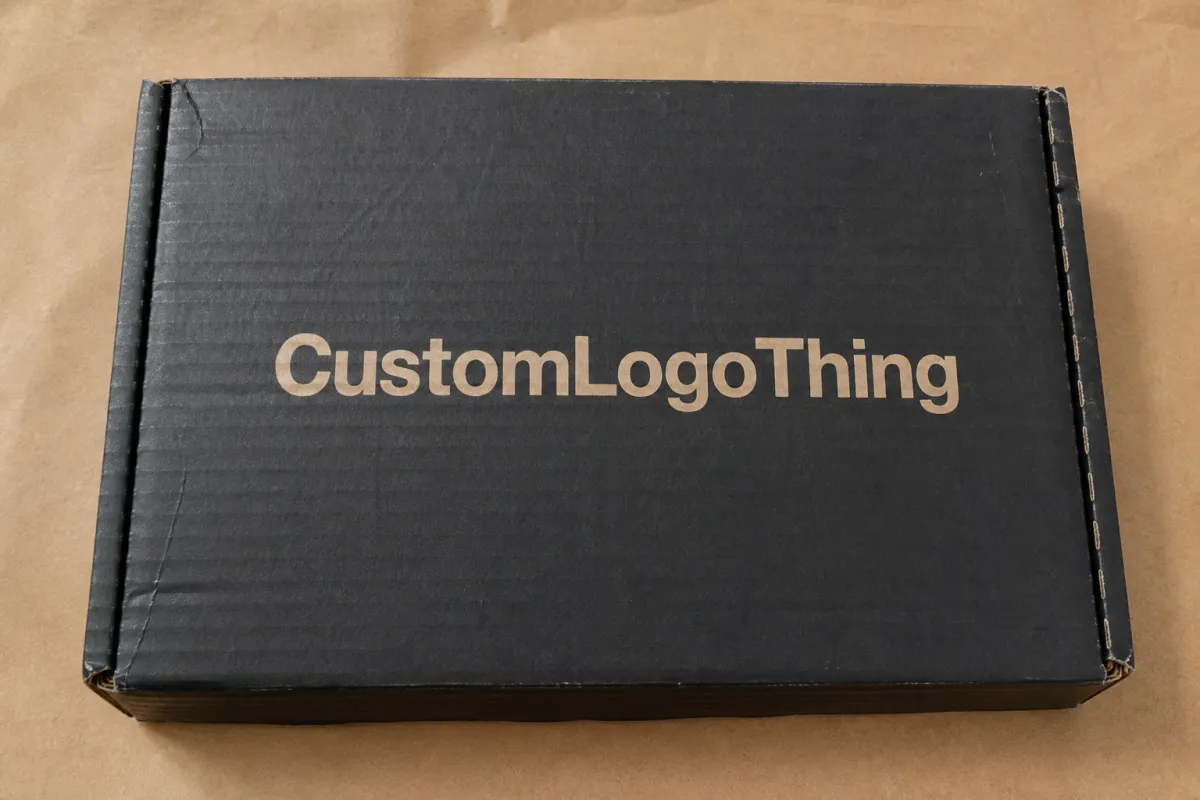
Open two parcels on the same day and the difference is obvious. One is a plain brown shipper with a label on the face. The other is one of the custom logo corrugated mailers that turns the package into part of the brand experience before the product is even touched. That outer layer is not decoration alone. It is protection, visual identity, and a quiet form of quality control all at once.
Custom logo corrugated mailers are folded corrugated shippers printed with a logo, product art, a pattern, or a short message. They can stay restrained and minimal or carry a fuller graphic treatment, depending on how much of the panel you want to use for package branding. Fulfillment teams often prefer this format because it gives them the stiffness of corrugated board with a structure that packs quickly and closes with less friction than a more elaborate carton.
The value is easy to miss because it is spread across several small wins. A printed mailer can sharpen first impressions, improve recall, and make a shipment feel like it belongs to a real business rather than a warehouse lane. That matters in product packaging, especially for direct-to-consumer orders, replacement parts, launch kits, and samples where the mailer is the first physical contact a customer gets from the brand. A package that feels considered often makes the contents feel more considered too.
These mailers show up in subscription programs, PR mailings, retail-ready fulfillment, and standard e-commerce shipping. They also work well when parcels move through carrier networks instead of being handed off in person. Buyers comparing Custom Poly Mailers, plain corrugated shippers, and more elaborate Custom Shipping Boxes often land here because the format sits in a useful middle ground: more polished than a generic poly bag, less involved than a fully printed carton, and usually simpler to handle on the packing line.
That middle ground is why many brands keep these mailers in the conversation. Protection stays in view. So does presentation. The sections that follow cover how they are built, what changes performance, where pricing comes from, and how to order a version that fits the shipment instead of fighting it.
How Custom Logo Corrugated Mailers Work from Design to Delivery
Corrugated board uses a fluted center layer bonded between linerboards, and that structure explains much of its usefulness. It stays light, carries stiffness well, and absorbs some impact without adding much weight. The flute creates a small air gap that softens handling shock, while the liner faces carry print and provide the surface that the package needs to hold its shape. In shipping terms, that can mean a stronger package without adding unnecessary freight weight.
The mailer itself is built to fold, lock, and hold through handling, stacking, and sorting. Some versions use tuck flaps. Others rely on self-locking tabs or shallow box walls. The shape matters because shipping lanes are hard on packaging. Conveyor drops, compression from stacked cartons, and repeated handling all put stress on the board. A well-designed corrugated mailer spreads that stress across the panel instead of pushing it into one weak seam.
Printing brings the brand into view. Flexographic printing usually suits larger runs, especially when the artwork uses one or a few spot colors and the layout stays straightforward. Digital printing makes more sense for short runs, several SKUs, or more detailed artwork because setup is lighter and variable images are easier to manage. Some brands use a single bold logo and generous white space. Others print full patterns, product names, or seasonal graphics to create a stronger unboxing moment.
The outer surface carries more than decoration. A mailer has to protect the item and present it well, which means the opening experience matters almost as much as transit performance. Tight packout and an intuitive closure create a clean reveal instead of a struggle with packaging that feels overworked. That is the practical side of branded packaging: the impression looks visual, but the job is functional.
Board choice, print method, and layout all affect the finished piece once it is packed, labeled, sorted, and shipped. A proof can look strong on a screen and still miss the mark if the board surface is rough enough to blur small text or if the structure leaves too much movement around the product. Packaging design only pays off when it respects the route the parcel actually travels.
“The outer shipper should not be treated like an afterthought. If it looks flimsy, crowded, or hard to close, the whole shipment feels less reliable before the customer opens it.”
Key Factors That Shape Performance, Appearance, and Durability
Board construction usually comes first. E-flute is thinner and tends to print cleanly, so it fits well when appearance matters and the contents are relatively light. B-flute is thicker and generally offers better crush resistance, which helps with heavier products or shipments that may sit under pressure during storage and transit. Other flute combinations exist, but those two tend to lead the conversation because they offer a practical balance of print quality, cushioning, and rigidity.
Fit matters just as much as flute choice. A mailer that is oversized lets the product move, which raises scuff risk and creates a less polished feel the moment the customer lifts the lid. A mailer that is too tight slows assembly, makes inserts awkward, and can damage corners or edges during closure. The best fit usually leaves just enough room for easy packout while still holding the product steady in transit.
Logo placement and readability deserve real attention. Corrugated board has texture, especially on recycled kraft liners, and that texture can blur small type or delicate strokes. Strong marks with clear contrast usually survive best. A brand mark that depends on thin lines may need to be simplified so it reads well on the board instead of fading into it. That concern grows on unbleached kraft, where the natural color can mute pale inks and reduce legibility.
Color count changes both the look and the spend. A one-color print can feel sharp and confident when the layout is deliberate. Multi-color artwork can create a richer retail packaging effect if the budget can handle it. Interior printing deserves a look too, since it adds a reveal when the customer opens the mailer. A message under the flap, a pattern on the inside, or a clean product identifier can make a compact package feel more intentional without changing the structure much.
Finishing choices shape the final experience. Water-based coatings can improve rub resistance. Special inks may be selected for brighter color or better adhesion. Some buyers want the natural kraft look because it supports an earthy, recycled identity. Others prefer a whiter face liner so the graphics stand out more clearly. The best choice depends on the product category, the shipping conditions, and how the budget should be divided between visual presentation and physical protection.
Sustainability should be grounded in performance, not slogans. Recycled content, FSC-certified board, and recyclable construction all matter, but they need to fit the use case. A lightweight mailer made from recycled fiber that fails in transit can create more waste through damage and replacement shipments. For a broader look at responsible sourcing, the Forest Stewardship Council is a useful reference: FSC. For materials recovery and end-of-life guidance, the EPA’s sustainable materials resources are worth reviewing: EPA sustainable materials management.
Quick performance checklist
- Board grade: choose E-flute for cleaner print and lighter loads, or B-flute for stronger crush resistance.
- Fit: confirm the product cannot slide more than a small amount inside the shipper.
- Closure: test whether tabs, tuck flaps, or locking points hold under repeated handling.
- Print readability: keep logos bold enough to read on textured corrugated surfaces.
- Shipping lane: match the mailer to parcel transit, warehouse stack time, and any secondary packaging.
Custom Logo Corrugated Mailers Cost and Pricing Factors
Pricing starts with board type, size, print complexity, and quantity. That is the real baseline. A small E-flute mailer with one-color flexo printing will price very differently from a larger digital job with multiple colors, and the gap can widen fast once tooling, revisions, and prepress time enter the picture. Buyers usually discover those setup items on the first quote, not in the first conversation.
For rough planning, smaller custom runs often fall around $0.70 to $1.80 per unit, while larger orders may come down meaningfully depending on the spec, print count, and packaging style. Setup fees can land around $150 to $600 or more when new tooling, plates, or prepress work is required. Those numbers are not universal, but they are useful because they remind buyers that the quote is usually a bundle of costs, not just a unit price.
MOQ has a direct impact on unit cost. Bigger quantities tend to lower the per-piece price because setup and press time get spread across more finished mailers. A large run is not always the right call, though. Storage space, product changes, and forecast uncertainty can make a smaller order the smarter move even if the unit price rises. The best choice is the one that fits the sales plan and the inventory picture, not the cheapest line on the page.
Hidden costs usually live in the details. Artwork revisions take time. Samples and proofs may carry their own fees. Rush work can cost more because it disrupts the production schedule. Freight matters too, especially when the mailers are bulky and the shipment moves in large master cartons. Any comparison should focus on total landed cost, not only the printed box price.
There are moments when spending more makes sense. Heavy, fragile, or high-value products usually justify a stronger structure because damage claims and replacements cost more than the packaging upgrade. Customer-facing shipments deserve that extra attention too, since the outer package is part of the brand story. In those cases, the mailer is not simply a container; it is part of the offer.
| Option | Typical Strength | Print Style | Common Use | Budget Impact |
|---|---|---|---|---|
| E-flute mailer | Light to medium duty | Clean logo, fine graphics | Samples, cosmetics, accessories | Usually lower to moderate |
| B-flute mailer | Medium to heavier duty | Simple branding, bold marks | Parts, kits, denser products | Moderate to higher |
| Digital print mailer | Depends on board choice | Short runs, multiple SKUs | Launches, test programs, seasonal art | Lower setup, higher unit price |
| Flexographic print mailer | Depends on board choice | One to several spot colors | Repeat programs, steady demand | Higher setup, lower unit price at scale |
For teams comparing corrugated to other forms of Custom Printed Boxes or lighter mailing formats, cost should always be measured against damage risk, labor time, and customer perception. A slightly pricier mailer can reduce packing steps, cut filler material, and improve the appearance of the shipment enough to earn its keep. Packaging is rarely a single line item; it is part of how the operation performs.
Custom Logo Corrugated Mailers Process, Timeline, and Lead Time
The process usually begins with discovery. Product dimensions, shipping method, target presentation, and protection needs all have to be pinned down first. Once those basics are clear, the structure can be selected and the artwork can be built around the actual dieline rather than a generic placeholder. That step sounds routine, yet it often decides whether a packaging program works or stumbles, because a strong mockup still has to fold correctly on the line.
After structure selection, artwork moves into prepress. The team checks logo placement, line weight, bleed, color expectations, and how the art sits on the board surface. If the mailer uses a specific print method, those technical limits need to be addressed early. A design that behaves perfectly on a screen may need simplification for corrugated print, especially when thin type or small reverses are involved. Catching those issues before proofing saves time and keeps the process from bogging down.
Lead time changes with the print method and the complexity of the order. A straightforward digital run with approved artwork may move quickly, while a custom die-cut mailer with flexographic printing and several revision rounds takes longer. Board availability matters too, since material lead times can shift with seasonal demand. In practice, many teams should plan for 10 to 15 business days after proof approval for simpler programs, and more time for complex structures or higher-volume runs.
Planning ahead matters for launches, trade shows, holiday shipments, and replenishment orders. A campaign date leaves less room for error than a routine restock. Samples, internal reviews, and one round of corrections all need room in the schedule. Waiting too long can trigger rush fees and force compromise on board choice or print coverage, which is a poor trade if the packaging is supposed to support a premium release.
Approval cycles make a bigger difference than many teams expect. Packaging, marketing, and operations move faster when they review the same proof set at the same time. Brand color and transit performance rarely come from the same department, so the final call needs to reconcile both priorities before production starts. That coordination saves more time than any minor schedule trick.
Typical production flow
- Gather product dimensions, weight, and packout details.
- Select mailer style, flute, and print method.
- Prepare artwork against the dieline.
- Review prepress proof and confirm color, copy, and closure features.
- Run production, die cutting, and folding or gluing.
- Ship finished mailers to your facility or fulfillment partner.
Step-by-Step Guide to Ordering the Right Mailer
Start with the product itself. Measure length, width, and height carefully, and include any inserts, trays, protective wrap, or void fill that will travel inside the shipper. A small measurement error can become a production problem if the mailer ends up too tight or too loose. Fragile surfaces, sharp corners, and unusual shapes should be part of the spec from the start instead of becoming a surprise later.
Choose the structure based on the shipping path. Lightweight goods moving through parcel delivery may do well in a sturdy mailer, while denser items may need a stronger flute or a different box-style format. Packaging design and operations have to meet in the middle here. The goal is not a package that looks impressive only in photos; the goal is a shipper that packs quickly, survives transit, and still looks clean when it reaches the customer.
Artwork should be built around the print process. Keep logos bold, type readable, and line weights within the limits of the board. Brands with delicate marks may need an adapted version for corrugated surfaces. Color expectations should stay realistic too. Kraft liners do not behave like coated stock, and a digital proof can appear richer than the finished board if the print method is not matched to the art. Small changes early in the process protect the result later.
Samples and mockups pay for themselves. A fitted sample in the actual packout flow can reveal whether the mailer opens properly, closes cleanly, and presents the product the way the team intended. A mockup can also expose issues like crushed corners, loose movement, or a logo too close to a fold. For premium programs, a physical sample usually separates a guess from a decision.
Review the quote with attention to volume, turnaround, and freight. A low unit price can disappear once shipping is added or if the order has to move on a rush schedule. The best choice usually balances appearance, protection, and operational efficiency. That applies whether the order is a few hundred units for a pilot or a steady replenishment program across multiple SKUs.
What to ask before you place the order
- What flute and board grade are being quoted?
- How many print colors are included, and what is the setup fee?
- What is the approved dieline and where are the safe areas?
- How long does proof approval add to lead time?
- Can the supplier provide a sample or preproduction mockup?
Common Mistakes, Expert Tips, and Next Steps
A common mistake is choosing a mailer that is too large, too thin, or too ornate for the product. Oversized packaging lets the item shift and makes the shipment feel less deliberate. Underbuilt packaging risks crushing, corner damage, or closure failure. Overdesigned packaging can waste money when the product does not need the extra showmanship. The better choice is usually the one that matches the item, the shipping lane, and the brand expectation without excess.
Artwork can work against the package if it is not built for corrugated printing. Tiny text, low-contrast logos, and crowded layouts often disappear once they meet textured board. The same problem shows up when artwork assumes studio lighting instead of a warehouse, a truck, or a porch. Strong packaging usually favors readability and structure over decorative density. A bold mark printed cleanly on the outer face often does more for recall than a busy image that nobody can read.
Operations teams get better results when they test the packout before placing the full order. Compression strength, closure performance, and handling behavior should all be checked with the actual product inside. The outer shipper is only one layer in the chain, so any insert, sleeve, or second protective component should be part of the trial. Teams building a broader packaging lineup should review all Custom Packaging Products together instead of treating each item as a separate island.
Customer journey matters too. A shipper that opens cleanly, displays the product well, and keeps its shape during transit builds confidence. That same logic applies in retail packaging, even when the parcel is never headed for a shelf. The package should protect, the graphic should communicate clearly, and the materials should support the brand promise without pretending to be something they are not.
Choosing between mailers and other formats gets easier when the questions stay simple. What does the product weigh? How fragile is it? How will the parcel be handled? How visible does the outer package need to be? Answer those questions, then choose the lightest, strongest, and cleanest option that satisfies them. That is usually how the best custom logo corrugated mailers get selected: not by chasing the flashiest spec, but by balancing protection, appearance, and cost in a way the entire operation can live with.
Practical next steps
- Collect exact product measurements and weight.
- Shortlist 2 to 3 board styles and print methods.
- Request sample pricing and lead times.
- Ask for a blank sample or printed mockup.
- Compare landed cost, not only unit price.
What are custom logo corrugated mailers used for?
They are used to ship products in a branded corrugated envelope or box-style mailer that protects contents and improves presentation. They work especially well for e-commerce orders, samples, subscription boxes, replacement parts, and PR shipments. They are a strong fit when you want packaging that does double duty as protection and marketing.
How do I know what size custom logo corrugated mailer to order?
Measure the product length, width, height, and any inserts or protective materials before choosing the mailer size. Leave enough clearance for easy packing, but avoid extra empty space that lets the item shift in transit. If the product is fragile, test the fit with a sample before placing a full order.
What affects the cost of custom logo corrugated mailers the most?
The biggest cost drivers are board grade, size, print complexity, quantity, and any special finishing or coatings. Setup and proofing can also affect the total, especially on small runs or rush jobs. Buying in larger quantities usually lowers the unit cost, even if the initial spend is higher.
How long does the production timeline usually take?
Lead time depends on artwork readiness, proof approval, print method, and how complex the structure is. Simple orders with approved artwork move faster than jobs that need dieline changes or multiple revision rounds. If you have a launch date, plan backward and leave time for samples and internal approvals.
Are custom logo corrugated mailers strong enough for shipping?
Yes, when the board grade and structure are matched to the product weight and shipping method. The mailer should be tested for closure strength, crush resistance, and fit, especially for heavier or fragile items. For more demanding shipments, pair the mailer with inserts or additional protective packaging.
Can custom logo corrugated mailers support sustainability goals?
They can, if the board is responsibly sourced and the structure is right-sized for the product. FSC-certified liners, recycled content, and recyclable construction all help, but the package still has to perform in transit. A well-designed mailer that prevents damage is often the better environmental choice than a lighter package that fails and has to be replaced.
For teams that need a practical blend of protection, branding, and shipping efficiency, custom logo corrugated mailers are often one of the most useful formats in the lineup. They can carry a clean brand message, support product packaging that feels deliberate, and hold up to real transit conditions when the board, print method, and fit are chosen carefully. The most reliable result comes from one discipline: match the structure to the product, verify the sample in real packout conditions, and compare the full landed cost before the order goes into production.

