Soap packaging has one job before anything else: make the product feel worth picking up. Custom logo kraft Bags for Soap brands do that well because they combine a natural look with enough structure to keep a bar presentable on a shelf, at a market table, or inside a gift set. If the bag feels thoughtful, the soap usually gets a better first read. If it feels flimsy or oversized, the product works harder than it should.
That is why kraft bags keep showing up across handmade soap, botanical lines, seasonal collections, and retail-ready bundles. They are simple, but not basic. The paper stock, print method, handle style, and size all change how the finished pack behaves. Get those details right and the bag supports the brand. Miss them and the package starts sending the wrong signal before a customer ever touches the soap.
The real question for buyers is not whether kraft bags can look good. They can. The question is how to choose a bag that fits the soap, protects it, stays within budget, and does not create production headaches six weeks later. That is where the useful decisions live.
Why custom logo kraft bags for soap brands stand out
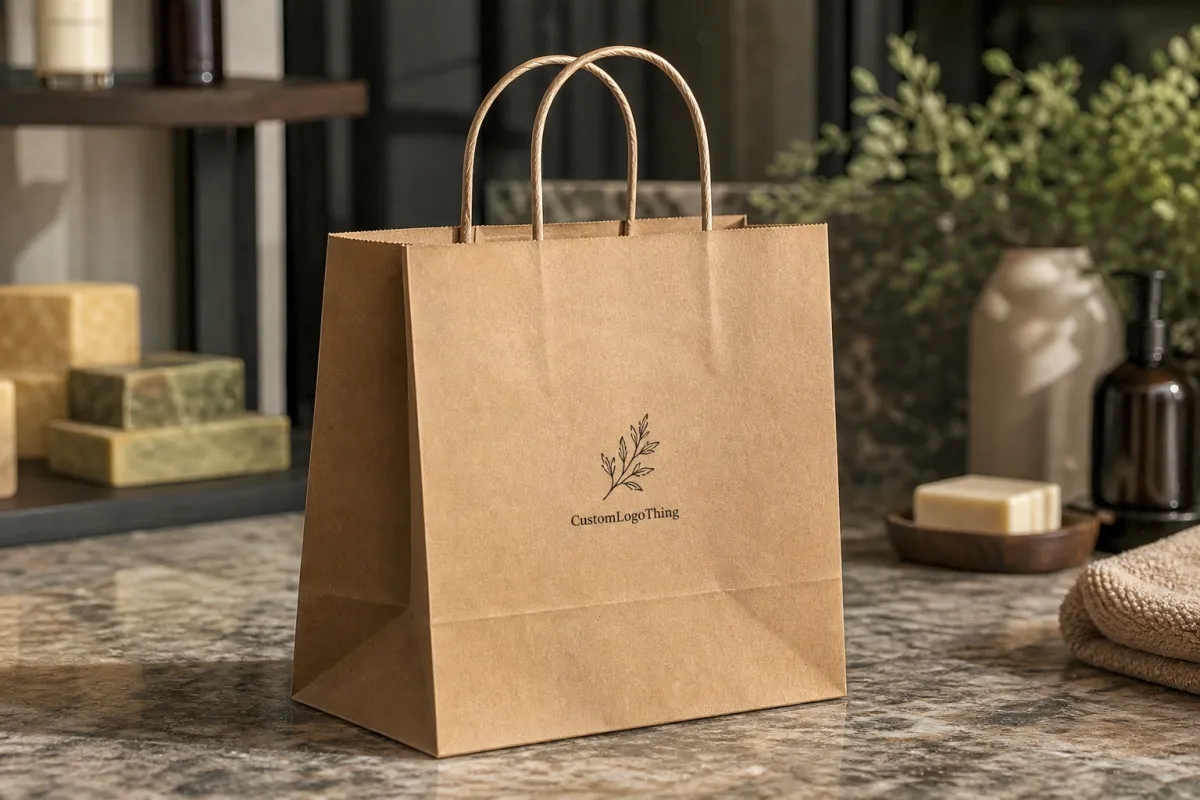
Soap is judged quickly. A shopper sees the bag, checks the logo, and makes a snap decision about quality. That means the package has to communicate clean, calm, and intentional almost immediately. Kraft helps because it has a grounded look that suits ingredient-led brands, handmade bars, apothecary styles, and scent-first collections without demanding a lot of decoration.
A bag is also different from a wrap, carton, or poly sleeve. A wrap usually covers a single bar tightly and keeps the format simple. A carton gives more structure and more print space. Poly is better at moisture resistance, but it rarely gives the same tactile feel. Custom logo kraft bags for soap brands sit in the middle. They are versatile enough for retail, farmers markets, and bundled sets, while still feeling more polished than loose packaging.
The material does a lot of design work on its own. Brown kraft makes dark ink look crisp. White ink can feel cleaner and more deliberate than a full-color flood. Foil, when used carefully, stands out more on kraft than on a busy background. That is one reason restrained layouts often look stronger than crowded ones. The paper already has character. The print should not fight it.
That restraint matters for shelf appeal. A small logo, one product name, and a few supporting details usually read better than a long list of claims. Soap brands that rotate scents or limited runs can use the bag as a flexible system instead of redesigning the whole package every season. The bag becomes part of the brand language, not just a container.
There is also a practical retail reason these bags work. They stack well, sit cleanly in baskets, hang on hooks, and travel better than loose wraps when the product needs to move through fulfillment. For brands comparing formats, the broader options on Custom Packaging Products are useful when bag, box, and wrap decisions need to stay aligned.
Good packaging is usually the one that looks obvious only after you see it. The size feels right. The logo lands in the right place. The soap does not rattle around. Nothing feels forced. That is the real value of custom logo kraft bags for soap brands: they make the product look finished without turning the order into a design exercise that never ends.
Paper stock, sizing, and print choices that protect the soap
Paper stock sets the tone before anything else. Virgin kraft usually gives the cleanest surface and the most consistent print result from sheet to sheet. Recycled kraft has more visible fiber and a more natural character, which fits handmade brands well, though tiny details can print a little less sharply. Bleached kraft creates a lighter background and can make color feel brighter, especially when a brand wants a more clinical or apothecary look.
Uncoated kraft is the safest starting point for many soap bags. It feels honest and prints well with simple graphics. A light coating can improve color hold and keep dark ink from sinking too deeply into the paper, but it changes the tactile feel and can affect how the bag fits into a sustainability story. There is no universal winner. The right stock depends on how the brand wants the package to feel in the hand.
Sizing should start with the real product, not the mold or the idea of the product. Measure the finished bar, then factor in any wrapper, label, insert card, or secondary bundle that will go inside the bag. A 3.5 x 2.5 x 1.2 inch bar behaves differently from a 4.25 x 3 x 1.5 inch one, especially once the paper folds and gussets are involved. Too tight and the pack looks stressed. Too loose and the soap shifts around like it was packed in a hurry.
Print method should match run size and artwork complexity. Flexographic printing works well for larger orders and simpler spot colors. Offset gives tighter detail and cleaner image control when the artwork is more demanding. Digital printing is useful for shorter runs and faster file changes. Foil and embossing add depth, but they also add setup and cost, so they make sense only when the design really needs that premium lift.
Protection is the part buyers sometimes underestimate. Kraft bags are fine for dry, fully cured bars. They are not moisture barriers. If the soap is oily, fragrant, or still releasing curing moisture, the outer bag may need an inner wrap, liner, or another layer of protection. That is not a flaw in the bag. It is just how paper and soap behave together over time.
Structure matters too. A flat-bottom bag stands more confidently than a loose side-gusset format. Reinforced tops help when the bag will be handled often. Paper twist handles work well for gift sets and carryout. Die-cut handles keep the profile cleaner for smaller packs. Window patches can help when the color swirl, botanical add-ins, or texture of the soap are part of the sales story.
For buyers who want to check paper sourcing and package testing references, the FSC site is useful for certified paper supply chains, and ISTA is a practical reference for distribution stress and package handling. Those matters show up in freight, shelf wear, and the way a bag survives being picked up fifty times a day.
Packaging note: if the mockup looks strong but the sample feels weak, the spec is not done. A soap bag has to carry the product, the brand, and the retail use case all at once.
| Option | Best For | Typical Strength | Common Tradeoff |
|---|---|---|---|
| Uncoated virgin kraft | Clean branding, simple logos, retail shelf appeal | Good print consistency and a dependable hand feel | Less texture than recycled stock |
| Recycled kraft | Natural, handmade, ingredient-led brands | Strong tactile character and a clear eco story | More visible fiber variation in print |
| Lightly coated kraft | Sharper color and cleaner graphics | Better image hold and smoother print surface | Less raw paper feel |
| Foil or embossed finish | Gift lines, premium retail, seasonal sets | High visual impact and stronger shelf presence | Higher setup cost and longer lead time |
Cost, pricing, and MOQ tradeoffs to plan around
Pricing gets easier to understand once it is broken into the pieces that actually move the number. Paper grade, size, print coverage, number of colors, handle style, special finishes, and tooling all affect the quote. If a price seems unusually high or suspiciously low, one of those variables is usually hiding in plain sight. Custom logo kraft bags for soap brands are rarely priced from a single formula; they are priced from a mix of setup, materials, and labor.
MOQ has a direct effect on unit cost. A smaller run spreads setup work across fewer bags, so the price per bag climbs. Larger runs are more efficient, but they also raise inventory risk if the soap line is still changing or the packaging may be refreshed later. The cheapest unit price is not always the best deal. A better question is whether the order size fits sell-through, storage, and cash flow.
Tiered pricing is useful because it shows where the cost curve starts to flatten. Quotes at 500, 1,000, 2,500, and 5,000 units make it much easier to see how much of the cost is setup and how much is production efficiency. If the jump from 1,000 to 2,500 is small, the run may already be in a good sweet spot. If it is steep, the bag probably needs more prep or more complex finishing than expected.
For planning, a realistic pricing range helps. These numbers are not fixed, but they are a sensible reference for standard retail bags with normal print coverage.
| Order Size | Plain Kraft Bag | Printed Logo Bag | Premium Finish Bag |
|---|---|---|---|
| 500 units | $0.55-$0.95 | $0.85-$1.45 | $1.35-$2.20 |
| 1,000 units | $0.38-$0.72 | $0.62-$1.10 | $1.05-$1.75 |
| 2,500 units | $0.28-$0.56 | $0.48-$0.92 | $0.92-$1.45 |
| 5,000 units | $0.18-$0.40 | $0.32-$0.68 | $0.72-$1.20 |
Heavy ink coverage, foil stamping, embossing, a window cutout, or a reinforced handle can push those numbers up. Freight matters too, and it is easy to forget until the final quote lands. Preproduction samples, proof revisions, and color adjustments can add cost as well, especially if the artwork changes after proof approval.
It also helps to compare packaging value against what the bag replaces. Sometimes a slightly more expensive kraft bag eliminates the need for an extra sleeve, label, or insert, which can save labor during packing. That matters for small soap makers who are counting both time and materials. The right bag is not only a branding decision. It is also a line-efficiency decision.
Inventory space deserves the same attention. Ordering early can protect the launch schedule, but overordering ties up cash and storage. The right quantity is the one that matches demand, not the one that just looks efficient on paper. For custom logo kraft bags for soap brands, the best order size is usually the one that keeps production practical and repeatable.
Production process, proofing, and turnaround expectations
The cleanest orders usually follow the same path: confirm dimensions, choose stock and print method, submit artwork, review the proof, approve the sample, then release production. Simple on paper. Less simple in real life. Each step matters because one wrong dieline, one crowded logo placement, or one bad fold assumption can throw off the whole package.
Proofing is where a lot of problems get caught early, and it should be treated seriously. A proper proof checks the dieline, font legibility, barcode placement if needed, color expectations, and logo spacing near folds or handles. If the soap line uses fine lines, small ingredient text, or subtle typography, ask how those details will behave on kraft paper. What looks sharp on screen can disappear into fiber and texture very quickly.
Turnaround depends on more than print speed. Artwork cleanup can take a day or two if files arrive in the wrong format. Sampling takes time. Finishing adds time. Packing and freight add more. A simple printed run may move through production in about 12-15 business days after proof approval, while foil, embossing, or custom tooling can extend that window. It is better to think in phases than in one blunt delivery promise.
Delays usually come from familiar places. Missing vector files are a common problem. So are last-minute color changes after a proof has already been approved. Rush orders can also narrow the finish options or raise the cost because they need a special slot in the schedule. The earlier the artwork is locked, the easier the production run becomes.
Work backward from the sales date, not the order date. If the soap is launching at a trade show, the bags need to arrive early enough for packing, inspection, and display setup. If the product is going into a subscription box, the bag schedule has to fit the carton and fulfillment schedule too. The calendar should match the actual distribution path, not an ideal one.
For brands comparing packaging formats, the same timing logic shows up across Case Studies for other product types. Different material, same discipline: clear specs, clean files, and enough room for approval without panic.
Common mistakes that weaken shelf appeal and durability
One of the easiest mistakes is choosing the bag before the soap is final. A small change in wrapper thickness, label size, or bundle count can ruin the fit. A pack that looked right during design can feel awkward once the product is wrapped, labeled, and boxed. Measure the finished item, not just the bar in isolation.
Another common issue is overdesigning the surface. Kraft paper already has texture. It rewards cleaner layouts and punishes clutter. Too many colors, too much copy, or thin contrast lines can sink into the paper grain and make the bag feel busier than it should. A clear logo, a product name, and a couple of supporting details often do more work than a crowded panel full of claims.
Product behavior matters too. Some soaps shed oils. Some are high in fragrance. Some need more breathing room after curing. If the package ignores that behavior, the bag can stain, soften, or lose its shape before it reaches the customer. That is why barrier planning matters even when the outer bag is paper-based.
Skipping physical samples is another expensive habit. A flat mockup cannot show how the paper feels in the hand, how the logo lands near a fold, or whether the base carries weight without sagging. Samples matter even more when custom logo kraft bags for soap brands are part of a larger retail packaging system, because the bag has to work with tags, trays, cartons, and display bins as a set.
Budget mistakes are common as well. Some buyers order too few units and run out halfway through the season. Others forget freight or assume a premium finish will still fit the original budget. Some approve a complex print layout that looks great on screen but costs more to set up than the brand expected. Packaging has to stay tied to what the line can actually make.
The practical rule is simple: test early, approve carefully, and ask for the physical sample before committing to a full run. That is basic packaging discipline. It saves money more often than it costs money.
Expert tips and next steps for a smarter bag order
Start with the use case, not the logo. A single bar for a shop shelf has different needs than a gift set, subscription mailer, or seasonal bundle. The first one wants clarity and efficient handling. The second may need more structure and a stronger visual hierarchy. The third may need more protection and a better unboxing moment. Custom logo kraft bags for soap brands work best when they follow the product behavior instead of forcing the product to fit the package.
Before asking for quotes, build a small spec sheet. Include the bag dimensions, estimated quantity, artwork format, print colors, finish preferences, and timeline. Add notes about whether the soap will sit on a shelf, move in a shipping carton, or travel in a gift box. That one page reduces back-and-forth and makes pricing comparisons much cleaner.
If the design is still new, ask for a plain-stock prototype or sample. A sample can reveal that the handle feels better in a different style, or that the logo needs more breathing room near the top edge. Those are small adjustments, but they change how the bag reads in retail packaging. Physical handling tells you more than a screen ever will.
Think in reorder terms, not just launch terms. A good bag choice should support repeat production without forcing a redesign every time the soap line expands. That means choosing a stock and print method that can scale, and avoiding finishes so niche they become expensive to repeat later. Reorders are where package branding becomes efficient instead of improvised.
Simple checklist:
- Measure the finished soap and any insert or wrap.
- Choose the paper stock that matches the brand story and product behavior.
- Match the print method to the quantity and artwork detail.
- Review the proof carefully before approval.
- Confirm freight timing and the production window before release.
That is the practical path to better custom logo kraft bags for soap brands: fit the bag to the soap, keep the artwork honest, and respect the schedule. If those three pieces are right, the package supports the product instead of competing with it.
For brands comparing other formats at the same time, it helps to review Custom Packaging Products alongside the bag spec so the soap line stays consistent across retail packaging, secondary packaging, and ship-ready cartons.
The strongest order is the one that feels straightforward because the decisions were made in the right order. Measure first, sample early, price the real quantity, and approve only when the proof matches the product and the shelf plan. That is how these bags stay practical, polished, and ready for repeat production.
FAQ
What kind of kraft bag works best for custom soap packaging?
For most dry bar soaps, a sturdy uncoated or lightly coated kraft bag gives a useful mix of durability, printability, and shelf appeal. If the soap is oily, strongly fragranced, or still conditioning, add an inner wrap, liner, or another barrier layer. The best option usually matches the soap's size, weight, and display style rather than the cheapest stock available.
How do I choose the right size for custom kraft soap bags?
Measure the finished soap, not the raw mold, and include any wrapper, label, insert card, or bundle element that travels inside the bag. Leave enough room for easy packing, but not so much that the product shifts around or looks undersized on the shelf. A dieline or sample is the safest way to confirm fit before a full order.
Do custom logo kraft soap bags need a coating or liner?
Not every soap line needs one. A coating or liner helps when the product carries moisture, fragrance oils, or a polished finish that could mark paper. If the goal is a natural, recyclable look, many brands keep the outer bag uncoated and add protection inside the pack instead. The right choice depends on how the soap is cured, wrapped, shipped, and displayed.
How long does production usually take for custom soap kraft bags?
Timing depends on artwork readiness, proof approval, print complexity, and whether the order needs custom tooling or special finishing. Simple orders usually move faster than bags with foil, embossing, or multiple print passes. Build the schedule backward from the launch date so there is room for sampling, revisions, and freight.
What should I include when requesting a quote for soap bag printing?
Send the bag dimensions, estimated quantity, paper preference, print colors, finish choices, and any handle or window requirements. Include the soap type and whether the packaging will sit on shelves, in gift boxes, or in shipping cartons. A complete request makes it much easier to compare pricing on equal terms across suppliers.

