Buyer Fit Snapshot
| Best fit | Custom Logo Packaging Pouches projects where brand print, material claims, artwork control, MOQ, and repeat-order consistency need to be specified before quoting. |
|---|---|
| Quote inputs | Share finished size, material target, print colors, finish, packing count, annual reorder estimate, ship-to region, and any compliance wording. |
| Proofing check | Approve dieline scale, logo placement, barcode or warning zones, color tolerance, closure strength, and carton packing before bulk production. |
| Main risk | Vague material claims, crowded artwork, missing packing details, or unclear freight terms can make a low unit price expensive after revisions. |
Fast answer: Custom Logo Packaging Pouches: Branding, Cost & Process should be specified like a repeatable production item. The safest quote records material, print method, finish, artwork proof, packing count, and reorder notes in one written spec.
Production checks before approval
Compare the actual filled-product size with the drawing, then confirm tolerance on folds, seals, hang holes, label areas, and retail display edges. Reserve space for logos, QR codes, warning copy, and material claims before decorative graphics fill the panel.
Quote comparison points
Review material grade, print process, finish, sampling route, tooling charges, carton quantity, and freight assumptions side by side. A quote is only useful when the supplier can repeat the same color, closure quality, and packing count on the next order.
Custom Logo Packaging pouches can change how a product feels before anyone opens it. Same formula. Same fill weight. Same shelf price. Put one in a clean pouch with sharp graphics, tight seals, and a finish that fits the brand, and it suddenly looks like a different product. That is the part people underestimate. The pouch is doing more than holding stuff. It is doing first impressions, and it is doing them fast.
For a packaging buyer, the pouch has to pull several jobs at once. It protects the product, carries the brand story, supports compliance text, and still has to survive shipping, display, and repeated handling. That is a lot for one piece of film to juggle, honestly. If you are sorting through options for a launch or a refresh, our Custom Packaging Products page is a practical place to start, because custom logo packaging pouches sit right in the overlap between branding, protection, and cost control.
The best pouch is not just attractive. It has the right barrier, the right closure, the right dimensions, and a print layout that gives the logo room to breathe. Custom logo packaging pouches work because they combine branded packaging and functional protection in one compact format. That is a big reason so many buyers move from rigid containers to flexible packaging once they run the freight, storage, and shelf-efficiency numbers.
I have seen brands spend weeks arguing over a shade of gold, only to discover later that the zipper choice or seal width was the real problem. That happens more often than people admit. The pretty part gets attention. The technical part decides whether the pack survives real life.
In the sections below, I will walk through how custom logo packaging pouches are built, what drives price, how to order them without creating revision headaches, and the design choices that usually separate a polished result from a disappointing one. If you have ever looked at a pouch and thought, “Why does this one feel premium and that one feel cheap?” the answer is usually in the structure, the print, and the finishing details.
What Custom Logo Packaging Pouches Are and Why They Stand Out
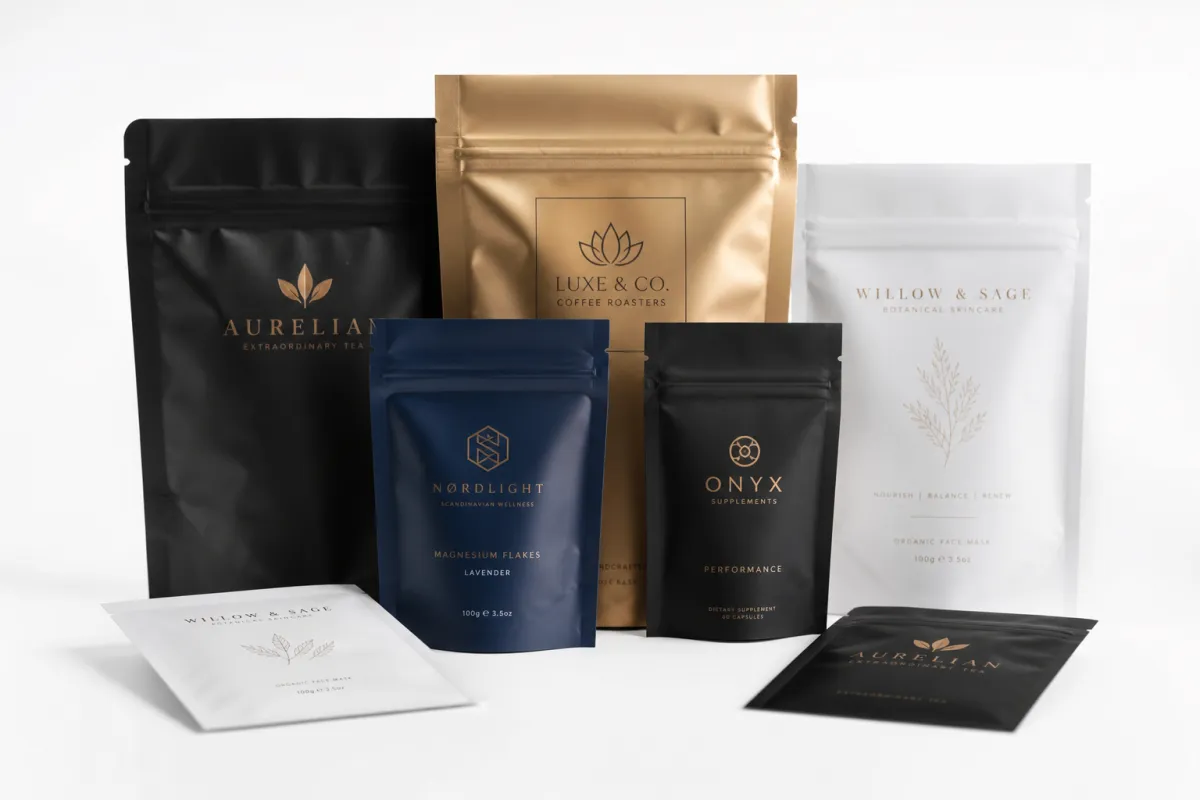
Custom logo packaging pouches are flexible containers made to hold a product while displaying brand graphics on one or more panels. They can be stand-up pouches, flat pouches, side-gusset bags, quad-seal styles, spouted pouches, or resealable formats with zippers and tear notches. The core idea is simple, but the range is broad: custom logo packaging pouches can be tailored for dry snacks, powdered supplements, liquid concentrates, bath salts, pet treats, coffee, granola, cosmetic samples, and a lot of other products.
What makes them stand out is not only the print area, but the way they change perception. A pouch can make a product feel more modern, more premium, more natural, or more technical depending on the artwork and finish. In practice, custom logo packaging pouches often become the first touchpoint a shopper has with the brand, so the logo, color system, product claims, and usage instructions need to work together instead of fighting for attention.
Good packaging design earns its keep here. Strong custom logo packaging pouches give the eye a clear path: brand name first, product type second, benefit or flavor third, then the technical details that help the buyer trust the item. Bad layouts try to say everything at once, and the result is usually clutter. On a crowded shelf, the cleaner pouch almost always wins, even if the product inside is identical.
There is also a very practical side to custom logo packaging pouches. Compared with many rigid containers, they weigh less, take up less room in storage, and usually reduce freight cost per unit. For a buyer managing inventory, that matters. A pallet of pouches can be easier to receive and store than cases of jars or tubs, and a filled pouch often gives better cube efficiency in shipping. That kind of efficiency is one reason flexible packaging keeps growing across retail packaging categories.
A pouch that looks premium but leaks is not premium; it is expensive waste. The best custom logo packaging pouches balance shelf appeal, seal integrity, and day-to-day handling so the brand looks good and the product stays protected.
For many brands, the appeal also comes from format flexibility. Custom logo packaging pouches can use a glossy finish for high color saturation, a matte finish for a softer premium feel, a clear window for product visibility, or a metallic layer for extra shelf pop. They can be designed for heat sealing, cold sealing, or resealing, and they can include features like hang holes, euro slots, spouts, and rounded corners when the use case calls for them.
One thing people sometimes miss is how well custom logo packaging pouches support package branding across a product line. A family of flavors or formulas can share the same layout system while changing only a few colors, icons, or copy blocks. That keeps the brand recognizable without making every SKU look identical. It is a smarter move than treating each pouch like a one-off art project.
If you are comparing this format to custom packaging products in other categories, think about the product’s journey from fill line to hand to shelf. The pouch should make that journey easier, not harder. When the structure, closure, and print all line up, custom logo packaging pouches do more than hold product. They help sell it.
How Custom Logo Packaging Pouches Are Made
The production path for custom logo packaging pouches starts long before the first roll of film hits the press. It begins with artwork, dielines, product specs, and a clear decision about what the pouch has to do. A good supplier will want to know fill weight, product texture, shelf life expectations, storage conditions, and whether the package needs to stand up, hang, reseal, or protect against light, moisture, oxygen, or odor.
From there, the structure is built layer by layer. An outer print layer carries the graphics. A middle barrier layer or layers help protect freshness, aroma, or sensitive ingredients. An inner sealant layer gives the pouch the ability to close cleanly and hold under pressure. The exact construction changes by product, but that multilayer approach is what gives custom logo packaging pouches their flexibility and performance.
Printing method matters too. Flexographic printing is common for longer runs and efficient repeat production. Digital printing is often a better fit for shorter runs, versioned artwork, or projects that need faster setup. Gravure can support very high-volume work with strong color consistency, though it usually comes with more upfront preparation. The right choice depends on order size, color demands, and how much change is expected from one SKU to the next.
After printing, the film is laminated if needed, cured if the process requires it, and then converted into the final pouch shape. Conversion is where features like zippers, tear notches, hang holes, valves, spouts, and gussets are added. That stage is where custom logo packaging pouches become actual packaging rather than just printed film. A small decision here can affect filling speed, consumer convenience, and how well the finished pouch holds its shape on shelf.
Closures deserve special attention. A zipper may add convenience for snacks or powders that are opened repeatedly. A tear notch can make the first opening easier, but if it is poorly placed, the consumer may struggle. Hang holes help in peg display environments. Clear windows can build trust by showing the product inside, though they also reduce print area and can reduce barrier depending on how the structure is built. These are not decorative choices; they are functional decisions that shape the user experience of custom logo packaging pouches.
Testing belongs in the process too. Strong suppliers will talk about seal strength, drop resistance, and shipping durability instead of only talking about artwork. ASTM seal testing, transit simulation, and line trials help catch weak points before a launch goes live. For transport validation, the protocols published by ISTA are a good reference point because they give structure to what can otherwise turn into guesswork.
In the best cases, custom logo packaging pouches move through a simple sequence: artwork approval, material selection, proofing, printing, converting, inspection, and shipment. The sequence sounds straightforward, but each step has room for delay if files are incomplete or if the pouch has special features. Clear communication early in the project saves time later. Fancy mockups do not fix messy specs.
People often think the pouch is the easy part. That is usually not true. The smoother the final pack looks, the more coordination it took behind the scenes. That is especially true for custom logo packaging pouches that need barrier performance, retail polish, and exact branding alignment all at once.
Key Factors That Shape Custom Logo Packaging Pouches
Material selection is the first major decision, and it affects almost everything else. Custom logo packaging pouches can be built for moisture barrier, oxygen barrier, odor control, puncture resistance, or clarity. A coffee pouch has different needs than a bath salt pouch, and a protein powder pouch has different needs than a gummy supplement pouch. If the product is sensitive to light or air, the film structure has to reflect that from the start.
Finish matters more than many buyers expect. Matte film can create a softer, more natural look, while gloss often makes colors feel louder and sharper. Soft-touch lamination can add a tactile premium feel, though it usually increases cost. If the branding calls for a clinical or technical look, a clean white surface with tight typography may work best. If the goal is artisanal or handmade, a warmer palette and more open spacing often help custom logo packaging pouches feel authentic.
Size is another factor that changes both appearance and function. A pouch that is too large can look underfilled and sloppy. One that is too small may stress the seals, leave no room for the product to settle, or make filling difficult on the line. Dimensions are not just a spec sheet detail; they are part of the visual design. Good packaging design respects fill volume as much as it respects the logo.
Readability matters too. Custom logo packaging pouches have to carry a lot of information without becoming noisy. Ingredient panels, nutrition facts, barcode placement, warning text, lot coding, and usage instructions all need space. If those elements sit too close to folds, seals, or gussets, the finished pouch can look cramped or fail a compliance review. A clean hierarchy on the front panel and disciplined use of the back panel go a long way.
Sustainability comes up in almost every packaging conversation now, but it needs to be handled carefully. Recyclable claims should match the actual film structure and the recovery pathways available in the market where the product is sold. Mono-material polyethylene structures can be a smart option for some applications, but they are not the answer for every product. Downgauging, lighter materials, and responsible sourcing can all help, yet none of those choices should weaken performance just to sound greener.
For brands that care about sourcing, chain-of-custody and fiber content standards can also matter. If a pouch includes paper components or printed cartons in the broader pack system, the FSC framework is one of the best-known references for responsible forestry claims. That does not replace material testing, but it does help keep package branding honest.
Custom logo packaging pouches also need to match the emotional tone of the brand. A wellness brand may want calm colors, restrained copy, and a cleaner front face. A pet treat brand may want bolder graphics and stronger contrast. A luxury food brand may choose dark tones, metallic accents, and a premium seal. The pouch is not just a container. It is a signal.
Here is the simplest way to think about it: custom logo packaging pouches work best when the technical spec and the visual spec are developed together. If one runs ahead of the other, the result tends to feel compromised. The strongest projects start with product performance first, then brand expression, then finishing details.
Custom Logo Packaging Pouches Pricing and Cost Drivers
Pricing for custom logo packaging pouches is driven by a handful of predictable factors: material structure, print method, pouch size, order quantity, closure type, and any added features like windows, spouts, or matte finishes. If you understand those inputs, quotes make a lot more sense. If you do not, it is easy to compare two prices that are not actually comparable.
Setup and tooling are a big part of the conversation. A simple flat pouch with standard dimensions and a familiar print layout will usually cost less than a custom stand-up pouch with a zipper, tear notch, hang hole, and soft-touch finish. Each feature adds labor, material handling, or both. For custom logo packaging pouches, the price can move quickly once special formats or premium finishing enter the spec.
Volume changes the math in a very real way. A short run may cost more per unit because setup costs are spread over fewer pieces. Larger runs usually lower the unit price, which is why custom logo packaging pouches often become more economical once a brand settles on a stable SKU and can commit to a bigger purchase. That does not mean short runs are bad; they are often the smart choice for launches, seasonal products, market testing, and limited editions.
Late artwork changes are another hidden cost driver. If copy changes after proof approval, or if a barcode gets shifted, or if regulatory text has to be rewritten, the project may need a revised proof and more production time. That can mean extra cost, especially if materials or press time have already been scheduled. Good file prep saves more money than most people realize.
Shipping, storage, and overage planning also affect the total budget. A pouch price that looks excellent on paper can become less attractive if the freight cost is high or if the order arrives in a window that forces extra storage charges. For this reason, custom logo packaging pouches should always be evaluated as part of the total packaging cost, not just the factory quote.
| Option | Typical Order Range | Approx. Unit Price | Best Fit | Cost Notes |
|---|---|---|---|---|
| Digital short run pouch | 500-2,000 units | $0.55-$1.25 | Launches, seasonal SKUs, small-batch product packaging | Lower setup burden, but unit price stays higher |
| Flexographic mid run pouch | 3,000-10,000 units | $0.18-$0.45 | Stable retail packaging programs and repeat orders | Good balance of cost and print efficiency |
| Gravure high-volume pouch | 20,000+ units | $0.12-$0.30 | Large branded packaging programs with locked artwork | Lower unit cost, but more upfront preparation |
| Premium feature pouch | Any volume | Base price + $0.03-$0.18 | Soft-touch, spout, window, zipper, or specialty finish | Feature cost stacks fast if several upgrades are combined |
Those numbers are ranges, not promises, because the exact quote depends on material structure, print coverage, pouch size, and the features added to the pack. Still, they give you a reasonable budgeting frame. In many projects, the biggest gap between “cheap” and “good value” is not the printed artwork; it is the performance risk. A pouch that looks inexpensive but fails in transit is not a bargain.
That is where practical judgment matters. If the product is sensitive, brittle, or sold at a premium, paying a little more for better seal strength or a stronger barrier can save far more money than it costs. Custom logo packaging pouches should be judged the same way a buyer would judge a machine part: by how reliably they perform under real conditions, not by how low the quote looks on day one.
If you are comparing options across your broader packaging line, it can help to think about pouches alongside Custom Packaging Products in other formats, such as cartons or sleeves. Sometimes the best answer is not the cheapest pouch; it is the format that gives the brand the strongest shelf presence and the most dependable production result for the budget available.
Step-by-Step Guide to Ordering Custom Logo Packaging Pouches
The ordering process starts with a clear product brief. Before you request a quote, know what the pouch must hold, how long the product needs to stay fresh, what the fill weight is, and where the package will be sold. A pouch for a 2-ounce cosmetic powder is not specified the same way as a pouch for 16 ounces of roasted nuts. If those basics are not defined early, the quote will be slower and the revisions will multiply.
Next comes the technical spec. Decide whether the pouch needs a zipper, a tear notch, a window, a hang hole, or a special shape. Confirm whether the finish should be matte, gloss, or soft-touch. Then define the barrier requirement. Custom logo packaging pouches for oxygen-sensitive product packaging need a different structure than pouches for dry goods with short shelf exposure. This is the stage where details save time later.
Artwork preparation is where many projects go sideways. Use the correct dieline, keep copy away from heat-seal zones, and design to the pouch shape instead of imagining a flat label. A logo that looks centered in a mockup can end up too low once the pouch is formed, especially on stand-up styles and gusseted formats. Good packaging design respects the actual geometry of custom logo packaging pouches.
Proofing should not be rushed. Verify logo placement, spelling, barcode size, font legibility, ingredient text, and color expectations before approval. If the pouch carries regulated content, this is the time to double-check the panel copy rather than after production starts. A clean proof review can prevent a costly reprint.
Sampling is worth requesting whenever the product is sensitive or the first order is significant. A sample lets the buyer see how the pouch handles, how the zipper feels, how the print reads under light, and how the filled pack sits on shelf. For many brands, the sample is where the final confidence comes from. It is much easier to adjust a spec at that point than after thousands of units are already in motion.
Once the sample and proof are approved, production can move forward. Fill-line testing, if needed, should happen before the full order ships. That is especially true for custom logo packaging pouches that will run on semi-automatic or automatic equipment. A pouch that feeds cleanly by hand may not behave the same way on a high-speed line.
As the order closes out, make sure receiving, storage, and launch timing are aligned. There is no benefit to having beautiful pouches arrive too early if they have nowhere to go, and there is no benefit to having them arrive too late when the launch date is already fixed. A simple checklist keeps the handoff smooth:
- Product dimensions and fill weight confirmed
- Barrier needs and closure style approved
- Artwork file and dieline matched
- Regulatory text reviewed
- Sample or proof approved
- Delivery date aligned with filling and launch
That checklist looks basic, but it solves a lot of problems. Custom logo packaging pouches reward organized buyers. When the spec sheet is clear, the quote is cleaner, the proof cycle is shorter, and the finished result usually looks better too.
Process and Timeline for Custom Logo Packaging Pouches
A realistic timeline for custom logo packaging pouches depends on artwork readiness, material availability, print method, and the complexity of the pouch itself. Simple projects with approved files can move faster than complex formats with special finishes, but even the smoother jobs still need time for proofing, production, and shipping. Planning for that sequence is better than hoping the schedule will compress itself.
The first phase is discovery and spec confirmation. That is where the supplier learns the product details, the buyer explains the branding goals, and both sides agree on the format. A few good questions early can prevent a lot of confusion later: Is the product dry or oily? Is it shelf-stable or fragile? Will it be hand-packed or run on equipment? Does the brand want a premium, natural, or technical look?
After that comes proof creation and revisions. This stage can be quick if the artwork is clean and the copy is final. It can stretch if the design is still changing. Custom logo packaging pouches often sit at the intersection of marketing and compliance, which means several people may need to sign off before the proof is approved. That is normal, but it should be scheduled honestly.
Manufacturing usually follows a sequence: printing, laminating if needed, curing when the process requires it, converting into finished pouch shapes, and inspecting the order before packing. If there is a zipper, spout, or other special feature, that can add time. If the order needs custom colors or exact brand matching, the press setup may take longer. Each of those steps is manageable, but each one should be included in the timeline from the start.
For many custom logo packaging pouches programs, a first order often lands somewhere in the 12-15 business day range after proof approval for straightforward work, while more complex jobs can stretch beyond that. Add shipping time on top of production time, and build a buffer if the packaging is tied to a launch or seasonal sales window. Even a strong supplier cannot make physics disappear.
Schedule risk usually comes from one of five places: late art changes, delayed approvals, raw material shortages, special finish requests, or heavy production traffic around seasonal peaks. The smarter move is to treat the timeline as a chain, not a single date. If one link slips, the rest can shift too.
One practical habit helps a lot: keep the approved spec file, print references, and artwork history organized for each SKU. The second order of custom logo packaging pouches is almost always easier than the first if the documentation is clean. That is where process discipline pays off. It reduces back-and-forth, speeds quoting, and helps maintain consistency from run to run.
In a well-run program, custom logo packaging pouches move from concept to delivery with fewer surprises than people expect. The key is not speed for its own sake. The key is predictable movement through each stage, with enough time to catch small issues before they become big ones.
Common Mistakes With Custom Logo Packaging Pouches
The biggest mistake is designing for appearance only. A pouch can look polished in a mockup and still fail in use if the barrier is wrong, the seal area is weak, or the closure does not fit the product behavior. I have seen buyers fall in love with a visual concept, then realize later that the product needs better puncture resistance or a different opening style. Custom logo packaging pouches should always be judged as performance packaging first.
Another common issue is crowding the front panel. When the logo, flavor, benefit claims, badges, and compliance text all compete for the same space, the pouch loses focus. Strong branding is usually clearer, not busier. Leave enough white space for the eye to rest. Use hierarchy. Let the product name breathe. That simple discipline makes custom logo packaging pouches look more expensive without adding a dollar to the manufacturing cost.
File problems cause a lot of avoidable delays. Low-resolution images, missing fonts, unembedded links, and artwork that ignores the dieline can all lead to revision loops. So can changing the copy after approval. Once production is scheduled, the cost of rework rises quickly. A careful proof stage is not bureaucracy; it is protection against expensive mistakes.
Product mismatch is another trap. A lightweight pouch may be fine for powder, but not for a sharp-edged snack or a heavy granular fill. A non-resealable structure can be frustrating for anything the consumer uses more than once. If the consumer opens the pouch repeatedly, custom logo packaging pouches should be built for repeat access, not one-time use.
Sustainability claims can also backfire if they are vague. Words like recyclable, compostable, or eco-friendly should match the actual material composition and the disposal route available to the customer. A claim that sounds good but cannot be supported hurts trust fast. Better to be precise than to be flashy.
There is also a shelf mistake that shows up all the time: designing the pouch as if it will be seen only in a mockup, not on a crowded retail shelf. In real retail packaging environments, glare, neighboring brands, and vertical stacking can change the way a pouch reads. Good custom logo packaging pouches are legible from a distance and still informative up close.
Finally, do not ignore the filling line. Some pouch structures work beautifully by hand and become a nuisance on automated equipment. If the filling setup is not part of the conversation, a packaging choice that seems smart on paper can become expensive during production. That is one reason experienced buyers ask about the line before they ask about the art.
These mistakes are common because custom logo packaging pouches sit at the crossroads of branding, manufacturing, and logistics. That makes them powerful, but it also means small oversights can echo across the entire project. The fix is usually simple: slow down early, define the spec clearly, and keep performance at the center of the decision.
Expert Tips for Better Custom Logo Packaging Pouches
Start by treating the pouch as a retail tool, not just a container. That mindset changes everything. Custom logo packaging pouches should answer a shopper’s questions quickly: What is this? Why should I trust it? What makes it different? If the front panel can answer those questions in three seconds, the design is doing its job.
Use contrast wisely. A logo that disappears into the background is a wasted opportunity, even if the palette looks elegant in a digital file. High-contrast type is often easier to read under store lighting, especially when the pouch has matte film or a soft-touch surface that absorbs some glare. The same rule applies to small claims and icon rows. If a detail matters, it must be legible in the real world.
Test a few variants if the budget allows. A small shift in zipper style, window placement, or finish can alter how a consumer responds. Sometimes the softer look wins. Sometimes the brighter, more direct look sells better. You do not always need a full A/B program to learn something useful; even a short side-by-side review can tell you a lot about how custom logo packaging pouches are being perceived.
Think about the fill operation before finalizing the pouch. If the line is manual, a certain level of forgiveness may be fine. If the line is automatic, the gusset, seal area, and pouch stiffness matter much more. Good custom logo packaging pouches are designed with the filling method in mind, not after the fact. That saves time, product, and patience.
Do not neglect the back panel. Many brands use it poorly, filling it with dense copy and little else. A better approach is to use the back for trust-building details: usage instructions, origin notes, storage guidance, QR code placement, and any statements that reinforce quality. That is where package branding can become more helpful and less decorative.
Keep the spec sheet disciplined. Once a pouch style performs well, lock the details down: film structure, size, print method, closure, finish, and artwork conventions. That makes repeat orders simpler and reduces variation from run to run. In a mature packaging program, custom logo packaging pouches become easier to buy because the system has already been proven.
If you need a broader packaging comparison, look at the pouch next to other Custom Packaging Products and ask which format best supports the product story, the filling method, and the budget. Sometimes the answer is still the pouch. Sometimes a carton, sleeve, or another structure makes more sense. The best decision is the one that fits the whole package, not just the mockup.
One last practical point: keep samples from approved runs. They become a useful reference for color, seal feel, and material behavior. When a future order needs to match the original, having a physical benchmark can prevent a lot of guesswork. That is the kind of habit that separates a one-off order from a reliable packaging program.
Custom logo packaging pouches work best when they are built with clear priorities: protect the product, support the brand, and make the consumer’s job easier. If those three pieces line up, the pouch does far more than look good on a shelf. It supports the business behind it.
FAQ
What are custom logo packaging pouches used for?
They are used to package and brand products in a flexible format that can support freshness, convenience, and shelf appeal. Custom logo packaging pouches work across food, supplements, cosmetics, pet treats, and specialty consumer goods, and the logo turns the pouch into both protection and a marketing surface.
How do I choose the right material for custom logo packaging pouches?
Start with the product’s protection needs, including moisture, oxygen, light, puncture resistance, and odor control. Then match the structure to the shelf life and the brand look. Ask for material options that balance performance, appearance, and disposal considerations so the final custom logo packaging pouches fit both the product and the market.
What affects the price of custom logo packaging pouches the most?
The biggest cost drivers are material structure, print method, pouch size, order quantity, and added features like zippers or windows. Special shapes, premium finishes, and low-volume runs usually increase the unit price, and artwork changes late in the process can add cost through extra proofs or schedule delays.
How long does it take to produce custom logo packaging pouches?
Timing depends on artwork readiness, proof approval, material sourcing, and the production queue. A simple project with approved files can move faster than a complex pouch with custom finishes or technical requirements. Building in buffer time helps avoid launch delays if revisions are needed.
What should I prepare before ordering custom logo packaging pouches?
Have product dimensions, fill weight, barrier needs, closure preferences, and branding assets ready. Prepare clean artwork files and confirm any regulatory text, barcode placement, and panel copy before proofing. A clear spec sheet makes quoting faster and lowers the chance of revision loops.
Custom logo packaging pouches are one of the most practical ways to combine branding and product protection, but they only perform well when the spec, artwork, and production plan are lined up from the start. The best next step is simple: lock the product requirements first, then build the pouch around them. That order saves time, cuts avoidable revisions, and gives you a finished pack That Actually Works on the shelf and on the line.

