custom logo Plastic Bags Wholesale is usually not expensive because of the logo. The real cost moves with volume, film choice, thickness, and how cleanly the specification is set before production starts. A buyer who understands that saves money fast. A buyer who guesses usually pays for rework, delays, or a bag that looks fine on a screen and useless in hand.
If you are sourcing branded packaging for a store, a promo, a subscription kit, or a seasonal event, bulk packaging has to do two jobs at once: carry the product and represent the brand. That is why packaging design matters even on something as plain as a poly bag. If you also need cartons or inserts, keeping package branding aligned across formats is easier if you plan the whole order together instead of one piece at a time. For broader sourcing, our Wholesale Programs page is a practical starting point, and Custom Packaging Products covers other formats that need to match the same look.
Custom Logo Plastic Bags Wholesale: Where the Real Savings Come From
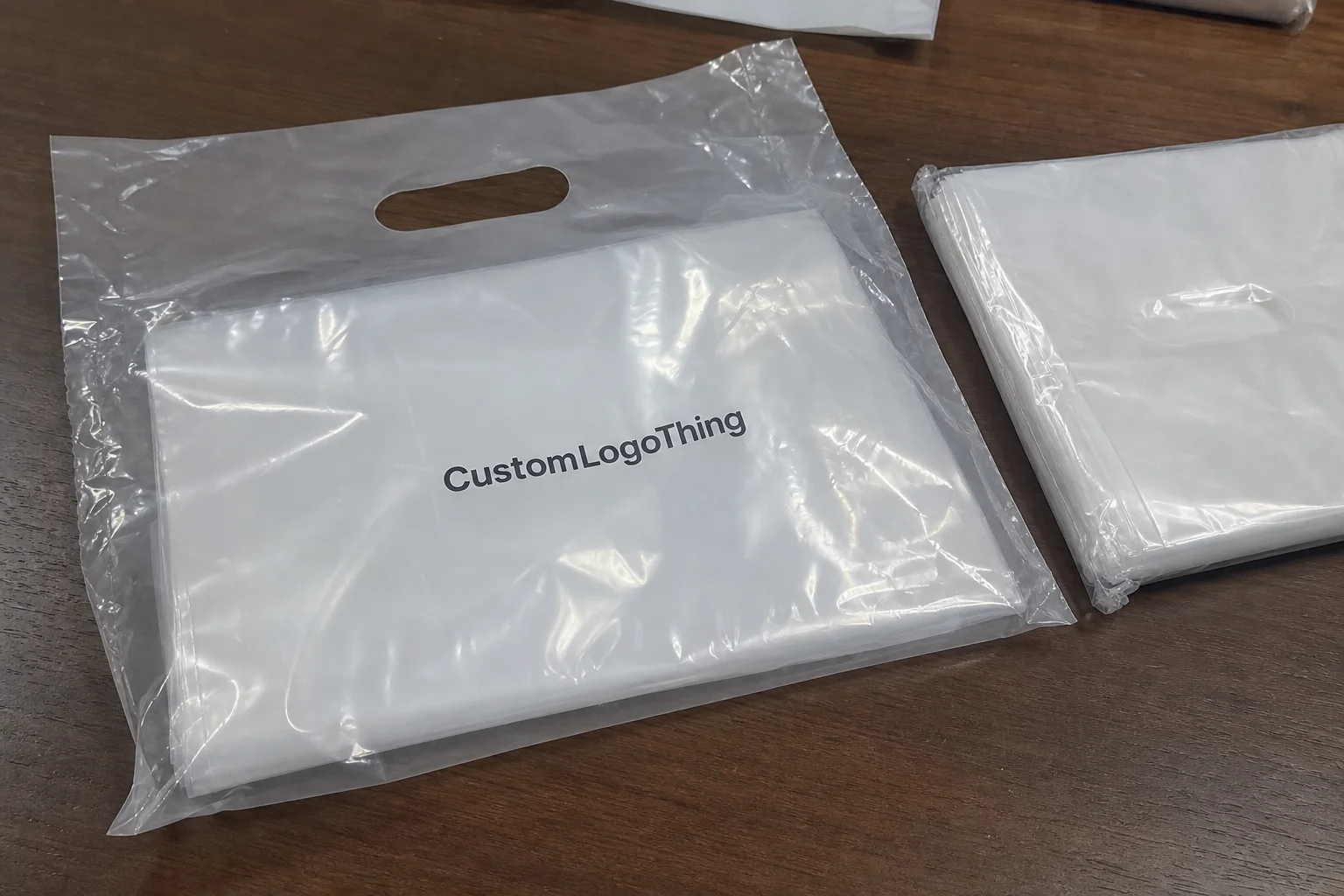
The biggest pricing surprise is simple. The printed logo is usually not the expensive part. Setup is. Once plate costs, proofing, and press setup are spread across a real run, the unit price drops hard. That is why custom logo plastic bags wholesale often beats last-minute Retail Packaging On total cost, even if the first quote looks higher on paper.
Wholesale pricing is driven by bag size, film type, thickness, color count, and quantity. A small two-color run on a stock size will price very differently from a large, gusseted bag with heavy coverage and a custom size. The artwork matters, but the production math matters more. A clean one-color logo on a standard bag can be efficient. A full-coverage design with fine type and several spot colors can add setup time and make the order slower and more expensive.
From a buyer’s point of view, the right question is not, “What is the unit price?” It is, “What does this cost per actual use?” A cheap bag that tears in transit, scuffs on shelf, or shows up late is not cheap. It is a problem. Stores need carryout bags that do not split at the handle. Subscription brands need mailing and insert bags that keep product neat. Event teams need bags that look intentional in the hand, not like leftover packaging pulled from a drawer.
That is the real savings. Fewer failures, fewer rush replacements, fewer awkward substitutions. If the specification is right from the start, the whole packaging line becomes easier to manage.
“Cheap packaging is expensive when it fails in the customer’s hand.”
Bag Styles Buyers Actually Order for Retail, Shipping, and Events
There is no single best bag. Different jobs need different formats, and the wrong style wastes money fast. Retail carryout, product protection, and giveaway kits do not behave the same way. That is why buyers who understand the use case usually get better results from custom printed bags and better pricing on the first quote.
- T-shirt bags: Light, low-cost, common for grocery, convenience, and quick retail carryout. They work well for simple loads, but they are not the best choice for premium presentation.
- Die-cut handle bags: Cleaner presentation for retail and promotions. Good shelf presence, good for branded packaging, and usually better for stores that want a more polished look.
- Patch handle bags: Stronger carry point, better feel, and better for heavier merchandise or higher perceived value.
- Gusseted bags: Useful when the contents need extra room. Better for apparel, kits, and product packaging that stacks or folds unevenly.
- Wicketed bags: Fast dispensing for packing lines. Good when labor efficiency matters more than display.
- Flat poly bags: Best for inserts, parts, and lightweight shipping protection. Not a carry bag, but very useful inside a box.
Each style has a failure point. A carry bag that stretches too much feels flimsy. A clear bag can show too much if the contents are not tidy. A thin mailer-style bag can look acceptable until it is loaded with actual product weight, then the seams start telling the truth.
Presentation details matter too. Clear versus opaque film changes how the logo reads. Reinforced handles change how the bag feels in the hand. Flat pack, roll pack, and wicketed bundle formats affect how much labor the store team spends opening and staging bags at the counter. In practice, packaging format is part of the product. Ignore it and you pay for it later.
There is also a practical distinction between bags that will be seen once and bags that will be handled repeatedly. A one-time event giveaway can tolerate lighter film if the contents are small and the route is short. A retail bag that goes from register to car to home needs more margin. That extra margin is often a few cents, not a dramatic jump, but it saves far more than it costs.
Material, Gauge, and Print Specs That Decide Durability
Material choice is where most buyers either save money or create headaches. LDPE, HDPE, and recycled-content options each behave differently. LDPE feels softer, folds more easily, and usually gives better clarity. HDPE is lighter and often cheaper for simple carry applications. Recycled-content films can work well, but the usable range depends on the look you want and the performance you need. If you want a neutral overview of packaging materials and industry basics, packaging.org is a decent reference point.
Gauge, or thickness, is where durability starts to show up. A 1.25 mil bag is not the same thing as a 2 mil bag. Thicker film resists tearing better and usually feels more substantial, but it can also reduce flexibility and raise cost. That tradeoff is normal. If the product is light and low-risk, overbuilding the bag is just waste. If the product has corners, weight, or repeated handling, underbuilding it is fake savings.
Print method matters just as much. Spot-color flexo printing is common for wholesale runs because it is efficient and consistent on simple artwork. Fine lines, small type, and tight color registration need clean files and realistic expectations. If the design relies on gradients, photo detail, or tiny text, it may not translate well to film. A logo that looks perfect on a laptop can still look muddy on a glossy bag. That is packaging, not magic.
Finish changes the visual read too. Gloss looks louder. Matte feels softer. Translucent film gives a lighter look but can reduce contrast. Frosted film feels more premium. Tinted film can hide contents and add a stronger brand color. The wrong finish can flatten the whole package branding effort.
Common mistakes are predictable:
- Undersized dimensions that make the bag too tight.
- Weak seam construction that fails under load.
- Too many colors, which pushes cost up fast.
- Artwork that looks fine on screen but breaks on film.
There is another detail buyers miss: print coverage changes how a film behaves. Heavy ink coverage can make a bag feel stiffer and sometimes exaggerate minor handling marks. On lighter films, that matters more than people expect. A design that is visually elegant in a mockup may still be the wrong choice if it creates production risk or slows pack-out.
From a packaging buyer’s point of view, better specs beat bigger promises. That is true for bags, and it is true for custom printed boxes too.
Pricing, MOQ, and Unit Cost: What Changes the Quote
The quote is a stack of choices, not a single number. Bag size, material, thickness, print colors, artwork setup, production method, packing format, freight, and any special finishing all affect the final price. For custom logo plastic bags wholesale, the quote only becomes useful after those details are locked. Otherwise you are comparing guesses.
MOQ depends on style and complexity. A stock-size, one-color order can usually start lower than a fully custom build with a special size or multiple inks. Lower quantities mean higher unit cost because setup gets spread across fewer bags. That is not a penalty. It is basic production math. Buyers who understand that are easier to quote and easier to serve.
Artwork can move the price more than people expect. Every extra color adds setup complexity. A larger print area may require more ink and more press time. Design changes after proofing can trigger new plates or another approval round. If you want a cleaner quote, keep the layout simple and lock the specification before anyone starts running numbers.
Freight deserves its own line in the decision. A bag that is cheap at the factory can stop being cheap after shipping, especially if the order is bulky but low value per cubic foot. That is one reason buyers compare landed cost, not just unit cost. Packaging is often full of small per-unit savings that disappear once pallets, cartons, and transit charges are counted.
Use the same comparison rules across vendors. Same size. Same film. Same gauge. Same quantity. Same shipping terms. If one supplier gives you an apples-to-oranges quote, the headline number is not useful. It is just marketing with decimals.
| Bag Type | Typical MOQ | Common Unit Range | Best For |
|---|---|---|---|
| HDPE T-shirt bag | 5,000 to 10,000 | $0.03 to $0.08 | Basic retail carryout, low-cost distribution |
| LDPE die-cut handle bag | 5,000 to 10,000 | $0.08 to $0.18 | Retail packaging, promos, cleaner brand presentation |
| Gusseted LDPE bag | 10,000+ | $0.12 to $0.28 | Apparel, kits, product packaging with more volume |
| Thicker custom mailer-style poly bag | 10,000+ | $0.18 to $0.45 | Shipping inserts, heavier loads, premium feel |
These ranges are only useful if the spec is clear. Freight, plates, and repacking can change the real landed cost more than the bag price itself. That is the part a cheap headline quote usually hides.
Production Steps, Lead Times, and Delivery Windows
Good production runs are boring in the best way. Inquiry, artwork review, digital proof, approval, production, quality check, packing, shipment. That is the normal path. The delay usually comes from the buyer side, not the factory side. Missing size confirmation, late artwork changes, or color edits after proof approval slow everything down.
For custom logo plastic bags wholesale, lead time starts after proof approval, not after the first email. Simple repeat runs can move faster because the tooling and artwork are already locked. New sizes, multiple colors, or recycled-content requests usually take longer. A realistic window is often 12 to 20 business days from approval for straightforward runs, with more complex orders stretching beyond that depending on capacity and shipping method.
Rush work is possible, but it is not a magic trick. You still need a clean file, a confirmed specification, and an open production slot. If a supplier promises impossible speed without asking questions, that is not efficiency. That is a future problem with better branding.
Quality control should happen in layers. First comes the proof check: dimensions, artwork placement, type size, and color callouts. Then the production check: film thickness, seam consistency, handle strength, and registration. Final packing matters too, because a good bag can still arrive as a bad shipment if the counts are off or the cartons are crushed. Buyers often focus on the print and forget the packing, but the packing is what survives the last mile.
If the bags are going into broader shipping programs, ask whether the packing method and transit plan line up with the rest of the shipment. For shipping tests and transit handling references, ISTA is the standard place to start. It is a better use of time than guessing whether the cartons will survive a rough route or a stacked pallet.
Have this ready before you request production:
- Final bag dimensions
- Material and thickness target
- Print colors and artwork file
- Quantity and delivery destination
- Any compliance, pack-out, or labeling rules
Once those pieces are fixed, the timeline gets much easier to trust.
What Repeat Buyers Need From a Wholesale Supplier
Repeat buyers do not want drama. They want the same bag to arrive the same way every time. Color drift, size variation, weak seams, and pack-count mistakes destroy confidence fast. That is true whether the order is for retail packaging, giveaways, or a recurring product launch.
The best suppliers store artwork, lock specifications, and keep proof history clean. That saves time on seasonal restocks and ongoing programs because the buyer does not have to rebuild the order from scratch. If the supplier keeps changing the process every time the price shifts, that is not flexibility. It is instability with a sales pitch.
Quality control should be specific, not vague. Ask how they check thickness tolerance, print registration, seam strength, and pack count accuracy. Ask what happens if the bags arrive with print drift or a dimension miss. A supplier who can answer those questions clearly is usually easier to work with on future runs.
Consistency matters even more when the bag is part of a larger package branding system. If your store also uses custom printed boxes, inserts, or mailers, the bag should support the same visual language. Otherwise the whole presentation looks pieced together. Buyers notice. Customers do too.
There is also a service angle that gets overlooked. A supplier who can handle both test runs and larger recurring orders without forcing specification changes is worth more than the lowest quote. Saving a cent is not helpful if the next reorder takes three extra weeks and a full round of corrections.
For recurring programs, the practical advantage is predictability. A buyer can plan inventory, labor, and launch dates around a supplier that understands repeat production. That is harder to see on a quote sheet than a low unit price, but it tends to matter more after the first reorder.
Next Steps to Get an Accurate Custom Bag Quote
If you want a quote that is actually useful, send the basics first: bag style, dimensions, material, thickness, quantity, print colors, and shipping destination. That is the minimum. If you skip those details, the reply will be rough, and you will waste time on back-and-forth that nobody needed.
Be clear about the real use case. Retail carryout, shipping inserts, event handouts, or subscription packaging all need different specs. Do not ask a supplier to infer performance from a logo file alone. That is how buyers end up with a bag that looks right and fails the job.
Use clean artwork files and tell the supplier whether you care about exact color matching, print-area limits, or layout restrictions. If you need mockups, ask for them before approval. If you need samples, confirm the policy early. If you want timing you can trust, ask for the production window and the transit window separately.
If you are already set up for recurring purchases, the Wholesale Programs path is usually the fastest route. If you are still building out your branded packaging mix, the broader product catalog gives you room to match the bag with the rest of the order. Either way, compare identical specs across vendors before you approve anything.
Custom logo plastic bags wholesale works best when the order is treated like production, not shopping. Lock the spec, compare the landed cost, and choose the bag that performs in real use, not the one that only looks cheap on a quote sheet.
What is the MOQ for custom plastic bag wholesale orders?
MOQ depends on bag style, size, material, and print method. Simple stock-size runs are usually lower than fully custom builds. Bigger quantities reduce unit cost because setup gets spread across more bags. Ask whether the MOQ is tied to one size, one artwork version, or one color version before you compare quotes.
Which material is best for custom plastic bag wholesale orders?
LDPE is a common choice when you want a softer feel, better clarity, and more flexibility. HDPE is often preferred when lower cost and lighter-duty carry are more important. Choose thickness based on load weight, puncture risk, and how much abuse the bag will take in real use.
How long do wholesale custom plastic bags usually take to produce?
Lead time starts after artwork approval, not after the first email. Simple repeat orders usually move faster than new artwork, multiple colors, or custom sizes. Shipping time is separate, so confirm the production window and the transit window before you promise a launch date.
Can I print multiple colors on wholesale custom plastic bag runs?
Yes, but every extra color can add setup complexity and cost. Simple spot-color logos are usually the cleanest and most cost-controlled option. Request a proof to check line weight, spacing, and color contrast before production starts.
What do I need to send for a fast custom logo plastic bags wholesale quote?
Send the bag style, dimensions, material, thickness, quantity, print colors, and destination ZIP or postal code. Include the artwork file and say whether you need samples, mockups, or just pricing. If you want apples-to-apples pricing, make sure every supplier gets the same specification sheet. That is how custom logo plastic bags wholesale orders stay predictable instead of becoming a guessing game.


