Buyer Fit Snapshot
| Best fit | Custom Logo Pouches for Cosmetics projects where brand print, material claims, artwork control, MOQ, and repeat-order consistency need to be specified before quoting. |
|---|---|
| Quote inputs | Share finished size, material target, print colors, finish, packing count, annual reorder estimate, ship-to region, and any compliance wording. |
| Proofing check | Approve dieline scale, logo placement, barcode or warning zones, color tolerance, closure strength, and carton packing before bulk production. |
| Main risk | Vague material claims, crowded artwork, missing packing details, or unclear freight terms can make a low unit price expensive after revisions. |
Fast answer: Custom Logo Pouches for Cosmetics: Film, Print, MOQ, and Carton Packing should be specified like a repeatable production item. The safest quote records material, print method, finish, artwork proof, packing count, and reorder notes in one written spec.
Production checks before approval
Compare the actual filled-product size with the drawing, then confirm tolerance on folds, seals, hang holes, label areas, and retail display edges. Reserve space for logos, QR codes, warning copy, and material claims before decorative graphics fill the panel.
Quote comparison points
Review material grade, print process, finish, sampling route, tooling charges, carton quantity, and freight assumptions side by side. A quote is only useful when the supplier can repeat the same color, closure quality, and packing count on the next order.
Custom Logo Pouches for cosmetics do more than hold a product still long enough to ship it. They shape the first impression, protect the contents, and make a small item feel considered instead of improvised. A pouch that seals well, prints cleanly, and feels right in the hand can lift a sample kit, travel set, or skincare refill from functional to legitimately polished.
That is why pouch selection is never just decoration. It sits inside product packaging, supports retail packaging, and carries part of the brand story with it. The right choice protects the formula, handles transit without drama, and supports the visual identity without creating a production mess. The wrong choice looks nice for one approval round and then starts causing problems.
A weak seal will ruin a premium pouch faster than bad typography. Customers forgive a lot. Leaks are not one of those things.
What Custom Logo Pouches for Cosmetics Really Do
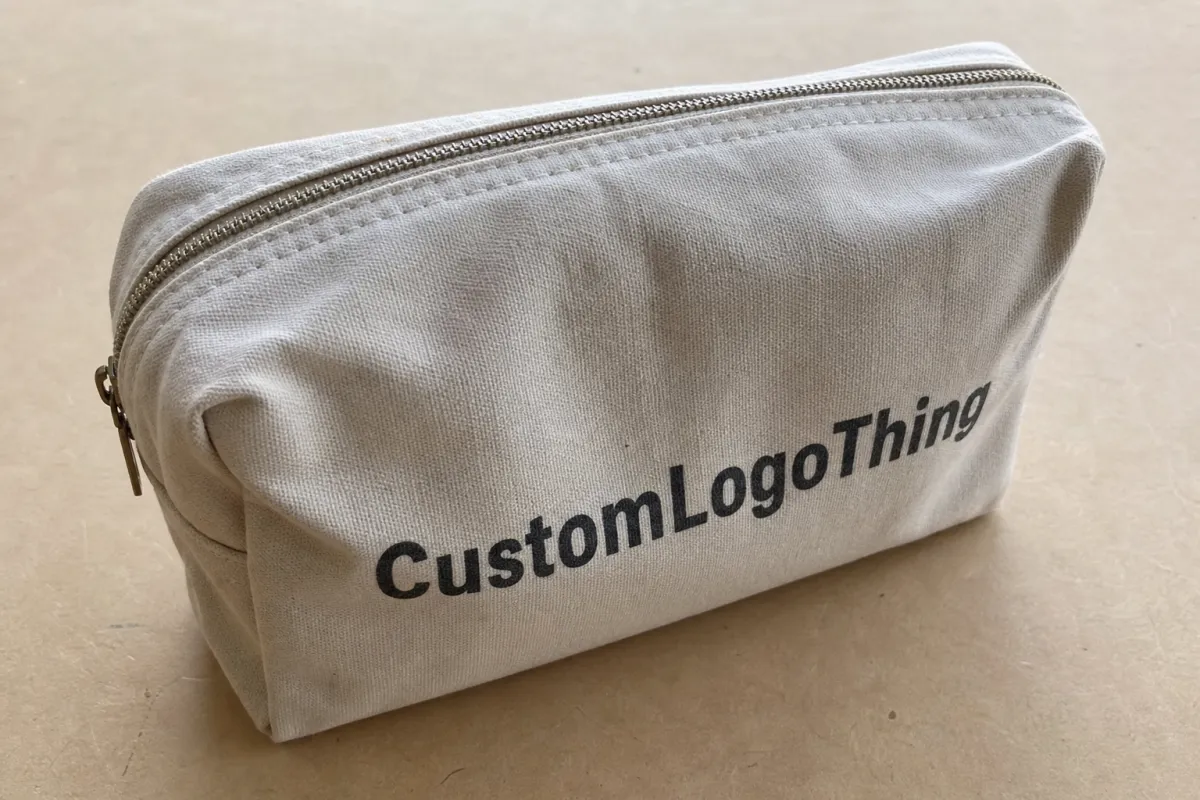
Custom pouches do more than hold a product. They act like a handshake, a shield, and a billboard all at once. Most shoppers will never ask about film gauge or seal width. They will notice whether the pouch feels thin, whether the logo looks crisp, and whether the closure behaves like it was designed by people who have actually opened packaging before. Those small signals shape perceived quality before the formula even gets tested.
Beauty brands use these pouches across a wide range of formats: sample kits, refill packs, travel sizes, subscription sets, gift bundles, and extra protection around jars, tubes, or bottles. That flexibility is part of the appeal. The same pouch family can shift from launch to launch without making the line feel disconnected. Buyers keep returning to it because it solves real packaging problems and still leaves room for branding packaging that looks intentional, not assembled from leftovers.
A plain pouch carries the product. A branded one carries the experience. Logo placement, print sharpness, surface finish, zipper style, and overall structure all change how finished the product feels. A soft matte pouch with restrained type sends a very different message from a glossy pouch with foil stamped across the front, and those differences influence price perception, product category, and how customers read the brand.
That matters on shelf and on a screen. A shopper scrolling through beauty products may only see the pouch for a second, but that second counts. Clean package branding helps the line look organized and trustworthy. For a newer skincare brand, that can be the difference between looking like a test run and looking like a real retail item. Buyers notice coherence fast, even if they cannot explain why.
The practical side matters just as much. Thin film can crease in transit. A weak zipper can make the pouch feel disposable in the worst way. Artwork that drifts too close to a seal can make even a strong product look rushed. Good pouch selection keeps appearance, protection, and production reality in the same conversation instead of letting them fight in separate rooms.
And yes, the use case changes the answer. A pouch for a luxe facial oil is not the same animal as a pouch for dry bath salts or a refill powder. The formula, fill method, shelf life, and distribution channel all change what “good” looks like. That is the part too many mockups skip.
How Custom Logo Pouches for Cosmetics Are Designed and Printed
The path from idea to finished pouch usually follows a predictable order, though the details shift with material, decoration method, and order quantity. A buyer starts with a brief, the supplier recommends a structure, artwork gets checked, proofs are prepared, samples may be made, and full production begins after approval. Skipping one of those steps usually means paying for it later.
- Start with the product brief. Define what the pouch will hold, how much it weighs, and whether it contains creams, powders, oils, or liquids.
- Choose the structure. Flat pouch, stand-up pouch, side-gusset style, or a shaped format depending on shelf use and fill method.
- Prepare the artwork. Confirm logo placement, color targets, copy, and any special effects such as foil or spot gloss.
- Review a proof. Check proportions, bleed, seams, zipper zones, and the way the design sits across the panel.
- Request a sample if needed. A physical sample shows how the material feels, how the pouch fills, and whether the closure behaves properly.
- Approve production details. Final sign-off should include dimensions, finish, color references, quantity, and packaging requirements.
- Run production and inspection. Finished pouches should be checked for print consistency, sealing, trim accuracy, and closure function.
Artwork readiness
Artwork is one of the fastest ways to blow a timeline. Vector files in AI, EPS, or PDF format are usually best for logos, and raster files need enough resolution to stay sharp on press. Most pouch projects also need bleed, safe margins, and a clear map of where seals or folds will cut into the artwork field. A design that looks centered on a monitor can shift once the pouch is filled and sealed. Packaging has a habit of exposing lazy assumptions.
Small typography can get ugly fast on flexible film. Fine serif type, hairline rules, and low-contrast text may look elegant in a mockup and turn muddy in production. A solid packaging review checks legibility at actual size, not just in the designer's layout file. If the pouch will sit beside Custom Packaging Products such as boxes or inserts, keep the type scale and color logic aligned so the whole line feels connected instead of stitched together from separate jobs.
One practical habit helps a lot: print the proof at roughly real size and look at it from arm's length. If the logo reads weak on paper, it will not magically become stronger on film. Flexible packaging is less forgiving than a box. The geometry moves, the surface bends, and small mistakes show up faster.
Decoration methods
Different print and finishing methods create different effects. Digital print works well for shorter runs or faster turnarounds. Flexographic print usually makes more sense for larger volumes and repeat artwork. Hot stamping adds a metallic hit that can lift a logo off the surface, while matte or gloss lamination changes both the feel and the light response of the pouch. Some brands use spot effects only on the logo or one signature element. That keeps the design focused instead of turning it into a small trade show booth.
Cosmetic formulas can force changes in the build. Creams and lotions often need stronger seals and better barrier layers than dry masks or sample sachets. Oils behave differently from powders, and liquids can demand a tighter closure or a more careful seal profile. A pouch that looks great on screen but fails the product chemistry test is the wrong pouch. Pretty is not a workaround.
For teams thinking about shipping performance, industry references such as ISTA packaging test methods are useful. Not every cosmetic pouch needs formal transit testing, but if the product is moving through mailers, fulfillment centers, or subscription kits, the packaging should be judged against handling, compression, and drop risk. Cute packaging that arrives broken is just expensive disappointment.
It also helps to ask what the printer can actually hold consistently. A finish that looks fantastic in the sample room may be less stable on a high-volume run if the artwork is too delicate or the substrate is finicky. That is not pessimism. It is manufacturing.
Materials, Finishes, and Structural Choices That Matter
Material selection is where appearance, protection, and cost all meet. A pouch can look simple from the outside and still be built from a layered laminate that handles moisture, oxygen, and print quality well. A cheaper material can look fine in a proof and still fail once the pouch gets filled, stacked, or shoved into a shipping carton like it owes somebody money.
| Material or Format | Best For | Brand Feel | Typical Planning Cost Pressure |
|---|---|---|---|
| PE or mono-PE structures | Refill pouches, simpler skincare items, lighter contents | Clean, practical, modern | Lower to moderate |
| PET/PE laminates | Most cosmetic pouches with balanced print and barrier needs | Versatile and polished | Moderate |
| Foil laminates | High-barrier or premium-looking beauty packaging | Sharper, more reflective, more protective | Moderate to higher |
| Kraft-look laminated pouches | Natural or earthy beauty lines that still need print durability | Warm, organic, tactile | Moderate |
| Shaped or custom-cut pouches | Signature launches, promotional sets, and standout shelf displays | Distinctive and memorable | Higher |
Matte finishes soften the whole visual language. They fit skincare lines, clean-beauty positioning, and calmer editorial packaging. Gloss finishes create more reflection and stronger contrast, which can help color cosmetics or any product that needs more shelf pop. Soft-touch laminations push the tactile side further and give the pouch a velvety feel, though that extra polish should be balanced against price and scuff resistance. Fancy is not free.
Barrier requirements should be stated plainly during sourcing. Moisture resistance matters for powders and creams. Oxygen resistance can matter for formulas that depend on freshness. Light protection helps products that degrade under exposure. Puncture strength matters if the pouch will be packed tightly, shipped often, or handled in bulk. None of those points are abstract. They affect storage, transport, and how the customer experiences the final package.
Closures deserve equal attention. A zipper makes the pouch reusable, but the force needed to open it should fit the buyer. A tear notch helps with first-opening convenience. Resealability adds real value for travel sizes and sample sets. If the pouch will be opened repeatedly, especially for powders or refills, a stiff or flimsy closure will make the whole pack feel less thoughtful.
Structure changes perception too. Flat pouches are efficient and clean. Stand-up pouches sit well on shelf and give the front panel more space to work. Side-gusset styles make sense when volume matters more than a strong face-on look. Shaped pouches create a more distinct identity but usually add cost and setup complexity. The right structure is the one that fits the way the pouch will actually be used, not the one that photographs best in a deck.
For teams weighing sustainable sourcing against brand appearance, ask about recycled content, mono-material construction, or paper-based accents where those options make sense. If paper is part of the spec, FSC guidance is a useful reference for responsible sourcing. Sustainability claims still need to pass the boring tests: barrier performance, sealing behavior, and product compatibility. A greener pouch that fails in use is just green in theory.
There is also a brand-risk side here. If your line uses one pouch for refills and another for hero SKUs, the materials should still feel like they belong to the same family. That does not mean identical finishes. It means the customer should see a system, not a pile of random choices.
Production Steps, Timeline, and Lead Time
Lead time is one of the easiest parts of the process to underestimate. A pouch job is not only a print run. It includes artwork review, material booking, possible sampling, proof approval, production scheduling, and final inspection. Each step is reasonable on its own. Together, they can eat a launch calendar alive if the brief lands late or the approvals drag.
Sample timing versus production timing
A digital mockup may come back quickly, sometimes within a day or two. That is not the same thing as a physical sample. A sample takes longer because it has to be made, checked, and shipped. For many pouch projects, a physical sample can take roughly 5 to 10 business days, while full production may run 12 to 20 business days after proof approval, depending on material availability, finishing, and quantity. Custom shapes, special closures, or detailed print effects can stretch those ranges further.
What slows a project most often is not the machine. It is the back-and-forth. Artwork corrections, missing dielines, unclear color targets, last-minute finish changes, or vague quantity needs all add time. If a client wants the logo larger after the proof is done, or the team decides the zipper should be swapped out, the schedule moves. Packaging rarely slips because the idea was bad. It slips because people kept changing their minds after the clock started.
Buyers should approve the elements that are hardest to change once production begins: dimensions, material spec, print colors, finish, closure style, quantity, and any special features such as hang holes or tear notches. If the product will launch alongside seasonal sets, influencer kits, or retail promotions, build buffer time into the schedule instead of pretending the shortest estimate will hold. It usually does not.
What good planning looks like
Good planning starts with the end date and works backward. If the pouches need to be filled by a warehouse team, account for receiving time. If they are part of a co-packed gift set, account for box assembly. If they are headed into stores, account for merchandising and retail packaging checks. Packaging projects fail less from bad art than from a calendar that was wildly optimistic.
The shipping side matters too. If the pouch moves through ecommerce or subscription fulfillment, the team should think about compression and drop exposure the same way they would with boxes or paperboard cartons. That is why some buyers compare pouch specs with the broader packaging design standards they already use for cartons and mailers. The pouch may be flexible, but the handling risks are still real.
One more thing: sample approval and production approval are not the same. A sample can prove the feel, seal, and proportions. Production still needs its own check because materials and registration can shift slightly on a run. If the launch window is tight, leave room for one round of corrections. It is cheaper than rushing a bad batch into the market.
Cost, Pricing, and MOQ: What Changes the Quote
Pricing for custom cosmetic pouches depends on more than the logo. Size, material complexity, print coverage, number of colors, finishing steps, closure style, and order quantity all affect the quote. A 6 by 8 inch flat pouch with a single-color print is a very different manufacturing job from a soft-touch stand-up pouch with foil accents and a custom zipper. Same category. Very different bill.
| Cost Driver | Why It Changes the Quote | Typical Effect |
|---|---|---|
| Size | More film and larger print area raise material use | Small to substantial increase |
| Quantity | Setup costs spread across more units at higher volume | Higher MOQ usually lowers unit cost |
| Print colors | More colors often mean more plates, more setup, or more passes | Moderate increase |
| Finish | Matte, gloss, soft-touch, and spot effects add process steps | Moderate to high increase |
| Structure | Custom shapes, gussets, zippers, and windows complicate manufacturing | Moderate to high increase |
For planning, a simple custom pouch in a moderate run might land somewhere around $0.20 to $0.60 per unit, while more premium builds, lower quantities, or specialty finishes can move higher. That is a budgeting frame, not a quote. Exact cost shifts with dimensions, film choice, artwork coverage, and closure hardware. Someone ordering 1,000 units will usually see a very different unit cost from someone ordering 20,000. Scale still exists, inconvenient as that may be.
Minimum order quantity, or MOQ, matters because setup has to be paid for somewhere. If the run is small, setup cost gets spread across fewer pouches, which lifts the per-piece price. If the run is larger, that same setup burden gets diluted. That is why some brands launch with a simpler pouch first and move into a more complex version later, after the line proves itself.
Custom shapes, window cutouts, reseal features, and premium effects can raise pricing even when the pouch looks straightforward from the outside. A matte pouch with a small logo may seem simple, but if it uses a special laminate, a custom zipper, and a foil accent, the production chain gets more involved. The cheapest pouch is not always the best deal if it tears during packing, prints badly, or looks flat on shelf.
To get a tighter quote, send the supplier the product type, dimensions, desired quantity, artwork files, finish preference, and any performance needs such as moisture resistance or resealability. If the team is comparing this with Custom Printed Boxes or other branded packaging, align the brief so the pouch and carton do not start fighting each other visually. Mixed signals cost money too.
Common Mistakes to Avoid with Cosmetic Pouches
The biggest mistake is choosing a pouch because the mockup looks attractive. A nice render says almost nothing about fill behavior, barrier performance, or shipping durability. If the structure cannot support the product or the use case, the design is not finished. It is just styled.
Artwork errors are another regular problem. Logos placed too close to seams, tiny lettering that disappears on film, or weak contrast between the text and the background can all damage the final result. Flexible packaging is less forgiving than a brochure or rigid carton because it bends, creases, and moves during fill. The safest artwork is usually the artwork that respects those limitations from the start.
Buyers also underestimate size. A pouch that is too small can stress seals and make filling awkward. A pouch that is too large can look empty or sloppy on shelf. For cosmetics, that visual balance matters because customers read size as value and value as quality. If the item is supposed to feel premium, underfilled packaging sends the wrong message fast.
Approval mistakes create another layer of risk. Some teams skip a physical sample because the proof looks fine, then discover the material feel is wrong or the zipper does not open cleanly. Others approve artwork without checking the actual finish or how the print sits around a gusset. A few minutes spent reviewing the real object can save a very expensive correction later.
- Do not ignore barrier needs. Creams, oils, and liquids may need stronger protection than dry products.
- Do not crowd the layout. Leaving visual breathing room often makes a pouch look more premium.
- Do not skip dimensional checks. Confirm the pouch is sized for the fill volume and the closure hardware.
- Do not mix finishes carelessly. Different gloss levels across SKUs can make a line feel inconsistent.
- Do not overcomplicate the logo zone. A clean focal point usually prints and photographs better.
Branding mistakes can be subtle and still expensive. If one SKU has a centered logo and another has a shifted one, the shelf block can look uneven. If one pouch is matte and the next is highly reflective without a reason, the line can feel disconnected. Package branding works best when the whole system feels deliberate from product to product.
There is a trust issue here too. Cosmetic buyers are quick to spot packaging that looks rushed. That does not mean everything has to be expensive. It means the choices have to make sense together. Consistency reads as competence.
Expert Tips for Better Branding and a Smoother Launch
Start with the shelf story. What should a customer notice from a distance? What should they notice once the pouch is in hand? If the answer is fuzzy, the design can drift into decoration without purpose. The strongest cosmetic pouches usually carry one primary message, not four competing ones and a tagline shouting in the corner.
A focal point helps. A crisp logo lockup, a signature color field, or one well-placed foil accent can do more work than a crowded panel full of claims. In beauty packaging, restraint often reads as confidence. It gives the product room to feel considered instead of overworked.
Finish should match the product position. Matte supports calm skincare, wellness, and clean-label positioning. Reflective accents or gloss work well for color cosmetics, festive sets, or launches that need more energy on shelf. Soft-touch surfaces feel premium and tactile, which helps giftable items or kits that should feel special when opened. The finish should support the product story, not fight it for attention.
Photography matters too. Many cosmetic products are discovered online first and touched later. That means the pouch has to look good in natural light, under retail lighting, and in the soft studio lighting used for ecommerce. A surface that looks strong in one condition and flat in another can weaken the whole campaign. Photograph the sample. Do not trust the desk lamp.
Good cosmetic packaging does not try to fill every inch with noise. It gives the eye a place to land, a surface to trust, and a reason to remember the brand next time.
Keep the pouch language aligned with the rest of the branded packaging in the line. If the brand also uses custom printed boxes, labels, or inserts, the typography, color spacing, and finish family should feel related. That does not mean everything must match exactly. It means the customer should sense the same hand behind the work.
Logistics matter too. A pretty pouch that is awkward to pack, stack, or reseal creates friction for the warehouse and the customer. The best custom logo pouches for cosmetics support both the story and the handling. That combination turns a nice-looking package into something that actually earns its keep.
If you are ordering for multiple SKUs, build a simple rule set before artwork starts. Decide what stays fixed across the line and what changes by product. That one move prevents a lot of visual drift later.
Next Steps: Build a Short Brief Before You Request Quotes
A short, clear brief saves time and usually improves the first round of quotes. Start with the product itself: what the pouch will hold, whether it is for single-use samples or repeat use, and whether it needs barrier protection, resealability, or travel-friendly convenience. That beats a vague request for “something premium,” which tells the supplier almost nothing useful.
Next, choose the pouch style and finish that match the brand position. Gather the logo files, dimensions, target quantity, and any must-have features such as tear notches, zippers, windows, or special printing. If your team is comparing the pouch with cartons, mailers, or other elements of product packaging, line up those specs at the same time so the full package feels coordinated.
- Product details: formula type, fill weight, and any storage concerns.
- Size targets: target dimensions, capacity, and preferred structure.
- Artwork files: logo files, color references, and copy approval.
- Finish choices: matte, gloss, soft-touch, foil, or spot effects.
- Schedule: target approval date, launch date, and buffer time.
Then compare a sample, a proof, and a quote side by side. That is the fastest way to judge appearance, function, and budget together. A low price on paper means very little if the sample feels flimsy or the proof shows the logo sitting too close to a seal. A slightly higher quote can be the better value if the result looks cleaner and fills more reliably.
If the launch date is fixed, add a backup plan. Packaging schedules move, and the first production run sometimes needs a small adjustment after real-world filling. A simple contingency keeps the project from slipping into the launch window. When the brief is clear, the sample is checked properly, and the production details are approved with care, custom logo pouches for cosmetics become a brand asset instead of just another container.
The shortest path to a better result is not a fancier render. It is a better spec. Define the product, choose the structure that fits the formula, lock the finish, and approve a physical sample before you commit to volume. That is the part that saves money, time, and your sanity.
Frequently Asked Questions
What materials work best for custom logo pouches for cosmetics?
Start with the product, not the appearance. Creams and liquids usually need stronger barrier layers than dry powders or sample sachets, while refill packs may work well with lighter mono-material structures if the seal performance is still strong. For a more premium look, matte laminated films, foil structures, and soft-touch finishes usually feel more polished than basic clear film. If sustainability matters, ask about recyclable or mono-material options, then check that they still meet the product's barrier and sealing needs before you lock anything in.
How do I decide the right size for cosmetic pouches?
Start with the product volume, then add room for seals, closure hardware, and the visual look you want on shelf or in a kit. A pouch that is too large can look empty, while one that is too tight can stress the seals and make filling awkward. Request a sample or a dimensional mockup before ordering a full run so you can test both fit and presentation. That small step can prevent wasted material and a disappointing shelf look.
What affects the price of custom logo pouches for cosmetics the most?
The biggest price drivers are size, material type, print coverage, number of colors, special finishes, and the quantity ordered. Smaller runs usually carry a higher unit cost because setup expenses are spread across fewer pouches, while larger orders tend to lower the per-piece cost. Simple artwork and standard construction keep pricing more controlled, while custom shapes, premium surfaces, and extra finishing steps add cost quickly. If you want the quote to stay realistic, avoid asking for five premium features when the product only needs two.
How long does it usually take to produce branded cosmetic pouches?
Timeline depends on artwork readiness, sample approval, material availability, and how complex the pouch build is. A straightforward run can move faster than a custom format with special finishes or multiple proof rounds. As a planning frame, physical samples often take roughly 5 to 10 business days, while full production may take about 12 to 20 business days after proof approval, though special projects can extend beyond that. Build in extra time if the pouches are tied to a launch date, holiday set, influencer kit, or retail deadline.
What should I send when requesting a quote for custom logo pouches for cosmetics?
Send pouch dimensions, product type, desired quantity, logo files, finish preferences, and any barrier or closure requirements. Include whether you need samples, a specific timeline, or special packaging features like resealability or hang holes. The more complete the brief, the faster a supplier can give a useful quote and avoid revisions later. That kind of preparation keeps custom logo pouches for cosmetics in the realm of actual packaging decisions, not vague design wishes.
Should the pouch match the rest of the line exactly?
No. It should belong to the same system, but it does not need to be identical to the carton or label. Matching every detail can make the line feel stiff. Matching the major signals -- color family, typography, finish logic, and brand voice -- usually works better and gives you room to vary by SKU.

