Buyer Fit Snapshot
| Best fit | Custom Magnetic Closure Packaging Boxes projects where brand print, material claims, artwork control, MOQ, and repeat-order consistency need to be specified before quoting. |
|---|---|
| Quote inputs | Share finished size, material target, print colors, finish, packing count, annual reorder estimate, ship-to region, and any compliance wording. |
| Proofing check | Approve dieline scale, logo placement, barcode or warning zones, color tolerance, closure strength, and carton packing before bulk production. |
| Main risk | Vague material claims, crowded artwork, missing packing details, or unclear freight terms can make a low unit price expensive after revisions. |
Fast answer: Custom Magnetic Closure Packaging Boxes: Board, Finish, Dieline, and Unit Cost should be specified like a repeatable production item. The safest quote records material, print method, finish, artwork proof, packing count, and reorder notes in one written spec.
Production checks before approval
Compare the actual filled-product size with the drawing, then confirm tolerance on folds, seals, hang holes, label areas, and retail display edges. Reserve space for logos, QR codes, warning copy, and material claims before decorative graphics fill the panel.
Quote comparison points
Review material grade, print process, finish, sampling route, tooling charges, carton quantity, and freight assumptions side by side. A quote is only useful when the supplier can repeat the same color, closure quality, and packing count on the next order.
Custom Magnetic Closure Packaging Boxes: What to Know
Custom magnetic closure packaging boxes are not just containers. They shape the first tactile impression, the first quiet snap shut, and often the part of the package people keep long after the product is gone. If the closure feels loose or the box crushes too easily, the brand feels cheaper than it should. That is the blunt truth, and it is why these boxes show up so often in gifts, cosmetics, electronics, PR kits, and premium retail packaging.
These custom magnetic closure packaging boxes sit in a different category from folding cartons and tuck-end boxes. They use rigid chipboard, wrapped paper, and hidden magnets to create a presentation box with a solid, deliberate closing feel. That structure costs more, yes. It also looks more substantial before a logo is even printed.
For brands building branded packaging or a product launch with real shelf presence, the choice is rarely about whether the box is pretty. Pretty is easy. The harder question is whether the box supports the product, the margin, and the unboxing experience without spending money on details nobody notices.
So the practical buying questions stay pretty direct: how big should the box be, what insert works best, where does the money actually go, and how much lead time does the project need? Those are the decisions that separate a polished set of custom printed boxes from a very expensive disappointment.
Custom Magnetic Closure Packaging Boxes: What Buyers Miss First
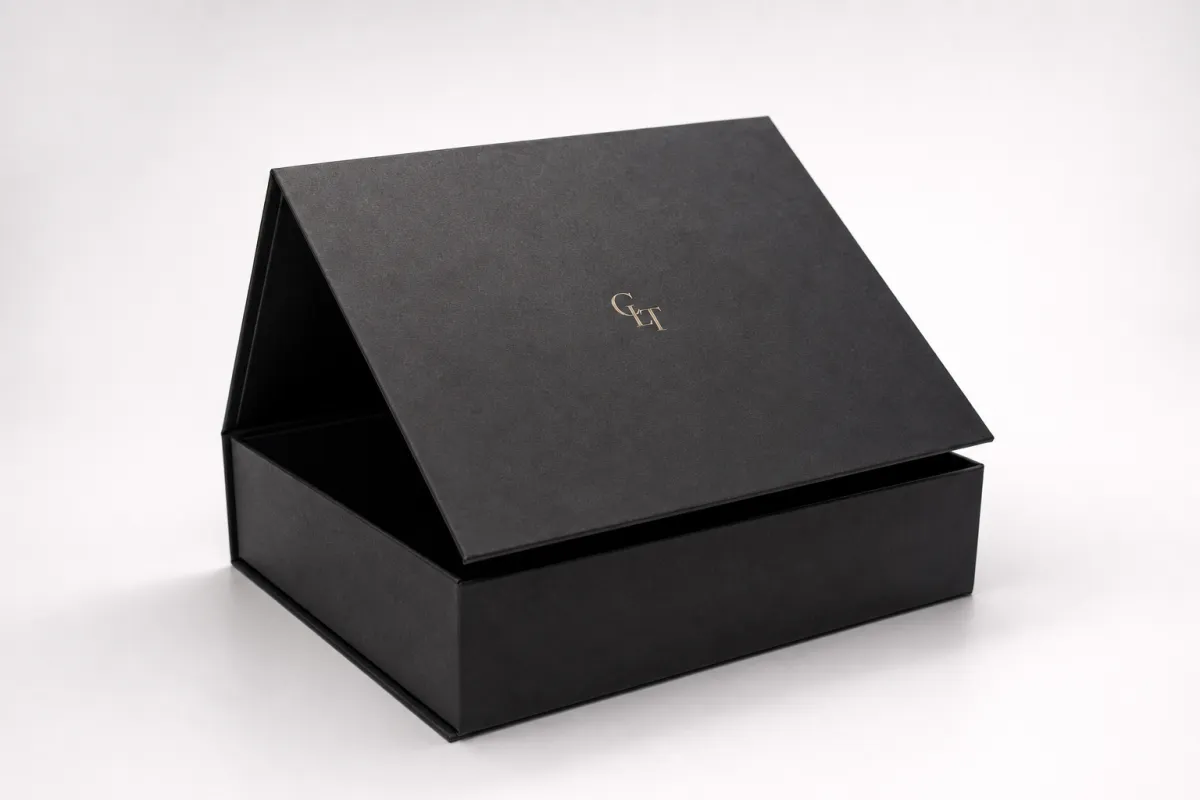
Custom magnetic closure packaging boxes are part of the product experience, not a separate accessory. Buyers often treat them as a protective shell, but in practice they are closer to a stage set. They make the product feel more considered the moment the lid opens. That matters for luxury retail, cosmetic kits, promotional launches, and presentation-heavy product packaging.
The first thing people miss is how much the closure contributes to perceived value. A rigid box with a magnetic snap does not need loud graphics to feel premium. The structure carries a lot of that work. The lid closes with a soft pull into place, the edges stay crisp, and the printed wrap looks clean because the board underneath holds its shape. That is why custom magnetic closure packaging boxes often get kept, reused, and photographed.
They also solve a common problem for gift-ready packaging: they feel finished. Folding cartons can be efficient and perfectly fine for many products, but they usually read as “shipping carton with branding.” Rigid magnetic boxes say something else. They say the brand planned the reveal. That is why you see them in luxury cosmetics, watch sets, accessory kits, corporate gifting, and high-end retail packaging.
A magnetic box earns its keep when the packaging feels as intentional as the product inside. If it looks expensive but opens awkwardly, the illusion breaks fast.
From a packaging buyer’s point of view, the real tradeoff is simple: custom magnetic closure packaging boxes cost more to make, but they can raise perceived value enough to justify the spend on the right product. That is especially true if the box is part of the unboxing moment, because customers remember what they touched, not just what they bought. I have seen teams obsess over spot color matches and then lose the room because the lid felt flimsy in hand; people notice that stuff immediately.
- Gifts and PR kits: the presentation matters almost as much as the sample or item inside.
- Cosmetics and skincare: the box needs to look refined on a vanity and in photos.
- Electronics and accessories: product fit and protection matter, but the opening still needs to feel premium.
- Luxury retail: the packaging has to support higher price expectations without looking fussy.
If you are comparing options across Custom Packaging Products, start by asking whether the box needs to sell the product before it is opened. That single question usually tells you whether custom magnetic closure packaging boxes are worth the spend or whether a simpler format would do the job better.
How Custom Magnetic Closure Packaging Boxes Work
At a structural level, custom magnetic closure packaging boxes are straightforward. A rigid chipboard shell forms the body, printed wrap paper covers the exterior and sometimes the interior, and hidden magnets are embedded in the lid and base so the box closes with a controlled snap. There are no exposed clasps, snaps, or metal hardware on the outside, which is part of the appeal.
Structure and materials
The board is usually grayboard or chipboard in the range of about 1.5 mm to 3 mm thick, depending on size and the amount of protection needed. Thicker board feels more substantial, but it also adds weight and cost. For smaller custom magnetic closure packaging boxes, 2 mm board is common. For larger presentation sets, a thicker structure may be needed to keep the box from flexing at the corners.
The wrap paper can be standard printed paper, coated art paper, soft-touch laminated stock, or specialty paper with texture. From a package branding standpoint, the wrap is where a lot of the visible value lives. A plain board with a clean wrap can look more expensive than a busy design with too many effects. That is not glamorous, but it is how good product packaging behaves.
Opening styles and closure feel
There are a few common constructions. Book-style lids open from one side like a hardcover book. Lift-off lids separate vertically and can still use hidden magnets for the final closure. Collapsible versions ship flat and assemble into shape, which can reduce freight volume on larger orders. Each format changes the user experience and the production cost of custom magnetic closure packaging boxes.
The closure feel should land in a very specific place: strong enough that the box stays shut in transit and during handling, but not so strong that customers have to fight it open. If the magnet pulls too hard, the box starts feeling overbuilt in the wrong way. If it is too weak, the lid flops and the whole premium effect disappears. That balance sounds small. It is not. Too strong and the opening becomes a chore, which is kinda the opposite of the experience you paid for.
Insert design matters just as much. Foam inserts work well for delicate items. Paperboard trays suit retail sets and cleaner sustainability goals. Molded or die-cut trays are useful for repeat placement and product visibility. Without a proper insert, the closure is doing too much work, and custom magnetic closure packaging boxes can rattle during shipping even if the exterior looks perfect.
Key Factors That Shape the Final Box
Once you understand how the box works, the real design questions are about what Drives the Final result. Custom magnetic closure packaging boxes are shaped by size first, then by material choices, finish choices, insert style, and closure strength. Skip the sequence and the quote gets messy fast.
Product dimensions are the starting point because the inner cavity determines everything else. A lipstick set, a candle kit, and a wireless headset all need different board dimensions, insert layouts, and clearance tolerances. If the product is oversized and the box is sized to the artwork instead of the item, you end up with awkward dead space or a cramped insert that crushes the product. That is avoidable, and frankly, it is one of the most common mistakes in packaging design.
Wrap and finish choices can change the whole tone. Soft-touch lamination gives a velvety feel but can show oils and scuffs more easily than a standard matte finish. Foil stamping creates sharp brand accents. Embossing and debossing add depth. Spot UV can highlight a logo or pattern, though it can also create visual noise if overused. The best custom magnetic closure packaging boxes usually rely on one strong finish decision, not five competing ones.
Insert type should match the product and the brand story. Foam is the pragmatic choice for fragile items or parts that need to stay locked in place. Paperboard inserts are easier to recycle and often better for retail packaging. Fabric-wrapped inserts or satin liners can feel upscale, but they add labor and cost. If the product is already visually strong, there is no reason to wrap the inside like a jewelry case unless the margin supports it.
Magnet strength is a design decision, not an afterthought. Too weak and the closure feels sloppy. Too strong and the unboxing experience becomes annoying. For larger custom magnetic closure packaging boxes, multiple smaller magnets may be better than one oversized one. The point is controlled closure, not a wrestling match.
- Shelf presence: does the box need to stand out in a retail display?
- Gift appeal: will the consumer hand it to someone as-is?
- Protection: does the box need to survive light shipping or repeated opening?
- Brand fit: is the visual style quiet, luxe, playful, or technical?
If you need a broader starting point for format comparisons, browse our custom packaging products and compare the structure against simpler carton options. Sometimes the right answer is a rigid magnetic box. Sometimes it is a cleaner, less expensive structure that leaves more budget for print and product.
Custom Magnetic Closure Packaging Boxes Cost, MOQ, and Quote Basics
The price of custom magnetic closure packaging boxes is driven by a few things that matter a lot more than most first-time buyers expect: board thickness, box size, print coverage, finish complexity, insert design, and how many magnets are used. The more handwork involved, the higher the labor cost. Rigid boxes are not expensive because someone decided to be difficult. They are expensive because assembly takes time.
Unit cost drops as quantity rises, but setup charges still have to be paid somewhere. That means a small run can look surprisingly pricey per box, while a larger order may suddenly make much more sense. A buyer ordering 500 boxes is paying for the same kind of assembly setup as a buyer ordering 5,000, only the second order spreads that cost out more efficiently. That is the whole game.
Minimum order quantities vary by supplier and construction. Custom magnetic closure packaging boxes usually need a higher MOQ than folding cartons because the labor, die cutting, wrapping, and magnet placement are more intensive. If you add specialty paper, a custom insert, or multiple foil colors, the MOQ can climb again. There is no magic workaround for that. Production math wins.
Quotes should always be compared spec for spec. A quote for a 9 x 6 x 2 inch box with 2 mm board, matte lamination, and a paperboard insert is not comparable to a quote for a similar-looking box with thinner board, no insert, and a different finish. People get tripped up here all the time because the outside dimensions look similar. They are not the same product.
| Option | Typical MOQ | Common Spec | Approx. Unit Price | Best For |
|---|---|---|---|---|
| Entry rigid magnetic box | 500-1,000 | 2 mm board, printed wrap, simple paperboard insert | $1.80-$3.20 | Small launches, gift sets, lightweight retail packaging |
| Mid-range presentation box | 1,000-3,000 | 2-3 mm board, soft-touch or matte finish, foil logo, custom insert | $2.60-$4.80 | Cosmetics, premium accessories, branded packaging programs |
| Premium luxury box | 3,000+ | Thicker board, specialty paper, multi-step finish, upgraded insert | $4.50-$8.50+ | High-value gifts, jewelry, VIP kits, premium product packaging |
Those ranges are broad on purpose. Size, freight, and finish details can move them in either direction. The important part is that custom magnetic closure packaging boxes are usually worth buying for the customer-facing surfaces: the outer wrap, the logo treatment, and the opening moment. That is where the money should go. Hidden extras nobody sees are just padded ego.
Watch for hidden charges. Sample fees, plate fees, die-cut setup, magnet sourcing, rush production, imported specialty papers, and freight can all shift the budget. For many brands, the cleanest approach is to decide up front where to spend. I would rather see a good board, a clean wrap, and one strong finish than a box overloaded with effects and underbuilt where it matters.
For sustainability-minded brands, ask whether the wrap paper can be FSC-certified and whether the insert can be paper-based instead of foam. If sustainability claims matter on the label, they should be backed by a real standard, not wishful thinking. The Forest Stewardship Council explains certification clearly at fsc.org.
Process and Timeline for Custom Magnetic Closure Packaging Boxes
Ordering custom magnetic closure packaging boxes is a process, not a one-email purchase. The timeline usually starts with a spec sheet, then moves to dieline review, artwork setup, sampling, revisions, bulk production, inspection, and freight. Skip any of those steps and the schedule turns into guesswork.
The first step is a clean brief. A supplier needs product dimensions, target quantity, finish preferences, insert requirements, and the date the boxes need to land. If the product is not finalized, say so. If the artwork is not final, say that too. Ambiguity does not save time; it simply hides delays until production is already underway.
- Quote and spec confirmation: confirm size, board thickness, finish, insert, and magnet placement.
- Dieline and artwork review: align the print layout to the actual box structure.
- Sampling or prototype: test fit, closure strength, and the feel of the opening.
- Revisions and approval: make the changes before bulk production starts.
- Mass production: print, cut, wrap, assemble, and inspect.
- Packing and shipment: protect the boxes so they do not arrive scuffed or crushed.
Lead time depends on complexity and capacity. A simple run of custom magnetic closure packaging boxes with standard matte lamination and a paperboard insert may move in about 12-18 business days after final proof approval. Add specialty paper, foil, embossing, or a complex insert and that can stretch to 18-25 business days or more. Freight is separate, and it can be the part that reminds everyone the calendar does not care about your launch date.
Most delays happen in the same few places. Artwork gets changed after approval. The insert dimensions were estimated instead of measured. The magnet strength looked fine on screen but felt wrong in hand. The finish looked good in a mockup, then fingerprints became a problem on the sample. These are not surprises to anyone who has handled enough custom magnetic closure packaging boxes. They are the standard headaches.
There is also the shipping question. A magnetic box is sturdy, but it is still a presentation box. It should not be treated like a corrugated shipping carton. If the order is traveling far, use outer protection. If the box will be tested for transit, ask whether the design should align with ISTA test methods or ASTM D4169-style distribution testing. The point is simple: if it needs to survive rough handling, test it like it will be handled roughly. The International Safe Transit Association explains transit testing standards at ista.org.
For brands building launch schedules, the safer plan is to approve the sample first, then lock artwork, then add a little buffer for freight. That sounds obvious. It is also the step most people skip because they are convinced the production week is gonna be unusually kind to them. It rarely is.
Common Mistakes With Custom Magnetic Closure Packaging Boxes
One common mistake with custom magnetic closure packaging boxes is designing around the artwork instead of the product. The box ends up looking proportionate in a mockup but awkward in real life. There is too much empty space, or the insert is too tight, or the product looks lost inside the cavity. Pretty renderings do not fix bad sizing.
Another mistake is underestimating the magnet. A weak closure feels cheap immediately. A customer opens the lid, the magnet barely catches, and the premium moment is gone. On the other hand, overpowered magnets can make the box annoying to open, especially for repeat use. That is a bad trade for packaging meant to feel elegant.
Finish choices can also backfire. Glossy surfaces, heavy foil, and dark colors can look excellent in a proof and then show fingerprints, scratches, or scuffing the moment the box is handled by real humans. Funny how that happens. If the box will be touched often, soft-touch and matte finishes are usually safer. If the box is for display only, more dramatic treatments may be fine.
Too many decorative features is another trap. A box can have embossing, foil, spot UV, specialty paper, and a custom insert, but that does not mean it should. More effects do not automatically create better package branding. They often create clutter. Good custom magnetic closure packaging boxes are usually disciplined. One or two strong decisions beat five competing ones.
Shipping damage is a bigger issue than most buyers think. Even a premium rigid box can arrive dented if it is packed loosely. And once the corner is crushed, the box looks cheap no matter how beautiful the print is. That is why outer corrugated protection matters so much. The presentation box can be beautiful; the shipping carton should be boring and effective.
- Do not skip the physical sample if the product margin is high.
- Do not assume the same insert works across multiple SKUs.
- Do not approve a finish based only on screen images.
- Do not trust a fragile box to survive freight alone.
If you are buying custom magnetic closure packaging boxes for a launch or seasonal set, the sample stage is where you catch expensive problems early. It is the least glamorous part of the process and the most useful. That pattern holds up far too often to ignore.
Expert Tips and Next Steps for Ordering Custom Magnetic Closure Packaging Boxes
The easiest way to order custom magnetic closure packaging boxes without wasting time is to start with a proper spec sheet. Include product dimensions, target quantity, insert needs, print coverage, finish preferences, and delivery timeline. If you already know the style direction, add reference images or a brand guideline. That gives the supplier something concrete instead of a vague “make it premium” request, which is not a specification.
Ask for a sample or prototype before bulk production. Test the fit, the closure feel, the board rigidity, and the print quality. Open and close the box a few times. Put the product inside and shake it gently. If it moves, the insert is wrong. If the lid swings open too easily, the magnet choice needs work. If the finish fingerprints immediately, better to learn that now than after 3,000 units are printed.
Comparing quotes only works if the structures are the same. A lower quote is not a bargain if it leaves out the insert, uses thinner board, or switches to a cheaper wrap paper. That is how buyers end up “saving” money and then paying for rework, replacement cartons, or customer complaints. For custom magnetic closure packaging boxes, the cheapest quote is often just the one that described less.
The best packaging design decisions are usually disciplined, not flashy. Pick one hero finish. Maybe that is foil on the logo. Maybe it is a textured paper. Maybe it is a clean matte wrap with a sharp interior print. Then stop. A box with one strong idea often looks more expensive than a box with six half-good ideas fighting for attention.
Plan the unboxing sequence from the customer’s side. The closure should feel smooth. The product should sit centered. The insert should lift cleanly or reveal the item without friction. That is the difference between packaging that feels deliberate and packaging that feels assembled by committee. For premium custom magnetic closure packaging boxes, the user should not have to work to enjoy the reveal.
If the order is tied to a launch date, build in buffer time for revision and freight. Freight delays happen. Artwork corrections happen. Samples reveal issues. None of that is unusual. The safer move is to lock the spec early, approve the prototype, and then let production run without chaos. The brands that do this consistently tend to get better results from their custom magnetic closure packaging boxes and fewer midnight problems from their logistics team.
For buyers comparing presentation boxes, rigid boxes, and other custom printed boxes, it helps to treat packaging as part of the product economics, not a decorative afterthought. That is where a lot of brands finally stop overspending in the wrong places. The box should support the sale, the margin, and the experience. Nothing more, nothing less.
Start with the item, not the artwork. Measure the product, decide the opening moment you want customers to feel, and then choose board, wrap, insert, and magnet strength to match that moment. That is the practical path to custom magnetic closure packaging boxes that do their job without wasting material, budget, or patience.
For brands that get the details right, custom magnetic closure packaging boxes do something useful: they turn packaging into part of the product value instead of dead weight. That is the point. If the box is meant to be kept, photographed, and remembered, the structure, finish, and insert all need to earn their place. Otherwise it is just a fancy container with a magnet in it.
How much do custom magnetic closure packaging boxes usually cost per unit?
Pricing depends on size, board thickness, print coverage, finish complexity, and insert type. Small runs cost more per box because setup and labor are spread across fewer units. As quantity rises, the unit price usually drops, but premium finishes and custom inserts still push it up. The cleanest way to compare quotes is to match the exact specs, not just the outer dimensions.
What is a typical MOQ for custom magnetic closure packaging boxes?
MOQ varies by supplier and construction, but rigid magnetic boxes usually need a higher minimum than folding cartons. Many factories set lower minimums for simple sizes and higher minimums for custom inserts or specialty finishes. If you need a very small run, expect a higher per-unit cost and fewer material options. Ask whether the MOQ applies to one design, one size, or one print version, because that detail changes everything.
Are custom magnetic closure packaging boxes strong enough for shipping?
They are sturdy, but they are still presentation boxes, not a shipping carton. Use outer corrugated packaging if the box will travel far or pass through rough handling. Add an insert or tray so the product does not shift and stress the closure during transit. If protection is the main goal, design the system as a package set instead of relying on the magnetic box alone.
How long does it take to make custom magnetic closure packaging boxes?
Lead time usually includes quoting, artwork review, sampling, production, finishing, and shipping. Simple projects move faster; complex finishes, custom inserts, or revisions slow things down. An approved sample can save a lot of pain later, but it adds time up front. Build schedule buffer into the project so the launch date does not depend on a perfect factory week.
What files do I need to order custom magnetic closure packaging boxes?
Send product dimensions, logo files, artwork, and any brand color references you have. A dieline is ideal, because it shows exactly where folds, panels, and magnets go. Ask for the supplier's template before designing, since rigid boxes are unforgiving when the layout is off. If you do not have final artwork, at least provide content hierarchy and finish priorities so the quote is accurate.

