Buyer Fit Snapshot
| Best fit | custom mailer boxes design for packaging buyers comparing material specs, print proof, MOQ, unit cost, freight, and repeat-order risk where brand print, material, artwork control, and repeat-order consistency matter. |
|---|---|
| Quote inputs | Share finished size, material target, print colors, finish, packing count, annual reorder estimate, and delivery region. |
| Proofing check | Approve dieline scale, logo placement, barcode or warning zones, color tolerance, and any recyclable or compostable wording before bulk production. |
| Main risk | Vague material claims, crowded artwork, or missing packing details can create delays even when the unit price looks attractive. |
Fast answer: Custom Mailer Boxes Design: Film, Closure, Print, and Fulfillment should be specified like a repeatable production item. The safest quote includes material, print method, finish, artwork proof, carton packing, and reorder notes in one written spec.
What to confirm before approving the packaging proof
Check the product dimensions against the actual filled item, not only the sales mockup. Ask for tolerance on folds, seals, hang holes, label areas, and retail display edges. If the package carries a logo, QR code, warning copy, or legal claim, reserve that space before decorative graphics fill the panel.
How to compare quotes without losing quality
Compare board or film grade, print process, finish, sampling route, tooling charges, carton quantity, and freight assumptions side by side. A lower quote is only useful if the supplier can repeat the same color, closure quality, and packing count on the next order.
Custom Mailer Boxes Design Tips That Actually Work Better
Most shoppers size up a delivery box in about 3 seconds. Not after the label comes off. Not after the insert is pulled free. That first glance decides whether a package feels deliberate or disposable, which is exactly why Custom Mailer Boxes design tips matter before artwork ever reaches a dieline.
Brands that sell online, fulfill subscription kits, or ship retail launches live and die by small packaging decisions. The right Custom Mailer Boxes design tips can improve the unboxing experience, trim waste, and keep budget creep from turning a neat project into a headache with a tracking number. They also separate a box that looks designed from one that just looks shipped.
What Are the Best Custom Mailer Boxes Design Tips?
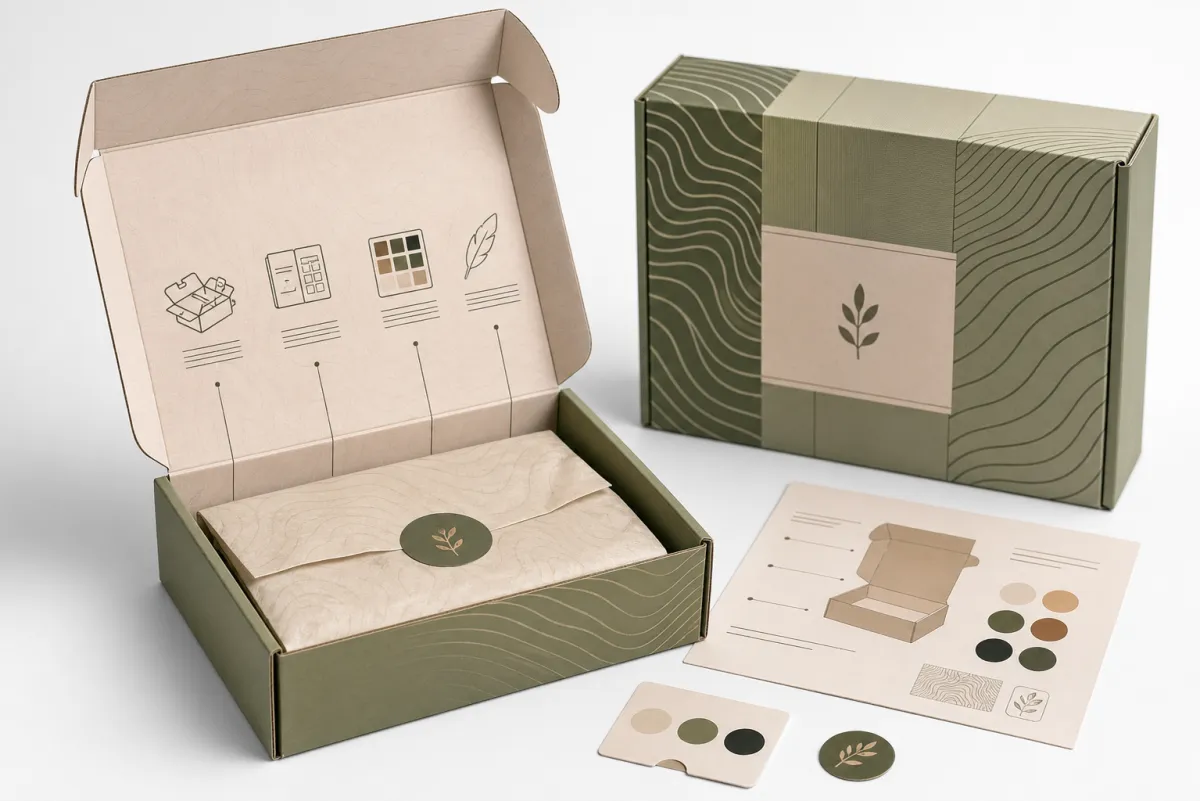
A custom mailer does two jobs at once: it protects a product and it carries a brand story. That tension is the whole point. custom mailer boxes design tips are not a style checklist. They are a way to force real priorities into one object that has to survive transit, hold its shape, and still look like somebody cared. I keep seeing brands spend hours on gradients while the fold tolerances are ignored. The corners split. The story ends there.
Useful custom mailer boxes design tips start with three questions. How well does the box protect the item? Does it close properly in a warehouse? Does it create a clear brand moment when the flap lifts? When those three answers line up, the design feels stronger than any decorative layer could make it on its own. That is the practical core of good mailer box design.
Three-second reality check
A customer is not studying your mailer under studio lighting. They are walking, carrying a bag, scanning a courier label, and moving on. That means hierarchy matters. One logo, one strong color field, one readable message often beat a crowded front panel full of illustrations. Smart custom mailer boxes design tips focus on those first seconds instead of pretending full coverage equals better branding.
The goal is not to decorate the box for its own sake. The goal is to make shipping feel intentional. Dense graphics often trigger confusion before admiration. People read clarity as confidence, and packaging is no exception. In that sense, the best custom mailer boxes design tips are closer to editorial design than decoration.
Packaging and marketing are the same system
Every custom printed packaging project sits at the intersection of engineering and advertising. A beautiful box that falls apart in transit still fails. A sturdy box with no visual identity fails in a quieter way. custom mailer boxes design tips keep both sides of the equation in view so the structure and the brand message work together instead of fighting for attention.
Picture a bottle with three labels shouting different priorities. One says premium, one says fragile, one says handle carefully, while the shape feels awkward in the hand. Trust breaks down fast. A box should remove that friction. Precise spacing, controlled trim lines, and disciplined placement can make a plain design feel more premium than a crowded one ever will.
Strong first impression without noise
Consumers remember repeated patterns, not visual clutter. A single dominant shape, a clean logo, and a restrained palette often outperform a front panel packed with claims. In product packaging reviews, the boxes that read calm and expensive tend to travel better across campaigns because they look consistent from one reorder to the next.
One practical move helps more than people expect: move some of the story inside the box. A short message on the interior flap or a card insert gives the customer a second reveal. The outside stays legible. The inside gets a voice. That small shift is one of the simplest custom mailer boxes design tips for turning routine shipping into a branded moment.
How Custom Mailer Boxes Design Tips Work in Production
Once artwork exists, production decisions start deciding the outcome. At that point, custom mailer boxes design tips stop being theory and become a file that can actually run. Structure, print method, coating, and tolerance all interact. Ignore one and the budget starts leaking in places nobody planned for.
Dieline discipline: folds, flaps, and glue tabs first
A dieline is a production map. It shows where the board folds, where glue lands, and where a design can shift without ruining the final piece. A flat mockup can look polished and still fail once the crease eats into the artwork. That is why the dieline needs to come before the render, not after it.
Practical custom mailer boxes design tips keep artwork inside safe zones, leave fold lines clean, and maintain bleed of at least 3 mm, often 3-5 mm depending on the printer. Boring? Yes. Expensive? Only if you ignore it. Those millimeters save reprints, rush charges, and a lot of awkward calls.
Structure drives print layout, including tuck style and depth
Tuck-in, auto-lock, and gable top formats all change where a logo can sit without being interrupted by seams or folds. Put important copy across a fold and it will split, stretch, or disappear in the exact place you wanted people to look. Depth changes panel size too, which affects safe print space in ways that mockups often hide.
I have watched teams approve a structure because it looked nice in a presentation, only to discover the artwork no longer fit the actual panel dimensions. That is why custom mailer boxes design tips should begin with the box shape and move outward from there. If the box depth is 120 mm and the product is 80 mm tall, the remaining 40 mm must handle cushioning, inserts, and real-world movement. A fourth accent color does not fix that math.
Proofing and sampling are non-negotiable
Digital prepress checks catch fonts, image placement, and alignment issues. They do not catch everything. Physical sampling catches glue creep, panel misalignment, edge behavior, how the finish sits near a fold, and whether the box actually closes the way the file promised. For serious custom mailer boxes design tips, a sample should be part of the process before full production unless the run is a repeat order with a proven history.
Proof approval usually takes 2–4 business days for a simple file, though it can stretch to a week if the review chain slows down. That seems minor until a freight booking waits on the box and the launch date does not move for anyone.
Print method and coatings affect what the customer sees
Digital printing is often the better fit for shorter runs, variable data, and faster changes. Offset tends to become more economical as volume increases because plate and setup costs get spread across more units. The tradeoff is simple: flexibility versus efficiency.
Below 500–1,000 units, digital usually makes sense if speed matters. Beyond 2,000–5,000 pieces with stable artwork, offset starts looking better. Add varnish, lamination, or spot treatment only where the finish serves the design. That is the heart of custom mailer boxes design tips: choose durability, controlled gloss, and clear intent before chasing effects for their own sake.
“If the box closes cleanly, reads clearly at the seam, and holds up in hand, the design has a better chance of surviving real life than it does on a screen.”
This is also why prepress and sampling keep coming back up. Skipping them does not save money. It usually moves the cost into waste, replacements, and emergency reruns. In packaging, the expensive mistake often starts as a tiny shortcut.
The Key Factors: Size, Material, Print, and Finish
If one rule holds across every project, it is this: custom mailer boxes design tips begin with dimensions, not graphics. A box that fits well is easier to ship, easier to store, and easier to trust. I would rather adjust one panel than rebuild an entire run because the carton was too loose, too tight, or too deep for the product and insert system.
Size: fit your product like a good glove
Measure the product first. Length, width, height, and the space needed for protection all matter. If your item measures 200 x 120 x 60 mm and you need 10 mm of clearance on each side, the inner target should land around 220 x 140 x 80 mm, not a guess wrapped in optimism. A box that is too big fills with air-fill and shipping voids. A box that is too small crushes the contents and sends damaged returns back through the system.
Oversized packaging does not merely look sloppy. It signals waste. The product floats, the insert shifts, and the whole shipment feels less controlled. Right-sizing is one of the most underrated wins in retail packaging, and it is one of the clearest custom mailer boxes design tips for any brand trying to balance cost and presentation.
Material choices by load and handling risk
Light items under 500 g, such as small accessories, compact apparel, or gift items, often perform well on 250–300 gsm SBS artboard with medium white coating. Heavier or fragile products often need 350–450 gsm board, with reinforcement around fold points. Glass, metal, and bulky items usually need die-cut inserts or a stronger wall structure near the stress zones.
Subscription kits and custom printed packaging that opens and closes often need a board grade matched to repeat handling, not just a one-time ship. If the carton gets reopened every month, weak board shows up quickly in complaints. custom mailer boxes design tips only hold up when they account for the full journey, not just the first send-out. For heavier parcels, corrugated mailers can be the smarter baseline.
Print decisions: coverage, inside print, visual weight
Color count affects both cost and consistency. One- and two-color builds stay stable and clean on restrained budgets. Four-color builds with spot colors can look richer, but they also raise the risk of registration issues and higher ink cost. Once the palette grows past three major colors and text gets small, proofing needs to tighten.
Inside print is often ignored, which is strange because the interior has more emotional room than the exterior. A single message, a color block, or a branded flap can raise perceived value without much extra spend. If the budget is tight, spend the money on the hero panel and keep the inner art simple. That is one of the most practical applications of custom mailer boxes design tips.
Finish strategy: matte, gloss, soft-touch, or spot UV
Matte finishes reduce glare and feel controlled in photography. Thin logos usually look best on matte because the surface does not fight the linework. Gloss adds punch, yet it can reduce legibility under harsh lighting. Soft-touch feels high-end in hand, though it can increase price and slow production. Spot UV works well for emphasis, but too much of it creates consistency problems near folds.
Choose one primary finish and one accent. That combination is usually enough. For most branded packaging projects, matte with spot UV on a logo or symbol gives the right balance. Full-surface UV, foil, and gloss laminate at once often looks like a budget problem dressed up as luxury. That is not a premium signal; it is visual noise.
Inserts, dividers, and protective elements are part of design
Inserts are not a second thought. If the product can break, shift, or chip, cushioning alone is rarely the answer. E-flute partitions, molded pulp trays, and recycled paper dividers can cut movement sharply and lower damage claims. For fragrance, electronics, jewelry, or glass bottles, insert planning belongs in the same file set as the box art.
Foam alternatives can make sense for heavier shipments, but they should always be tested against real courier vibration. Sorting lanes are rougher than most people imagine. Even the best-looking custom mailer boxes design tips fall apart if the product arrives cracked.
Standard and sustainability references
Shipping confidence improves when packaging follows recognized standards where relevant. ISTA profiles are commonly used for distribution stress testing. For fiber content, many buyers reference FSC certification as part of their spec. These only help if the supplier can document them cleanly.
ASTM guidance can also help frame discussions around materials and performance, especially when a buyer needs a clear technical brief rather than a vague sustainability claim. In practice, standards are one more way to turn custom mailer boxes design tips into measurable decisions instead of assumptions.
Custom Mailer Boxes Design Tips for Cost and Pricing
Pricing is where emotion tends to take over. custom mailer boxes design tips are not only creative decisions; they are a cost control system. The real numbers live in size, board, print coverage, finish, quantity, and the freight footprint tied to the final carton.
What actually drives unit cost
Most unit cost swings are predictable. Board and structure carry the biggest fixed weight. Print complexity can push the price up fast, especially when metallics, varnishes, or deep coverage are involved. Small order quantities usually hurt more because setup and waste get divided across fewer boxes.
When you quote a job, ranges are more useful than false precision. A 1,000-piece run might land around $0.90–$1.60 per unit for a simple one- or two-color structure, then move toward $2.00+ with richer finishes. At 5,000 pieces, that may fall to $0.35–$0.85 per unit if the spec stays controlled. At 10,000, you may see $0.22–$0.60 per unit depending on board and complexity. Those numbers are directional, but they are more useful than vague adjectives like “affordable” or “premium.”
Volume math: why small jobs look expensive
Setup cost explains a lot. If setup runs $150–$400 plus plates and calibration, that fee hurts at 200 units and barely Moves the Needle at 5,000. Unit price falls as the volume rises because the fixed work gets spread farther.
That does not mean every brand should order more. Sometimes pilot testing, cash flow, or a seasonal release requires a smaller first batch. In that case, simplify the structure and trim the finishes so the run teaches the market without punishing margin.
Budget traps to avoid
Full bleed artwork looks polished in a presentation and costly in production if it is not planned well. Multiple coatings, too many stock colors, oversized cartons, and decorative treatment on every side all add spend without helping the message. custom mailer boxes design tips work best when money goes where the eye lands and gets cut everywhere else.
Oversized boxes are a classic trap. It feels generous to leave extra room, yet every extra millimeter eats board, filler, freight, and storage space. Increase width by 8 mm and height by 10 mm across 5,000 units, and the hidden tax gets real fast.
Price comparison by option
| Specification path | Qty | Estimated per-unit cost range (USD) | What you gain | Typical downside |
|---|---|---|---|---|
| Simple structure, 1–2 color, matte | 1,000 | $0.90 – $1.30 | Fast approval, low risk | Limited brand pop |
| 4-color full panel, soft-touch | 2,500 | $1.20 – $1.90 | Premium feel, stronger on-shelf identity | Tighter proof windows, higher setup |
| 4-color + spot UV accents + reinforced insert | 5,000 | $1.50 – $2.60 | High-end unboxing, better protection | Longer production, careful QC |
| Basic structure, customized insert, digital print | 300 | $2.20 – $3.50 | Good for pilots and quick test launches | Higher unit cost, higher iteration cost |
Hidden costs you actually care about
Never stop at the supplier quote. Shipping, storage, and damage rates all change the real cost. A box that looks cheaper but damages 2% of shipments can cost more than a stronger option with 0.4% damage. At scale, freight efficiency can erase small per-unit savings very quickly.
Think in landed cost: unit price, return ratio, storage density, and fulfillment speed. Once that math is on the table, custom mailer boxes design tips become financial decisions, not decorative ones.
Where to cut and where not to cut
Spend on tactile points people actually touch first: the hero panel, the closure, the inside reveal, and the short message they read after opening. Trim the hidden areas and the blocked panels if the budget tightens. That keeps visual consistency across product lines and reorder cycles without draining the project.
Need a place to compare formats? Pair this with your SKU planning, then review the broader Custom Packaging Products range for options that keep the same style language. The best custom mailer boxes design tips usually start with reuse, not reinvention.
Process and Timeline: From Dieline to Delivery
Timeline stress usually starts with bad sequencing. Proofs arrive late, approvals drag, and suddenly a launch date becomes a firefight. A cleaner process gives breathing room and makes custom mailer boxes design tips usable beyond a single run.
Recommended workflow
- Discovery: define product dimensions, fragility, channel, and branding priorities.
- Rough sizing: lock structure and inner dimensions before layout begins.
- Dieline review: confirm fold map, scoring, glue zones, and clearances.
- Artwork prep: vector clean-up, color setup, bleed, safe zones, barcode and shipping field reservation.
- Proof approval: internal and brand review with clear sign-off path.
- Sampling: physical sample validation for fold, feel, and closure behavior.
- Production: run under monitored schedule.
- Freight and receiving: full inspection and sample archive.
Realistic timeline windows
Clean assets can move through proofing in 2–4 business days. Samples usually add 5–10 business days depending on complexity and quantity. Full production often takes 7–18 business days for moderate runs, and special finishes or large sizes can push that longer. Campaign packaging should be scheduled before creative work gets too far along.
Subscription drops need a backward schedule from the fulfillment date. Too many teams file art at the end of the timeline and then blame production for a delay that started with poor planning. Better custom mailer boxes design tips always account for the calendar, not just the carton.
Where delays happen and why
Most delays come from file problems: missing bleed, unoutlined fonts, too many transparent layers, and logos that are rasterized at low resolution. Once the file stops separating cleanly for print, the operator spends time compensating, and that burns the approval window.
Slow decisions cause just as much damage. If two managers need to sign off, timelines stretch. Faster approvals often cut 30–40% off the calendar. That is why strong custom mailer boxes design tips always include a clear sign-off path.
Plan around launches and campaigns
Waiting until marketing announces a date is a bad habit. Mailers should be locked before campaign assets are finalized, not after. With a standard timeline, a launch in week six usually needs design lock by week two. If fulfillment starts in week four, samples and approvals need to land even earlier.
Build a simple schedule with named owners. If wholesale channels are part of the mix, reserve time for relabeling and channel-specific instructions. A corrected template library makes the next run faster and cleaner than the last, which is one of the most practical custom mailer boxes design tips for growing brands.
Common Mistakes That Ruin Custom Mailer Box Design
The ugly truth is that a few predictable mistakes ruin otherwise solid packaging. Good custom mailer boxes design tips matter most when they prevent those same mistakes from showing up again and again.
Wrong inner dimensions and clearance assumptions
This is the most expensive beginner error. A 5 mm gap can be the difference between a safe shipment and a wave of complaints. If an item cannot move even 1–2 mm, there may still be room for cushioning, but not much else. Fragile products need movement control more than visual polish.
Measure the product with packaging attached, not just the naked item. A bottle with a cap, labels, and protective film can be taller than expected. If that detail gets missed, the item shifts and the protection plan falls apart.
Too much text and low contrast
Seven claims on one panel means nobody reads the claims. Legal blocks, product claims, and tiny text all fight each other. Low contrast is just as bad, especially under courier lighting or at a dark loading dock. If the box cannot be read in that environment, it is not functioning as packaging.
Keep the exterior voice short. One promise, one brand cue, maybe one action line. Put the rest on a card insert or in a follow-up email. That is custom mailer boxes design tips translated into a real shipping lane.
Designing only for screens
Flat mockups are useful and deceptive at the same time. Seams, folds, and angles disappear unless someone checks the actual layout. Brands that trust renders alone often get warped text and panel collisions. A scale mock or folding dry test catches that before production makes the mistake permanent.
If the mock looks clean but the fold line sits too close to a headline, fix it before the press runs. Otherwise, the box will arrive with a design problem that everyone can see and nobody wants to own.
Overusing finish and effects
Spot UV, foil, embossing, and gloss varnish all have a place. The issue appears when every effect gets used at once. Diminishing returns arrive fast. Costs climb, production slows, and the side panels become cluttered.
Put finish money into tactile or functional zones. Gloss can help a logo stand out. Soft-touch can make the panel feel richer. A brief with no budget discipline turns custom mailer boxes design tips into a pile of features with no clear reason.
Skipping structural testing before high-volume use
Structural testing is only optional when the shipping profile is tiny and low-risk. Fragile items, subscription kits, and repeated logistics need actual testing. Weight, vibration, and worst-case orientation matter. Top-impact and corner crush are the usual enemies.
Good inserts reduce returns, but only when the clearances match the item. Testing saves reorder cost, courier claims, and support tickets. If the route is rough, ask for a sample test and inspect it after a real drop cycle before scaling up.
Ignoring barcode and regulation space
Every shipment carries logistics metadata. Leave no clean area for barcode labels, handling instructions, or destination fields, and fulfillment slows immediately. Hand-applied stickers wreck alignment and create noise in the process.
Regional mailing rules vary too. Orientation marks, hazard notes, and compliance marks all need room. custom mailer boxes design tips should leave space for logistics clarity even when the creative brief feels crowded, because branding does nothing if the package gets rejected or rerouted.
Expert Custom Mailer Boxes Design Tips and Next Steps
Once the basics are locked, the work becomes a series of better decisions rather than a search for perfection. Real-world success with custom mailer boxes design tips comes from making the product geometry, the shipping lane, and the budget speak to each other instead of pretending they are separate problems.
Start with three non-negotiables before any creative pass
Measure the product stack with tolerance included. Define the unboxing moment: the first panel read, the first hand-feel, the first interior reveal. Then request the final dieline and work backward from there. If artwork gets created before the dieline exists, a second pass is already built into the schedule.
From a packaging buyer’s angle, this is the fastest way to reduce chaos in a fully custom run. It also keeps custom mailer boxes design tips rooted in reality instead of presentation polish.
Choose one hero side and protect it
Not every side should do the same job. That usually creates noise. Pick one hero panel for the first impression, one secondary panel for functional information, and one clean area for balance. For a retail packaging campaign that gets repeated, that structure usually performs better than trying to make every surface dramatic.
Set a repeat template for future drops: same bleed zones, same interior message format, same flap logic. Reorders move faster, the production team works from a known baseline, and quality drift drops.
Order samples and run real shipping tests
Nothing settles a debate faster than a controlled test. Get at least one physical sample, handle it the way your warehouse actually handles it, and test it on the route you use most often. If damage shows up, adjust the insert before the run scales. It may feel slower. It is usually cheaper.
If the campaign also needs alternatives for lightweight or oversized parcels, compare it against Custom Poly Mailers and evaluate the touchpoints separately. Different structures should not be forced into one packaging behavior.
Build a repeatable spec sheet for consistent reorder quality
A reorder should start from recorded decisions, not from memory. Track the final size, inner dimensions, board weight, print colors, finish, insert geometry, carton count, barcode placement, approval contact, and reorder trigger point, such as 20% below MOQ. That is what keeps quality from drifting in small ways that become expensive later.
With that sheet in place, each future run begins from the same baseline. Fewer arguments. Better consistency. More time spent selling instead of re-litigating packaging details. In other words, your custom mailer boxes design tips become a system instead of a one-off project.
Closing move
If you apply custom mailer boxes design tips with discipline, the result is a box that protects, communicates, and scales. It is not theory. It is a practical system built around geometry, shipping reality, and budget truth. The best packaging is usually the one that knows what it is for and does not pretend to be anything else.
The brands that win are rarely the loudest. They are the clearest. Their boxes open well, protect well, and say exactly what the brand stands for without making the customer work for it. That is what strong custom mailer boxes design tips should deliver every time.
Lock the dimensions, test the sample, and keep the exterior simple enough to read in three seconds. Everything else is decoration.
FAQ
What are the best custom mailer boxes design tips for small brands?
Start with a simple layout and high contrast so the box reads clearly at arm’s length. One hero side is often enough for a first impression, while extra detail can move to an insert card. Choosing a common size and a standard structure at the beginning keeps custom mailer boxes design tips practical and avoids unnecessary tooling changes.
How do custom mailer boxes design tips help reduce shipping damage?
Correct inner sizing reduces movement, and movement is usually the reason corners dent or products crush. Better board grade and insert planning protect against side impact and corner fatigue without stuffing the carton with unnecessary void fill. Designing for transport conditions, not just shelf appearance, is what cuts returns and chargebacks.
How much do custom mailer boxes usually cost to design and produce?
There is no single honest number. Price depends on size, board strength, quantity, print coverage, finish, and complexity. Small runs naturally cost more per unit because setup gets spread across fewer boxes. If budget is tight, a restrained structure with a clean print layout is usually the best place to begin.
What file format should I use for custom mailer box artwork?
Use print-ready vector files whenever possible, ideally PDF/X-1a or layered AI files. Keep images high resolution, outline fonts, and place the artwork directly on the supplier dieline with clear bleed and safe zones. That is one of the most reliable process rules for keeping custom mailer boxes design tips moving without rework.
How long does the custom mailer boxes design process take?
Proof cycles can move quickly when the file is production-ready, often within a few days. Sampling and full production usually take longer than most teams expect, especially on larger quantities or special finishes. Fast approvals are the easiest timeline control you have.