Buyer Fit Snapshot
| Best fit | Price of Custom Packaging Prototypes projects where brand print, material claims, artwork control, MOQ, and repeat-order consistency need to be specified before quoting. |
|---|---|
| Quote inputs | Share finished size, material target, print colors, finish, packing count, annual reorder estimate, ship-to region, and any compliance wording. |
| Proofing check | Approve dieline scale, logo placement, barcode or warning zones, color tolerance, closure strength, and carton packing before bulk production. |
| Main risk | Vague material claims, crowded artwork, missing packing details, or unclear freight terms can make a low unit price expensive after revisions. |
Fast answer: Price of Custom Packaging Prototypes: What Drives Cost should be specified like a repeatable production item. The safest quote records material, print method, finish, artwork proof, packing count, and reorder notes in one written spec.
Production checks before approval
Compare the actual filled-product size with the drawing, then confirm tolerance on folds, seals, hang holes, label areas, and retail display edges. Reserve space for logos, QR codes, warning copy, and material claims before decorative graphics fill the panel.
Quote comparison points
Review material grade, print process, finish, sampling route, tooling charges, carton quantity, and freight assumptions side by side. A quote is only useful when the supplier can repeat the same color, closure quality, and packing count on the next order.
A single sample can prevent a very expensive mistake. That sounds modest until you see the numbers stack up. The Price of Custom packaging prototypes often lands in the low hundreds, but one early build can stop a launch from going sideways because of a weak tuck, a panel that buckles, or a finish that looks great on screen and flat in hand. I have seen teams hesitate over a prototype fee, then spend far more fixing a production run that should never have gone live. From a buyer's perspective, the price of custom packaging prototypes is not a decorative line item. It is a guardrail for fit, timing, and margin.
Ordering Custom Packaging Products gets a lot less risky once the first sample confirms the plan. The same logic applies to custom packaging development: a physical proof tells you things a PDF cannot. A dieline can look perfect on a monitor and still fail once glue, pressure, and real handling enter the picture. That is why the Price of custom packaging prototypes buys certainty before the larger spend begins, and why teams that plan their prototype budget early usually avoid the expensive surprises that show up later, right when everyone is already busy.
Price of Custom Packaging Prototypes: Why the First Sample Matters
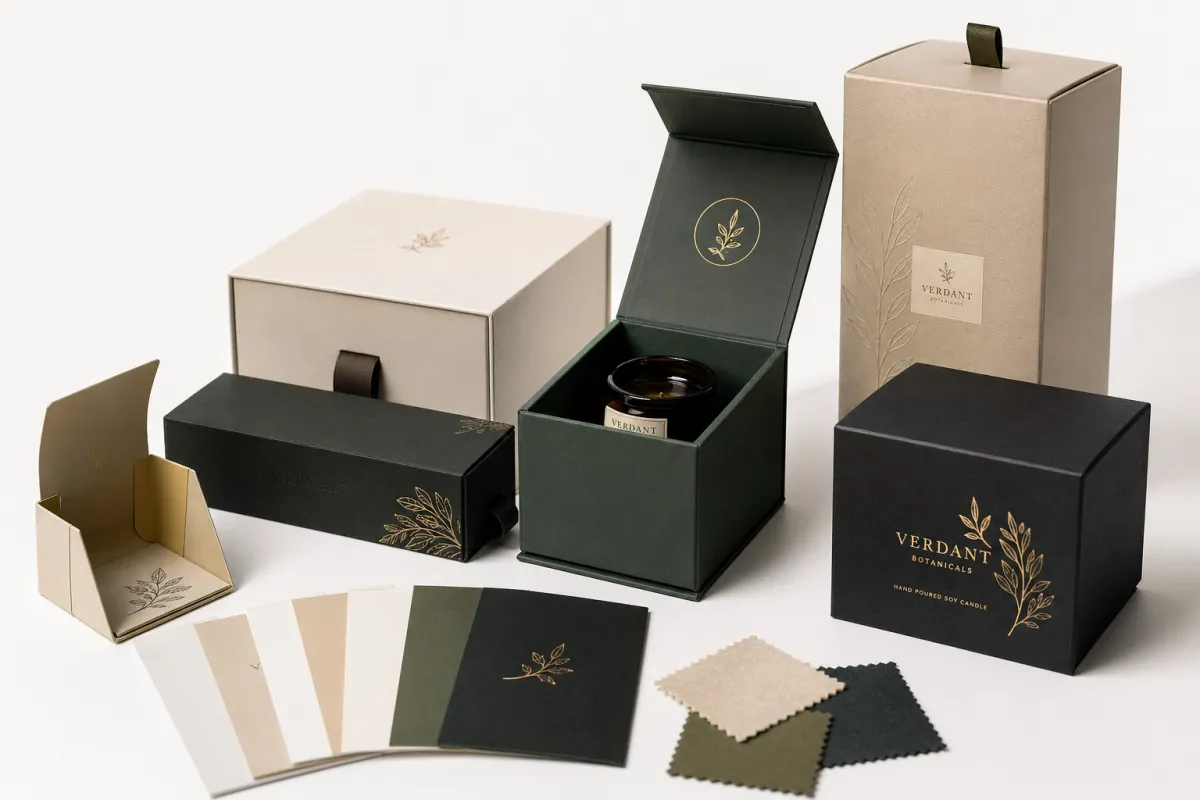
A familiar failure pattern shows up over and over. A team approves a mailer box from the CAD file alone, then discovers during fulfillment that the insert tips because the retention geometry shifted by 1.2 mm after assembly. By then, 3,000 units are already printed, coated, and packed. The prototype budget looked optional in the moment. In hindsight, it would have been the cheapest insurance on the project. A blank structural sample at 4 to 6 inches square, tested with a simple mock insert, could expose that error in minutes instead of after 3,000 parcels are scheduled for shipment. That gap between a five-minute bench test and a five-figure correction is exactly why procurement teams keep circling back to the price of custom packaging prototypes.
The mistake is treating the price of custom packaging prototypes like a cosmetic fee for the design team. That misses the real function. The sample protects three separate areas at once:
- Budget risk - one caught error can keep a launch inside the planned cash envelope.
- Brand risk - no release date benefits from a weak seal or an off-register logo.
- Timeline risk - a pre-production correction almost always costs less time than a fix after the run is underway.
What the first sample actually validates
A physical sample answers questions that a screen never settles. Does the product fit without forcing the walls? Does the structure fold cleanly after repeated handling? Does the closure stay secure under shelf pressure? Does the printed surface still look intentional once matte lamination, UV spot, or fingerprinting enters the mix? Those are not abstract design preferences. They are mechanical conditions, and they decide whether the packaging survives the first use cycle.
Take a rigid cosmetics box. It can look polished in render and still fail if the insert is too tight by a fraction of a millimeter. The price of custom packaging prototypes may cover one build, yet that one build can reveal a failure that would have sunk a production line. Teams that skip the sample stage often pay the correction premium later, when every adjustment costs more because the schedule is already moving and nobody has time to be picky.
Cost realism versus speed: the tradeoff you must own
The useful question is not whether to prototype. The useful question is how much certainty the project needs right now. Early concept work usually benefits from a low-cost structural mockup. Final packaging, especially before marketing sign-off, calls for a sample that mirrors production finish more closely. The price of custom packaging prototypes rises as realism rises. That includes better materials, tighter tolerances, longer proofing, and more coordination between teams. The increase is not wasted money. It is the cost of buying the right kind of certainty and reducing the odds of costly rework.
"In launches with real volume behind them, each revision has a measurable cost. A useful prototype should point directly to the fix, not just prove that something exists."
Define the purpose before asking for a quote. A fit check, a visual approval sample, and a production bridge are three different purchases. That distinction changes the price of custom packaging prototypes more than most buyers expect.
How Much Does the Price of Custom Packaging Prototypes Really Cost?
If there is one question buyers ask repeatedly, it is this: "Is this number high or fair?" The price of custom packaging prototypes is less about "expensive" and more about how complete the sample brief is. A project with clean specs, matched expectations, and realistic tolerances can cost less than a vague brief with the same materials. In other words, the real variable is not just spend, but precision.
Think of it as a three-part prototype quote model: engineering complexity, visual fidelity, and revision control. A simple structural sample with no print usually sits at the lower end of the scale. Add color proofing and finish matching, and each layer compounds labor and inspection requirements. That is why one brand may pay about 30% less with a lean structural path, then spend more later, while another pays more up front and saves during ramp-up. Same project category, very different economics.
The price of custom packaging prototypes is also shaped by intended use. A direct-to-consumer mailer tested for weight and courier abuse behaves differently from retail packaging tested for shelf endurance. Same artwork, different stress profile, different sample depth, different price of custom packaging prototypes.
So the benchmark is this: if the first sample can stop one structural mistake and one brand approval delay, it has probably paid for itself. That is not a slogan. It is a simple return-on-sample equation that holds better in real operations than many pricing charts ever will.
Prototype Types That Change the Price of Custom Packaging Prototypes
Sample packaging is not one thing. The price of custom packaging prototypes shifts because the build can be anything from a bare structural mockup to a near-production replica with premium finishes. Each format asks for different materials, different labor, and a different amount of checking. A supplier can quote the same box shape three different ways, and each quote may be honest.
1) Blank structural mockups
Blank structural mockups usually sit at the lower end of the cost range, especially for folding cartons, sleeves, and inserts. Their job is mechanical. They show whether the fold order works, whether the panel dimensions fit, whether the glue zones make sense, and whether the package protects the product without excess bulk. For a clean file and standard materials, a small sample run may land around $45-$150 per variation. That price answers a narrow but useful question: does it stand, fold, and protect? It does not usually include print realism, brand texture, or finish behavior, so the price of custom packaging prototypes stays lower at this stage.
Branded packaging teams often request three to five of these before moving to a printed sample. Low-volume product packaging programs do the same thing when tooling confidence matters more than appearance. One bad die cut can wreck a launch before it begins.
2) Printed digital prototypes
Printed digital prototypes bring the design side into the conversation. Calibrated CMYK output, sometimes with a small spot-color set, allows teams to check artwork placement, copy legibility, logo balance, and general color behavior. A box with one or two colors often falls in the $120-$380 range for the first round, depending on size and finish. That tier does not answer every question, but it catches the visual mistakes that become expensive when repeated across a full order.
A Custom Printed Boxes program benefits heavily from this middle stage. Marketing gets a real surface to approve. Engineering still has room to refine the structure. When those two groups work from the same sample, fewer arguments survive the handoff, and the price of custom packaging prototypes stops ballooning across internal reviews.
3) Production-grade and pre-production prototypes
Production-grade prototypes come closest to the final run. They may include spot UV, embossing, debossing, soft-touch lamination, special varnishes, heavy board, or precise die-cut windows. The cost jumps fast. A rigid box with premium finishing can reach $500-$1,800 or more, especially once inserts and hardware enter the design. The number feels steep until you compare it with the cost of a failed launch correction.
Pre-production approval often relies on one or two of these samples, along with dimensional checks, package strength verification, and a final sign-off stage. Retail packaging with strict channel requirements benefits from this approach because it reduces surprises once the larger run starts. In those cases, the price of custom packaging prototypes looks less like an expense and more like risk control.
How formats alter the formula
Format changes the economics in a way that surprises even seasoned buyers. Folding cartons move quickly through early testing. Sleeves can be economical but demand careful scoring. Rigid boxes need more assembly time and more inspection of fit. Inserts and tray systems introduce multiple material interfaces, which adds hand-assembly risk. Mailers behave differently in shipping tests than retail cartons, even when the artwork is identical, so the same design file can produce very different prototype costs.
For retail packaging, a blank mailer might fail if edge crush resistance is too low. For e-commerce, the same design can pass shelf logic and fail courier impact tests. Same artwork, different use case, different sample depth, different price of custom packaging prototypes.
The practical takeaway is simple. If the final buyer sees the package on a shelf, choose a finish-matched prototype early. If the main risk is mechanical fit, start with a structural mockup and move up only where the test results justify it. That sequencing keeps the price of custom packaging prototypes aligned with the actual risk, which is the whole point.
Specifications That Move Prototype Pricing Up or Down
The price of custom packaging prototypes tracks specification detail more closely than most buyers expect. Broad measurements create broad quotes. Tight, complete specs usually produce cleaner pricing and fewer add-on charges later. That is the kind of detail that sounds boring until it saves a revision cycle.
Dimensions and structural complexity
Every extra panel, flap, hinge, lock tab, and cutout adds labor. A sleeve with one fold and one lock is simple to quote. Add a tuck flap, a snap-lock, and a reinforced insert and the same format can rise 25% to 60% in prototype labor. Tolerance ranges matter too. A +/-0.5 mm critical dimension takes more setup and checking than a +/-1.5 mm allowance, especially on parts that must interlock cleanly.
Complex rigid packaging often needs one to three extra internal test prints to confirm measurements. That is one reason the price of custom packaging prototypes can climb quickly around hinge strength and insert load-bearing points. A good supplier should tell you whether tolerances are handled in software, checked manually, or confirmed only during assembly. If they cannot explain that clearly, keep asking.
Substrates: materials, grammage, and behavior
Material choice is where quoting mistakes start. Corrugated board is usually the least expensive option for protective cartons at small quantities, but its performance is better described by flute profile and board strength than by GSM alone. The liner sheets might sit in the 120 to 200 GSM range, while the assembled board is judged by burst, edge crush, and compression behavior. SBS paperboard usually gives a cleaner print face and is common for premium package branding, though cost rises with caliper and finish. Chipboard and rigid board tend to cost more per square inch, but their stiffness can justify the difference when the package has to hold its shape through handling.
Specialty papers with texture, recycled content, or strict whiteness controls affect both print behavior and proofing outcomes. Sustainability claims need documentation early, not after approval. FSC-certified material claims should be traced to valid chain-of-custody documentation through FSC standards, because a late material swap can trigger a second round of prototyping. In those cases, the price of custom packaging prototypes is tied as much to compliance confidence as to aesthetics.
Print, finishing, and color workflow
Print complexity shapes the quote quickly. CMYK-only digital output is usually easier to price than artwork heavy on spot colors. Metallic inks, foil, soft-touch lamination, matte coatings, and window patches all create extra prepress work and can add $80-$400 per build, depending on the surface area and build complexity. The same pattern shows up in premium custom printed boxes, where each finish adds handling, inspection, and rejection risk.
Color matching deserves strict attention. If proofing requires LAB targets and a Delta E threshold, budget for real color management. If files arrive at the wrong scale or with low resolution, prepress cleanup can double the effort. A clean file often avoids a separate cleanup line altogether. A messy one can push first-pass setup cost up by 30% to 70% before the sample is even built.
Scope boundaries: what is included and what becomes a surprise
Quotes often hide assumptions in plain sight. Assembly may be included or excluded. Hand finishing may be counted separately. Kitting, wrapping, and shipping can turn into surprise charges if they were never defined. Is the sample delivered flat or assembled? Are inserts glued, stitched, or stapled by hand? Does shipping include tracking and signature service? Those answers matter more than many buyers realize.
Ask for a breakdown with setup, prepress, materials, finishing, labor, and shipping listed separately. That is the cleanest way to compare the price of custom packaging prototypes across vendors without comparing a partial quote to a full one. It is also the easiest way to keep the prototype cost conversation honest.
Price of Custom Packaging Prototypes: Pricing, MOQ, and Hidden Costs
MOQ often gets treated as if it automatically lowers sample cost. That logic works in production runs, not always in prototype work. The price of custom packaging prototypes tends to depend on engineering labor and finishing steps more than on the quantity count itself. One supplier may quote five samples at $600 because the job needs several finishing passes. Another may quote $300 if the sample is simpler or if key services are excluded.
Where prototype budgets usually go
| Quote Line Item | What It Covers | Typical Impact | Common Range |
|---|---|---|---|
| Setup and prepress | Dieline cleanup, art checks, imposition, die and rule setup | Higher for complex folds, color-heavy files, and multiple revisions | $60-$450 per project |
| Materials | Board, paper, adhesive, substrate grade, special papers | Strongly affected by caliper, board construction, and specialty inputs | $20-$900 for small sample sets |
| Finishing | Lamination, varnish, foil, embossing, die-cut finishing | Largest spread between basic and premium prototypes | $40-$1,200 add-on |
| Labor and assembly | Glueing, hand set-up, packing of samples, kitting | Higher for rigid and multi-part designs | $30-$250 depending on complexity |
| Shipping and delivery | Packaging, label, freight, insured or express options | Can double for rushed or oversized deliveries | $20-$250 |
Line-item detail usually shows where the missing cost lives. One proposal may look cheaper because it leaves out assembly or freight and then adds them after approval. The total changes shape fast once the job is underway.
MOQ and prototype economics
Production MOQs can lower unit cost, but prototype samples often behave like fixed engineering work. Ask for one sample, five samples, or ten samples, and the cost may barely move if labor dominates the job. Only at higher sample counts do material discounts begin to flatten the curve.
That is why a prototype-only path matters. It keeps the job in sample economics instead of forcing full production assumptions too early. For the price of custom packaging prototypes, this is especially useful when folding cartons and product packaging are still being tested and volume is not locked.
When the line is still in exploration mode, this approach often makes the price of custom packaging prototypes far more controllable than a full production quote. It is not the same cost model, and buyers should compare it as a separate category in the prototype quotation.
Comparison tiers for commercial quoting
Most buyers compare sample paths in a fairly predictable order:
- Unprinted structural mockup - lowest cost, fastest way to test geometry and fit.
- Printed digital sample - moderate cost, useful for artwork validation and brand approval.
- Production-close prototype - highest cost, but the safest path for launch readiness.
- Multi-variation test set - expensive, yet useful when several options need to be judged in one cycle.
As a rough benchmark, a simple carton structure may start around $90, a printed version may land in the $180-$350 range, a close-appearance sample can reach $450-$1,200, and a three-variant comparison set may sit around $1,000-$3,000 depending on finishing.
Hidden costs that wreck the quote
Hidden costs are usually predictable once the right questions are asked. Rush fees often run 20% to 50%, depending on the deadline. Multiple revision rounds add labor. Special dies, new tooling, and re-sampling after a structural change also add cost. Revisions become common when one team signs off on dimensions and another signs off on artwork under different assumptions. A color correction cycle after the first print can take as much time as a second sample. That is why the price of custom packaging prototypes can swing dramatically even when materials stay the same.
Use one rule when comparing suppliers: do not compare the total first. Compare scope first. If one quote excludes tooling, finishing, hand assembly, or delivery terms, the number is incomplete no matter how attractive it looks.
Price of Custom Packaging Prototypes: Process and Timeline
Speed matters, but chaos costs more. The price of custom packaging prototypes often stays lower when the workflow is tight and the brief is complete. A clear process can save money even if the first quote does not look like the cheapest on paper. That part is annoying, but true.
End-to-end workflow in sequence
- Brief and scope definition: product dimensions, target quantity, print method, finishing, deadline.
- Quote and sample option: blank vs printed vs production-close, plus line-item scope.
- Dieline review: lock panel sizes, folds, glue zones, tolerances.
- Proof approval: confirm text, positioning, spacing, color references.
- Prototype build: materials cut, formed, printed, and finished.
- Feedback and adjustments: acceptance criteria for fit, strength, and appearance.
- Revision build: if required, update only in controlled scope.
- Final sign-off: issue production-aligned files and approved method notes.
A blank mockup can often move in 3-6 business days once the files are clean and approved. A printed prototype usually takes 5-10 business days. Production-close work with premium finishing can stretch to 10-18 business days, and specialty coatings or multiple-part builds can add more time. The delay usually comes from the number of steps, not from a lack of effort.
Delay drivers you can control
Most schedule slips come from communication, not machinery:
- Missing artwork causes prepress back-and-forth.
- Indecision on dimensions triggers re-cutting and reprint risk.
- Specialty materials need sourcing lead time.
- Structural change midproof requires refitting and new checks.
- Approval bottlenecks stall release when multiple stakeholders review late.
If those pieces are unclear, the price of custom packaging prototypes rises through extra labor and rescheduling. Fast delivery always has a cost. If the go-live date cannot move, time and money become linked whether anyone likes it or not.
How buyers shorten lead time without paying panic pricing
Clarity in the first message saves the most time. Send a complete spec sheet with final dimensions, stock preference, print treatment, finish requirement, and deadline. Name one approval contact so internal review does not splinter across too many hands. State whether the sample should arrive flat or assembled. Ask what "rush" actually means: same-day dispatch, expedited proofing, or both.
Teams that use a single one-page checklist often cut revision cycles by almost half. If the price of custom packaging prototypes needs to stay predictable, ask for these items from the supplier:
- Dimensions and product tolerances (in mm).
- Print process and color standards (CMYK only or spot support).
- Finish type and whether it is hand-applied.
- Target quantity and test quantity tolerance.
- Deadline with hard stop date.
- Shipping destination and handling class.
- Single point of approval and escalation.
Channel expectations matter too. If distribution includes rough handling or long transit, ask for ISTA-aligned assumptions and a quick drop-test plan if possible. When a supplier knows the shipping reality at the start, the price of custom packaging prototypes reflects function rather than guesswork.
Why Choose Us for Custom Packaging Prototype Pricing
The strongest supplier quote is not the lowest first number. It is the one you can defend internally without discovering hidden charges later. The price of custom packaging prototypes should be transparent enough for procurement, design, and operations to read it the same way. Anything less turns a simple approval into a game of telephone.
Why transparent line-iteming matters
Line-item clarity changes how decisions get made. Two suppliers may both quote around $300. One includes assembly and freight. The other leaves them out. One may bundle sample packaging; the other treats it as extra. Transparent quoting reduces those traps, which is why serious teams ask for setup, prepress, materials, finishing, assembly, and freight in separate lines.
That kind of visibility matters inside the company too. Procurement can compare apples to apples. Branding can see what appearance level is actually being bought. Approvals move faster when nobody has to decode the quote. The price of custom packaging prototypes becomes easier to manage once the scope is written plainly.
Execution quality: fewer handoffs, fewer mistakes
In-house packaging engineering with a fast feedback loop cuts translation errors. Each extra handoff introduces a new layer of interpretation. A designer passes notes to a vendor, the vendor passes them to a finisher, and the finisher passes assumptions to shipping. Small misunderstandings compound. A supplier that handles structure, finishing, and sample testing in one flow usually reduces both timeline and cost.
For packaging design teams, that means iteration stays controlled instead of scattered. Branded packaging launches benefit most when brand rules are strict and legal requirements are non-negotiable. The price of custom packaging prototypes tends to fall over the full project when the first sample is closer to the final run. That is the boring truth, and it saves money.
Why production alignment beats cheapest-upfront pricing
The real mistake is treating prototype work as disposable. Save $100 on the sample and lose thousands in correction work, and the bargain disappears fast. A production-close prototype can reduce redesign cycles, lower shipping failure rates, and make compliance checks far less stressful. It matters especially when material choice, fold pattern, and finishing need to mirror the actual order.
A reliable prototype path also strengthens sustainability claims. If recycled content, barrier properties, or fiber percentages are wrong at the sample stage, the fix becomes more expensive as volume grows. The same issue applies to legal claims and retailer test procedures. Small inaccuracies expand quickly when multiplied across a production schedule.
"The point is not to get a prettier sample. The point is to lock packaging behavior before the production clock starts charging for every change."
Teams evaluating package prototyping options often underestimate this alignment effect because they focus on sticker price. Yet the price of custom packaging prototypes is often the only phase where the correction model is still flexible. After that, every little change starts acting like a tax.
Next Steps: Get an Accurate Quote for Custom Packaging Prototypes
If you want the price of custom packaging prototypes to support execution instead of triggering surprise invoices, use this checklist now:
- Product dimensions (W x H x D) with tolerance range and target clearance.
- Target quantity for sample and for first production order.
- Artwork status and file type: PDF, AI, EPS, or native file plus font permissions.
- Finish preferences (lamination, gloss/matte, foil, embossing, patch windows).
- Timeline with a final approval cutoff and shipping destination.
- Revision policy expectation (how many rounds, who approves).
- Competitor samples or photos to benchmark geometry and finish outcomes.
Then ask for two quotes when the project deserves a fair comparison. One supplier can price a structural mockup. Another can price a production-close sample. Looking at both under the same scope often reveals that the "more expensive" sample is actually cheaper once repeat revisions disappear. The price of custom packaging prototypes is not just one number. It is a choice between two different kinds of risk.
Ask the right quote questions before approval
Before you approve anything, ask for a detailed estimate that states clearly:
- whether tooling is included;
- whether assembly and kitting are included;
- whether final trimming is included;
- whether sample packaging and delivery are included;
- what happens if a revision is needed after the structural review.
If those answers are missing, the quote is incomplete.
Send photos of existing packaging, reference samples, and shipping constraints as well. If the job is for custom packaging in retail, include shelf dimensions and fixture expectations. If the job is for direct-to-consumer fulfillment, include parcel routing and weight limits. Precise scope keeps the price of custom packaging prototypes under control because the supplier is quoting a real job, not guessing at one.
FAQ: Price of Custom Packaging Prototypes
What is the average price of custom packaging prototypes?
The average depends on the format, print complexity, and whether the sample is blank, printed, or production-close. A simple structural mockup can stay relatively low, while rigid boxes and premium finishing push costs higher quickly. Shipping, assembly, and revisions can change the final total, so a line-item quote matters more than a single headline number. The price of custom packaging prototypes should be evaluated by what is included, not just what is missing.
Why does the cost of custom packaging prototypes vary so much?
Different suppliers use different materials, proofing methods, and finishing workflows. One quote may include setup and assembly while another leaves both out, which makes the totals look closer than they really are. Rush timing, color matching, and tooling can move the price fast, sometimes by 20% or more. Those gaps are usually about process design, not arbitrary pricing.
Can I get a low-MOQ prototype without paying full production setup costs?
Yes. Many suppliers offer prototype-only paths that avoid full production-style setup. Digital print, simplified finishing, and blank structural samples are common ways to keep low-MOQ sample costs down while still checking fit and build. That route works best when the sample is clearly for fit testing and not final production approval, and when the prototype quotation is tied to that objective.
How long does a custom packaging prototype usually take?
Simple samples move quickly when dieline and artwork are ready. Printed or specialty-finish samples usually take longer because of prepress, color approval, and assembly. Missing files and revision rounds are still the most common reason schedules slip. A clean sample prototyping brief often halves that risk.
What should I send to get the most accurate price of custom packaging prototypes?
Send exact dimensions, target quantity, packaging type, and must-have features. Include final artwork if it is ready, plus finish requirements and required delivery speed. Reference photos, existing packaging, or competitor samples help the supplier quote more precisely and catch hidden costs early. The strongest requests tie design, materials, and approval workflow into one clear package.

