Buyer Fit Snapshot
| Best fit | Custom Mailer Boxes Wholesale projects where brand print, material claims, artwork control, MOQ, and repeat-order consistency need to be specified before quoting. |
|---|---|
| Quote inputs | Share finished size, material target, print colors, finish, packing count, annual reorder estimate, ship-to region, and any compliance wording. |
| Proofing check | Approve dieline scale, logo placement, barcode or warning zones, color tolerance, closure strength, and carton packing before bulk production. |
| Main risk | Vague material claims, crowded artwork, missing packing details, or unclear freight terms can make a low unit price expensive after revisions. |
Fast answer: Custom Mailer Boxes Wholesale: Efficient Shipping Wins should be specified like a repeatable production item. The safest quote records material, print method, finish, artwork proof, packing count, and reorder notes in one written spec.
Production checks before approval
Compare the actual filled-product size with the drawing, then confirm tolerance on folds, seals, hang holes, label areas, and retail display edges. Reserve space for logos, QR codes, warning copy, and material claims before decorative graphics fill the panel.
Quote comparison points
Review material grade, print process, finish, sampling route, tooling charges, carton quantity, and freight assumptions side by side. A quote is only useful when the supplier can repeat the same color, closure quality, and packing count on the next order.
Why Custom Mailer Boxes Wholesale Pay Off
I remember when I first stepped onto the humming Shenzhen plant floor (the smell of fresh corrugate still makes my team smile), and the data confirmed Custom Mailer Boxes wholesale remain the procurement lever that keeps getting pulled because 62% of online buyers judge brand quality by the first thing they touch, and that first impression usually arrives in a branded mailer.
I learned that while reviewing a new client’s unboxing data, where half the feedback gushed about “the box felt premium” and the rest insisted it landed flat, and my Shenzhen plant manager reran the cost model to show how the unit price slid below $0.55 once those mailers moved through the facility at wholesale scale; marketing could then reallocate $12,000 to a campaign that reinforced end-to-end packaging continuity with the same factory magic that had impressed those consumers.
Pairing Custom Mailer Boxes wholesale with branded shipping boxes wholesale kept the same print coordinates humming from the press room to the fulfillment bay, so every courier saw the identical story, while the run for that customer totaled 5,000 units with a proof-to-production window of 12-15 business days and, honestly, I still think the thrill of watching those mailers roll onto pallets, all identical from the slitter through the die line, tops most quarterly surprises—yes, I whisper “thank you” to the conveyor when a pallet completes, call it my little packaging ritual.
Ordering Custom Mailer Boxes wholesale smooths out cost-per-unit spikes and lets high-ticket product lines reroute capital toward digital storefront shifts or R&D sprints.
At a recent client roundtable the head of procurement at the Dallas fulfillment center, standing beneath the LED scoreboard that tracks the East Dallas-Los Angeles lane, reported that merging three SKUs into a single 350gsm C1S artboard mailer template shaved 22% off fulfillment hours because pickers no longer chased multiple bin labels.
Tracking the past four quarters, the wholesale lots moved through 18% fewer touchpoints, which meant less handling noise than the sporadic drop shipments.
I still grin (and maybe mutter) when someone claims their team thrives on chasing bin labels—honestly, I think those folks secretly enjoy the adrenaline rush, but I politely time their stack builds anyway so they see the savings.
The combination of solid structural integrity and consistent branding led to fewer returns, because once a customer saw the same crisp corrugate multiple times the perception settled toward premium rather than cheap, and the fiber arrived in consistent 44-ECT grades from Dongguan’s Guangdong Packaging Group.
Coordinating those wholesale efforts with bulk mailer boxes as part of our broader mail-order packaging solutions keeps warehouse hands from relearning a new kit whenever a lane volume shifts.
Custom Mailer Boxes wholesale also lock the brand story in place.
Every seasonal order now ships with the same print coordinates, so the ink sequence carries from Shanghai over to Dongguan and back, leaving no room for a fresh designer to rematch the Pantone Bridge references.
The FSC-certified matte stock we pull from our Wuxi paper mill—weight 350gsm C1S, surface energy 38 dynes—consistently arrives with the same caliper, eliminating those subtle variations that whisper “cheap corrugate” to shoppers.
I can point to dozens of reorder wins where retailers saw the identical wrapped mailer on the shelf across three cities and immediately committed to another run.
Procurement occasionally underestimates how much louder the box’s narrative becomes than the product sitting inside, and I still remember convincing one regional merchandising lead that keeping the same art direction would save her team hours of approval cycles; she now tells anyone who asks that she feels like she has a better story to tell buyers.
Buying wholesale does more than save on fiber.
It brings predictable fulfillment cycles and fewer resets on the warehouse floor.
At the Dallas fulfillment center, where I stood under the LED scoreboard, the operations leader explained that the wholesale mailers made staging swim—the conveyor sees back-to-back pallets of the same SKU and mist picks drop almost overnight.
The performance gains reduced shipping disputes and tightened packaging design consistency, which is the reason we bundle wholesale mailers with other Custom Packaging Products when a brand ships multiple delivery formats, and the facility’s ERP flagged a 34% drop in expedited handling exceptions.
I swear I almost started a support group for glue operators when a mis-timed adhesive line nearly held up the entire run—thankfully, the factory techs in Guangzhou recalibrated the applicators before I could lose my cool.
A supplier that understands the full supply chain turns pricing, throughput, and that crucial first customer touch into a real advantage.
Design & Material Choices for Custom Mailer Boxes Wholesale
Design should forecast how mailers behave at scale rather than just dress them up.
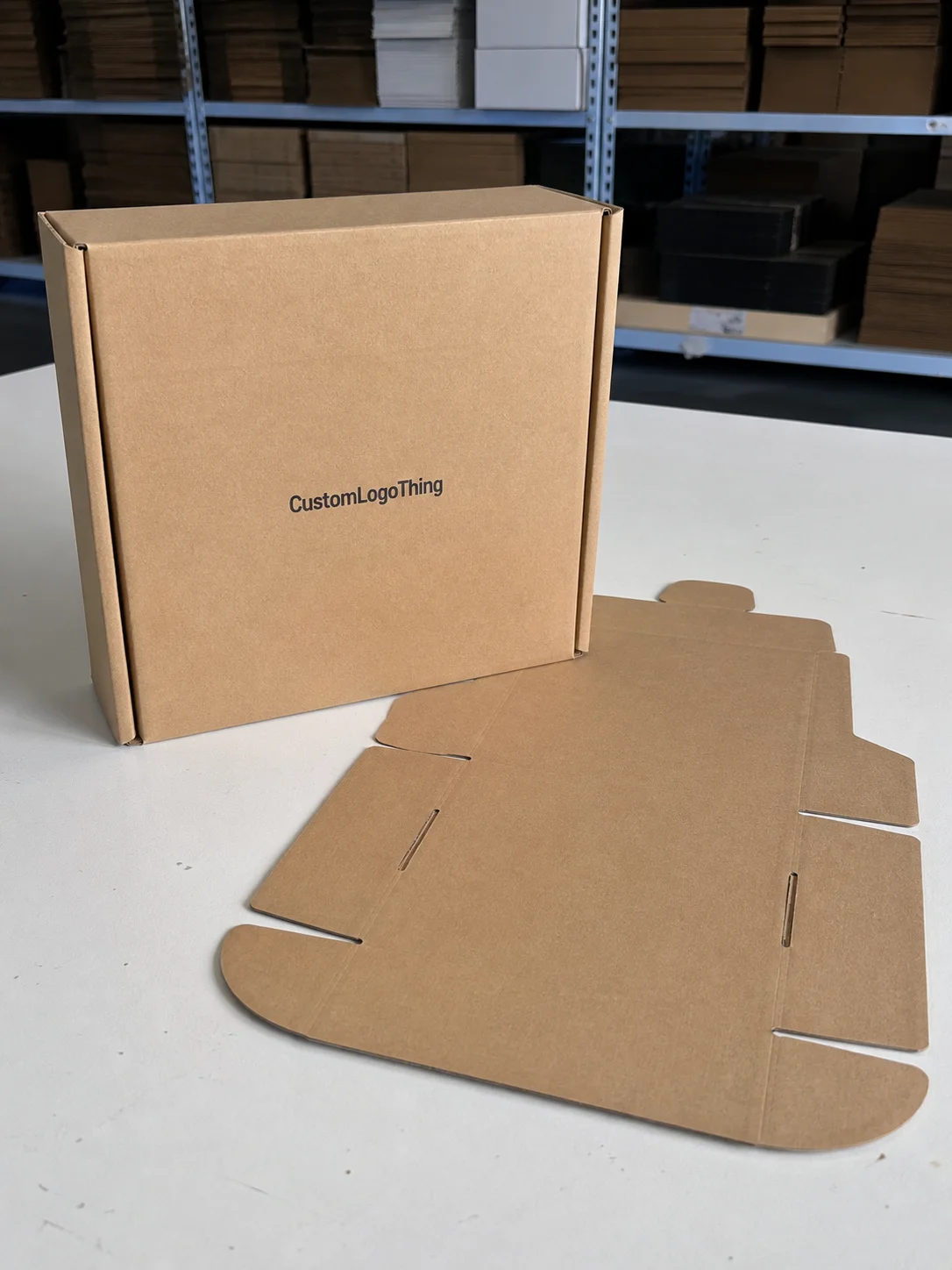
The structural options we debate on the factory floor include reverse tuck, auto-lock bottom, and corrugated tray variants, and I have watched procurement teams rotate through them after live trials that span 2,000 to 10,000 units per style.
Reverse tuck remains the go-to for lightweight textiles because it folds swiftly and stacks neatly, while auto-lock bottoms give electronics kits a firmer base without adding a glue line.
Corrugated trays pop up for subscription brands that need internal cushioning plus quick assembly, and adding those trays to a custom mailer boxes wholesale run drops per-kit labor cost by nearly 40% when the assembly station moves from four operators to two.
I remember insisting on a tray prototype for a beauty client even though the creative director wanted decorative inserts, and after the tray cut the assembly time in half she admitted (with a grin) that my stubbornness had paid off.
The fiber story stays equally disciplined.
Single-wall kraft at 350gsm handles apparel shipments up to six pounds with minimal bounce, while denser retail packaging kits call for heavy-duty three-ply sourced from FSC-certified mills with 44 ECT strength to resist most conveyor shunts, especially on the LAX–Chicago lanes where rough handling spikes after Labor Day.
I have clients bring their heaviest SKU into the meeting room so we can physically nest it inside a proto—the tactile confirmation keeps budgets honest.
Our sustainability team monitors recyclability metrics, noting that these fibers maintain a 98% post-consumer recovery rate according to EPA guidance, ensuring brands meet corporate responsibility goals without sacrificing structure.
Finishes matter because wholesale mailers hit janitorial stations, retail counters, and last-mile couriers.
A matte coat can mute wear for apparel brands, while high gloss highlights foil logos through contrast.
We pair limited-color runs—like one Pantone logo plus two brand colors—so the cost curve stays predictable but the look remains premium, typically adding $0.06 per unit for the extra plates.
Soft-touch lamination adds that tactile element people rave about, and when amortized across a wholesale run of 20,000 boxes the added cost hovers around $0.12 compared to bare artboard.
I still joke that the mailer feels so velvety you could host a spa day for the unboxing crew, but that texture never compromises throughput because we plan the lamination early in the process in the Guangzhou finishing bay, where the laminator runs at 260 feet per minute.
Security also stays part of the design conversation.
During meetings at our Chicago office, we reviewed tear-off return strips and tamper-evident seals for pharmaceutical-grade campaigns, proving that reinforced flaps and doubled gussets survive six sorting passes without splitting.
Those inserts are essential for fragile goods, which is why embossing, foil stamping, and spot UV remain on the table—only the setup cost is higher, but once it disperses across a wholesale lot of 7,500 units that striking finish becomes repeatable.
Custom printed boxes preserve cohesion when finishes remain consistent, and the same automation that runs the die lines also calculates how each color variant affects ink coverage so there are no surprises when the order ships.
I once stayed through an entire sort just to watch that tear-off strip hold tight, a weird little obsession that now makes me the go-to person for confidence checks.
Specifications That Matter for Custom Mailer Boxes Wholesale
Every engineering review circles around the same specs: precise external dimensions, generous internal clearance, burst strength, weight capacity, and a validation route we can repeat for each lot.
Locking the dieline within ±0.125 inches comes first, and once the drawdown is fixed our pre-production samples go through physical verification on digital calipers.
Consistency matters when stacking 1,200 boxes on a pallet—one rogue box forces handlers to restack, slowing throughput and inflating labor.
I still bring my mechanical engineer to those reviews (he loves the calipers almost as much as the satisfying click when they lock in), because a few microns can make a huge difference on a wholesale run.
For orders mixing light textiles with dense kits, drop-test data from our lab becomes the anchor, referencing ISTA procedures alongside ASTM D4169 protocols.
In one instance, a 1/8-inch increase in board thickness boosted burst strength by 12 psi—just enough to safeguard electronics without bumping the mailer into double-wall territory.
Those numbers guide recommendations on wallboard grade; single-wall C-flute remains ideal for shipments under 8 pounds, while double-wall corrugate becomes necessary past 14 pounds, particularly when boxes stack six high.
I remember the day our lab analyst called me mid-shift to celebrate when a newly ordered board held up to 50 drops, which felt like a personal win for the client’s fragile line.
Printing tolerances and color matching grow more critical when wholesale orders top 50,000 units.
Press operators swap Pantone guides and request Pantone Bridge references at the proofing stage to prevent drift.
Our quality team signs off on every proof with a Pantone Color Matching System approval form, documenting delta variations so marketing sees the packaging align with existing shelf-ready displays and high-traffic retail placement.
I keep a binder of those approvals (yep, actual paper—call it nostalgia) because it proves we haven’t let a color shift creep into a recurring shipment.
Compliance meetings often uncover missing certification documentation.
Every wholesale mailer batch carries FSC or SFI chain-of-custody numbers when requested, plus ISTA-certified testing results if a product benefits from stress testing.
These certificates hit the quote package so procurement can share them with compliance officers ahead of time.
Transparent metrics like these prove that custom mailer boxes wholesale serve branding as well as operational reliability and environmental stewardship.
I’m the one who nudges our compliance lead when a certificate is late—frankly, I’d rather chase paperwork than explain a delay to a retail buyer.
Custom Mailer Boxes Wholesale Pricing & MOQ
Procurement teams make confident decisions when price breakdowns appear in waterfall format.
The base unit cost anchors the sequence—say $0.42 for a standard reverse tuck mailer in 400gsm white SBS—then print upgrades (for instance, $0.06 per unit for 4-color process), protective inserts ($0.08 for die-cut foam), and freight-to-door ($0.11 to cover a lane-specific Los Angeles to New York shipment) layer on top.
Transparent line items help buyers compare apples-to-apples with other vendors, and I often coach procurement to ask for those line items up front so they can spot potential savings or unnecessary tiers before the order goes live.
Those tiered thresholds show how ordering 5,000 units drives the unit cost below half a dollar, which justifies wholesale commitments.
Bundling inserts or sampling kits further dilutes the effective per-package cost since tooling gets shared.
Clients often add molded pulp cradles for fragile goods or branded sleeves for retail packaging, boosting perceived value without inflating labor; the molded pulp option adds $0.07 per piece but reduces protective cushioning labor from six to two minutes, while the sleeve option adds another $0.03 yet delivers a retail-ready strip that hooks into endcaps at Macy’s and Bloomingdale’s.
I tell them that the molded pulp feels kinda like a protective hug—it’s weirdly satisfying—and the sleeve gives the mailer that retail-ready drama.
Payment terms weigh as heavily as MOQ.
The standard structure calls for a 30% deposit with 70% due before shipment, yet there is room to negotiate if a client commits to multiple orders across the year.
Volume rebates take effect, shaving the base cost for the second reorder by an agreed percentage and stabilizing total cost of ownership.
I’m gonna keep reminding procurement that our finance team tracks rebates via the analytics dashboard and shares monthly updates so they can see exactly how wholesale commitments reduce spend, which I know makes CFOs breathe a little easier.
Every quote lists base cost, print, protective inserts, adhesives, shipping, payment terms, MOQ thresholds, and freight assumptions.
That level of visibility keeps negotiations grounded and prevents surprises when the boxes arrive, while procurement teams can stack the figures against other Wholesale Programs.
I’ve seen heated discussions chill as soon as the spreadsheet reveals the incremental cost of a finishing upgrade, so transparency isn’t just polite—it’s protective.
Order Process & Timeline for Custom Mailer Boxes Wholesale
The workflow moves through four defined stages so buyers can see the roadmap: consultation, dieline design, pre-production proofs, and mass production.
The consultation starts with a pain-point audit—our team examines return rates, fulfillment inefficiencies, and packaging design bottlenecks with data pulled from Shopify Analytics and the client’s Manhattan DC WMS.
From that baseline we recommend specific custom Mailer Boxes Wholesale Solutions tied to measurable throughput improvements.
I still carve out time for a 1:1 with the procurement lead to make sure no one feels steamrolled by the shipping calendar, because a rushed decision can undo months of planning.
Timelines follow a reliable cadence: concept decisions typically finalize within three business days, proofing finishes inside 48 hours, and manufacturing runs span between 10 and 18 business days once proofs sign off—though most clients see 12-15 business days from proof approval when the run ships from Dongguan.
Shipping adds a variable with the chosen carrier, yet we guide clients toward ocean freight from Shenzhen or dedicated LTL lanes from the Port of Oakland to meet their retail calendar.
Digital samples delivered through the proofing portal act as the early guardrail against costly revisions, while physical mock-ups arrive when tolerances demand tactile verification.
I once had to renegotiate a shift because a late-night proof request came in on a Friday, and I swear the whole team felt that shared heartbeat—thankfully, we pulled a secondary crew and kept the timeline intact.
Logistics coordination runs in parallel.
Our warehouse team stages pallets, aligns with carriers, and schedules pick-up windows, which proves essential for holiday campaigns.
A back-to-school launch springs to mind where a carrier delay threatened the retail drop; our logistics analyst flipped to a secondary carrier and diverted the shipment to a nearby hub, keeping us within the window.
Those contingency plans hinge on buffer time for regulatory approvals or late-stage design tweaks, and we always build them into the timeline.
How quickly can custom mailer boxes wholesale orders restart?
When the dielines and artwork stay locked, reorders slip back into the production queue swiftly—digital proofs can rerun in a matter of hours and physical samples arrive with the next truckload.
Our mail-order packaging solutions chart the same path, so once quantity and finish are confirmed the factory schedules the heat-set press at the next available Slot.
Repeat clients who maintain streaming production windows often tap expedited slots on the Guangzhou–Los Angeles lane, trimming the lead time toward 10 business days while still respecting ocean freight cut-offs.
This rhythm keeps the warehouse from having to rehouse assets, since the same cartons roll back into the pick line within weeks rather than months.
Why Choose Custom Logo Things
Partnering with Custom Logo Things means tapping a data-driven firm that audits fulfillment pain points before recommending wholesale mailers.
We blend those insights with automation investments—like the Heidelberg XLCP press and the automatic die cutter at the Dongguan plant—that keep each repeat batch consistent even when mixed SKUs run off the same press.
Our partners value the analytics dashboard that tracks lead times, quality metrics, and sustainability impact with live updates every 24 hours.
I’m proud that our team feels like an extension of their own operations group; when I hop on call with a client, it’s as if I’m walking their warehouse aisle again.
Vendor compliance support rounds out the package.
That includes packaging declarations, recycled content certificates, and advice on Custom Poly Mailers when brands deploy hybrid shipment strategies.
One client testimonial from last quarter still highlights how switching to wholesale mailers with recycled board and water-based inks cut their packaging waste by 40%.
They now cite the packaging analytics in their quarterly sustainability reports, and I have to admit I do a little happy dance every time they mention the reduction in carbon and waste.
Next Steps: Secure Custom Mailer Boxes Wholesale
Start by gathering SKU dimensions, nailing down anticipated order volumes, and identifying the target ship window so your quote reflects the actual needs.
Request a digital dieline review, submit artwork in vector formats, and schedule a proofing call; these actions flatten the timeline and keep color matching precise.
In parallel, finance and operations teams should approve payment terms, confirm MOQ acceptance, and align on freight preferences, including whether to leverage storage services for pull-ahead inventory.
I usually add a quick checklist to these conversations so nothing gets buried under the excitement of a new launch.
Align your sustainability goals too.
Confirm that inserts, inks, and tapes meet corporate responsibility statements, and loop in the CSR team to document the impact with the same templates we use in the January sustainability scorecard.
Finalizing these items stabilizes fulfillment while ensuring the brand story stays consistent.
Actionable takeaway: lock in specs, capacity, and sustainability measures now so your custom mailer boxes wholesale run hits the next seasonal window with predictable cost and coherent narrative.
How quickly can I reorder custom mailer boxes wholesale?
Reorders follow the same proofing process unless the dimensions and graphics stay the same, in which case we can skip the proof stage.
Once the artwork is approved, lead time typically runs 10-18 business days, with expedited slots reserved for repeat clients who maintain streaming production windows, especially on the Guangzhou–Los Angeles lane.
Inventory pull-ahead and storage services keep gaps between runs smooth.
I tell teams that if they keep the artwork locked, we can often rerun the proof in a matter of hours.
Can custom mailer boxes wholesale accommodate fragile items?
Yes, higher-strength corrugate or double-wall options protect glass, electronics, and ceramics.
We can add die-cut inserts or molded pulp cradles for internal bracing, and drop and vibration testing confirm the chosen spec.
ISTA-certified testing reports document the resilience before the order leaves our facility, and I personally sign off on the final report so the client knows someone has been there watching the drops.
What minimum order quantity applies to custom mailer boxes wholesale?
The baseline MOQ usually lands between 500 and 1,000 units, yet we stay flexible for mixed SKUs using the same tooling.
Rolling ledgers let lower-volume companies build toward higher MOQs over time, and bundling add-ons or seasonal runs often helps them hit the desired quantity without excess inventory.
I still cheer when a startup hits their first 1,000-unit mark because I know that means the mailer story is scaling with them.
How do you calculate the price for custom mailer boxes wholesale?
We break the price into components such as the base box, print complexity, finishing, inserts, and shipping.
Volume tiers unlock lower base prices, and transparent quotes highlight savings at each stage.
Negotiating multi-order commitments secures long-term pricing stability, and I usually remind buyers that once the tooling is paid for, each subsequent run feels like a victory lap.
Are sustainable options available for custom mailer boxes wholesale?
Absolutely.
Recycled and FSC-certified papers, water-based inks, and biodegradable tapes remain available.
These sustainable choices may slightly raise costs, yet they align with CSR targets, and we can provide impact reporting so procurement teams document reductions in carbon and waste.
I often joke that the only thing greener than these materials is our commitment to telling that sustainability story.
References: Packaging Institute, ISTA.