Mailer Boxes with Inserts: Fit Testing, Protection, and Unboxing Specs
Custom Mailer Boxes with inserts solve a stubborn packaging problem: they keep a product from wandering around inside the carton. That sounds almost too ordinary to matter. It matters a lot. A rigid outer mailer plus a shaped insert often protects fragile goods better than simply upgrading to heavier board, and it usually does so with less waste, less bulk, and less confusion on the packing line.
Brands shipping cosmetics, subscription kits, electronics, samples, or promotional sets use Custom Mailer Boxes with inserts for a few very concrete reasons. Damage rates tend to fall. Returns become easier to control. Packing becomes more consistent from one shift to the next. The customer also gets a cleaner opening moment, because the product arrives centered instead of slumping into a corner after a few hundred miles of vibration and compression.
Buyer Fit Snapshot
Use this page when products need both a branded mailer box and an internal insert that holds the item in place during shipping.
| Decision point | What to specify before quoting |
|---|---|
| Material and construction | Substrate, thickness, coating, print coverage, finish, and tolerance requirements. |
| Order economics | MOQ, unit tiers, sample run, lead time, packing method, and freight assumptions. |
| Production control | Dieline, artwork proof, barcode or warning copy, QC checks, carton marks, and reorder plan. |
Custom Mailer Boxes with Inserts: Why They Matter
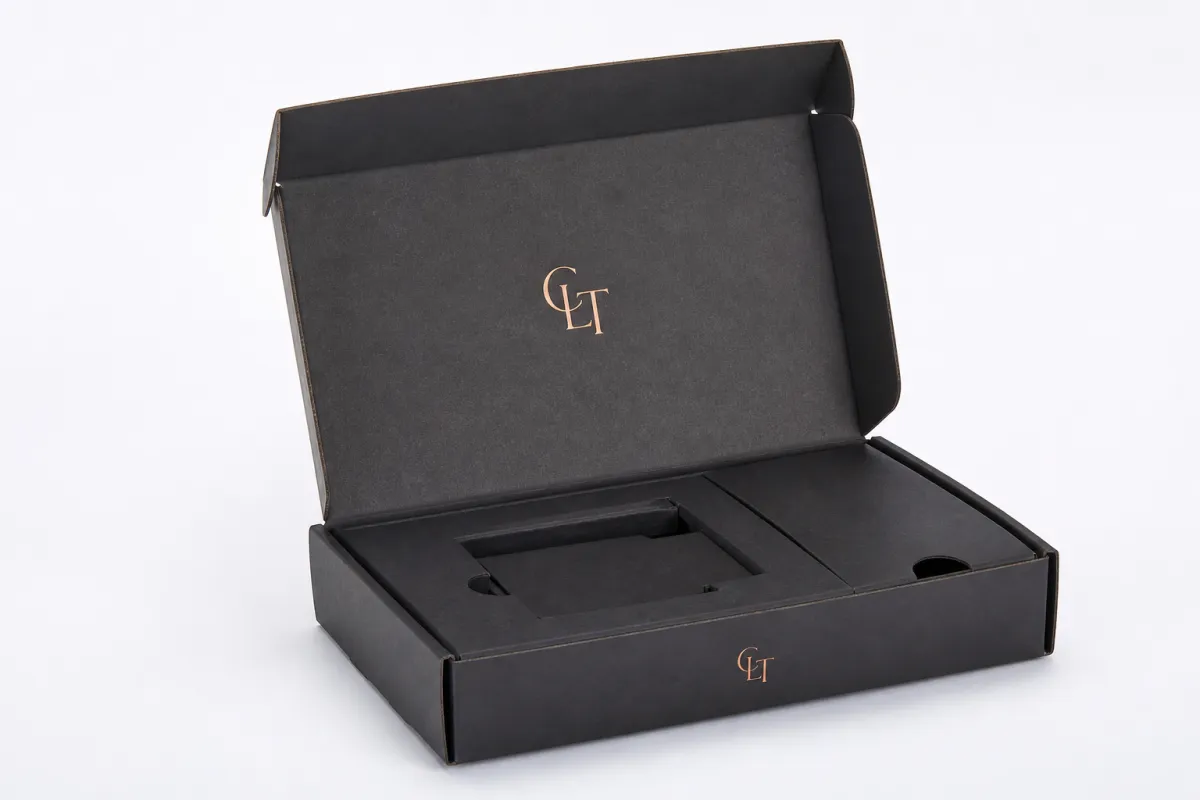
What catches many buyers off guard is that custom mailer boxes with inserts usually prevent damage by limiting movement, not by adding a dramatic amount of material. A product that cannot rattle, tip, or slide has a far easier trip through the parcel network. That matters because shipping failures rarely begin with a single catastrophic event. They build from repeated small shocks: vibration in transit, compression under stacked freight, corner impacts, and the odd drop at a sorting hub.
In packaging terms, custom mailer boxes with inserts work as a system. The outer box provides structure. The insert does the careful work of cradling, dividing, suspending, or locking the product into place. That insert might be die-cut corrugated, paperboard, molded fiber, or foam, depending on the product and the protection target. The result is more orderly product packaging and a box that feels intentional the moment the lid opens.
The use cases are easy to spot once you start looking for them. Glass bottles. Small electronics. Candles. Sample kits. Skincare sets. Promotional bundles. Subscription programs with several loose pieces that would otherwise drift around like coins in a glove compartment. Custom mailer boxes with inserts also help operations teams because packing becomes more predictable. When the cavity fits the product correctly, the worker is not improvising with tissue, void fill, or extra tape just to keep everything from shifting.
There is a logistics story hiding inside the design story. Better fit can lower returns, reduce damage from repeated vibration, and make cartonization easier to manage in the warehouse. When the footprint is controlled and the insert is built around actual product dimensions, shipping costs are easier to predict. That matters for brands balancing retail packaging for direct-to-consumer orders and small wholesale replenishment runs, where the same SKU may need to perform in more than one channel.
For a packaging buyer, custom mailer boxes with inserts should be treated as one decision rather than two separate purchases. Board grade, insert geometry, opening sequence, and shipping method all affect each other. Miss one piece and the whole package feels off. The difference is often obvious in the hand before it ever shows up in a damage report.
I learned that the hard way on a candle launch years ago. The outer mailer looked fine on press proofs, but the inserts had about 4 mm too much lateral play. That tiny gap turned into scuffed jars after the first parcel test, and the fix was not more board. It was a tighter cavity and a different fold sequence. That kind of detail is unglamorous, but it is usually where the money is hiding.
How Custom Mailer Boxes with Inserts Work
The outer shell of custom mailer boxes with inserts is usually corrugated board, though the construction can vary more than buyers expect. A tuck-top mailer, a roll-end mailer, or a self-locking style may be chosen for stack strength, print area, or assembly speed. In a busy fulfillment operation, even a small change in fold sequence can show up in labor time. Three motions versus five motions does not sound dramatic until it is repeated thousands of times.
The insert is where the real protection happens. A good insert can cradle a single product, suspend it away from the walls, divide multiple components, or lock a specific profile into place. In custom mailer boxes with inserts, the insert should do more than fit in a sketch. It needs to hold securely without forcing the operator to wrestle the pack-out or stressing delicate finishes. A cosmetic bottle with a narrow neck, a polished cap, or a label that must remain unmarred needs a cavity that respects those details.
Fit and tolerance are the quiet variables that decide whether the system works. Too much room and the item moves during vibration. Too little room and the line slows down because workers have to press, twist, or bend the product into place. The better custom mailer boxes with inserts usually allow for real-world variation: coating thickness, heat-sealed bags, secondary labels, or a dimensional shift from one supplier lot to the next. A few millimeters can separate a smooth pack-out from a frustrating one.
The customer experience is part of the engineering. A well-planned insert guides the opening sequence so the recipient sees products in a deliberate order rather than opening a carton full of loose parts. That is one reason custom mailer boxes with inserts come up so often in package branding work. The box stops being a shipping container and starts acting like a structured reveal. The main product can appear first, followed by accessories and paperwork in the exact order the brand wants.
Performance depends on the whole system, not the insert alone. Product weight, shipping lane, carton orientation, and opening style all matter. A package that survives a local parcel route may need a different insert profile for cross-country transit with more handling points. Testing is the difference between optimism and evidence. Vibration, compression, and drop behavior need to be checked together instead of assuming a nice-looking insert will protect the product by appearance alone.
One useful rule of thumb: if the product can move more than a sliver inside the cavity, the design deserves another pass. I usually look for a controlled fit with just enough clearance for loading speed and manufacturing variation, not a heroically tight nest that only one person on the team can assemble without swearing under their breath.
Cost, Pricing, and MOQ for Custom Mailer Boxes with Inserts
Cost for custom mailer boxes with inserts comes down to a small set of practical drivers: board grade, print coverage, insert material, die complexity, finish choices, and the overall size of the mailer. A compact kit box with modest print and a plain paperboard insert sits in a very different price band from a large full-color mailer with a molded insert and specialty coating. As structure becomes more complex, setup time and material waste usually rise with it.
MOQ matters because setup costs have to be spread across the run. Small quantities can still be produced, but the unit price climbs when tooling, press make-ready, and cutting time are divided across fewer pieces. For custom mailer boxes with inserts, many suppliers quote at 500 or 1,000 units. Runs of 2,500 to 5,000 pieces often improve the balance between price and production efficiency. That does not mean every project needs a large run. It means the buyer should understand what sits behind the number.
Labor belongs in the cost conversation even when it is hard to see on a quote sheet. Some inserts drop into the carton quickly. Others need careful alignment or a specific assembly sequence. If a box saves $0.08 on material but adds ten seconds per pack-out, the landed cost may not improve at all. For custom mailer boxes with inserts, carton price and fulfillment labor should be reviewed together, not in separate columns that never meet.
There is also a trap in comparing only unit price. Two packaging specs can look close on paper and still behave very differently once freight is added. A slightly smaller mailer may cost a bit more to manufacture, then pay for itself by reducing dimensional weight. That is a boring detail until a shipping invoice lands, and then it suddenly becomes the main event.
| Insert option | Best use case | Protection profile | Typical added cost at mid-volume |
|---|---|---|---|
| Corrugated die-cut insert | Kits, bottles, small devices, set packaging | Good edge support and stable placement | About $0.08-$0.22 per unit |
| Paperboard insert | Samples, lightweight retail sets, presentation packs | Clean presentation with light-to-moderate hold | About $0.05-$0.16 per unit |
| Molded fiber insert | Brands prioritizing fiber-based materials and shaped support | Good cradle effect, moderate cushioning | About $0.12-$0.32 per unit |
| Foam insert | Highly delicate items, premium electronics, glassware | Highest shock absorption, less recyclable in many streams | About $0.20-$0.55 per unit |
Freight and dimensional weight can change the math in a hurry. Oversized packaging may look acceptable on paper, but if the outer dimensions bump the shipment into a higher rate tier, the savings on material vanish quickly. A smaller and better-fitting design often pays back over time because it trims shipping charges and reduces damage. That is one of the quieter strengths of custom mailer boxes with inserts: the benefit often appears downstream, not in the first quote.
Accurate quoting usually requires product dimensions, unit weight, quantity, shipping method, artwork expectations, and whether the insert needs printing or special cutting. If the box is part of broader branded packaging, sample photos and retail display notes help too. A structure can only be smart when the brief reflects the real product, the real handling path, and the real business objective.
For teams comparing board sources and recycled-content claims, the FSC system is a useful reference point for certified fiber. For transit performance, the package should be tested against a recognized method such as the ISTA family of procedures, since shipping damage does not care how polished the artwork looked on screen.
Production Process, Timeline, and Lead Time
The production path for custom mailer boxes with inserts usually begins with discovery. The packaging team gathers dimensions, fragility concerns, fill rate, shipping method, and any display or branding needs. This step saves time later. Glossy coatings, tucked cables, glass droppers, and nested accessories all need to be understood before the structure is drawn. A strong brief often prevents two or three rounds of avoidable revision.
Next comes dieline and sample development. The outer mailer and the insert geometry are checked against the actual product, not just a sketch of it. Stack height, closure behavior, and cavity tolerances are verified here. For custom mailer boxes with inserts, the sample is more than a proof of appearance. It is a working model of how the package behaves in the hand and in transit. If the insert pinches a coating or leaves too much headspace, that problem should surface here rather than after the first shipment leaves the warehouse.
After the structure is settled, prepress and approval matter just as much as the cut shape. Artwork, material spec, print method, and finishing details should be confirmed together. A beautiful printed panel does little good if the insert forces the product into a position that hides part of the design. In careful custom printed packaging work, the structural piece and the visual piece have to be reviewed as one package. Treating them separately often creates a package that looks polished and works poorly, or works well and looks improvised.
The production flow itself is straightforward, but every step is sensitive to detail: board conversion, printing, die-cutting, scoring, insert fabrication, flat packing or kitting, and final inspection before shipment. Lead time depends on complexity, quantity, sample revisions, and seasonal pressure on the plant schedule. Simple custom mailer boxes with inserts can often move in about 10 to 15 business days after proof approval. More intricate jobs, especially those with unusual insert geometry or multiple revisions, can stretch into three to five weeks. A structural sample adds time, yet it usually avoids much larger delays later.
That timeline can surprise teams planning a launch calendar around marketing milestones instead of manufacturing reality. Packaging is not a design file sitting still on a desktop. It is a production object with tooling, paper availability, queue time, and inspection steps. The fastest job is usually the one that was specified cleanly the first time.
How to Design the Right Insert for Your Product
The right insert starts with product geometry. A round bottle, a flat device, a two-piece kit, and a multi-SKU promotional set all call for different handling strategies. Some custom mailer boxes with inserts need side-grip cutouts. Others need tabs, sleeves, partitions, or a suspended cradle that keeps the product away from the bottom of the box. The insert style should follow the shape and fragility profile, not the other way around.
Material choice matters just as much. Corrugated works well for most shipped goods because it balances protection and cost effectively. Paperboard can be a strong choice for lighter items and cleaner presentation. Molded fiber fits brands that want a more fiber-based approach and can accept a different look and feel. Foam still has a role for highly sensitive products, though it may not suit every sustainability target. For custom mailer boxes with inserts, the material has to support the actual product weight and shock resistance required, not just the message on the marketing sheet.
Testing with real units is non-negotiable. CAD dimensions are helpful, but they do not capture everything. Coatings add thickness. Heat seals add bulk. Closure tabs flex differently on a machine than they do on a monitor. Even a small supplier variation can change how the pack-out feels. Good custom mailer boxes with inserts are tested with finished products, not only with dummy files, because the final package has to work for warehouse staff as well as for the customer opening it at home.
Assembly speed belongs in the design conversation from the first draft. The best insert is protective, but it is also easy to load repeatedly without confusion. If the packer has to remember an odd rotation, search for a hidden tab, or force the product into a cavity, the design is doing too much. In modern package branding, efficiency and presentation should reinforce each other. The insert should help the line move faster, not slow it down in the name of cleverness.
Branding should be added where it earns its place. A printed instruction panel, a clean product label area, or a reveal message on the insert can improve the unboxing moment without turning the pack-out into a puzzle. That is one reason many teams build custom mailer boxes with inserts around a clear opening sequence: the lid opens, the main item appears first, and the extras follow in a controlled order. If your broader line includes other formats, our Custom Packaging Products page is a useful place to compare structures, and Custom Poly Mailers can make sense for lighter SKUs that do not need rigid support.
A good insert should feel almost invisible in use. If the customer notices the protection before they notice the product, the structure may be working, but it is probably working too hard.
There is a subtle tradeoff here that gets missed a lot: a more dramatic reveal is not always a better one. Some brands want a theatrical unboxing, but customers who buy practical goods often care more about order, speed, and clean access than about a staged moment. The insert should fit the promise of the product, not just the mood board.
Common Mistakes with Mailer Boxes and Inserts
One of the most common errors is designing too loose. If the insert allows the product to shift even a little, the outer box gets blamed while the product absorbs vibration and impact. That problem shows up often in custom mailer boxes with inserts that look fine in a static photo but become sloppy once the real item is loaded. Movement is cumulative. A few millimeters of play can become abrasion marks, corner dents, or broken closures by the time the parcel reaches the customer.
The opposite mistake is designing too tight. A prototype can look perfect on a table, then fail in production because the worker needs too much force to insert or remove the product. Tight cavities can scuff printed surfaces, compress foam seals, or bend delicate parts during pack-out. For custom mailer boxes with inserts, fit has to support speed and repeatability. A package that only works when one careful person handles it slowly is not a strong production design.
Another blind spot is testing only on a shelf. A box may survive a simple hand drop and still fail under stacking, crushing, or repeated handling in a real parcel network. Transit is harsher than many teams expect. That is why recognized procedures such as ISTA methods are useful: they create a more realistic picture of what the package will face. If your custom mailer boxes with inserts are meant for broad distribution, they should be checked against conditions that resemble the shipping lane, not a studio desk.
Overengineering creates a different kind of problem. Extra board thickness, oversized dimensions, specialty coatings, and heavy embellishment can push cost up without improving field performance in a meaningful way. I see this often in product packaging reviews: the team spends money on visible features and forgets to ask whether the structure itself is doing useful work. In many cases, a better insert and a tighter footprint outperform a fancier outer shell that is simply bigger than necessary.
Skipping validation is probably the fastest route to trouble. Approving artwork without a physical sample leaves too many unanswered questions about fit, closure tension, and pack-out speed. The first hundred units might appear fine, then a longer run exposes the weak spot quickly. A tested sample is cheap insurance for custom mailer boxes with inserts, especially when the order supports a launch, a subscription program, or a seasonal campaign that cannot afford delays.
Another mistake is treating sustainability as a label instead of a material decision. If a team swaps in a greener-sounding insert but the design still wastes space or causes damage, the environmental story gets shaky fast. A smaller box with a well-designed fiber insert can outperform a larger "eco" build that ships more air. That comparison is not glamorous, but it is honest.
Next Steps for Ordering Custom Mailer Boxes with Inserts
If you are ready to order custom mailer boxes with inserts, the best next move is to build a simple packaging brief. Include product dimensions, unit weight, fragility notes, shipping method, target quantity, branding goals, and any special insert requirements. If the product includes accessories, batteries, chargers, or printed collateral, mention those too. The more concrete the brief, the faster a supplier can suggest a structure that makes sense.
Requesting a sample or prototype before full production is usually money well spent. A real sample lets you confirm fit, appearance, and pack-out speed with the actual product in hand. It also exposes the details that screenshots miss: how the lid closes, whether the insert creases cleanly, whether the product slides too easily, and whether the reveal feels intentional. For custom mailer boxes with inserts, that physical check is often the line between a good concept and a usable package.
Comparing two or three material and insert options side by side is another smart move. A corrugated insert may suit one line, while molded fiber or paperboard works better for another. The right choice depends on how much protection is needed, what the brand wants the unboxing moment to feel like, and how much assembly time the fulfillment team can spare. Custom mailer boxes with inserts are strongest when the design respects all three constraints at once.
A small pilot shipment is a practical final step. Watch for damage, assembly delays, and customer feedback before scaling to a larger run. If the pilot shows problems, fix them while the quantities are still manageable. That is much easier than discovering after a full launch that the insert was slightly too tight or the box size quietly inflated shipping cost. In the end, custom mailer boxes with inserts work best when product, insert, and shipping method are matched before ordering, so the final package protects well, supports the brand, and ships efficiently.
If the brief, sample, and pilot all line up, you have a package that is doing real work instead of just looking tidy in a rendering. That is the point. The best packaging is the kind that disappears into the experience: no rattling, no awkward assembly, no mystery gaps, just a product arriving where it should, intact and ready to open.
Frequently Asked Questions
What are custom mailer boxes with inserts used for?
They are used to hold products securely during shipping, especially when items are fragile, divided into multiple pieces, or meant to open in a specific sequence. Custom mailer boxes with inserts also help with presentation for subscription kits, sample packs, and retail-ready shipments where the unboxing experience matters as much as protection.
Which insert material is best for custom mailer boxes with inserts?
Corrugated and paperboard inserts are strong choices for most shipped goods because they balance protection, printability, and cost. Molded fiber can fit brands that want a more sustainability-friendly direction, while foam may be better for highly delicate items that need extra cushioning. The right answer depends on the product, the transit route, and the way custom mailer boxes with inserts will be packed.
How much do custom mailer boxes with inserts cost?
Price depends on box size, board grade, print coverage, insert complexity, finish, and quantity, so there is no single standard number. For custom mailer boxes with inserts, per-unit cost usually drops as quantity rises, but freight, dimensional weight, and assembly labor can change the true landed cost in ways that are easy to miss on the first quote.
What is the typical turnaround for custom mailer boxes with inserts?
Turnaround depends on whether you need a structural sample, artwork approval, and custom cutting tools before production begins. Simple jobs can move faster than highly customized builds, but complex inserts, revisions, or seasonal demand can extend lead time. With custom mailer boxes with inserts, a careful sample step often saves more time than it consumes.
Do custom mailer boxes with inserts reduce shipping damage?
Yes, when the insert is designed around the real product and the actual shipping method, it can greatly reduce movement, abrasion, and impact damage. The biggest gains usually come from better fit and more consistent pack-out, which can also lower return rates and customer complaints. That is the practical reason many brands keep returning to custom mailer boxes with inserts for fragile kits and value-added sets.
For brands that want packaging to do more than survive transit, custom mailer boxes with inserts are one of the most practical tools available. They protect product, support package branding, and bring order to the fulfillment process without forcing the design to become overbuilt or difficult to use. If the box, the insert, and the shipping method are matched carefully, the package does its job quietly and well, which is usually the best sign of all.
The clearest takeaway is simple: start with the product, not the artwork. Measure the real unit, build the insert around the actual handling path, sample it with finished goods, and test it in a way that resembles shipping, not just a tabletop demo. Do that, and custom mailer boxes with inserts stop being a packaging line item and become part of the product experience itself.


