Buyer Fit Snapshot
| Best fit | Custom Mailer Boxes with Matte Lamination projects where brand print, material claims, artwork control, MOQ, and repeat-order consistency need to be specified before quoting. |
|---|---|
| Quote inputs | Share finished size, material target, print colors, finish, packing count, annual reorder estimate, ship-to region, and any compliance wording. |
| Proofing check | Approve dieline scale, logo placement, barcode or warning zones, color tolerance, closure strength, and carton packing before bulk production. |
| Main risk | Vague material claims, crowded artwork, missing packing details, or unclear freight terms can make a low unit price expensive after revisions. |
Fast answer: Custom Mailer Boxes with Matte Lamination: Film, Print, MOQ, and Carton Packing should be specified like a repeatable production item. The safest quote records material, print method, finish, artwork proof, packing count, and reorder notes in one written spec.
Production checks before approval
Compare the actual filled-product size with the drawing, then confirm tolerance on folds, seals, hang holes, label areas, and retail display edges. Reserve space for logos, QR codes, warning copy, and material claims before decorative graphics fill the panel.
Quote comparison points
Review material grade, print process, finish, sampling route, tooling charges, carton quantity, and freight assumptions side by side. A quote is only useful when the supplier can repeat the same color, closure quality, and packing count on the next order.
Custom Mailer Boxes with matte lamination change the first impression in a way that is easy to feel and surprisingly hard to fake. The finish softens reflections, quiets down busy artwork, and gives a parcel a more deliberate presence before the customer has even opened the flap. For candles, skincare sets, apparel drops, and subscription kits, that softer surface often helps the whole package read as more considered, more premium, and a bit less shouty.
The box is doing more than moving a product from point A to point B. It is carrying the brand voice, framing the unboxing moment, and, for a lot of direct-to-consumer orders, acting as the main piece of packaging the customer actually remembers. Matte lamination supports that role by lowering glare, improving photo quality, and making colors feel steadier under bright light. In a product video or on a kitchen counter under overhead LEDs, Custom Mailer Boxes with matte lamination usually look calmer than gloss, which can flare out and flatten small details.
There is also a practical reason teams keep coming back to this finish. A matte surface tends to show fingerprints and minor scuffs less aggressively than a high-shine one, so the box can survive packing, stacking, and parcel handling with a cleaner appearance. That said, the finish does not solve everything. Board grade, structural design, and insert fit still carry the load, and if those parts are off, the prettiest surface in the world won’t save the order. The sections below cover how Custom Mailer Boxes with matte lamination are built, what changes the price, how lead times usually unfold, and where buyers tend to trip up.
What Are Custom Mailer Boxes with Matte Lamination?
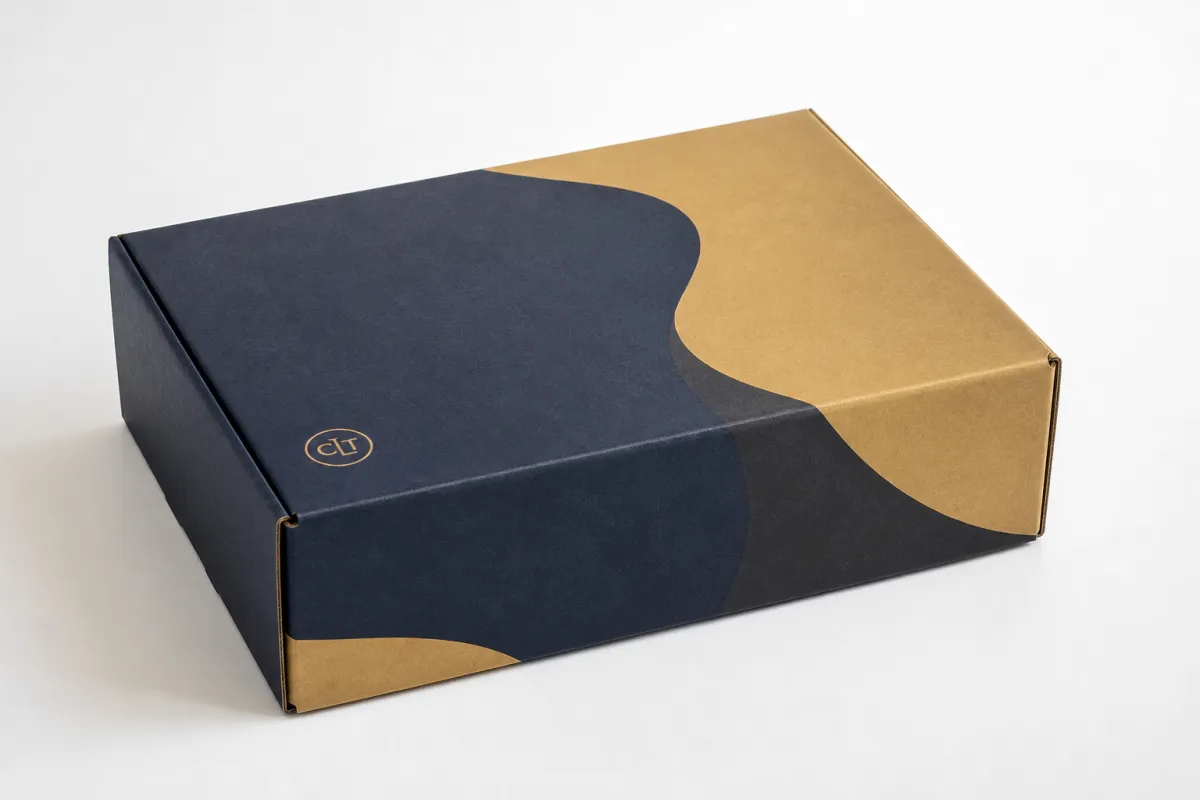
At the simplest level, custom mailer boxes with matte lamination are printed mailers finished with a low-sheen outer layer. That layer may be a matte film, often BOPP or a similar material, or in some production setups a matte coating system that creates a comparable effect. The important point is that the finish is applied after printing and before the box is die cut, folded, and glued into its final shape.
That distinction matters more than most buyers expect. The box structure is what determines whether the mailer can protect the product. The finish is what changes the visual tone and the handling feel. A mailer with strong locking tabs, a correct die line, and the right corrugated construction can still fail if the artwork is too busy or the finish is wrong for the use case. Matte lamination mainly shapes the presentation, which is why it is often chosen for branded packaging that needs to feel polished without becoming flashy.
Picture a skincare subscription that lands every month. The customer expects consistency, tidy presentation, and a package that still looks clean after moving through a few hands. Custom mailer boxes with matte lamination fit that kind of job well because the finish keeps the surface from catching light in a harsh way, and the box tends to photograph evenly. It creates a clearer line between a plain shipping carton and a package that feels like part of the brand experience.
Matte does not mean dull or flat in a bad way. It still handles full-color printing, foil accents, embossing, and spot varnish if the structure and budget allow for those extras. What changes is the mood. Gloss usually speaks louder. Matte holds back a little, which is often exactly what premium packaging needs. A lot of brands don’t want a box that feels like it is trying too hard, and honestly, that restraint can be the whole point.
Practical rule: if the box helps sell the product, treat the finish as part of the brand system rather than a decorative add-on.
Buyers usually get the most out of this finish when the packaging is meant to be seen. That includes DTC shipping, influencer kits, seasonal gifts, launch packaging, and subscription programs where the parcel itself is part of the customer memory. It is less compelling if the only goal is to move goods at the lowest possible cost. In that case, a simpler shipper or a different mailer format may make more sense.
So the real question is not whether custom mailer boxes with matte lamination look good. They usually do. The better question is whether that look matches the product, the shipping path, and the margin target. That is where material choice starts to matter.
How Matte Lamination Works on Mailer Boxes
Matte lamination starts after the artwork is printed. The printed sheet or liner receives a matte film on the exterior side, then the sheets are cut, creased, and converted into the final mailer. That film is what reduces shine and creates the soft, low-glare finish people usually mean when they ask for matte packaging. Supplier methods vary, but the sequence stays familiar: print first, finish second, then die cut and assemble.
The visual change is immediate. Bright colors become a little more controlled. Black areas look deeper and less mirror-like. Fine type often reads more cleanly because the surface does not bounce as much light back to the eye. That matters in photography, where custom mailer boxes with matte lamination tend to hold up well in unboxing shots and studio setups alike. Beauty, apparel, wellness, and lifestyle brands lean on that effect a lot, sometimes without even naming it outright.
The tactile difference matters too. Matte feels drier and smoother, while gloss usually feels slicker and more reflective. That touch gives the box a more measured, grounded presence. It also hides small fingerprints and warehouse handling marks better than a glossy finish, though it is not magic. Scrapes, heavy compression, and rough conveyor belts can still leave visible wear. Packaging is packaging, not a force field.
Matte, gloss, and soft-touch are not the same
People sometimes use “matte” as a catch-all for premium-looking packaging, but the tradeoffs are real. Gloss boosts color intensity and makes the box pop under retail lighting. Soft-touch adds a velvety hand-feel and usually lands higher on the pricing scale. Matte lamination sits in the middle in a practical sense: less reflective than gloss, less specialized than soft-touch, and often easier to defend on cost.
That middle ground is one reason Custom Mailer boxes with matte lamination show up so often in branded packaging. The finish supports the artwork instead of competing with it. A strong logo, a restrained palette, or a disciplined pattern usually looks better when the surface is quiet and even. The box gets to do its job without acting like it needs applause.
What substrates work best
The finish performs best when the board and print method are matched to the artwork. E-flute corrugated is a common choice for mailer boxes because it gives a good balance of print quality and shipping strength. B-flute has its own feel and stiffness profile. For lighter retail packaging, paperboard can also work well if the goal is a compact, polished presentation rather than heavier transit protection.
The match between artwork and substrate matters more than many buyers realize. Dark solids, detailed photography, and tiny reversed type all behave differently on a matte surface. If the design depends on sharp contrast, the press setup needs to be dialed in carefully so the finish does not soften the artwork more than intended. Custom mailer boxes with matte lamination look best when the files are built with that behavior in mind from the start.
One honest note: matte lamination is a surface treatment, not a waterproof shield. It helps with wear, but it does not turn the mailer into a moisture-proof carton. If humidity, condensation, or liquid exposure is likely, the product pack-out needs its own protection plan. That part is easy to overlook until a shipment sits in a cold truck overnight and everything changes.
Key Factors That Change the Look, Feel, and Performance
A few variables decide whether custom mailer boxes with matte lamination feel polished or just ordinary. Size, board thickness, ink coverage, and how much of the surface gets finished all matter right away. The less obvious details usually show up after the first run: how the corners hold, whether dark solids show rub marks, and whether the finish still looks even after fulfillment has had its way with the carton.
Box size affects more than freight cost. Larger mailers expose more surface area, which creates more room for scuffs and more chance for visual imbalance if the artwork is not scaled properly. Smaller boxes can look elegant, but if the logo is too tiny or the typography is too fine, the matte surface can soften the image more than expected. Good packaging design takes that into account before the press ever starts moving.
Board grade matters just as much. A box can look strong on the outside and still buckle under stacking pressure or fail during pack-out if the board is too light for the job. Buyers often focus on the surface finish and overlook the structure underneath. That’s an easy mistake to make. The finish shapes perception; the board shapes performance. Both need to pull their weight.
Artwork choices have outsized impact
Matte lamination rewards contrast that feels deliberate. Black-and-white systems often look especially clean. Earth tones, muted blues, and cream backgrounds usually behave nicely too. Problems tend to show up with very dark backgrounds, tiny text, and weak image files. Matte can flatten those elements if the print process is not carefully controlled, so the artwork needs to be built for the finish instead of hoping the finish will fix the artwork.
Foil, embossing, and metallic accents can work beautifully on custom mailer boxes with matte lamination, but each treatment adds another layer of complexity. A spot foil logo on a matte field can look excellent. A crowded layout with too many effects can feel confused, even expensive in the wrong way. More treatments do not automatically equal more value. Sometimes they just make the box harder to read in motion, on camera, or at a glance.
Brands with a disciplined visual system often do best here. One logo, one accent color, and a matte field can feel more premium than a busy layout full of competing effects. That tends to ring true for wellness, candle, skincare, and stationery brands, where the box is part of the product story rather than a noisy wrapper around it.
Shipping conditions are not optional details
Even a beautiful box still has to survive fulfillment. Stacking pressure, belt abrasion, temperature swings, and rough parcel handling all leave a trace. If a mailer moves through several touchpoints, custom mailer boxes with matte lamination should be judged on more than appearance. They need to be tested with the actual product weight, insert design, and shipping path.
For parcel programs, many teams reference the ISTA library to understand drop, vibration, and compression behavior. That does not mean every job needs formal certification. It does mean the shipping route should inform the box spec rather than the other way around. Packaging that looks perfect on a render but flakes apart in transit is just expensive disappointment.
Sustainability is part of the spec sheet
Matte lamination can complicate environmental claims. Some laminated structures are accepted in paper recycling streams; others are handled differently depending on the local recovery system. That variation matters. If a brand wants to make a sustainability claim, the board, adhesive, and finish need to be checked together. FSC-certified board can support responsible sourcing, but it does not answer every end-of-life question on its own. For chain-of-custody basics, the FSC site is a useful place to verify terminology and sourcing standards.
The cleanest packaging conversations are usually the most practical ones: what does the box need to do, and which tradeoff can the brand live with? If the answer is “look excellent, survive shipping, and support premium branded packaging,” custom mailer boxes with matte lamination are often a sensible fit. If the answer is “lowest possible cost per shipment,” another structure may be the better choice, and that is fine too.
- Best visual fit: premium DTC orders, launch kits, subscription drops, and giftable product packaging.
- Best structural fit: E-flute or similar corrugated mailers with strong tuck locks and accurate die cutting.
- Best design fit: restrained graphics, readable type, and a palette that still holds detail under matte light.
- Less ideal fit: packages that need heavy water resistance or serious abrasion protection.
Custom Mailer Boxes with Matte Lamination: Cost, Pricing, and MOQ
Price is where most projects become very real, very quickly. Custom mailer boxes with matte lamination cost more than plain unprinted mailers, and the reasons are straightforward: printing, finishing, cutting, setup, and assembly all add labor and material. The biggest drivers are size, board thickness, print coverage, quantity, and whether you add inserts, foil, embossing, or specialty coatings.
Small quantities can feel pricey because setup costs are spread across fewer units. At higher volumes, the per-box price usually drops quite a bit. That is why a startup order of 500 boxes can look nothing like a replenishment order of 5,000. The artwork may be the same, the structure may be the same, and the finish may be the same, yet the quote still shifts because fixed costs are divided differently.
MOQ matters for the same reason. Many suppliers quote 500 to 1,000 units as a practical floor for fully custom mailer boxes with matte lamination, although some can go lower with digital production or a simplified spec. For a launch, that kind of minimum can be helpful because it keeps risk manageable. For a recurring subscription program, it may be too low and force more frequent reorders than the operation really wants.
If you are comparing vendors, ask them to quote the same board, the same dieline, the same finish, and the same freight assumption. Without that, the quotes do not mean much. A lower price can hide thinner board, a different lamination process, or fewer finishing steps. That is how buyers end up paying later through damaged returns or a box that just does not present well.
It also helps to compare custom mailer boxes with matte lamination against other options in your packaging lineup, including a simpler shipper or a lighter format such as Custom Poly Mailers. Not every SKU needs the same package. A premium candle may justify a refined finish, while apparel or soft goods may ship better in a different structure entirely.
Budget is more than unit price. Samples, proofing, freight, inspection, and the labor the box adds to fulfillment all belong in the math. A slightly more expensive box can still be the smarter choice if it lowers damage rates or improves repeat purchase behavior. Packaging has to serve the margin, not just the mockup, and that part gets forgotten more often than it should.
| Finish Option | Look and Feel | Typical Use Case | Approx. Unit Cost at 1,000 | Approx. Unit Cost at 5,000 |
|---|---|---|---|---|
| Gloss lamination | Bright, reflective, vivid color pop | Retail packaging that needs visual punch | $0.95-$1.65 | $0.48-$0.92 |
| Matte lamination | Soft sheen, low glare, restrained premium look | Branded packaging, DTC shipments, giftable mailers | $1.05-$1.85 | $0.52-$1.02 |
| Soft-touch matte | Velvety, tactile, high-end | Luxury product packaging and launch kits | $1.25-$2.20 | $0.68-$1.30 |
Those ranges assume a common mailer size, standard four-color print, and a normal corrugated build. Change the dimensions, add inserts, or increase ink coverage, and the numbers will move. That is normal. The real question is whether the finish supports the value proposition. Sometimes custom mailer boxes with matte lamination are worth every extra cent. Sometimes a simpler box produces a better return per shipment.
A useful buying test is whether the box will materially improve retention, referral, or perceived quality. If the answer is yes, a few extra cents per unit can be money well spent. If the box is only barely visible in the customer journey, that same budget may work harder in another part of the Custom Packaging Products lineup.
Production Steps, Timeline, and Lead Time
The production path for custom mailer boxes with matte lamination usually follows a predictable sequence. First comes sizing and dieline approval. Then artwork prep. Then proofing. After that, printing, lamination, die cutting, folding, inspection, and shipment. If inserts are included, they often run alongside the box or in a separate lane depending on the supplier.
The step that causes the most friction is often late-stage change, not printing itself. A small update to the dieline can ripple through the schedule. Artwork that is not fully print-ready can do the same. If the font is too small, the image resolution is weak, or the bleed is off, proofing drags on. That becomes a project management problem as much as a manufacturing one.
Realistic timing helps planning
For many custom mailer boxes with matte lamination orders, a first run can take roughly 12 to 20 business days after proof approval, with samples or pre-production checks adding more time before that. Repeat orders usually move faster if the dieline is already locked and the board setup is in place. Rush production can compress the schedule, but it may narrow the range of paper stocks, finishing options, or inspection time. There is no free shortcut there; something always gives.
Freight belongs in the lead time conversation too. A box can finish production and still miss a launch if shipping, receiving, or final assembly is not planned correctly. Lead time should be treated as a full chain, not a factory-only estimate. I have seen teams plan around a press date and forget the dock date. The boxes technically arrived. The launch still slipped, which is a frustrating kind of almost-right.
Where delays usually happen
Custom mailer boxes with matte lamination are most likely to slip when the order changes after approval. Common trouble spots include artwork revisions, finish swaps, size changes, and sample review delays. Another frequent issue is underestimating how long it takes multiple stakeholders to review physical samples. A marketing lead may like the box on screen. A fulfillment manager may spot a fit issue that changes the structure. Both perspectives matter, and they usually do not arrive at the same time.
It helps to build a project calendar backward from the launch date. Reserve time for sample review, proof corrections, and freight transit. If the boxes need to support a parcel program, use transit expectations that match your channels and check them against the actual shipping environment. The ISTA framework is useful because it keeps the focus on how packaging behaves under stress, not under studio lighting.
There is also a hidden timing issue in matte finishing itself. Some production lines run matte lamination in dedicated windows because the surface needs consistent handling and curing. That does not always create a delay, but it can. If the launch date is fixed, ask whether the finish choice affects queue time before you approve the order. That question can save a week and a half, which is a bigger deal than people think.
Field-tested advice: manage the box schedule like a supply chain project, not a graphic design task.
That mindset helps teams avoid shortcuts that cost more later. A mailer that arrives with the right size, the right finish, and clean folding is more useful than a rushed run with a prettier file and a bad fit. Custom mailer boxes with matte lamination only earn their keep if they show up on time and behave well in the warehouse and on the doorstep.
Common Mistakes When Ordering Matte-Laminated Mailers
The most common mistake is choosing the finish before the structure. Buyers fall in love with the look of custom mailer boxes with matte lamination and then discover the box is too weak, too large, or awkward to pack. The shipping use case should drive the material decision first. Matte finish is the layer you choose after the functional spec is settled.
A second mistake is designing artwork as if the box will never leave a screen. Matte changes contrast. Dark backgrounds can swallow detail. Tiny logos can disappear. Fine lines can soften. If the brand palette is delicate, the print team needs a file that anticipates the finish rather than hoping the finish will rescue the layout. That one gets missed a lot, and it is usually the reason people think the box looked “off” even though the artwork was technically approved.
Skipping samples is another expensive shortcut. On a monitor, custom mailer boxes with matte lamination often look pretty close to a polished render. On board, the result is different. You need to feel the texture, inspect the corner quality, and see how the box behaves under natural and warehouse light. One physical sample can prevent a full run of disappointment. It is a small cost compared with getting 5,000 boxes that miss the mark.
Quote comparisons can be misleading
A low quote only matters if the specification truly matches. That sounds obvious, yet it is one of the easiest traps in packaging procurement. A vendor may quote thinner board, a different lamination process, or a simpler finishing pass. Another may exclude freight, inserts, or proofing. On paper, the cheaper option looks better. In practice, it may be a different product altogether.
To compare fairly, line up the board grade, outer liner stock, print coverage, finish type, insert count, die line complexity, and delivery terms. Then compare custom mailer boxes with matte lamination on the same basis across vendors. If one supplier is still far lower, ask why. Sometimes there is a real efficiency gain. Other times there is a hidden downgrade, and that is the sort of detail that comes back to bite the budget later.
Fit mistakes show up fast
It is surprisingly easy to overpack a mailer or leave too much empty space inside it. Either version looks careless. Even the nicest custom mailer boxes with matte lamination cannot fix a product that rattles in transit. Inserts, paper fill, molded components, and cavity design all need to be tested together. The outer finish gets the attention; the inner fit prevents damage.
Quality control matters on the first production run. Inspect color drift, corner durability, crease alignment, lamination consistency, and how the tuck points hold under repeated opening. If the box will be used for retail packaging and e-commerce alike, test both conditions. A box that survives a single presentation but frays after repeated handling is not ready for scale.
There is also a brand perception mistake that is less visible but just as real: assuming matte automatically means premium. It does not. A weak layout, awkward typography, or undersized logo can make the box feel generic regardless of finish. Good custom printed boxes still need disciplined composition. Matte just gives the design a cleaner stage to stand on.
Expert Tips and Next Steps for a Better Order
If you are considering custom mailer boxes with matte lamination, start with one benchmark sample. That single sample can answer questions that PDFs never really settle: how the finish handles glare, how it resists scuffing, how the logo reads from arm’s length, and whether the box feels right for the brand. A sample is not extra work. It is usually the fastest way to avoid a bad assumption.
Build a one-page packaging brief before you request quotes. Include product dimensions, product weight, shipping method, target quantity, budget ceiling, brand color preferences, and any special effects you want to test. That brief keeps vendors honest and keeps your internal team aligned. It also makes it easier to compare custom mailer boxes with matte lamination against other options without losing track of what the box actually needs to do.
From a procurement point of view, the best quote is the one that matches the brief exactly. Ask for unit cost, setup charges, sample fees, lead time, freight assumptions, and whether reorders can reuse the same tooling. If the vendor also offers other formats such as Custom Packaging Products, it can help to compare the mailer against a lighter or simpler structure before locking the final spec. Sometimes the prettier choice is not the smartest one, and that is fine to say out loud.
It also helps to run a small launch test. Send a few boxes through actual fulfillment, then track how they arrive. Check corner wear, surface marks, and how the box looks on camera when customers post it. That kind of real-world feedback is more useful than theory because it shows how custom mailer boxes with matte lamination behave in the channels that matter.
- Confirm the structure first: size, board grade, closure style, and insert fit.
- Approve the dieline: do not move ahead until the print area and folds are locked.
- Review a physical sample: compare matte glare, color, and corner finish in daylight.
- Compare quotes on the same specs: unit price only means something when the build is identical.
- Test a real shipment: see how the box handles fulfillment before you scale up.
That sequence keeps the order grounded in operations rather than aesthetics alone. That is where custom mailer boxes with matte lamination usually perform best: when the finish is chosen to support the product, the shipping route, and the economics of the order, not just to look good in a mockup. If you lock the structure, verify the sample, and match the spec to the actual shipment path, the finish becomes a dependable part of the packaging system instead of a one-time flourish. That is the practical takeaway, and it holds up pretty well across categories.
Are custom mailer boxes with matte lamination durable enough for shipping?
Yes, they usually hold up well against scuffs and handling, but durability still depends on corrugated grade, box design, and how the product is packed inside. They are not a waterproof solution, so humidity, liquid exposure, and rough freight conditions still need to be managed with the right structure and inserts.
How do custom mailer boxes with matte lamination compare with gloss finish?
Matte reduces glare and creates a softer, more premium look, while gloss makes colors appear brighter but can show scratches and reflections more easily. The right choice depends on brand style, photography needs, and whether the packaging should feel understated or highly attention-grabbing.
What affects the price of custom mailer boxes with matte lamination the most?
Size, board strength, print coverage, and order quantity are usually the biggest pricing levers, with inserts and special effects adding more cost. MOQ and setup charges also matter, especially for smaller runs where tooling and proofing costs are spread across fewer boxes.
What is the usual production time for matte-laminated mailer boxes?
Production time depends on artwork readiness, proof approvals, and factory capacity, but finishing steps like lamination can add extra days to the schedule. If you need a launch date, ask about sample timing, standard lead time, and whether expedited production is available before you finalize the order.
Can custom mailer boxes with matte lamination be eco-friendly?
They can be, but the answer depends on the substrate, laminate type, and how the local recycling stream handles finished paperboard packaging. Ask for recyclable board options and confirm whether the finish or coating affects your sustainability claims before you place the order.

