Buyer Fit Snapshot
| Best fit | Custom Mailer Envelopes Supplier projects where brand print, material claims, artwork control, MOQ, and repeat-order consistency need to be specified before quoting. |
|---|---|
| Quote inputs | Share finished size, material target, print colors, finish, packing count, annual reorder estimate, ship-to region, and any compliance wording. |
| Proofing check | Approve dieline scale, logo placement, barcode or warning zones, color tolerance, closure strength, and carton packing before bulk production. |
| Main risk | Vague material claims, crowded artwork, missing packing details, or unclear freight terms can make a low unit price expensive after revisions. |
Fast answer: Custom Mailer Envelopes Supplier: Film, Print, MOQ, and Carton Packing should be specified like a repeatable production item. The safest quote records material, print method, finish, artwork proof, packing count, and reorder notes in one written spec.
Production checks before approval
Compare the actual filled-product size with the drawing, then confirm tolerance on folds, seals, hang holes, label areas, and retail display edges. Reserve space for logos, QR codes, warning copy, and material claims before decorative graphics fill the panel.
Quote comparison points
Review material grade, print process, finish, sampling route, tooling charges, carton quantity, and freight assumptions side by side. A quote is only useful when the supplier can repeat the same color, closure quality, and packing count on the next order.
Custom Mailer Envelopes Supplier: What Buyers Should Know
A strong custom mailer envelopes supplier does more than print a logo on a shipping sleeve and call it branded packaging. The right partner shapes the first physical thing your customer sees, and that matters more than a lot of teams want to admit. Finish, stiffness, opening feel, and print clarity all change how the brand lands before the product is even visible. That first touch can make a shipment feel deliberate or kinda cheap, even when the item inside is exactly the same. A thoughtful custom mailer envelopes supplier helps you balance protection, presentation, and production reality without turning the last mile into guesswork.
For buyers managing broader branded packaging or product packaging programs, this is where design stops being a nice mockup and starts hitting warehouse labor, freight cost, and damage rates. If you need adjacent formats too, compare options across Custom Packaging Products or review heavier-duty Custom Poly Mailers when the contents need a different kind of protection.
What a custom mailer envelopes supplier actually does
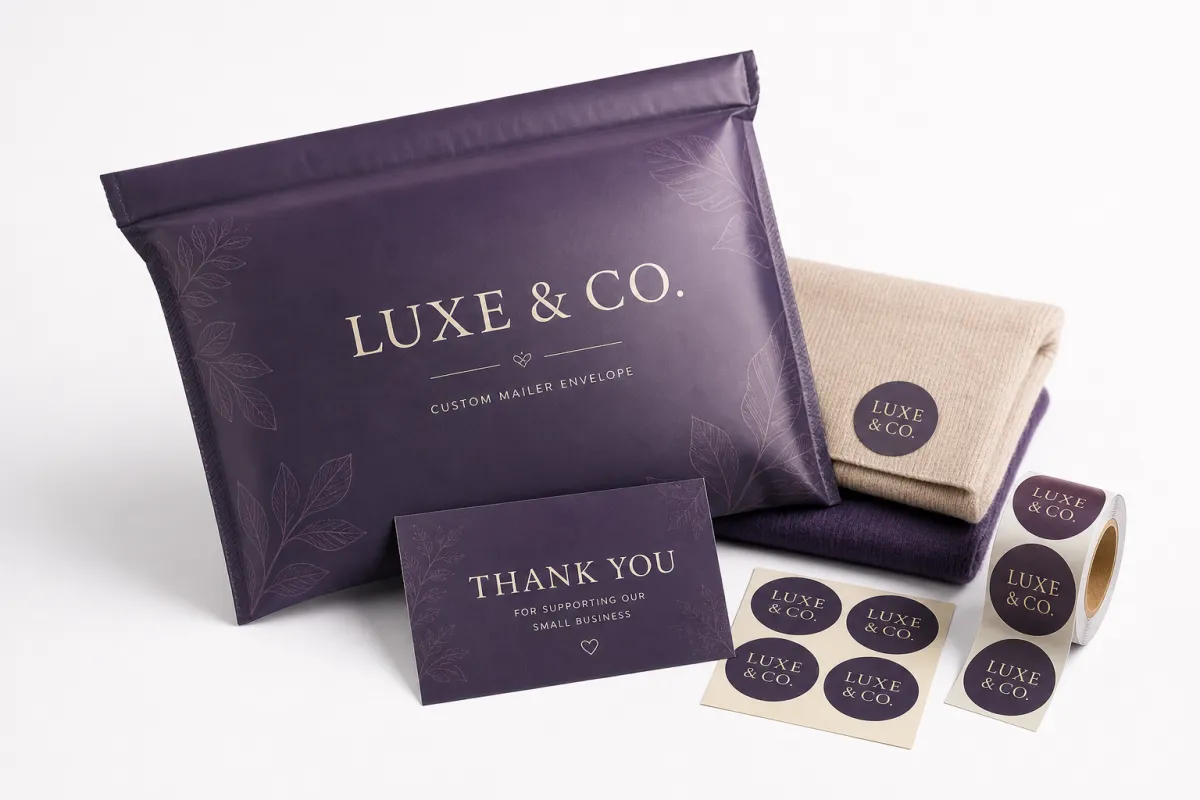
A custom mailer envelopes supplier usually handles four jobs at once: material selection, structural sizing, print support, and production coordination. That sounds tidy on paper. It rarely stays tidy once a real product, a real timeline, and a real warehouse get involved. One buyer may need a rigid paperboard envelope for skincare or printed stationery. Another may need a folded corrugated mailer that stores flat but protects fragile goods during parcel handling. A good custom mailer envelopes supplier translates those needs into a build that can actually be manufactured, packed, and repeated without drama.
The practical difference between stock and custom is not just branding. Stock mailers are fast to buy and easy to replace, but they force the product to fit the package instead of the other way around. Custom sizing can cut wasted void space, improve stacking, and reduce movement in transit. It can also reduce the need for inserts or extra tape, which matters when the fulfillment team is packing hundreds or thousands of orders a day. For many brands, that is the point where custom printed boxes are no longer the only answer, because a custom envelope can deliver a cleaner, lighter, and more economical presentation.
From a packaging buyer’s point of view, the supplier is also the bridge between design intent and manufacturing limits. If artwork crosses a glue zone, if a flap is too narrow for a stable seal, or if a substrate creases badly around a tight fold, the design may look fine on screen and fall apart on press or at pack-out. A seasoned custom mailer envelopes supplier knows where those traps are and should flag them early, not after the order is already moving.
The best envelope is usually the one that disappears into the workflow: it fits properly, seals cleanly, holds print accurately, and arrives looking deliberate instead of improvised.
That is why the conversation should go beyond “Can you print this?” Better question: “Can this structure support our contents, our branding, and our shipping method without creating new problems?” A reliable custom mailer envelopes supplier will answer with specifics about board caliper, closure style, print coverage, and the way the mailer behaves under real handling.
For brands building out retail packaging or direct-to-consumer shipping at the same time, the envelope often becomes part of the larger package branding system. The mailer may arrive first, but it still needs to feel like it belongs to the same visual family as the label, insert card, and product box.
How custom mailer envelopes supplier production works
The production flow at a custom mailer envelopes supplier usually starts with a request for quote that includes dimensions, quantity, print goals, closure needs, and the type of product being shipped. From there, dieline review comes next. That is where the structural template gets checked against the product dimensions and the planned graphics. A few millimeters can decide whether the envelope closes with a clean edge or bulges at the corners like it’s trying too hard.
Artwork prep and proofing come after that. A good custom mailer envelopes supplier will want to see artwork placed on the dieline, not just floating on a flat mockup. Fold lines, tuck flaps, adhesive areas, and tear strips all need to be accounted for. If the piece is printed with high coverage, the supplier may also talk about ink density, coating, or lamination so the color does not scuff during transit or rub against other cartons in the master pack.
Material choice is usually the biggest structural decision. Many jobs use paperboard because it offers a clean print surface and decent rigidity. Others use corrugated structures when the contents need more cushioning or when the mailer must survive rougher parcel handling. Laminated surfaces can improve the look and add scuff resistance, though they may change recycling expectations depending on the build. Adhesive closures, peel-and-seal strips, and tear-open features also affect the user experience and the pack line. A good custom mailer envelopes supplier should explain those tradeoffs in plain language, not in supplier-code meant to make everything sound more complicated than it is.
Printing and finishing are where the brand promise becomes visible. Offset printing is common for larger runs that need sharp image quality and tight color control. Flexographic printing may suit simpler graphics or more economical volumes. Digital printing can help on shorter runs or when the design changes more often. Coatings, soft-touch films, matte varnish, and spot finishes can elevate the look, but they can also change drying time, cost, and abrasion resistance. The right custom mailer envelopes supplier will not oversell decorative finishes if the mailer is going to spend most of its life in a warehouse or a courier sack.
There is also a logistics side to production that buyers should not ignore. The supplier may need to coordinate carton counts, pallet patterns, moisture protection, or insert instructions for fulfillment teams. If the order is tied to a launch or seasonal push, the timeline should include proof approval, production, quality checks, and freight transit. For shipments that need testing, it is smart to ask whether the sample path reflects common standards such as ISTA transport testing guidance. Not every order needs a formal test plan, but when the contents are fragile or high value, simulated transit can prevent expensive surprises.
Some buyers assume the supplier only needs dimensions and artwork. That assumption is convenient. It is also usually wrong. The best results come when the custom mailer envelopes supplier knows how the item will be packed, whether the package will move through parcel networks or palletized fulfillment, and whether the brand is aiming for a premium unboxing feel or a simple protective shipper. That context changes the recommendation from top to bottom.
For sustainability-sensitive programs, a supplier may also suggest substrate choices aligned with FSC-certified paper sourcing or paper-based constructions that fit recycled-content goals. That does not make every build automatically sustainable, but it gives buyers a cleaner path for documentation and brand claims when the materials are chosen carefully.
What drives cost, pricing, and minimums
Pricing from a custom mailer envelopes supplier is shaped by several variables that interact more than people expect. Material grade is the obvious one. A light paperboard envelope costs less than a thick corrugated build, but the extra protection can be worth it if damage or returns are a real concern. Dimensions matter too. Larger mailers use more raw material and sometimes require different machinery or slower production speeds. Print coverage and color count also affect pricing because full flood coverage, metallic inks, or multiple passes usually increase setup and press time.
Finishing details add another layer. A peel-and-seal closure is different from a standard tuck flap. A tear strip is different from a plain open edge. Soft-touch lamination or heavy coating can improve shelf appeal, but it also adds cost and may affect recyclability messaging. A custom mailer envelopes supplier should be able to show where the money is going instead of hiding it behind a vague “custom” label.
Minimum order quantities are tied to setup economics. The press has to be calibrated, the dieline has to be prepared, and the material has to be staged whether you order 1,000 or 10,000 pieces. That is why lower quantities usually carry a higher unit price. The setup cost gets spread across fewer units, which is why a small run can feel disproportionately expensive. A fair custom mailer envelopes supplier will explain whether the MOQ reflects material purchasing, press efficiency, or simply internal production policy.
| Option | Typical use | Indicative unit price at 5,000 pcs | Notes |
|---|---|---|---|
| Stock mailer | Simple shipping needs, limited branding | $0.20-$0.45 | Fast to source, but fit and presentation are less controlled |
| Custom paperboard mailer | Light goods, branded presentation, tidy pack-out | $0.45-$0.95 | Good for clean print and efficient storage |
| Custom corrugated mailer | Fragile products, higher protection needs | $0.60-$1.20 | More structure, usually bulkier and heavier |
| Laminated premium mailer | Higher-end product packaging and retail packaging | $0.80-$1.60 | Better scuff resistance and presentation, but more finishing cost |
Those ranges are directional, not a promise. A custom mailer envelopes supplier may quote lower or higher depending on material availability, print method, freight terms, and whether the design requires unusual tooling. Still, they are useful for sanity-checking proposals. If one quote lands far outside the normal range, ask what is different before assuming the cheaper number is the better deal. Cheap is not a personality trait. It is usually a line item with missing details.
Tooling and proofing fees can also matter. Some jobs carry a one-time plate charge, a die charge, or a digital proof fee. Others bundle those costs into the unit price. When you compare quotes, make sure you know whether the supplier included freight, cartons, and overage allowances. A quote that looks cheaper on paper can become the most expensive option once all the extras are added back in. A careful custom mailer envelopes supplier should be transparent about that.
The real pricing discipline is not about chasing the lowest unit price. It is about matching cost to risk. If a stronger build prevents returns, if a cleaner print finish supports brand trust, or if better sizing reduces void fill and pack labor, the slightly higher unit price can be the smarter buy. That is especially true for brands trying to make their custom printed boxes or envelopes feel aligned across channels.
Step-by-step: choosing the right custom mailer envelopes supplier
The first step is a real needs assessment, not a guess dressed up as strategy. What is being shipped, how fragile is it, what is the final ship weight, and what should the customer feel when they open it? A custom mailer envelopes supplier can only recommend the right structure if they know whether the item is soft goods, rigid products, inserts, cosmetics, sample kits, or something with sharp corners that could puncture a weaker wall.
Then define the shipping environment. Will the mailer go through standard parcel networks, regional courier routes, or fulfillment centers with dense sortation? Will it be packed manually or on a semi-automated line? Will it sit in storage for weeks before use? These questions affect board grade, closure choice, and print finish. A buyer who gives this context to a custom mailer envelopes supplier usually gets a far better recommendation than someone who sends outer dimensions and hopes for magic.
Next, request quotes using the same spec sheet. That means the same internal dimensions, board thickness, print coverage, coating, closure style, quantity tiers, and delivery location. If you change one detail from one vendor to the next, the pricing comparison stops being meaningful. A reliable custom mailer envelopes supplier will welcome a clean spec because it makes their estimate easier to defend.
Sample packs matter more than polished sales language. Ask for material swatches, flat samples, printed samples, and, when possible, a fully finished sample with your actual product inside. This is where a lot of buyers discover that a nice-looking render does not always translate into practical packaging design. The fold may pinch a label, the closure may sit too tight, or the print may look darker than expected on a textured board. A serious custom mailer envelopes supplier should be comfortable with that kind of validation.
Responsiveness is another selection factor that gets overlooked. If a supplier answers technical questions quickly and clearly, that usually says something about how they handle problems later. Delays happen. Artwork needs to be corrected. A material substitute may be required if a grade goes out of stock. The best custom mailer envelopes supplier is not the one that never hits a problem; it is the one that communicates early and gives you options instead of suspense.
Scale matters too. Some vendors are excellent for limited runs but struggle with repeat replenishment or seasonal spikes. Others are better suited to a growing brand that needs repeatable output, tighter color control, and a predictable reorder path. If you expect volume growth, ask how the supplier handles repeat jobs, artwork archiving, and specification lock. That can save a lot of time later.
If you are building a wider packaging system, ask how the envelope relates to your other formats. A supplier that understands branded packaging as a whole can often help you keep visual consistency between mailers, inserts, and other shipping materials. That can be more useful than choosing each component in isolation and hoping it all feels connected.
One practical decision framework is simple:
- Does the custom mailer envelopes supplier understand your product and shipping method?
- Can they show samples that match the quoted spec?
- Do they explain tradeoffs clearly, without hiding setup costs or material differences?
- Can they scale from the first run to the repeat order without changing the build?
- Will they help you protect both the product and the customer experience?
That list looks basic because it is. Basic does not mean optional. It catches a lot of mistakes buyers make when they rush the sourcing step and let a glossy pitch do the thinking for them. A good custom mailer envelopes supplier should make the process feel structured, not mysterious.
Common mistakes when sourcing mailer envelopes
One of the biggest mistakes is choosing a size because it looks tidy on a spreadsheet. A mailer that seems efficient on paper can create loose movement, crushed corners, or a closure that fights the contents. The right size should account for the product, any inserts, and the way the item behaves when the package is handled, stacked, or dropped. A custom mailer envelopes supplier should be asked to validate fit, not just manufacture to dimensions.
Artwork mistakes are just as common. Thin type can disappear on textured board. Light colors can look weak on kraft or recycled surfaces. Images can get interrupted by folds, tuck flaps, or adhesive zones. I have seen brands approve artwork that looked elegant in a mockup and then fail because the important branding sat too close to a crease. Packaging does not care how pretty the PDF looked. A careful custom mailer envelopes supplier will mark these danger zones early.
Another mistake is underestimating lead time. People often think the only clock that matters is the print run itself, but the real schedule usually includes quote approval, dieline revisions, sample review, artwork corrections, production, quality checks, and freight. Add seasonal demand or a material substitution, and the timeline can stretch quickly. A thoughtful custom mailer envelopes supplier should help you build a plan that leaves room for revision instead of pretending every handoff will be flawless.
Skipping sample testing is a costly habit. It is one thing to approve a flat sample in a conference room. It is another to pack a real item, seal the closure, ship it through your fulfillment workflow, and see how it comes back from transit. That is where weak corners, rubbing, or scuffing show up. If the program is important, testing against common handling and distribution practices, including guidance shaped by ISTA, gives you a far better view of performance. A custom mailer envelopes supplier should be part of that testing conversation, not standing off to the side with crossed arms.
Some buyers also overbuild the mailer because they assume thicker always means better. Not always. An oversized, heavily laminated envelope can increase freight cost, take up more storage space, and slow pack speed without giving much added value. On the other hand, underbuilding can create avoidable damage and bad first impressions. The best custom mailer envelopes supplier helps you find the middle ground that fits the product and the route.
Finally, many teams forget to align the envelope with the rest of the system. If the mailer looks premium but the insert card feels unrelated, or if the envelope design ignores the visual rules used in the rest of the package branding, the customer experience can feel fragmented. Consistency is not just a marketing goal; it also signals control and care. That is true whether the program is simple product packaging or a broader family of custom printed boxes and mailers.
Put plainly, a custom mailer envelopes supplier is not just a vendor to place an order with. The supplier is part of the risk management process. If they are not asking hard questions, that is a warning sign.
Expert tips for better performance, branding, and timeline planning
Choose the material based on what the contents actually need. Light apparel, documents, and accessory kits often do well in paperboard constructions, especially when the goal is a clean presentation and efficient storage. Fragile, angular, or heavier items may need corrugated reinforcement or a dual-wall design. A smart custom mailer envelopes supplier will not push the heaviest option by default; they will match the build to the product and route.
If you want a stronger unboxing moment without making production difficult, think about restraint. A subtle texture, a matte surface, or a single well-placed logo can feel more premium than a crowded design with too much ink coverage. One or two brand cues, used well, often beat a full flood graphic that risks scuffing and slows drying. That is a practical packaging design lesson many teams learn only after a few production runs. A good custom mailer envelopes supplier can help you keep the print ambitious but realistic.
Closure details deserve attention. An easy-open strip can improve the customer experience, while a dependable peel-and-seal flap can speed fulfillment. If the mailer will be reused or returned, durability at the opening edge matters. If the package is a one-way shipper, you may care more about the first open than the second use. These choices affect cost, labor, and the feel of the package in hand. The best custom mailer envelopes supplier will ask how often the package needs to be opened and by whom.
Timeline planning should be conservative, especially if the order is tied to a launch. Add buffer time for proofing, art correction, and freight transit. Build in slack for seasonal congestion and supply variation. Even when the supplier is organized, shipping is still shipping, and the final leg can shift by several days. A steady custom mailer envelopes supplier helps you avoid a launch schedule that depends on perfect conditions, which is a cute fantasy and a terrible plan.
Warehouse efficiency matters more than many brand teams realize. If the envelope is hard to fold, if the closures vary from batch to batch, or if dimensions are inconsistent, pack speed drops and errors rise. Easy-open features, repeatable dimensions, and clear stacking behavior can improve throughput without changing the look of the package. That is one reason the right custom mailer envelopes supplier can save money in places that never show up on the invoice.
For brands that care about environmental claims, ask for documentation rather than assumptions. FSC chain-of-custody paperwork, recycled-content statements, or material disclosures are more useful than a vague “eco-friendly” promise. Also ask whether coatings or laminates affect recyclability claims in your market. A responsible custom mailer envelopes supplier should be able to discuss those details without hand-waving.
When the mailer is one part of a broader direct-to-consumer program, I like to think in systems. The envelope, insert card, label, and shipper all need to support one another. If they do, the customer feels a coherent brand. If they do not, even a good product can feel less polished than it should. That is the quiet value of a strong custom mailer envelopes supplier: they help your packaging look like one intentional decision instead of a stack of separate purchases.
Next steps: build a strong RFQ and sample test plan
The fastest way to get useful quotes is to send one clean RFQ to every custom mailer envelopes supplier you are considering. Include the product dimensions, target ship weight, desired material, print method if known, closure preference, quantity range, target launch date, and any special handling concerns. If the item is fragile, say that clearly. If the brand wants a premium tactile finish, say that too. The clearer the request, the easier it is to compare responses without reading tea leaves.
Then ask each custom mailer envelopes supplier for the same things: a unit price at multiple volumes, setup or tooling costs, proofing steps, lead time, freight terms, and sample availability. When those details are aligned, the decision becomes much easier. You are not comparing sales language anymore. You are comparing structure, responsiveness, and total landed value.
A simple sample test can save a lot of trouble. Put the real product inside the sample envelope, seal it the way your team will seal production units, and move it through the same handling path it will face in the warehouse. Shake it gently. Stack it. Send a few through transit if possible. Watch for scuffing, seal failure, or corners that buckle under pressure. A serious custom mailer envelopes supplier should not resist that kind of testing; they should welcome it.
Once the sample passes, document the final spec in plain language. Record the dimensions, board grade, print coverage, finish, closure style, overage allowance, approved artwork version, and lead time. That document becomes the reference point for reorders and prevents quiet drift over time. One of the easiest ways to protect quality is simply to keep the approved spec visible and current. A dependable custom mailer envelopes supplier will appreciate that discipline because it reduces ambiguity on both sides.
If you are still deciding whether the envelope should sit inside a wider custom packaging program or serve as the main branded shipper, that is fine. Many teams refine the system over a few production cycles. The important thing is to start with a fit-for-purpose build and a supplier who can explain the tradeoffs honestly. For many brands, that partner is the custom mailer envelopes supplier who can connect cost, presentation, and fulfillment without forcing one priority to wreck the others.
Here’s the practical takeaway: write one spec, get one finished sample, and test it with the actual product before you approve the first production order. That small bit of discipline catches most of the expensive mistakes before they turn into a warehouse problem.
FAQs
What should I ask a custom mailer envelopes supplier before requesting a quote?
Ask which materials, print methods, and closure options fit your product weight and shipping method, then confirm minimum order quantity, proofing steps, and expected production lead time. It also helps to request sample options so you can compare fit, finish, and durability before you approve the run with a custom mailer envelopes supplier.
How do I compare custom mailer envelopes supplier pricing fairly?
Use the same dimensions, material grade, print coverage, and quantity when you compare quotes. Check whether setup, proofing, freight, and packaging are included or listed separately. A lower unit price is not always the better deal if the envelope is weaker or if hidden charges appear later, so review total value with the custom mailer envelopes supplier in mind.
How long does it usually take a custom mailer envelopes supplier to produce an order?
Lead time depends on artwork approval, material availability, quantity, and finishing complexity. Simple jobs move faster, while custom structures or special print effects usually need more time. Build in extra room for proof revisions and shipping so your launch date stays realistic with any custom mailer envelopes supplier.
What materials work best for custom mailer envelopes?
Paperboard, corrugated, and laminated structures are common choices depending on protection needs. Match the material to the contents so the envelope protects without adding unnecessary bulk or cost. Ask for samples so you can see how the material feels, folds, and performs during packing with a custom mailer envelopes supplier.
How can I reduce mistakes when working with a custom mailer envelopes supplier?
Use a detailed spec sheet with exact dimensions, artwork placement, and closure requirements. Approve physical samples with real products inside before full production, and plan early enough to absorb revisions, test shipments, and freight delays. That kind of discipline makes it much easier to get consistent results from a custom mailer envelopes supplier.

