Buyer Fit Snapshot
| Best fit | Custom Mailers With Die Cutting for Sustainable Packaging projects where brand print, material claims, artwork control, MOQ, and repeat-order consistency need to be specified before quoting. |
|---|---|
| Quote inputs | Share finished size, material target, print colors, finish, packing count, annual reorder estimate, ship-to region, and any compliance wording. |
| Proofing check | Approve dieline scale, logo placement, barcode or warning zones, color tolerance, closure strength, and carton packing before bulk production. |
| Main risk | Vague material claims, crowded artwork, missing packing details, or unclear freight terms can make a low unit price expensive after revisions. |
Fast answer: Custom Mailers With Die Cutting for Sustainable Packaging should be specified like a repeatable production item. The safest quote records material, print method, finish, artwork proof, packing count, and reorder notes in one written spec.
Production checks before approval
Compare the actual filled-product size with the drawing, then confirm tolerance on folds, seals, hang holes, label areas, and retail display edges. Reserve space for logos, QR codes, warning copy, and material claims before decorative graphics fill the panel.
Quote comparison points
Review material grade, print process, finish, sampling route, tooling charges, carton quantity, and freight assumptions side by side. A quote is only useful when the supplier can repeat the same color, closure quality, and packing count on the next order.
Custom mailers with die cutting solve a packaging problem that shows up in plain cartons, oversized mailers, and hurried pack-outs every day: wasted space, shifting product, and the little damage marks that stack up into returns, replacements, and avoidable customer complaints. A well-built structure keeps the item where it belongs, ships flat before use, and cuts out the extra inserts that often do little more than occupy empty space. That makes custom mailers with die cutting useful for product packaging, retail packaging, and stronger package branding without turning every shipment into a patchwork of add-ons.
Buyers usually come to custom mailers with die cutting for practical reasons rather than novelty. Fit matters. Packing speed matters. So does the customer experience when a box is opened and the product sits crooked, rattles in transit, or arrives with a crushed edge because the cavity was guessed instead of designed. A thoughtful die-cut mailer can take the place of a box plus insert, and in some cases it can carry the same presentation value people expect from Custom Packaging Products or even Custom Poly Mailers, depending on the product category and the way it ships.
The strongest case for custom mailers with die cutting is simple: less wasted board, cleaner presentation, and fewer moving parts in the fulfillment line. Brands comparing branded packaging options often discover that the structure does more of the heavy lifting than the print ever could. The design looks polished, the pack-out stays consistent, and the material use stays closer to what the product actually needs. I've seen teams get excited about ink coverage and finishes, then realize the real savings came from trimming half an inch of dead air. That part is kind of boring on paper, but it makes a real difference in the warehouse.
Custom Mailers With Die Cutting: Why They Stand Out
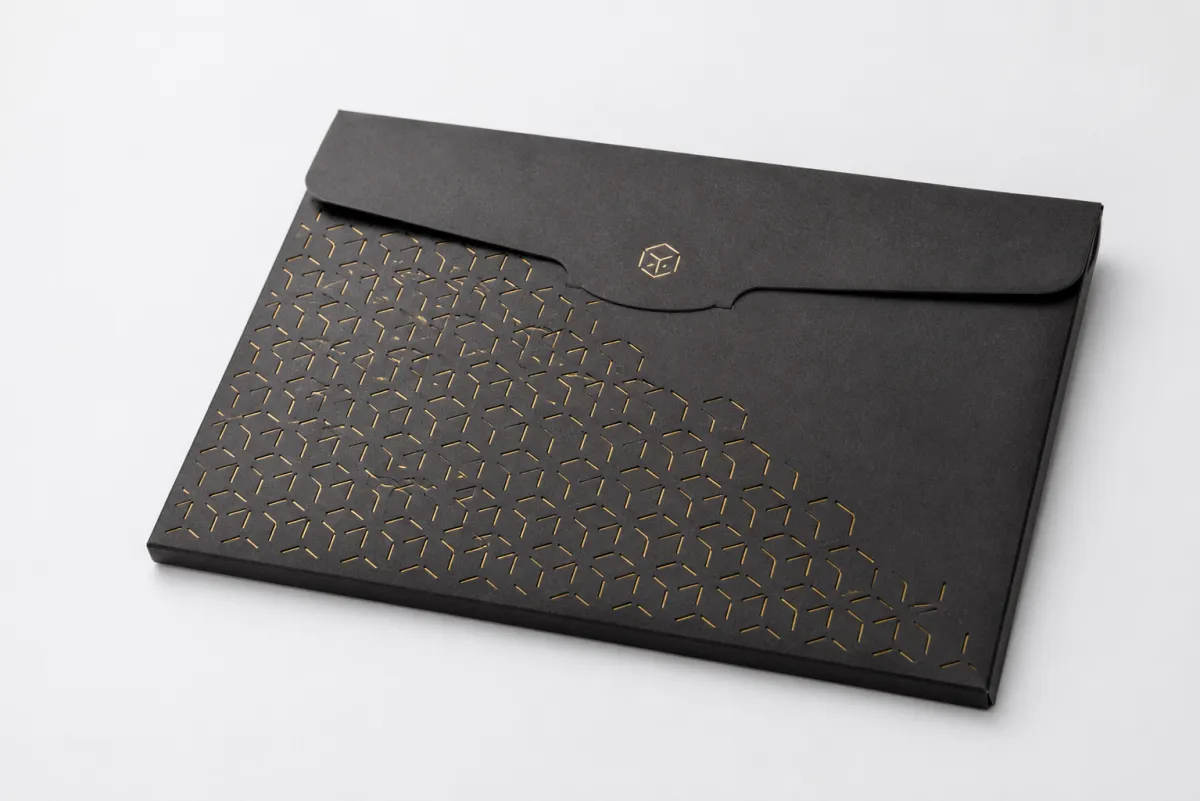
Imagine a mailer that ships flat, looks refined on arrival, and holds the product without tissue, foam, shredded paper, or a stack of insert material doing emergency work. That is the everyday value of custom mailers with die cutting. The shape itself creates a cavity, fold, lock, or retention point that keeps the product from sliding around, which means the package does not need to depend on filler to stay presentable.
Custom mailers with die cutting are usually made from folded paperboard or corrugated board that has been cut and scored to match a specific product profile. Openings, tabs, flaps, and holding points are built into the layout so the item lands in the correct position and stays there. Instead of forcing a generic box to behave, the package is drawn around the object from the start.
That approach matters in sustainable packaging because empty space is not free. More void means more shipping volume, more filler, and often more breakage risk. Parcel carriers price space as well as weight, so a package that shrinks the dead air around the product can lower dimensional charges and trim wasted material. When the design is done well, custom mailers with die cutting reduce filler use, help the pack look cleaner, and let the product do the visual work instead of the packing materials.
Packaging teams run into trouble when the graphic design gets all the attention and the structure gets treated like an afterthought. A mailer can carry beautiful print and still fail in the real world if it bows, shifts, or opens too easily. Custom mailers with die cutting usually perform better because the structure is doing the important work first, while the print supports the brand instead of trying to rescue the package.
Labor is part of the story too. If a packing associate can fold one mailer, place one product, and close one flap without juggling extra inserts, the line moves faster and the chances of error drop. That sounds ordinary, but ordinary is what keeps fulfillment predictable. Repeated production loves consistency, and custom mailers with die cutting make that easier to hold onto. A pack line can only move as fast as its slowest fold, and extra inserts have a funny way of becoming the slowest fold.
“If the product can move inside the mailer, the mailer is not finished. It is just decorated cardboard.”
That is the reason custom mailers with die cutting earn their place in both branded packaging and day-to-day operations. They can look polished from the outside, protect better on the inside, and keep material use closer to the actual need instead of padding the job with excess.
How Custom Mailers With Die Cutting Work
The structure is straightforward once you look past the jargon. A die-cut mailer usually has outer panels, score lines, tuck flaps, locking tabs, and one or more shaped cavities for the product. Some designs include thumb cutouts so the package opens more easily. Others use slits, retention arms, or fold-over elements that grip the item at the edges. The exact layout depends on whether the shipment holds a flat item, a bottle, a kit, or something that needs support at more than one point.
The die cutting step is what makes the format repeatable. A steel rule die is built from the final pattern, then the board passes through the press so cutting and creasing happen in a controlled run. The same mailer can be produced again and again with strong consistency, which is the part buyers care about most. Once the tooling exists, the package is no longer a one-off craft exercise. It becomes a production format that can be run at scale.
A good structural decision changes how the package behaves in the customer’s hands and in the warehouse. A product that fits tightly stays centered. A mailer that stays centered packs faster, stacks better, and opens more cleanly. That matters for subscription boxes, skincare, apparel accessories, and smaller retail packaging programs that need a polished look without sacrificing function. It also helps prevent the kind of scuffed edges and crushed corners that show up when the cavity is too generous.
Decorative openings and functional openings are not the same thing. A window may improve photography or add a design detail. A cutout that helps with grip, visibility, or product retention serves the package. If a cutout does not improve packing, opening, or security, it is just extra tooling. That does not mean the package should be plain. It means the structure should earn its place before anyone starts arguing about aesthetics.
Some of the best custom printed boxes feel as if every fold was measured twice because the pack-out was settled before the artwork got polished. The same discipline belongs here. The mailer needs to fit the product first, then support the graphics. If you are developing a packaging system around Manufacturing Capabilities, ask how the structure, print, and finishing choices support one another before you approve the dieline.
Prototype before production
Do not skip the sample stage. A physical prototype catches issues that a screen mockup cannot show, including awkward finger access, too much closure tension, cavity depth that misses the mark, or a product that slides as soon as the mailer is tipped. Fragile products deserve a drop test that resembles real shipping conditions instead of a polite desk test. That kind of validation often follows common transit checks such as ISTA-style handling protocols, which are meant to show how a package behaves under rough movement and repeated handling.
If the prototype fails, the dieline gets revised. That is the right time to catch the problem. It is a nuisance early, and a very expensive nuisance once the run has started. A quick correction on paper is a lot cheaper than a pallet of beautiful mailers that do not actually hold the product.
Key Materials and Sustainability Factors for Custom Mailers With Die Cutting
Material choice decides whether custom mailers with die cutting feel sturdy and considered, or thin, overworked, and forgettable. Common options include kraft paperboard, recycled chipboard, and single-wall corrugated. Each substrate brings a different feel, a different print surface, and a different tolerance for folds and retention features. Light products often work well in 14pt to 18pt paperboard. Heavier or more fragile items may need 24pt to 32pt board or a slim corrugated build for extra protection.
The goal is not to overbuild the package. A thin board can bow, tear, or make the whole piece feel cheap. A heavy board can add cost, increase shipping weight, and turn a responsible material story into a pile of unnecessary stock. The best choice is usually the lightest substrate that still protects the product and holds its form in transit. That rule applies to custom mailers with die cutting and, frankly, to a lot of custom printed boxes as well.
Sustainability claims deserve scrutiny. Recycled content is useful when the stock performs properly. FSC-certified board matters when chain-of-custody documentation is part of the sourcing requirement. Compostable coatings can help in some recovery systems, but only if the local end-of-life path actually supports them. A claim printed on a spec sheet is not the same thing as a material that can be recovered in the real world. If environmental language is part of the decision, verify it against a recognized standard or certification body such as FSC or a recycling guidance source like EPA recycling resources.
Finishing choices can support or complicate the sustainability picture. Heavy lamination, thick plastic soft-touch films, and dense ink coverage can make recovery harder in some systems. That does not make them wrong. It means the tradeoff should be deliberate. A soft-touch finish may suit Luxury Retail Packaging, while a water-based coating or lighter varnish may be better for a brand trying to keep recovery simpler. Embossing adds tactile value without relying on film, which is one reason it appears so often in well-planned branded packaging.
The simplest rule for buyers is to choose the smallest material package that still protects the product and supports the brand. Too little board creates failures. Too much board buys strength you never needed. Custom mailers with die cutting perform best when the material, structure, and shipping method are aligned instead of stacked with extra weight and extra cost.
| Material Option | Typical Use | Approximate Unit Cost at 5,000 Units | Notes |
|---|---|---|---|
| Kraft paperboard | Light products, clean natural look | $0.18-$0.35 | Good print surface, lighter feel, often a smart balance for custom mailers with die cutting |
| Recycled chipboard | Budget-conscious packaging with moderate protection | $0.22-$0.42 | Can feel less premium unless print and structure are well designed |
| Single-wall corrugated | Heavier or more fragile items | $0.35-$0.85 | Better crush resistance, usually a little bulkier and more expensive to ship |
| Specialty coated board | Premium retail packaging and strong graphics | $0.30-$0.70 | Great presentation, but check recyclability and finish tradeoffs carefully |
Those figures move with print coverage, insert complexity, size, and freight. They are not promises. They are the kind of ranges that help a buyer avoid wishful pricing and build a real budget for custom mailers with die cutting.
Cost and Pricing for Custom Mailers With Die Cutting
Pricing begins with five variables: substrate, size, print complexity, finishing, and quantity. Die construction belongs in that list too, because custom mailers with die cutting need tooling built for the final shape. A simple one-up design might need a steel rule die in the $150-$500 range. More complex layouts, deeper creases, or multi-part forms can run higher. That is not a warning sign. It is the normal cost of custom tooling.
Unit price falls as quantity rises, and the shift is easy to miss if you only look at one run size. At 500 units, the die charge and setup are spread across a small order, so the per-piece cost can feel steep. At 5,000 units, the same tooling is divided over many more pieces and the economics improve noticeably. At 50,000 units, press efficiency and freight planning start to matter as much as raw setup time.
A practical buying range for custom mailers with die cutting might look like this: low-volume work can land around $0.70-$1.60 per unit depending on structure and print, mid-volume runs often fall into the $0.25-$0.70 range, and larger runs can go lower when the build is simple. Add inserts, specialty coatings, heavier ink coverage, or unusual dimensions, and the numbers rise. Freight can rise too. Packaging teams love a low unit price until the shipping quote arrives and reminds everyone that cubic inches are part of the bill.
Hidden costs show up quickly if nobody asks about them. Samples take time and can add expense. Artwork revisions may trigger new proofs. Inserts add materials. Bulky packaging can cost more to ship than teams expected when they assumed a flat carton would behave like paper. If you are comparing custom mailers with die cutting to Custom Packaging Products such as standard cartons, the lowest quote on paper is not always the lowest landed cost.
The better buying rule is this: if custom mailers with die cutting reduce filler, lower damage claims, and cut packing labor, a slightly higher unit cost can still be the cheaper total package. That is a more reliable way to judge the order than chasing a tiny difference on the packaging line. A product that arrives cleanly and looks intentional is usually worth more than a bargain mailer that needs extra materials to work.
MOQ deserves a real conversation too. A supplier may quote 500, 1,000, or 5,000 units, but the economics at those levels are very different. If your volume shifts through the year, design for a structure that can scale without forcing a full retool every time. That keeps custom mailers with die cutting practical instead of turning them into a one-off headache. I have watched otherwise smart teams get stuck with a mailer that only made sense at one volume, and that is a painful place to land.
Process and Timeline: From Dieline to Delivery
The process begins with a brief. Product dimensions, weight, fragility, shipping method, and any sustainability requirements need to be known before anyone draws a sensible dieline. From there comes sizing, structural design, and artwork placement. If the mailer has a special closure, hidden lock, or internal cavity, that feature should be locked down before print files are finalized. Custom mailers with die cutting are far easier to manage when the structure is settled early.
Proofing is the point where many schedules slip. A dieline can look fine on a monitor and still fail in the hand if the fold tension is off, the cavity is too tight, or the closure opens too easily. A PDF is not enough. A sample or prototype is the real test. If the brand is also using package branding across custom printed boxes, inserts, and mailers, the visual system should match before production begins. Sorting out mismatched art after tooling is made costs time and money that nobody wants to spend.
Lead times depend on complexity. A simple custom mailer with die cutting can move from approved dieline to production in roughly 12-18 business days when the sample is approved quickly and the artwork is ready. More detailed structures, specialty coatings, or late-stage changes can extend that to 3-5 weeks or more. Freight is separate. If the packaging is crossing regions, transit time needs to sit on top of production time, not inside it. That detail gets overlooked constantly, and then the launch date gets blamed on the factory as if shipping time were a rumor.
Timing mistakes tend to repeat. Teams wait too long to approve the dieline. They change dimensions after the sample arrives. They forget that a custom die must be built before the press can run. Some assume the job ends when the cartons leave the plant, which is a lovely theory until the goods sit in transit for days. A sensible buffer is 10-15 percent of the total schedule for reviews, adjustments, and freight uncertainty.
For shipments that need confidence in transit, ask whether the pack-out has been tested under compression and drop conditions that resemble real use. ISTA methods are a common reference point for that kind of validation, and they separate a pretty sample from a package that can survive distribution. That matters especially when custom mailers with die cutting are holding fragile, premium, or high-return-value items. If the product is expensive enough to make damage painful, the test protocol should reflect that reality instead of a best-case scenario.
Common Mistakes When Ordering Custom Mailers With Die Cutting
The biggest mistake is designing for graphics first and product fit second. A beautiful mailer that crushes the item is still a failure, only more expensive than a plain one. Custom mailers with die cutting need to protect first and present second. If the product needs a snug cavity, that cavity should be developed before anyone gets lost in ink coverage or finish samples.
Oversized cavities cause another common problem. Buyers sometimes think extra room gives the product breathing space. In practice, it often gives the item room to move. Movement leads to edge wear, rattling, and the kind of arrival experience that drives returns and complaints. If the product needs support, use retention points or tighter side walls rather than hoping a loose insert will make everything behave.
Shipping conditions matter more than many teams want to admit. Temperature swings can affect adhesives. Humidity can soften paperboard. Stack pressure inside a truck can flatten weak structures. Courier handling can be rough enough to expose every shortcut in the design. A package that only works in a calm office is not ready for real distribution. That is true for custom mailers with die cutting, and it is true for most forms of product packaging.
Another mistake is choosing finishes that work against the sustainability target. A mailer can use recycled board and still be awkward to recover if it is wrapped in heavy film or covered with a finish that complicates recycling. Brands that care about a cleaner environmental profile should ask which coatings, inks, and adhesives fit the recovery target before the spec is locked. Otherwise, the sustainability story starts to sound more hopeful than practical.
And the sample should not be skipped. The PDF may look fine. The physical sample is what reveals bad folds, weak closures, and fit issues that a spreadsheet never catches. Before approving a large run, request a prototype and test it with the real product weight. For custom mailers with die cutting, one sample round is far cheaper than replacing a flawed production order. Trust me, that lesson gets expensive fast.
What usually saves the order
Three things tend to rescue the project: exact measurements, honest test criteria, and a willingness to trim back features that do not earn their keep. Decorative extras should come out if they do not improve fit or presentation. Purposeful structure keeps custom mailers with die cutting useful instead of turning them into a costly way to decorate cardboard.
Expert Tips for Better Custom Mailers With Die Cutting
Start with the product, not the artwork. Exact dimensions, weight, fragility, and opening behavior should drive the structure. If the item has a sharp corner, a heavy base, or a surface that scratches easily, the layout should answer those risks first. That is basic packaging logic, yet it gets ignored often enough to cause real trouble. Custom mailers with die cutting work best when the structure reflects the object inside them.
Keep folds simple wherever the design allows it. Complex structures can look clever, but every extra step gives the packing line another chance to slow down or make a mistake. Simpler scores and fewer motions usually mean faster packing, cleaner output, and less waste. That matters even more when the team is handling multiple SKUs and does not have time to memorize a different folding sequence for each one.
Test more than one board when the product sits near the edge of what the package can handle. A 16pt board might work for one item and fail for another that is only a little heavier or taller. The difference between a package that feels solid and one that feels thin can be smaller than people expect. When the load is uncertain, compare two substrate options instead of guessing. With custom mailers with die cutting, a 10 percent change in board performance can matter more than a much larger change in decoration.
Do not chase the cleanest environmental claim on paper while ignoring real damage rates. A lighter board that crushes easily creates returns, replacements, and wasted materials. A heavier board that protects well may be the better environmental choice because it lowers breakage and re-shipping. Sustainability is not a prize for using the least possible material. It comes from making the right tradeoff for the product, the route, and the customer expectation.
If you are building a packaging line around custom mailers with die cutting, use a simple decision set before you place the order:
- Request a dieline that matches the exact product dimensions.
- Compare at least two material options, not one.
- Ask for a sample and test closure tension, fit, and protection.
- Check whether the finish supports recycling or complicates it.
- Confirm production time plus freight time before launch.
That checklist may feel plain, but it is often the difference between a package that performs and one that turns into a postmortem. Custom mailers with die cutting do not need to be complicated. They need enough discipline to fit the product, protect it, and look intentional in the customer’s hands.
If you are still comparing formats, it helps to look at the full packaging system instead of a single carton or a single mailer. A well-built mailer can complement Custom Packaging Products across a subscription line, and in some product categories it can reduce the need for heavier alternatives. For brands that care about branded packaging, that consistency matters as much as the board specification itself.
Final Takeaway
Custom mailers with die cutting deserve attention because they do three jobs at once: they protect the product, reduce filler waste, and improve presentation without turning shipping into a pile of loose inserts and overpackaging. They work especially well for brands that need to balance cost, speed, and sustainability while still making the customer feel like the package was built with care.
The better question is not whether custom mailers with die cutting are “better” in the abstract. The real question is whether they fit your product, your shipping method, and your damage tolerance. If they do, the structure can save labor, reduce empty space, and improve the unboxing experience. If they do not, another format may serve you better. No drama. Just the right packaging decision.
For most buyers, the strongest formula is simple: choose the lightest structure that still protects, validate it with a sample, and keep the finishing choices honest. That is how custom mailers with die cutting become part of a better packaging system instead of another line item on a purchase order. When the package needs to support the brand instead of fighting it, custom mailers with die cutting usually offer the cleaner path.
FAQ
What makes custom mailers with die cutting different from standard mailers?
Standard mailers are usually built around a generic footprint and depend on filler or insert material to stop movement. Custom mailers with die cutting are shaped to match the product, so the structure itself helps hold the item in place. That can improve protection, reduce waste, and make the unboxing feel much more intentional.
Are custom mailers with die cutting actually more sustainable?
They can be, but only when the design reduces board use, filler, and damage-related re-ships. A cleaner structure is not automatically greener. The sustainability result depends on substrate choice, coatings, shipping efficiency, and whether the mailer replaces a heavier or less efficient format.
How much do custom die-cut mailers usually cost?
Pricing depends on board type, size, print coverage, finish, and quantity. A simple run at higher volume may land in the low-cent range per unit, while smaller runs and more complex structures can be much higher. Tooling, sampling, and freight all affect the total cost of custom mailers with die cutting.
What is the typical turnaround for custom mailers with die cutting?
Lead time depends on how fast the dieline is approved, whether samples need revisions, and how complex the structure is. Simple projects can move in roughly 12-18 business days after approval, while more detailed builds or late changes can stretch the schedule. Freight time should be added separately.
What should I send my supplier before requesting a quote?
Send the product dimensions, weight, photos, shipping method, target quantity, and any finish or sustainability requirements. If you have a reference sample or mockup, include that too. The more precise the input, the easier it is to quote custom mailers with die cutting without guessing at the structure.

