Staples Custom Mailing Labels for Clothing Buyers
Staples Custom Mailing Labels look minor on a spreadsheet, then suddenly they are the thing that decides whether a carton moves cleanly through the warehouse or gets touched three times because the label curled, smeared, or landed in the wrong place. In apparel, that is not a cosmetic problem. It is labor, speed, and first impression all at once.
For clothing buyers, labels sit inside the packaging system, not outside it. They need to match the mailer or box, survive handling, and still read clearly under bad light, rushed scanning, and mixed shipping conditions. A label that fails at any one of those points can create more friction than a more expensive decorative upgrade ever would.
That is why staples custom mailing labels are usually a practical purchase rather than a branding flourish. The best orders are the ones that disappear into the workflow: the label sticks, scans, and looks intentional. Nothing dramatic. Just fewer exceptions.
If the label is part of a broader packaging program, it should follow the same visual discipline as the rest of the kit. That means readable type, sensible contrast, and enough whitespace that the address block does not fight the logo. Buyers who manage Custom Packaging Products often get better results when they think in systems instead of isolated items.
There is also a hidden comparison worth making. A mailer label is closer to an operational tool than a retail display piece. It does not need luxury effects. It needs repeatability. That puts it in the same category as other functional items such as Custom Labels & Tags, where production consistency matters more than novelty.
What Staples Custom Mailing Labels Actually Cover
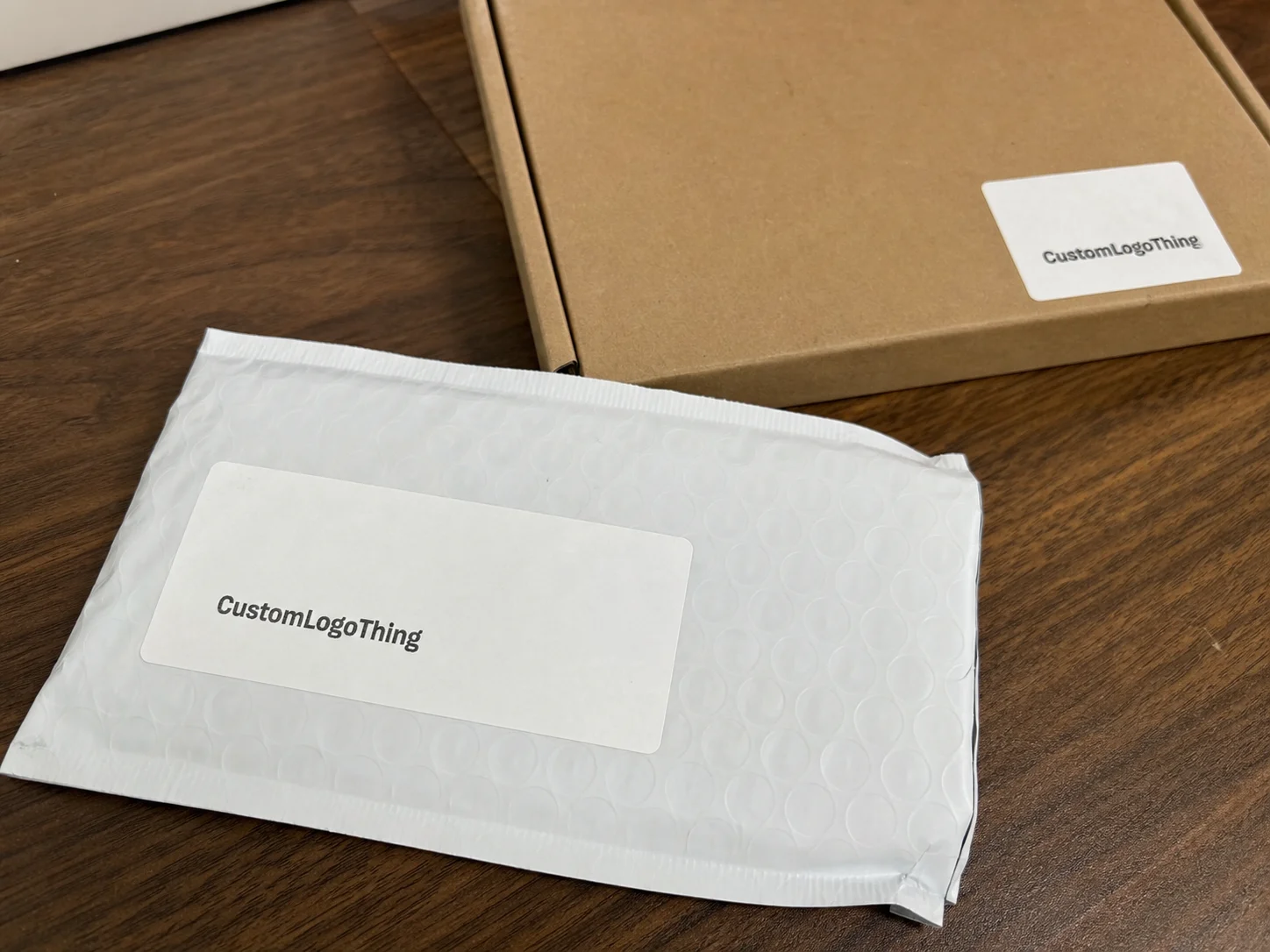
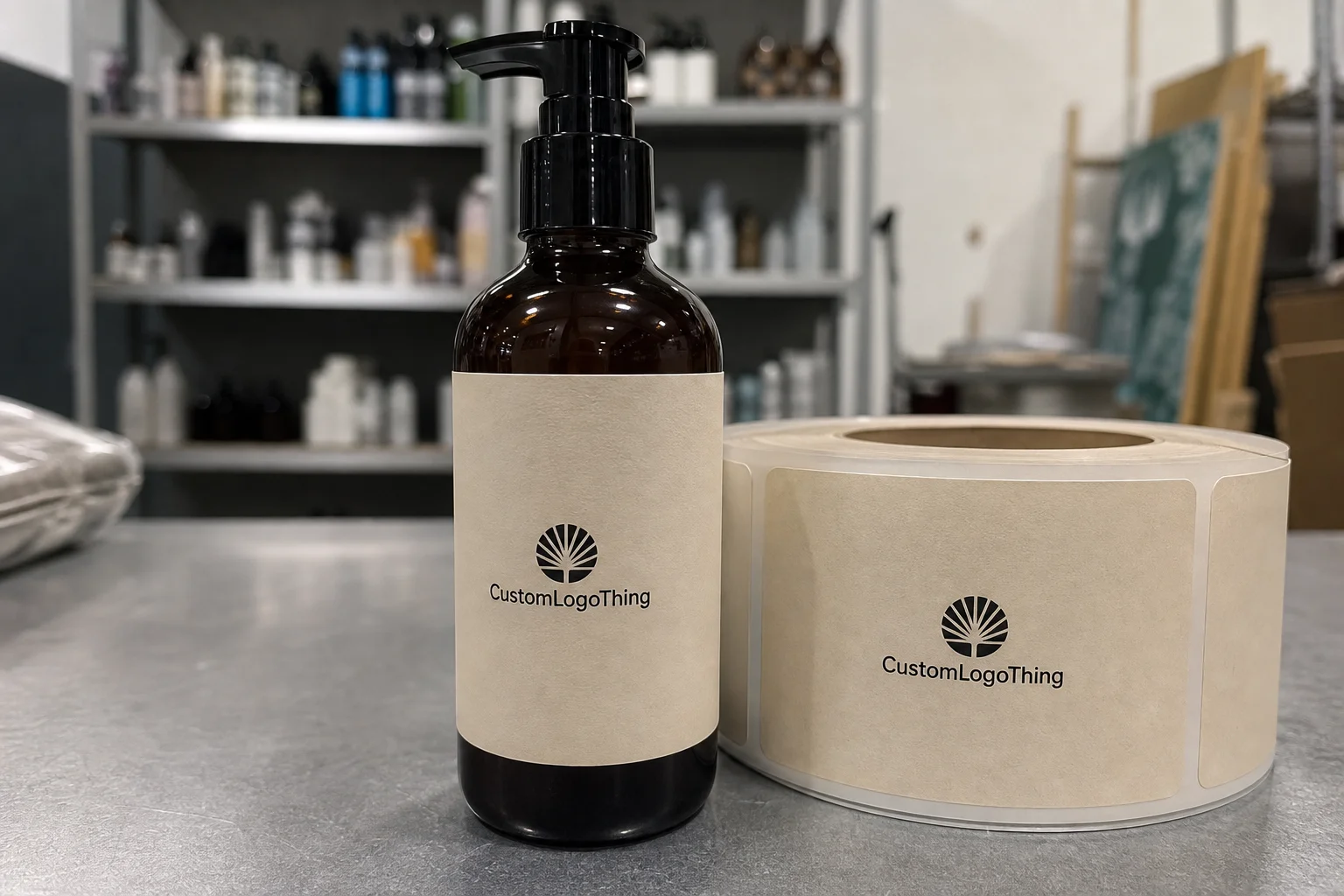
The term covers more ground than many buyers expect. Sheet labels, roll labels, branded address labels, and shipping labels are all related, but they behave differently in real use. A sheet label works well for office-driven or low-volume fulfillment. A roll format is a better fit for repetitive packing lines. A shipping label needs durability and scan clarity, which is a different standard from a decorative return address sticker.
For clothing shipments, the label may go on a corrugated carton, a poly mailer, a garment bag, or an internal return insert. That single choice changes the spec. A clean kraft box and a glossy poly mailer do not respond to adhesive the same way. If you use one label across all surfaces without testing, the failure usually shows up after the order is already live.
The practical use case is easy to define. You want a standard size, a repeatable artwork setup, and a replenishment path that does not require a new design conversation every time the order is placed. That is why staples custom mailing labels tend to work well for seasonal apparel drops, replenishment, and direct-to-consumer fulfillment. They are useful because they are predictable.
That predictability matters more than most teams assume. A low-cost label that peels at the corner or prints with weak contrast creates manual handling. Manual handling is where the real expense appears. One extra touch per parcel may feel small; multiplied across thousands of units, it becomes a measurable hit to throughput.
Good buyers also separate label use from retail display use. A label for outbound shipping should not be judged by the same standards as a premium packaging insert. If the label is doing its job, it should reinforce the branding without getting in the way of the address, barcode, or return data.
Process and Turnaround: What Happens After You Place the Order
The ordering sequence is usually straightforward: choose the format, upload artwork, review a proof, approve the file, then wait for production and delivery. The mistake is assuming each step takes the same amount of time. They do not. Proof review can be fast or slow depending on file quality, and that often determines whether the final ship date holds.
Production lead time is only part of the schedule. Transit time is separate. A buyer who says they need labels in ten days is often describing a total window, not just a print window. If the first proof needs edits, that window can shrink fast.
As a practical planning range, simple digital runs often move into production within 5 to 10 business days after approval. More complex orders, specialty stock, or larger quantities can stretch to 10 to 15 business days or more. Shipping adds another layer, and that layer is not always predictable. A rush fee may move the order ahead in the queue, but it cannot erase freight time.
Several things tend to slow an order down:
- Proof revisions that require layout changes or new copy placement.
- Unusual dimensions that need a custom die or nonstandard layout.
- Stock shortages on coated or synthetic materials.
- Freight choices that do not match the launch window.
That schedule pressure is real in apparel. A label order tied to a launch, wholesale delivery, or replenishment promise is not a minor procurement task. If the packaging misses the shipment, the consequences are visible immediately. The label may be small, but the operational risk is not.
A clean process treats the order like any other production item: file, proof, approval, receipt, and reorder logic. Boring works. It also reduces the number of surprises that show up at the warehouse door.
Material, Adhesive, and Finish Choices That Affect Real-World Use
Labels fail for ordinary reasons. The stock is wrong for the surface. The adhesive is too weak. The finish looks good in a PDF but behaves badly under warehouse lighting. None of that is glamorous, but it is exactly where production problems start.
Paper stock is usually sufficient for clean, dry cartons and internal applications. It is less forgiving on rough recycled board, condensation-prone packages, or routes where the parcel is handled more than once. Synthetic stock costs more, but it tends to hold up better against moisture, abrasion, and longer transit. That difference becomes obvious after a few production cycles.
Adhesive selection deserves more attention than most buyers give it. A permanent acrylic adhesive is common for outbound cartons and many mailers because it stays in place after application. High-tack options are useful on textured or recycled surfaces. Removable adhesive has a narrower role and is usually better for temporary internal marking than for apparel shipping. If a vendor makes performance claims, ask for a measurable standard such as ASTM D3330 peel data instead of vague language.
Finish changes behavior too. Matte stock usually reads better under fluorescent warehouse lights and is easier to annotate by hand. Gloss can sharpen color and make the label look more polished, but it can also show scuffs sooner and make barcode or address areas harder to read if the layout is crowded. In a fulfillment room, legibility tends to matter more than shine.
Environmental stress is where weak specs reveal themselves:
- Humidity can loosen lower-grade adhesive.
- Cold storage can reduce initial tack.
- Repeated handling can abrade glossy surfaces.
- Long parcel routes can stress corners and edges.
That is why the best test is the actual packaging surface, not a sample that merely resembles it. Poly mailers, satin garment bags, and recycled kraft cartons behave differently. If your line uses more than one substrate, the label should be checked against the hardest case first.
For teams with a sustainability claim, paper sourcing may matter as much as the print itself. If recycled content or chain-of-custody documentation is part of the procurement standard, look for paper options with clear certification support such as FSC-certified paper. That does not make the label inherently sustainable, but it does make the claim easier to substantiate.
One more point gets overlooked: the label is not only branding. If the address block, barcode, and return information are packed too tightly, the label turns into a liability. A layout that saves a few millimeters on the art board can cost minutes at the packing bench.
Cost, Pricing, and Unit Economics to Check Before You Buy
Sticker price is a weak decision metric on its own. A lower print quote does not help if the label peels, needs a reprint, or slows the line. The better question is total landed cost: print price, freight, internal handling, application time, and the risk of correction. In clothing fulfillment, those hidden costs matter because labor is already under pressure.
As a rough planning guide, simple paper sheet labels on larger runs may land around $0.04 to $0.12 per label. Roll labels and more durable synthetic stock often run higher, roughly $0.09 to $0.25 per label depending on size, coverage, finish, and quantity. Small runs usually carry setup charges that distort the unit price, which is why a 500-piece order can look disproportionately expensive next to a 5,000-piece order with the same basic spec.
Several factors push the price up or down:
- Quantity
- Dimensions
- Ink coverage and color count
- Stock type
- Finish or lamination
- Proofing complexity
- Rush shipping
The table below is a planning tool, not a quote. It shows how the common formats usually compare for apparel shipments.
| Format | Typical Use | Indicative Price at 5,000 Units | Strengths | Watch-Outs |
|---|---|---|---|---|
| Paper sheet labels | Office-friendly address and return labels, light fulfillment | $0.04-$0.08 each | Low cost, easy storage, good for short runs | Less durable on textured or humid surfaces |
| Paper roll labels | Higher-volume packing lines, faster application | $0.05-$0.10 each | Efficient for repeat application, cleaner workflow | Needs compatible dispensers or application setup |
| Synthetic roll labels | Poly mailers, moisture-prone routes, rough handling | $0.09-$0.25 each | Better moisture resistance, longer shelf life | Higher cost, more sensitive to file and finish choices |
That range explains why unit price alone is not enough. A label that saves two cents but fails once in every few hundred units can cost more than a better one after labor and rework are counted. A 1% failure rate sounds small until it starts touching a launch quantity or a wholesale shipment.
Bottom line: if the label supports a time-sensitive clothing shipment, compare the print quote against the cost of manual correction. A cheap label that has to be restuck or re-scanned is not cheap anymore.
A label that saves a little on paper and creates rework on the line is expensive twice.
Step-by-Step Setup From Artwork File to Approved Proof
File prep is where avoidable mistakes begin. Before sending artwork, confirm the exact label dimensions, bleed, and safe area. If the label is meant for a sheet format, make sure the design fits the grid. If it is for a roll, verify roll direction and application orientation. A file that looks clean in a viewer can still fail after imposition into production.
A vector PDF is usually the safest starting file because it keeps text and logo edges sharp. Raster artwork can work, but only if the resolution stays high enough after scaling. For image elements, 300 dpi is a practical floor. If barcodes are included, pay more attention to size, quiet zones, and contrast than to decorative details.
The proof review should cover more than appearance. A serious packaging order should be checked in this order:
- Confirm the final dimensions against the carton or mailer.
- Verify the return address, ship-from address, and any SKU data.
- Inspect barcode readability at actual size, not zoomed in.
- Check color contrast where the logo meets the data zone.
- Look for trim safety so nothing important gets cut off.
That list looks basic because it is basic. It is also where many reprints start. A proof is not a design comp. It is a production check. Buyers who treat it that way catch most problems before they reach the warehouse.
Version control matters as well. Clothing lines often run multiple sizes, colors, or seasonal variants, and label files get reused months later. Vague names like “final-final” are how wrong artwork gets reordered. Use a naming system that includes SKU, season, and revision so the file is identifiable six months later without relying on memory.
For teams managing both labels and mailers, the proof should reflect the full packaging system. If the box size changes or the mailer color shifts, the address block can suddenly feel cramped. That is a common issue in broader packaging design programs, especially when labels are ordered separately from the other components.
At this stage, staples custom mailing labels should be judged by the same criteria as any other working production item: fit, readability, application speed, and repeatability. If one of those fails, the spec still needs work.
Common Mistakes That Cause Reprints, Delays, and Waste
The most expensive label mistake is usually a mismatch between the spec and the actual shipment. A label that is too large for a narrow panel can crowd the barcode or push key data out of place. A label that is too small can make the address or brand mark unreadable. Both create manual handling, and manual handling is where labor costs creep in.
Over-design is another repeat offender. Too many font weights, too much copy, and weak contrast can make a label look polished on screen but fail in the warehouse. If the crew has to search for the return address or squint at a shipment code, the design is wrong, regardless of how good it looked in the presentation deck.
Skipping a real adhesion test is a costly shortcut. A label that sticks to one carton may fail on another, especially if the second surface is recycled, textured, or slightly dusty. A label that holds at room temperature may lift when exposed to cold, condensation, or a longer route through transit. If your operation uses more than one packaging surface, test the worst case first.
Seasonal and high-volume orders magnify every small error. A proof mistake on 1,000 labels hurts. The same mistake on 20,000 labels can tie up inventory and force a partial reprint during a launch window. That is why experienced buyers treat staples custom mailing labels as a controlled spec, not a casual add-on.
There is also a system problem that shows up in apparel programs. Labels often get ordered separately from the rest of the packaging, even though they should match the carton, poly mailer, or insert card. The mismatch may seem minor, but next to custom printed boxes or a branded mailer, it becomes visible immediately.
If you want a useful durability lens, the thinking behind ISTA test protocols is helpful even if you are not running a formal transit certification. Vibration, compression, drop risk, and surface abrasion are not abstract risks. They are the conditions that separate an approved label from one that survives the shipment.
Next Steps to Tighten Your Spec and Place a Cleaner Reorder
The fastest way to improve a reorder is to stop depending on memory. Build a one-page spec sheet before requesting pricing. Include label size, stock, finish, quantity, ship date, the exact surface it will stick to, and any barcode or return-address requirements. That one page removes a lot of back-and-forth.
Then ask for a proof that shows more than artwork. It should confirm address readability, barcode placement, and the actual fit on the carton or mailer used in fulfillment. If the proof is digital, print one at size and place it on the real package. A physical check still catches issues that a screen check can miss.
Run a small test on the actual packaging surface before the larger order goes live. That matters even more if the brand ships in mixed materials: corrugated boxes one week, poly mailers the next, and recycled cartons after that. Adhesion can change enough to justify a short trial.
From there, save the approved artwork, approved proof, and reorder quantity together. Link them to the exact SKU or seasonal code. That keeps the next order close to the approved version and lowers the chance of an accidental format change. It also makes coordination easier with other branded packaging pieces, whether that means a mailer, a tag, or a carton insert.
For many clothing buyers, staples custom mailing labels make the most sense when the order is repeatable, the shipping surface is known, and the team wants a clean replenishment path. That is why they fit neatly alongside Custom Labels & Tags and a coordinated Custom Poly Mailers program. Keep the spec tight, keep the proof honest, and the reorder gets simpler each time.
How long do custom mailing labels usually take after proof approval?
Standard orders often move into production within about 5 to 10 business days after approval, though larger or more complex runs can take longer. Transit time is separate and depends on the shipping service and destination. If the launch date is fixed, build in a buffer for proof changes and freight delays.
Which label material works best for clothing shipments?
Paper labels usually work well for clean, dry cartons and simple fulfillment tasks. Synthetic stock is better for poly mailers, moisture exposure, and rougher handling. Matte finishes are often easier to read and annotate, while gloss can look sharper but may scuff more easily.
What file should I upload for a clean proof?
A vector PDF is usually the safest starting point because it keeps text and logos sharp. If you use raster artwork, keep the resolution high enough that the smallest text and barcode elements stay readable after scaling. Include bleed and safe-zone margins so nothing important gets trimmed.
How can I lower the unit cost without hurting quality?
Ordering larger quantities usually lowers the per-label price more effectively than chasing special effects. Standard sizes and materials keep setup under control. Avoid rush shipping unless the timeline truly requires it, since freight can erase savings from the print quote.
What should I test before reordering at scale?
Test adhesion on the actual packaging surface, not a substitute material. Check scanability, address readability, and color contrast under warehouse lighting. Confirm that the approved file still matches the current box, mailer, or garment packaging used in fulfillment.