Custom Matchbox Stickers Turn a Tiny Surface Into a Brand Moment
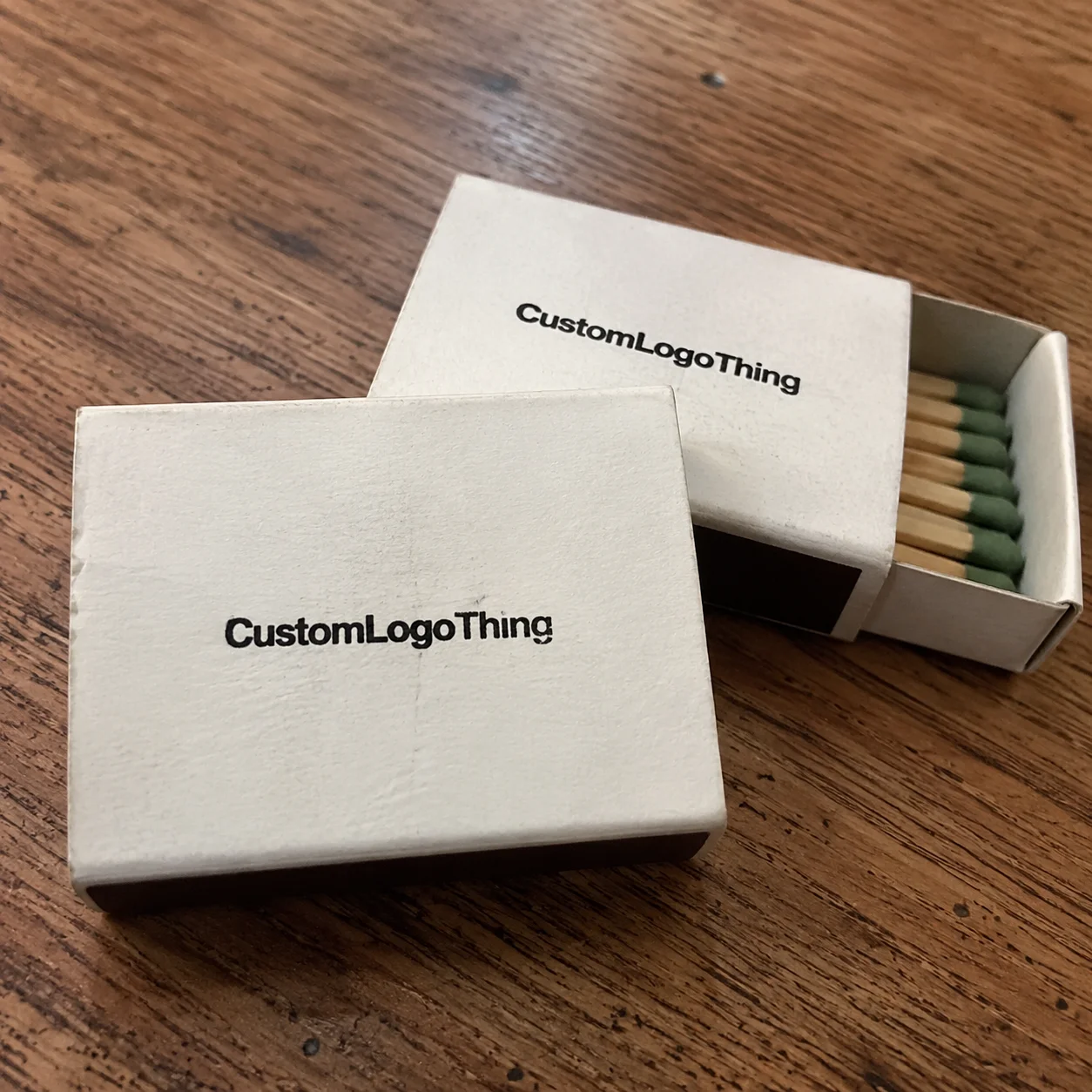
A customer picks up a matchbox at a candle shop counter, cocktail bar, boutique hotel room, or wedding favor table. Small object. Real branding space. Custom matchbox stickers turn a plain box into a compact piece of packaging without forcing you into fully printed matchbox production.
That distinction matters. A sticker is an adhesive label made to cover, wrap, seal, or decorate an existing blank matchbox. You are not changing the box structure. You are adding printed material to the outside, which keeps the project flexible for seasonal graphics, event runs, retail tests, private-label batches, or several design versions under one packaging program.
The common use cases are practical: candle packaging, restaurant hospitality, promotional giveaways, wedding favors, retail displays, subscription boxes, and limited-run product launches. Matchboxes sit in a useful middle ground between functional item and keepsake. They are cheap to distribute, easy to store, and more likely to hang around in a drawer or bag than a postcard ever will.
The biggest advantage is version control. If your packaging shifts every few months, or if one run is for a holiday market and another is for a private event, stickers let you move without committing to pallets of Custom Printed Boxes. The tradeoff is simple: small labels are unforgiving. Sizing, adhesive, finish, and application pressure all show up in the final result.
A good matchbox label rarely comes from one fancy finish. It comes from several small decisions made correctly.
How Matchbox Label Stickers Work on Real Packaging
A matchbox sticker has a basic construction, but each layer has a job. The face material carries the artwork. The adhesive bonds that face stock to the box. The release liner protects the adhesive until application. A coating, varnish, or lamination may sit on top to improve scuff resistance, reduce fingerprints, or change the surface feel.
Placement varies. Some buyers use a top-panel label only, which is clean and fast to apply. Others use front-and-back panel labels so the logo appears on the main face while scent names, safety copy, event details, or batch information sit on the opposite side. Belly-band wraps cover several panels in one piece. Full-cover labels hide most of the original box. Small seal stickers are common for favors and boutique retail packaging.
The matchbox surface affects performance more than people expect. Coated paperboard usually accepts labels more predictably than rough, dusty, uncoated stock. Kraft-style paperboard can look warm and natural, but fibers, surface dust, and handling oils can reduce adhesive contact. On a small carton, even a 1 mm lifted corner looks messy. There is nowhere for it to hide.
Thickness matters too. A heavy textured paper may feel premium, yet it can fight tight edges. Very thin film may conform well but reveal paperboard texture underneath, especially if the box surface is dark, ribbed, or uneven. In many jobs, a 60 to 80 lb paper label or thin BOPP film is a reasonable starting point. Not a universal answer. Just a sane place to begin testing.
Paper labels are popular for candle, wedding, natural product, and vintage-style packaging. BOPP film is better where moisture, oils, or frequent handling are expected. Specialty papers can add a tactile finish, but they should be tested before a full run because small labels do not behave exactly like bottle labels, shipping labels, or carton seals.
One function point needs plain language: do not cover the striker strip unless the layout is specifically designed to preserve strike access. A matchbox that cannot strike properly is not charming. It is annoying, and potentially unsafe.
Matte finishes create soft, understated branding. Gloss helps color pop. Soft-touch and textured finishes feel higher-end, but they add cost and can change how edges lay down. If a finish looks beautiful on a flat proof but will not stay clean, flat, and aligned on the actual matchbox, it is the wrong finish for that job.
Shop-floor rule: the label has to survive the box, not just the proof screen.
Key Specs That Decide Fit, Finish, and Durability
Size accuracy comes first. Matchboxes may look standardized from a distance, but dimensions vary by supplier, especially across imported blanks, boutique matchboxes, and different drawer-style constructions. A common small matchbox might have a top panel around 2.0 by 1.5 inches, but designing from memory is asking for trouble.
Measure the actual box. Use a ruler at minimum and a caliper if the wrap is tight. Check width, height, depth, striker location, panel breaks, rounded edges, crushed corners, and any area that must stay uncovered. Measure several boxes from the same batch because paperboard construction can drift slightly.
Artwork needs bleed and safe margins. For a small die-cut label, 0.0625 inch bleed is a typical minimum. Keep type, borders, QR codes, and logo details at least 0.0625 to 0.125 inch inside the cut line to hide normal trimming variation. Rounded corners are usually smarter than sharp corners because they reduce picking and edge lift during handling.
Adhesive choice should match the surface. Permanent acrylic adhesive works for many paperboard applications. Removable adhesive is only useful if the label must peel away cleanly, and it may not hold as well on textured stock. Stronger adhesives can help on rough or recycled board, but they should be tested because aggressive adhesive grabs fast during hand application. Once it lands crooked, good luck.
Print method changes the economics and the finish. Digital printing is practical for short runs, variable artwork, and multiple designs. Flexographic printing makes sense for larger quantities because setup is spread across more labels. Screen printing, foil stamping, embossing, and specialty coatings can look sharp, but small labels need enough open area for those effects to read clearly.
Color deserves a sober conversation. Tiny dark artwork can plug up. Fine type can fill in. Pale ink on kraft paper can look weaker than expected because the stock absorbs and warms the color. For tighter brand control, ask about PMS color matching or a physical proof. If exact matching matters across Custom Labels & Tags, cartons, inserts, and other pieces, say that before production planning starts.
- Preferred logo format: vector files such as AI, EPS, or editable PDF.
- Image resolution: 300 dpi at final printed size for raster artwork.
- Fonts: outlined or packaged with the working file.
- Dieline: separate layer showing cut, bleed, safe area, and fold or wrap marks.
- Versions: clearly labeled artboards for each scent, event, flavor, or design.
Durability comes from the right top protection. A varnish may be enough for light event use. Lamination is better for labels that will be stacked, shipped, handled in a restaurant, or carried in pockets and bags. If the matchboxes belong to a broader retail packaging system, the finish should feel consistent with the rest of the package. Not like a nice label got slapped on at the last minute.
Cost, Pricing, MOQ, and What Drives Unit Cost
Pricing for custom matchbox stickers depends on size, material, adhesive, finish, print method, quantity, artwork versions, and whether custom cutting is needed. A simple matte paper rectangle costs far less than a soft-touch laminated label with foil, rounded corners, and five design versions. Premium finishes are not wrong. Vague quotes are.
Setup cost and unit cost are separate. Short runs carry more setup cost per sticker because file prep, proofing, press setup, and cutting still have to happen. Larger runs spread that work across more pieces. On a basic digitally printed paper label, a small run may land around $0.20 to $0.60 per sticker depending on size and finish. Larger quantities can drop meaningfully. Specialty effects, custom dies, low-volume handling, and extra sorting can push the range higher.
MOQ, or minimum order quantity, is not one fixed number. Digital sticker production can support lower quantities, sometimes a few hundred pieces for standard shapes. Foil, embossing, specialty paper, custom tooling, or flexographic production may raise minimums to 1,000, 2,500, or 5,000 pieces. The real number depends on equipment, material availability, and how the job is being produced.
| Sticker Approach | Typical Best Fit | Common Cost Driver | Practical Buyer Note |
|---|---|---|---|
| Matte paper top label | Events, candles, boutique gifts | Quantity and print coverage | Often the most budget-friendly option for clean branding. |
| BOPP film label | Bars, restaurants, humid storage | Film stock and adhesive choice | Better resistance to oils and moisture than standard paper. |
| Wraparound label | Fuller visual coverage | Exact sizing and application labor | Requires careful alignment and testing on the actual box. |
| Foil or specialty finish | Premium launches and luxury favors | Tooling, setup, and minimums | Works best with simple artwork and enough open surface area. |
Multiple designs can help or hurt pricing. If every version uses the same size, material, finish, and cut shape, the printer may be able to gang them together efficiently. Still, every unique artwork version requires file handling, proofing, production checks, and sometimes extra sorting. Ten scent labels are not the same job as one label repeated ten times.
Good cost control comes from disciplined choices: use standard shapes, keep dimensions consistent, avoid specialty finishes that do not improve the customer experience, and order extra for application waste. For hand-applied stickers, a 3% to 8% overage is a practical cushion. If several seasonal designs are coming soon, ask whether consolidating them into one production order improves the price.
Do not pick the lowest quote if adhesive, coating, liner format, or cut accuracy is underspecified. A dull print, weak adhesive, or sloppy cut can make an otherwise nice matchbox feel cheap. Ask for the target quantity and the next one or two price breaks, such as 500, 1,000, and 2,500 pieces. The drop in unit cost may be large enough to change the buying decision.
Process and Timeline From Artwork to Finished Stickers
The cleanest process starts with the physical matchbox, not the artwork file. Confirm the exact dimensions, choose the label coverage, prepare the design, review the dieline, approve the proof, print, finish, cut, inspect, and ship. That order removes uncertainty one step at a time.
Information quality drives timeline. A supplier can quote faster when you provide exact measurements, material preference, finish choice, quantity, shipping destination, application method, and deadline. If the matchboxes are needed for an event, launch, hotel opening, or retail reset, say so early. A deadline revealed after the proof is approved is not a deadline. It is a small production fire.
Proofing has two levels. A digital proof confirms layout, spelling, placement, cut line, and general color expectations on screen. A physical proof or material sample helps you judge texture, adhesive feel, opacity, finish, and color on the real stock. Not every job needs a physical proof, but I recommend one when the sticker is part of premium product packaging or when the paperboard surface is unusual.
Lead time depends on artwork readiness, proof approval, material availability, finish complexity, cutting requirements, and shipping distance. Simple digitally printed labels may move through production in roughly 5 to 10 business days after proof approval. Labels with foil, embossing, specialty materials, custom tooling, or tight color matching may need 12 to 20 business days or more. Treat those as planning ranges, not guarantees.
Testing before full application is cheap insurance. Apply a few labels by hand to actual matchboxes, then rub the edges, open and close the drawer, stack several boxes, and leave a few overnight. If the label crosses an edge, check whether corners lift after the board relaxes. If the matchbox will sit near candles, drinks, or food service areas, consider heat, moisture, wax, oil, and fingerprints.
Receiving format matters too. Stickers can arrive on rolls or flat sheets depending on the application method and production setup. Roll labels are