A plain printed sticker can look fine. Fine is not always enough. Custom 3d dome stickers read more like product badges than basic labels because the clear resin adds depth, gloss, and a little physical weight customers can feel.
That raised lens effect changes the message fast. A flat vinyl sticker carries graphics. A domed sticker turns the logo into a tactile brand marker that people notice before they read it. Tiny difference. Big perceived value.
Custom 3D Dome Stickers Make Flat Branding Look Expensive
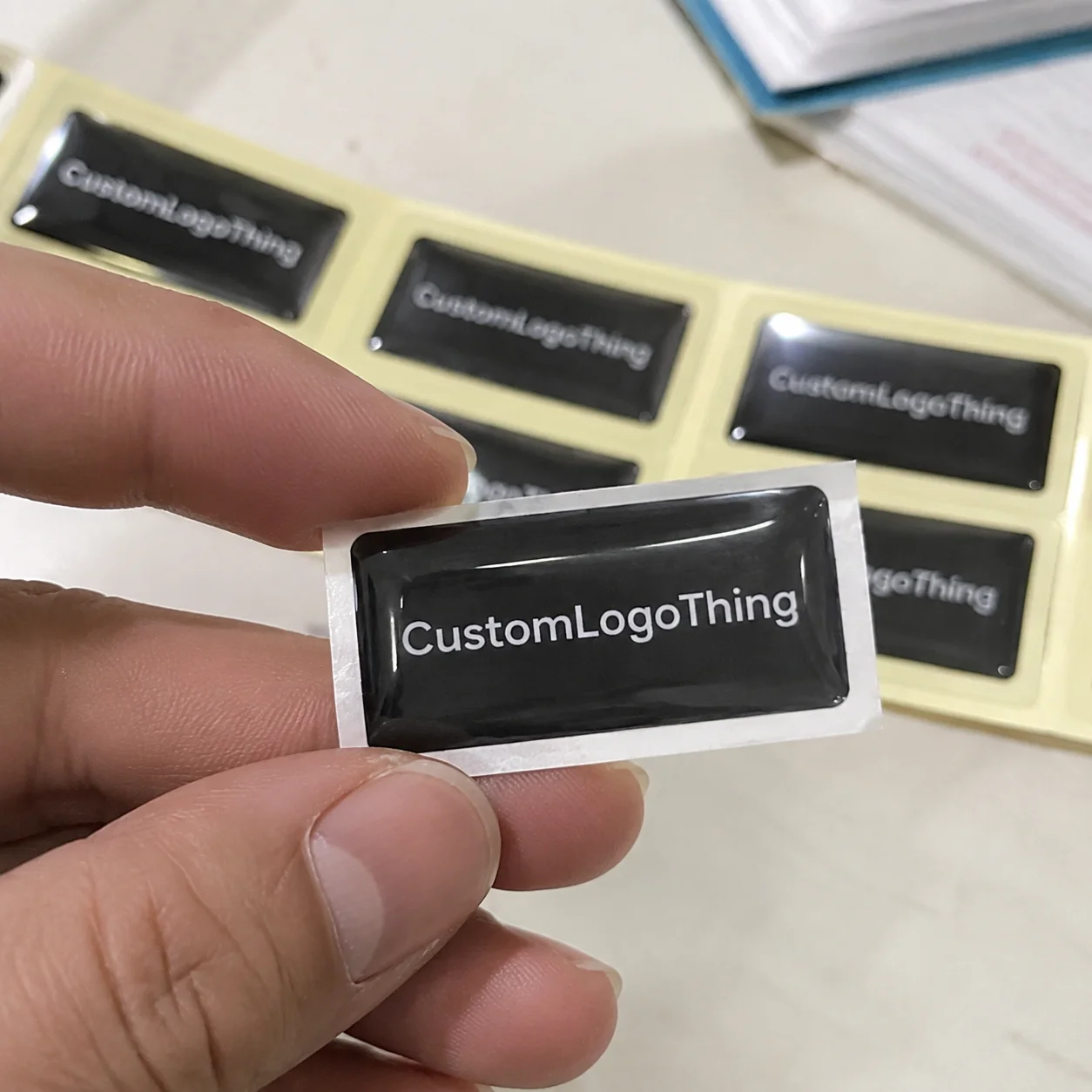
Custom 3d dome stickers are Printed Adhesive Labels topped with a clear polyurethane or epoxy-style resin. After curing, the resin forms a raised, glossy, lens-like surface over the artwork. The finished piece looks thicker, brighter, and more dimensional than a standard decal.
Buyers use them on electronics, equipment badges, automotive accessories, promotional products, cosmetic tools, drinkware, outdoor gear, sample kits, and premium packaging accents. They also work on retail packaging when a printed box needs one polished detail instead of a full redesign.
Are they the cheapest sticker option? No. Pretending otherwise is how people end up comparing apples to plastic confetti. A regular vinyl sticker may be perfect for shipping cartons, short-term campaigns, giveaways, warning labels, instruction labels, or event handouts. A domed sticker makes more sense when the label is part of the product experience.
From a packaging buyer’s point of view, the main question is simple: does the extra thickness, shine, and durability justify the higher unit cost? If the sticker sits on a $4 giveaway pen, maybe not. If it sits on a control panel, branded tool, sample kit, cosmetic device, custom printed box, or premium retail display, the math starts looking better.
The right order depends on size, shape, adhesive, artwork, resin type, target surface, packing method, and lead time. Skip one of those details and the final result can still “technically” match the quote while failing in real use. That is not a supplier miracle. That is a spec problem.
Buyer reality check: treat a domed sticker like a small manufactured component, not a throwaway print item. It has height, cure time, adhesive behavior, packing requirements, and surface limits.
How the Doming Process Works From Print to Resin Cure
The production flow is usually straightforward: artwork setup, printing, contour cutting, resin dispensing, curing, inspection, and packing. Each stage matters because one weak step can make the finished sticker look cheap. And cheap-looking branding is a very efficient way to waste money.
Most domed labels start with vinyl, PET, or another synthetic film. These materials hold sharper color than basic paper and resist moisture more reliably. For outdoor use or heavy handling, buyers should ask about UV-rated inks, film thickness, adhesive type, and whether the resin is designed to resist yellowing.
Contour cutting happens before the resin goes on. The sticker is cut to shape, then clear resin is dispensed onto the printed piece. Surface tension helps the resin flow toward the edge and form a rounded lens instead of a flat puddle.
Too little resin looks skimpy. Too much spills over the edge. Glamorous? No. Critical? Very.
Curing adds time. The resin needs to settle, release bubbles, and harden enough for handling and packing. That is why domed decals usually take longer than standard roll labels or kiss-cut stickers. A supplier may print and cut quickly, but the dome still needs cure time. Chemistry does not care about your launch panic.
Shape affects success more than most buyers expect. Circles, ovals, rounded rectangles, and smooth custom silhouettes dome predictably. Sharp starbursts, needle-thin lines, tiny cutouts, and jagged shapes create more risk for uneven resin flow or overflow. If the logo has complicated edges, print the detailed logo inside a simpler outer badge shape.
Good quality control checks for bubbles, dust specks, uneven edges, weak adhesion, resin haze, poor color registration, scratches, and early yellowing. For larger orders, inspection standards should be discussed before production. Packaging buyers working with retail programs may also reference distribution testing guidance from ISTA when raised labels could be affected by compression, abrasion, or shipping vibration.
Key Specs That Decide Durability, Look, and Fit
Start with size. Common dome sticker sizes range from about 0.5 inch mini badges to 4 inch labels. Smaller pieces need simpler artwork because the resin magnifies the print but does not magically rescue unreadable type. If your logo has a tagline in 4-point type, the dome is not the villain. The file is.
Dome height usually lands around 1.5 to 2.5 mm, depending on sticker size, resin viscosity, edge shape, and supplier process. Thicker is not automatically better. A high dome can look premium on a badge, but it may catch on sleeves, inserts, box dividers, cleaning cloths, or hands during assembly.
Adhesive selection deserves more attention than it gets. Permanent acrylic adhesive is common for smooth plastic, glass, coated paperboard, painted metal, and many product surfaces. Specialty adhesives may be needed for textured plastic, powder-coated metal, rubberized coatings, flexible substrates, or outdoor exposure.
Adhesion should be tested if the surface is low-energy plastic, silicone-like, oily, dusty, or curved. Polypropylene and polyethylene are common troublemakers. So are soft-touch coatings that feel premium right up until a label starts lifting at the edge.
Surface prep is boring and powerful. Smooth, clean, non-porous surfaces usually give the best bond. Dust, mold-release residue, oil, hand lotion, recycled paper fibers, and flexible surfaces can all reduce performance. For industrial or outdoor applications, ask for surface preparation instructions instead of assuming “stickers stick.” That phrase has cost buyers plenty.
The finish is naturally glossy because the dome creates a clear magnifying layer over the print. High-contrast logos, metallic inks, chrome-look films, white underprints, and strong brand colors tend to look sharp under resin. Very fine lines, soft shadows, and low-contrast gradients can lose punch, especially on pieces under 1 inch wide.
Weather resistance depends on the full construction, not just the resin. Ask whether the ink, film, adhesive, and dome are rated for sun, rain, heat, cold, abrasion, and cleaning chemicals. Outdoor stickers for gear, equipment, automotive accessories, or drinkware may need UV-resistant resin and an adhesive matched to the actual surface.
Raised stickers also affect packaging fit. If you are applying them to boxes, sleeves, inserts, sample cards, or rigid mailers, check stacking height, scuffing risk, and shipping pressure. A 2 mm dome on the front of a small carton can create pressure points when 200 units are packed tight in a master case.
| Spec | Typical Range | Buying Tip |
|---|---|---|
| Sticker Size | 0.5 to 4 inches | Use simpler artwork below 1 inch wide. |
| Dome Height | 1.5 to 2.5 mm | Check clearance if pieces stack or slide into inserts. |
| Base Material | Vinyl, PET, synthetic film | Choose synthetic film for moisture and handling resistance. |
| Adhesive | Permanent acrylic or specialty adhesive | Test textured, curved, rubberized, or powder-coated surfaces. |
| Use Environment | Indoor, outdoor, wet, high-touch | Specify UV, cleaning, temperature, and abrasion exposure. |
Cost, Pricing, and MOQ Factors Buyers Should Compare
Pricing for custom 3d dome stickers depends on size, shape, quantity, material, adhesive, print method, resin type, artwork complexity, inspection level, packing method, and freight. Yes, that is a lot of variables. No, a supplier cannot price accurately from “small logo sticker, maybe glossy.”
Small runs cost more per piece because setup, proofing, printing, cutting, resin dispensing, curing, and inspection still take labor. A 100-piece order does not become magically efficient just because the stickers are cute. Many manufacturers prefer minimums in the few hundred to low thousand range. Lower quantities may be available, but the unit price will usually climb.
As a planning range, small simple domed stickers around 1 inch wide might land roughly between $0.35 and $1.20 per piece at a few hundred units, depending on specs. At 2,000 to 5,000 pieces, simple shapes can often drop into the $0.18 to $0.55 range. Larger 2 to 3 inch badges, outdoor-rated builds, specialty adhesives, or complex shapes can move well above that. These are planning ranges, not promises from the pricing fairy.
Size math matters. A 2 inch dome sticker is not just “a little more” than a 1 inch sticker. Resin volume, print area, material usage, curing space, handling time, and packing bulk all increase. Shape complexity also raises risk. Smooth shapes are cheaper and safer to produce than thin, jagged, or multi-cut designs that invite resin overflow and production headaches. Fun for designers. Less fun for factories.
To compare quotes properly, give each supplier the same details: final size, quantity, artwork file, shape, indoor or outdoor use, target surface, packaging method, delivery address, and deadline. If one quote includes outdoor-rated resin and another uses a basic indoor construction, the cheaper number is not automatically a win.
Buyers sourcing broader branded packaging can pair dome stickers with Custom Labels & Tags or use them as a premium accent across Custom Packaging Products. That approach works well when a full structural packaging change is too expensive, but the brand still needs a polished product-facing detail.
| Order Scenario | Typical Unit Range | Best Fit | Watchout |
|---|---|---|---|
| Few hundred small badges | $0.35 to $1.20 | Samples, launches, limited runs | Setup cost keeps unit price high. |
| 2,000 to 5,000 simple shapes | $0.18 to $0.55 | Product labels, promo items, packaging accents | Confirm resin and adhesive specs match the use. |
| Large outdoor-rated badges | $0.50 to $2.50+ | Equipment, automotive, outdoor gear | UV resistance and surface testing matter. |
| Complex custom silhouettes | Varies widely | Premium logo shapes | Sharp points and thin bridges raise defect risk. |
Step-by-Step Guide to Ordering Raised Logo Stickers
Start with the use case. Is the sticker going on a product, package, equipment panel, giveaway item, display card, retail shelf unit, or sample kit? A dome label for indoor packaging design has different requirements than a badge stuck to outdoor gear that gets rain, heat, abrasion, and frequent cleaning.
- Measure the application area. Leave enough margin so the raised edge does not hang over curves, seams, lids, box folds, hinges, or corners. A 1.5 inch badge may need a flat application zone closer to 1.75 inches wide.
- Simplify the artwork. Use vector files when possible. Keep tiny text, hairline strokes, and critical details away from the cut edge. A safe margin of 1 to 2 mm is a reasonable starting point for many small stickers.
- Choose a practical shape. Rounded rectangles, circles, ovals, and smooth silhouettes usually create cleaner domes than needle-thin shapes or aggressive points.
- Match material to the surface. Smooth plastic, glass, metal, coated paperboard, painted surfaces, and powder-coated finishes may each need different adhesive choices.
- Request a digital proof. Confirm size, cutline, colors, bleed, quantity, and orientation before production. Boring people save money here. Everyone else buys reprints.
- Ask about samples. For product launches, outdoor use, unusual surfaces, or orders above a few thousand pieces, a pre-production sample is cheaper than discovering failure after delivery.
- Confirm packing format. Domed stickers may ship on sheets, rolls, or individually. Sheets are common for application teams, while individual pieces may fit kitting or retail assembly better.
Artwork quality is one of the fastest ways to separate a clean result from a sad one. Vector AI, EPS, or editable PDF files are best for logo edges and cutline setup. High-resolution PNG or PSD files may work for simple designs, but low-resolution screenshots are a great way to buy disappointment.
If color matching matters, provide Pantone, CMYK, or brand color references. The resin can slightly deepen the look because of the glossy lens effect, so ask for a printed proof or sample if a brand color must match other product packaging exactly.
Also check how the stickers will be applied. Hand application is flexible but slower, and placement can drift if there is no fixture or printed guide. Machine application may require a specific roll format, liner type, gap, unwind direction, and dome clearance. That detail gets ugly if it is discovered after production.
For sustainability-related packaging claims, be careful. A dome sticker added to recyclable paperboard can affect how the package is sorted or processed, depending on the construction and local recovery stream. If sustainable sourcing is part of your branded packaging program, the FSC is a useful authority for paper and fiber sourcing standards, but it does not automatically make a resin label recyclable. Different issue. Different standard.
Timeline, Lead Time, and Turnaround Expectations
Standard dome sticker orders often take longer than regular stickers because resin dispensing and curing add production time. A simple reorder may move faster, especially if the supplier already has the die line, artwork, material, and resin spec approved. A new custom shape usually takes more coordination.
A realistic timeline includes quote review, artwork proof, material confirmation, printing, cutting, doming, curing, quality control, packing, and shipping. For many normal orders, production may run about 7 to 15 business days after proof approval. Sampling, outdoor-rated materials, larger quantities, complex shapes, or special packing can add several days or more.
Proof approval speed matters. If a buyer takes three days to approve a cutline, that is not the factory being slow. That is the calendar doing basic math. The same applies to missing artwork, vague size instructions, and “use the logo from our website” requests. Websites are not production art departments.
Rush orders are possible in some cases, but they come with tradeoffs. Faster production may limit material options, skip sampling, increase cost, reduce schedule flexibility, or push the buyer toward a simpler shape. If you need 10,000 outdoor-rated custom 3d dome stickers in a highly specific color by next week, the answer might be yes. It might also be “yes, but expensive.”
Shipping needs care. Domed stickers should be packed to avoid pressure marks, dust, abrasion, and excessive heat exposure during transit. If they ship on sheets, sheets should not be crushed. If they ship individually, bags or dividers may be needed so the domes do not rub against each other.
Plan backward from the launch date. Add time for proofing, sampling, production, freight, receiving inspection, and a small buffer for fixes. For retail programs, allow extra time if the stickers must be applied to Custom Printed Boxes, display units, or kits before final distribution.
Common Mistakes and Smarter Next Steps Before You Order
The biggest artwork mistake is using tiny text, thin strokes, or low-resolution files that look acceptable on screen but weak under a glossy dome. Screens lie. Production tells the truth. If the logo must be readable at 0.75 inch wide, print it at that size on paper first and look at it from a normal viewing distance.
Bad surface assumptions cause plenty of failures too. Adhesives behave differently on textured plastic, powder-coated metal, silicone, rubber, recycled paperboard, curved bottles, matte coatings, and oily surfaces. If the sticker has to survive handling, cleaning, weather, or flexing, test it on the real surface. Not a similar surface. The real one.
Shape is another common trap. Sharp points, narrow bridges, tiny holes, and complex outlines increase the risk of uneven doming or edge overflow. A supplier may still make the shape, but that does not mean it is the smartest production choice. If clean appearance matters more than artistic stubbornness, use a simple outer badge and print the complex logo inside.
Then there is the cost mistake: comparing a basic vinyl quote with a domed sticker quote and acting shocked. One is a flat print. The other is a mini manufactured badge with print, cut, resin, cure time, and inspection. Apples and oranges? More like apples and a tiny glossy helmet.
- Measure two size options so you can compare cost and fit before locking the design.
- Photograph the target surface and note whether it is plastic, metal, glass, coated paperboard, rubberized, textured, or curved.
- Prepare vector artwork with a clear cutline, bleed, brand colors, and simplified small details.
- Define the use environment as indoor, outdoor, wet, high-touch, retail display, or shipping-heavy.
- Request quotes with identical specs from each supplier so the comparison is actually useful.
- Order samples or a small first run if the sticker needs to survive weather, cleaning, handling, or retail abuse.
Custom domed labels work best when buyers treat them like branded components, not afterthoughts slapped onto a product five minutes before launch. Define the surface, size, shape, adhesive, use environment, packing method, and deadline early. Do that, and the finished dome can make the whole product feel more expensive without rebuilding the entire package.
FAQ
Are custom 3D dome stickers waterproof?
Most are water-resistant or waterproof when made with synthetic film, durable inks, permanent adhesive, and properly cured resin. For wet or outdoor use, specify UV exposure, rain, cleaning chemicals, and temperature range before quoting. Waterproof does not mean suitable for every surface; adhesion can still fail on oily, textured, flexible, or poorly cleaned materials.
How much do raised dome logo stickers usually cost?
Unit cost depends heavily on size, quantity, shape, adhesive, resin type, sampling, inspection, and rush production. Small runs have higher unit prices because setup, cutting, doming, curing, and inspection still take labor. For an accurate quote, provide artwork, dimensions, quantity, use environment, target surface, delivery location, and deadline.
What is the best file type for custom domed decals?
Vector files such as AI, EPS, or editable PDF are best because they keep logos sharp and make cutline setup cleaner. High-resolution PNG or PSD files may work for simple designs, but low-resolution screenshots usually produce poor edges and weak detail. Include Pantone, CMYK, or brand color references if color matching matters.
Can custom 3D resin stickers be used outdoors?
Yes, if the sticker is built with outdoor-rated inks, UV-resistant resin, suitable film, and the correct adhesive. Outdoor use should be tested when the sticker will face strong sun, rain, heat, cold, abrasion, or frequent washing. Ask the supplier about expected life span, yellowing resistance, and surface preparation requirements.
What shapes work best for 3D dome stickers?
Circles, ovals, rounded rectangles, squares with softened corners, and smooth custom silhouettes usually dome most cleanly. Sharp points, thin extensions, tiny holes, and jagged outlines can cause uneven resin flow or overflow. If the logo has complex edges, use a simple outer badge shape and print the detailed logo inside it.