A small sticker can become the piece people keep longest. Custom memorial stickers turn a candle, envelope, favor box, water bottle, journal, photo card, or seed packet into something personal enough to save in a memory box or place on a refrigerator for months.
That is a surprising amount of emotional weight for an adhesive label. Still, remembrance pieces often work best when they stay simple. A sticker does not need to carry every story. It needs the right detail: a name, a date, a clear photograph, a favorite flower, a short line of faith, a dove, a ribbon, a heart, or a color family and friends recognize immediately.
The practical decisions matter as much as the design. A label for a chilled bottle needs different material than a paper seal for an envelope. A keepsake photo sticker deserves a stronger proofing process than a one-inch closure sticker. The best results come from matching the surface, size, message, material, and deadline before anyone gets attached to a layout that cannot print well.
What Custom Memorial Stickers Are and When They Help
Custom memorial stickers are printed adhesive labels made with names, dates, photos, short messages, symbols, artwork, or event details for funerals, celebrations of life, anniversaries, awareness events, and remembrance gifts. Some are decorative. Some are functional. Some are intended as keepsakes guests may save after the gathering.
The distinction changes the specification. A decorative remembrance sticker might seal a program envelope or dress up a favor bag. A functional label might identify water bottles at a reception, organize candle tins for a table display, or mark seed packets for a planting tribute. A keepsake sticker is usually handled with more care: a photo label, a die-cut heart, or a small tribute piece guests may place in scrapbooks, journals, phone cases, memory boxes, or personal belongings.
Common uses include sealing service programs, labeling candle tins, adding a tribute to favor bags, decorating seed packets, personalizing water bottles, creating photo stickers for guests, or adding a name and date to small remembrance gifts. For buyers already working on Custom Labels & Tags, the production logic is familiar, but the tone is different. Memorial work needs restraint. Too much decoration can feel loud quickly.
Most orders happen during an emotional, time-sensitive stretch. That makes plain decisions more useful than elaborate print terminology. What will the sticker go on? Will it be handled? Will it face moisture? Will people keep it? Those four questions usually narrow the options faster than browsing design styles for an hour.
Practical callout: If the sticker will be applied to candles, chilled bottles, textured bags, or items handled by many guests, choose the material before choosing the artwork style. The surface can make or break the result.
How Memorial Sticker Printing Works from Artwork to Finish
The production path is direct, but each step has consequences. The buyer provides wording, photo files, preferred colors, size, quantity, and intended use. The artwork is checked for print quality. A proof is created. After approval, the sticker is printed, coated or laminated if needed, cut to shape, packed, and shipped.
Digital printing is common for memorial stickers because it handles short runs, full-color artwork, portraits, gradients, and variable quantities without large setup demands. For 50, 100, or 250 pieces, digital production is often practical. Larger runs may move into roll label production, especially when hundreds or thousands of labels need consistent color and fast application.
Photo quality is one of the biggest variables. A clear original image usually prints better than a screenshot, a heavily compressed file, or a photo pulled from social media. For a small portrait sticker, an image around 1200 pixels wide or larger gives the designer more room to crop cleanly. Resolution is not the only issue, though. A sharp 900-pixel image can outperform a blurry 2000-pixel one. Lighting, focus, facial size, and compression all count.
Finishes change both mood and performance. Matte finishes create a quieter look and reduce glare under indoor lighting. Gloss finishes make color and photo contrast feel brighter. Laminated or coated stickers hold up better to handling, light moisture, and rubbing, especially on reception items passed around for several hours.
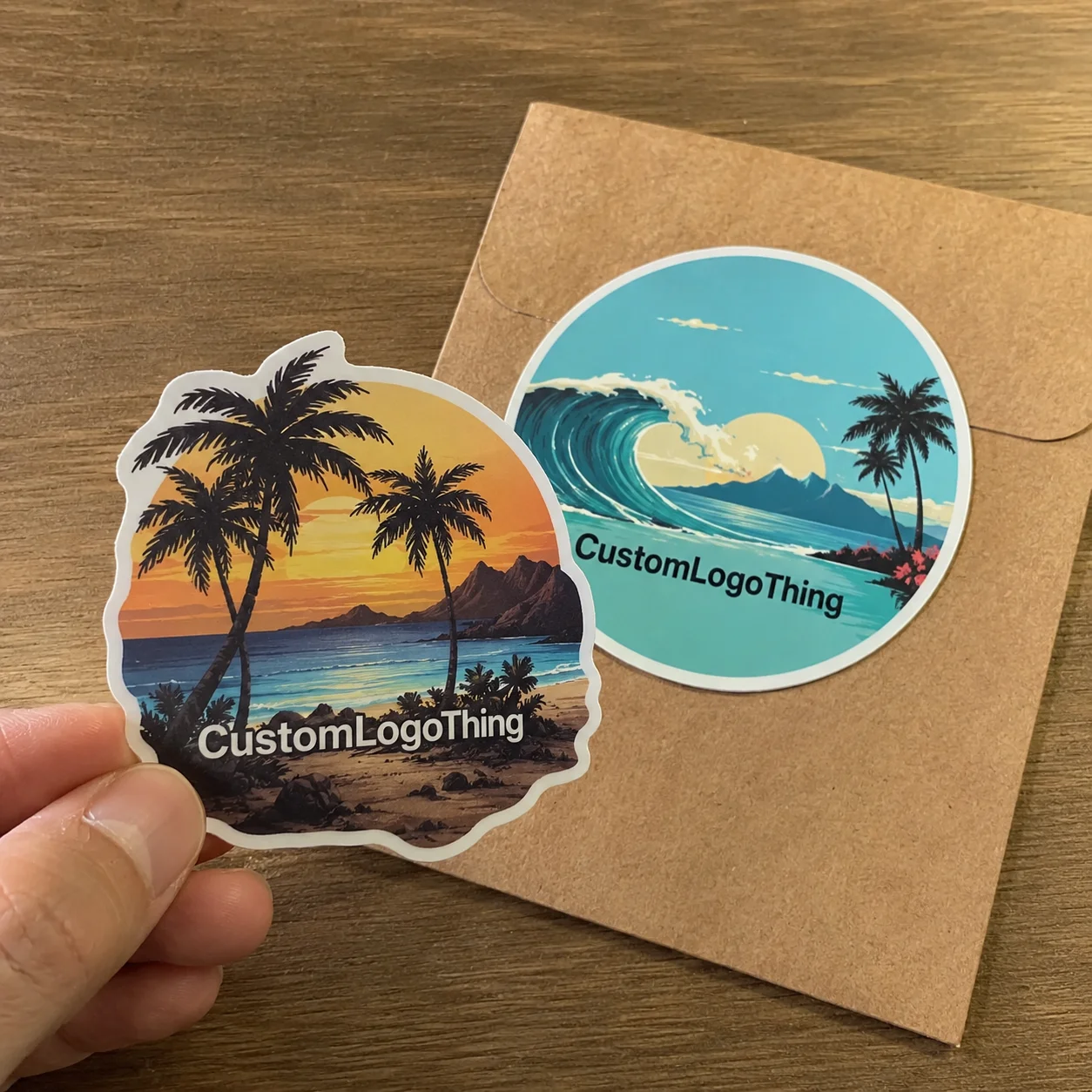
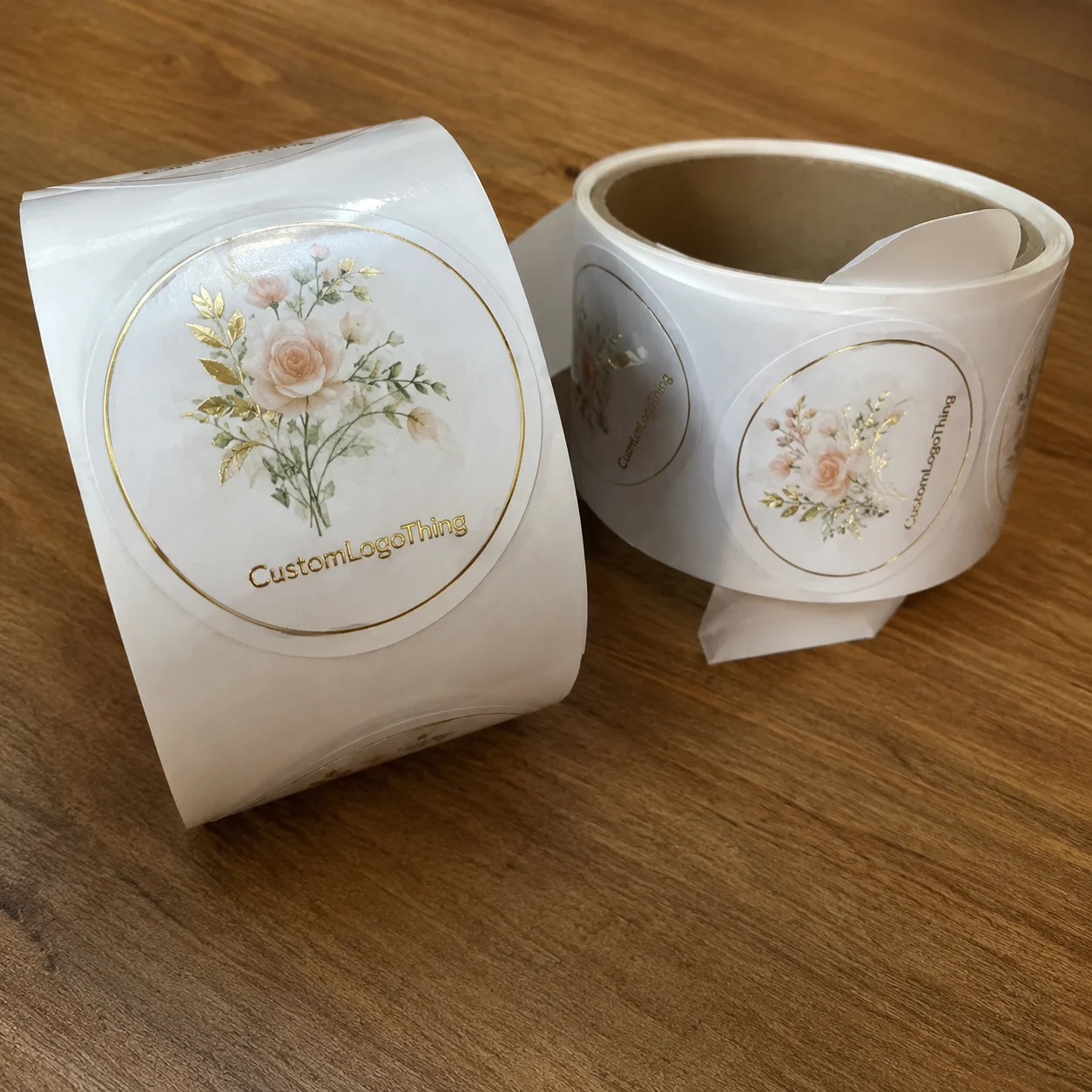
Cut style affects the job, too. Individual die-cut stickers feel giftable. Kiss-cut sheets are tidy for hand assembly. Rolls make application faster if someone is labeling 300 candle tins or water bottles. Round labels suit candles and jars. Rectangles fit boxes and program envelopes. Custom shapes can follow hearts, doves, ribbons, initials, crosses, awareness symbols, or floral artwork, but complex cuts may add cost and production time.
Adhesive choice should match the surface. Paper stickers suit dry indoor items. White film, clear film, or polypropylene-style materials are better for chilled bottles, outdoor use, curved plastic, acrylic, glass, and pieces handled throughout a service. Industry groups such as PMMI, The Association for Packaging and Processing Technologies, publish packaging education resources that reinforce a basic rule across many categories: the substrate and application environment drive performance.
Key Design Choices: Size, Shape, Material, and Message
Size selection should start with the item being labeled. For favor bags and envelope seals, 1.5- to 2-Inch Round Stickers are common. For candle tins, 2- to 3-inch labels usually give enough room for a name, date, and small graphic. For keepsake boxes, larger rectangles such as 3 x 4 inches can work well, especially if a portrait and short message are included. One-inch seals can look elegant, but text gets tight fast.
Shape affects the mood more than many buyers expect. Circles feel soft, traditional, and balanced. Rectangles give more room for photos, dates, and short wording. Ovals work well for portraits because they echo framed photographs. Custom shapes can support religious, cultural, military, floral, music, sports, or awareness themes. The cut line still needs enough margin so the design does not feel cramped at the edge.
Material has a practical side and an emotional side. Uncoated paper gives a gentle handmade feel, especially for seed packets, kraft favor bags, and natural remembrance gifts. Coated paper produces sharper color and cleaner photo detail. White film improves durability. Clear film works nicely on glass or acrylic when the surface color is part of the design. Kraft paper creates warmth, though it mutes photos and light ink colors.
Message length needs discipline. Names and dates should stay legible. Short quotes should be chosen carefully. Longer poems, obituary text, service details, or a full life story usually belong on cards, programs, inserts, or custom printed boxes rather than on a 2-inch label. The same packaging design habit applies to product packaging and retail packaging: one focal point usually reads better than six competing details.
Color can be personal without becoming hard to read. Cream, silver, sage, navy, blush, Black and White, warm gray, soft lavender, and a loved one’s favorite color can all work. Contrast is the catch. Pale gray type on a cream background may feel elegant on a monitor and nearly vanish in print. Dark photos may need light adjustment before the proof is approved.
If the design feels uncertain, choose one focal point: a portrait, a name, a symbol, or a phrase. One strong element gives custom memorial stickers a calm presence. Too many memories packed into a small adhesive surface can turn a tribute into visual noise.
| Sticker Use | Common Size | Practical Material | Typical Finish |
|---|---|---|---|
| Candle tins | 2 to 3 inches round | Coated paper or white film | Matte or gloss coating |
| Favor bags | 1.5 to 2.5 inches round | Uncoated paper, kraft, or coated paper | Matte for a softer look |
| Water bottles | 2 x 3 inches or custom wrap size | White film with suitable adhesive | Gloss or laminated |
| Photo keepsakes | 2.5 to 4 inches | Coated paper or white film | Matte, gloss, or soft-touch style coating |
| Envelope seals | 1 to 1.5 inches round | Paper label stock | Matte or uncoated |
Process and Timeline for Ordering Memorial Stickers
A good ordering sequence keeps stress down. Gather the best available photo and final wording. Decide what the sticker will go on. Estimate the quantity. Select size and material. Request a quote or upload the artwork. Review the proof carefully. Approve production only after spelling, crop, color, and delivery details are right.
The proofing stage is the last controlled checkpoint before printing. Names, nicknames, birth dates, passing dates, accent marks, titles, religious wording, and family-approved phrasing should be checked by the person responsible for final approval. One extra proof review can prevent a painful reprint.
Timeline depends on artwork readiness, revision rounds, quantity, specialty materials, die-cut shapes, lamination, roll versus sheet format, and shipping distance. A simple round or rectangular order with print-ready artwork can often move faster than a custom-shaped sticker that needs photo cleanup, multiple revisions, and a specialty finish. In many production settings, standard printed labels may take roughly 5 to 10 business days after proof approval. More complex pieces may need 10 to 15 business days or more. Rush options depend on the exact order and are not always available.
Build in assembly time. If 200 labels need to be applied to candle tins, favor boxes, seed packets, or reception items, someone has to handle that work. Rolls speed up repetitive labeling. Sheets are easy for smaller hand-applied projects. Individually cut stickers feel polished but may take more time to peel, place, and align.
Use this mini-checklist before approval:
- Final spelling: full name, nickname, dates, and any title or honorific.
- Approved photo: best original file, not a tiny screenshot if another image is available.
- Exact event date: service, celebration, anniversary, or awareness event timing.
- Delivery address: include suite, apartment, venue, or family contact details if needed.
- Quantity plus extras: add overage for application errors, keepsakes, and last-minute guests.
- Proof approver: one named person who can approve changes quickly.
For memorial orders connected to broader Custom Packaging Products, such as favor boxes, bags, cards, or small gift packaging, align sticker timing with packaging timing. Labels, inserts, and boxes look better when they arrive early enough for calm assembly, not late-night sorting.
Cost and Pricing Factors That Affect the Final Quote
Sticker pricing usually depends on quantity, size, material, print coverage, finish, shape, artwork support, packaging format, and shipping speed. The same basic math appears in many label and branded packaging projects: setup, proofing, file preparation, machine time, material waste, cutting, packing, and freight all show up somewhere in the quote.
Unit cost generally drops as quantity rises because setup and production preparation are spread across more pieces. A small run of 50 individually cut photo stickers may have a higher per-piece cost than 500 round stickers on rolls. That does not mean the larger order is always smarter. For a private family gathering, a precise small run with a few extras may be more sensible.
As a broad planning range, simple paper memorial labels in quantities around 250 to 500 pieces may fall around $0.20 to $0.60 per sticker, depending on size and finish. Smaller runs can be higher per unit, sometimes $0.75 to $2.00 or more for individually cut pieces or heavy design support. Film materials, lamination, metallic effects, custom die-cut shapes, and rush freight can raise the price. These are planning ranges only; the final quote depends on the actual specification.
Format affects labor. Roll labels are efficient for fast application and larger quantities. Sheets are practical for smaller batches and organized handwork. Individually cut stickers can feel more giftable, especially for keepsake photo stickers, but they require more finishing work and packing time.
Minimum order quantities vary by material, production method, and finishing style. Some digital jobs can be produced in small memorial runs, while specialty materials or custom die tooling may make larger quantities more practical. Ask whether the quote includes artwork cleanup, proofing, coating, lamination, die-cutting, packing, and shipping. A low sticker price can change quickly once missing services are added.
| Option | Cost Level | Best For | Watch Point |
|---|---|---|---|
| Standard paper circles | Lower | Envelope seals, favor bags, dry indoor use | Not suited for condensation or rough handling |
| Coated paper photo labels | Moderate | Candle tins, keepsake cards, favor boxes | Photo quality and contrast matter |
| White film labels | Moderate to higher | Water bottles, acrylic, glass, handled items | Confirm adhesive for the exact surface |
| Custom die-cut shapes | Higher | Hearts, doves, ribbons, initials, special symbols | May add setup time and minimums |
| Laminated keepsake stickers | Higher | Memory boxes, journals, long-handled pieces | Finish changes the feel and glare level |
Common Mistakes That Make Memorial Stickers Harder to Use
The most common mistake is using a low-resolution or tightly cropped photo that looks acceptable on a phone but becomes soft, pixelated, or too dark once printed. Small screens are forgiving. Print is not. If the face is already small in the original image, cropping it into a 2-inch sticker can make the issue worse.
Overcrowding comes next. Multiple images, long quotes, service details, icons, decorative borders, full dates, and patterned backgrounds can all compete for space. A sticker viewed at arm’s length needs hierarchy. Name first. Date second. Symbol, quote, or portrait as the supporting element.
Application mismatches cause avoidable trouble during assembly. Paper labels may wrinkle on chilled water bottles. A delicate adhesive may lift from textured favor bags. A flat label may crease on a sharply curved jar. Candle tins with oil, dust, or raised lid edges may need wiping and test placement before the full batch is applied.
Ordering the exact headcount is risky. Extras help with misapplied labels, late guest additions, keepsake sets, family requests, and backup items. For hand-applied projects, 5 to 10 percent overage is a practical planning range. For very small orders, adding 10 to 20 extras may be wiser than calculating a strict percentage.
Proofreading deserves patience. Names, nicknames, birth and passing dates, accent marks, military titles, religious wording, and family-approved phrasing should be checked carefully. If two family members use different wording, settle that before production. A printer can check layout and image quality, but the family knows the correct spelling and sentiment.
Color surprises also happen. Very pale type on a light background may lose readability. Dark photos can print heavier than expected if they are not adjusted. Metallic-looking artwork is only a printed color unless foil, metallic ink, or specialty material is specified. If sustainability or paper sourcing is part of the decision, ask about certified paper options; the Forest Stewardship Council explains certification standards for responsibly sourced forest products.
What to Prepare Before Requesting a Quote
Before requesting a quote, decide what the sticker will go on and measure the application surface. A flat 2.5-inch candle lid gives different design freedom than a narrow water bottle panel or a textured kraft bag. If the sticker crosses a seam, curve, ridge, or fold, reduce the size or choose a more flexible format.
Next, decide whether the piece is decorative or keepsake-quality. Decorative labels can be simpler and more economical. Keepsake stickers may justify better photo cleanup, film material, lamination, or individual cutting. Neither choice is wrong. The right choice depends on how the sticker will be used and how long people are likely to keep it.
Prepare three core assets before contacting a printer: the best available photo, the final name and date text, and any phrase, symbol, color, or theme that should guide the design. If there is a favorite flower, branch of service, faith symbol, awareness ribbon, hobby, or color, include it in the brief. If the design should feel quiet and minimal, say that too.
Choose quantity by counting the main items first, then adding extras for application errors and keepsakes. If stickers will be used on candles, favor bags, and envelopes, calculate each use separately. A service with 120 guests might need 120 favor labels, 120 envelope seals, 30 candle labels, and 20 extras, not simply 120 stickers total.
Ask direct production questions:
- What material fits this surface best?
- Does the sticker need water resistance?
- How are proofs handled, and how many revision rounds are included?
- What is the lead time after proof approval?
- Is rush production or rush shipping realistic for the delivery date?
- Are artwork cleanup, photo adjustment, and shipping included in the quote?
Here is a simple ordering brief that covers the essentials: “I need stickers for [item being labeled], approximately [size target], quantity [number plus extras]. Preferred material is [paper, kraft, white film, clear film, or unsure]. Event date is [date], and delivery is needed by [deadline]. I have a photo and final wording, and I do/do not need design help.”
Ordering custom memorial stickers becomes easier when the details are organized before the proof is made. Start with the surface, size, quantity, photo, wording, and deadline. Then let the material and finish support the purpose of the piece rather than overpowering it.
FAQs
What size should memorial stickers be for candles or favor boxes?
For small candle tins, 2-inch round or 2.5-inch round stickers usually work well, while favor boxes often use 2- to 3-inch labels depending on the panel size. Measure the flat area before ordering, especially on curved jars, tins with raised lids, or boxes with folds and seams. Leave enough white space around names and dates so the sticker reads clearly from arm’s length.
Can custom remembrance stickers include a photo?
Yes, photo stickers are common, but the original image should be clear, well-lit, and large enough for print. Avoid screenshots or tiny social media images when possible because they can print blurry or grainy. Ask for a proof so you can check cropping, skin tone, contrast, and text placement before production.
Are memorial labels waterproof for water bottles or outdoor events?
Paper memorial labels are best for dry indoor use, while film materials are better for chilled bottles, handling, moisture, or outdoor conditions. If the stickers will sit in ice or condensation, ask for a water-resistant material and suitable adhesive. Gloss or laminated finishes can add protection, but the material and adhesive choice matter most.
How many personalized memorial stickers should I order?
Start with the number of items being labeled, then add extras for application mistakes, keepsakes, family requests, and last-minute guests. For hand-applied projects, a 5 to 10 percent overage is often a practical planning range. If the sticker will be used across several items, such as candles, favor bags, and envelopes, calculate each use separately.
How long does it take to print custom tribute stickers?
Timing depends on artwork readiness, proof approval, quantity, material, finish, shape, and shipping method. Simple shapes with approved artwork usually move faster than custom die-cut designs or orders needing photo cleanup and multiple revisions. Approve the proof as early as possible and confirm the needed delivery date before production begins.