What Custom Mountain Bike Stickers Actually Do
A mountain bike frame can take hundreds of small hits from gravel, mud, brush, lift racks, tailgate pads, and workshop stands before one scratch becomes impossible to ignore. That is why custom mountain bike stickers sit somewhere between branding, identification, and light-duty protection. They mark a rider’s bike, promote a shop or sponsor, cover cosmetic wear, add visibility, and make a build easier to spot in a crowded trailhead rack or race pit.
The category is wider than it looks. A decorative decal might be a 3-inch vinyl logo on a top tube. A race number sticker needs bold digits readable from 20 to 40 feet away. Sponsor logos may land on down tubes, fork lowers, helmets, bottles, tool cases, or registration bags. Frame protection graphics are larger, usually laminated, and expected to take abrasion. Fork decals and rim decals need precise sizing because a 4 mm mismatch can make an expensive build look careless.
Full sticker kits combine several of those pieces on one sheet, often with left-right pairs, rider names, spare logos, and small replacement marks. That sheet format sounds simple until the production file has 18 shapes, two finishes, three rider versions, and a cut path that leaves no room for easy peeling.
Bike decals face conditions that ordinary product labels rarely see. UV exposure fades weak inks. Pressure washing can lift exposed edges. Mud behaves like fine sandpaper. Chain oil, degreasers, sunscreen, and bike wash products can attack adhesive or dull the finish. Temperature swings add another variable: a bike may sit in a hot van near 120°F, then roll into a cold, wet trail system an hour later.
Curved tubes, textured powder coat, carbon layup contours, matte clear coats, welded joints, cable ports, and frame protection film all complicate adhesion. A decal that performs well on a flat laptop may fail quickly on a fork lower.
From a packaging buyer’s point of view, bike stickers behave like small-format outdoor labels with higher emotional stakes. A rider notices every bubble. A shop notices every crooked sponsor mark. An event organizer notices if 500 number plates arrive with weak contrast. The smarter order starts with design, material, adhesive, cost, and timing instead of treating decals as an afterthought.
Practical rule: if a sticker will live outdoors, touch mud, meet a hose, or sit near a boot, specify it like trail gear rather than like a paper giveaway label.
How Bike Decal Materials, Adhesives, and Finishes Work
The base material does most of the quiet work. Standard outdoor vinyl is the common starting point because it prints cleanly, bends around gentle curves, and handles water better than paper stock. Laminated vinyl adds a clear protective layer over the printed ink. Reflective film improves low-light visibility for commuter bikes, night rides, event gear, and safety-minded branding. Clear film creates a subtle look over painted frames, though it often needs white ink behind the artwork so colors do not disappear.
Specialty films can help, but they are not automatic upgrades. Textured films create a rugged, molded appearance and can work well for larger graphics. They are less friendly to tiny lettering. Very thick films may resist scuffs but struggle around tight curves, raised edges, or small-diameter tubes.
Finish changes both style and performance. Gloss catches light and makes saturated colors pop, but scratches can show more clearly. Matte looks clean on carbon gray, raw alloy, and black frames, yet pale colors may look slightly softer. Satin sits between the two. Clear finishes keep frame color visible. Holographic films are loud by design, useful for limited drops, youth race teams, or merchandise packs, but not every sponsor wants that much visual noise on a premium build.
Adhesive choice matters as much as film. Painted frames, powder-coated parts, helmets, forks, rims, bottles, and tool cases all behave differently. A high-tack adhesive may grip a textured helmet well but be too aggressive for delicate paint. A removable adhesive may be acceptable for short-term event decals and risky on fork lowers that get wet every ride. Most durable bike decal orders use permanent pressure-sensitive adhesive with laminate, but the right choice depends on the surface, expected lifespan, and removal concerns.
Lamination is the hidden durability layer. It helps resist UV fading, trail grime, light abrasion, and cleaning chemicals better than unprotected ink. ASTM D3330 is one common method for evaluating peel adhesion in pressure-sensitive materials, while ASTM D3654 is often referenced for shear performance. Those standards do not guarantee a sticker will survive a season of muddy enduro racing. They do explain why two similar-looking decals can behave differently after ten washes.
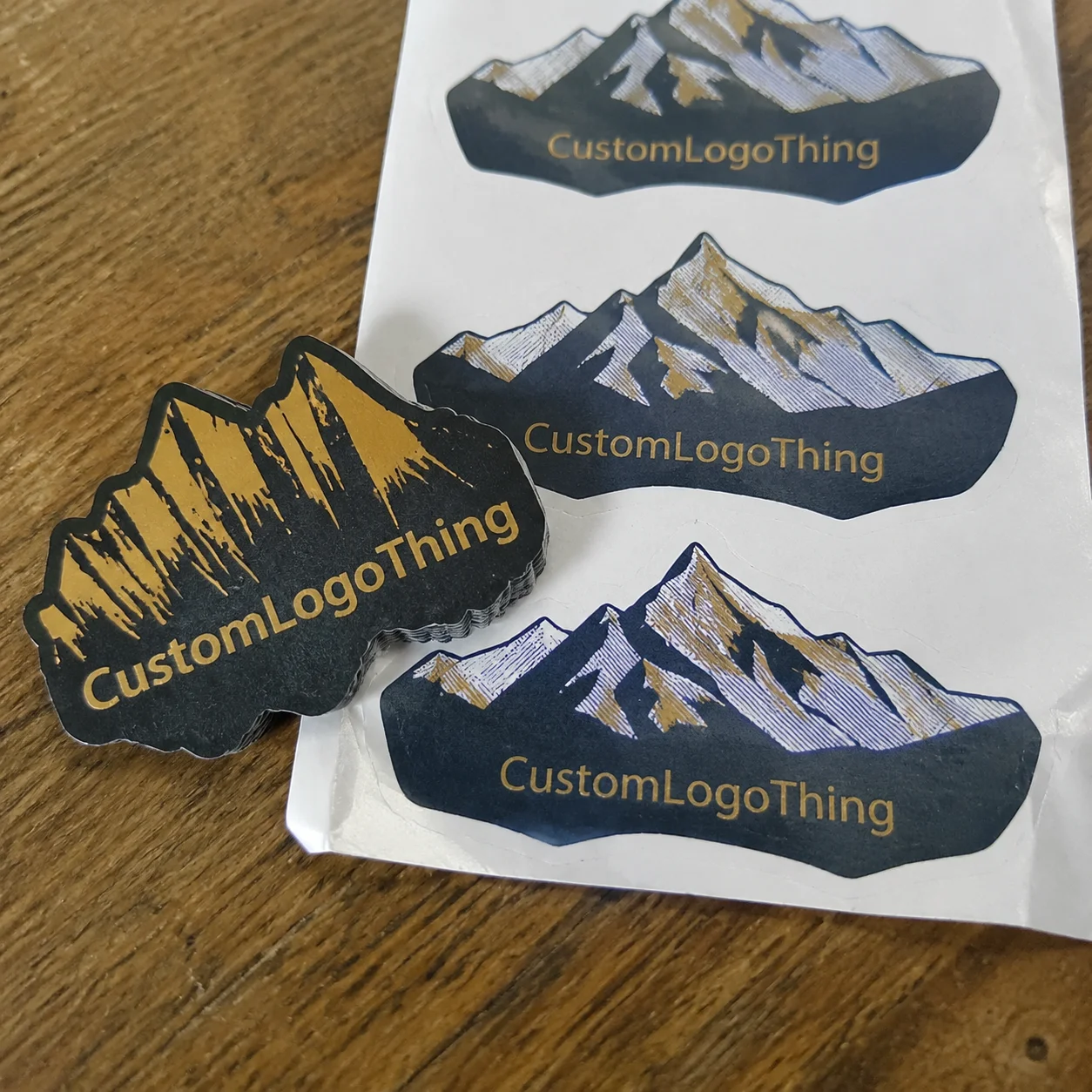
Cut style also affects usability. Die-cut decals follow the outer shape. Kiss-cut sheets keep several stickers on one backing sheet for easier handling. Transfer decals work well for individual letters or complex logo marks. Contour-cut graphics trim close to the artwork. Multi-sticker sheets are often the neatest option for teams and shops because one sheet can include down tube logos, helmet names, sponsor marks, and small spares.
The best material is rarely the thickest or the flashiest. The better target is balance: conformability, edge-lift resistance, print clarity, adhesive match, abrasion resistance, and compatibility with the surface being labeled.
Key Design Factors Before You Print Bike Sticker Kits
Start with the bike, not the artwork. Top tubes, down tubes, fork lowers, rims, helmets, seat stays, toolboxes, and water bottles all offer different usable spaces. A logo that looks balanced at 6 inches wide on a screen may feel oversized on a narrow seat stay or too timid on a long down tube.
Measure with a flexible tape. Then subtract safe margins around welds, cable ports, suspension pivots, bottle mounts, rubber frame guards, and existing protection film. On a curved tube, a 1-inch-tall decal may wrap cleanly while a 2-inch-tall decal starts to wrinkle at the edges. For fork lowers, check both sides. Graphics are often mirrored, but brake hose routing and factory decals can interfere.
Readability is the design test many orders skip. Race teams, bike shops, sponsor logos, and outdoor brands usually want visibility at speed and distance. If a mark cannot be recognized from 15 to 30 feet, it may still work as personal decoration, but it will not deliver much brand exposure. Social media adds another wrinkle: a thin gray logo on a matte black frame may look tasteful in person and vanish completely in a moving trail photo.
Color contrast should be checked against common frame finishes: matte black, raw alloy, carbon gray, white, neon, deep red, dark blue, and metallic paint. White ink can be essential on clear material or dark substrates. Metallic and fluorescent colors can look strong, but they may require special print setup, specific stock, or a longer production window.
File setup is not glamorous. It saves money anyway. Vector logos in AI, EPS, SVG, or production-ready PDF formats give the cleanest edges and cut paths. Raster art should usually be 300 dpi at final print size, though small details deserve closer review. Fonts should be outlined. Bleed is commonly 1/16 to 1/8 inch, depending on the cut process. Safe zones protect text and logos from trimming. Spot colors should be identified if brand matching matters.
This is where many good-looking orders go sideways. Laptop artwork can fail on a muddy trail if thin lines, tiny type, or low-contrast colors disappear after the first ride. Packaging design teaches the same lesson: a graphic has to work in the real handling environment, not only in a mockup. The logic that keeps branding visible on a retail shelf also keeps bike decals legible on a moving frame.
- Minimum text height: 0.12 to 0.18 inch is safer for small labels, but larger type is better for trail visibility.
- Fine line caution: lines under 0.5 pt can break up visually after lamination, cutting, or abrasion.
- Edge clearance: keep key artwork at least 1/16 inch from the cut line; add more room for rugged outdoor use.
- Contrast check: test the design on a photo of the actual frame color before approving the proof.
Pricing, MOQ, and Unit Cost for Mountain Bike Decals
Price is built from several small decisions. Size, material, lamination, shape complexity, number of designs, color requirements, finishing, quantity, and packaging all affect the quote. A 2-inch helmet logo on gloss vinyl is one job. A laminated 18-inch down tube decal with white ink, contour cutting, and individual bagging is another.
Unit cost usually falls as quantity rises because setup, proofing, machine calibration, material handling, and quality checks get spread across more pieces. That pattern appears across labels, retail packaging, and Custom Packaging Products such as folded cartons or custom printed boxes. The machine still has to be set up whether it prints 25 pieces or 2,500 pieces.
Minimum order quantity depends on the production method and order structure. A solo rider may only need one or two sheets, although some printers price that as a short-run custom job. A bike team may need 20 to 100 sheets with rider names. A retail brand might order 500 to 5,000 decals for product packaging, warranty kits, or branded inserts. Events often order by participant count, then add 5% to 10% for replacements, late registrations, and damaged applications.
One large sheet with multiple decals is often more economical than many separate tiny sticker types. It reduces handling, organizes the kit, and can cut waste if the layout nests well. Separate sticker types make sense when each design needs a different finish, material, adhesive, quantity, or packaging format.
| Order Type | Typical Use | Common Quantity | Estimated Unit Range | Best Fit |
|---|---|---|---|---|
| Single decal | Top tube name, small logo, helmet mark | 25-100 pieces | $0.80-$2.50 each | Personal builds or small shop branding |
| Kiss-cut sheet | Multiple sponsor, frame, helmet, and toolbox decals | 25-250 sheets | $3.50-$12.00 per sheet | Teams, events, and organized bike kits |
| Laminated large frame decal | Down tube or fork graphics | 50-500 pieces | $1.75-$6.50 each | Outdoor durability and premium visual impact |
| Retail-ready sticker pack | Branded resale pack or event merchandise | 250-5,000 packs | $1.20-$4.80 per pack | Bike shops, outdoor brands, and race organizers |
Those ranges are directional, not universal. Print coverage, white ink, specialty films, rush timing, and packaging can move the price. For a useful quote, prepare dimensions, quantity, application surface, indoor or outdoor use, expected lifespan, finish preference, and whether pieces need individual bags, header cards, or barcode labels.
The cheapest sticker can become expensive if it peels after washing, fades before the event season ends, or arrives in the wrong size. The same false economy shows up in product packaging: saving a few cents on the wrong spec can cost far more in replacements, delays, or disappointed customers. For bike decals, the real cost is the finished kit that survives the ride and looks intentional.
Production Steps, Timeline, and Turnaround Expectations
A typical decal order moves through a predictable chain: artwork submission, file review, material selection, digital proofing, proof approval, printing, lamination, cutting, quality checks, packing, and shipping. Each step is small. Together, they determine whether an order lands in time for a race weekend, shop launch, or sponsored ride.
For straightforward laminated vinyl decals, production often runs about 5 to 10 business days after proof approval. More complex orders can take 10 to 15 business days, especially with specialty films, multiple versions, rider names, retail packaging, or hand assembly. Shipping adds time. Rush production may be possible, but it narrows the margin for proof changes and material substitutions.
Digital proofing is the main control point. The proof should confirm dimensions, cut lines, color expectations, spelling, quantities, and sheet layout. For custom mountain bike stickers, also check placement logic: left and right fork decals, logo orientation, sponsor readability, and enough spacing around small pieces so riders can peel them without bending corners.
A one-day delay in proof approval can shift the whole production queue. That sounds harsh, but print schedules are built around material loading, machine time, curing or drying needs, lamination, cutting, and packing. Custom stickers are fast compared with many branded products, including Custom Labels & Tags, cartons, or rigid boxes, but they are still manufactured goods. They are not instant printouts.
Teams, shops, and events should order early enough to test application, replace damaged decals, and resolve fit issues before the ride or sale date. For a race team, that may mean approving final art two to three weeks before the first event. For a retail sticker pack, add time for package branding, barcode setup, photography, or display requirements.
Quality control should be practical, not theoretical. Check that the laminate fully covers the printed area, cut lines follow the intended shape, corners are clean, colors match the approved proof within the agreed tolerance, and sheets are not curling from excess tension. For kits, count the parts. Missing one tiny sponsor mark can hold up an entire team handout.
Industry standards can help buyers think more clearly about handling and distribution. The International Safe Transit Association, at ISTA, focuses on transport testing for packaged products. A small decal order does not need a full transit protocol. Still, the mindset is useful: protect finished goods from bending, moisture, abrasion, and sorting damage before they reach the rider.
- Submit production-ready artwork or request setup help.
- Confirm material, adhesive, laminate, size, and quantity.
- Review the digital proof closely before approval.
- Allow production time for printing, lamination, and cutting.
- Inspect the received decals before race-day or retail use.
Common Ordering and Application Mistakes Riders Make
The most common mistake is ordering decals before measuring the actual bike surface. It sounds basic because it is. Yet many awkward placements, trimmed logos, and crooked sponsor marks start with a guess. Frame sizes vary. Down tube profiles vary. Cable ports move. A decal that fits a large enduro frame may look cramped on a small trail bike.
Surface prep is the next culprit. Stickers do not like dust, wax, oil, silicone polish, wet paint, textured dirt, or residue from old decals. Chain lube overspray can travel farther than people think. So can bike wash products.
Clean the area with a suitable mild cleaner, then dry it fully. For many painted or powder-coated surfaces, isopropyl alcohol can help remove residue, but harsh solvents may damage paint or clear coat. Carbon frames, matte finishes, and aftermarket protection films deserve extra caution because surface coatings vary.
Design mistakes are easier to prevent on screen than fix on a frame. Tiny lettering, overly complex shapes, weak contrast, and layouts that ignore bottle cages or cable routes will not improve after printing. Curved tubing exaggerates problems. If the decal must bend around a tube, keep the important artwork away from the tightest curve and avoid long, razor-thin elements near the edge.
Skipping lamination is another risky shortcut for outdoor riding. Unlaminated decals may be fine for short-term event giveaways, indoor shop displays, or packaging inserts. For mountain bikes, UV, water, grit, abrasion, and frequent washing make laminate a practical durability layer. The U.S. Environmental Protection Agency offers broader guidance on product life-cycle thinking and waste reduction at EPA.gov; longer-lasting materials can reduce reorders and discarded failed graphics when specified responsibly.
Application conditions matter. Very cold, wet, or dusty environments reduce adhesion and increase the risk of edge lift. Many pressure-sensitive films apply best around 50°F to 90°F, though exact ranges depend on the adhesive. After application, some adhesives need 24 to 72 hours to build stronger bond strength. Riding through mud ten minutes after application asks too much from the chemistry.
Bubbles, crooked placement, lifted corners, and premature wear often trace back to prep and sizing decisions, not only sticker quality. Use a hinge method for larger decals, squeegee from the center outward, and avoid stretching the film. If a corner lifts near a shoe-rub area, that may be a placement issue rather than a manufacturing defect.
- Measure first: photograph the bike and mark available decal zones before ordering.
- Clean twice: remove dirt first, then remove oils or polish residue.
- Apply warm: avoid cold garages, mist, trail dust, and wet frames.
- Wait before washing: give the adhesive time to build bond strength.
Next Steps: Build a Bike Sticker Order That Fits
A smart order starts with a simple checklist. Choose sticker locations. Measure each area. Decide the intended lifespan. Pick finish preferences. Gather artwork files. Then ask for material recommendations based on the actual use case rather than selecting the cheapest or shiniest option from a menu.
Create a placement map before requesting a quote. It does not need to be polished. A phone photo with marked zones can work: down tube, top tube, fork, rim, helmet, toolbox, bottle, retail pack, or event swag decal. Add rough sizes beside each location. If the order includes team riders, mark where names and numbers change so variable artwork does not create confusion later.
Ask the printer about surface type, cleaning routine, weather exposure, and whether the stickers are for racing, resale, personal use, or brand promotion. A shop sticker going on a customer’s tool case has different demands than a fork decal on a downhill bike. A retail sticker pack may need hang holes, backing cards, UPC labels, or coordinated product packaging. That overlaps with broader packaging design decisions, especially for outdoor brands selling decals with apparel, accessories, or Custom Printed Boxes.
For multiple small decals, a proofed sticker sheet can simplify production, reduce waste, and keep designs organized. It also makes inventory easier. A bike shop can hand one sheet to each sponsored rider. An event organizer can pack one sheet into each registration bag. A brand can include one sheet in branded packaging without counting loose pieces one by one.
Before approving the proof, review dimensions, spelling, cut paths, logo spacing, finish, quantity, and edge clearance. Zoom in. Then print the proof at actual size on office paper and hold it against the bike if scale is uncertain. That ten-minute check can prevent a full batch of decals from arriving 20% too large.
For Custom Logo Things buyers, the strongest brief is direct: “I need laminated outdoor vinyl decals for matte black carbon frames, cleaned with bike wash, used for a six-month race season, supplied as 50 kiss-cut sheets with rider names.” That gives production teams something concrete to price and engineer.
Custom mountain bike stickers work best when treated like trail gear: matched to conditions, measured carefully, proofed before production, and ordered with enough time to test before the next big ride.
FAQ
What material is best for custom MTB decals?
Laminated outdoor vinyl is usually the safest starting point because it balances durability, print quality, water resistance, and conformability on curved bike surfaces. Reflective, clear, matte, or textured films may be better for specific uses such as night visibility, subtle branding, or a rugged frame-protection look.
How long do custom mountain bike stickers last on a frame?
Lifespan depends on material, lamination, surface prep, riding conditions, washing habits, and placement. Stickers in high-rub zones near shoes, knees, cables, or chain slap areas will usually wear faster than decals on cleaner, flatter frame sections.
Can I put custom bike stickers over existing frame protection film?
Yes, in many cases, but adhesion depends on the film texture, cleanliness, age, and coating. Test a small area first, avoid oily or silicone-treated protection films, and ask whether the adhesive is suitable for that surface.
What files do I need to order personalized mountain bike decals?
Vector files such as AI, EPS, or SVG are best for logos and clean cut paths. High-resolution PNG, PDF, or PSD files may work for artwork, but confirm resolution, transparent areas, bleed, and white ink needs before proofing.
Are custom mountain bike sticker kits expensive for small teams?
Small team orders can be cost-effective when multiple decals are grouped onto shared sheets instead of produced as many separate tiny jobs. Unit cost depends on quantity, finish, size, lamination, and design count, so a detailed quote is more useful than comparing sticker prices by piece alone.