Buyer Fit Snapshot
| Best fit | Custom Natural Kraft Folding Cartons projects where brand print, material claims, artwork control, MOQ, and repeat-order consistency need to be specified before quoting. |
|---|---|
| Quote inputs | Share finished size, material target, print colors, finish, packing count, annual reorder estimate, ship-to region, and any compliance wording. |
| Proofing check | Approve dieline scale, logo placement, barcode or warning zones, color tolerance, closure strength, and carton packing before bulk production. |
| Main risk | Vague material claims, crowded artwork, missing packing details, or unclear freight terms can make a low unit price expensive after revisions. |
Fast answer: Custom Natural Kraft Folding Cartons: Production Spec, Color Control, and Delivery Risk should be specified like a repeatable production item. The safest quote records material, print method, finish, artwork proof, packing count, and reorder notes in one written spec.
Production checks before approval
Compare the actual filled-product size with the drawing, then confirm tolerance on folds, seals, hang holes, label areas, and retail display edges. Reserve space for logos, QR codes, warning copy, and material claims before decorative graphics fill the panel.
Quote comparison points
Review material grade, print process, finish, sampling route, tooling charges, carton quantity, and freight assumptions side by side. A quote is only useful when the supplier can repeat the same color, closure quality, and packing count on the next order.
Custom Natural Kraft folding cartons are still underestimated, especially by teams that only see them as a cheaper paper alternative. In my experience, they often replace a mailer plus filler sleeve or a heavier tray-and-insert stack and still keep line efficiency intact, which is not something you get by accident. A lot of buyers now ask me the same thing: “If this looks so plain, where is the performance?” and that’s exactly the right question. The answer is in hidden engineering: dimensions, score logic, board behavior, and product fit carry most of the load while the carton stays visually restrained.
For buyers, this matters on launch day and also six months later when replenishment spikes. A well-built structure can improve shelf presence, reduce material waste, and behave better through warehouse and retail handling without locking you into a rigid format. You can run this structure across Custom Printed Boxes, premium retail packaging, sustainable packaging, and higher-velocity product packaging formats, then compare options in Custom Packaging Products before you close with a supplier.
A carton that folds accurately, stacks predictably, and holds shape under load usually saves money in production more than the lowest quote that looks perfect in a spreadsheet but drags line pace, causes jams, and sends your team into rework.
The practical promise is simple: by the end, you should understand how Custom Natural Kraft folding cartons are built, where lead time stretches, what drives pricing, and what questions prevent costly surprises before purchase order signature. That clarity matters in seasonal launches, refill systems, and shelf-ready channels where one weak decision can affect margin across multiple replenishment cycles. In one mid-size beauty launch I handled, we saw roughly a 12% freight-cube improvement just by locking carton geometry earlier; not every SKU gave the same result, but that was the big wake-up call.
Custom Natural Kraft Folding Cartons: Why They Deserve a Second Look
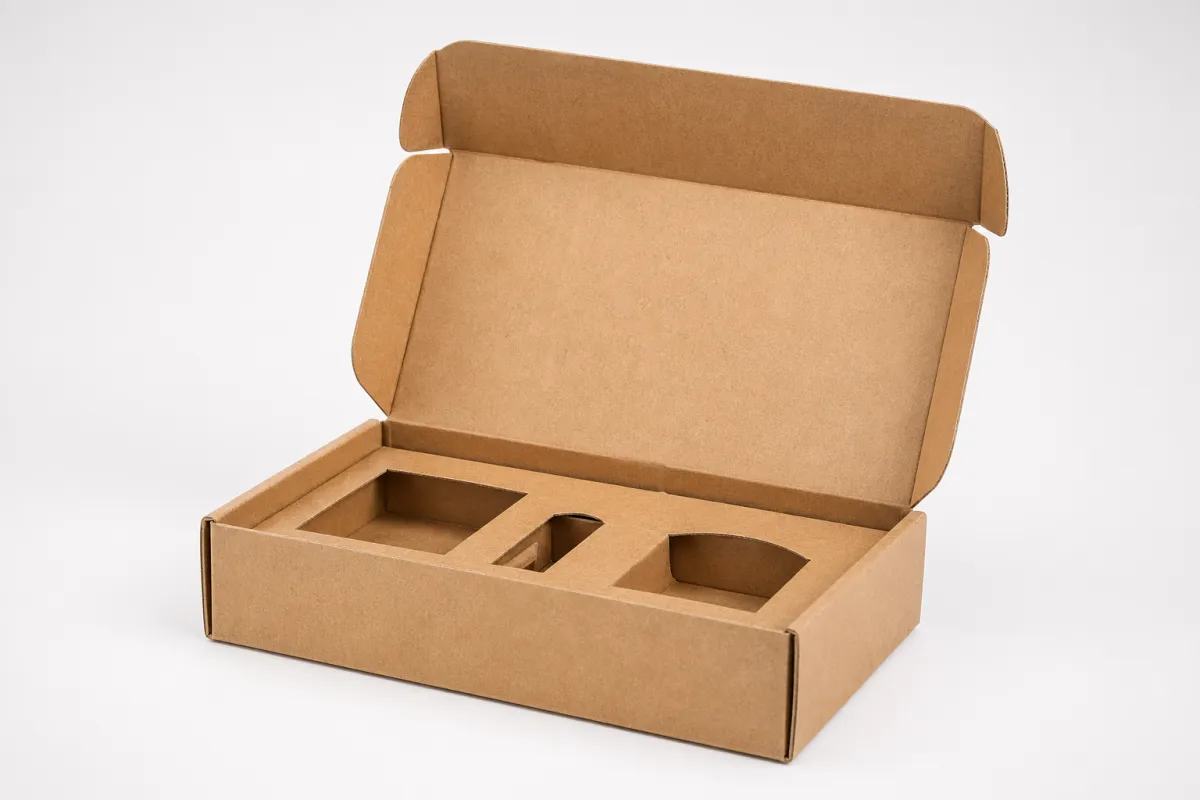
Most teams notice kraft for its tone first, then only later discover the structure beneath. Natural kraft gives a grounded, material-forward look that signals care without needing a hard gloss finish. But the real shift is mechanical: Custom Natural Kraft Folding cartons ship flat, then become stable containers, and can be cut to the exact SKU profile instead of forcing the SKU into a generic shell.
Technically, a folding carton starts as a die-cut paperboard blank and is turned into a container through scored folds, slits, folds, and joining methods like glue lines, locking tabs, or mixed systems. Some makers use water-based coatings or water-based varnishes, some use almost glue-free interlock designs, and both approaches shift seam behavior, speed, and risk. That flexibility is why these cartons show up in brands that want a fiber-forward story while keeping medium-weight products protected across mixed handling environments.
Customization is much wider than artwork, which is where a lot of procurement specs go wrong. Dieline dimensions, tab geometry, fold order, closure system, score depth, opening angle, and glue-flap profile all move together, and they must move with the product and the channel in mind. A serum bottle structure is not the same as a nutraceutical jar format or an electronics accessory carton, and the strongest Custom Natural Kraft folding cartons specs always start by honoring those product differences.
These cartons are also showing up in six clear use cases:
- Seasonal campaigns that need fast conversion, short storage life, and clean floor footprint.
- Refill programs that need consistent brand shape across repeated cycles while containing variable fill weight.
- Cosmetics and personal care SKUs that rely on clean shelf presentation plus dependable opening action.
- Food-adjacent and nutraceutical packs where print zones, readability, and footprint control are tightly constrained.
- Electronics accessory bundles where dimensional predictability beats decorative complexity.
- Gifting applications where unboxing flow matters as much as color and typography.
The overlooked advantage is storage math. Flat conversion can collapse carton stacks to near-zero thickness before assembly, so one pallet staging bay can hold materially more units than equivalent rigid alternatives. Teams tracking warehouse dwell and receiving cycles often find custom natural kraft folding cartons reduce hidden operational friction that never shows up on a unit-level quote. In practice, those hidden gains can be bigger than the unit-cost conversation, especially when the same SKU family runs both retail and e-commerce routes.
From a decision perspective, these cartons often perform best across three tracks: structural reliability, brand execution, and warehouse tolerance. If your team is comparing architectures, I strongly advise running candidate options through a real design-to-line check with a structured brief before locking final specs. That early comparison tends to prevent architecture mistakes from becoming production defects later.
My rule of thumb is simple: define the product first, define the distribution path second, then lock the carton architecture. Reversing that sequence usually means expensive late changes.
At one point last spring, I was on a refill campaign where that rule saved us from one full re-cutting cycle and about a week of delay because the team had kept product tolerances flexible until too late.
How Custom Natural Kraft Folding Cartons Perform in Real Packaging Lines
A gorgeous spec on paper can still lose time on the floor if the structure and machine behavior are misaligned. custom natural kraft folding cartons begin with paperboard stock and move through die-cutting, scoring, creasing, punching, and folding stages to create panels, flaps, and locks. Depending on your structure, stock may be natural kraft board, kraft-facing board, or brown-toned stock tuned for tactile cues and stiffness targets. Variables that actually move performance are basis weight, caliper, grain direction, and score depth strategy.
In many programs, the board lands somewhere in roughly the 16 to 28 pt range, although lighter and heavier builds are both common when product mass, shelf stacking, or parcel handling changes the requirement. Grain direction is one of the most common blind spots when approval cycles are rushed. If grain alignment is wrong, you see split folds, spring-back, and compression distortion. Machine direction and cross direction behavior then show up in crease memory and can quietly kill assembly pace or shelf stability. A practical way to avoid this is to force grain alignment into the first dieline draft and never let it become an afterthought.
Conversion usually follows a strict workflow. The dieline gets drafted and proofed, then printed and cut, then scored, then finishing and conversion are applied in that order, usually with an adhesive station if glue is part of the closure system. Surface condition and bond strength have to match, or wrinkles and edge lifting appear where you least want them. Aqueous varnish, soft-touch systems, or selective UV are often chosen based on expected handling profile and abrasion goals, followed by counting, bundling, palletization, and freight staging.
Finish is strategic, not cosmetic. A matte aqueous system can preserve the natural look while improving rub resistance for repeated handling. Clear protective systems can be useful on products with higher touch frequency. Spot UV can still work for selective emphasis, but each added process adds setup effort and pushes tolerance risk. For material-forward brands, restrained finishing often supports custom natural kraft folding cartons better than heavy visual decoration.
Closure choice changes how workers and machines behave, and that becomes obvious in rejection data before it becomes visible in mockups. Tuck-end structures are fast and familiar for manual assembly teams. Auto-lock bottoms hold stronger in deeper stacks but may need more setup calibration. Pressure-lock and reinforced tab systems can stabilize the structure in transit but usually require slower manual rhythm in mixed-shift teams. So, test closure behavior with the actual fill method, not with a hypothetical line setup.
Another recurring field problem appears at the machine interface. A mismatch in flange geometry, seam placement, or erected geometry can create jams and packing inconsistency. This is why CAD signoff is only part of it. The print lead and mechanical engineer need one physical sample together, because custom natural kraft folding cartons can pass on one setup line and fail on another over just a few millimeters difference.
Sustainability claims also need disciplined interpretation. Natural kraft can support a lower-plastic image, but the stack still includes coatings, adhesives, inks, inserts, and sometimes liners, all of which affect end claims. For fiber-forward messaging to hold up in audits, your evidence set must match the actual structure. FSC documentation is common in enterprise supply chains, while transit performance is often benchmarked against ISTA approaches through fsc.org and ista.org.
If I were to give one hard lesson from the floor: the biggest strength of custom natural kraft folding cartons is not aesthetics, and not color depth, but that they let structure, line behavior, and brand communication land together without waiting for a heavier shell.
Process Timeline for Custom Natural Kraft Folding Cartons from Quote to Shipment
Lead time is usually the deciding variable in this kind of program. A packaging delay can stall replenishment, push emergency freight, and split lots across sites. For custom natural kraft folding cartons, teams usually move through intake, dieline development, proof, prepress, conversion, inspection, and freight scheduling in that order.
In practical planning, a typical timeline looks like this:
- Requirements intake: 1 to 2 days when dimensions, product references, and channel goals are already locked.
- Dieline development: 2 to 5 business days, depending on closure and insert complexity.
- Proof review and revisions: 2 to 4 days when approvals are centralized and decision makers are available.
- Prepress and conversion setup: 2 to 5 days, with longer durations when unusual dies or coating profiles are needed.
- Press run and conversion: 3 to 10 days, depending on quantity, finish depth, and line efficiency.
- Curing, inspection, and packing: 1 to 2 days for staged jobs.
- Dispatch: depends on freight mode, destination, and port or lane constraints.
Delays usually come from predictable gaps, not mysterious ones. Most often, the dimensions arrive late or artwork does not lock to fold lines. The final rework spike often appears after proof when a coat change is introduced too late. Keep product dimensions frozen before artwork freeze, and custom natural kraft folding cartons become much less vulnerable to avoidable delays.
A solid sample workflow often uses digital preflight, a 3D prototype or flat sample, courier review, then a pilot lot when supplier capability allows. Straightforward runs can complete in one to two weeks; complex cartons with barrier layers, windows, and multiple revision loops often take longer. That’s usually normal, but it needs to be communicated up front so launch teams don’t treat it as a failure.
Supplier readiness and internal readiness are separate clocks. A manufacturer can hit pressing dates while legal signoff is still open, or freight planning is unfinished. That is why dates for custom natural kraft folding cartons should be treated as shared milestones and not only production milestones.
Cross-border execution adds another layer. Humidity swings, customs dwell time, and compression stretch strategy all influence carton shape retention in ways teams underestimate. Untreated fiber can lose edge integrity on humid lanes if it’s not protected correctly. A modest humidity-buffer coating and better bundling strategy often save more than a late emergency rework cycle.
A practical planning pattern is to keep one alternate finish and one contingency sample in reserve, then hold a controlled decision window once print and board are approved. A spare option is not overkill in volatile supply months; it is insurance.
Key Factors That Determine Custom Natural Kraft Folding Carton Quality
Quality starts with the board and no amount of design polish fixes a weak base. Underspecified stock can collapse under stack load; overly dense stock can create creasing resistance and fold fatigue. A good custom natural kraft folding carton design sits between these extremes and still supports expected logistics stress. A lot of teams still choose stock on appearance first and then discover compression weakness after week two of handling.
Basis weight and caliper do different jobs and should be considered separately. Basis weight changes rigidity and stiffness feel; caliper changes panel thickness and folding behavior. Both interact with puncture resistance and fold recovery under repeated compression. If score depth is too aggressive, even premium stock can crack earlier; if too shallow, flaps refuse to seat cleanly. Conversion teams that test crease cycle performance early usually avoid late-stage rejects.
Print calibration has to stay in the spec conversation because natural kraft shifts tone across batches. Darker earth palettes are often more stable, while bright whites can drift with board variation and humidity changes. If you are serious about tone consistency, request print proofs on the exact board lot. That single step lowers the chance that what looked “fine on screen” turns into “different on rack.”
Seam architecture matters more than decoration. Bottom seam width, sidewall score quality, and adhesive distribution decide whether a carton survives repeated load and shelf interaction. Too narrow a seam or light glue invites opening fatigue at the edges. The best specifications define seam resilience for warehousing conditions first, then confirm retail conditions.
Moisture behavior is an operational, not cosmetic, dimension. Dry bulk storage and humid distribution are two different worlds. Powders, gels, liquids in secondary packaging, and glass-adjacent products each require distinct protection strategy. Some programs only need a barrier coat, others need upgraded inserts or board shifts. The right choice depends on route profile, fill profile, and storage behavior.
Visual complexity can become a quality trap if not controlled. Heavier finishes, broad spot UV, or dense structural effects can look great but increase setup waste and tolerance sensitivity. In many brands, controlled finishing and restrained color use lets the fiber language do the premium signaling in custom natural kraft folding cartons with less process pain.
Testing makes assumptions defensible. Drop checks, vibration profiles, and compression simulations should be part of acceptance planning, not a post-approval courtesy. If parcels are in scope, test conditions have to include real parcel stress profiles instead of only shelf simulation. On average, teams see fewer field failures when these tests are run before volume release.
For claims and compliance, documentation is part of quality. FSC records support chain-of-custody conversations; ASTM references can structure material testing. ISTA-style transit methods give a common language when operations teams argue over transport assumptions. If your carton claims recyclable content or fiber-forward positioning, the evidence should match the exact coatings and inks used.
Step-by-Step Guide to Specing Custom Natural Kraft Folding Cartons
Specing gets clean when sequence replaces improvisation. In practical terms, the first pass is product envelope definition, then opening and reseal behavior, then graphics. For custom natural kraft folding cartons, fit is not “close enough.” It is a deliberate tolerance game: enough room for insertion, enough control to prevent rattling and play.
Step 1: Define the product envelope. Measure width, depth, and height with real tolerances and include the heaviest fill case. Cap geometry, labels, foam inserts, and closure hardware can change real-world dimensions by more than initial drawings show, and that difference can derail line setup. I’ve seen this exact issue in underweight samples that passed CAD only to fail at full-fill verification.
Step 2: Choose the architecture before the print suite. Tuck-end, auto-lock, pressure-lock, sleeve-and-tray, and custom tabs each change tooling logic, fill compatibility, and production pace. This is not a branding-only decision; it changes your machine behavior and carton survivability. So the architecture decision comes before the graphic direction, then artwork should follow the form.
Step 3: Lock board and surface finish. Confirm GSM or basis-weight band, natural kraft shade target, and coating requirements. Spell out moisture resistance assumptions early. If a matte hand is required, define varnish type and target handfeel, because “matte-like” language is interpreted too loosely across factories.
Step 4: Build artwork around the dieline, not against it. Keep fold lines, glue tabs, and barcode zones clear from critical text and legal copy. Tight text on a moving fold point is usually a defect generator, not a style issue. Early production-grade dieline approval is cheaper than chasing proof edits after press.
Step 5: Validate with physical or virtual prototypes. Test opening force, corner engagement, seam closure, and registration at the expected load. If the SKU is heavy, include loaded prototypes, not empty shells. For fragile items, evaluate movement and contact pressure inside cavity volume, not just appearance on the bench.
Step 6: Define acceptance limits in advance. Set explicit tolerances for natural kraft color drift, scuff limits, seam separation, and closure resistance. Without measurable limits, review becomes opinion-based and revision loops can stretch indefinitely. A short acceptance sheet aligned across design, print, and operations protects custom natural kraft folding cartons from subjective drift.
Step 7: Recalculate economics before volume scale-up. Review MOQs, setup charges, tooling and plate costs, and freight impacts together. Unit economics are not linear: 5,000 and 25,000-piece runs can behave very differently under the same spec, and the curve is usually not your friend unless you budget for it.
Step 8: Assign revision ownership before signoff. Confirm who signs creative, dieline, and final production approvals, and who controls last-minute changes. I call this your “damage-control architecture.” One named owner reduces revision drift after prepress, especially in mixed time-zone projects.
Before release, hand the supplier a complete input package: final dimensions, product mass profile, inserts, expected storage environment, ship date, and compliance copy. That package transforms “rough estimate” into a manufacturing plan and gives engineering the right basis for board, score profile, and finish choices in custom natural kraft folding cartons.
Cost and Pricing: What Builds the Price of Custom Natural Kraft Folding Cartons
Cost is easier to defend when you break it into components instead of arguing about one final number. Custom natural kraft folding cartons pricing usually moves across five buckets: board grade, conversion complexity, print system, finishing, and logistics burden. Two cartons that look similar can vary materially in cost if one has reinforced bottoms, multiple windows, and a more complex lock profile.
Setup costs are fixed almost per project. Die creation, calibration, and proofing do not scale down efficiently, so short runs carry higher per-unit costs. Material and ink spend provide the real volume flexibility. Request tiered pricing before you commit and you are less likely to chase hidden assumptions for custom natural kraft folding cartons.
For planning, four order bands generally tell the story:
| Order Band | Typical Use | Pricing Pressure | Common Feature Set |
|---|---|---|---|
| Pilot / sample lot | Fit checks and launch approval | Highest per-unit cost because setup is spread thin | Basic print, limited finishing, fast review |
| Small batch | Short seasonal run or test market | Setup impact still heavy but easier to absorb than pilot | Standard print, common closure styles |
| Standard batch | Core replenishment or wider launch | More balanced unit economics | Improved coatings and stronger board options |
| Larger campaign | High-volume retail or multi-SKU program | Best spread of setup, conversion, and material costs | Broader customization choices with lower unit penalty |
Conversion complexity can move cost quickly. More lock tabs, nested score patterns, complex windows, and multiple adhesive points increase setup time, reject risk, and waste potential. In many quotes, “high visual” equals “high rework risk” unless the print plan is carefully tied to natural kraft tolerance limits. I have seen restrained visual builds outperform ornate packages on total landed cost, especially where line speed is a priority.
Hidden cost traps are where budgets really go sideways: correction loops, rush shipping, extra proofing, storage bottlenecks, and rework from first-sample mismatch. A landed-cost view is usually more accurate than a single unit-cost number. Build your business case around sellable-unit margin after freight, handling, and correction is included.
Freight can amplify or erase the packaging savings. Natural kraft is often lighter, but it can still be bulky, and that affects cubage class and handling strategy. Efficient flattening and packaging footprint planning are key because pallet logic defines logistics cost beyond material cost alone. If carton footprint undermines pallet density, your savings can disappear in dispatch.
For comparisons, ask three bids at minimum: board-only build, standard print, and premium finish. You’ll see where the premium actually returns value and where it just looks pretty on a sample stack. That exercise protects the team from emotional quoting and keeps decisions focused on custom natural kraft folding cartons performance.
Most teams should evaluate with contribution margin, not only unit cost. Better structure can reduce damage rates, speed packing, and improve shelf visibility, all of which impact margin over time. For mixed retail and e-commerce programs using custom natural kraft folding cartons, this broader math is usually the only way to see true ROI.
Custom Packaging Products remains useful for comparing structure options, but final decisions still need to reference product mass, route profile, and launch timeline.
What Should You Check Before Ordering Custom Natural Kraft Folding Cartons?
Before placing an order, confirm six practical points: product envelope, architecture, board grade, finish stack, transit route, and approval owner. If those are locked, custom natural kraft folding cartons are much less likely to drift into rework loops and overnight freight. Fast approvals usually come from a clean dieline, stable copy, realistic prototype testing, and an explicit tolerance sheet.
If an SKU moves across more than one channel, validate shelf stability and parcel stress on one architecture before adding a second one later. That check prevents a “fix” program from becoming a parallel, costly second launch.
Quick pre-order validation is useful if you score each line below from 1 to 5 before PO signature: fit, closure stability, print consistency, moisture risk, and lead-time feasibility. If any factor lands below 4, hold the order and correct it before steel, ink, and paper lock the decision. If you want to compare formats first, start with Custom Packaging Products and then narrow down based on product weight and route profile.
Common Mistakes and How to Avoid Them in Custom Natural Kraft Folding Cartons
Some mistakes repeat because they are baked into rushed workflows. The first is locking material before finalizing product envelope. That sequence forces redesign, additional proofs, and sometimes full tooling change. The safe path for custom natural kraft folding cartons is envelope lock first, architecture second, visuals last.
Second, teams often overload artwork. Natural kraft already brings a clear identity, and too much color area can hurt contrast and increase process complexity. Keep critical text off score lines, preserve bleed control, and let the substrate tone carry part of the communication.
A third issue is weak sustainability claims. Paper-based construction alone does not guarantee end-state recyclability. Coatings, adhesives, inserts, and window films can change whether a claim is reliable. If fiber-forward positioning is core, require build-level documentation and keep product claims aligned with test evidence. A few teams treat this as legal cleanup; I treat it as design integrity.
Skipping prototypes is a short-term cost saver that becomes a long-term tax. A sample might feel optional, but for cartons with closure force or corner retention risk, one rigorous cycle usually replaces many reactive fixes after conversion. A loaded sample is better than an empty shell if your SKU weight sits above 200 grams.
Edge stress is another silent failure mode. Too-tight scores can crack early, while too-loose scores can spring open and weaken hold. For denser or sharper units, combine compression simulation with drop checks instead of relying on visual inspection alone.
E-commerce is often under-tested in retail-led programs. Shelf-friendly cartons can still fail in parcel routes with vibration, corner impacts, and repeated handling points. If DTC is in the flow, include transit simulation and define reinforcement logic. A narrow local reinforcement strip often beats full-panel overbuilding on every wall.
Timeline drift begins with ownership gaps. If no one owns creative approval, print signoff, production check, and freight coordination, delays become normal and hard to control. A simple stage gate with named owners for each decision point is usually enough to stabilize custom natural kraft folding cartons execution.
Supplier communication is a quality variable too. Speedy, specific responses matter, but precision in revision handling matters more. A strong supplier translates design intent into reproducible behavior across warehouse and transport, not just low quote value.
Conclusion: Next Steps to Launch Custom Natural Kraft Folding Cartons with Confidence
The clean path usually starts with grouping SKUs by size and protection needs. Run one consolidated pilot of custom natural kraft folding cartons to evaluate closure behavior, print quality, and finish levels before scaling. That gives operational data instead of assumptions and makes each next run less of a guess.
Bring product development, print, operations, and warehouse teams into one review loop. One agreed dieline, one controlled proof, and one test quantity prevent revision creep and stop teams from arguing about unknowns mid-production. Once that baseline is shared, execution quality usually improves on the next campaign run.
Use a practical calendar: sample order on Day 0, review on Day 4 to Day 7, approval on Day 8 to Day 10, then conversion with staged checkpoints before full release. This pattern gives time for adjustments without turning into a timeline crisis. If a change is unavoidable, the process should already have a documented fallback.
Build a supplier scorecard before you commit: cost at target MOQ, lead-time consistency, defect trend, rework triggers, and communication responsiveness. Price matters, but reliability protects launch confidence. A carton delivered late or out-of-spec damages margin and planning no matter how tempting the unit quote looks.
Actionable takeaway: lock the envelope, lock revision ownership, and run one real package validation before full conversion, because that one cycle tells you whether the structure is going to hold under your actual conditions. Keep a secondary approved option for board or tone variance, and document when every fallback can be used. Do that, and custom natural kraft folding cartons shift from “interesting option” to operational asset.
FAQs
How much do custom natural kraft folding cartons usually cost for a first production run?
Startup cost is mostly about setup intensity, followed by board and finishing decisions. Smaller runs usually carry higher per-unit costs because die creation, prepress, and proofing are distributed across fewer units. For custom natural kraft folding cartons, ask at least three pricing options: board-only build, standard print, and premium finish. Comparing those three usually shows where your spending actually improves handling or durability.
How long should I expect for custom natural kraft folding carton samples and approval?
A common window is one to two weeks when artwork is locked and the dieline is clean, but specialty coatings, multiple revisions, or structural redesign can extend the timeline. Send copy, final dimensions, and approved dieline together to reduce iteration. Delays usually come from late changes, not from normal prepress work.
Can custom natural kraft folding cartons hold up on e-commerce routes better than rigid mailers?
They can, when engineered for shipping reality and not only shelf aesthetics. Score depth, board mass, closure strategy, and reinforcement patterns usually matter more than raw thickness alone. Test with realistic drop, vibration, and fill-weight profiles, then add targeted reinforcement only where data shows stress concentration.
What are the biggest budget traps when ordering custom natural kraft folding cartons?
Common traps include reprint cycles, color corrections, rush freight, and pallet-dimension penalties. Storage charges and late sample revisions also add quietly, especially if proofing cycles drag. Most teams avoid most of these with one robust proof cycle and a contingency window tied directly to carton quality criteria.
Can I use natural kraft cartons for moisture-sensitive products or heavy items?
Yes, if the specification is built around actual performance limits. Moisture-sensitive items often need barrier or alternative liners. Heavy SKUs may need upgraded board, reinforced flaps, or stronger closure systems. For final claims, verify the chosen material, coating, and route before launch; “paper-based” does not automatically equal “all-use-case ready.”

