Custom Necklace Box: How Packaging Changes Perceived Value, Protection, and Quote Accuracy
A custom necklace box does more than hold a chain. It controls first impression, keeps the necklace from drifting out of position, and tells the buyer how seriously the brand takes the piece before they even touch the metal.
That matters because necklaces are awkward products from a packaging standpoint. A ring can sit quietly in a tray. A bracelet can tolerate a little movement. A necklace twists, tangles, flips, and catches on its own clasp if the box gives it room to misbehave. The result is often a product that leaves the factory looking fine and arrives looking improvised.
For packaging buyers, the real question is not whether the box looks attractive in a mockup. It is whether the structure protects the jewelry, fits the sales channel, and keeps the quote honest. Those three things are connected more tightly than most first-time buyers expect.
Why necklace packaging changes perceived value fast
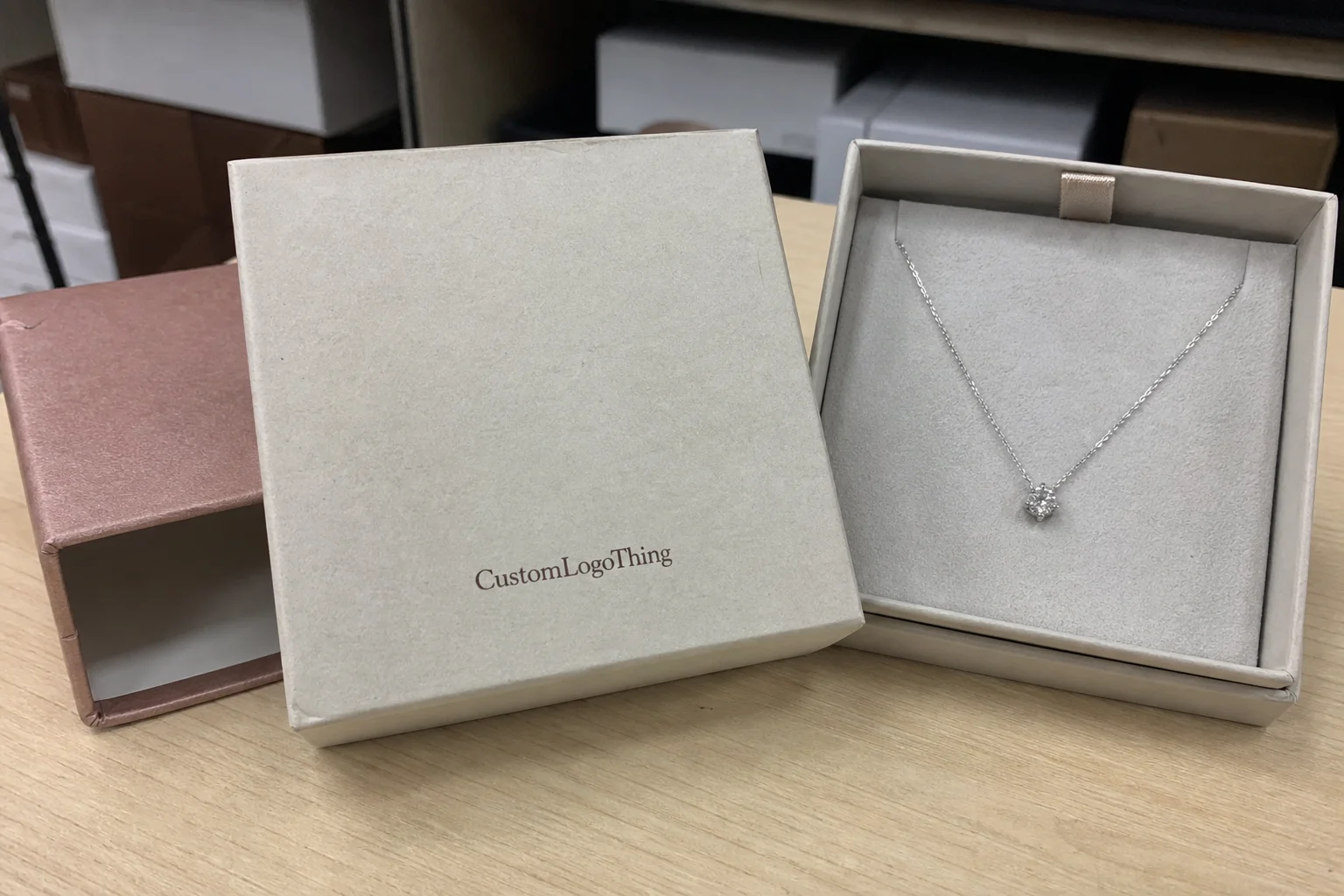
Necklace packaging changes perceived value because the buyer does not separate the jewelry from the presentation. A delicate chain in a loose pouch feels different from the same chain resting in a fitted insert inside a rigid box. The product has not changed, but the judgment has.
That shift happens quickly. The opening experience is short, tactile, and visual all at once. If the pendant lands off-center, if the chain bunches at one end, or if the clasp rattles against the lid, the package starts working against the product. Even when the necklace is perfectly fine, the customer can still feel that something about the experience was not planned.
There is a practical side to this as well. Packaging complaints in jewelry often begin as presentation problems and then turn into service issues. A chain that rubs against a sharp insert edge, a pendant that keeps sliding under transit vibration, or a lid that presses on the piece can all become returns, replacements, or negative reviews. The jewelry may survive. The margin may not.
That is why a proper retail package is part of the product, not an accessory to it. For gifting, the effect is even stronger. Buyers are not just deciding whether the necklace feels worth buying. They are deciding whether it feels worth giving.
“The necklace can be excellent and still underperform if the box makes it look ordinary.”
Online sales make the margin for error smaller. E-commerce orders go through more handling, more vibration, and more carton movement than many sellers plan for. In-store sales have a different pressure: the box has to look clean, credible, and gift-ready before anyone opens it. Either way, the packaging is doing brand work before the product does any of its own.
How a custom necklace box is built for protection and presentation
A good jewelry box is usually a system, not a single object. It has four main parts: the outer shell, the closure, the insert, and the finish. Each one plays a different role. The shell gives structure. The closure controls the opening feel. The insert fixes the necklace in place. The finish sets the visual tone.
For a custom necklace box, the insert does most of the mechanical work. Paperboard tabs work well for light chains and high-volume runs. Foam gives more grip and better motion control. Velvet-wrapped inserts create a softer presentation and are common in gifting programs. Molded inserts are useful when the pendant is unusually shaped or must sit in one exact position. The wrong insert usually shows itself as soon as the box is tilted.
The shell style matters too. Rigid setup boxes are common for premium jewelry because they hold shape, resist crush, and feel more substantial in the hand. Folding cartons can work for lower-cost lines or for pieces that will be nested inside a separate mailer. Tuck-style cartons are useful for simple retail packaging, but they rarely deliver the same presentation value as a rigid build.
Materials change both appearance and durability. A matte wrap hides fingerprints better than a glossy one. Soft-touch lamination feels refined but can show scuffing if the box moves through crowded fulfillment lines. Textured paper wraps can look expensive without leaning on heavy decoration. If the box is going through warehouses, the finish should survive handling, not just photography.
Decoration is where many quotes drift upward. Foil stamping, embossing, debossing, spot UV, custom printing, and magnetic closures all add value, but they also add setup complexity. A buyer should ask whether each feature improves the sale or simply increases the number on the invoice. The best packaging usually has a clear visual hierarchy rather than a crowded list of effects.
Size is where errors become costly. Too much empty space and the necklace shifts. Too little and the pendant presses into the lid or the chain bends around the clasp. The box should match the real product, not an idealized version of it. Measure the necklace laid flat, include pendant height and clasp thickness, and allow for how the insert sits once the lid closes.
Typical structural specs are straightforward. Many jewelry boxes use board in the 1.5 mm to 2.5 mm range for rigid builds, with thicker board reserved for larger or more premium presentations. Inserts are often cut to tight tolerances because even a few millimeters of slack can change how the necklace sits. That is a small detail on paper and a visible one in the box.
For brands building a larger product family, it helps to compare the necklace box against the rest of the line so the packaging language stays consistent across SKUs. A related catalog of Custom Packaging Products can help align the necklace presentation with gift boxes, e-commerce mailers, or other jewelry formats.
Cost, pricing, and MOQ: what moves the quote
Pricing usually starts with structure, not decoration. A rigid box with a fitted insert costs more than a simple folding carton because it uses more board, more hand assembly, and more finishing steps. Add specialty wrap, foil, embossing, magnets, or a Custom Die Cut, and the quote rises again. That is normal. It is also why rough budget requests often come back with wide price ranges.
For buyers, the better question is usually: what is the lowest specification that still protects the jewelry and supports the brand? A clean box with a well-fitted insert can look premium without carrying the cost of every available finish. Good typography, proportion, and material choice often do more than a pile of effects.
MOQ changes the math. Small runs tend to cost more per unit because setup and tooling are spread across fewer boxes. Larger runs reduce the unit price, but they also increase inventory risk if the design changes or the collection sells unevenly. A 1,000-unit run can price very differently from a 5,000-unit run even when the structure looks identical on paper.
In practical terms, basic folding carton jewelry packaging can sit near the low end of custom packaging budgets, while rigid presentation boxes with custom inserts often move into a higher bracket quickly. Once foil, embossing, specialty paper, or magnetic closures enter the spec, the price can climb again. Exact numbers depend on board grade, print coverage, component sourcing, and packaging method, so a quote without those details is rarely meaningful.
| Option | Typical Use | Unit Cost Trend | Best For |
|---|---|---|---|
| Folding carton with insert | Lightweight retail or entry-level gifting | Lower | Budget-conscious launches, simple branding |
| Rigid setup box | Premium presentation and better crush resistance | Mid to higher | Gift sets, direct-to-consumer orders, elevated retail |
| Rigid box with foil and embossing | Luxury presentation and stronger shelf impact | Higher | Higher-price jewelry, seasonal collections, display programs |
| Custom-shaped specialty box | Unusual pendant or layered necklace formats | Highest | Signature pieces, limited collections, brand-led launches |
The most accurate quote comes from a precise brief. Send exact dimensions, unit count, artwork status, board or wrap preference, insert style, and packing requirements. If the supplier has to guess whether the necklace sits in foam, paperboard, or velvet, the price will either be padded for risk or revised later. Neither outcome helps the project.
Ask every supplier for the same spec sheet. That means the same insert type, the same finish, the same print coverage, the same packing method, and the same sample terms. Otherwise, one quote may appear lower only because it excludes the parts that matter most.
Production steps and timeline from spec to shipment
The production sequence is usually manageable if the inputs are clean. It starts with requirements, then dieline confirmation, artwork setup, proofing, sampling, mass production, finishing, inspection, and packing. The steps are ordinary. The delays happen in the handoffs.
Artwork is one of the most common bottlenecks. Print-ready files save time. Files with missing bleed, low resolution, wrong color profiles, or unflattened effects create proof revisions, and each revision adds days. The same problem appears when dimensions are approximate and the insert must be redrawn after the first sample. Packaging work is much easier when the measurement stage is disciplined.
Finishing also affects lead time. Foil stamping, embossing, soft-touch lamination, spot UV, and specialty wraps often require extra setup or drying time. A plain printed box can ship sooner than a premium rigid build even if the two boxes are the same size. The calendar is shaped by the process, not just by the product.
Sampling is where expensive surprises get caught early. A physical prototype can reveal a chain that moves too freely, a pendant that sits too high, a lid that closes with too much pressure, or a magnet that feels weak once the box is handled repeatedly. Those are the kinds of problems that do not show clearly in a PDF.
For many standard jewelry packaging jobs, 10 to 15 business days after proof approval is a realistic range once the design is settled. More complex orders can run longer if they include special inserts, multiple finishes, or unusual structural elements. If parts are sourced separately or if the approval cycle drags, the schedule stretches fast. Fast approvals matter more than most buyers expect.
Inspection should be specific, not vague. For transit performance, some brands ask for testing aligned with ISTA procedures so the box is judged against shipping stress rather than guesswork. For paper sourcing, FSC certification can support responsible material selection where that matters to the brand. Neither one replaces fit testing, but both add structure to the process.
Quality checks worth asking about include lid alignment, magnet pull consistency, insert fit, print registration, scuff resistance, and carton compression. If the supplier cannot describe how those items are checked, the job may still be fine, but the buyer is carrying more risk than the quote suggests.
Step-by-step guide to spec the right jewelry box
Start with the necklace itself. Measure the chain length, pendant dimensions, clasp style, and any fragile detailing. A flat charm behaves differently from a long drop pendant. A fine-link chain needs different control than a heavier statement piece. Packaging should follow the product, not force the product into a generic box size.
Next, choose the opening style. A lift-off lid creates a classic presentation. A magnetic closure gives a cleaner premium feel. Drawer styles work well for gift sets because the reveal is slower and more deliberate. A simple presentation carton may be enough for some retail programs, especially where the brand already has strong recognition.
Then decide how the necklace should be held. Foam is useful when the piece needs to stay locked in place. Paperboard tabs are efficient and cost-effective for lighter chains and higher volumes. Velvet-wrapped inserts improve the tactile impression but are not always the best choice for motion control. Molded components make sense when the jewelry has an unusual shape and requires a specific cradle.
After that, set the branding direction. The packaging should support the price point and the sales channel. A bridal necklace, a subscription piece, and a fashion accessory sold in a mall setting do not need identical visual treatment. That is where branded packaging earns its keep. A restrained logo, a consistent color story, and a material that matches the product are often stronger than a crowded layout with too many effects.
Use the right priority for the channel. For retail display, presentation may lead. For direct-to-consumer shipping, protection should lead. For wholesale, stacking efficiency and carton consistency matter more than a dramatic opening sequence. A buyer who defines the use case early usually gets a better result than one who starts with aesthetics alone.
For brands with several jewelry formats, it helps to apply the same logic across broader custom printed boxes so the necklace packaging does not look disconnected from the rest of the line. That consistency makes the brand easier to recognize and easier to trust.
What to confirm before a quote
- Exact necklace dimensions, including pendant and clasp details
- Box style preference, such as rigid, folding carton, magnetic, or drawer
- Insert type, finish, and whether the item must stay fixed during transit
- Quantity, artwork readiness, and print coverage
- Use case: retail display, gifting, e-commerce shipping, or wholesale
Once those basics are fixed, the supplier can recommend a structure that fits the job rather than the mood board. That difference matters. In packaging, the most attractive option is not always the best-performing one.
Common mistakes that cause damage, rejects, or quote surprises
The first mistake is oversizing. Too much empty space allows the chain to shift, twist, and settle in the wrong place. It also makes the package feel less valuable, because product movement suggests waste and poor planning. The box should hold the necklace, not merely contain it.
The second mistake is choosing an insert that looks polished in a sample photo but does not hold up under vibration. Transit is harsher than a tabletop presentation. If the necklace moves when the box is shaken lightly by hand, it will probably move in shipping too. Pretty is not enough if the insert cannot do its job.
Late artwork changes create another round of avoidable cost. If the dieline shifts after approval, tooling or hand assembly may need to change. If print files are still being revised while samples are moving, the schedule stretches and the final price often climbs. That kind of slippage is common, and usually preventable.
Buyers also confuse sample approval with production approval. A sample can confirm the structure and fit while the mass run still shows small shifts in color, texture, or closure feel because of batch variation. That is normal in manufacturing. It becomes a problem only when nobody defines acceptable tolerances up front.
Master carton planning is another weak spot. A necklace box that looks perfect individually can still ship poorly if the outer carton is packed loosely, stacked badly, or underfilled. Packaging is a chain of decisions. A strong inner box cannot fully compensate for a careless outer pack.
The lowest quote is not always the best value. A supplier may have priced low because the insert was simplified, the board was thinner, the print area was reduced, or protective packing was excluded from the quote. On paper that looks efficient. In reality it can become returns, replacements, or customer service work later. A good custom necklace box protects the jewelry and supports the sale. If it only does one of those jobs, it is incomplete.
If the necklace is especially delicate, ask how the box will be tested for movement, closure strength, and compression before mass production. Those checks do not sound glamorous, but they tell you whether the package is ready for actual handling instead of ideal conditions.
Next steps: what to gather before requesting a quote
Before requesting pricing, gather the product dimensions, quantity, box style, insert preference, artwork files, and finish goals. That gives the supplier enough information to quote the real job rather than a rough guess. It also reduces the back-and-forth that tends to slow lead times.
Define the use case clearly. A necklace box for retail display can prioritize shelf presence. A box for direct-to-consumer shipping should prioritize motion control and crush resistance. A subscription package may need lower cost and easy stacking. The right spec changes with the channel, and the quote should reflect that.
Ask for a sample or prototype if the necklace is delicate, unusually shaped, or sold at a price point where presentation affects conversion. A sample is not unnecessary bureaucracy. It is the cheapest place to catch an insert that is too loose, a closure that feels weak, or a finish that looks better in renderings than it does under warehouse lighting.
Then compare lead time, MOQ, structure, and unit cost side by side. Those four numbers tell a more honest story than price alone. If one supplier is faster because the design is simpler, that may be the right answer. If another supplier is cheaper because the spec has been stripped too far, that is a different decision entirely.
A buyer who prepares this information usually gets a clearer quote, fewer surprises, and a better finished product. That is the practical path to a custom necklace box that fits the jewelry, protects the chain, and supports the brand from first touch to unboxing.
What size should a custom necklace box be for standard chain lengths?
Measure the necklace laid flat, then allow only enough room for the insert and closure so the chain does not slide around. A pendant or clasp with extra height may require a deeper box, but oversized space usually creates more problems than it solves.
Which insert works best for a custom necklace box?
Foam and paperboard inserts are common because they keep the piece stable. Velvet-wrapped inserts can improve presentation, but the best choice depends on pendant weight, chain movement, and whether the box will be opened once for gifting or handled repeatedly in retail.
How much does a custom necklace box usually cost?
Unit cost depends on structure, quantity, print coverage, board thickness, and finish level. A rigid box with specialty decoration costs more than a simple folding carton, and MOQ can change the effective price a lot, so compare quotes using the exact same spec.
How long does production take for custom necklace boxes?
Timeline depends on sample approval, artwork readiness, and whether the order includes custom inserts or specialty finishes. Clear specs and fast approvals usually move the job faster than anything else, especially after the dieline and proof files are approved.
What should I send when requesting a quote for custom necklace box packaging?
Send product dimensions, quantity, box style preference, insert needs, branding files, and any finish or budget target you already have. It also helps to explain whether the box is for retail display, gifting, or shipping, because the use case changes the structure recommendation.