Custom Oval Labels for Clothing Brands: What Actually Matters Before You Order
Custom oval labels solve a specific packaging need: a brand wants something polished, easy to read, and small enough to stay out of the way. On clothing, that usually means a hang tag accent, a size sticker, a care insert, a polybag seal, or a branding label that supports the product without taking over the pack.
The oval shape works because it naturally centers the eye and softens a layout. That helps logos, short collection names, and simple marks feel finished at small sizes. But shape is only one part of the spec. If the stock, adhesive, or finish does not match the surface, the label becomes the first thing customers notice for the wrong reason.
For brands that coordinate Custom Packaging Products across boxes, inserts, and mailers, oval labels can help the system feel cohesive. The best result comes from matching the label to the garment, the packing line, and the final presentation, not treating it as an afterthought in the artwork file.
What Custom Oval Labels Are and Why Clothing Brands Use Them
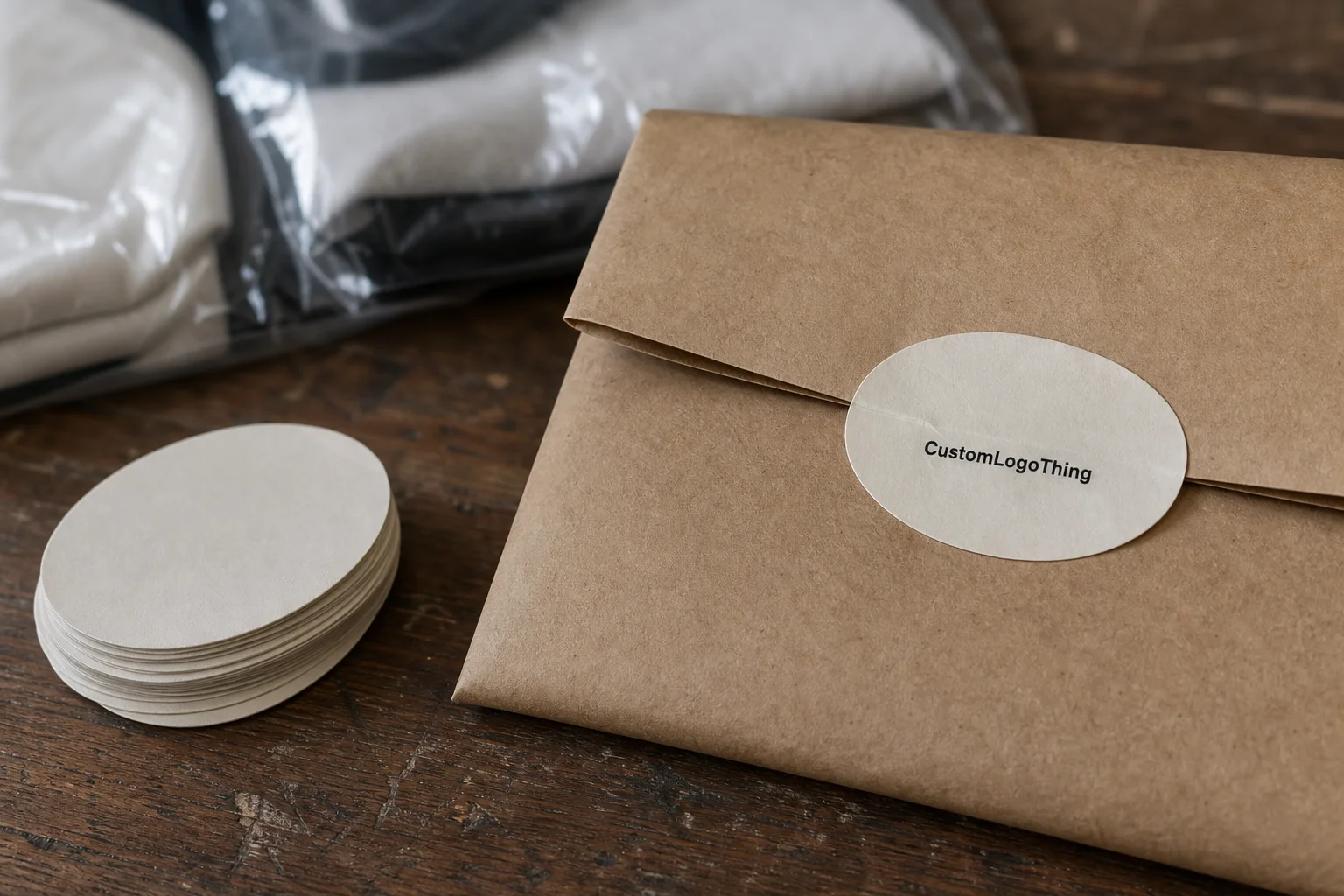
Custom oval labels are die-cut labels with a rounded outline that works well for compact branding. The shape feels finished even at a small size, which is why apparel brands use it on hang tags, folded garments, promotional inserts, size stickers, and seasonal packaging.
The appeal is partly visual. Ovals soften hard edges, so they often fit boutique, baby, organic, heritage, and lifestyle brands better than a rectangle. They also give narrow layouts a little breathing room without increasing the footprint too much.
That said, the shape is not a substitute for the right material. Paper works for short-term inserts and presentation pieces. Film or synthetic stock makes more sense when the label needs to handle moisture, friction, or repeated handling. The correct spec depends on where the label is going and how long it needs to last.
Most requests for custom oval labels are really packaging decisions. The real question is whether the label needs to be permanent, removable, moisture-resistant, or simply decorative for a short run. Answer that early and the rest of the order gets easier.
A label that looks good in a mockup but lifts in transit is not branding. It is avoidable waste.
Clothing brands also use the format because it fits inside a broader visual system. If the same tone shows up across retail packaging, tissue wrap, and Custom Labels & Tags, the product line feels deliberate without getting busy.
How the Shape, Material, and Adhesive Work Together
The shape, face stock, and adhesive are linked. Change one, and the others may need to change too. A paper oval that works on a flat insert can fail on a textured mailer. A film label that looks sharp on a polybag may be unnecessary on a folded retail card.
Material usually falls into three practical buckets. Paper stocks are best for short-term packaging, inserts, and presentation labels where durability is not the main job. Synthetic or film stocks are better when the label needs moisture resistance, stronger handling performance, or a cleaner premium finish. Specialty finishes such as matte lamination or soft-touch can lift perceived value, but they also change cost and can make adhesion more sensitive to surface texture.
Adhesive should follow the use case, not the artwork. Permanent adhesive suits sealed bags, carton closures, and packaging that should stay put. Removable adhesive makes more sense for temporary garment placement, price stickers, or over-labels that need to come off cleanly. If the label touches coated paper, recycled board, or treated textiles, test it on the real surface.
There is also a sourcing angle. If the project uses fiber-based stock and the brand cares about chain-of-custody claims, FSC certification can matter. If the packaging needs to survive transit abuse or be evaluated as part of a larger retail pack, asking whether the line is being measured against ISTA protocols is sensible. Those standards do not fix bad design, but they make material choices easier to defend.
Application method matters too. A label applied by hand can tolerate a different backing and tack profile than one applied in a fast packing line. If labels are dispensed quickly, a stock that curls, tears, or grabs inconsistently can slow the line and increase waste.
What Drives Unit Cost
Pricing is rarely about the oval shape by itself. Unit cost is driven by size, material, adhesive, print complexity, finish, and quantity. A simple one-color paper label in a standard size costs far less than a soft-touch, full-color label with specialty adhesive and variable data.
Small orders cost more per unit because setup, proofing, tooling, and press time are spread across fewer pieces. That is why MOQ matters: the lower the quantity, the more the fixed work affects the price. A 1,000-piece order has to absorb much of the same planning overhead as a 10,000-piece order, so the per-unit number drops as volume rises.
| Spec Type | Typical Use | Approx. Unit Range | Notes |
|---|---|---|---|
| Paper, single-color, standard adhesive | Inserts, short-run packaging | $0.06-$0.14 | Best for simple branded packaging and low handling exposure |
| Paper, full color, matte finish | Hang tags, retail packaging accents | $0.10-$0.22 | Often chosen for boutique apparel and cleaner package branding |
| Synthetic film, permanent adhesive | Shipping bags, moisture-prone packs | $0.15-$0.30 | Better for friction, humidity, and repeat handling |
| Soft-touch or specialty finish | Premium launches, gift sets | $0.20-$0.40 | Higher perceived value, higher setup sensitivity |
The most common cost drivers for apparel buyers are specialty finishes, multiple SKUs, metallic ink, and tight color matching. Variable data is another one. If one label needs size coding, another needs a promo line, and a third needs a compliance message, the run becomes more complex.
The hidden cost of the wrong spec is usually worse than the price difference between materials. A cheaper label that smudges, peels, or leaves residue can create complaints, rework, and waste. A more durable option often pays for itself by surviving packing, shipping, and display without drama.
Production Steps and Turnaround
The production path is usually straightforward: artwork review, material selection, proof approval, printing, finishing, die cutting, quality check, and packing. Delays usually come from missing bleed, low-resolution logos, unclear trim lines, or late approvals.
Turnaround depends on whether the order is a repeat or a new build. A repeat order with an approved spec can move faster because the setup already exists. New custom work takes longer, especially if the label uses a specialty stock, a custom adhesive, or multiple versions across product lines. As a planning baseline, simple repeat jobs often move in about 7-10 business days after approval, while new or more complex orders more often land in the 12-15 business day range before freight.
Proofing deserves attention. A digital proof confirms layout, cut line placement, and copy hierarchy, but it will not always show how a pale color behaves on a matte stock or how a thin border looks after die cutting. Before sign-off, verify the label size against the actual packaging surface.
Launch calendars need buffer time. Reprints happen. Freight slips happen. A supplier may need a revised proof if the artwork changes late. The buyer who leaves a small cushion is less likely to have labels become the bottleneck in fulfillment.
Quality control should not stop at the press. A solid check looks at trim accuracy, adhesive consistency, ink coverage, and backing release. If the order includes multiple SKUs, the cartons should be verified against the correct artwork version before packing.
Common Mistakes That Make Apparel Labels Look Cheaper
The first mistake is trying to cram too much into a small oval. Too many words, too many icons, or too many certification marks can make the label feel crowded and hard to scan. Ovals work best when the logo gets room to breathe.
Color contrast is the next problem. Pale type on a pale stock, glossy backgrounds with weak readability, and brand colors that disappear under retail lighting all create the same issue: the label looks better in the file than it does on the shelf. A label that feels elegant on screen can still fail if it cannot be read at arm's length.
Adhesion errors are equally common. A permanent adhesive used where a removable one is needed creates residue and frustration. A weak adhesive on textured packaging leads to edge lift and complaints. Production tolerances matter too. If text sits too close to the edge, thin strokes can fill in, and a border shift can make the label look off-center even when the file looked balanced.
Another mistake is assuming every SKU should use the same spec. Seasonal collections, colorways, and bundled offers often need slightly different label formats even if the logo stays the same. The label should support the packaging system, not flatten it into a single generic template.
A cheap-looking label is usually not a design problem alone. It is often a spec problem, a contrast problem, or a process problem. Fix the right one and the label gets better fast.
Expert Tips for Specifying the Right Label on the First Try
Start with the application surface, not the design. Ask where the label will live, how long it needs to stay there, and whether it must remove cleanly after use. That one question eliminates a lot of expensive guesswork.
Design for distance and motion. If the label appears on folded apparel, a polybag, or a shelf display, the key copy needs to read in one glance. Short brand names, a compact product line, and one clear visual anchor usually outperform dense copy.
- Test on the actual surface, not a substitute.
- Ask for one version for the main SKU and one for variants if the line is expanding.
- Confirm whether the finish should be matte, gloss, or soft-touch before proof approval.
- Check whether the label has to apply by hand or by machine, since that changes the spec.
Real testing is cheap compared with a reprint. Tape a sample to the actual packaging, expose it to friction, and leave it in conditions that resemble storage and transit. If edges lift, the color shifts, or the adhesive leaves residue, the spec needs work.
If a label cannot survive the way the product is handled, it is the wrong label. The file may be fine. The spec is not.
For brands that manage multiple packaging formats, coordination matters. A Label That Fits hand-packed orders but slows a fulfillment line can create more labor than it saves. The right spec should support the workflow, match the materials, and still look like it belongs next to the garment.
There is also a margin angle that buyers sometimes miss. A more expensive material can be the cheaper option if it cuts waste, reduces labor, or avoids a second run. The right question is not "What is the lowest sticker price?" It is "What spec gets the job done without creating a second problem?"
Next Steps for Ordering with Confidence
Begin with one sentence: where the label goes, what surface it touches, and whether it needs to be permanent, removable, or decorative. That sentence is more useful than a mood board because it defines function. After that, collect the minimum specs before asking for quotes: size, quantity, substrate, finish, print colors, adhesive type, and any timing constraint tied to launch or replenishment.
If the design is new, request a proof or sample review. A small investment in validation usually saves far more than it costs, especially when the label is part of a broader retail packaging program. Compare vendors on more than price: turnaround, proof process, material options, reprint policy, and communication quality matter.
It also helps to think in systems, not individual pieces. The label should complement the garment, the pack-out process, and the rest of the brand kit. When that alignment is there, custom oval labels do more than decorate. They make the product line feel considered and keep the packaging line moving without drama.
For most clothing brands, that is the real standard: clean, readable, and durable enough to do the job the first time.
Are oval labels better than rectangular labels for clothing brands?
Oval labels usually feel softer and more premium, which suits boutique, lifestyle, baby, and heritage apparel. Rectangles are better when you need more copy, more SKUs, or denser compliance information. The better choice depends on readability and application surface, not style alone.
What material should I choose for labels on apparel packaging?
Use paper stock for short-term packaging and inserts where durability is not critical. Use synthetic or film materials when the label needs moisture resistance, handling strength, or a cleaner premium finish. Match the stock to the surface and the conditions it will face during shipping and retail handling.
How do these labels affect pricing compared with other shapes?
The shape itself usually is not the main cost driver. Material, quantity, finish, and adhesive matter more. Complex dies, small runs, and special finishes raise the unit cost quickly, so compare setup plus per-unit pricing to see the real budget impact.
What turnaround should I expect for a new order?
Simple repeat jobs are usually faster than new custom orders because proofing and setup are already established. Specialty materials, custom adhesives, or multiple versions can extend production time. Approve artwork quickly and leave freight buffer so the order does not delay launch.
Can custom oval labels be removed cleanly from clothing packaging?
Yes, if you specify a removable adhesive and test it on the actual surface. Clean removal depends on the packaging material, dwell time, and temperature exposure. For most clothing brands, the best custom oval labels are the ones that match the garment, remove cleanly when needed, and support the whole packaging workflow without creating friction in fulfillment.