Buyer Fit Snapshot
| Best fit | Custom Packaging for Food Delivery Business Explained projects where brand print, material claims, artwork control, MOQ, and repeat-order consistency need to be specified before quoting. |
|---|---|
| Quote inputs | Share finished size, material target, print colors, finish, packing count, annual reorder estimate, ship-to region, and any compliance wording. |
| Proofing check | Approve dieline scale, logo placement, barcode or warning zones, color tolerance, closure strength, and carton packing before bulk production. |
| Main risk | Vague material claims, crowded artwork, missing packing details, or unclear freight terms can make a low unit price expensive after revisions. |
Fast answer: Custom Packaging for Food Delivery Business Explained should be specified like a repeatable production item. The safest quote records material, print method, finish, artwork proof, packing count, and reorder notes in one written spec.
Production checks before approval
Compare the actual filled-product size with the drawing, then confirm tolerance on folds, seals, hang holes, label areas, and retail display edges. Reserve space for logos, QR codes, warning copy, and material claims before decorative graphics fill the panel.
Quote comparison points
Review material grade, print process, finish, sampling route, tooling charges, carton quantity, and freight assumptions side by side. A quote is only useful when the supplier can repeat the same color, closure quality, and packing count on the next order.
Custom Packaging for Food Delivery business is not decoration. It is the last working part of the meal before the customer forms an opinion, and that part has to handle heat, condensation, motion, and expectation all at once. A package can sit unnoticed in a storage room for months, then one leak or crushed corner turns it into the entire story. Good packaging protects the food, carries the brand, and quietly protects revenue by reducing refunds, remakes, and bad reviews.
That sounds severe because the economics are severe. Packaging begins as a small line item and ends up deciding whether the meal arrives intact. A generic clamshell or plain bag may look fine on a prep table, then fail once traffic, stacking, or moisture enters the picture. Strong custom Packaging for Food delivery business is part food protection, part logistics, part branded presentation. It has to survive the route, not just sit pretty for a photo. If you need a place to compare formats, you can browse Custom Packaging Products for boxes, bags, labels, and inserts built around different menu types.
The goal is not to make a chicken sandwich look like it belongs in a museum. The goal is fit: right package, right food, right route, right customer expectation. Once those four line up, packaging stops behaving like a cosmetic expense and starts acting like a system that supports repeat orders, pricing power, and reputation. That is the part operators usually feel in their margins before they ever say it out loud.
Custom Packaging for Food Delivery Business: Why It Matters
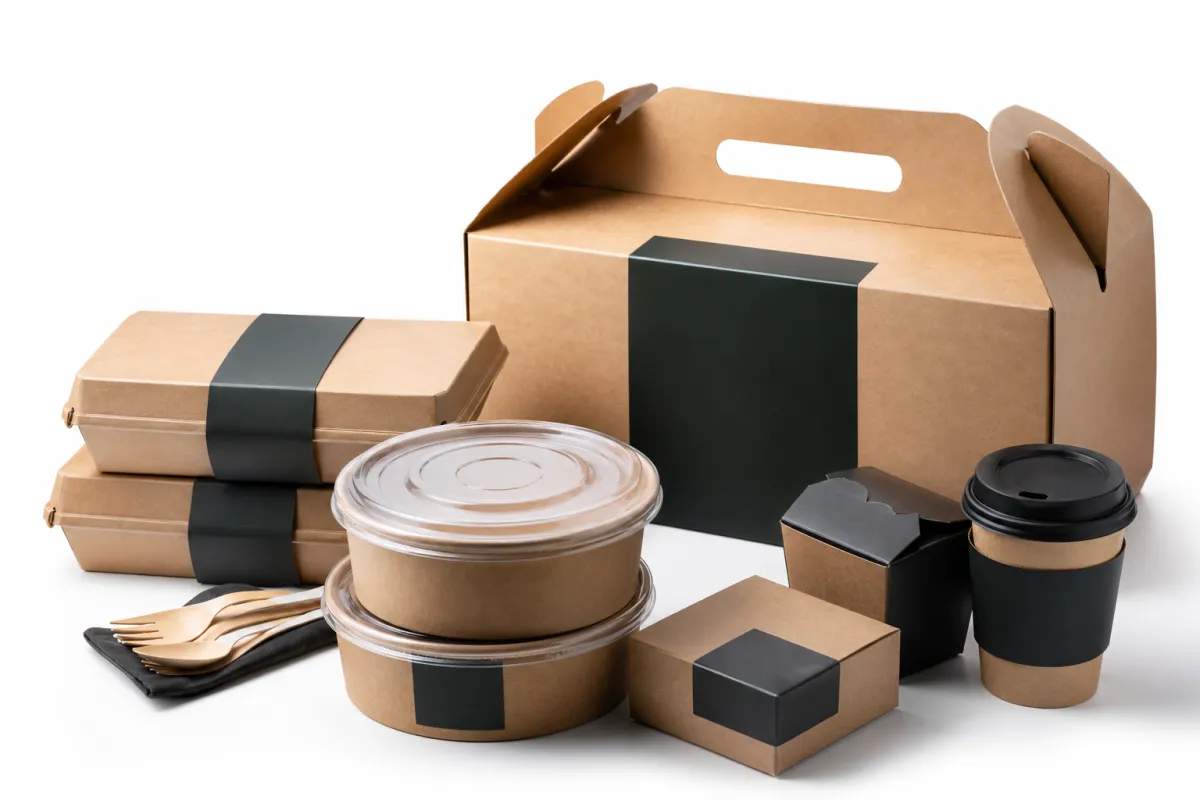
People usually notice packaging only after something fails. That is a bad time to start thinking about it. In custom Packaging for Food delivery business, the box is often the only physical object left after the meal is gone. If it buckles in transit, leaks sauce, or arrives looking tired, the brand inherits that disappointment. The driver did not design the box. The customer rarely blames the box. The business still owns the outcome.
Useful custom packaging starts with structure, not graphics. Folding cartons work for lighter meals. Corrugated mailers handle stacked items and heavier combinations better because they resist crush. Rigid boxes fit premium sets, meal kits, and catering-style orders. Paper bags with reinforced handles help with multi-item handoffs. Inserts keep sauce cups from wandering around like loose change in a glove box. Tamper-evident seals add a visible layer of trust. Printed labels can identify allergens, spice levels, or temperature-sensitive contents. That is why custom packaging for food delivery business is not one item. It is a linked set of decisions.
The numbers reveal the value faster than brand decks do. Better fit reduces shifting and compression. Better moisture control keeps fries from turning limp too soon. Better closures cut spill rates. Better presentation improves repeat orders because customers trust the business to deliver the same quality they expected at pickup or in-store. Even a tiny reduction in damaged orders can move the margin. If a shop sends out 1,000 orders a month and only 2% of them need a remake, that is 20 meals plus labor, courier time, and customer service attention. The damage is rarely just the meal itself.
Generic packaging often looks cheaper than it is. The Price Per Unit may be lower, then the hidden costs arrive. Extra bags. Extra stickers. Extra napkins. Extra labor to repair bad orders. Extra customer-service time. Strong custom packaging for food delivery business lowers those hidden costs while improving brand presence at the same time. Operators who treat packaging like an afterthought usually pay for that decision twice.
“Customers do not judge the meal in a vacuum. They judge it after 18 minutes in traffic, three turns, and a handoff at the door.”
That is why packaging matters beyond appearance. It affects temperature retention, damage rate, customer trust, and whether an order gets photographed and shared. For restaurants, ghost kitchens, cafés, and meal prep brands, custom packaging for food delivery business is an operating tool. If the meal is the product, the package is the transport mechanism. I have watched beautiful sandwiches collapse because the box looked premium but had nowhere for steam to go; the packaging was polished, and kind of useless.
Teams that like proof can borrow a habit from transit testing. Organizations such as ISTA publish packaging test guidance that exposes weak points before launch, and the logic is simple enough to use even without a lab. A small brand does not need a full engineering department to learn from that thinking. It does need to test packaging like a real delivery system instead of approving it by guesswork and optimism.
How Custom Packaging for Food Delivery Business Works
The workflow is practical, not glamorous. Start with the menu item. Measure the container. Decide how the food moves from kitchen to customer. Choose the structure and material. Then move into print spec, sample approval, and production. That order matters because custom packaging for food delivery business fails most often when people jump straight to artwork and skip sizing. A beautiful box that fits the wrong container is still the wrong box.
Different formats solve different problems. Custom printed boxes work well for burgers, sushi, rice bowls, pastries, and meal combinations where shape control matters. Corrugated mailers help with stacked items or heavier bundles because they resist compression better. Folding cartons suit lighter food and takeaway packaging that does not need extreme structural strength. Branded bags work for multi-item orders, retail add-ons, and deliveries that need one clean handoff point.
Customization extends far past a logo on the lid. Size, wall thickness, insert layout, coating, venting, closure style, and grease resistance all shape performance. A fried chicken box without venting traps steam and softens the coating. A dessert box without the right insert lets cupcakes slide around like coins in a glove compartment. In custom packaging for food delivery business, structure is part of the recipe.
Delivery conditions should shape the package. Hot food needs venting balanced against insulation. Fried food needs moisture management. Cold desserts need materials that do not sag. Sauces need separation or secondary containment. Mixed orders with several temperature zones are especially tricky because the packaging has to hold conflicting needs in one trip. That is a design problem, not a branding problem.
Testing saves money because it shows behavior before the customer does. Run sample packs through real delivery conditions: a 20-minute drive, stop-and-go traffic, a hot bag, a scooter tote, a bike courier pouch. Check for crushed corners, soggy bottoms, weak seals, and labels that peel when condensation shows up. Custom packaging for food delivery business gets easier once the package is judged in motion instead of under studio lighting.
If you want to compare structures before committing to a run, a sample round is usually the fastest route. Review Custom Packaging Products for format ideas, then request samples built around your actual container sizes. That is the difference between choosing packaging and collecting expensive surprises.
Cost and Pricing for Custom Packaging
Price in custom packaging for food delivery business depends on a few concrete variables. Material choice, box size, print method, color count, coating, structure complexity, and order volume all affect the unit cost. A simple one-color folding carton will price very differently from a full-coverage rigid box with specialty finishing. That is normal. Packaging is manufacturing, not a mood.
The part many operators miss is that the cheapest box can become the most expensive one. A low-cost container that needs a sleeve, sticker, second bag, and a napkin rescue kit is no longer a saving. It is a repair job in pieces. Good custom packaging for food delivery business often pays for itself by reducing leakage, remakes, and customer-service time.
Minimum order quantities matter too. Smaller businesses usually pay more per unit at first because setup costs are spread across fewer pieces. That does not mean they should overbuy. It means the first run should be sized to the business, often 500 to 2,000 pieces for early testing and 5,000 or more once the design has been proven. The smarter move is not chasing the lowest unit price. It is balancing cash flow against risk.
Hidden costs show up fast. Sampling, plate or setup fees, freight, storage, and redesigns after launch can add up before anyone notices. Spoilage matters as well. If the packaging fails and food is discounted or remade, the box cost is the smallest part of the loss. In that sense, custom packaging for food delivery business is a profitability decision, not only a purchasing decision.
| Packaging Type | Typical Use | Rough Unit Cost | Strengths | Watch-Outs |
|---|---|---|---|---|
| Folding carton | Light meals, pastries, deli items | $0.18-$0.32 | Lightweight, printable, easy to brand | Needs the right coating for grease and moisture |
| Corrugated mailer | Stacked meals, heavier combos | $0.28-$0.55 | Better crush resistance, better stacking | Can feel bulky if the menu is light |
| Rigid box | Premium sets, gift meals, catering | $0.85-$1.80 | Premium look, strong presentation | Higher cost, more storage space |
| Branded paper bag | Multi-item orders, add-ons, retail packaging | $0.12-$0.30 | Fast packing, low handling friction | Not enough on its own for spill-prone items |
Those ranges are not a quote. They are a working starting point, assuming typical print coverage and standard paperboard specs. A logo-heavy build with coated finishes, inserts, or specialty die cuts can move the price quickly. A plain one-color pack in higher volume can move the other way. Budget by menu category, not by fantasy. A fried snack box and a premium dinner tray should not carry the same target, because the performance burden is not the same.
Brands that want eco claims without empty marketing language need to look at sourcing and performance together. FSC-certified paper options can support a responsible sourcing story, but only if the packaging still holds up. Recycled content sounds fine until a carton loses stiffness and a lid folds under steam. That is why custom packaging for food delivery business should be priced against performance, not slogans.
How do you choose custom packaging for food delivery business?
Start with the food itself. Greasy food needs grease resistance. Wet food needs sealed seams or lined paperboard. Crispy food needs venting and enough structural strength to avoid compression. Frozen desserts need temperature stability. Stacked meals need rigid corners and a stable footprint. If the package does not match the food, custom packaging for food delivery business becomes a cosmetic exercise.
Heat retention helps, until it ruins texture. That is the trap. A package that holds food very hot may also trap steam and destroy crispness. A package that breathes too much may lose temperature too quickly. Good packaging design solves the tension by balancing insulation, venting, and food type. Fries and fried chicken need a different airflow strategy than noodles or curry.
Stackability matters more than many owners expect. A bag that tips in a courier tote can spoil an entire order chain. Strong bases, squared corners, and consistent sizing help drivers stack multiple orders without compression. That matters during lunch rushes, in ghost kitchens, and anywhere speed outruns attention.
Branding is larger than logo placement. It includes the feel of the package in the hand, the clarity of the print, and whether the order looks intentional in a photo. A plain box can work, but branded packaging gives the customer a memory cue. That matters for repeat recognition. Good package branding makes the business easier to recall the next time someone is hungry and scrolling.
Sustainability deserves a practical lens. Recyclable, compostable, and reusable options matter only if customers can actually dispose of them correctly and the package still protects the meal. A compostable lid that warps in transit is not a win. A recyclable paperboard box with the wrong coating may not be accepted in local recycling streams. Realistic custom packaging for food delivery business means choosing materials that match both the menu and the disposal reality where the customer lives.
Compliance basics belong in the conversation too. Ask suppliers for food-contact safety documentation, ink specifications, and any relevant migration or barrier information before launch. Teams often review ASTM- and ISTA-style testing concepts, then translate them into practical checks during sampling. That is not glamorous work, but it is cheaper than learning about failures from customers.
Before you order, build a short checklist:
- Does the container hold the exact portion size without crushing garnish or sauce?
- Does it stay stable in a delivery bag for at least 20 minutes?
- Does the surface resist grease, steam, and condensation?
- Does the unboxing feel clean and branded, not improvised?
- Does the package support your pricing without eating the margin?
That kind of checklist keeps custom packaging for food delivery business tied to actual operations. Otherwise, the result is a nice-looking box that fails in the only place that matters: the customer’s kitchen table.
Step-by-Step Process and Timeline
The cleanest way to handle custom packaging for food delivery business is to follow a sequence. First, define the menu item and portion size. Second, measure the container or product space. Third, choose the structure and material. Fourth, confirm the print spec and artwork. Fifth, approve the sample. Sixth, move to production. Seventh, inspect quality and plan shipping. Eighth, schedule the reorder before inventory runs thin. That sounds basic because it is. Trouble appears when the whole project gets compressed into one rushed conversation.
Timing varies with complexity, but practical ranges help. A straightforward printed box may move from brief to sample in roughly 7-12 business days, with production often taking another 10-15 business days after approval. More complex builds, specialty coatings, or multiple revisions can extend that. Seasonal artwork and multiple SKU sizes need extra runway. Custom packaging for food delivery business gets messy fast when the launch date is locked before the packaging is ready.
A strong packaging brief saves both time and money. Include exact dimensions, food temperature, sauce count, delivery distance, how the item is carried, branding goals, and your target budget range. If the product is hot and greasy, say so. If it needs to stack in a courier bag, say that too. A vague brief creates vague samples, and vague samples create expensive revisions.
Testing should use real food, not dummy props. Sauce, steam, oil, and weight reveal problems that an empty box never will. Put the sample through the same route your customers use, then inspect the package at the end. Look for soggy corners, warped lids, ink rub, scuffed panels, and labels that peel. One round of real testing can save three rounds of apology emails. That is a good trade in any custom packaging for food delivery business project.
If you want a structured way to think about quality, compare your sample against a transit standard rather than personal taste. Packaging teams often reference ISTA testing methods because the language is practical: drop, vibration, compression, handling. You do not need to run every test in the book. You do need to know whether the package survives ordinary abuse.
Inventory planning belongs in the timeline too. A menu launch can stall if packaging arrives late, and emergency generic stock usually costs more. Keep a reorder trigger based on actual usage, not optimism. If you use 800 units a week and lead time is three weeks, the reorder point is not "soon." It is already late on the calendar. That is the boring part of custom packaging for food delivery business, and it is also the part that keeps operations calm.
Common Mistakes to Avoid With Custom Packaging
The first mistake is easy to spot: choosing the cheapest box without testing it. A container that looks fine on a shelf may fail in a car, on a scooter, or in a delivery bag with three other orders stacked on top. In custom packaging for food delivery business, real use matters more than catalog photos. If the box cannot survive the route, the price tag means very little.
The second mistake is overdesigning. Not every meal needs a premium rigid build, coated print, and three inserts. Sometimes the better answer is a simpler structure with better venting and a cleaner fit. Fancy does not equal functional. Many brands spend too much on appearance and too little on the part customers actually need: food that arrives in one piece.
The third mistake is ignoring grease barriers, vents, and stack strength. Those are not optional extras for fried food or warm meals. They are the difference between a package that works and one that creates predictable failure during rush hour. Good custom packaging for food delivery business is built around moisture, heat, and movement, not around a mood board.
The fourth mistake is approving artwork before the dieline is locked. Wrong dimensions can shift logos, cut off text, and make a thoughtful design look amateur. Packaging design should be finalized against the actual structure, not against a guess. That sounds minor until the printed run arrives and the logo sits under a fold. Then it becomes an expensive oversight.
The fifth mistake is poor forecasting. Some operators under-order and run out during peak weeks. Others over-order and sit on old stock that no longer fits the menu. Either way, the packaging stops matching the business. A better approach is to tie inventory to moving averages, not hope. That way custom packaging for food delivery business supports operations instead of creating another problem to chase.
One more error shows up often: treating customer-facing as the same thing as customer-proof. A package can look attractive on a mockup and still be terrible in practice. The job is to make it useful and branded, not one or the other. The fix is usually straightforward: test more, simplify the structure, and Choose the Right material the first time.
Expert Tips and Next Steps for Food Delivery Brands
Start with one hero item. Do not redesign every package in the business on day one. Pick the menu item that sells the most or creates the most complaints, then test two or three packaging options. That gives a clean comparison and keeps the project from swallowing the schedule. Custom packaging for food delivery business works best when the rollout is controlled.
Ask for samples that reflect real use. A polished display sample that never sees heat or grease is not enough. You want the version that represents production reality, even if it looks plain. Then test it with the actual food, the real lid, and the same delivery conditions your customers experience. This is usually where teams learn that the "perfect" box has poor steam behavior or a weak corner seam.
Build a short internal checklist before placing a large order. Include fit, seal, temperature retention, unboxing, stackability, print clarity, and delivery damage. You do not need a hundred questions. You need the right ten. That checklist becomes the filter for future packaging decisions and makes reorder choices easier.
Use customer feedback early. Delivery photos, refund notes, and driver comments are a cheap source of truth. If customers keep mentioning soggy fries or crushed lids, do not wait for a full rebrand to fix it. Adjust the material, venting, or structure quickly. The best custom packaging for food delivery business teams are the ones willing to make small corrections before a pattern hardens into a reputation problem.
For brands ready to compare options, take another look at Custom Packaging Products and shortlist the formats that match your top-selling items. Then request samples, test them with real food, and compare performance against what you use now. That is the cleanest way to make sure your packaging choice is based on facts, not wishful thinking.
If you want a simple launch sequence, use this one:
- Measure the top three menu items.
- Choose the packaging format that fits each item’s travel behavior.
- Request sample runs with your artwork or a clean mockup.
- Test them against heat, grease, stacking, and transit time.
- Place the first production order only after the sample passes.
That process is not flashy. Good packaging rarely is. It keeps custom packaging for food delivery business tied to operating reality, which is the place where margins are won or lost.
Frequently Asked Questions
What is custom packaging for a food delivery business?
It is packaging designed around your menu, delivery flow, and brand instead of a one-size-fits-all generic container. In practice, custom packaging for food delivery business can include box structure, inserts, coatings, closure style, labels, and branded graphics that help food arrive safely and look better on arrival. The goal is straightforward: fewer leaks, better temperature control, and a stronger customer experience without loading the order with unnecessary extras.
How much does custom packaging for food delivery business usually cost?
Pricing depends on size, material, print coverage, order volume, and special features like coatings or inserts. Smaller runs usually cost more per unit, while larger runs lower the unit price but require more upfront cash. The real budget for custom packaging for food delivery business should also include sampling, freight, storage, and the cost of damaged orders if the packaging fails.
How long does custom food delivery packaging take to produce?
Timelines vary by structure complexity, sample approval speed, and print revisions. Simple printed items can move faster, while custom shapes or specialty finishes add time. A practical plan for custom packaging for food delivery business leaves room for sampling, artwork checks, and shipping so a menu launch is not held hostage by one delayed carton.
What is the best material for food delivery packaging?
There is no single best material because hot food, fried food, cold desserts, and liquids behave differently. Greasy items often need stronger moisture resistance, while lighter products can use simpler paperboard formats. The best custom packaging for food delivery business material is the one that matches the food, travel distance, and customer expectation without paying for features you do not need.
How do I test custom packaging before ordering in bulk?
Order samples and test them with real food, real sauces, and the same delivery distance customers will experience. Check for leaks, sogginess, stacking strength, temperature drop, and how the package looks after transport. Use feedback from drivers and customers to decide whether to change the size, material, closure, or artwork before you scale custom packaging for food delivery business across the full menu.
If you treat custom packaging for food delivery business as a system instead of a box purchase, you usually end up with better food quality, fewer complaints, and cleaner margins. The next move is simple: pick one high-volume item, test the packaging against a real delivery run, and only then place the larger order. That keeps the decision grounded in how your business actually works, not how the sample looks under good lighting.

