Buyer Fit Snapshot
| Best fit | MOQ Packaging projects where brand print, material claims, artwork control, MOQ, and repeat-order consistency need to be specified before quoting. |
|---|---|
| Quote inputs | Share finished size, material target, print colors, finish, packing count, annual reorder estimate, ship-to region, and any compliance wording. |
| Proofing check | Approve dieline scale, logo placement, barcode or warning zones, color tolerance, closure strength, and carton packing before bulk production. |
| Main risk | Vague material claims, crowded artwork, missing packing details, or unclear freight terms can make a low unit price expensive after revisions. |
Fast answer: MOQ Packaging: Artwork Proof, Packing Count, and Landed Cost should be specified like a repeatable production item. The safest quote records material, print method, finish, artwork proof, packing count, and reorder notes in one written spec.
Production checks before approval
Compare the actual filled-product size with the drawing, then confirm tolerance on folds, seals, hang holes, label areas, and retail display edges. Reserve space for logos, QR codes, warning copy, and material claims before decorative graphics fill the panel.
Quote comparison points
Review material grade, print process, finish, sampling route, tooling charges, carton quantity, and freight assumptions side by side. A quote is only useful when the supplier can repeat the same color, closure quality, and packing count on the next order.
The practical side of moq Packaging How to Choose starts with a trade-off that buyers feel in two places at once: the quote and the warehouse. A lower unit price can still become the expensive option if it locks cash into cartons that sit for months, forces a reprint after artwork changes, or takes up more pallet space than the building can comfortably hold. I have seen a 500-unit order cost more in the long run than a 1,000-unit run, simply because the smaller lot triggered a second production cycle before the first batch had even cleared the dock. The right quantity is rarely the smallest number on the page. It is the order that matches sales pace, launch risk, and the way the product will actually move through production, freight, and storage. For teams comparing minimum order quantity, unit cost, and landed cost at the same time, moq packaging how to choose is really a planning question disguised as a pricing question.
That is why moq packaging how to choose is not just a pricing question. It is a planning question, and the strongest answer usually sits where unit cost, setup expense, and inventory exposure all make sense together. A run that looks large on paper can be the safer move if it lowers press changeovers, plate or die costs, and repeated freight charges. A run that looks tiny can still work for a test launch, but only if the structure, print method, and finish can support the product without creating rework that eats up the savings. In other words, moq packaging how to choose is often less about the lowest threshold and more about the cleanest production math. That is a boring sentence, maybe, but it saves real money.
For buyers of branded packaging, custom printed boxes, and other forms of retail packaging, the real skill is comparing total landed cost instead of chasing the lowest MOQ number. If you need a quick reference while you work through specs, the Custom Packaging Products page is a useful place to start, and the FAQ can help with common order questions before you request a quote. A clean quote is not magic. It is usually just a clear spec sheet and a supplier who does not have to guess.
MOQ packaging how to choose for a first run?
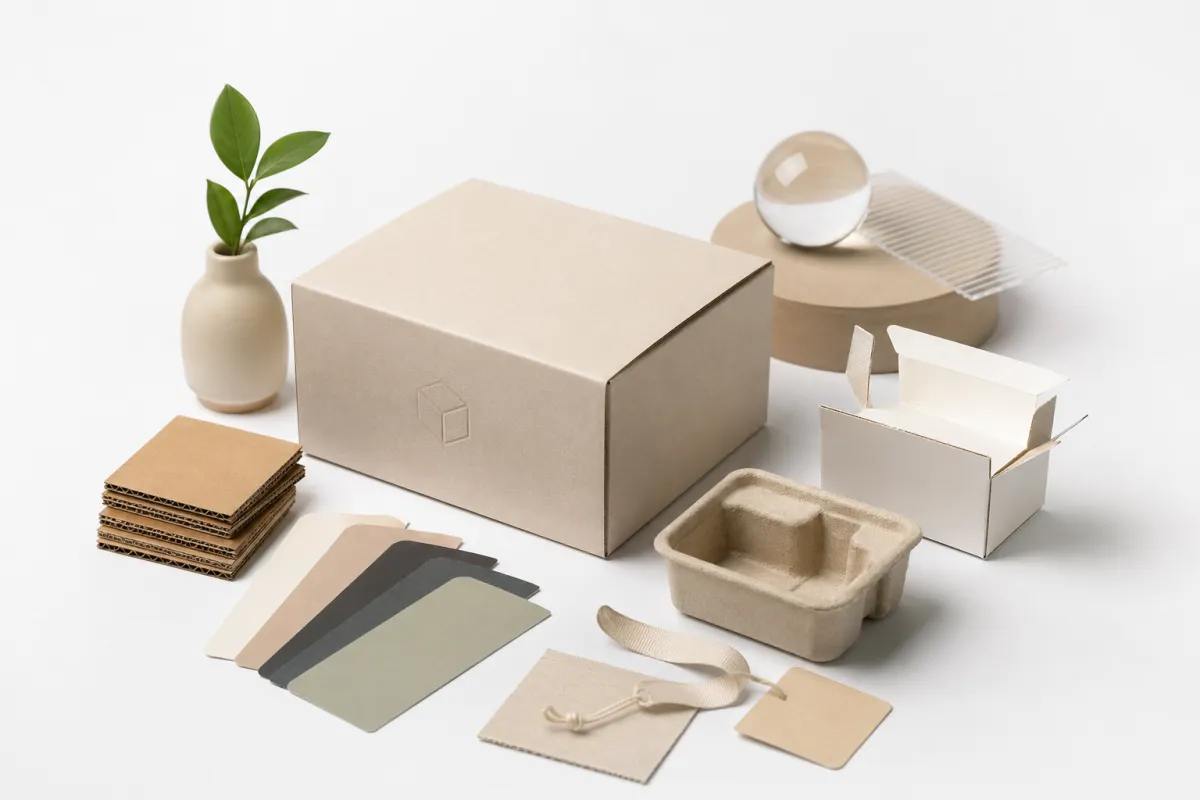
MOQ packaging how to choose begins with the product itself, not the supplier's minimum. A fragile glass jar, a dense metal component, a food-contact pouch, and a lightweight cosmetic box all carry different levels of damage risk, presentation pressure, and assembly time. A heavy or breakable product makes the package work harder in transit, which can push a buyer toward stronger board, thicker film, or more protective inserts. That extra performance often changes MOQ because more complex materials usually require different setup, different sourcing, or tighter production control. The box is not just holding the product; it is absorbing the abuse that happens on the way to the customer.
Launch volume matters just as much. A buyer who expects 800 units in the first quarter is not solving the same problem as a brand that will ship 8,000 units every month. That is why moq packaging how to choose should start with sales velocity, reorder confidence, and warehouse capacity. A run that is too small pushes up the per-unit cost because the press, die, and finishing setup are spread over fewer pieces. A run that is too large traps cash in stock that may age out when artwork, pricing, or compliance language changes. If the first run is only a test, you are not gonna get much value from a huge MOQ, no matter how pretty the unit cost looks on paper.
From a packaging buyer's point of view, the right MOQ is the one that supports launch momentum without creating a storage headache. I often tell teams to think in three buckets: the quantity they will almost certainly use, the buffer they need for defects and sample pulls, and the safety stock that protects the first reorder window. That frame keeps moq packaging how to choose grounded in actual demand instead of wishful forecasting. It also keeps the minimum order quantity from becoming a guess dressed up as a purchasing decision. A little caution here is not weakness. It is how experienced buyers avoid dead stock.
A low MOQ only feels cheap until it sits on a rack for six months, or worse, forces a second print run because the first batch ran out before the product caught traction.
There is also a quiet manufacturing reality that many buyers miss. The smallest quote is not always the most efficient quote because presses, cutters, and finishing lines all have setup friction. Plates, dies, knives, registration checks, and color calibration take time whether you run 500 pieces or 5,000. In moq packaging how to choose, a slightly higher quantity can reduce the cost per box enough to offset the extra inventory, especially when the packaging is custom printed and the supplier can run more steadily on a standard sheet size. That is one reason seasoned buyers keep one eye on the press and one eye on the shelf.
That does not mean larger is always better. It means the decision should be tied to risk. A seasonal product, a new SKU, or a promotional pack often deserves a lower commitment than a stable reorder item. The smarter question is not "What is the smallest MOQ?" but "What quantity gives me the cleanest balance of risk, cash flow, and production efficiency?" That is the practical center of moq packaging how to choose, and it is where many buyers find the most useful answer. A good answer usually looks a little dull. That is a good sign.
One more point matters for first-time buyers: presentation and protection are not separate decisions. Good product packaging has to survive the channel and still look right on the shelf or in the shipping box. If the design is too bare, the retail story weakens. If it is too elaborate, the order can become expensive before the first unit ships. The best answer usually lands in the middle, where the packaging supports the brand, protects the product, and still fits the sales plan. That middle ground is where most healthy MOQ decisions live.
Product details that change the right MOQ packaging choice
Moq packaging how to choose gets much easier once the product details are clear. Product size, weight, fragility, and shelf life all shape the format you should use. A compact skincare item may work well in a folding carton with a simple insert, while a heavier electronic accessory may need a corrugated mailer or a sturdier retail box. Food and beverage projects add another layer because barrier needs, grease resistance, and regulatory language can all affect the substrate and the finishing options. The package has to fit the product physically, but it also has to fit the product legally and commercially. That part gets overlooked more often than people admit.
Distribution channel matters just as much. E-commerce shipping rewards packages that travel well through parcel networks and survive drops, vibration, and compression. Club store programs reward pack-out efficiency and pallet discipline. Subscription kits reward compact dimensions and fast hand assembly. Retail packaging for shelf display asks for strong front-panel branding, clean barcode placement, and a size that sits well among adjacent products. The right MOQ often shifts because each channel changes the board strength, insert style, and box geometry you actually need, which is why moq packaging how to choose has to be evaluated against the real route to the customer. A carton that looks elegant on a mockup can be a nuisance if it jams a fulfillment line.
Fill weight and internal fit also influence the decision. A loose product inside a box can rattle, scuff, and arrive looking cheap, while an over-tight fit slows assembly and raises reject risk. That is why moq packaging how to choose should include exact product dimensions, the closed-and-filled size, and any accessory items that travel with the primary product. A foam insert, paperboard cradle, or molded pulp tray can add useful protection, but each one changes labor and material consumption. On a small run, that can move the MOQ more than buyers expect. I have watched teams fix a product-failure problem and accidentally create a packaging-budget problem at the same time.
Standard structures are often the best starting point for a new launch. Straight tuck end cartons, mailer boxes, sleeve boxes, and common folding carton shapes usually carry lower setup friction than custom-engineered forms. For buyers who need a faster launch or a tighter budget, standard structures keep moq packaging how to choose focused on the parts that matter most: fit, print quality, and shipping performance. Fully custom shapes make sense when the product really needs them, but they are not automatically the best first-run choice. A standard format can still feel premium if the graphics, finish, and proportions are handled well.
That is where smart packaging design earns its keep. A clean structure with strong graphics can do more for package branding than a complicated shape that costs too much to repeat. Good branded packaging should make the product easy to identify, easy to open, and easy to ship. If the package has to do all three, the best MOQ is usually the one that lets you test the market without compromising the design logic or the protection plan. A lot of packaging gets judged by shelf appeal, but the complaint that usually matters is the one from the warehouse floor.
There is also a sustainability angle that buyers increasingly ask about. FSC-certified paperboard, right-sized cartons, and less void space can improve the environmental profile without making the order harder to run. For sourcing claims and fiber chain questions, the Forest Stewardship Council provides a useful reference point. For shipping validation, teams often review standardized methods through ISTA, especially when e-commerce or distribution damage testing is part of the approval process. Those standards do not solve every packaging problem, but they do keep the conversation honest.
Specifications to confirm before you compare quotes
Moq packaging how to choose becomes much cleaner once the specs are locked. Before you compare prices, define the exact dimensions, board or film grade, print colors, coating or lamination, and any special finishing details. A quote built on "approximate size" can be misleading by a wide margin, because even a small dimensional change can alter sheet utilization, die size, and how many units fit on a press form. If the supplier has to guess, the MOQ estimate may rise simply because they have to protect against waste. That is one reason moq packaging how to choose should never begin with a price sheet alone.
Tolerance is one of the most overlooked details. Tight-fitting inserts, display cartons, and folding structures all depend on repeatable dimensions. If the tolerance is too loose, the product may shift inside the pack. If it is too tight, assembly slows down and rejects creep up. In moq packaging how to choose, a tolerance of plus or minus 1 to 2 mm may be fine for some cartons, while a precision insert or retail tray may need tighter control. The point is to ask, not assume. Small differences can snowball when you are making thousands of units.
Artwork files deserve the same discipline. Confirm the dieline, bleed, safe area, barcode placement, white ink requirements, and color expectations before you send files to production. That reduces prepress back-and-forth and keeps the order from getting stuck in proofing. If the pack includes custom printed boxes with heavy coverage, soft-touch lamination, foil, or spot UV, the design team should know how those effects behave on the chosen substrate. Some finishes raise the MOQ because they require additional setup or slower throughput, and that should be visible before approval. It is better to hear that early than after three rounds of revisions.
Here is a practical checklist that usually saves time and rework:
- Exact dimensions: product size, finished box size, and any insert or accessory dimensions.
- Material grade: paperboard caliper, corrugate flute, film type, or specialty substrate.
- Print details: number of colors, CMYK or spot colors, inside print, and barcode needs.
- Finish details: varnish, matte or gloss lamination, soft-touch, foil, embossing, or windows.
- Assembly method: flat ship, glue, tuck, or hand pack with insert placement.
When moq packaging how to choose is built on these facts, the quote becomes a real comparison rather than a rough estimate. That is especially helpful for retail packaging and branded packaging, where the visual finish can be just as important as the protective performance. A supplier should be able to tell you which specifications are fixed, which can be simplified, and which changes will materially reduce the MOQ without hurting the box's job. If they cannot explain that clearly, the quote is not doing enough work for you.
Buyers also need to watch for hidden complexity. A window patch, magnetic closure, custom insert, tear strip, or multi-step closure can add labor and change the minimum run. The same applies to unusual carton sizes that waste sheet space. In many cases, the best answer is to standardize one or two details and leave the rest flexible. That keeps moq packaging how to choose practical, not theoretical. Flexible where it can be, exact where it must be.
Finally, ask about proofing. Some suppliers can supply a digital proof quickly, while others will recommend a structural sample before production. A structural sample can add a few days and a modest fee, but it is often worth it if the fit is tight or the carton has special folds. The earlier those details are confirmed, the more accurately the MOQ can be set. A sample costs less than a full run that has to be reworked, and that gap is bigger than people think.
Pricing, MOQ, and MOQ packaging how to choose the best break point
Moq packaging how to choose gets most interesting at the quote stage, because this is where unit price can distract buyers from the true cost. The smallest run is often the highest unit cost, but it may also be the lowest cash commitment. The right break point is not the cheapest line item on the quote sheet; it is the quantity that gives you the best balance between setup expense, freight, inventory holding, and the risk of ordering too much too early. If you only look at the sticker price, the math can lie to you.
One useful way to compare quotes is to separate setup charges from per-unit cost. Setup includes die creation, plate work, prepress, color matching, machine make-ready, and sometimes tooling. The per-unit portion covers board, ink, finishing, converting, and packing. When moq packaging how to choose is done well, you can see how those costs behave as quantity rises. A jump from 500 to 1,000 units might not halve the unit cost, but it can reduce it enough to make the larger run more attractive if the product has a clear sales path. That is the practical math behind moq packaging how to choose for custom work. The numbers matter, but the pattern matters more.
Here is a simplified example for a Custom Folding Carton project. These ranges are illustrative, because actual pricing depends on size, board grade, print coverage, and finish choices, but the pattern is realistic for many buyers:
| Run size | Typical unit cost | Setup / tooling | Best fit | Planning note |
|---|---|---|---|---|
| 500 units | $0.90-$1.40 | $120-$300 | Pilot launch, limited test, seasonal sample pack | Lowest cash outlay, but the highest unit cost and the least room for waste |
| 1,000 units | $0.52-$0.88 | $120-$300 | Small launch with moderate demand confidence | Often the sweet spot for buyers who need a real production run without overcommitting |
| 2,500 units | $0.28-$0.55 | $120-$300 | Established SKU or launch with strong repeat expectations | Better press efficiency and lower freight per box, but more inventory exposure |
| 5,000 units | $0.18-$0.34 | $120-$300 | Stable demand, retail replenishment, or multi-channel distribution | Usually strongest on unit economics, especially when storage and sell-through are predictable |
That table shows why moq packaging how to choose cannot be reduced to a single unit price. If the 500-unit quote is $1.12 each and the 1,000-unit quote is $0.64 each, the larger run may save enough to absorb some storage and still improve cash efficiency. But if the product is unproven, even the better unit price may not be worth the risk of overbuying. The break point depends on how quickly you expect to sell, how many design revisions may still happen, and whether you can safely store the balance. That is not glamorous, but it is the real work of packaging buying.
Freight and warehousing deserve equal attention. A smaller carton can often ship more efficiently, and a flatter pack can reduce pallet count. Yet a bigger quantity can also reduce per-unit freight because the shipment is spread across more finished pieces. That is why landed cost matters more than the raw quote. Moq packaging how to choose should account for inbound freight, receiving labor, repacking, and the cost of tying up shelf space or pallet positions. In some businesses, warehouse space costs more than the carton itself over time. I have seen finance teams realize that only after the pallets were already on the floor.
Print method also changes the picture. Digital print can be a good fit for short runs, personalized packs, and lower minimums, but it may carry a higher per-unit price once volumes increase. Offset or flexographic printing often improves economics at higher counts, especially for repeated artwork or simpler graphics. A buyer who understands this can ask for multiple price tiers and quickly see where the economics turn. That is the heart of moq packaging how to choose: compare break points, not just the first number on the page.
It also helps to ask for two or three alternatives side by side. For example, one quote could use a standard board and matte aqueous coating, another could use a thicker board with soft-touch lamination, and a third could remove the finish entirely to see the price impact. This lets you see whether the premium is coming from material, finish, or setup. Sometimes the most useful quote is not the cheapest one; it is the one that shows you exactly which feature pushes the MOQ up. That kind of transparency is worth more than a vague discount.
For buyers managing custom printed boxes or other forms of product packaging, this comparative view is usually the clearest way to make a decision. Unit cost matters. MOQ matters. So does the time value of cash and the risk of obsolete inventory. The best answer is usually the one that preserves flexibility while still giving you a production run that makes economic sense. A clean comparison is often better than a confident guess.
Process and timeline for moving from quote to production
Moq packaging how to choose is easier to manage when you understand the production path. A normal project moves through inquiry, spec review, quotation, artwork check, proof approval, sampling, production, finishing, and shipment. Each step has its own timing risk. If your specs are complete and your artwork is press-ready, the process can move quickly. If the dieline is unclear or the proof takes several rounds, the schedule stretches immediately. That is why moq packaging how to choose should always be tied to a calendar, not just a spreadsheet. The supplier's schedule and your launch date are part of the same decision.
Typical lead times for custom MOQ orders vary by structure and finish, but many straightforward runs land somewhere around 10 to 15 business days after proof approval. More complex work, such as foil stamping, embossing, custom inserts, or special coatings, can extend that window to 15 to 25 business days depending on the plant load and material availability. Rush requests can be possible, but they often carry trade-offs in cost, scheduling priority, or available finish options. That is another reason moq packaging how to choose should be tied to the launch calendar, not just the budget. A low-cost order that misses the shelf date is not really low-cost.
Delays usually come from a few predictable places. Missing dielines create back-and-forth with prepress. Low-resolution graphics or unembedded fonts delay proofing. Changes after proof approval can trigger rework, and that rework can add both time and cost. If the project includes a retail packaging display or a branded packaging requirement with exact brand colors, the approval team should know who signs off and how quickly they can respond. A clean approval chain often saves more time than any rush fee. In practice, approvals are where many timelines quietly fall apart.
The fastest orders are rarely the ones with the smallest MOQ; they are the ones where the product specs, artwork, and approvals are all complete before the supplier starts quoting.
That is where good communication pays off. A reliable packaging partner should tell you when a requested finish will raise the run minimum, when a size choice wastes sheet space, and when a delivery date is realistic versus optimistic. In moq packaging how to choose, those warnings are useful, not negative. They help keep the order aligned with your launch or replenishment plan so you are not paying for avoidable urgency. The best suppliers do not flatter every idea. They tell you where the weak points are.
For packaging projects that involve e-commerce, many teams also want to know how the box will perform in transit. Standardized testing methods from ISTA are commonly used for shipping validation, and some buyers also reference ASTM procedures when compression or material performance matters. If you are planning a mailer, shipper, or corrugated sleeve, it is worth asking whether the design should be tested before the full run. A small test fee can prevent a much larger loss if returns or breakage show up after launch. That is not theory; it is often the cheapest insurance in the job.
A clear approval process also defines the point at which changes become expensive. Before proof approval, a dimension tweak may be manageable. After plates or dies are made, changes are slower and more costly. Before production, a finish change may only affect the quote. After production starts, it may become a new order altogether. Moq packaging how to choose is as much about process discipline as it is about material selection. The cheapest mistake to fix is the one caught before the run begins.
Buyers who manage several SKUs should think about cadence too. If one carton is needed every month and another only for a quarter-end promotion, they should not use the same MOQ logic. Schedule, storage, and reordering patterns should guide the order size. That is why a dependable supplier will ask questions about volume, seasonality, and release dates before locking the quote. Those questions are not slowing things down; they are saving you from a misfit order.
Why choose us for MOQ packaging projects
At Custom Logo Things, the focus is practical packaging work that fits real production constraints. We are not interested in pushing a buyer into a quantity that creates waste or fills a warehouse with boxes that age out before they are used. For moq packaging how to choose, that means the conversation starts with the product, the channel, and the print strategy, then moves into the order size that supports those realities. That approach is a little less flashy, but a lot more useful when the boxes actually have to ship.
We approach each project with the same questions a good packaging buyer would ask: What does the product weigh? How will it ship? Does the package need to be shelf-ready or mailer-ready? Does the design depend on specialty finishes, or can a clean printed surface do the job? Those details matter because they determine whether a structure should be simple or specialized, and whether a low MOQ is truly a fit. That kind of thinking is useful for packaging design, package branding, and the broader economics of product packaging. It is also the reason moq packaging how to choose often starts with a conversation about use case instead of a line item.
Clients usually get the most value when the quote is transparent. A strong quote should show what is included, what changes the MOQ, and which features can be adjusted to lower the price without hurting the performance of the pack. If a buyer wants a lower threshold, we can often look at standard structures, simplify colors, or adjust the finish stack. If the packaging needs stronger shelf appeal, we can talk through trade-offs so the order stays grounded. That is the kind of support that makes moq packaging how to choose feel manageable rather than vague. It also keeps expectations realistic, which is half the battle.
We also know that many buyers compare options quickly. They may be looking at several materials, several size options, or several artwork versions at once. In those cases, the most useful quote is the one that separates the choices clearly, shows the unit cost at each tier, and explains what is affecting the minimum. That helps you compare custom printed boxes without having to decode every line item yourself. It also makes moq packaging how to choose much easier to defend internally when more than one stakeholder is involved. Procurement, marketing, and operations usually do not care about the same detail, so clarity matters.
For brands that want a clean launch plan, this kind of support matters. A good MOQ decision should protect the product, fit the brand, and leave room for the next reorder. It should not force a compromise that creates damage in transit, weakens the visual story, or ties up too much working capital. Our role is to help you find the number that works in the field, not just on the page. That usually means asking a few uncomfortable questions early, which is better than discovering the problem after goods have landed.
If you are still early in the process, use the Custom Packaging Products page to frame the structure you need, then gather the basic specs before asking for pricing. The more complete your information, the more accurate the recommendation becomes. That is a simple truth, but it saves a lot of friction in MOQ conversations. And yes, it saves time too.
MOQ packaging how to choose your next steps with confidence
The easiest way to move forward is to treat moq packaging how to choose as a short decision checklist. First, confirm the exact product dimensions and the finished packaging style. Next, decide whether the first run is for launch, test market, seasonal demand, or replenishment. Then define the artwork status, the shipping destination, and any finish or insert requirements. Those facts make the quote meaningful and keep you from comparing numbers that are built on different assumptions. They also keep minimum order quantity decisions aligned with the real demand curve. Once those pieces are fixed, the rest is mostly arithmetic.
After that, ask for at least two quantity tiers. One should sit close to the launch need, and the other should test the next cost break. That side-by-side view often makes the right answer obvious. If a slightly larger order lowers the unit cost enough to justify the added inventory, you will see it. If not, the smaller order protects cash and reduces storage risk. That is the practical rhythm of moq packaging how to choose, and it works better than guessing at a single number. The gap between tiers is where the decision usually reveals itself.
Before production, review the proof, verify the dieline, and confirm the shipping schedule. If there is still uncertainty about fit, ask for a sample or a structural check. Spending a little time there is usually cheaper than correcting a run after it has been printed. A careful proof stage is especially valuable for retail packaging, where brand consistency and barcode placement matter, and for branded packaging that has to support a clean shelf presentation from the first carton onward. Small errors tend to get expensive once ink hits board.
- Confirm demand: estimate first-month and first-quarter needs, then add a small buffer.
- Compare tiers: review two or three quantity breaks instead of one quote only.
- Check storage: make sure the warehouse can hold the finished cartons without strain.
- Review total cost: include freight, setup, and inventory holding, not just unit price.
- Approve carefully: lock artwork and structure before production begins.
Custom Logo Things can help you compare those options in a way that keeps the numbers honest. The goal is not to chase the smallest MOQ for its own sake. The goal is to pick a quantity that supports launch timing, protects the product, and gives you a sensible path to reorder. That is the real answer behind moq packaging how to choose, especially when the order has to balance cost, presentation, and production efficiency at the same time.
If you want the shortest version of the rule, use this: moq packaging how to choose should always be based on specs, timing, and total landed cost, not on the smallest number alone. When those three pieces line up, the order is far easier to live with, and the packaging is far more likely to do its job from the first ship date onward. That is the part worth keeping on a sticky note near the quote file.
How do I choose the right MOQ packaging quantity for a new product?
Start with realistic first-month and first-quarter demand, then add a buffer for sampling, defects, and the first reorder window. From there, compare two or three quantity tiers so you can see where the unit savings justify a larger commitment. For moq packaging how to choose, the lowest workable quantity is usually the one that keeps inventory manageable while still giving you a usable unit cost. If the numbers are close, choose the option that protects launch speed and reduces storage pressure.
What affects MOQ packaging pricing the most?
Setup work, tooling, and print complexity usually have the biggest impact on lower-volume orders. Material grade, board thickness, coatings, and specialty finishes can raise both the price and the MOQ. Freight, packaging dimensions, and warehouse needs matter too, because moq packaging how to choose should be based on total cost, not just the quoted per-piece number. A quote that ignores storage or inbound freight is only half a quote.
Can I lower MOQ by changing the packaging materials or print method?
Yes. Standard materials and common print methods usually allow lower minimums than highly customized options. Simplifying colors, removing special finishes, or choosing a standard structure can reduce setup burden and improve the order threshold. That trade-off is exactly why moq packaging how to choose often starts with the material and the print plan, not the quantity alone. A smarter spec can be worth more than a hard negotiation.
How long does MOQ packaging usually take from approval to delivery?
Lead time depends on structure, material availability, finishing steps, and how complete your artwork files are. Simple runs can move in about 10 to 15 business days after proof approval, while more complex projects may take 15 to 25 business days or more. The fastest way to stay on schedule is to send complete specs early and approve proofs quickly. Delays usually start with missing information, not with the production line.
What should I send to get an accurate MOQ packaging quote?
Send product dimensions, target quantity, packaging type, print requirements, finishing details, and any insert information. Include artwork files or a rough layout, plus the shipping destination and timeline so freight and scheduling are priced correctly. If you are unsure about the specs, ask for two or three options so you can compare cost, MOQ, and lead time side by side. That gives the supplier something solid to work from, and it gives you a quote you can actually use.