Buyer Fit Snapshot
| Best fit | Custom Mailer Boxes Wholesale projects where brand print, material claims, artwork control, MOQ, and repeat-order consistency need to be specified before quoting. |
|---|---|
| Quote inputs | Share finished size, material target, print colors, finish, packing count, annual reorder estimate, ship-to region, and any compliance wording. |
| Proofing check | Approve dieline scale, logo placement, barcode or warning zones, color tolerance, closure strength, and carton packing before bulk production. |
| Main risk | Vague material claims, crowded artwork, missing packing details, or unclear freight terms can make a low unit price expensive after revisions. |
Fast answer: Custom Mailer Boxes Wholesale: Pricing, Specs, and MOQ should be specified like a repeatable production item. The safest quote records material, print method, finish, artwork proof, packing count, and reorder notes in one written spec.
Production checks before approval
Compare the actual filled-product size with the drawing, then confirm tolerance on folds, seals, hang holes, label areas, and retail display edges. Reserve space for logos, QR codes, warning copy, and material claims before decorative graphics fill the panel.
Quote comparison points
Review material grade, print process, finish, sampling route, tooling charges, carton quantity, and freight assumptions side by side. A quote is only useful when the supplier can repeat the same color, closure quality, and packing count on the next order.
For a brand shipping 500 orders a week, Custom Mailer Boxes wholesale is rarely just a packaging line item. It touches freight, pack-out speed, damage rates, and the first physical impression customers carry away from the brand. A box that fits properly can reduce void fill, trim dimensional weight, and make the fulfillment table move faster. I have seen teams chase tiny savings on box price, then lose more in labor and reshipments than they saved on the purchase order. Packaging has a way of hiding its bill until the month closes.
That is one reason more buyers move from generic corrugated stock into Custom Mailer Boxes wholesale programs. The economics are direct, but they are not simple. Better fit lowers shipping waste. Better print control reduces rework. Better replenishment planning prevents a launch from stalling because the packaging ran out first. If packaging is part of the product, then sourcing becomes a logistics decision, a branding decision, and a margin decision all at once. Not many purchases sit at that many crossroads.
From a packaging buyer’s perspective, the useful question is not whether custom packaging looks cleaner. It does. The real question is what you pay, what you save, and which specifications matter in production. That is where Custom Mailer Boxes wholesale earns its keep: predictable unit costs, consistent print quality, and a format that supports ecommerce shipping, subscription kits, and retail-facing drops without forcing the brand to buy features it will never use. A well-tuned mailer can replace two weaker decisions with one better one.
So no, this is not a decorative exercise. It is a control system for fulfillment.
Why Custom Mailer Boxes Wholesale Changes the Unit Economics
The most common mistake is treating packaging as fixed overhead. It is not fixed. A box that is even 1 inch too large nudges shipping cost on every order. Add too much void fill and packing labor rises. Use a weak generic mailer and damage claims rise because product shifts in transit. custom mailer boxes wholesale gives a buyer control over those variables instead of accepting them as background noise. That control is the part most companies underestimate until the monthly bill lands.
Picture a DTC apparel brand shipping 500 weekly orders, each parcel under 3 pounds. A standard carton may look cheaper at first glance, but if empty space grows by only a quarter inch to half an inch on each side, dimensional weight compounds quickly. Over a quarter, freight impact can become a line item with real strategic weight. custom mailer boxes wholesale can tighten interior dimensions to the product, which reduces shipping volume and speeds packing flow. Savings can look modest per parcel and still reshape a P&L.
Retention matters too. Unboxing consistency is not decoration; it is memory architecture. If each shipment arrives in a different size box with different fill habits and variable print, the experience feels improvised. That weakens package branding and can chip away at trust across repeat orders. A coordinated run of custom mailer boxes wholesale supports brand memory, especially in subscription packaging and ecommerce packaging where the box is a recurring touchpoint. Customers notice repetition in a good way when the finish and structure stay stable.
A mailer has to do three jobs at once: protect the product, present the brand, and fit the shipping network. If one of those jobs slips, the order feels less trustworthy than it should.
Generic packaging hides its cost inside labor, waste, and margin bleed. More void fill means more material and more handling time. Loose product movement means more damage claims. Inconsistent cartons also make forecasting and replenishment harder because procurement teams are forced to improvise around stock variability. custom mailer boxes wholesale improves predictability. A set dieline, a known board grade, and a scheduled reorder point are easier to manage than a random pile of box sizes and emergency substitutions. Predictability sounds dull. It is where margin usually hides.
Wholesale pricing structures reward scale, and that changes the math fast. Larger runs usually lower the per-unit cost because setup, cutting, print, and finishing are spread across more boxes. That is why custom mailer boxes wholesale works best when demand forecasting is disciplined enough to support efficient lot planning. A brand shipping 200 units a month and another shipping 5,000 live in different worlds. The same design can be a clean solution in one case and a pricey headache in the other.
For sustainability-conscious brands, there is a second-order effect. Correct sizing reduces corrugate volume and shipping waste, and when material is responsibly sourced, the brand story becomes easier to defend. Buyers ask about FSC-certified board and recycled content because they are increasingly audited by customers and procurement teams alike. The argument gets stronger when environmental claims and freight efficiency move in the same direction. For reference, the Forest Stewardship Council publishes standards at fsc.org.
Brands with broader packaging lines can link mailers to other formats in our Custom Packaging Products catalog, or carry the same visual system into Custom Poly Mailers for lighter SKUs. That continuity matters more than most teams admit: a fractured shipping system reads as unplanned, while coherent packaging feels intentional from first click to final delivery.
Can Custom Mailer Boxes Wholesale Lower Shipping Costs?
Yes, if size, material, and finishing are aligned to the actual item. The short answer is that this packaging approach works because most shipping cost rises from preventable mismatch. A properly engineered box is rarely expensive in a vacuum; it is usually cheaper over a full quarter because it reduces avoidable waste in multiple places at once: freight, labor, and returns handling.
Think about it this way: if a box carries 500 cubic inches of extra air and every shipment adds 500 extra grams of void fill, labor and carrier costs rise together. If your business runs 500 parcels a week, that becomes one recurring cost center you can measure. custom mailer boxes wholesale is the mechanism to correct that mismatch and cut the hidden surcharge category that procurement teams end up chasing later. The bill is rarely visible in one place. It shows up everywhere.
For teams chasing margins, this is especially useful because the gain compounds. Better fit reduces damage frequency. Lower damage means fewer reshipments and less customer-service churn. Fewer reshipments means less time at the fulfillment desk and less uncertainty in demand planning. A decision that starts at the carton door can ripple through warehouse storage, carrier spend, and cash recovery over the next few months.
Custom Mailer Boxes Wholesale Options: Styles, Materials, and Printing
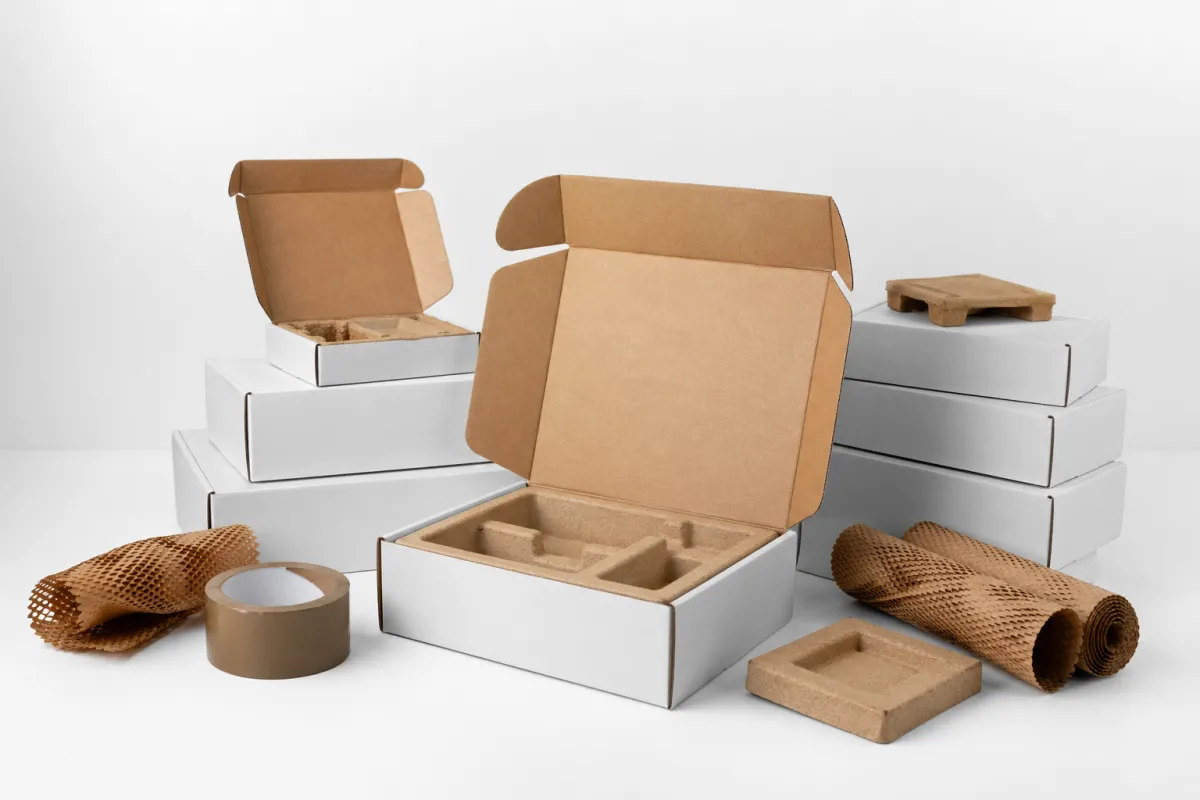
Not every box needs to perform like a luxury retail reveal. The right structure depends on what is inside, how it ships, and how much brand theater the order actually needs. custom mailer boxes wholesale usually starts with four common structures: roll-end tuck-front mailers, tab-lock mailers, corrugated mailers, and rigid-feel presentation boxes built for premium handling. They may share a style language, but their performance profiles do not.
Roll-end tuck-front formats are popular because they lock securely, stack neatly, and ship flat. Tab-lock formats can be easier to assemble in many fulfillment operations. Corrugated mailers are the workhorse for ecommerce packaging in light-to-medium protection categories. Rigid-feel boxes are less about structural strength and more about perceived value, which makes them useful for cosmetics, premium apparel, and gift sets. In practice, custom mailer boxes wholesale should follow shipping behavior first, not sales deck inspiration. I have watched beautiful mockups fail the minute they met a real packing bench.
Board choice is equally consequential. E-flute gives a smoother print face and a slimmer profile, common for branded packaging where graphics are central. B-flute offers stronger crush resistance, which helps when parcels are frequently stacked and handled in transit. Kraft-lined corrugated stays a practical default for many programs because it balances strength, printability, and cost. A buyer comparing custom mailer boxes wholesale options should evaluate transit performance, not just visual appeal. A glossy sample can flatter the design; a distribution run tells the truth.
Printing is where branding and budget collide. No-print kraft mailers support simple identity and lower complexity. One-color logo print is a reliable midpoint and often enough for small to mid-volume packaging systems. Full-color exterior printing gives visual impact but increases setup, revision cycles, and minimums. Inside print, matte lamination, gloss coating, and soft-touch finishes can elevate the reveal, but each adds cost and sometimes lead time. custom mailer boxes wholesale works best when the print method supports product margin, not vanity. Pretty is not a strategy by itself.
| Box Option | Typical MOQ | Approx. Unit Price | Best For | Notes |
|---|---|---|---|---|
| Plain kraft corrugated mailer | 500-1,000 | $0.28-$0.42 | Fast-moving ecommerce, internal packaging tests | Lowest branding cost; strong baseline for custom mailer boxes wholesale |
| Single-color printed mailer | 1,000-2,500 | $0.36-$0.62 | Apparel, supplements, mid-volume branded packaging | Good cost-to-brand ratio; often the sweet spot |
| Full-color printed mailer with coating | 2,500-5,000+ | $0.55-$1.20 | Cosmetics, premium kits, retail packaging | Higher setup and finish cost; stronger shelf impact |
| Rigid-feel presentation mailer | 1,000-3,000 | $1.10-$2.40 | Gift sets, launches, influencer boxes | Best when unboxing value matters more than lowest freight |
The right combination depends on category and handling reality. Apparel brands often perform well with E-flute and a one-color logo because items are light and margin pressure is real. Cosmetics and subscription kits usually justify more print coverage because the box contributes to perceived value and retention. Fragile goods may need inserts, partitions, or stronger flute profiles. custom mailer boxes wholesale is not one SKU; it is a family of structures with predictable tradeoffs.
For handling and transit performance, standards like ISTA remain useful because they simulate real shipping stress better than showroom reviews. If your packaging program is built around damage prevention, review the International Safe Transit Association at ista.org. A carton that looks good in office light can still fail after a rough ride through conveyors, vans, and loading docks.
Specifications That Matter for Fit, Protection, and Presentation
Dimensions are where many quoting errors begin. A supplier needs the interior length, width, and depth, not only the outer product dimensions. If the order includes tissue, an insert, a foam cradle, or a printed card, those add-ons change fit immediately. For custom mailer boxes wholesale, the difference between “fits” and “fits well” can be 3 to 6 millimeters, enough to shift stability in fulfillment once the cartons hit the conveyor.
Weight matters too. A lightweight tee inside a flat mailer does not need the same structure as a ceramic mug or a three-piece gift set. Compression resistance, board thickness, and closure style all affect safety. If cartons stack in a fulfillment center, the supplier needs that detail. A mailer built for one-off shipping can fail under palletized storage. custom mailer boxes wholesale buyers should ask about crush performance, not just artwork placement. The wrong board grade can cost more than an upgrade ever would.
Artwork specs are another recurring source of delay. A proper dieline requires bleed, safe zones, fold lines, and clear panel labeling. Vector logos stay crisp. Small raster files can pixelate at production size, especially on larger surfaces. Ink coverage affects drying behavior and, in some cases, scuff resistance. If the box has full wrap or inside print, approval usually takes longer because more surfaces are inspected. That is normal in custom mailer boxes wholesale production, and catching it early is always cheaper than correcting after setup.
Practical add-ons often decide between acceptable and excellent performance. Tear strips reduce opening friction. Dust flaps improve edge protection. Locking tabs can replace part of the tape process. Inserts and partitions control movement in multi-item kits. A custom box can also include a label window area or barcode placement strategy for distribution scanning. Used properly, these features reduce fulfillment complexity. Used carelessly, they add cost without solving movement.
Before any quote is requested, the team should align on a clean spec packet:
- Final product dimensions, including all inserts, sleeves, and cushions
- Estimated quantity by release wave or reorder cycle
- Print coverage: no print, one-color, or full-color
- Material preference: E-flute, B-flute, kraft-lined corrugated, or specialty board
- Shipping destination and whether boxes must be palletized
- Artwork format, preferably vector files with dieline labels
- Any transit requirements for fragile goods or international lanes
If buyers answer those questions up front, quoting moves faster and sampling becomes useful instead of symbolic. That is why custom mailer boxes wholesale programs run cleanly when packaging, design, and fulfillment stay aligned. A box that looks good in a mockup but fails on the line costs more than a simpler, cleaner spec. Clarity at the start reduces reprints and emergency approvals later.
Custom Mailer Boxes Wholesale Pricing, MOQ, and Cost Drivers
Price is never a single number; it is a system. Size, board grade, print complexity, finish, insert count, and run volume all influence the quote. On a practical level, custom mailer boxes wholesale pricing is driven by three buckets: setup cost, unit manufacturing cost, and freight. Ignore one and the landed-cost view becomes misleading.
MOQ, or minimum order quantity, usually drops with simpler specifications. A plain kraft mailer supports lower minimums than a fully printed box with interior decoration and specialty coating. That is not supplier resistance; it is process economics. Press setup, cutting, and finishing must be amortized somehow. For custom mailer boxes wholesale, a small run can still make sense, but per-box cost will generally be higher than the same spec at scale. The math rewards repetition.
There is a major difference between quoted cost and landed cost. A quote may cover only the box; the buyer still pays freight, tooling, samples, palletization, and sometimes warehousing or split-shipment fees. A strong-looking offer can weaken once those layers are added. Experienced teams compare custom mailer boxes wholesale options on a landed basis, not just the unit headline price. Freight can erase a bargain before the first carton reaches the loading dock.
Three common buying scenarios show how pricing moves:
- Plain kraft mailers: Useful for early-stage brands and fast-moving inventory. They keep costs controlled and are often the simplest way to start custom mailer boxes wholesale without overcommitting.
- Branded single-color mailers: A practical middle path. Often provide enough identity while keeping setup and print complexity manageable.
- Fully printed premium mailers: Best for higher-margin products, launch campaigns, and retail packaging where unboxing impact justifies added spend.
Most buyers can reduce cost without weakening the package. Standardize dimensions where possible. Limit special finishes unless the brand strategy requires them. Consolidate artwork so multiple SKUs share a common structure. Repeat orders, once the design and tools are stable, often cost less than first runs because proofing and setup are no longer starting from zero. custom mailer boxes wholesale becomes more efficient as the program matures. The first run identifies variance. The second and third runs usually settle the cost curve.
Below is a practical map of cost drivers:
| Cost Driver | How It Affects Price | What Buyers Can Control |
|---|---|---|
| Box size | Larger boards consume more material and may increase freight | Match interior dimensions to the packed product, not to a visual preference |
| Print coverage | Full-color coverage increases ink usage, setup time, and color management complexity | Choose one-color or partial coverage when brand guidelines allow |
| Finish | Soft-touch, gloss, and matte coatings add processing steps | Reserve premium finishes for products where feel and visual depth matter most |
| Inserts | Die-cut inserts increase material, labor, and tooling complexity | Use inserts only where movement control or presentation justifies them |
| Quantity | Higher volumes distribute setup across more units | Order enough to lower unit cost without tying up unnecessary cash |
Brands often ask whether the cheapest box is automatically the best box. Usually, no. A box that saves three cents but increases claims can cost more over a quarter than a modestly priced premium structure. A box that is oversized may push freight every week until the team notices the drift. The right answer follows product fragility, fulfillment labor intensity, and reorder cadence. That is the real math behind custom mailer boxes wholesale. Cheap packaging can become an expensive loop when claims, rework, and wasted material stack up.
custom mailer boxes wholesale also supports cleaner comparisons with other formats such as folding cartons, shipper boxes, and poly mailers. The decision should be based on the item’s shipping profile, not category trends. Lightweight garments do not need the same board profile as glass jars. Heavy cosmetics should not be forced into thin sleeves. The correct structure starts with fit, then cost, then aesthetics. A correct fit often outperforms a clever-looking compromise.
Production Process and Timeline for Custom Mailer Boxes Wholesale
The workflow is straightforward, and the details are where quality is won or lost. A good custom mailer boxes wholesale project moves through quote request, specification review, proofing, sampling, approval, production, quality check, and shipment. Each phase exists for a reason. Skip one and the probability of a costly correction rises fast.
Quote request comes first. The buyer submits dimensions, volumes, print details, and destination. If the supplier receives clean inputs, the quote is more meaningful than generic baseline pricing. In proofing, artwork is placed on the dieline and the team checks panel alignment, logo scale, color callouts, and required warning labels. In custom mailer boxes wholesale, proofing is not bureaucracy. It is the main defect-prevention step. One misaligned panel can disrupt an entire run.
Sampling is the next safeguard and often the one most teams undervalue. A physical sample confirms closure strength, insert fit, print feel, and handling behavior. Digital mockups may hide friction issues at the tuck flap or a wrong internal depth reading. If a product launches with a campaign, sampling is cheap insurance. In custom mailer boxes wholesale programs, it often prevents a costly repeat production cycle. A sample can protect both schedule and inventory.
Typical timelines vary by complexity. A simple one-color mailer can move from approval to production in roughly 10 to 15 business days, plus transit. More complex projects with inserts, coatings, or multiple revisions usually need more time. Rush options can compress the schedule, but they usually carry a premium. A buyer should pay that premium only when launch timing or inventory risk truly justifies it. Speed has a cost; the question is whether delay cost is higher.
To keep the schedule stable, prepare these before the first production call:
- Final dimensions and product weight
- Artwork files in approved formats
- Target quantity and backup quantity
- Shipping address and receiving constraints at the fulfillment center
- Desired delivery date or campaign launch date
- Sample references, color notes, and tolerance windows
Quality checks matter more than many teams realize. Corrugated boxes should be verified for print registration, board consistency, scoring accuracy, and clean folding. If the run includes large color areas, production samples should be reviewed for scuffing or color variation. Some suppliers offer validated testing and shipping simulations. If your product travels long distance or faces rough handling, ask how they test against real transit conditions. That question belongs in any serious custom mailer boxes wholesale conversation. A supplier who explains failure points usually shortens your learning curve.
Timeline discipline comes from a complete brief. Finalize the box size before design starts polishing artwork. Approve one sampling round without delay. Avoid late-stage insert changes unless they solve a real fulfillment issue. The more complete the brief, the less likely schedules drift. custom mailer boxes wholesale is smoothest when treated like a production project, not a speculative design exercise. That sounds unglamorous. It saves money anyway.
Why Choose Us for Custom Mailer Boxes Wholesale
Buyers are not just paying for boxes. They are paying to reduce operational friction. That is why a capable custom mailer boxes wholesale partner should offer more than a competitive price sheet. The real advantage is reliable quality control, clean print registration, and packaging tailored to actual use rather than a generic template that happened to be in stock.
Response time matters too. Procurement teams and founders usually juggle launch calendars, sample approvals, and multiple vendor touchpoints. A supplier that quotes clearly, answers artwork questions quickly, and flags spec risks before production saves time in ways teams often underestimate. In custom mailer boxes wholesale, delay usually costs more than per-box price differences. A late response can throw off a campaign before production even starts.
There is a judgment element as well. A good supplier can say when a more expensive option is unnecessary. Sometimes a standard flute and one-color print is the best answer. Sometimes a full wrap with special coating is justified. Practical guidance on structure, board grade, and finish tradeoffs prevents overbuying. That matters when teams balance ecommerce packaging with retail packaging under one branding hierarchy.
Before committing, what should buyers look for?
- Sample depth: Real prototypes reveal tolerances that mockups cannot show.
- Material fluency: The supplier should explain board strength, flute choice, and finish tradeoffs in plain language.
- Production transparency: Honest updates on lead time, proofing, and shipping reduce surprises.
- Artwork support: Clean dieline handling and file guidance keep files moving toward approval.
- Reorder planning: Strong partners help teams think in release waves, not one-off runs.
custom mailer boxes wholesale should also support scale-up. A brand that begins with 1,000 pieces can need 5,000 in quarter two. Reorder continuity matters. If structure, color, and board quality drift between batches, customers notice even when operations do not. Consistency is a trust mechanism. It is also cheaper than rebuilding packaging systems every campaign.
From a buyer’s perspective, a reliable vendor is one that holds standards on closure strength, print consistency, carton packing, and timeline discipline. If they can do that with straightforward communication, the result is not just better boxes. It is a stronger packaging program. That is the advantage custom mailer boxes wholesale can deliver when run with discipline. The box becomes part of the operating system instead of a recurring problem.
Next Steps to Order Custom Mailer Boxes Wholesale
The fastest route to useful pricing is complete information on first contact. Gather product dimensions, target quantity, preferred material, and intended print level. If you are comparing options, request the same product in two or three structures so the decision is based on fit and cost, not assumption. That is how custom mailer boxes wholesale should be evaluated. Cleaner inputs lead to cleaner economics.
For a first run, request a sample or at least a dieline review before approval. This is especially important when inserts are involved, the contents are fragile, or the product will be photographed for press and retail launches. A quick review catches issues that become expensive after production begins. In custom mailer boxes wholesale, a short pause before approval is usually cheaper than a large correction after tooling and print. That part is not glamorous, but it is kinda the whole point.
Send these items in your first inquiry to speed pricing and reduce revision rounds:
- Interior box dimensions
- Estimated order quantity and reorder cadence
- Material preference or performance requirements
- Artwork files, logo files, and design notes
- Shipping destination and receiving details
- Add-ons such as inserts, tear strips, locking tabs, or coatings
If your team is still evaluating formats, compare custom mailer boxes wholesale against close alternatives before locking the production slot. The same product can look acceptable in three structures; usually only one balances freight, protection, and presentation with sane efficiency. A smart buyer chooses the format that protects both margin and customer experience. In many cases, the less dramatic choice is the better business decision.
The practical takeaway is simple: lock the internal dimensions, choose the lightest board that survives your shipping lane, and approve a physical sample before the full run goes to press. That sequence protects cash, reduces rework, and gives custom mailer boxes wholesale a real chance to earn its place in the operation.
What is the minimum order for custom mailer boxes wholesale?
MOQ depends on structure, print method, and material choice. Simpler unprinted or one-color jobs often support lower minimums than fully customized, high-coverage designs. Ask for MOQ by size and finish, since thresholds can shift once inserts or special coatings are introduced. Exact numbers are determined by the setup required for each structure, and they can vary by converter and region.
How much do custom mailer boxes wholesale cost per unit?
Unit cost is driven most by quantity, box size, and print complexity. Larger runs usually reduce the per-box price, while smaller runs carry more setup cost per unit. Freight, sample charges, finishing, and handling costs should be included in landed cost, not just the base quote. A low base price can become a costly shipment if hidden expenses are not included.
How long does custom mailer boxes wholesale production take?
Timing depends on proof approval, sampling, and current printing workload. Straightforward jobs generally move faster than orders with custom inserts, coatings, or repeated revisions. Build extra time if packaging launch is tied to a product release or seasonal demand window. Lead times are shortest when artwork is final, dimensions are settled early, and approval steps are disciplined.
What files do I need for custom mailer boxes wholesale artwork?
A print-ready dieline with bleed and safe zones is the best starting point. Vector files are preferred for logos and typography because they remain crisp at production scale. Include color references and placement notes so final output matches the intended layout. Clear files reduce proofing rounds and help keep the schedule on track.
Can custom mailer boxes wholesale help reduce shipping damage?
Yes, when structure matches product weight and handling conditions. A well-fitted mailer reduces movement and can lower void-fill dependency. Inserts, locking tabs, and right-sized dimensions often improve transit performance more than simply increasing wall thickness. Fit and structure usually matter more than making the carton artificially heavy.