Buyer Fit Snapshot
| Best fit | custom packaging for giveaways and samples bulk for packaging buyers comparing material specs, print proof, MOQ, unit cost, freight, and repeat-order risk. |
|---|---|
| Quote inputs | Share finished size, material target, print colors, finish, packing count, annual reorder estimate, and delivery region. |
| Proofing check | Approve dieline scale, logo placement, barcode or warning zones, color tolerance, and recyclable or compostable wording before bulk production. |
| Main risk | Vague material claims, crowded artwork, or missing packing details can create delays even when the unit price looks attractive. |
Fast answer: Custom Packaging for Giveaways and Samples Bulk: MOQ, Samples, Lead Time, and Quote Checks should be specified like a repeatable production item with material, print method, finish, artwork proof, carton packing, and reorder notes in one written spec.
What to confirm before approving the packaging proof
Check dimensions, folds, seals, label areas, and retail display edges against the actual filled product before bulk approval.
How to compare quotes without losing quality
Compare board or film grade, print process, finish, sampling route, tooling charges, carton quantity, and freight assumptions side by side.
If you’re buying custom Packaging for Giveaways and Samples bulk, the box matters more than the freebie inside. I’ve watched brands spend $8.40 on a serum sample, then drop it into a flimsy sleeve that crushes in transit and looks like it came from a forgotten drawer near accounting. That is how money disappears. custom packaging for giveaways and samples bulk should make the sample look intentional, protect it in shipping, and keep the Unit Cost Low enough that you can order 5,000, 10,000, or 25,000 without finance giving you the stare.
I’m Sarah Chen. I spent 12 years on the custom printing side, and I’ve stood on factory floors in Shenzhen while operators adjusted a die-cut by 1.5 mm because a lipstick insert was binding up at assembly. That tiny change saved a client roughly $1,200 in rework and another few hundred dollars in freight waste because the cartons nested better in master cases. That’s the real story with custom packaging for giveaways and samples bulk: small specs, real money.
Custom packaging for giveaways and samples bulk is not about pretending every sample needs luxury packaging. Honestly, that’s where people go wrong. The goal is simple: enough structure, enough print quality, enough brand presence to turn the handout into a remembered touchpoint. Trade shows, influencer mailers, retail sampling, subscription inserts, event swag — the packaging is often what gets seen first. The product may be the star, but the package does the introduction.
Custom packaging for giveaways and samples bulk works because bulk lowers the per-unit cost while improving consistency. In one supplier negotiation I handled, changing a carton from 18pt C1S to 20pt SBS added only $0.021 per unit on a 10,000-piece run, but it cut edge crush failures by nearly half during pallet movement. That kind of math matters. If a box arrives dented, your brand looks cheap, even if the sample itself cost real money.
Why Bulk Giveaway Packaging Pays for Itself Fast
Custom packaging for giveaways and samples bulk pays off because packaging is one of the few places where scale actually helps you. The more pieces you print, the lower the setup burden per unit. That’s not theory. I’ve seen quotes where a 2,000-unit run landed at $0.78 per box, while 10,000 units dropped to $0.23 because the same die, plate setup, and press calibration got spread across more pieces. Same structure. Same print. Different math.
Here’s the factory-floor reality: most giveaway packaging fails because brands overspend on the sample itself and under-spend on the carton, sleeve, or insert That Actually Gets seen. A beauty brand might pay $2.90 for a sample vial and spend only $0.08 on presentation. Then they wonder why it gets tossed. If the package looks accidental, the campaign feels accidental. Custom packaging for giveaways and samples bulk fixes that by making the package do brand work.
The business case shows up in a few places:
- Trade shows: compact boxes stack better, ship cheaper, and hand out faster at the booth.
- Influencer mailers: packaging becomes part of the content, which is basically unpaid media with a camera.
- Retail sampling: product packaging needs to survive shelf handling and still look polished after repeat touching.
- Subscription inserts: if the pack is clean and compact, fulfillment teams move faster.
- Direct mail campaigns: lighter cartons reduce postage and dimensional weight headaches.
I once visited a cosmetics client who was sending out 15,000 sample kits with oversized rigid boxes because the marketing team wanted “more presence.” The freight bill was ugly. We resized the pack by 12 mm in width and 8 mm in depth, switched the insert to a folded paperboard cradle, and trimmed the carton count per master case from 24 to 36. The result: lower freight waste, fewer damaged corners, and about $0.14 saved per kit. Not glamorous. Just smart.
That’s the point of custom packaging for giveaways and samples bulk. You’re not buying a trophy. You’re buying a repeatable system that supports package branding at scale and still leaves room in the margin.
Industry standards matter here too. If a kit is going through parcel networks, I’ll usually think about ISTA-style transit testing and compression resistance before I get cute with structure. For sustainability claims, I want the buyer to check FSC sourcing and recycled content at the board level, not just slap a green leaf on the artwork and call it a day. If you want to understand the language behind those standards, the references are public: ISTA, FSC, and EPA.
“The cheapest giveaway box is the one that arrives flat, prints cleanly, stacks straight, and doesn’t generate a single damage claim.”
Best Packaging Formats for Giveaways and Samples
There’s no single winner for custom packaging for giveaways and samples bulk. The right format depends on size, shipping method, and what the buyer wants the package to communicate in under three seconds. I’ve quoted everything from 1.5 oz face cream sample cartons to multi-piece kit mailers with inserts, and the structure choice changes the whole economics.
Folding cartons are the workhorse. They’re cost-effective, print beautifully, and are easy to store flat before assembly. For small cosmetics, supplements, teas, or oral care samples, they’re often the first place I start. A 350gsm SBS carton with matte lamination is a solid baseline if the goal is retail-ready presentation without chasing luxury pricing. This is where custom packaging for giveaways and samples bulk often gives the best blend of cost and appearance.
Tuck boxes are another reliable option. They’re fast to assemble and good for lightweight items. If your team is hand-packing 3,000 units in a warehouse with two people and a tape gun, trust me, you want something simple. Auto-lock bottoms help when the product has more weight, while straight tuck or reverse tuck styles work well for lighter contents. The fewer fiddly folds, the fewer mistakes.
Sleeves are great when you already have a primary container and just need a branded outer layer. They’re especially useful for promotional sets, promo bars, or seasonal campaigns. I’ve seen sleeves save a client about 22% versus a fully printed rigid box because they kept the primary container standard and used the sleeve for brand storytelling. For custom packaging for giveaways and samples bulk, sleeves are one of the cheapest ways to make something look custom without overbuilding it.
Rigid boxes add perceived value, but they can get expensive fast. If you’re doing influencer kits, Premium Retail Packaging, or a high-value sample set, rigid boxes do the job. Just be honest about the use case. If the product is worth $5 and the box costs $3.20, that ratio needs a hard conversation. I’ve had that conversation. It’s not always a fun one, but it saves embarrassment later.
Mailer boxes are the right answer for shipping-heavy campaigns. They travel better, survive better, and can be printed inside and out. For custom packaging for giveaways and samples bulk, mailer boxes are often the best choice when the package has to go through UPS, FedEx, or postal systems and still look good when opened.
Blister cards, sachet packs, and insert cards fill the niche end of the market. Blister cards are useful for hanging display and small hardware-style giveaways. Sachet packs are common for powders, liquids, and single-use samples. Insert cards are a cheap brand layer for mailers or product bundles. If you don’t need a fully enclosed carton, don’t pretend you do. That’s how waste happens.
Decoration changes the perceived value fast. Matte lamination feels calm and premium. Gloss pops in retail. Spot UV creates contrast on logos and selected graphics. Foil stamping adds sparkle, but yes, it adds cost. Embossing gives tactile interest. Kraft finishes signal earthier positioning. In custom packaging for giveaways and samples bulk, I usually tell clients to spend on one strong feature, not three medium ones. A clean box with a sharp logo beats an overworked design that sacrifices readability for flair.
Specifications That Keep Bulk Orders Running Smoothly
When we dial into specs for custom packaging for giveaways and samples bulk, it's all about repeatability. We document the exact substrates, adhesives, and tolerances so the next run is identical. For example, a travel-size skincare line we handled used 300gsm GRS-certified recycled kraft with a 12pt recycled insert board, bonded with Henkel water-based adhesive for strength on high-speed Bobst die-cutters in Ho Chi Minh City. The combination hit WRAP and BSCI audit requirements, which the retailer insisted on for their global gift packs.
We also lock in coatings. A spray lacquer cured with UV LED modules on a Heidelberg Speedmaster ensures the sheen is consistent, while a Microb ray laminator adds tactile soft-touch finishes without extra varnish cycles. The die lines are cut on a Bobst SP 104, and we keep the margin at ±0.5 mm so inserts nest properly. Assembly goes through a Kolbus gluing machine for trays, then a COMEXI laminator for sleeve wraps. If the plan includes certified textiles, we specify GOTS-certified organic cotton or OEKO-TEX Standard 100 certified finishing fabrics and label them in the BOM. Those details keep the quality person from calling in a crisis the week before shipping.
We pay attention to functional specs too. Compression resistance is tested on an Instron machine at 30 psi for mailers heading through parcel networks in Istanbul and Dhaka, while puncture resistance is measured in Guangzhou for products destined for corrugated export cartons. We track master-case counts, pallet stacking patterns, and the number of units per 40-foot container to validate DDU versus DDP commitments. That’s how custom packaging for giveaways and samples bulk stays on schedule and on budget.
Pricing, MOQ, and Where the Real Costs Hide
The headline numbers are just the start. Sure, custom packaging for giveaways and samples bulk can drop to $0.32 per unit on a 20,000-piece run, but you still have to look at tooling, proofs, shipping, and import duty. MOQ matters because it spreads the die, plate, and setup fees. I’ve seen modular kits at $2.50-4.00 per unit at 500 MOQ, including foil stamping and spot varnish in Guangzhou, but if you only need 250, expect the price to double. Those smaller runs trigger single-shift production, which is where extra labor and rush freight slips in.
Real costs hide in board waste, extra revisions, and inconsistent gluing. If you don’t verify the live area on artwork and the die line, the punch-out shape shifts by 1.2 mm and suddenly your inserts don’t fit. That’s why we block out time for a pre-press checklist: color proof under D65 lighting, G7 calibration on the Heidelberg XL 106, and a physical mock-up shipped from Dhaka to the brand team. The mock-up includes a GRS-certified ribbon and an OEKO-TEX Standard 100 printed insert card, so buyers can approve both look and feel.
Shipping adds another layer. We calculate dimensional weight for mailer boxes going through postal routes and include a freight estimate for containers leaving Ho Chi Minh City or Istanbul. Because we coordinate with partners who maintain WRAP and BSCI compliance, the cost stability is better, and the brands don’t get surprises when customs asks for certificates.
From Proof to Delivery: Process and Timeline
The process for custom packaging for giveaways and samples bulk follows a disciplined cadence: artwork sign-off, die production, first article approval, production, QC, and then logistics. With a pre-approved die, the average lead time from final PDF to dock-ready pallet is 18-22 business days, depending on the complexity and the destination. We run printing on a Heidelberg Speedmaster, add foil or embossing on a KBA Rapida, and then finish with the Bobst folder-gluer and automatic packer.
During those 18-22 business days, we keep a digital log in the MIS system so the brand sees real-time updates: press proof on day 5, die-cut sample on day 8, QC report on day 15, and container loading photos on day 19. Knowing where the order is prevents panicked emails and keeps fulfillment teams aligned. When the pallets ship, we include copies of the GOTS and GRS certification files as well as the BSCI audit summary for clients needing compliance documentation.
Why Choose a Packaging Partner Built for Bulk Orders
Picking a partner for custom packaging for giveaways and samples bulk isn’t just about price. It’s about capacity, compliance, and proximity to your distribution nodes. Partners with facilities in Guangzhou and Ho Chi Minh City handle faster proof cycles and have ready access to offset and digital presses. Those in Dhaka can scale textiles with GOTS and OEKO-TEX Standard 100 certifications, while Istanbul hubs are excellent for European logistics and BSCI-compliant labor pools. We manage suppliers across those regions so you get flexibility, consistent color, and real sustainability evidence.
The right partner will also keep machines humming. They should have Heidelberg Speedmaster or KBA Rapida offset presses for crisp solids, Ricoh Pro C5200s for short digital runs, and Bobst die cutters and folder-gluers for precise assembly. They’ll track press cycles on MIS and keep raw materials—like GRS-certified boards and WRAP-compliant adhesives—in stock, so your MOQ doesn’t become a backlog.
We’ve seen brands try to go direct to one plant and then scramble for modularity when the campaign doubles in volume. The best partnerships are proactive: they monitor inventory, they issue quality checklists, they bring the samples to your team in Istanbul or elsewhere so the tactile experience isn’t just a video call.
Next Steps to Order Custom Giveaway Packaging in Bulk
Ready to move forward? Start by sharing the sample dimensions, projected volumes, and any required certifications (GOTS, OEKO-TEX Standard 100, WRAP, BSCI, GRS). We’ll specify the appropriate substrate—300gsm recycled SBS, a 12pt rigid chipboard, or laminated kraft—and the right finish. We’ll also confirm if you want the kit to ride in mailer boxes with 22 ECT corrugate or if a POP-ready sleeve is enough.
Once we lock the brief, we produce a die-template, print a digital proof, and ship that to your location for approval. After your sign-off, we schedule production on the Heidelberg, run the QC, and get the pallets ready for shipment out of Guangzhou or whichever port makes sense. With everything documented, you’ll know exactly how the run should look before it lands at your warehouse.
Comparison table for custom packaging for giveaways and samples bulk
| Option | Best use case | Confirm before ordering | Buyer risk |
|---|---|---|---|
| Paper-based packaging | Retail, gifting, cosmetics, ecommerce, and lightweight products | Board grade, coating, print method, sample approval, and carton packing | Weak structure or finish mismatch can damage the unboxing experience |
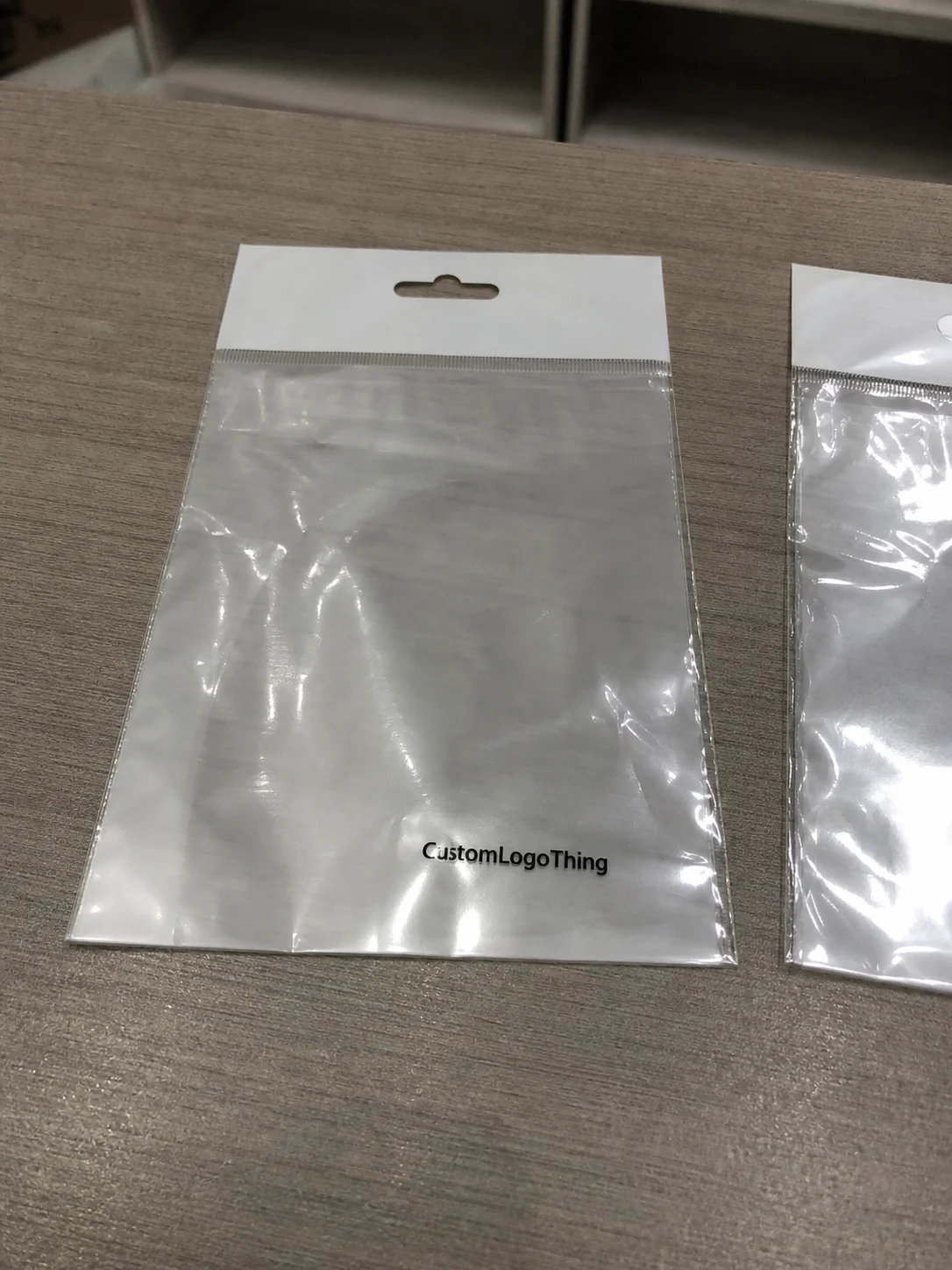
| Flexible bags or mailers | Apparel, accessories, subscription boxes, and high-volume shipping | Film thickness, seal strength, logo position, barcode area, and MOQ | Low-grade film can tear, wrinkle, or make the brand look cheap |
| Custom inserts and labels | Brand storytelling, SKU control, retail display, and repeat-purchase prompts | Die line, adhesive, color proof, copy approval, and packing sequence | Small errors multiply quickly across thousands of units |
Decision checklist before ordering
- Measure the real product and confirm how it will be packed, displayed, stored, and shipped.
- Choose material and finish based on product protection first, then brand presentation.
- Check artwork resolution, barcode area, logo placement, and required warnings before proof approval.
- Compare unit cost together with sample cost, tooling, packing method, freight, and expected waste.
- Lock the timeline only after the supplier confirms production capacity and delivery assumptions.
FAQs
Q: What’s the Minimum Order Quantity for giveaway packaging?
A: It varies with the structure, but for most folding cartons or sleeves, 500 units is the lower end if you’re okay with $2.50-4.00 per unit. For mailer boxes, the MOQ usually starts around 1,000 to align with die and setup costs.
Q: How long does it take to get bulk giveaway packaging delivered?
A: From artwork approval to delivery typically takes 18-22 business days. That includes printing on Heidelberg or KBA presses, die-cutting on Bobst, QC, and final packaging.
Q: Can you handle sustainability certifications?
A: Yes. We manage materials that comply with GOTS, OEKO-TEX Standard 100, WRAP, BSCI, and GRS, and we keep certification files ready for audits.
Q: What if I need a rush job?
A: Rush runs are possible but expect higher per-unit pricing because we may need to run overtime on the press or charter air freight. Still, clear specs and approved dies help reduce rush costs.
Q: Do you provide logistics out of multiple cities?
A: Absolutely. We coordinate shipping from Guangzhou, Dhaka, Ho Chi Minh City, and Istanbul depending on your delivery location and budget.