Buyer Fit Snapshot
| Best fit | Custom Packaging for Subscription Box Business Startup projects where brand print, material claims, artwork control, MOQ, and repeat-order consistency need to be specified before quoting. |
|---|---|
| Quote inputs | Share finished size, material target, print colors, finish, packing count, annual reorder estimate, ship-to region, and any compliance wording. |
| Proofing check | Approve dieline scale, logo placement, barcode or warning zones, color tolerance, closure strength, and carton packing before bulk production. |
| Main risk | Vague material claims, crowded artwork, missing packing details, or unclear freight terms can make a low unit price expensive after revisions. |
Fast answer: Custom Packaging for Subscription Box Business Startup should be specified like a repeatable production item. The safest quote records material, print method, finish, artwork proof, packing count, and reorder notes in one written spec.
Production checks before approval
Compare the actual filled-product size with the drawing, then confirm tolerance on folds, seals, hang holes, label areas, and retail display edges. Reserve space for logos, QR codes, warning copy, and material claims before decorative graphics fill the panel.
Quote comparison points
Review material grade, print process, finish, sampling route, tooling charges, carton quantity, and freight assumptions side by side. A quote is only useful when the supplier can repeat the same color, closure quality, and packing count on the next order.
Custom Packaging for Subscription Box Business Startup
Custom packaging for subscription box business startup gets judged before the customer opens a thing. That first look happens on a porch, in a lobby, at a mailbox, or on a kitchen counter, and it sets the tone before the product has even had a chance to speak for itself. A package that looks intentional gives the brand a little authority right away. A package that feels generic can make a thoughtful product seem kind of forgettable.
The challenge is that packaging has to do more than look good in a mockup. It has to protect the contents, fit the product properly, survive parcel handling, and still leave room in the margin for fulfillment, freight, and replacement costs. I have seen more than one startup get excited by a beautiful proof, only to find out the box was too deep, too slippery, or too expensive once the real shipping math showed up. Pretty is nice. Functional is what keeps the business alive.
Strong branded packaging helps a subscription box feel worth the price, lowers breakage, and gives a new company a way to stand out without stuffing every order with extra product. The best custom packaging for subscription box business startup plans start with measurements, material choice, shipping method, and landed cost per order. The design details matter, but they matter more after the structure is right. Fit first, flash second.
Why custom packaging for subscription box business startup wins attention fast
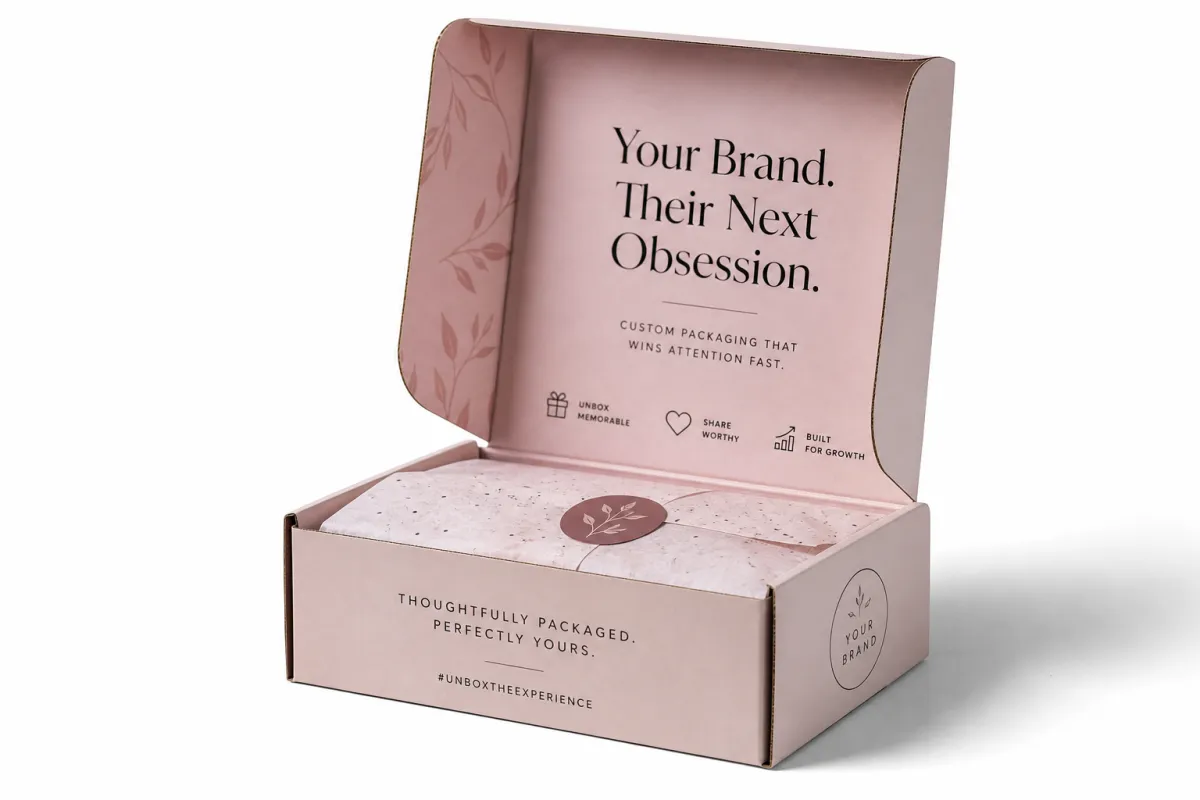
Most subscription boxes are evaluated in a matter of seconds. A customer notices the weight, the print, the finish, and the way the box opens, then makes a quick call about whether the brand feels worth keeping around. That short window matters because the packaging is carrying brand meaning before the product is visible. A thoughtful custom packaging for subscription box business startup can make a young company feel established sooner than its size would suggest, while a sloppy one can make a good offer feel unfinished.
Unboxing is not just theater. It is part of the product experience, and for many subscription brands it becomes part of the reason customers stick around. When the outer mailer, inner wrap, insert, and message card all line up, the package feels deliberate. Small businesses often look much larger than they are when they get those details right. The same business can look rushed if the custom packaging for subscription box business startup approach boils down to “print something nice on a carton and call it done.” That usually lands flat.
Protection matters just as much as presentation. Damaged product creates refunds, replacement work, support emails, and a memory the customer will carry longer than the unboxing excitement. A plain kraft mailer can work beautifully if the size is right, the inserts are sensible, and the product stays put. A full-color printed box can still fail if the contents rattle around inside. Good custom packaging for subscription box business startup decisions treat packaging design and shipping performance as one system, not two separate departments.
From the customer’s point of view, the best packaging usually does three things at once:
- It makes the brand feel established from the first delivery.
- It holds the product securely without a pile of extra filler.
- It keeps the total landed cost inside the subscription model.
“A premium-looking box that arrives crushed does not feel premium. It feels expensive and disappointing, and that is a much harder problem to fix.”
That is the real test for custom packaging for subscription box business startup planning. The package should support repeat orders, protect margins, and give the customer a reason to trust the next shipment. If it can look good enough to share and survive the trip there and back, it earns its place in the business. If it cannot, it becomes a costly surface for a logo.
How custom packaging for subscription box business startup works
The process is much easier once it is treated like production work instead of a design exercise with no boundaries. A custom packaging for subscription box business startup workflow usually starts with product dimensions, then moves through structure selection, artwork, sampling, approval, production, and freight. Each step depends on the one before it. Skip one and the mistake usually shows up later as waste, delays, or extra cost.
Step 1: Measure the product. Measure the real item, not the version in a staging photo or a concept deck. Include inserts, tissue, wrap, or any other component that shares the box. Even a millimeter can change the way the closure feels, especially when the contents are dense or oddly shaped. If the product is still changing, wait before ordering custom packaging for subscription box business startup boxes. Early guesses have a habit of turning into dead inventory.
Step 2: Choose the structure. Mailer boxes, folding cartons, rigid boxes, inserts, tissue, and labels each solve a different problem. A mailer box handles shipping well and gives the box itself a strong role in the presentation. A folding carton is lighter and often easier on the budget. A rigid box feels more premium, though it asks more from the budget and storage space. Inserts stop items from shifting. Tissue adds presentation. Labels can support seasonal runs or smaller custom printed boxes without forcing a major change every time.
Step 3: Build the artwork and print plan. This is where package branding starts to carry weight. Exterior graphics matter, but the interior often makes the bigger impression because it shapes the reveal. A simple interior print or a restrained message panel can make the package feel more composed without pushing the spec into pricey territory. For a custom packaging for subscription box business startup, restraint often produces a better result than trying to print every surface.
Step 4: Sample and test. Skipping the sample stage is a fast way to spend twice. A sample shows how the box closes with the real product inside, how crisp the print looks, whether the finish scuffs, and whether the structure holds under handling. A startup that approves packaging from a screen alone usually learns about the problem after the boxes have already landed in a warehouse.
Step 5: Approve and produce. Once the proof is right, the run moves into manufacturing, then freight, then storage, then fulfillment. That sequence is why custom packaging for subscription box business startup planning needs to happen before launch pressure starts building. Packaging is not something to squeeze into the final week and hope survives contact with reality.
Common packaging formats for startups
Not every custom packaging for subscription box business startup needs the same structure. The right choice depends on product weight, shipping method, and the feel the brand wants to create. A perfume sample kit, a snack box, and a premium skincare edit are all subscription boxes, but they do not need the same build. That sounds obvious, yet it is where a lot of first-time founders get tripped up.
- Mailer boxes fit direct-to-customer subscription shipments and make the box part of the presentation.
- Folding cartons suit lighter products, small accessories, and items already riding inside an outer shipper.
- Rigid boxes work best when the subscription sits at a higher price point and the package needs to feel gift-like.
- Inserts keep products from moving and often improve perceived quality more than a flashy exterior does.
- Tissue and labels add polish without much cost, which is why they show up so often in custom packaging for subscription box business startup launches.
If you want to compare structures before locking a direction, the Custom Packaging Products page is a practical place to start. Real box types are easier to judge than a stack of mockups that all look impressive in isolation.
Key factors in custom packaging for subscription box business startup
The biggest mistake in custom packaging for subscription box business startup work is starting with special effects instead of fit. Box size shapes shipping cost, product protection, and the way the package feels the moment it is picked up. Too much empty space makes the package feel flimsy even when the board is technically strong. Too little space creates crushed corners, awkward closures, and items that arrive bent or broken. Nobody wants that first customer complaint right after launch. That part stings.
Box fit should be measured against the actual product, then adjusted for insert depth, protective wrap, and closure tolerance. A tight fit is not automatically the right fit. If the lid has to fight to close, the customer notices. If the product rattles in open space, the customer notices that too. Careful custom packaging for subscription box business startup planning reduces filler, reduces complaints, and removes the guesswork that usually slows a launch down.
Material choice changes the economics and the feel of the package. Corrugated board is the workhorse for shipments that need impact resistance and better compression performance. Paperboard fits lighter items where presentation matters more than crush strength. Rigid packaging belongs in higher-value programs that can justify the extra cost and the extra storage footprint. It is not the default answer just because it looks attractive in a sample room.
If the product ships through normal parcel distribution, ask how the design performs under transit conditions. Good suppliers can talk through ISTA test families, drop behavior, vibration, and compression resistance in plain language. For fiber-based materials, FSC certification may matter when the brand story includes responsible sourcing. Those details are worth more than decorative wording on a quote sheet.
Finish choices deserve the same discipline. Soft-touch lamination feels rich in the hand, though it adds cost and can mark up if the structure is not engineered well. Gloss can brighten color, but it also shows scuffs and fingerprints more readily. Matte often lands in the safest middle. Spot UV, foil, embossing, and debossing all have a place, yet each one should earn its keep through a business reason instead of a designer’s wish list.
For a custom packaging for subscription box business startup, the priorities usually belong in this order:
- Fit and protection.
- Brand clarity.
- Shipping efficiency.
- Unboxing experience.
- Premium finishes.
That order may sound plain, and it is. Plain is useful when it keeps the product from arriving damaged and the budget from being burned on decorative choices that do not change the customer’s actual experience. Packaging works best as a system, not as a costume.
What to decide early
Early decisions shape every quote that follows. Lock product dimensions, the shipping method, and the packaging grade before comparing suppliers. A custom packaging for subscription box business startup quote without those details is usually more guesswork than pricing.
| Packaging option | Best use case | Typical unit cost at moderate volume | Main advantage | Main tradeoff |
|---|---|---|---|---|
| Mailer box | Direct-to-customer subscriptions, product sets, branded shipping | $0.55-$1.40 | Balanced print area with solid transit strength | Uses more material than a plain outer shipper |
| Folding carton | Lighter items, retail packaging, secondary pack | $0.18-$0.48 | Lower cost and lighter weight | Usually needs an outer mailer for shipping |
| Rigid box | Premium subscription tiers, gift sets, high perceived value | $1.75-$4.50 | Strong shelf presence and premium feel | Costs more and occupies more storage space |
| Corrugated insert system | Fragile items, multi-piece kits, damage reduction | $0.10-$0.60 | Keeps products from moving inside the box | Needs careful fit engineering |
Those ranges are a reality check, not a promise. Custom packaging for subscription box business startup costs move around based on board grade, print coverage, finish, quantity, freight, and how much handwork the package requires. A simple spec and a simple quote rarely stay simple once the details are real.
Custom packaging for subscription box business startup cost and pricing
Cost is where many custom packaging for subscription box business startup plans get shaky. A unit price can look attractive until freight, inserts, storage, sampling, and replacements enter the picture. The box itself is only one part of the landed cost. A smart budget includes the whole chain, not just the carton line.
The main pricing drivers are not mysterious. Dimensions, board thickness, print coverage, finish type, order quantity, and shipping weight all matter. A larger box costs more because it uses more material and more freight space. Full-coverage print costs more than a restrained one-color design. Special finishes add setup and handling. Inserts add parts and labor. Each one is easy to explain, which makes it more frustrating when they are ignored until the invoice arrives.
For custom packaging for subscription box business startup buyers, volume changes the economics quickly. A run of 1,000 boxes usually costs more per unit than a run of 5,000. A run of 10,000 may lower the piece price again, yet now the business is carrying inventory that has to be stored, handled, and eventually used. Lower unit cost is useful. A warehouse full of unused boxes is not.
Typical cost buckets usually include:
- Samples and mockups: often $25-$150 each depending on structure and complexity.
- Print setup or tooling: can be light for digital runs, while dies and plates add setup cost on other specs.
- Unit packaging cost: driven by board type, print coverage, and quantity.
- Freight: tied to cube, destination, and the shipping mode selected.
- Storage: relevant once custom packaging for subscription box business startup inventory starts occupying meaningful space.
The cheapest box is rarely the cheapest decision. When low-cost packaging causes more damage, more filler, more postage, or more customer service work, the total cost per order climbs. That pattern hits hard for custom packaging for subscription box business startup brands that are still building trust. A company in the early months does not get many chances to look careless.
Price bands help set expectations, but only when the specification is clear. A basic mailer at a few thousand units can fall into a sub-dollar range, while a premium rigid box can rise several times higher. Those numbers still depend on the exact build. A 9 x 6 x 2 inch mailer with one-color print is not the same object as a deep box with interior print, foil, and a custom insert set. Same category, very different bill.
Replacement risk deserves its own line in the budget. If the first custom packaging for subscription box business startup run is wrong, a correction order may happen fast and usually costs more because it is smaller and rushed. Spending a little more on sampling and fit testing often protects the launch from a much larger expense later.
When launch cash is tight, a phased approach usually makes the most sense. Start with one box style, a restrained print plan, and a well-built insert system. Add premium effects later once the subscription model has earned the right to carry them. That is not cutting corners. That is protecting the business while it learns.
Step-by-step timeline for custom packaging for subscription box business startup
A custom packaging for subscription box business startup timeline should work backward from launch day. That sounds obvious until a founder orders the product, finishes the website, and then discovers the packaging is still weeks away from approval. Packaging belongs on the critical path, not in the “we’ll get to it later” bucket.
A realistic sequence looks like this:
- Measure the product and define the shipping method. The supplier needs actual size constraints, not a rough estimate.
- Choose the box structure. Mailer, folding carton, rigid, insert system, or a mix.
- Request quotes. Use the same spec with every supplier so the numbers are comparable.
- Review mockups and dielines. Artwork placement and panel layout get checked here.
- Order samples. Fit, print, closure, and handling need to be tested in real conditions.
- Revise if needed. Small adjustments now prevent much bigger headaches later.
- Approve production. Once the proof is right, the run moves to manufacturing.
- Plan freight and receiving. Boxes do not sort themselves into the warehouse.
The timeline usually stretches not because manufacturing is always slow, but because review cycles take time. Artwork revisions. Sample changes. Internal approvals. A logo moved a quarter inch. A line of copy reworded. A swatch reviewed again. The custom packaging for subscription box business startup calendar slips quietly while everyone is still saying the project is “almost done.”
Typical timing often looks like this: sample review in 5-10 business days, production in 12-20 business days after approval, then freight on top of that. Add more time if tooling is involved. Add more time if the structure is complex. Add more time again if the team cannot agree on the shade of black. Packaging has no patience for indecision.
One practical rule keeps launches calmer: do not push the subscription sales date until the packaging plan is locked. Design changes after marketing starts can create shipping delays, mismatched inventory, and customer emails that need careful damage control. None of that helps the brand feel ready.
For custom packaging for subscription box business startup planning, a simple calendar check keeps everyone honest:
- 8-12 weeks before launch: finalize size targets and request quotes.
- 6-8 weeks before launch: review samples and approve artwork.
- 4-6 weeks before launch: complete production and freight planning.
- 2-4 weeks before launch: receive boxes, inspect them, and stage fulfillment.
That schedule can shift based on supplier location, shipping mode, and the number of revisions. Even so, it is a much better starting point than counting on the packaging to “show up in time.” Hope does not move freight.
Common mistakes in custom packaging for subscription box business startup
The most expensive mistakes in custom packaging for subscription box business startup work are usually the boring ones. Wrong size. Overdesigned first run. No shipping test. Lowest unit price chosen without looking at the total cost. These are the errors that sneak past excitement and show up later as reprints, damage claims, and delayed launches.
Mistake 1: Ordering before the product is final. Even a small change in product size can make the box too tight or too loose. The result is often inventory that cannot be used the way it was planned. Startups sometimes call that speed. In practice, it just moves the risk from the product team to the warehouse.
Mistake 2: Trying to do everything on run one. Too many finishes, too many colors, too many inserts, too much complexity. Custom packaging for subscription box business startup founders often want the first release to feel like a luxury object, which makes sense emotionally. The problem is that an overloaded spec sheet can drain the budget for reasons that do not improve the actual shipment. A leaner first run usually gives better control.
Mistake 3: Ignoring shipping tests. A package that looks perfect on a desk can still fail in transit. Corners crush. Print scuffs. Products shift. That is why transit testing matters. Drop and vibration checks can reveal weak points early, and compression testing helps show whether the box holds up in the chain. A customer will not care about the test you skipped. They will care that the contents arrived broken.
Mistake 4: Chasing the lowest unit price. A cheap quote can turn into a higher real cost if it leads to reprints, returns, or a weak first impression. Custom packaging for subscription box business startup numbers need to be measured by total cost per shipped order, not by the headline figure on the quote sheet. Cheap cardboard plus customer complaints is not a deal.
Mistake 5: Forgetting the unboxing sequence. A box can be structurally correct and still feel awkward. If the contents spill open, the message card lands face down, or filler escapes the moment the lid lifts, the experience loses polish. Inserts, tissue, and a clear opening order all help the package feel composed rather than improvised.
“A package should open cleanly, hold the product in place, and make the first ten seconds feel easy rather than fussy.”
The best fix for most of these mistakes is not more spending. It is more discipline in planning and testing. Custom packaging for subscription box business startup projects usually improve when the team slows down long enough to approve one sample carefully before ordering a warehouse full of regret.
Expert tips and next steps for custom packaging for subscription box business startup
My best advice for custom packaging for subscription box business startup work is simple: choose one dependable box structure, one sensible print plan, and one repeatable insert system before chasing upgrades. A clean, well-fitted package usually beats a crowded spec sheet. Fancy finishes only matter after the core pack works the way it should.
If you want packaging to behave like a real business asset, test it against three realities: shelf appeal, shipping durability, and repeat-order economics. Shelf appeal matters when the box is seen outside the home or on social media. Shipping durability matters because damage burns margin and trust at the same time. Repeat-order economics matter because a subscription model depends on costs that do not surprise you every month.
Here is the checklist I would actually use for custom packaging for subscription box business startup decisions:
- Measure the product and any inserts before requesting quotes.
- Set a realistic price ceiling for the full package, not just the carton.
- Compare at least two or three suppliers with the same spec sheet.
- Request a physical sample and test closure, fit, and scuff resistance.
- Check whether the board and finish match the shipping method.
- Confirm artwork approvals before launch marketing starts.
If you need to compare box styles, finishes, or add-on components, the Custom Packaging Products page is a useful place to narrow the field. It is much easier to make a decision when the options are real and the specs are visible instead of being described in broad strokes.
Keep the process simple. Build a checklist, keep the decisions in one place, and treat packaging as part of the launch rather than a side task that can wait until the last minute. Custom packaging for subscription box business startup success usually comes from clear specs, measured choices, and steady follow-through rather than from a frantic upgrade at the eleventh hour.
Get the fundamentals right and custom packaging for subscription box business startup work turns into an advantage instead of a headache. The box protects the product, supports the brand, and gives customers a reason to remember the shipment the next time they see your name. The action step is straightforward: lock the product dimensions, choose the shipping structure, and test one physical sample before you place the full order. That one move keeps the rest of the launch from getting tangled up in avoidable packaging mistakes.
How much does custom packaging for a subscription box business startup usually cost?
Cost depends on size, material, print coverage, finish, and quantity. Smaller runs almost always cost more per box, while larger runs lower the unit price but tie up more cash. A smart custom packaging for subscription box business startup budget also includes samples, freight, inserts, and storage, not just the carton itself.
What is the best packaging material for a subscription box startup?
Corrugated is usually the safest choice for shipments that need real protection. Paperboard works well for lighter products and tighter budgets, especially when presentation matters but impact resistance is less critical. Rigid packaging should be reserved for products and price points that can justify the added cost in a custom packaging for subscription box business startup plan.
How long does custom packaging take for a new subscription box business?
Timing depends on artwork approval, sampling, production, and freight. The delays usually happen during reviews and sample revisions, not the manufacturing itself. A custom packaging for subscription box business startup should be planned well before launch so the boxes are ready before the first subscription ship date.
What box size should I choose for custom packaging in a subscription business?
Start with the actual product dimensions, then add only the space needed for inserts and safe movement. Oversized boxes waste shipping money and look sloppy. A custom packaging for subscription box business startup run should always be tested with a sample before a full order is placed.
Do I need inserts for custom subscription box packaging?
If the items can shift, break, or look messy in transit, inserts are worth it. They improve presentation and reduce damage-related returns. Most custom packaging for subscription box business startup launches do better with a simple insert system first, then add more structure only if the unboxing needs it.

