Buyer Fit Snapshot
| Best fit | Custom Packaging Pouches Wholesale projects where brand print, material claims, artwork control, MOQ, and repeat-order consistency need to be specified before quoting. |
|---|---|
| Quote inputs | Share finished size, material target, print colors, finish, packing count, annual reorder estimate, ship-to region, and any compliance wording. |
| Proofing check | Approve dieline scale, logo placement, barcode or warning zones, color tolerance, closure strength, and carton packing before bulk production. |
| Main risk | Vague material claims, crowded artwork, missing packing details, or unclear freight terms can make a low unit price expensive after revisions. |
Fast answer: Custom Packaging Pouches Wholesale: Film, Print, MOQ, and Carton Packing should be specified like a repeatable production item. The safest quote records material, print method, finish, artwork proof, packing count, and reorder notes in one written spec.
Production checks before approval
Compare the actual filled-product size with the drawing, then confirm tolerance on folds, seals, hang holes, label areas, and retail display edges. Reserve space for logos, QR codes, warning copy, and material claims before decorative graphics fill the panel.
Quote comparison points
Review material grade, print process, finish, sampling route, tooling charges, carton quantity, and freight assumptions side by side. A quote is only useful when the supplier can repeat the same color, closure quality, and packing count on the next order.
Custom Packaging Pouches Wholesale: What Buyers Need to Know
Custom packaging pouches wholesale often comes down to a few millimeters rather than a clever line of copy. If the pouch runs too large, the order carries extra film, extra void fill, and extra freight; if it runs too small, the team fights fill issues, weak shelf presentation, and avoidable returns. I have seen quote sheets that looked tidy on paper but hid those tradeoffs in the background, and that is usually where budgets start drifting. For shipping, retail, and fulfillment teams, the real value of custom packaging pouches wholesale is simple: packaging becomes a controlled specification instead of a compromise.
Why custom packaging pouches wholesale can cut shipping waste
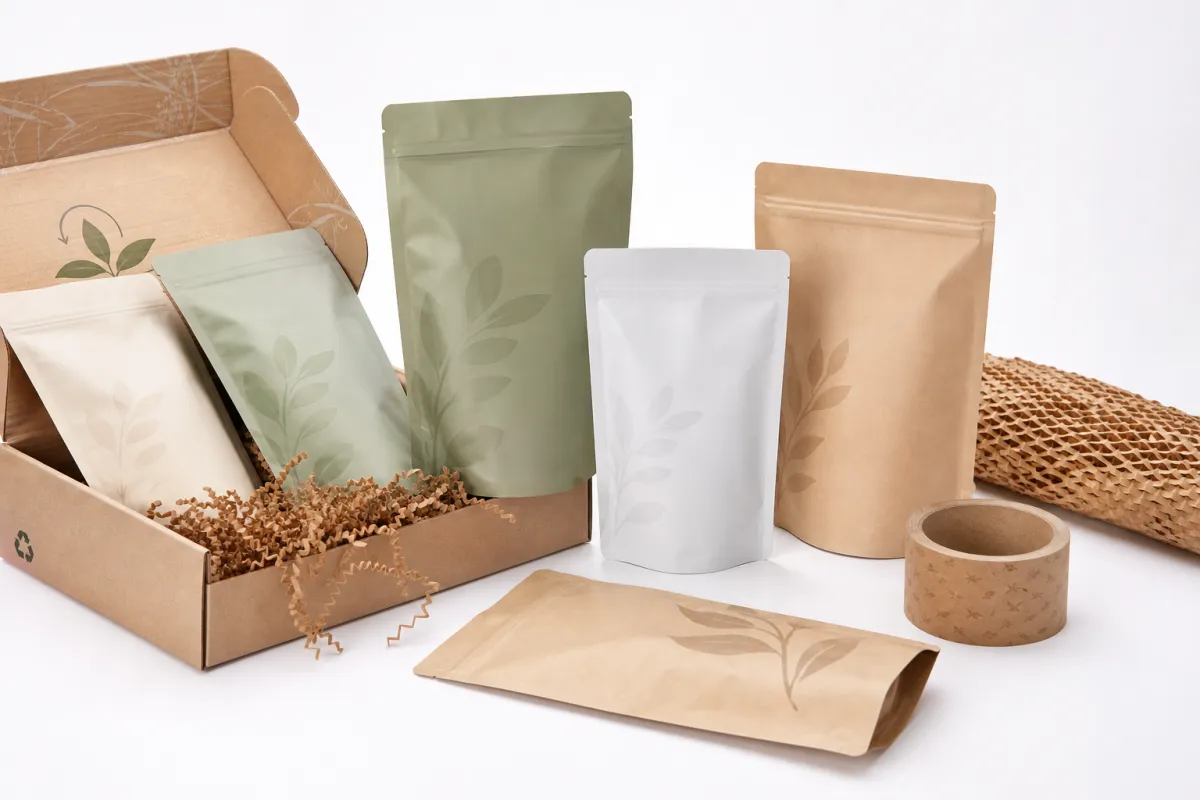
Custom packaging pouches wholesale should be treated as a logistics decision first and a print decision second. A pouch that fits the product more closely can reduce case-pack size, improve pallet density, and lower the amount of empty space moving through a warehouse, a parcel network, or a retail backroom. Those small gains add up because they touch labor, freight, and damage rates at the same time.
Picture a brand moving from an oversized stock pouch to a tighter custom fit. The old package may protect the product, but it can still leave the item shifting during sorting and transit. A better-sized pouch can hold the product upright, support cleaner carton packing, and reduce the need for extra inserts or void fill. For teams managing product packaging at scale, custom packaging pouches wholesale can be the difference between a shipment that wastes cube and one that travels predictably.
Presentation carries real weight as well. Retail buyers notice whether a pouch sits flat, hangs cleanly, and faces forward on shelf. Fulfillment teams notice whether it stacks well and survives a few conveyor turns without scuffing the print. Those are not cosmetic details; they belong inside packaging design because they shape how much handling abuse the package can take before the customer sees it.
Wholesale ordering matters because repeatability matters. A one-off pouch can look fine in a sample and still create problems once a team needs 10,000 units next quarter and 15,000 after that. With custom packaging pouches wholesale, the buyer is usually trying to lock in a stable spec, predictable lead time, and a unit cost that does not swing wildly every time the order size changes. That kind of stability helps finance, procurement, and operations at the same time.
From a packaging buyer’s point of view, the strongest argument stays practical: the pouch should fit the product, the ship method, and the sales channel. Ecommerce programs need transit stability. Retail packaging needs shelf presence. Programs that do both need a structure that balances protection, appearance, and packing speed. That is kind of the whole point of evaluating Custom Packaging Products by function first, then by graphics.
One useful way to judge value is to compare landed cost rather than the print quote alone. A pouch that costs a little more per unit but cuts freight waste, lowers damage claims, and improves case packing often wins in the real budget. That is where custom packaging pouches wholesale earns its place.
Product details that define custom packaging pouches wholesale orders
Custom packaging pouches wholesale covers several structures, and each one suits a different use case. Stand-up pouches are the most familiar because the bottom gusset lets them sit upright, which helps on shelf and in secondary packaging. Flat pouches are slimmer and work well for low-profile products, sample packs, and items that ship tightly packed. Side gusset pouches carry more volume and are common for coffee, dry goods, and products that need a taller fill profile. Lay-flat pouches are often the simplest format for unit dose items, inserts, or small components.
Closure choice changes the entire user experience. Zippers support reseal performance and make sense when the customer opens and closes the pouch more than once. Tear notches improve openability, but they need careful placement so the consumer does not tear too far into the seal area. Hang holes support peg display. Spouts work for liquids or semi-liquids, yet they add complexity and usually require tighter coordination during production. In custom packaging pouches wholesale, every functional feature should justify itself against packing speed, customer convenience, and cost.
Material selection matters even more than many new buyers expect. Polyethylene structures are common for straightforward applications and can offer strong seal performance. Laminated film structures are used when the package needs better barrier properties, more stiffness, or a sharper print appearance. Foil barrier layers help where moisture, oxygen, or aroma protection matters, especially for coffee, specialty food, and some nutraceutical products. Clear windows can improve product visibility, but they reduce printable area and may limit barrier performance. A thoughtful supplier should explain which structure fits the product instead of pushing the most expensive option.
Print and finish influence how the pouch behaves in production. A high-coverage design may look excellent, yet it can raise cost and increase the chance of color variation if the artwork is not prepared correctly. Matte finish, gloss finish, soft-touch coatings, and metallic accents each create a different visual tone. For branded packaging, the question is not just whether the pouch looks attractive; it is whether the design supports inventory control, scan readability, and clear label placement. In many custom packaging pouches wholesale programs, the cleanest artwork is the one that leaves enough room for lot codes, nutrition panels, or shipping labels.
Before ordering a large run, ask for a sample or a compatibility test if the pouch will be filled by machine, sealed by heat, or used in a fulfillment line that already has a speed target. A pouch that is technically correct but awkward on the line can slow production and create waste. Experienced buyers ask for a small test before they commit to a full custom packaging pouches wholesale order.
Here is a useful comparison for common pouch structures:
| Pouch structure | Best use | Operational advantage | Typical tradeoff |
|---|---|---|---|
| Stand-up pouch | Retail food, supplements, branded consumer goods | Sits upright, strong shelf presence | More material than a flat pouch |
| Flat pouch | Samples, low-volume items, slim kits | Compact for carton packing and mailing | Less display impact |
| Side gusset pouch | Bulk dry goods, coffee, higher fill volumes | Holds volume efficiently | Can require more careful sealing |
| Lay-flat pouch | Hardware, inserts, single-use items | Simple, economical, easy to stack | Limited shelf-facing value |
Specifications to confirm before you place an order
The fastest way to slow down custom packaging pouches wholesale is to send vague specifications. Width, height, gusset depth, fill weight, seal width, and target volume should all be stated clearly before the quote is finalized. A pouch for 8 ounces of product behaves very differently from a pouch for 2 pounds of product, even if the branding looks similar.
Material thickness and barrier level should match the product, not the other way around. A snack product that sits in warehouse inventory for weeks may need stronger moisture protection than a short-life promotional item. A fragrance product may need better aroma retention and stronger seal integrity. A sharp-edged or dense item may need puncture resistance, which often means a different film structure or lamination. Good custom packaging pouches wholesale planning starts with the product itself, then works outward to the film and closure.
Compliance and handling details deserve attention early. Food contact needs, odor protection, tamper evidence, and retail or warehouse labeling requirements can all affect the build. If the pouch will be used for regulated goods, buyers should confirm the required copy, lot code area, and any warning statements before artwork is finalized. The wrong assumption here can delay a production run or force expensive rework later.
Machine compatibility is another point that gets overlooked. Will the pouch be hand-filled, semi-automated, or run on a high-speed automated line? Does the zipper need to open easily for the operator? Is the tear notch placed where the customer can actually use it? How many units fit in a carton, and how many cartons fit on a pallet? Those questions may sound operational, but they have a direct effect on custom packaging pouches wholesale cost and lead time.
For transit-sensitive programs, packaging teams sometimes ask for outside guidance on shipping tests. ISTA test procedures are commonly used to evaluate pack performance under distribution stress, while FSC sourcing can matter when paper components are part of the build. If sustainability claims are part of the program, buyers should also review EPA guidance on packaging waste and local recycling rules rather than assuming a pouch is automatically recyclable because it uses less material. Many flexible pouches are still hard to recycle through curbside systems unless they are built for a specific recycling stream, so that claim needs to be handled carefully. Useful references include ISTA and FSC.
A practical buyer checklist helps keep the order clean:
- Final pouch dimensions and target fill weight
- Material preference, barrier needs, and closure type
- Artwork files, logo files, and print color targets
- Sample approval, proof approval, and any required label copy
- Fill method, carton pack, pallet count, and shipping destination
Once those details are fixed, custom packaging pouches wholesale becomes much easier to quote accurately and much easier to produce without surprises.
Pricing, MOQ, and freight factors for custom packaging pouches wholesale
Pricing for custom packaging pouches wholesale usually comes down to five things: material structure, pouch size, print coverage, closure features, and total quantity. A larger pouch uses more film. A more complex print layout may require tighter color control. A zipper, euro hole, spout, or special finish can all raise the cost. None of that is unusual; it is simply how flexible packaging is built.
MOQ logic ties back to setup and production efficiency. If a pouch requires more complex print preparation or a specialized film structure, the supplier may need a larger run to keep the unit price reasonable. Simpler structures can often start at lower quantities because they are easier to schedule and less expensive to convert. Buyers should ask directly where the volume breakpoints are, because the lowest quantity is not always the best value in custom packaging pouches wholesale.
Setup costs matter too. Some builds involve plate charges or tooling charges, especially if the print method or pouch feature requires dedicated setup. Those costs are easy to misunderstand if they are buried in a quote. A clean quotation should show the unit cost, the setup expense, and any tooling or prepress fees so the buyer can see what is fixed and what changes with volume. For a wholesale run, that transparency is more useful than a glossy promise.
Freight belongs in the conversation from the start, not the finish. Carton dimensions, palletization, the shipping lane, and the delivery method all influence landed cost. Parcel shipping may work for small sample orders, but larger custom packaging pouches wholesale runs often move better by LTL or full truckload depending on the destination and lead time. A low unit price can disappear quickly if the shipment is inefficiently packed or if the freight assumption is unrealistic.
Here is a simple way to compare quotes on equal terms: ask each vendor to quote the same dimensions, the same material structure, the same print coverage, the same closure features, and the same delivery destination. Without those controls, one quote may look cheaper only because it excludes a zipper, uses thinner film, or assumes a different freight lane. That is not a fair comparison for custom packaging pouches wholesale.
Typical pricing for a standard custom pouch can vary widely, but buyers often see better economics as quantity rises and artwork complexity falls. A straightforward printed stand-up pouch may land in a different range than a foil barrier pouch with zipper and matte finish, even at the same volume. The smartest purchasing move is to compare landed price per usable unit, not just the base packaging cost.
For internal planning, some teams like to compare Wholesale Programs against direct production quotes to see where the most dependable long-term value sits. That can be especially useful if the company expects repeat replenishment and wants one supplier to support reorder consistency.
Here is a simple comparison of cost drivers:
| Cost factor | Raises unit price | How to control it |
|---|---|---|
| Material structure | Foil, multi-layer laminate, thicker film | Match barrier to actual product needs |
| Print coverage | Full-bleed artwork, multiple spot colors | Simplify layout where possible |
| Features | Zippers, spouts, hang holes, tear notches | Use only the features the channel needs |
| Quantity | Lower order volume | Consolidate demand and forecast reorders |
| Freight | Oversized cartons, poor pallet loading | Plan carton pack and shipping method early |
How the custom packaging pouches wholesale process and timeline work
A clean custom packaging pouches wholesale process usually starts with inquiry, moves to spec review, then proceeds through artwork checking, proof approval, sample approval if needed, production scheduling, and final shipment. If the supplier is organized, each step has a clear handoff. If the buyer sends incomplete details, the process slows down almost immediately.
Realistic timeline depends on the build. A straightforward reorder with no structural changes is usually faster than a fully custom pouch with new artwork, new seals, or a new barrier film. The biggest delays usually come from artwork revisions, color corrections, sample tweaks, or a late decision on the closure type. In many custom packaging pouches wholesale programs, the production window is not the problem; the approval window is.
Approval should cover dimensions, materials, print placement, finish, and functional features. If the zipper sits too close to the top seal, that is a problem. If the fill line conflicts with the artwork or the label area, that is a problem. If the final color target is not defined, it can turn into a long back-and-forth after press setup. Strong packaging design is not just visual; it is a set of instructions the plant can execute consistently.
After signoff, production is usually queued, inspected, packed, and prepared for outbound freight. Buyers should ask how the supplier handles in-process checks, final carton labeling, pallet wrap, and shipment documentation. Those details matter because a neat sample does not help if the finished order arrives with damaged cartons or mixed pallet counts. That is why experienced teams treat custom packaging pouches wholesale as a managed workflow rather than a single purchase event.
“The best pouch program is the one that can be reordered without guesswork. If the buyer can restate the spec, the supplier can repeat the result.”
You can usually save time by sending complete information up front: product dimensions, expected fill weight, artwork files, sample references, and shipping destination. If the brand already has a current pack, an existing pouch sample is one of the most useful starting points because it shows what the product actually needs instead of what the spreadsheet assumes. That is especially true for custom packaging pouches wholesale orders that support both retail packaging and shipping workflows.
For teams building a broader sourcing plan, the supplier conversation can also connect to Custom Packaging Products and long-term replenishment strategy. Once one pouch spec is approved, it is much easier to manage forecasting, reorders, and inventory timing around it.
From a practical standpoint, buyers should expect a little more time if the order includes special materials, strict color matching, or functional components that require testing. That is not a bad sign; it usually means the supplier is checking the build carefully. In packaging, a measured approval process is often cheaper than a rushed production run that misses the mark.
Why choose us for custom packaging pouches wholesale
What buyers need from a supplier is not empty confidence. They need clear communication, repeatable specs, and a process that respects how wholesale packaging actually gets used. Custom packaging pouches wholesale works best when the partner understands structure, print readiness, transit reality, and reorder discipline. That is the kind of support that keeps a program steady after the first shipment goes out.
An experienced packaging partner should help reduce costly revisions before they happen. That means checking whether the structure matches the product, whether the artwork is set up correctly for print, and whether the pouch will hold up in the ship method the buyer actually uses. A lot of expensive mistakes start with a design that looks fine on screen but does not make sense on the line. Good custom packaging pouches wholesale support catches that early.
Quality control also matters at several stages, not just at the end. Material checks, print checks, and finishing checks each protect the final result. If the approved sample says the zipper should close firmly and the seal should look clean, the production run should match that expectation. Buyers do not want vague reassurance; they want the finished pouch to behave the same way every time.
Here is a point that is often overlooked: the right supplier can help coordinate reorder timing and inventory planning. That becomes critical when a business is balancing storage space, seasonal demand, or multiple sales channels. A dependable custom packaging pouches wholesale partner helps keep stockouts and rush fees from creeping into the budget. That may not sound dramatic, but procurement teams know how valuable it is.
Packaging buyers also appreciate honesty. If a requested finish is going to raise cost, the supplier should say so. If a certain structure is overbuilt for the product, that should be said too. If a lower-cost option still meets the basic performance need, that deserves to be on the table. The most useful packaging conversation is about fit, function, repeatability, and lead time, not vague claims about being the best. That is the standard buyers deserve for custom packaging pouches wholesale.
For brands that are also evaluating branded packaging across categories, the same discipline applies to custom printed boxes, Product Packaging Inserts, and retail-ready pouch lines. The goal is not just a pretty package. The goal is a package that fills properly, ships well, and supports the sales channel without creating avoidable waste.
Next steps for a clean wholesale pouch quote
If you want a clean custom packaging pouches wholesale quote, start with the basics: product dimensions, target fill weight, material preference, print needs, and expected order volume. The better the input, the cleaner the quote. That is true whether the pouch is for ecommerce, retail shelves, or fulfillment operations that need a steady reordering schedule.
Send reference material if you have it. An existing sample, a competitor package, or even a photo of the current pouch can help the supplier understand the real use case faster than a paragraph of description. If the program needs exact matching, the sample should be shared early. If the goal is improvement, say what should change and what should stay the same. That saves time in custom packaging pouches wholesale quoting and avoids assumptions.
Ask for a written breakdown before comparing vendors. The quote should show unit price, MOQ, setup charges, freight assumptions, and estimated timeline. If a supplier only gives a single number with no detail, it is hard to know whether the quote is complete. A strong quote makes it easy to compare one build against another without mixing up different specs or shipping terms.
For shipping-sensitive, retail-facing, or regulated products, approve a sample or proof before the full run starts. That may add a little time upfront, but it can save a lot more later. A pouch that is going to be used repeatedly should be checked for seal performance, fill behavior, color placement, and customer usability before the full custom packaging pouches wholesale order is released.
There is a simple rule that holds up across most packaging programs: the cleaner the spec, the smoother the production. If the volume is real, the timeline is realistic, and the design is built around the actual product, custom packaging pouches wholesale becomes a practical buying decision instead of a guessing game. That is the point where cost, function, and brand presentation start working together instead of fighting each other.
What is the usual MOQ for custom packaging pouches wholesale?
MOQ depends on pouch size, print complexity, film structure, and whether special closures or finishes are included. Simpler builds often allow smaller entry quantities, while more custom builds usually need larger runs to stay cost-effective. A good supplier should state the MOQ clearly in the quote and explain any cost breakpoints tied to volume for custom packaging pouches wholesale.
How are custom packaging pouches wholesale prices calculated?
Pricing usually reflects material type, pouch dimensions, print coverage, closure features, and total order quantity. Setup costs, tooling, freight, and packaging of the finished goods can also affect the final landed price. The cleanest comparison is an apples-to-apples quote with the same spec, quantity, and delivery terms for custom packaging pouches wholesale.
Can I order custom packaging pouches wholesale based on an existing sample?
Yes, an existing sample is often the fastest way to define size, structure, finish, and closure requirements. The supplier can then match or refine the specification, depending on whether you want exact duplication or an improved version. Provide the sample early so the quote reflects the real build instead of a rough estimate for custom packaging pouches wholesale.
What files do I need for custom packaging pouches wholesale printing?
Most quotes move faster when you send editable artwork, logo files, copy text, and any required compliance statements. Vector files are preferred for logos and line art because they hold quality at print scale. If artwork is not final, send a draft layout and request a prepress review before production starts on custom packaging pouches wholesale.
How long does production take for custom packaging pouches wholesale orders?
Timeline depends on how complete the specs are, whether artwork is approved quickly, and whether a sample is needed first. Simple repeat orders are usually faster than new custom builds because fewer setup steps are required. Ask for the production window and freight estimate together so you can plan inventory and shipping with fewer surprises in custom packaging pouches wholesale.
Custom packaging pouches wholesale works best when the product spec, order volume, and timeline are aligned before production starts. That is how buyers keep costs controlled, reduce packaging waste, and get a pouch that performs the way it should from the first shipment through every reorder. The most useful next move is also the simplest: send one complete spec sheet with dimensions, fill weight, material, closure, artwork, and freight destination, then ask every vendor to quote that exact version back. That is how the real decisions become clear.

