Buyer Fit Snapshot
| Best fit | Product Packaging Inserts Bulk projects where brand print, material claims, artwork control, MOQ, and repeat-order consistency need to be specified before quoting. |
|---|---|
| Quote inputs | Share finished size, material target, print colors, finish, packing count, annual reorder estimate, ship-to region, and any compliance wording. |
| Proofing check | Approve dieline scale, logo placement, barcode or warning zones, color tolerance, closure strength, and carton packing before bulk production. |
| Main risk | Vague material claims, crowded artwork, missing packing details, or unclear freight terms can make a low unit price expensive after revisions. |
Fast answer: Product Packaging Inserts Bulk: Pricing, Specs, Process should be specified like a repeatable production item. The safest quote records material, print method, finish, artwork proof, packing count, and reorder notes in one written spec.
Production checks before approval
Compare the actual filled-product size with the drawing, then confirm tolerance on folds, seals, hang holes, label areas, and retail display edges. Reserve space for logos, QR codes, warning copy, and material claims before decorative graphics fill the panel.
Quote comparison points
Review material grade, print process, finish, sampling route, tooling charges, carton quantity, and freight assumptions side by side. A quote is only useful when the supplier can repeat the same color, closure quality, and packing count on the next order.
Product Packaging Inserts bulk orders solve a problem that stays invisible until cartons start coming back damaged. A product can look polished on a shelf and still arrive with a scuffed edge, a crushed corner, or an accessory rattling around inside the box. The insert is the quiet part of the package that decides whether the item stays where it belongs. Buyers searching for product packaging inserts bulk are not just buying a sheet, tray, or cavity. They are buying control, repeatability, and fewer surprises in fulfillment.
At Custom Logo Things, the first conversation usually starts with the product itself. How heavy is it? Does it need to sit upright? Will it travel through parcel shipping, pallet freight, or a mixed route that includes both? Those answers shape the structure, the substrate, and the cost. Product packaging inserts bulk programs work best when the fit is defined early, because a clear spec keeps revisions from multiplying. A loose brief can add days. A precise one can save weeks, and that difference is not small when a launch date is already on the calendar.
I have sat through enough packaging reviews to know that the first sample rarely fails for dramatic reasons. More often, the problem is a millimeter here, a fold line there, or an accessory pocket that looked fine on screen but is awkward in the hand. That is why the insert deserves real attention instead of a shrug. If you are building a broader packaging setup, it is worth comparing our Custom Packaging Products with your carton plan before placing a bulk order. For recurring replenishment and larger rollouts, our Wholesale Programs can simplify scheduling and make repeat buying easier to forecast.
Why product packaging inserts bulk orders cut damage and returns
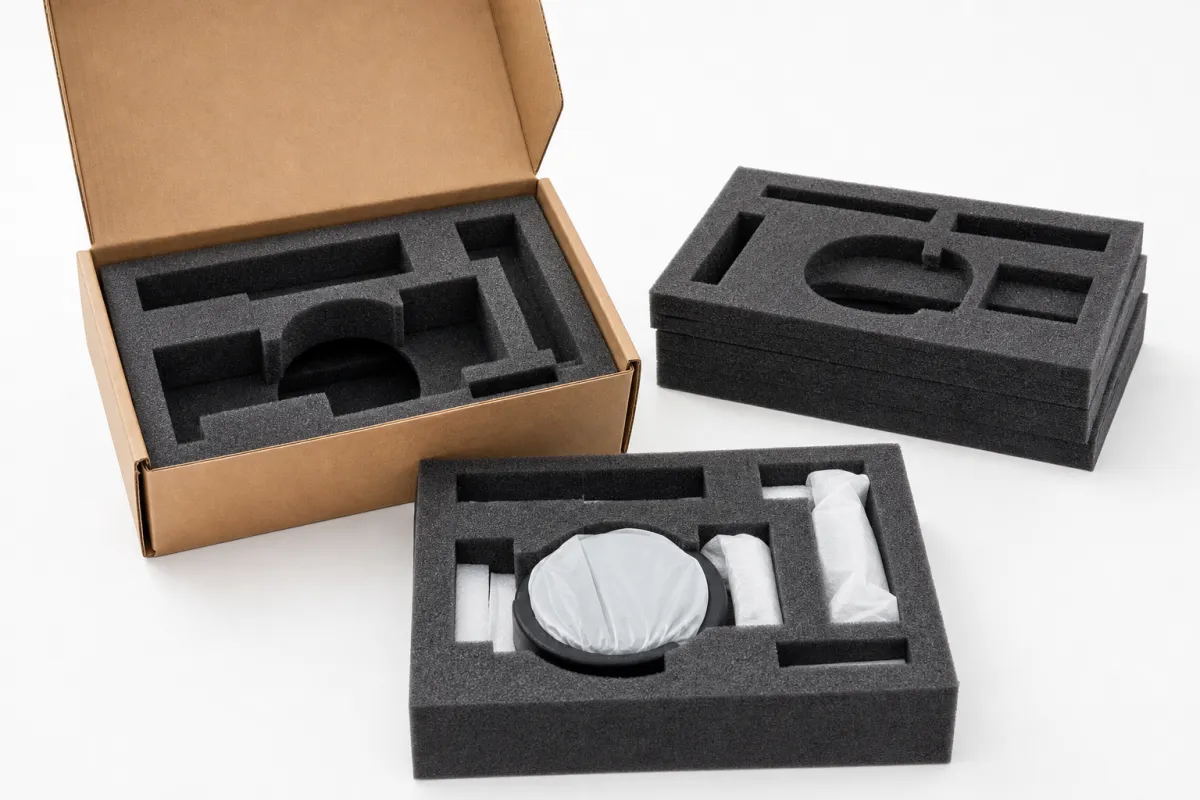
A box can look excellent and still fail in transit if the product shifts into a corner, sinks into a cavity, or rubs against another component. That is the practical reason product packaging inserts bulk orders matter. They do more than hold an item in place. They create a controlled interior space that limits motion, protects finishes, and gives the packer a consistent method every time the carton is closed.
From a packaging buyer's point of view, that consistency has financial weight. Damage is never only a product loss. It also creates repacking labor, customer service time, freight rework, and a dent in trust that is harder to measure than a refund. On a 50,000-unit run, even a 1% damage rate means 500 problems. That is a small percentage on paper and a very real headache in operations. A batch of inserts that fits correctly can lower breakage, but it can also reduce slower packout, excess filler, and the kind of messy unboxing that makes a product feel less considered than it is. A cheap insert that forces packers to fiddle with every box is kind of expensive, even if the quote looks tidy.
Bulk buying also fits the way most brands actually ship. They repeat the same SKU, launch seasonal kits, assemble subscription boxes, or replenish retail packaging on a schedule. In those cases, the insert becomes part of the production rhythm. Once the fit is locked, the line moves with less hesitation. The person packing the box does not need to improvise. The insert shows where the product goes, how it sits, and what the finished carton should look like when it leaves the table. If the carton is going to be handled by a fast-moving warehouse team, that visual cue matters more than most people admit.
That becomes especially valuable for:
- subscription kits with multiple components that must stay sorted during shipment
- ecommerce fulfillment where each second of packout time affects labor cost
- fragile goods that need edge support, separation, or anti-rub protection
- premium launches where package branding has to look intentional, not improvised
- repeat SKUs that justify tooling because the same format will be used again
Presentation counts as much as protection in a lot of categories. A fitted insert can make a carton look cleaner than a loose pack with folded paper or crumpled filler. Customers notice that difference even when they do not name it. They read the interior as part of the product experience. Stable placement, a clean reveal, and less wasted material all point to the same thing: a package that feels designed rather than assembled on the fly.
A good insert does not slow the line down. It guides the product into the box, keeps it there, and makes the finished carton easier to trust.
Before quoting product packaging inserts bulk, the first question should not be “How cheap can this be?” The better question is “What must the insert do inside the box?” That includes product dimensions, the amount of movement that can be tolerated, and whether the insert must protect printed surfaces as well as the item itself. The clearer the answer, the more accurate the pricing and the fewer revisions later.
For shipping validation, many teams use ISTA test methods to check vibration, drop behavior, and compression performance. The point is not to over-test. The point is to match the real shipping lane and the real carton size. Parcel networks create different risks than palletized freight, and a solid insert plan should reflect that split. For broader packaging standards and material guidance, the ISTA testing resource is a useful reference point.
Product packaging inserts bulk options: materials, fit, and finishes
There is no single best material for every insert, and that is where a lot of buyers get stuck. Product packaging inserts bulk orders can be built from paperboard, chipboard, corrugated board, molded pulp, or foam, and each behaves differently under load, in transit, and on the packing line. The right choice depends on whether the insert is meant to present, protect, separate, or do all three at once.
Paperboard and chipboard are common for lighter products, crisp graphics, and straightforward folding structures. They fit well when the carton needs a neat interior and the product does not need heavy cushioning. Corrugated board brings more stiffness and crush resistance, which makes it a strong candidate for heavier items or inserts that have to hold their shape during stacking. Molded pulp can suit brands that want a natural look and a stronger recycling story. Foam still has a role in specialty protection jobs where shock absorption matters more than premium presentation, but I would not make it the default for every category. In many product packaging inserts bulk programs, the real decision is not material alone. Thickness, structure, and finish decide whether the insert performs or just occupies space.
Fit separates a good insert from a frustrating one. A snug retainment fit lets the product sit firmly without forcing the packer to compress it into the cavity. That may include finger openings for easy removal, cutouts for cables or accessories, or layered pockets that keep components from colliding. Too loose, and the item rattles. Too tight, and the insert can deform, crush corners, or slow the line. That balance is why product packaging inserts bulk quotes should begin with real sample dimensions, not estimates pulled from memory. People are often off by a surprising amount when they rely on the “same size as last time” memory shortcut.
Finish choices matter too. A natural uncoated board can communicate a recycled or understated look. A coated surface can support sharper branding and cleaner print. Specialty treatments can improve shelf presence, but they can also add cost and lead time, so they should be reserved for places the customer actually sees. In practical packaging design, a printed insert inside a shipping carton is only worth the spend if the branding is visible during the unboxing moment or if the internal layout reinforces the product story. Otherwise, a cleaner unprinted build may be the smarter decision.
Here is a useful way to compare common options before you request product packaging inserts bulk pricing:
| Material | Best use | Typical strengths | Relative cost at volume |
|---|---|---|---|
| Paperboard / chipboard | Light products, premium presentation, simple die-cuts | Clean print surface, easy folding, good for retail packaging | Low to moderate |
| Corrugated board | Heavier items, stacking strength, transit protection | Better stiffness and crush resistance, strong for shipping cartons | Moderate |
| Molded pulp | Recyclable cushioning, natural aesthetic, component separation | Good hold, eco-friendly positioning, solid for simple product shapes | Moderate |
| Foam | Delicate items, shock protection, specialty inserts | High cushioning, precise cavity control, good for sensitive hardware | Moderate to high |
Structure matters just as much as substrate. A single-piece die-cut can be quick and economical. A multi-compartment tray works better for kits with several parts. Sleeves and fold-and-lock inserts are useful when assembly speed and a tidy interior profile matter. Layered builds help when one insert has to support multiple heights or protect both the product and an accessory. The best insert often reduces labor while still protecting the product. That is the sweet spot for product packaging inserts bulk orders.
Material choice can also shape sustainability messaging. If your packaging strategy includes recycled fiber, ask about source control and certified paper options. FSC-certified paper sourcing is often a strong fit for brands that want traceable fiber content, and the FSC resource is a helpful place to confirm what certification claims mean in practice. If recyclability matters, avoid unnecessary mixed-material builds that complicate disposal or make the insert harder to process in standard recycling streams.
One more point: not every insert needs to be flashy. Sometimes the cleanest answer is a structurally simple one that protects the product and speeds packout. That is especially true for product packaging inserts bulk programs tied to recurring shipments. Once a format is proven, consistency usually matters more than decoration.
Specifications that control fit, protection, and print quality
A dependable quote for product packaging inserts bulk starts with specifications, not guesses. The more exact the information, the better the structural recommendation, the easier the production planning, and the lower the chance of a midstream revision. At minimum, a buyer should provide exact product dimensions, weight, fragility level, quantity per box, shipping method, and the way the item needs to sit inside the package.
Board caliper and density matter more than many teams expect. An 18pt or 24pt board may be ideal for lightweight inserts, but a heavier product may need corrugated construction or a denser chipboard to keep its shape under stacking and vibration. If the insert will travel long distances or pass through parcel handling, wall thickness and flute profile become part of the protection plan. For product packaging inserts bulk jobs, those details help determine whether the insert is decorative, structural, or both.
Print and artwork details deserve the same attention. If the insert is visible during unboxing, logo placement, color targets, bleed, and dieline orientation should all be specified up front. Pantone matching is usually the right path when a brand needs consistency across Custom Printed Boxes and internal components. CMYK can work well for simpler branding, but it should be approved against a proof rather than assumed from a screen. If the insert must echo the outer carton, make sure the package branding language is aligned so the box and insert feel like one system rather than two separate jobs. That kind of alignment is a real advantage in branded packaging.
Below is a practical checklist that helps keep product packaging inserts bulk specifications clean and usable:
- product dimensions, including any protrusions, handles, or irregular surfaces
- product weight and the heaviest component in a kit
- fragility points such as corners, screens, glass, or coatings
- quantity per carton and whether items ship nested or separated
- shipping method, including parcel, pallet, or mixed distribution
- print requirements, including logo placement and color matching
- material preferences, recycled content targets, or FSC sourcing needs
- assembly method, especially if the insert is packed by hand
Compliance and sustainability can affect the specification too. Some food-related or sensitive applications may require different adhesive, coating, or substrate decisions. If recycled content matters, spell out the target percentage so the production team can avoid unsuitable stock. If the insert needs to support retail packaging claims or a recycling label, ask early about how the material, inks, and coatings affect the final statement. The safest approach is to define the requirement before the dieline is finalized, not after the first sample lands on the desk.
Testing belongs in the specification conversation as well. A sample fit check verifies the cavity size and the product's seating position. A packout trial shows whether the insert slows the line or improves workflow. Transit validation checks whether the product stays fixed under vibration, drop, and compression. For new SKUs, especially fragile ones, that testing pays for itself fast because the cost of a bad insert is usually paid later in returns and damage claims. That is why serious product packaging inserts bulk buyers build sample approval into the schedule instead of treating it as optional.
There is a practical difference between an insert that looks right and one that works right. The first can pass a visual check. The second survives production reality. In packaging design, that distinction matters.
Product packaging inserts bulk pricing, MOQ, and volume breaks
Pricing for product packaging inserts bulk orders is driven by a handful of predictable factors: material type, board thickness, print coverage, die complexity, assembly labor, and whether the insert ships flat or pre-assembled. A simple paperboard insert with minimal print may be economical. A multi-piece, heavily printed, tight-tolerance build will cost more because it requires more setup time and more careful handling during production.
MOQ usually reflects setup and tooling efficiency. A standard format can often support lower entry quantities because the die and production process are straightforward. A highly custom structure may need a higher MOQ to spread tooling costs across more pieces and keep the run efficient. That does not mean a larger order is only about quantity. It often unlocks a lower unit price and a more stable reordering rhythm. For product packaging inserts bulk planning, the real goal is not just hitting a number. It is aligning the order size with expected demand so inventory does not sit idle.
Volume breaks can be especially useful for brands with repeat SKUs. Once an insert is approved, larger runs usually reduce the per-unit cost because setup is distributed across more pieces. That is one reason it sometimes makes sense to standardize a format across multiple products if the dimensions are close enough. A single platform insert can simplify inventory and buying decisions, although the design should never be pushed so far that fit or protection suffers.
Here is what a transparent quote should include for product packaging inserts bulk:
- unit price by quantity tier
- tooling or setup costs
- sample or prototype charges
- freight or shipping cost estimates
- packaging and carton configuration details
- storage, release, or warehousing fees if relevant
Pricing conversations go faster when the buyer gives the supplier enough data to compare material paths. A lighter insert in paperboard may come in at a lower per-unit rate, while a corrugated or molded pulp option may cost more but reduce damage and repacking labor. That tradeoff is not always obvious on a quote sheet, which is why buyers should ask for side-by-side options instead of a single number. Sometimes a slightly higher insert cost lowers total fulfillment cost, and that is the number that actually matters.
If you are balancing several product lines, the best savings often come from design simplification rather than chasing the lowest material price. Consolidate insert sizes where possible. Remove cutouts that do not improve function. Keep specialty finishes only where the customer sees them. Design the insert to pack efficiently in the outer carton so freight space is not wasted. Small decisions add up across product packaging inserts bulk programs, especially when a brand ships at scale.
Some buyers ask for an ultra-low quote first and then discover the pack line slows down, the product rattles, or the insert needs to be rebuilt after testing. A cleaner approach is to request a recommendation that balances cost, protection, and assembly time. That kind of buying discipline keeps product packaging predictable instead of reactive.
Product packaging inserts bulk process and realistic timelines
The production flow for product packaging inserts bulk orders is fairly consistent, even when the insert itself is custom. It usually begins with discovery: product dimensions, quantity, shipping environment, branding goals, and any sustainability requirements. From there, the supplier prepares a quote and, if needed, a structural review. Once the direction is approved, the team moves into sampling or prototyping, proof approval, production, quality checks, and shipment.
New custom inserts generally take longer than reorder jobs because several things can happen at once. A die may need to be made. The art may need to be adjusted to fit the dieline. Sample testing may show that a cavity needs more clearance or that a finger notch needs to shift for easier removal. Those are normal steps, not setbacks. They are part of getting the fit right before bulk production starts. In practical terms, product packaging inserts bulk timing improves quickly once the spec is locked, because the reorder simply follows the known path.
Approval points matter because they stop expensive delays before they grow. Dieline sign-off confirms structure and dimensions. Print proof review confirms artwork, color, and placement. Sample confirmation tells the production team the fit is ready to scale. If those steps are rushed or skipped, the risk of a bad run rises fast. Buyers with a launch date should work backward from the packing deadline, not from the order date. That small shift keeps the schedule realistic.
Typical lead times vary by complexity, but simpler paper-based product packaging inserts bulk runs usually move faster than complex multi-material or heavily printed builds. Repeat orders can be quicker still because the structural work is already done and the team is simply replenishing a proven format. That is one of the strongest arguments for documenting a stable spec after the first approved run. A repeatable insert spec saves time on every future order.
The quote-to-shipment timeline is often smoother when the buyer can answer these questions immediately:
- What is the exact product size and weight?
- How many items sit in each carton or kit?
- Does the insert need print, or is function the priority?
- Will the order be packed flat or assembled before shipping?
- Is the insert for launch inventory, a reorder, or a seasonal run?
That kind of clarity matters because it lets the supplier recommend the right build instead of sending a generic sample. In the best product packaging inserts bulk programs, the production team is not guessing at the fit. They are translating real product data into a controlled insert that can be run again later without rework.
It also helps to think about replenishment, not just first-run delivery. If a packaging program will repeat, the team should keep the dieline, material spec, artwork, and acceptance sample organized in a way that makes reordering easy. That is how a one-time project turns into a stable packaging process.
Why choose us for product packaging inserts bulk production
Custom Logo Things approaches product packaging inserts bulk production as a technical packaging job, not just a print order. That difference matters. An insert has to fit the item, survive production, hold up in transit, and make sense for the pack line. If any of those pieces are ignored, the job may still look fine on paper but fail where it counts. Our focus stays on the practical details that keep a package stable and a fulfillment team moving.
We help buyers sort through material choices, structural options, and fit tolerances before production starts. That guidance is valuable because the cheapest material is not always the best total-cost choice. A slightly stiffer board or a cleaner cavity layout may reduce labor, improve pack consistency, and cut damage. In a lot of product packaging inserts bulk programs, that is the real savings: fewer mistakes, fewer returns, and less time spent fixing avoidable packaging problems.
Quality control matters across the whole chain. Sampling should confirm that the product seats properly. Die cutting should hold shape and maintain consistent openings. Assembly should stay aligned, especially for multi-piece inserts. Final inspection should look for print placement, clean edges, and the kind of dimensional consistency that keeps the insert working from the first unit to the last. Buyers who source product packaging inserts bulk runs need that consistency because one weak batch can affect a whole launch window.
Communication matters more than many people expect. A clear quote, a defined production window, and honest feedback about structural limits can save a surprising amount of time. If a format will perform better with a small adjustment, that should surface early. If a requested finish adds lead time without improving the customer experience, it should be called out. That kind of directness helps when brands compare multiple packaging suppliers and need to keep decision-making clean.
We also understand that bulk programs are rarely one-and-done. Some buyers need a pilot run to test market response. Others already know the product fit and simply need a stable supply path. Supporting both is important. A pilot run lets a team validate the insert before scaling. A larger ongoing program lets the business settle into predictable replenishment without switching vendors or rebuilding the structure every few months. That continuity is a real advantage for product packaging and for the teams responsible for keeping stock moving.
The right supplier should reduce uncertainty, not add it. A good insert program gives you a clear spec, a usable sample, and a repeatable production path.
If your packaging team is comparing custom printed boxes, internal trays, or a complete branded packaging setup, the insert should be reviewed alongside the outer carton, not after it. That is how the final package works as a system. It is also how product packaging designs stay efficient instead of overbuilt. We aim to help buyers get the protection they need without paying for unnecessary complexity.
For brands that value practical sourcing, product packaging inserts bulk is not just a commodity line item. It is part of the customer experience, the pack line workflow, and the shipping performance of the finished product. When those parts are aligned, the result is easier to scale and easier to trust.
Actionable next steps for product packaging inserts bulk orders
If you are ready to source product packaging inserts bulk, start with the basics and keep them organized. The fastest quote usually comes from a buyer who can hand over exact product dimensions, the weight of the item or kit, the fragility level, the shipping method, the target quantity, and any branding requirements. That may sound simple, but those details are what separate a useful proposal from a generic number.
It also helps to compare one or two structure options instead of forcing a single answer too early. A paperboard insert may be enough for one SKU. A corrugated or molded pulp option may be better for another. When the supplier can compare those options against the same product, the tradeoffs become visible: protection, presentation, assembly time, and cost per unit. That is the practical way to buy product packaging inserts bulk with confidence.
Ask for a sample or prototype before committing to full production. Then test it on the actual packing line, not just on a desk. Watch how the product seats, how long the packout takes, and whether the insert still performs after a realistic transit scenario. This step is often where hidden issues show up, especially with irregular parts or fragile finishes. It is better to adjust a sample than to discover a problem after thousands of pieces have already been produced.
Once the sample is approved, lock the production window and plan your inventory timing around it. That keeps freight, launch deadlines, and replenishment schedules aligned. If the order is part of a repeat program, document the final spec carefully so future product packaging inserts bulk reorders move faster and stay consistent. A stable spec is one of the easiest ways to protect both cost and lead time over the long term.
For many brands, the smartest next move is to treat the insert as part of the package architecture, not an add-on. Review the product, the carton, the branding, and the fulfillment process together. If you do that, the insert usually becomes simpler, more protective, and more economical. That is the outcome buyers actually want: a package that looks right, packs fast, and arrives in one piece. Product packaging inserts bulk should make your operation steadier, not more complicated.
What should you include in a product packaging inserts bulk quote?
A strong quote request should include exact product dimensions, weight, fragility points, and the number of items per carton or kit. Add the shipping method, target quantity, and whether you need a printed insert, a plain structural insert, or a branded internal tray. If the job has sustainability goals, call out recycled content, FSC sourcing, or recyclability targets early so the recommendation matches the packaging plan.
It also helps to share the assembly method and the real-world packing environment. A hand-packed line has different needs than an automated or semi-automated operation. If the insert must sit inside custom printed boxes, fit around accessories, or support a premium unboxing sequence, that should be part of the brief. The more complete the request, the more accurate the product packaging inserts bulk pricing will be.
FAQ
What do I need to quote product packaging inserts bulk pricing accurately?
Provide exact product dimensions, weight, and fragility level so the insert can be sized correctly. Share your target quantity, shipping method, and whether the insert must support retail display or transit protection. Include artwork, material preferences, and any sustainability or compliance requirements that affect the build.
Which material is best for product packaging inserts bulk orders?
Use paperboard or chipboard for lighter items, premium presentation, and clean die-cut structures. Choose corrugated board when the insert needs more cushioning, stiffness, or stacking strength. Consider molded pulp or foam for specialty protection needs, then compare cost, recyclability, and assembly speed.
How does MOQ work for product packaging inserts bulk jobs?
MOQ usually reflects setup, tooling, and production efficiency rather than a fixed industry number. Standard insert styles often allow lower quantities than highly custom shapes or multi-piece builds. Higher volumes usually lower the unit price, so it helps to plan around repeat demand instead of one-off purchases.
How long does a bulk insert order usually take?
Typical timing includes quoting, sample review, approval, production, and shipping, so planning starts before the press run. Simple repeat orders move faster than new custom builds that need die making or fit revisions. Rush timing may be possible in some cases, but it is best to approve the sample quickly to avoid bottlenecks.
Can product packaging inserts bulk orders be made recyclable?
Yes, many bulk inserts can be made from paper-based materials that are easy to recycle. Avoid mixed-material constructions when recyclability is a priority, because they can complicate disposal. Ask about coatings, inks, and adhesives early so the final build matches your sustainability goals.
Practical takeaway: if you are requesting product packaging inserts bulk pricing this week, send the supplier exact product dimensions, a packed sample or photos of the real item, your shipping lane, and the quantity you plan to reorder. That one habit trims the back-and-forth, sharpens the quote, and helps the finished insert do its actual job: protect the product without slowing the line.


