Buyer Fit Snapshot
| Best fit | custom packaging with embossing for packaging buyers comparing material specs, print proof, MOQ, unit cost, freight, and repeat-order risk where brand print, material, artwork control, and repeat-order consistency matter. |
|---|---|
| Quote inputs | Share finished size, material target, print colors, finish, packing count, annual reorder estimate, and delivery region. |
| Proofing check | Approve dieline scale, logo placement, barcode or warning zones, color tolerance, and any recyclable or compostable wording before bulk production. |
| Main risk | Vague material claims, crowded artwork, or missing packing details can create delays even when the unit price looks attractive. |
Fast answer: Custom Packaging with Embossing: What It Costs and Why should be specified like a repeatable production item. The safest quote includes material, print method, finish, artwork proof, carton packing, and reorder notes in one written spec.
What to confirm before approving the packaging proof
Check the product dimensions against the actual filled item, not only the sales mockup. Ask for tolerance on folds, seals, hang holes, label areas, and retail display edges. If the package carries a logo, QR code, warning copy, or legal claim, reserve that space before decorative graphics fill the panel.
How to compare quotes without losing quality
Compare board or film grade, print process, finish, sampling route, tooling charges, carton quantity, and freight assumptions side by side. A lower quote is only useful if the supplier can repeat the same color, closure quality, and packing count on the next order.
Custom packaging with embossing changes the buying moment faster than most brands expect. People usually touch a box before they study the copy, and that split second of texture can lift perceived value before anyone opens the product. For a brand competing on shelf presence, custom packaging with embossing is not decoration for its own sake; it is a tactile signal that the package was built with intention.
Packaging does more than protect a product. It frames the product, suggests quality, and quietly sets a price expectation. In practice, custom packaging with embossing can make a folding carton feel more premium, a rigid box feel more collectible, and a simple logo feel more memorable without piling on heavy ink coverage or loud graphics. The finish works because touch and sight reinforce each other, and that combination is hard to ignore.
Custom Logo Boxes, gift kits, cosmetics, specialty foods, and limited-edition launches all use that idea in different ways. Some brands want a quiet, blind impression. Others want registered embossing aligned with foil or print. Either way, custom packaging with embossing can turn an ordinary box into branded packaging that feels considered from the first glance to the first touch.
What Custom Packaging with Embossing Really Adds
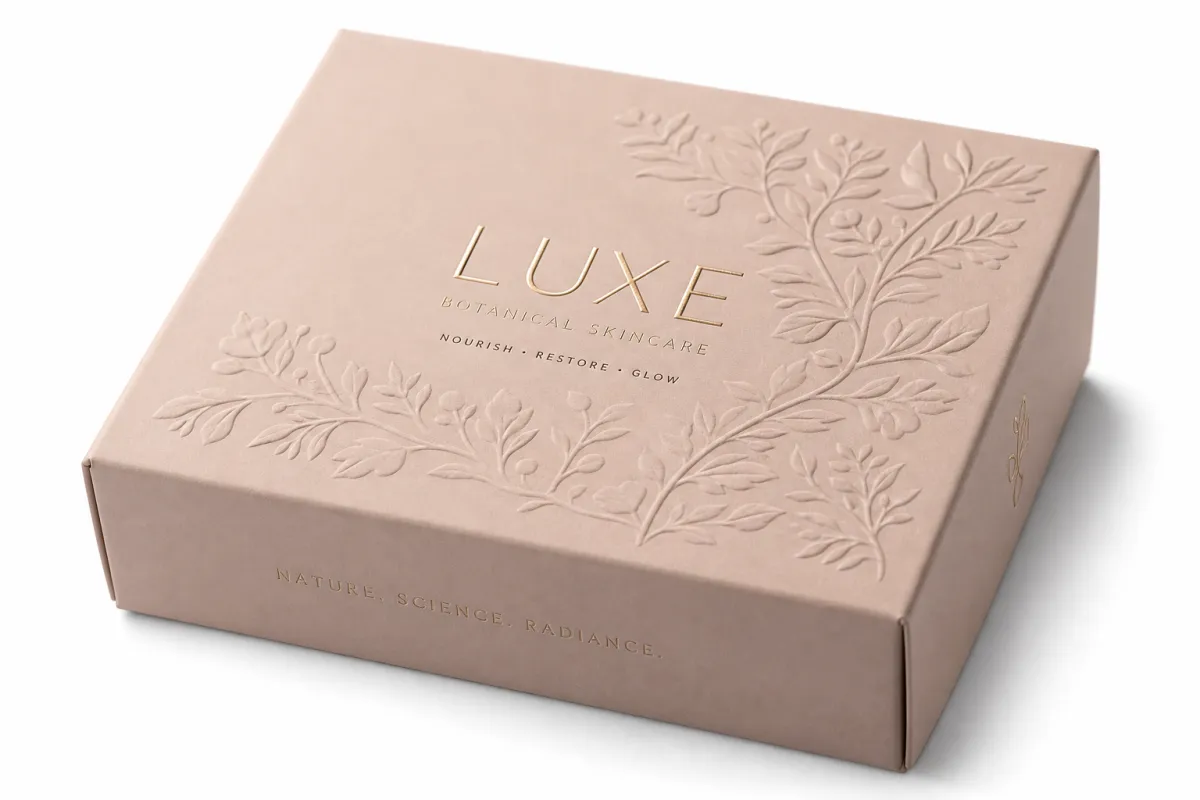
The simplest way to describe embossing is this: a die and counter-die press paperboard so a shape rises above the surface. No ink is required for the effect itself. The material becomes the message. That is why custom packaging with embossing often feels more expensive than flat print, even when the visual design stays restrained.
From a packaging buyer's point of view, the value sits in perception. Texture catches light differently across an aisle. Fingers notice the raised detail. The package asks to be handled, and that changes how the customer reads the brand. I have seen a humble blind emboss rescue a carton that looked forgettable on screen, because once the board came off the press, the depth gave the whole package a quieter authority. A carton with custom packaging with embossing rarely blends in with standard product packaging, especially if the board has a matte finish or a soft-touch coating that makes the raised area stand out even more.
It helps to separate embossing from similar finishes. Embossing raises the image. Debossing pushes the image inward. Foil stamping adds reflective metallic film, usually without changing the surface height much. Pairing foil with custom packaging with embossing creates a layered effect: the foil supplies shine, the emboss adds contour, and the package feels far more deliberate than print alone.
Premium folding cartons, rigid presentation boxes, subscription kits, cosmetic cartons, artisan food packaging, and promotional packaging all benefit from a raised design. Custom packaging with embossing is especially effective on structures with enough board strength to hold detail without spring-back. A flimsy substrate can flatten the effect, and then the whole exercise becomes costly without much return.
One detail many teams miss is hierarchy. Embossing is not only about looking premium. A raised logo, a raised product name, or a raised icon tells the eye where to go first. In custom packaging with embossing, hierarchy becomes physical. That is useful in retail packaging, where the box has only seconds to explain itself.
"The best embossing does not shout. It gives the hand something to confirm what the eye already suspects: this package was made to feel different."
For brands comparing custom printed boxes, the tactile layer can justify a higher shelf price or a better unboxing reaction. That does not mean every project needs deep relief. A shallow, clean impression often works better than a dramatic one. In custom packaging with embossing, restraint usually carries more authority than spectacle.
There is also a practical side to that restraint. A deep effect can look dramatic on a proof sheet and then start to feel heavy once it meets the actual box structure, especially if the panel is narrow or the board has a lot of memory. Subtle embossing tends to age better in production because it tolerates small shifts without losing its shape. That matters more than people think.
How Custom Packaging with Embossing Is Created
Production starts long before the press starts moving. The first step is artwork setup. Designers need a clean vector file, accurate dielines, and a clear idea of what should rise above the surface. Custom packaging with embossing depends on line quality because the tool will reproduce every weakness in the file. Tiny counters, crowded strokes, and fuzzy edges all become more obvious once pressure enters the picture.
Next comes die creation. An engraved metal die is built to match the artwork, and the counter-die is prepared so the paperboard has something to compress against. Press calibration follows. This is where the vendor tests pressure, registration, and substrate response. Even a good design can look soft if the pressure is too light or if the board is too springy. A sample strike before the full run begins is usually the safest path for custom packaging with embossing.
There are a few main approaches. Blind embossing uses the impression alone, with no ink or foil over the shape. Registered embossing aligns the raised area with printed art so the logo or icon lands exactly where intended. Multi-level embossing uses varied heights to create a more sculpted effect, though it also increases setup sensitivity. Custom packaging with embossing can use any of these methods, but each one changes the risk profile and the final look.
Pressure, heat, stock thickness, and coating all influence the final result. A coated board may hold a sharp shape differently than an uncoated one. A thicker paperboard generally gives the press more to work with. A highly flexible substrate may distort under pressure. Even die cutting nearby can affect the outcome if the emboss sits too close to a fold or score line. Good packaging design treats embossing as part of the structure, not a last-minute garnish.
Sampling matters because screens lie. A rendered mockup can suggest depth that the actual board will never carry, or the opposite can happen: a modest-looking file can turn into a very elegant raised mark once the press hits it. For custom packaging with embossing, a prototype is the quickest way to separate hope from reality. Approving the wrong version is far more expensive than spending one extra round on samples.
Brands that already have a box structure in place usually move faster. If the dieline is settled, the logo is final, and the finish stack is simple, custom packaging with embossing can be integrated without turning the project into a rebuild. If the structure is still changing, the die has to wait, and the whole schedule starts to stretch.
For teams evaluating branded packaging suppliers, ask how they handle proofing. Some vendors show digital proofs only, which helps with layout but does not say much about raised detail. Others offer a press proof or a strike on the final board. The second option gives a much clearer read on how custom packaging with embossing will perform in real production.
That proof stage is also where a good supplier earns trust. If the board choice is wrong, a decent die will not save the result. If the mark is too small, the press will not make it magically clearer. Honest feedback in this phase is worth more than polite optimism, and it usually saves the project from a bad run.
Design Factors That Control the Final Result
Embossing rewards disciplined design. If the artwork is too detailed, the impression can collapse into a soft blur. If the design is too small, the letters may lose legibility. Custom packaging with embossing works best when the shape is bold enough to survive pressure but simple enough to read instantly. Clean linework, generous spacing, and a logo or mark that does not rely on hairline detail usually perform better.
Material choice matters just as much. Thicker, more stable board generally holds a sharper impression than thin stock. Rigid board often creates a more luxurious result because it resists the press in a controlled way. Some coated stocks also perform well, but a slippery or highly flexible material can make the raised area look flatter than expected. If a package must travel through tight die cutting tolerances and still carry a crisp emboss, the board spec deserves as much attention as the graphics.
Placement strategy matters too. Centered focal elements are easier to control, while embossing near folds, seams, or glue zones can distort the design. A raised shape placed too close to an edge may look uneven after assembly. On custom packaging with embossing, safe zones matter: leave enough distance so the tool can work cleanly and the carton can still fold without stress.
There is also a tradeoff between subtle and dramatic impressions. A shallow blind emboss can feel elegant and confident. A deep, multi-level impression can look dramatic, but it asks a lot from the board and the press. More depth is not automatically better. In fact, custom packaging with embossing often looks more expensive when the detail is controlled rather than exaggerated. Precision tends to earn trust, and a design that knows where to stop usually feels more mature.
Finishes layered on top of embossing can either help or hurt. Matte varnish can support the tactile effect by reducing glare. Soft-touch lamination can make the box feel velvety, although it sometimes softens the visual contrast of the raised area if the design is not planned around it. Gloss coatings, by contrast, may make the emboss pop under retail lighting, but only if the artwork and the board are aligned properly. Custom packaging with embossing should be designed with the full finish stack in mind, not just the logo.
One practical rule works more often than not: let one strong feature carry the package. A single embossed mark paired with controlled color and a clean layout usually outperforms a crowded face covered in effects. That is true for custom printed boxes, premium kits, and many forms of retail packaging. When everything is fighting for attention, nothing feels intentional.
For product packaging that needs to communicate quality at a glance, the best use of embossing is usually a focal brand asset rather than a full-panel texture. The eye needs somewhere to rest. The hand needs somewhere to land. Custom packaging with embossing gives you both, as long as the design leaves enough breathing room.
Another design detail that gets overlooked is type size. Embossed lettering can look sharper than expected when the font has enough weight, but thin serif strokes or tiny uppercase copy can turn mushy fast. If the message absolutely has to be embossed, keep the copy short and the letterforms sturdy. That choice alone can save a lot of disappointment.
Custom Packaging with Embossing Costs and Pricing Variables
Cost is where most conversations get vague, and vague pricing causes problems. Custom packaging with embossing has several cost drivers, and each one can move the number more than buyers expect. Tooling, setup labor, press time, material grade, run length, artwork complexity, and added finishes all feed into the quote. If one vendor leaves out a line item, the quote comparison is not real.
The biggest jump usually comes from setup. Embossing requires a die, registration, and press make-ready, so short runs can feel disproportionately expensive. A simple custom packaging with embossing project for 500 or 1,000 boxes may carry a noticeably high per-unit cost because the die cost is spread over very few pieces. At 5,000 units and above, the setup burden shrinks, and the add-on becomes more manageable.
For many folding carton programs, a simple blind emboss might add roughly $0.04-$0.12 per unit at mid-volume, while a more complex registered or multi-level effect can land closer to $0.10-$0.25 per unit or more, depending on stock and press time. Tooling can range from about $150-$400 for a basic die to $500-$1,500+ for larger or more intricate work. Those are not fixed prices, but they give a realistic planning frame for custom packaging with embossing.
Design complexity has a direct budget impact. A small logo emboss is usually easier to price than a full-panel surface pattern. Multi-level embossing asks for tighter control and can add extra proofing. If the design uses foil stamping, spot UV, or heavy ink coverage alongside embossing, the production sequence becomes more demanding. That usually means more setup time and a higher chance of rework if the registration is off by even a little.
| Embossing Option | Typical Tooling Range | Typical Per-Unit Add-On | Best Fit |
|---|---|---|---|
| Blind embossing | $150-$400 | $0.04-$0.12 | Logos, icons, minimalist branded packaging |
| Registered embossing | $250-$750 | $0.06-$0.18 | Printed cartons with aligned logos or marks |
| Multi-level embossing | $500-$1,500+ | $0.10-$0.25+ | Luxury boxes, gift packaging, launch editions |
That table is a planning tool, not a promise. One vendor may quote lower tooling but higher press time. Another may bundle finishing and die cutting in a different way. To compare options fairly, ask every supplier for the same specs: board type, box style, size, artwork coverage, run quantity, and finish combination. If those inputs change from quote to quote, the comparison is not useful yet.
There is also a smart budgeting rule that saves money and usually improves the design: spend on one strong embossed focal point instead of embossing everything. That approach gives custom packaging with embossing the visual authority it needs without turning the whole box into an expensive experiment. One mark done well will outperform three marks done weakly.
For teams building a packaging budget, a few practical numbers help. If the package is a rigid presentation box with a simple logo emboss, the premium may be modest relative to the base box. If it is a complex folding carton with foil, special inks, and embossing, the finish stack can become a meaningful line item. Product packaging budgets work better when structure, print, and finishing stay in separate columns instead of getting folded into one generic number.
Industry groups such as packaging.org and substrate certification bodies like the FSC offer useful context on materials and responsible sourcing. If a packaging program also needs shipping validation, standards from the ISTA community are worth reviewing. None of that changes the emboss price directly, but it helps buyers make smarter material and transit decisions before they approve a run.
If you are sourcing from a catalog instead of starting from scratch, compare base structures first and then layer the finish choices on top. A good starting point is Custom Packaging Products, especially if you want to see which box styles can carry custom packaging with embossing without overcomplicating the build.
One caution here: a quote that looks cheap on paper can turn expensive once the board spec gets upgraded or the press time expands. That is why apples-to-apples comparisons matter so much. The number only means something when the structure, stock, and finishing steps are all locked.
Step-by-Step Timeline From Concept to Production
Custom packaging with embossing is usually a multi-stage project, not a same-week finishing choice. The timeline starts with the brief. What should the raised area communicate? A logo? A product line name? A pattern? Once that goal is clear, the team can lock the dieline, prepare the artwork, and decide where the emboss should sit. The earlier the structure is settled, the smoother the rest of the process becomes.
After the design is approved, the embossing die is made. That alone can take several business days, depending on complexity and vendor queue. Then comes the sample strike or proof. This is the moment where many projects slow down. If the sample feels too shallow, the artwork may need a revision. If the registration is off, the setup may need adjustment. Custom packaging with embossing rarely benefits from rushing this stage, because a weak proof often signals a weak production run.
A practical timeline for a straightforward project might look like this: 3-5 business days for final artwork and dieline confirmation, 3-7 business days for tooling, 2-4 business days for sample review, and 5-10 business days for production after approval. More complex programs can stretch into 4-6 weeks, especially if the box structure is new or if multiple finishes need to be sequenced. With custom packaging with embossing, the clock starts moving only after the design stops changing.
Where do delays usually happen? Late artwork revisions are the biggest culprit. Die changes are another. Sample re-approvals can also add time, especially if different stakeholders want to see the package in different lighting or with different print colors. Scheduling conflicts at the finishing press create another bottleneck, since embossing often has to be slotted into a line that is already balancing multiple jobs. If your packaging design depends on a specific paperboard grade, stock availability can add another variable.
There are ways to shorten the process without sacrificing quality. Use an existing box structure if possible. Lock the logo early. Keep the finish stack simple. Approve proofs quickly. Ask for a test on the final substrate rather than a substitute board that behaves differently. Those steps matter because custom packaging with embossing is highly sensitive to material and registration. A small decision made early can save a week later.
For retail launches, timing matters as much as appearance. If the packaging must hit a shelf reset or a seasonal campaign, build in slack. A safer plan is to think in terms of minimum and ideal timelines. Minimum timeline: enough to finish the job if nothing changes. Ideal timeline: enough to handle a sample revision without panic. That distinction keeps custom packaging with embossing from turning into a rush fee in disguise.
A useful analogy is this: print-only packaging behaves like a short sprint, while custom packaging with embossing behaves more like a relay. Artwork, tooling, proofing, production, and assembly all pass the baton to each other. If one handoff fails, the schedule slips. Good planning prevents most of that friction.
If you are coordinating across marketing, operations, and procurement, keep one person accountable for finish approval. Embossing decisions get muddy when too many opinions arrive late. A single owner does not have to make every artistic call, but someone should be responsible for freezing the file before tooling starts. That keeps the schedule honest.
Common Mistakes That Make Embossing Look Weak
The first mistake is over-detailing the artwork. Fine lines, tiny lettering, and intricate textures often look elegant on screen but collapse in the press. Custom packaging with embossing needs enough mass to survive physical pressure. If the shape is too delicate, the impression turns mushy and the whole package loses confidence.
The second mistake is choosing the wrong stock. Thin board, unstable fiber structure, or a flexible substrate can buckle instead of holding a clean rise. That problem shows up fast on custom packaging with embossing because the impression depends on resistance as much as force. A weak board gives a weak result, even if the art file is perfect.
Third, many brands crowd too many effects into one area. Embossing, foil, spot UV, heavy copy, and decorative lines all competing for the same visual space can create a cluttered panel. On custom packaging with embossing, less clutter usually means more impact. The raised area needs room to breathe, both visually and physically.
Another common issue is ignoring folds and glue zones. If the emboss sits too close to a crease, the final assembled box may distort the shape. That is especially true for custom printed boxes with intricate layouts. A design that looks aligned in flat art can shift after die cutting and folding. Physical structure wins over screen assumptions every time.
Skipping physical proofs is a gamble. A digital mockup cannot show how the board reacts under pressure. It cannot reveal whether a soft-touch coating mutes the detail or whether the logo feels too small once it is raised. Custom packaging with embossing needs material testing because tactile finishes are sensitive to the real substrate. A proof is not a luxury; it is insurance.
Finally, some teams flatten the brand hierarchy by embossing everything. When every element is raised, nothing feels special. The package loses focus. A strong custom packaging with embossing strategy usually reserves the effect for the most important brand cue and lets the rest of the design support it. That is true whether the package is for cosmetics, specialty foods, or a premium launch kit.
In most cases, weak results are not caused by the press. They come from choices made before the press ever runs. Better artwork, better material, better spacing, and better proofing solve most of the problem before it becomes expensive.
There is a reason experienced packaging teams keep the first revision simple. Every added flourish creates another place for the impression to get lost. If the idea works in its cleanest form, it usually works in production. If it only works when everything is exaggerated, the design probably needs another pass.
Expert Tips and Next Steps for Better Embossing
Use one focal texture and give it room. That is the simplest rule, and it works because embossing is strongest when it feels intentional. Custom packaging with embossing does not need to dominate every surface. A single raised mark, placed with care, often says more than a whole panel of decoration.
Pair the finish with controlled color. A matte field, restrained palette, or subtle foil accent can make the raised area easier to see and feel. If the artwork is too busy, the emboss gets lost. If the package is too glossy, the light can work against the contour. The right balance makes custom packaging with embossing look cleaner and more expensive than a louder design would.
Ask for a sample on the final substrate, not a substitute. That one step avoids a lot of false confidence. A paperboard that behaves beautifully in a test room may act differently once a coating, ink layer, or structural fold is introduced. For custom packaging with embossing, the final board tells the truth.
Use a comparison checklist before you approve a vendor. Keep the questions short and concrete:
- What is the tooling cost?
- What is the minimum order quantity?
- How long does the proofing step take?
- Is the embossing registered, blind, or multi-level?
- Will the finish work with the chosen board and coating?
- Is the quote based on the same dieline and carton size?
If the answers do not line up, the quote is not useful yet. That sounds simple, but it saves real money. A brand that plans custom packaging with embossing should compare suppliers by spec, not by marketing language. One vendor may sound cheaper because the setup is incomplete. Another may appear expensive because the quote includes tooling, proofing, and finishing in one number.
For the next step, audit the current package and choose one high-value SKU. Do not start with every product at once. Test one box, one logo, one finish stack. Then review the sample under actual retail lighting, not just on a desk under office fluorescents. The difference can be dramatic. What looks crisp in a studio may read softly on shelf, and custom packaging with embossing is all about how the package performs in the real viewing environment.
If the result is strong, scale from there. If it is not, adjust the size, placement, or stock before rolling out the full line. That is the practical side of packaging design: small tests save larger mistakes. Custom packaging with embossing rewards that discipline.
One more point matters. The best programs do not treat embossing as an isolated trick. They connect it to the brand story, the box structure, the material choice, and the unboxing sequence. That is where custom packaging with embossing becomes more than a finish. It becomes part of package branding, and that shift is usually what separates a decent box from a box people remember.
The real takeaway is straightforward: pick one clear message, choose a board that can hold it, prove the finish on the final substrate, and budget with the tooling and setup costs in view from the start. Do those four things well, and custom packaging with embossing stops feeling like a risky add-on and starts acting like a controlled design decision.
FAQ
What is custom packaging with embossing?
It is packaging finished with a raised design pressed into the material, usually to highlight a logo, name, icon, or pattern. The effect is tactile first and visual second, which is why custom packaging with embossing often feels more premium than flat print alone. It works especially well on cartons and rigid boxes where the board has enough structure to hold the impression.
How is custom packaging with embossing different from debossing?
Embossing raises the design above the surface, while debossing pushes the design into the material. Embossing usually reads as more attention-grabbing from a distance; debossing can feel quieter and more understated. Both can work well, but the best choice depends on the brand mood, material thickness, and how much contrast you want in the final custom packaging with embossing program.
What materials work best for custom packaging with embossing?
Thicker paperboard, rigid board, and other stable substrates usually hold the cleanest detail. Very thin or flexible materials can wrinkle, flatten, or distort the raised area during pressing. A sample test is the safest way to confirm whether the chosen stock will keep custom packaging with embossing crisp after production.
How much does custom packaging with embossing usually cost?
Cost depends on tooling, setup, material, run length, and whether the embossing is blind, registered, or combined with another finish. Short runs usually cost more per unit because setup is spread across fewer boxes. A simple, single-element emboss is usually less expensive than a large or multi-level custom packaging with embossing design.
How long does custom packaging with embossing take to produce?
Expect extra time for die-making, sampling, and approval compared with standard print-only packaging. The timeline varies with artwork readiness, vendor queue, and how quickly proofs are approved. Moving fast is easier when the dieline is locked early and the custom packaging with embossing finish stack does not need multiple revisions.
Can embossing work on small packaging runs?
Yes, but the unit cost usually rises because tooling and setup are spread across fewer boxes. That does not make small runs a bad idea; it just means the budget has to be realistic. For launch tests, special editions, and short seasonal runs, custom packaging with embossing can still make sense if the finish is reserved for one focused area.
Does embossing always need foil or ink?
No. Blind embossing uses shape alone, and that often gives the cleanest result. Foil and ink can add contrast, but they are not required. In many cases, the most elegant custom packaging with embossing is the one that relies on pressure, light, and strong board rather than extra decoration.
Custom packaging with embossing is worth serious consideration when a brand needs more than a printed surface. It adds touch, hierarchy, and perceived value, but only if the artwork, board, proofing, and budget are handled with discipline. The strongest results come from clear design choices, realistic pricing expectations, and a production plan that respects how the material behaves. Done well, custom packaging with embossing gives the box a physical voice, and that voice can carry a brand a lot further than flat print alone.

