Buyer Fit Snapshot
| Best fit | Custom Packing Inserts Wholesale for Safer Shipments projects where brand print, material claims, artwork control, MOQ, and repeat-order consistency need to be specified before quoting. |
|---|---|
| Quote inputs | Share finished size, material target, print colors, finish, packing count, annual reorder estimate, ship-to region, and any compliance wording. |
| Proofing check | Approve dieline scale, logo placement, barcode or warning zones, color tolerance, closure strength, and carton packing before bulk production. |
| Main risk | Vague material claims, crowded artwork, missing packing details, or unclear freight terms can make a low unit price expensive after revisions. |
Fast answer: Custom Packing Inserts Wholesale for Safer Shipments should be specified like a repeatable production item. The safest quote records material, print method, finish, artwork proof, packing count, and reorder notes in one written spec.
Production checks before approval
Compare the actual filled-product size with the drawing, then confirm tolerance on folds, seals, hang holes, label areas, and retail display edges. Reserve space for logos, QR codes, warning copy, and material claims before decorative graphics fill the panel.
Quote comparison points
Review material grade, print process, finish, sampling route, tooling charges, carton quantity, and freight assumptions side by side. A quote is only useful when the supplier can repeat the same color, closure quality, and packing count on the next order.
Custom packing Inserts Wholesale for Safer shipments matters because damage usually starts quietly. A box can survive the drop and still arrive with a scuffed finish, a crushed corner, a loose accessory, or a product that spent the whole ride rubbing itself raw. That is why custom packing inserts wholesale is not about stuffing empty space. It is about stopping movement, protecting presentation, and keeping every pack-out consistent.
From a packaging buyer's seat, the right insert does a lot of boring work very well. It keeps the product where it belongs, makes retail packaging look intentional, and gives branded packaging a cleaner finish. Whether the job is custom printed boxes, a premium kit, or a mixed-component shipment, the insert should protect the product, speed up packing, and make the unboxing feel deliberate instead of improvised.
Custom packing inserts wholesale is also a sourcing decision. Material selection, die complexity, minimum order quantity, freight, and storage all shape the real cost. Buyers who understand those pieces can pick an insert that fits the product, the carton, and the budget without crossing their fingers and hoping for the best. I have seen plenty of teams learn that lesson the hard way after one ugly return wave. It gets expensive fast, and the cardboard does not magically fix itself.
Why Custom Packing Inserts Wholesale Reduces Damage Fast
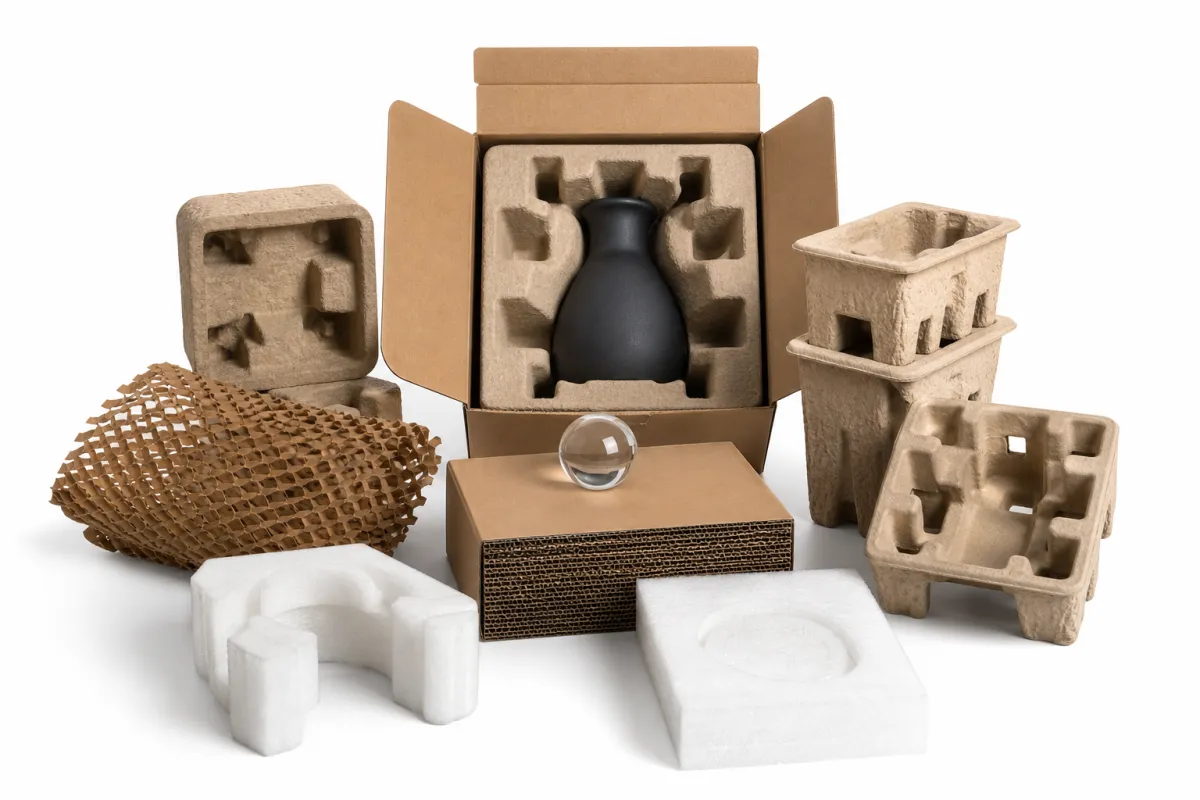
Most people picture damage as a dramatic impact. The real culprit is usually smaller. A bottle shifts and rubs a divider. A metal part slides into a corner. A cosmetic jar flexes against another item and scratches its own label. Ordinary transit does that. Nothing exotic required. That is exactly where custom packing inserts wholesale earns its keep.
The insert has one job before all the pretty packaging language kicks in: hold the product still. Once the item cannot move freely, edge wear drops, corner crush becomes less likely, and the load stays aligned. That matters for single-item shipping. It matters even more for multi-piece kits, where one loose part can chew up another by the time the box reaches the customer. A proper insert creates fixed cavities, separates components, and keeps the package behaving the same way every time.
The business side is just as blunt. Fewer returns mean fewer replacements, fewer reships, and less support time spent arguing with damaged goods. It also cuts the hidden labor that eats up a packing line. If people are stuffing in extra void fill, taping in dividers, or rewrapping fragile pieces by hand, the process slows down and the standard drifts. Custom packing inserts wholesale removes a lot of that mess.
Picture a premium kit with several parts and different surface finishes. The outer carton can look spotless while the interior quietly ruins the experience. The same thing happens with glassware, electronics accessories, medical device components, and machined parts with polished surfaces. The box did its job. The inside did not. A controlled insert stops that chain reaction before it starts.
I prefer to treat custom packing inserts wholesale as a protective component, not filler. Good inserts protect, organize, and improve presentation at the same time. That combination is what makes them useful at scale. A package that ships cleanly and opens cleanly is easier to trust, easier to receive, and easier to reorder.
Teams that track damage rates usually spot the pattern fast. Once the right insert is in place, corner dings drop, scuffing falls off, and the pack-out becomes repeatable. The fix is not always complicated. A two-cavity corrugated insert, a molded pulp tray, or a die-cut paperboard cradle can be enough to turn a fragile shipment into a stable one. That is the practical side of custom packing inserts wholesale.
And yes, sometimes the simplest fix wins. Fancy is overrated if the product still rattles around like loose change in a glove box.
Product Types for Custom Packing Inserts Wholesale Orders
Custom packing inserts wholesale covers a wide range of structures. The right one depends on what the product needs during transit. Weight matters. Surface finish matters. Fragility matters. So does how many pieces sit inside the shipper and whether the package needs to look good on a retail shelf or just survive the ride.
Die-cut paperboard works well for lighter products, display-focused packaging, and brand-forward presentations. It can be printed, folded precisely, and paired with custom printed boxes for a cleaner retail look. For cosmetics, small electronics, and accessory kits, paperboard inserts often provide enough support while keeping the package light and polished. They also fit nicely into branded packaging programs that want a neat interior finish.
Corrugated inserts are the workhorse. They are versatile, cost-conscious, and good at handling weird shapes. A corrugated insert can create dividers, trays, pads, and layered structures that protect glassware, hardware kits, and multi-item shipments. If the product needs more crush resistance than paperboard can offer, corrugated usually moves to the top of the list pretty quickly.
Molded pulp is often chosen for programs that want a recycled look and a more eco-minded story. It performs well for certain fragile items, especially where the product needs a shaped cradle instead of a flat divider. The molded fiber surface also suits brands that want a natural finish without heavy print. That can help in product packaging where sustainability messaging is part of the sale.
Foam options, including polyethylene and EVA styles, come into play when cushioning, vibration control, or surface protection matters more than visual finish. Foam can be the right answer for precision parts, sensitive electronics, or products with polished surfaces that cannot tolerate rub marks. It is not the best answer for every brand, but in the right application it gives very reliable anti-shift protection.
Hybrid designs mix materials to solve mixed problems. A common setup is a corrugated base with a die-cut paperboard top, or a molded pulp tray paired with a divider. That kind of structure helps when one product needs both presentation and shock control. In real packaging design, hybrid construction often gives the best balance of cost, performance, and appearance.
The right material is not chosen by habit. It is chosen by the product and the shipping path. A subscription box shipping light apparel is a very different animal from a glass bottle set, and both are different again from machined industrial parts. Custom packing inserts wholesale works best when the insert is matched to the load instead of copied from last quarter’s project.
For buyers comparing custom packing inserts wholesale options, four questions usually narrow the field fast: How heavy is the product? How fragile is the finish? Does the package need retail presentation? How much room is available inside the outer carton? Those answers point in the right direction faster than a stack of generic recommendations ever will.
Specifications to Confirm Before You Order
Fit decides whether custom packing inserts wholesale works or fails. A strong insert still underperforms if the cavity is too loose, the wall clearance is too tight, or the product is loaded differently on the floor than it was during sampling. The spec sheet needs to be practical, not vague.
Start with dimensions. Measure the product at its widest, tallest, and deepest points. Then note any protrusions such as caps, handles, connectors, or labels that should not be compressed. Add the outer carton size, internal clearance, and desired wall thickness. For die-cut paperboard or corrugated structures, a 1-3 mm tolerance can matter a lot, especially on small-format packaging. For foam or molded pulp, cavity depth and lead-in shape matter just as much.
Compression resistance needs to be clear too. If the package will be stacked in a warehouse or palletized for freight, the insert should help the carton hold shape. That means looking at board grade, flute selection, density, and the overall pack structure. A single-wall corrugated insert may be fine for a light kit shipping by parcel. A heavier bottle set may need stronger board or a different cavity layout entirely.
Environmental conditions belong in the brief. Does the shipment travel through humidity, cold storage, or long cross-country routes? Does the product sit in a hot truck or a damp distribution center before delivery? Paperboard and molded fiber behave differently under moisture exposure, and foam or coated structures react differently to temperature swings. Put those details on the table before the final quote gets approved.
Sample testing beats guesswork every time. A prototype should be checked for fit, loading speed, and movement inside the carton. If the item shifts even a little, the design needs another pass before full production. Many buyers also use transit testing modeled on ISTA test methods or relevant ASTM guidance to confirm the insert stands up to real shipping abuse. That is the cleanest way to review custom packing inserts wholesale before the money leaves the account.
The loading sequence matters more than people admit. Some inserts only work if the product is inserted upright. Others need accessories, manuals, or sleeves loaded in a specific order. If the line crew has to improvise, consistency falls apart. The better custom packing inserts wholesale projects document the pack-out step by step, so the insert maker can design around the way the carton is actually closed and sealed.
Helpful specs to send before quoting:
- Product dimensions and weight
- Outer carton size and board style
- Fragile surfaces, coatings, or exposed edges
- Target shipping method, such as parcel or freight
- Quantity forecast and expected reorder frequency
- Whether the insert needs print, branding, or a natural finish
Custom Packing Inserts Wholesale Pricing and MOQ
Pricing for custom packing inserts wholesale depends on more than material thickness. The quote usually reflects geometry, tooling, print coverage, order volume, packaging dimensions, and the level of protection the buyer wants. A simple insert for a light retail item may cost a fraction of a more complex multi-cavity structure, even before freight shows up.
Minimum order quantity matters because setup costs have to be spread across the run. Once a die is made, a cutting form is prepared, or a production line is set, the per-unit cost improves as the quantity rises. That does not mean the biggest order is the best order. It means buyers should match the run size to forecasted demand, storage space, and the risk tolerance of the supply chain. For many brands, phased purchasing is safer than one giant commitment.
Here is a practical snapshot of what a buyer may see in the market for custom packing inserts wholesale. These are working ranges, not fixed prices, because material grade and geometry can move a quote either way:
| Insert Type | Typical Use | Relative Price at 5,000 Units | Protection Level | Notes |
|---|---|---|---|---|
| Die-cut paperboard | Retail packaging, lightweight kits, branded packaging | $0.16-$0.32 per unit | Light to moderate | Good for clean presentation and simple geometry |
| Corrugated insert | Shipping protection, dividers, multi-item shippers | $0.20-$0.40 per unit | Moderate to high | Versatile and efficient for many product packaging needs |
| Molded pulp tray | Eco-forward programs, shaped cradles, protective nests | $0.28-$0.55 per unit | Moderate | Often used where recycled content and natural look matter |
| Polyethylene or EVA foam | High-value goods, vibration control, surface protection | $0.35-$0.90 per unit | High | Best for delicate finishes and precision fit applications |
| Hybrid insert | Mixed needs, premium kits, custom printed boxes | $0.30-$0.75 per unit | Moderate to high | Balances presentation, structure, and cushioning |
Those numbers can move fast if the design is unusually deep, the print coverage is heavy, or the insert needs nested parts. Tooling can change the picture too. A simple die is modest. A specialized setup for molded fiber or multi-piece foam can push upfront costs higher. That is why comparing only the unit price gives a false sense of control.
Better savings usually come from simplifying the design. Straighten a contour. Reduce the number of cavities. Standardize carton sizes. Cut back on print coverage. Those moves can lower cost without harming performance. Some brands also do better by ordering in forecasted batches instead of one emergency run. That gives the supplier cleaner production planning and can lower the unit price on custom packing inserts wholesale.
Freight and storage matter too. A low unit price can turn expensive if the insert ships inefficiently or eats warehouse space. The number that tells the truth is the landed cost: unit price, setup, freight, and any storage or handling charges. That is the real answer for custom packing inserts wholesale.
Process and Timeline for Custom Packing Inserts Wholesale
A clean workflow keeps custom packing inserts wholesale from turning into a back-and-forth guessing match. The usual path starts with a product review, moves into material recommendation, then concept development, sample approval, and production. Buyers who show up with the right information on day one usually get there faster.
The first step is a real product review, not a napkin sketch with optimism attached. The supplier should see the item itself, or at least get accurate dimensions, photos from several angles, and notes about fragile areas. If the product has a special finish, an exposed lens, a painted edge, or a part that must stay untouched, say so early. The same goes for carton size and shipping method.
From there, the insert maker can recommend materials and a structure that actually matches the job. This is where experience pays for itself. A good partner looks at protection, manufacturability, and packing speed together. The smartest solution is not always the fanciest one. It is the one that can be built repeatably and packed at line speed without drama.
Samples or prototypes usually come next. That step should include a fit check, a loading check, and a real look at how the product sits after the box is sealed. If there is movement, the prototype should be adjusted before production starts. In many projects, one revision is normal. More than that usually means the original data was incomplete or the loading process needs to be documented better.
Timing depends on design complexity and material availability. A straightforward custom packing inserts wholesale project may move from concept to sample in a short window, while a more specialized run with custom tooling or multiple revisions can take longer. Production scheduling also depends on queue position, print requirements, and whether the material is already in stock. Freight method matters too. Air shortens delivery time. Ocean or ground freight stretches the timeline.
Communication checkpoints keep surprises out of the room. Buyers should expect to review drawings, confirm sample approval, and sign off on pack-out testing before volume begins. That keeps the order controlled and reduces late-stage changes. It also saves a lot of pain when the sample looked fine but the warehouse pack-out did not match reality.
For companies using broader sourcing strategies, it helps to coordinate inserts with the rest of the package system. Our Wholesale Programs page is useful for larger recurring orders, and Custom Packaging Products shows where inserts fit alongside other packaging components. That context matters because custom packing inserts wholesale works best as part of a complete packaging design, not as a lonely add-on.
Well-prepared projects move faster. When the insert maker gets product samples, carton specs, quantity targets, and a clear shipping goal, the design can be built for protection and manufacturability from the start. That is the fastest route to reliable custom packing inserts wholesale.
Why Choose Us for Custom Packing Inserts Wholesale
Custom Logo Things is a practical manufacturing partner for custom packing inserts wholesale, and that matters because packaging buyers need more than a pretty mockup. They need a structure that fits the product, survives transit, and can be produced consistently when the reorder lands. The focus should be fit, protection, and repeatable production, not flashy promises that fall apart on the first shipping test.
What buyers should expect from a serious partner is plain guidance. If the product is better served by corrugated, molded pulp, paperboard, or foam, that should be said clearly. If the carton needs a different cavity layout, that should be explained in normal language. Good packaging design is not about making every order complicated. It is about making the right choices early so the line runs smoothly later.
Shipping conditions are rougher than a desk sample makes them look. Packages get vibrated in transit, stacked in warehouse lanes, tipped by handlers, and corner-loaded by the carton above them. That is why custom packing inserts wholesale should be designed around actual movement. The insert has to hold the item during small impacts, not just look accurate in a mockup.
A clean insert is not decoration. It is part of the shipping system, and if it is built well, the customer never has to think about it.
Responsiveness matters too. Buyers move faster when quoting is clear, the material recommendation is honest, and sample revisions are handled without confusion. If the first concept needs an adjustment, that is normal. What matters is whether the supplier can move quickly and keep the project on track. That matters even more for seasonal launches, new product packaging programs, and branded packaging updates that cannot slip.
There is a balance problem many companies get wrong. They want stronger protection, better presentation, and lower cost all at once, but they never decide which one matters most. A good supplier helps sort that out. If presentation is the priority, the insert should support presentation. If damage reduction is the priority, the structure should be built around protection first. If the target is a retail shelf, then branded packaging and package branding need to show up in the structure and finish. That is the practical side of custom packing inserts wholesale.
For teams already using custom printed boxes or broader retail packaging programs, inserts should reinforce the look instead of fighting it. A well-chosen insert can keep a product centered, frame the opening, and create a more polished presentation without adding unnecessary weight. That is usually the difference between an average shipment and one that feels considered from the first unseal.
Honestly, the best sign of a strong custom packing inserts wholesale partner is not what they promise on the first call. It is how clearly they talk about tolerances, material behavior, and pack-out realities. That kind of practical thinking keeps a packaging program stable when volume picks up.
For sustainability-minded programs, it also helps to think about recognized standards and material sourcing. Resources from the EPA recycling guidance and certification paths through FSC can support decisions around recycled content and responsibly sourced paper-based materials. That matters for buyers comparing options in custom packing inserts wholesale and trying to align packaging choices with corporate goals.
Next Steps for Custom Packing Inserts Wholesale Buyers
If you are ready to source custom packing inserts wholesale, the smartest next move is to gather a simple spec sheet before asking for quotes. Start with product dimensions, product weight, outer carton size, and the number of pieces that need to stay put. Add photos if you can. A visual reference catches things numbers miss. A cap, a nozzle, a cord, or a decorative finish can change the design more than people expect.
Next, define the damage risks. Is the concern edge wear, vibration, corner crush, scuffing, or component separation? That answer drives material selection right away. A product that only needs to stay centered may do fine in paperboard or corrugated. A heavier or more delicate item may need molded pulp, foam, or a hybrid structure. A clear risk profile keeps the quote focused.
Then decide what the package needs beyond protection. Does the unboxing need to support retail packaging? Does the insert need to match custom printed boxes or a premium branded packaging look? Does the buyer want a natural, uncoated appearance, or a cleaner white surface that supports package branding? Those choices belong in the brief, not in the revision round.
Order a sample or prototype whenever the product is valuable, fragile, or hard to pack. One fit check can save a lot of money later. It also reveals loading speed, which matters more than many teams admit. An insert that protects well but slows the packing line can still be the wrong insert for a busy operation. Custom packing inserts wholesale should work in the warehouse as well as in the lab.
Compare quotes on more than unit price. Review material grade, tolerances, lead time, freight impact, and whether setup charges are included. If one quote is lower because the material is thinner or the fit is looser, that quote is not really cheaper. The landed cost is the number that matters, and the landed cost tells you whether the insert actually supports the business.
Use the next quote request to be specific. If you are asking for custom packing inserts wholesale, state the quantity target, the material preference, the shipping destination, and the timeline pressure. That gives the supplier enough context to recommend a structure that protects the product without piling on unnecessary cost. It is a better way to buy, and it usually produces a better result.
Once those details are in hand, you can move with confidence. The right insert is not a generic add-on; it is a controlled part of the pack-out system, and the best custom packing inserts wholesale programs are built with that mindset from the start.
Frequently Asked Questions
What should I send when requesting custom packing inserts wholesale pricing?
Send product dimensions, product weight, outer carton size, target quantity, and photos or a sample if possible. If the item has fragile surfaces, multiple parts, or a preferred finish, include that too. The more complete the spec, the more accurate the quote and lead time for custom packing inserts wholesale.
How do custom packing inserts wholesale orders affect per-unit cost?
Per-unit cost usually drops as volume rises because setup and tooling get spread over more pieces. Complex die-cuts, thicker boards, heavier print coverage, and special materials increase cost, while simpler geometry lowers it. Freight and storage should also be included when comparing custom packing inserts wholesale landed cost.
Which material is best for custom packing inserts wholesale shipments?
The best material depends on the product. Corrugated is versatile, molded pulp works well for eco-forward programs, foam gives strong cushioning, and paperboard suits retail presentation. The safest way to confirm the choice is to test the product inside the actual carton before committing to custom packing inserts wholesale.
How long does it take to produce custom packing inserts wholesale?
Timeline depends on design complexity, sample approval, material availability, and order quantity. Projects move faster when measurements, carton details, and product samples are ready at the start. Prototype approval usually saves time later by cutting down on revisions in full production, which is why organized buyers get better results from custom packing inserts wholesale.
Can custom packing inserts wholesale help reduce returns?
Yes. A well-fitted insert limits movement, absorbs impact, and reduces scuffing and corner damage during shipping. It also improves pack-out consistency, which helps quality control across orders. Lower damage rates usually mean fewer replacements, fewer customer complaints, and a stronger case for custom packing inserts wholesale.
If you want safer shipments, cleaner presentation, and a more predictable pack-out process, start with the dimensions, define the risk, and build the spec with care. That is the most reliable way to buy custom packing inserts wholesale, and it keeps the whole packaging system from getting kind of stupid later.

