Buyer Fit Snapshot
| Best fit | custom molded pulp inserts wholesale for safer shipping for packaging buyers comparing material specs, print proof, MOQ, unit cost, freight, and repeat-order risk where brand print, material, artwork control, and repeat-order consistency matter. |
|---|---|
| Quote inputs | Share finished size, material target, print colors, finish, packing count, annual reorder estimate, and delivery region. |
| Proofing check | Approve dieline scale, logo placement, barcode or warning zones, color tolerance, and any recyclable or compostable wording before bulk production. |
| Main risk | Vague material claims, crowded artwork, or missing packing details can create delays even when the unit price looks attractive. |
Fast answer: Custom Molded Pulp Inserts Wholesale for Safer Shipping should be specified like a repeatable production item. The safest quote includes material, print method, finish, artwork proof, carton packing, and reorder notes in one written spec.
What to confirm before approving the packaging proof
Check the product dimensions against the actual filled item, not only the sales mockup. Ask for tolerance on folds, seals, hang holes, label areas, and retail display edges. If the package carries a logo, QR code, warning copy, or legal claim, reserve that space before decorative graphics fill the panel.
How to compare quotes without losing quality
Compare board or film grade, print process, finish, sampling route, tooling charges, carton quantity, and freight assumptions side by side. A lower quote is only useful if the supplier can repeat the same color, closure quality, and packing count on the next order.
Custom Molded Pulp Inserts Wholesale for Safer Shipping
Cheap foam looks harmless on a quote sheet. Then a shipment gets crushed, a corner breaks, and the “savings” turn into replacements, complaints, and a few ugly emails nobody wants to answer. That is the basic math behind Custom Molded Pulp Inserts wholesale. Buyers keep choosing it because it protects the product, looks more intentional, and avoids stuffing every carton with plastic filler that nobody asked for.
Good packaging does three jobs at once. It keeps the product from moving, takes the hit when transit gets rough, and fits the box without making the whole pack-out feel flimsy. Custom Molded Pulp Inserts wholesale works well because the insert can be built around the product instead of forcing the product into a generic shape. That matters in product packaging, and it matters even more in retail packaging where the first impression can affect returns, reviews, and reorder rates.
Brands that care about branded packaging usually land on molded pulp for a reason. It looks cleaner than loose-fill. It behaves better than brittle foam in real shipping conditions. It also avoids the messy, throwaway look that makes a customer wonder whether the box was assembled in a rush.
I have opened enough busted cartons to know the pattern. The product usually did not fail because the item was fragile. It failed because the pack-out left too much room to move, or the insert was too soft, or the carton was sized by someone who clearly never saw the thing ship. That kind of mistake is boring. It is also expensive.
Why custom molded pulp inserts wholesale beats cheap foam
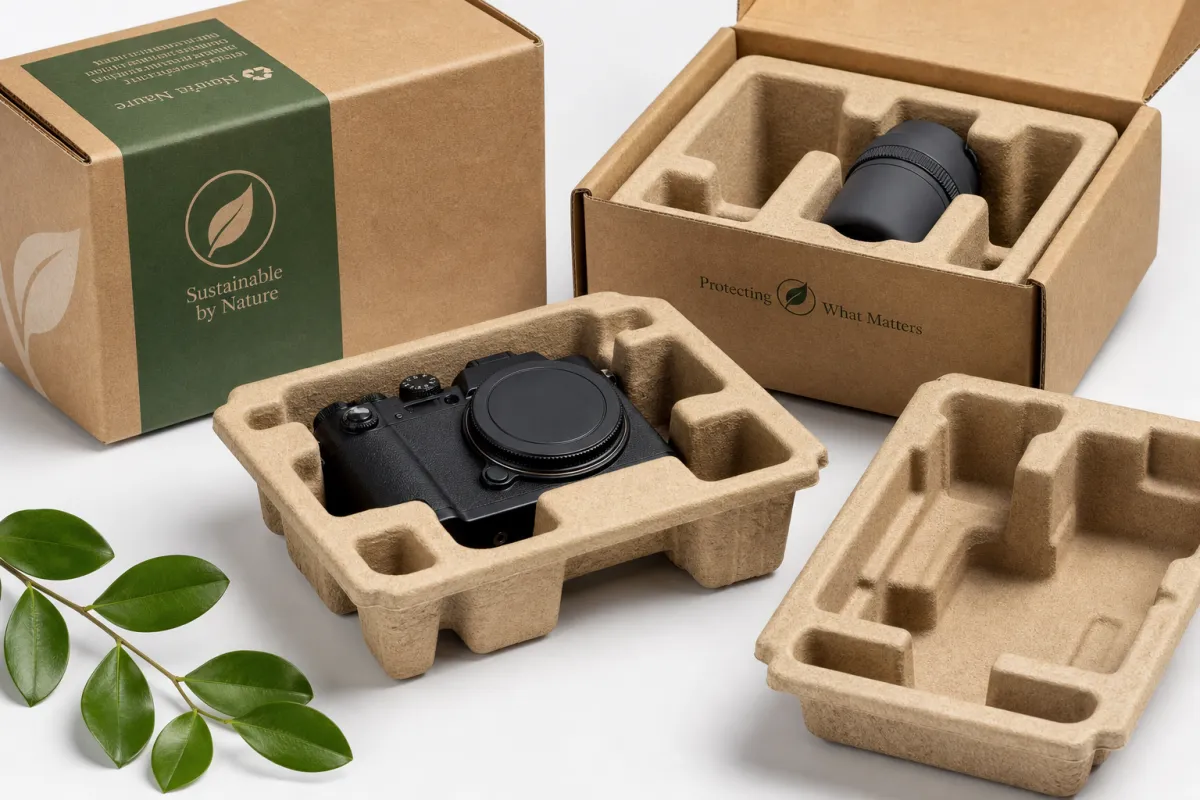
Cheap foam has one job, and even that job gets shaky in the wrong carton. It can cushion, sure. It can also collapse at the edges, shift under stack pressure, or leave the product rattling after a long freight run. Custom Molded Pulp Inserts wholesale usually wins when the product needs a shaped cradle instead of soft padding that hopes for the best.
Molded pulp gives tighter control over shock absorption and product fit. The cavity is formed to the item, so movement drops fast. Less movement means fewer scuffs, fewer corner hits, and fewer “opened fine, arrived broken” conversations. That saves money, reputation, and a lot of pointless back-and-forth. For electronics, cosmetics, candles, glass, small appliances, and display-ready kits, custom molded pulp inserts wholesale usually makes more sense than chasing the lowest foam price.
Presentation matters too. Foam can work, but it often looks like the cheapest part of the box. Molded pulp feels more finished, especially when the outer carton already carries the visual load. Pair it with custom printed boxes or a matte retail carton and the whole opening experience holds together. Customers notice that. They may not name the insert, but they absolutely feel the difference.
Cheap inserts stop being cheap the second they trigger claims, replacements, or a second shipment. The insert is a small line item. The mess it creates is not.
There are limits. Custom molded pulp inserts wholesale is not the right fit for every oily, moisture-sensitive, or high-gloss product. If the item stains easily or picks up texture from fiber, you may need a liner, a poly bag, a coated surface, or a different pack structure. That is not a flaw. It is just packaging doing actual work instead of pretending every product behaves the same.
For brands trying to cut waste, molded pulp is also easier to defend than many plastic alternatives. If sustainability claims matter to your team, use source material from the EPA recycling guidance and the fiber sourcing rules used by the FSC. Real references beat vague green talk every time.
- Best fit: fragile, fixed-shape products that need accurate cavity support
- Strong point: better stability than loose-fill and a cleaner look than blocky foam
- Watch out for: wet, oily, or stain-prone products without a barrier layer
What custom molded pulp inserts are made to do
Custom molded pulp inserts wholesale starts with fiber, not magic. The base material is usually recycled paper fiber, though some jobs use bagasse, bamboo fiber, or virgin pulp when the buyer wants a cleaner white finish or tighter appearance control. Material choice changes strength, color, surface feel, and cost. It also changes how the insert handles compression and humidity, which is where a lot of weak pack-outs quietly fall apart.
The forming method matters too. Transfer molded inserts are common for protective trays and shapes that do not need a showy surface. Thermoformed fiber gives a smoother, more refined face and is often used when the insert is visible through the box opening. Thicker protective formats are better for heavier products, deeper cavities, or parts that need a firmer cradle. When buyers ask for custom molded pulp inserts wholesale, they are really asking for the right material and the right forming method for the actual product risk.
Typical shapes include trays, end caps, corner protectors, suspended nests, clamshell-style holders, and multi-cavity assemblies. Those are not just different looks. Each one solves a different shipping problem. End caps help when the product has to survive edge impact. Trays work when the item needs a fixed bed inside the carton. Suspended nests help when fragile faces cannot touch the outer walls. Custom molded pulp inserts wholesale gives buyers options, but the right option depends on the product and the carton together, not one after the other.
Finish and branding options are more limited than with a printed carton, but there is still room to work. Natural gray is common for recycled fiber. Tan gives a warmer feel. White supports higher-end retail packaging where the insert shows during opening. A smoother visible face usually costs more, and light embossing can add a logo, SKU code, or simple identifier. That helps when package branding includes the part inside the box, not just the outside of it.
For teams building a full packaging system, I usually tell them to check the insert alongside the carton, labels, and any protective accessories. If the whole pack-out is being redesigned, our Custom Packaging Products page is a better starting point than treating the insert like a random accessory. That is how buyers avoid mismatched parts and avoid paying twice for the same mistake.
Common material options are listed below with the kind of buyer each one usually serves:
- Recycled paper fiber: cost-efficient, widely used, good for general shipping protection
- Bagasse: useful when a smoother natural look or different fiber profile is preferred
- Bamboo fiber: chosen less often, but useful for certain appearance and sustainability briefs
- Virgin pulp: cleaner surface and more consistent appearance, usually at a higher cost
Custom molded pulp inserts wholesale specifications to lock down
The easiest way to wreck a molded pulp project is to start with the insert drawing instead of the product. That is backwards. With custom molded pulp inserts wholesale, the supplier needs exact product dimensions, weight, center of gravity, and fragile points before cavity decisions make sense. A 150 g cosmetic device and a 1.2 kg glass item are not just different weights. They need different wall thickness, different lip support, and different compression behavior.
Start with the basics. Send the product length, width, height, and actual weight. Add photos from multiple angles and note what protrudes, what dents easily, and what should never touch the carton. If the item ships inside another branded carton, include that carton size too. Custom molded pulp inserts wholesale works best when the insert and the outer box are engineered together. If the box is too loose, the insert does not carry the full load. If the box is too tight, the pack-out turns into a fight.
Then define your tolerance stack. That means cavity depth, wall thickness, lip height, nesting clearance, and how firmly the product should sit. A good molded pulp insert does not clamp the item so hard that packing slows to a crawl. It also does not leave enough room for the product to rattle. Buyers who source custom molded pulp inserts wholesale often underestimate this part, then act shocked when a tiny tolerance change creates a big fit problem.
Performance requirements should be written before tooling starts. Ask for a drop-test target, a compression requirement, and a humidity expectation if the product will sit in storage or move through long freight lanes. For validation, many buyers use ISTA test methods or an ASTM D4169-style distribution check. That keeps the conversation on transit behavior instead of guesswork. If a supplier cannot talk clearly about those tests, that is a warning sign.
Cosmetic requirements matter too. If the visible face shows through a window box or open-top carton, specify smoothness, visible fiber limits, and color consistency. Some buyers want the shelf-facing side cleaner than the hidden side. Others want embossing for SKU identification. Those choices change tooling and cost, which is why custom molded pulp inserts wholesale needs a real brief before anyone starts quoting.
Lock these details before asking for a quote:
- Product dimensions, actual weight, and fragile points
- Outer carton dimensions and pack orientation
- Desired fit: snug, standard, or easy-load
- Drop-test or compression targets
- Visible-side finish, color, and embossing needs
If a supplier has to guess, the quote becomes a guess too. That is how budgets get muddy.
Custom molded pulp inserts wholesale pricing, MOQ, and cost drivers
Custom molded pulp inserts wholesale pricing depends on more than material weight. Mold complexity, cavity depth, insert size, surface finish, packaging format, and annual volume all move the number. A simple flat tray with one cavity does not price like a deeper suspended nest for a fragile product. Pretending they are comparable is how buyers end up annoyed and suppliers end up repeating the same explanation three times.
Tooling and unit cost need to stay separate in every conversation. Tooling is the upfront spend tied to the mold, setup, and sometimes sample revisions. Unit cost is the per-piece rate once production starts. On a smaller order, tooling can look expensive. On a steady reorder path, that cost gets spread out and the unit price matters more. That is normal. Custom molded pulp inserts wholesale is a volume business, so the economics improve when the design stays stable and the SKU count does not keep multiplying.
Minimum order quantity depends on whether the design is standard, modified, or fully custom. A pilot run may be possible for a new product launch, but the unit cost is usually higher until the line is running at scale. Shared tray families and simpler shapes reduce MOQ pressure. More cavities, deeper walls, and a cleaner cosmetic finish usually raise it. Anyone telling you otherwise is either oversimplifying or skipping the part where production reality shows up and ruins the mood.
| Option | Typical unit price | Tooling range | MOQ range | Best use |
|---|---|---|---|---|
| Simple recycled fiber tray | $0.18-$0.28 | $800-$1,500 | 3,000-5,000 | Basic shipping protection, shared SKUs |
| Fully custom cavity set | $0.24-$0.45 | $1,500-$3,500 | 5,000-10,000 | Fragile products, better fit control |
| Premium white visible-face insert | $0.30-$0.60 | $1,800-$4,500 | 5,000-10,000 | Higher-end retail presentation |
That table is a working range, not a promise. Product shape, freight mode, and finish spec can move numbers fast. If the insert has to look good in a window box, the cost goes up. If the design only needs to protect the item, the cost drops. That tradeoff is exactly what buyers should expect with custom molded pulp inserts wholesale.
There are a few clean ways to control spend without wrecking protection. Simplify the geometry. Combine related SKUs into one tray family. Cut decorative finishing if the insert stays hidden. Standardize carton sizes so the insert and shipper can be reused across more products. Most brands do not need three cavity styles just because three people had three slightly different opinions in a meeting. Better packaging design usually saves money before production even starts.
Typical cost levers:
- Geometry: fewer deep undercuts and tighter symmetry usually reduce tooling complexity
- Surface finish: smoother visible faces cost more than raw protective surfaces
- Volume: better pricing often starts once the run moves past pilot quantities
- Packaging format: nested cartons and shared tray families can lower total pack-out cost
One more reality check: a low insert price does not automatically mean a low landed cost. If the insert raises damage rates by even a small amount, the replacement freight and labor can wipe out the savings fast. I have seen brands celebrate a cheaper part, then spend more on returns in a single quarter than they saved in a year. Not a fun spreadsheet.
How the custom molded pulp inserts wholesale process works
The process is straightforward, but only if the product brief is actually useful. That is the part a lot of teams rush and then regret.
First comes discovery. A supplier should ask for product drawings, samples, dimensions, carton specs, shipping method, and any test requirements. If the item is still in development, a 3D file or prototype helps. For custom molded pulp inserts wholesale, this early step is where most of the design risk gets removed. Miss the details here and the sample process drags out later.
Next comes the initial concept. That usually means one or more cavity layouts, wall thickness options, and a recommendation for the best forming method. A decent supplier will explain why a tray shape works better than end caps, or why a visible face needs a smoother finish. That explanation matters. It shows they understand the product, not just the material. If the conversation stays at “yes, we can do that,” keep your guard up.
Sampling follows. Usually there is a first sample, a fit check, and then one or two revisions. That is normal. A first sample is not supposed to be perfect, and anyone claiming otherwise is selling theater. The goal is to catch fit problems early, before tooling is locked and the quote stops being flexible. For custom molded pulp inserts wholesale, a good sample round can save a painful production run later.
After approval, tooling and pilot production begin. This is where consistency starts to matter. Drying time, fiber distribution, cavity definition, and edge trim all affect how the finished insert behaves in the carton. If the supplier is serious, they will check dimensions and compression characteristics during the run, not just at the end. That kind of process control is what keeps the first shipment from becoming a surprise.
Then comes production and packing. Inserts may ship nested, stacked, or compressed depending on the form and the freight plan. Buyers often forget to ask how the insert is packed for inbound receiving. They should not. A beautiful insert that arrives warped because it was shipped badly is still a bad insert.
Common project stages:
- Briefing: product data, carton data, and performance targets
- Concepting: cavity layout, material selection, and fit strategy
- Sampling: sample review, fit checks, and revision notes
- Tooling: mold build, pilot run, and quality confirmation
- Production: bulk run, packing method, and final inspection
There is a practical reason to slow down here. Most packaging failures do not come from bad intentions. They come from bad handoffs. Sales says one thing, procurement says another, and operations gets the version nobody checked. A clean process keeps those gaps small.
Why buyers keep sourcing from us
Buyers do not stay with a supplier because the quote looked cute. They stay because the parts show up on spec, the samples match the production run, and the supplier asks annoying questions before the carton gets approved. Annoying questions are good. They save money later.
Experienced packaging teams usually look for the same few things. They want a supplier who understands fiber behavior, not just shape. They want realistic guidance on MOQ, finish, and shipping tolerance. They also want a frank answer when a request is too expensive for what it actually solves. That honesty matters more than a polished sales pitch.
I have seen projects recover simply because someone stopped insisting on a perfect-looking insert that nobody would ever see. Other times, the right move is the opposite: pay for a cleaner visible face because the insert is part of the unboxing story. There is no single rule. The job is to match the spec to the product and the channel, not to guess based on what looks impressive in a sample room.
Trust also comes from the boring stuff. Clear drawings. Dimension checks. Material notes. Photographs of the first article. Batch consistency. If a supplier is disciplined there, the rest of the job usually behaves.
For custom molded pulp inserts wholesale, buyers keep coming back when three things happen: the insert protects the product, the finish matches the brand level, and the quoting process does not turn into a mystery novel. Pretty simple. Not easy, but simple.
Next steps for ordering custom molded pulp inserts wholesale
If you are preparing a buy, start with the product data, not the artwork. That is the cleanest way to avoid expensive revisions.
Gather the item dimensions, weight, fragile points, and outer carton size. Decide whether the insert needs to be invisible, partially visible, or part of the shelf presentation. Then define the packaging environment: single parcel, palletized freight, export shipping, or long storage. Those details shape the right custom molded pulp inserts wholesale spec far more than anyone likes to admit.
From there, set your priorities in plain language. Is the goal lower damage rates? Better presentation? Lower plastic use? A smaller freight footprint? Pick the one that matters most. If everything is equally urgent, nothing is urgent, and the design usually ends up average. Average packaging is fine if you enjoy returns.
Use this checklist before approving a quote:
- Confirm product fit, carton fit, and pack orientation
- Specify the finish level you actually need, not the fanciest one
- Ask for sample criteria and test targets in writing
- Review inbound packing so the inserts arrive usable
- Compare landed cost, not just unit price
The most useful takeaway is pretty direct: send better data before asking for a price. A good brief shortens sampling, reduces rework, and gives you a much more accurate answer on cost and MOQ. That is how custom molded pulp inserts wholesale stops being a guessing game and starts acting like a packaging system.
FAQs
Are custom molded pulp inserts strong enough for fragile products?
Yes, if the cavity design matches the product weight and the carton is sized correctly. The insert should control movement first, then absorb impact. If the item is extra delicate, a barrier layer or suspended design can help.
Can molded pulp inserts replace foam in every pack-out?
No. They work well for many products, but not all. Oily items, moisture-sensitive surfaces, and some high-gloss finishes may need a liner or a different material choice. Packaging should fit the product, not force the product to behave.
What affects MOQ on custom molded pulp inserts wholesale?
Tooling complexity, cavity depth, finish requirements, and annual volume all play a role. Simple trays usually have lower pressure on MOQ. Fully custom, visible-face inserts usually require larger runs to make the numbers work.
How long does sampling usually take?
It depends on how complete the brief is. If the product dimensions, carton size, and performance targets are ready on day one, sampling moves faster. If the project starts with guesswork, expect extra rounds.
What should I send to get an accurate quote?
Product dimensions, actual weight, carton dimensions, fragile points, desired finish, and any drop or compression target. Photos help a lot. A 3D file is even better if the product is still being finalized.
Custom molded pulp inserts wholesale is not about buying the cheapest fiber tray you can find. It is about building the right fit, finish, and protection level for the product that has to survive shipping and still look decent when the customer opens the box. Start with the item, define the carton, set the test target, and the rest gets a lot easier. Skip that step, and you are kind of asking the insert to guess for you.

