Buyer Fit Snapshot
| Best fit | Custom Padded Mailers for Jewelry projects where brand print, material claims, artwork control, MOQ, and repeat-order consistency need to be specified before quoting. |
|---|---|
| Quote inputs | Share finished size, material target, print colors, finish, packing count, annual reorder estimate, ship-to region, and any compliance wording. |
| Proofing check | Approve dieline scale, logo placement, barcode or warning zones, color tolerance, closure strength, and carton packing before bulk production. |
| Main risk | Vague material claims, crowded artwork, missing packing details, or unclear freight terms can make a low unit price expensive after revisions. |
Fast answer: Custom Padded Mailers for Jewelry: Material Claims, Seal Quality, and Freight Cost should be specified like a repeatable production item. The safest quote records material, print method, finish, artwork proof, packing count, and reorder notes in one written spec.
Production checks before approval
Compare the actual filled-product size with the drawing, then confirm tolerance on folds, seals, hang holes, label areas, and retail display edges. Reserve space for logos, QR codes, warning copy, and material claims before decorative graphics fill the panel.
Quote comparison points
Review material grade, print process, finish, sampling route, tooling charges, carton quantity, and freight assumptions side by side. A quote is only useful when the supplier can repeat the same color, closure quality, and packing count on the next order.
If you are comparing a Custom Padded Mailers for Jewelry packaging material thickness guide, start with the part people like to ignore: jewelry fails in transit because it moves. Not because it survives one dramatic drop. Not because the outer print looked sharp in a mockup. It gets scratched, rattled, dented, or arrives looking sloppy after handling, sorting, and general shipping abuse. Thickness matters because it controls that movement. It is a protection decision, a presentation decision, and a cost decision all at once.
From a packaging buyer's point of view, the goal stays simple. Use enough material to protect the piece and keep the unboxing experience clean, but not so much that the mailer turns into expensive overkill. Too thin, and you get bounce, punctures, and damaged finishes. Too thick, and you pay for bulk you do not need, then wonder why freight and carton fill start acting up. The right answer depends on the jewelry format, the route it travels, and how the product sits inside the mailer.
For brands building branded packaging, that balance matters even more. A mailer can look polished on the outside and still fail if the inside spec is wrong. Good thickness gives you protection, print quality, and a tidy fit without wasting space. That is the whole assignment.
Custom Padded Mailers for Jewelry: Why Thickness Matters
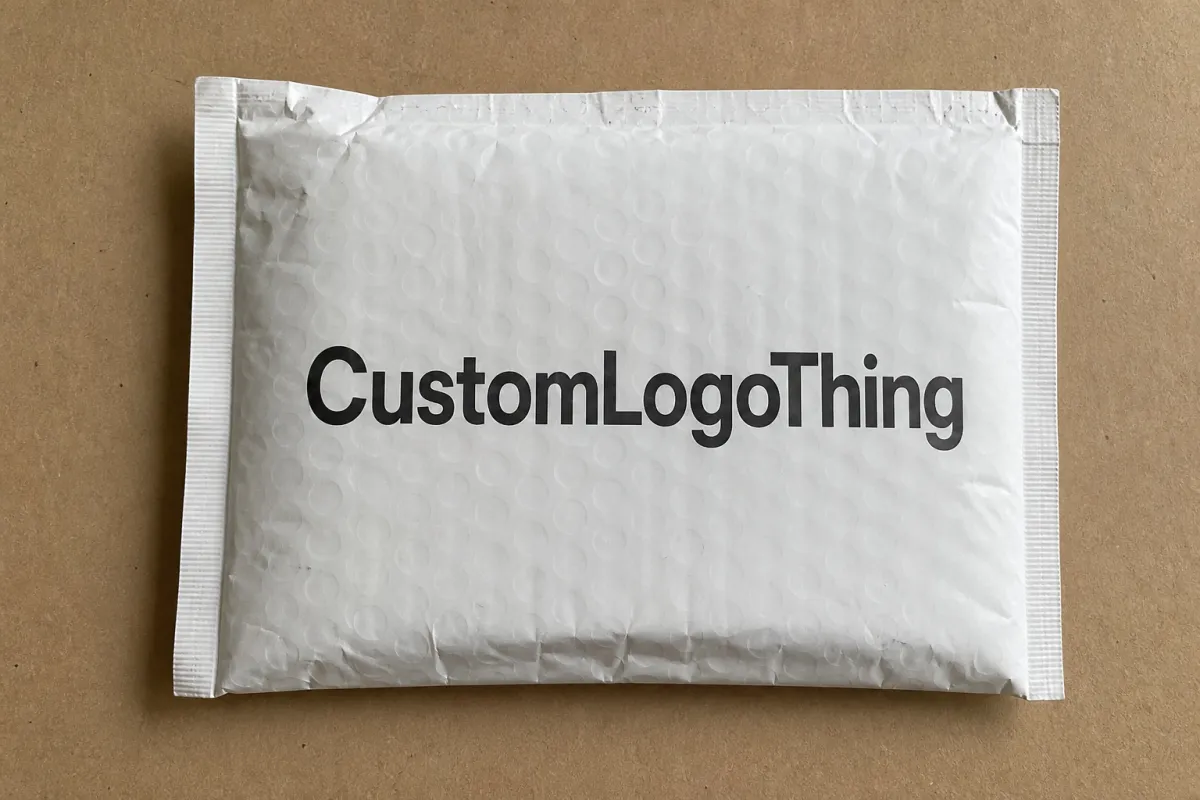
Jewelry is small. That makes people relax. Bad move. Tiny items get damaged in annoying ways. A ring can scratch against a card insert. A necklace can tangle or press into a seam. Earrings can rattle until their posts bend or the finish scuffs. Even plated metal can look dull after repeated vibration inside a mailer. The failures are usually small, repeated movements, not one giant impact.
When people talk about material thickness in padded mailers, they usually mean a few related things: the cushion layer, the outer shell or liner, and the way the mailer flexes under pressure. For a paper-padded or foam-padded mailer, that may be the thickness of the padding itself. For a bubble mailer, it may be the bubble depth plus the outer film or paper ply. For a kraft paper padded mailer, you are looking at paper weight, padding density, and how well the seams hold under load.
That difference matters. A mailer can feel thick in your hand and still perform badly. A fluffy outer layer does nothing if the product slides around inside. A mailer that looks premium at first glance may still be too soft to stop corners from denting or chains from bouncing. Presentation thickness and protection thickness are not the same thing, even if suppliers sometimes blur them on purpose.
Jewelry is a tricky category because it is light but fragile in awkward ways. A crystal pendant can chip. A brushed finish can scratch. A plated surface can pick up marks from a rough pouch seam. A rigid gift box can get crushed if the mailer is too soft, while a flat pouch can drift around if the mailer has too much empty volume. The real choice is not "thick or thin." It is "what combination of fit, cushion, and outer strength gives me the cleanest transit result?"
A mailer that feels sturdy in your hand is not automatically protective in a shipping lane. The only version that matters is the one that survives handling with the actual product inside.
If you sell through retail packaging channels, wholesale orders, or direct-to-consumer shipments, the choice also affects brand perception. A crushed mailer makes the product feel cheap before the customer even opens it. A clean, properly sized one supports the rest of your package branding. That matters with jewelry, because people are buying the item and the experience around it.
For a practical spec benchmark, many jewelry brands start testing with one of these builds: a 350gsm C1S artboard outer, an 80gsm or 100gsm kraft liner, and 2mm to 3mm EPE foam; or a 120gsm kraft outer with a 2mm bubble pad. Those are not magic numbers. They are starting points that give enough body to survive handling without turning the mailer into a brick.
How Custom Padded Mailers Protect Jewelry in Transit
Protection comes from three mechanics: cushioning, compression resistance, and movement control. Cushioning absorbs small shocks. Compression resistance helps the mailer survive stacking, bin pressure, and corner crush. Movement control keeps the jewelry from bouncing, sliding, or dragging against itself and the package surface.
Thickness affects each one differently. A thicker cushion layer helps absorb impacts, but only if the structure is dense enough to hold shape. If the material is too soft, it compresses flat and stops doing useful work. That is why a denser foam layer or a well-built bubble structure often outperforms a loose, puffy one of similar thickness. The package needs recovery, not just volume.
Scratch prevention is the other half of the story. Metal jewelry, enamel finishes, gemstones, and plated pieces each behave differently. A hard stone can chip. A polished metal edge can mar against a rough liner. A plated finish can show hairline scratches from tiny abrasive particles or seams. For jewelry, the surface condition matters as much as impact survival, which is why lining material and internal fit matter as much as outside thickness.
Package fit changes the result too. Too much empty space lets the contents bounce. Too little space can deform a small box, press a necklace into a corner, or force a pouch to wrinkle badly. Many brands pair padded mailers with inserts, tissue, or Custom Packaging Products that lock the product in place. Better fit often lets you use a lighter mailer without giving up protection.
| Mailer construction | Typical protection feel | Common material specs | Best use case | Typical unit cost range at scale |
|---|---|---|---|---|
| Bubble mailer | Light to medium cushioning | 60-90gsm outer paper or film, 2.5mm to 3mm bubble layer | Light earrings, simple pendants, low-value jewelry in pouches | $0.18-$0.42 |
| Foam-padded mailer | Dense, clean cushioning | 350gsm C1S artboard, 2mm EPE foam, 80gsm kraft liner | Scratch-prone finishes, small boxed jewelry, premium accessories | $0.24-$0.58 |
| Kraft paper padded mailer | Medium cushioning with a more natural look | 120gsm to 150gsm kraft outer, paper padding or honeycomb layer | Eco-positioned brands, lighter sets, brand-forward retail packaging | $0.22-$0.50 |
| Light corrugated mailer | High crush resistance | E-flute or micro flute, often around 1.5mm to 2mm caliper | Rigid jewelry boxes, set shipments, higher-value orders | $0.30-$0.70 |
The table above is directional, not gospel. Prices move with size, print coverage, paper grade, coating choice, and MOQ. Still, the pattern holds: more structure usually means more cost, and more cost only makes sense if the product needs that level of control. Testing matters more than supplier language.
If you need a comparison point, Custom Poly Mailers can work for low-fragility accessories or secondary packaging layers, but they usually are not the first pick for scratch-prone jewelry unless the inner pack is doing the real protective work.
One more practical detail: if a mailer uses a 2mm foam pad or a 3mm bubble layer, the outer dimensions can still look modest on paper, but the feel in hand changes a lot. That extra caliper can be the difference between a box corner staying crisp and the same corner getting flattened in a crowded parcel stream.
Key Thickness Factors for Jewelry Packaging Material
The right thickness starts with the product itself. Weight matters, but not by itself. A heavy item can be stable if it sits in a fitted box. A very light item can be worse if it rattles around in an oversized mailer. Fragility matters too. A simple pair of stud earrings is a different problem from a bracelet with hard edges or a necklace that can kink under pressure.
Packaging format changes the spec as well. Jewelry shipped in a pouch usually needs less crush resistance than jewelry shipped in a rigid box, but more internal friction control. Jewelry shipped in a gift box needs the mailer to handle corners and keep the box from deforming. Outer strength and internal clearance need to work together.
Shipping distance changes the math. A local delivery with minimal handling can survive a lighter build than a route with multiple carrier transfers, sortation centers, and long transit times. Longer routes usually justify stronger cushioning, tighter closure performance, and a more conservative thickness choice. That does not mean max everything. It means respecting the route.
Brand positioning matters more than most people admit. A luxury jewelry label usually wants a cleaner, more controlled unboxing feel. An everyday accessory brand may care more about practical durability and cost containment. Both are valid. The point is to match the mailer to the product story instead of treating every SKU like it deserves the same treatment.
Size and shape can create hidden problems. Thin chains can migrate into seams. Multi-piece sets can rub against each other if the package is too roomy. Small rigid gift boxes can get scuffed if the mailer is too tight. Those edge cases are exactly why real samples beat assumptions. One practical ship test teaches more than a page of supplier claims.
| Jewelry type | Good starting thickness | What to verify in testing |
|---|---|---|
| Stud earrings, light pendants, simple chains | 2mm to 2.5mm | Movement control, seam pressure, closure hold |
| Bracelets, plated pieces, boxed rings | 2.5mm to 3mm | Corner crush, scuff resistance, box fit |
| Premium stone settings, multi-piece sets, rigid boxes | 3mm or more | Shock recovery, compression resistance, presentation after transit |
Here is the rule that saves money: choose the lightest thickness that passes testing with your actual product. Not the heaviest one your supplier can quote. Not the one that feels best in a hand squeeze. The one that survives a real transit scenario without overpacking. That is the version that protects your margin and your customer experience.
- Lightweight jewelry: earrings, simple chains, small pendants, low-value sets.
- Mid-risk jewelry: plated pieces, bracelets, boxed rings, mixed-material items.
- Higher-risk jewelry: premium stone settings, rigid gift boxes, multiple-piece sets.
For most brands, thickness decisions should sit inside the broader product packaging plan, not on an island by themselves. A better insert, better box fit, or better closure can save more money than stepping up to a thicker mailer.
For a simple benchmark, many teams sort specs into these working bands: 2mm to 2.5mm for low-risk pouch shipments, 2.5mm to 3mm for mid-risk jewelry in light boxes, and 3mm or more for premium or highly scratch-prone pieces. Those ranges are not universal. They just give you a sane place to start testing instead of guessing blind.
Custom Padded Mailers Cost and Pricing: What Changes Unit Cost?
Thickness affects price in more ways than one. The obvious one is material consumption. More padding, denser liners, thicker films, and stronger seals all cost more. The less obvious one is manufacturing complexity. Some materials cut and seal more easily than others. Others require tighter tolerances or more careful print registration, which raises the production price.
Custom sizing is another cost driver. Standard sizes are usually cheaper because they are simpler to run and easier to source. Custom dimensions can improve fit, reduce void space, and support better retail packaging, but they also push up tooling and setup burden. That is often worth it for a core SKU line, less so for one-off seasonal products.
MOQ changes pricing too. Lower minimums usually raise unit cost because the factory has less room to spread setup and material waste across the run. If you are testing several thickness options, that matters. You do not want to lock into a big order before the real-world trial tells you which version actually works.
Print coverage can move cost almost as much as thickness. A full-coverage custom print with multiple colors, matte lamination, or special finishes will cost more than a simple one-color exterior. That does not mean branding is optional. It means branding should be deliberate. A well-executed print on a practical mailer often does more for customer perception than an overbuilt structure with weak graphics.
Thickness also affects shipping cost, and that part gets ignored too often. Bulkier mailers take more carton space. They can increase dimensional weight, reduce carton fill efficiency, and complicate freight planning. If a small increase in thickness pushes you into a larger shipper carton or a less efficient pallet layout, the real cost goes up fast. Factory price is only one slice of the bill.
For a realistic buying benchmark, a custom padded mailer for jewelry often lands around $0.15-$0.24 per unit at 5,000 pieces for a simple printed build with moderate coverage. Add heavier stock, extra padding, foil, soft-touch coating, or multi-panel print and the price can climb into the $0.26-$0.40 range, sometimes higher for specialty finishes or rigid structures. Those numbers vary by size, but they are close enough to plan with before you request samples.
| Cost factor | What usually happens | Buying implication |
|---|---|---|
| Thicker padding | Higher material cost, better crush and shock resistance | Worth it if the jewelry is scratch-prone or boxed |
| Custom size | Higher setup cost, better fit | Useful for repeat SKUs, less useful for tiny batches |
| Heavy print coverage | More ink, more processing, higher waste risk | Good for premium branding if the design actually looks sharp |
| Lower MOQ | Higher unit cost, easier testing | Smart for first runs and product validation |
| Bulky dimensions | More freight space, potential dimensional weight increase | Check total landed cost, not just factory pricing |
The smartest way to buy is to compare total landed cost: production, freight, duty if relevant, overage, spoilage, and the cost of replacements if the first spec fails. If you only compare factory quotes, you can end up picking the "cheapest" option that quietly becomes the most expensive mistake in the stack.
For packaging buyers, this is where the conversation gets practical. A slightly better spec that reduces damage claims can pay for itself faster than a bargain mailer that looks fine on paper. That stays true whether your outer system uses kraft paper, corrugated cardboard, or a mixed-material build.
If you are pricing a large run, a typical pattern looks like this: 1,000 pieces might be priced mainly on setup and material waste, 3,000 pieces usually improves the unit cost enough to notice, and 5,000 pieces often gives the cleanest balance between price and consistency. None of that helps if the mailer fails testing, though. Cheap damage is still damage.
Production Steps and Timeline: From Spec to Shipment
Good results start before the quote. Define the jewelry dimensions, item weight, packaging format, desired cushion level, print coverage, and target thickness before you ask for samples. Skip that part and you get vague answers, vague pricing, and a pile of options that all sound fine until the real product shows up.
The first proof stage should not be treated as a final answer. A digital mockup helps with layout and branding, but a physical sample tells you how the mailer behaves under pressure. That is a different test. You want to see seam strength, closure reliability, internal movement, and how the material feels after handling, not just whether the logo sits in the right place.
Most custom jobs move through a few basic steps:
- Spec definition and quote review.
- Artwork approval or print proof sign-off.
- Material sourcing and production planning.
- Cutting, sealing, printing, and finishing.
- Quality checks, packing, and shipment.
Where do delays usually happen? Artwork corrections, material substitutions, and holiday backlog. Sometimes it is a simple issue like a closure adhesive not behaving the way the sample did. Sometimes it is raw material availability. Sometimes the print file is technically fine but the colors miss the brand standard, so the run gets held. None of that is glamorous. All of it is normal.
Lead times vary by factory, spec complexity, and freight method, but these ranges are a solid planning baseline:
- Sampling: often 5-10 business days for simple constructions, and 7-12 business days if the structure needs custom die-cutting or layered padding.
- Proof approval to production: often 12-15 business days for standard custom padded mailers, with complex print or specialty coatings pushing closer to 18-20 business days.
- Freight: a few days to several weeks depending on the route and shipping mode.
If you need a rush job, expect tradeoffs. Fast turnaround can raise cost, reduce options, or limit the amount of sample iteration you can do. The packaging industry loves pretending deadlines are flexible until the freight truck shows up without you. Planning earlier costs less than panicking later.
For buyers building a broader packaging stack, the mailer should fit alongside inserts, boxes, and outer cartons. If your jewelry arrives in a small box, a padded mailer may need to be selected together with custom printed boxes or another internal structure so the entire shipment behaves like one system instead of three random parts.
A simple scheduling rule helps: get the spec locked before artwork refinement. If the mailer size changes after print approval, you pay twice in time and usually once in mistakes. That is an expensive hobby.
Common Mistakes When Choosing Thickness for Jewelry Mailers
The classic mistake is choosing a mailer that feels sturdy when empty but still lets the product move. People squeeze the sample, nod, and approve it. Then the jewelry arrives with a small scuff, a bent clasp, or a crooked presentation. Empty feel is not performance.
Another common error is overbuilding every SKU. If you sell lightweight earrings, medium-value necklaces, and premium gift sets, they do not all need the same mailer. Using one oversized spec for everything raises cost, increases bulk, and can make your packaging feel awkward instead of polished. Smart brands tier their mailers by product risk.
Closure method gets ignored more than it should. A strong padded shell with a weak seal is still a bad shipper. Adhesive strip quality, seam placement, and tamper resistance all matter. If the closure pops open, the thickness spec stops mattering very quickly.
Testing with fake loads is another trap. A naked mailer sample tells you almost nothing. Test with the real jewelry, the real pouch or box, and the real insert. That is the only way to see whether the piece moves, whether the closure survives repeated handling, and whether the package still looks right after transit abuse.
The biggest trap of all is buying based on supplier jargon. "Premium," "strong," and "high quality" are not specs. Ask for thickness numbers, material breakdowns, sample cuts, and evidence of transit testing. If a supplier cannot explain what is in the mailer, you are not buying knowledge. You are buying adjectives.
Ask for the spec sheet, not the mood board. Protection lives in numbers, material layers, and fit.
Many brands also forget that the mailer is part of a broader protection system. If the jewelry sits in a soft pouch, the mailer may need more structure. If the piece is already inside a rigid box, you may be able to reduce the mailer thickness without adding risk. The answer depends on the whole package, not one component.
That is why product packaging decisions should be tested as a full stack. The outer mailer, the inner pouch, the insert, and the seal all affect each other. Ignore one part and the whole thing feels off. Packaging is annoyingly literal that way.
Another mistake is matching thickness to aesthetics only. A matte black mailer with a heavy feel can look premium, but if it uses too much material for a lightweight stud earring line, you are paying for drama instead of protection. A cleaner 2mm foam spec can often do the job just as well, for less money, with less bulk in the carton.
Expert Tips for Picking the Right Thickness Without Wasting Money
Start with a simple test matrix. Check at least three product groups: lightweight pieces, medium-risk items, and premium sets. Then test two thickness options for each group if possible. That gives you a clean read on whether the thicker option actually improves protection or just increases cost and bulk.
Tiered packaging is usually better than one-size-fits-all packaging. Cheap items should not get luxury-grade mailers unless there is a real reason. High-value jewelry should not get the same light spec you use for low-risk accessories. That sounds obvious, but brands still pay for the wrong level of packaging because they want one tidy SKU number.
Sample runs matter because they reveal the ugly truth. They show how the mailer closes after repeated handling. They show whether the corners crush in the carton. They show whether the jewelry shifts inside the package when the parcel is turned on its side. A sample that looks good on a table is not proof. A sample that survives real use is proof.
If two thicknesses protect equally well, choose the one with better dimensional efficiency and better landed cost. That often means slightly less bulk, easier carton packing, and lower freight waste. In a business with thin margins, those details are not tiny. They are the difference between a smart spec and a bloated one.
Brand fit still matters, though. The mailer thickness should support the unboxing experience. If your brand promise is refined and minimal, an overstuffed mailer can feel clumsy. If your brand leans practical and eco-conscious, a well-sized kraft build may be more believable than a glossy, overdone structure. Good packaging design is practical first and visual second.
It also helps to think about your wider material mix. If the jewelry box is already made from corrugated cardboard, you may not need a heavy mailer on top of it. If your outer wrap uses kraft paper and a compact insert, you may be able to get the same protection from a slightly denser but still efficient mailer. The whole system should work together.
For brands that want a cleaner procurement path, standardizing sizes across related SKUs can simplify reorders and reduce waste. You do not need seven different mailers for seven nearly identical products. Usually, three well-chosen formats are enough.
And if the visual side matters, do not treat the mailer as an afterthought. A thoughtful shade, a clean logo mark, and consistent closure placement can make even a practical mailer feel intentional. That is how good branded packaging supports the product without shouting over it.
One useful benchmark is to keep your trial range narrow. Test a 2mm foam option, a 3mm foam option, and one paper-padded alternative. That mix usually tells you enough about protection, hand feel, and freight impact to make a real decision without ordering a dozen blind variants.
Next Steps for Choosing Your Jewelry Mailer Spec
Before you place an order, gather the details that actually drive thickness choice: jewelry dimensions, weight, fragility, packaging format, shipping distance, target price per unit, and whether the product already ships in a pouch or box. If those inputs are fuzzy, the spec will be fuzzy too.
Then request two or three sample thicknesses and test them with real product, not dummy fill. Run a shake test, a drop test, and a seal check. Rotate the package. Press the corners. Put it through the kind of handling you would expect from a real carrier. That is the only test that counts.
Document the results. Write down which thickness kept the jewelry still, which one preserved the presentation, and which one passed without making the package too bulky. Evidence beats memory. Memory always picks the sample that looked nicest on your desk and forgets the one that actually shipped better.
From there, pick one primary thickness, one backup spec, and one reorder plan. If the mailer works for most SKUs, lock it in. If a premium line needs more protection, separate that spec now rather than pretending one mailer will suit every product forever. It will not.
That is the practical way to use a custom Padded Mailers for Jewelry Packaging material thickness guide without wasting money on guesswork. Test, compare, document, then buy the smallest spec that proves itself in real transit. If you need one sentence to keep on the buying sheet, make it that one.
For extra reference on shipping and material standards, packaging teams often review resources from the International Safe Transit Association and the Forest Stewardship Council when evaluating performance and sourcing claims. Those organizations do not pick your mailer for you, obviously, but they do help keep the conversation grounded in real standards instead of supplier fluff.
If you are building a bigger packaging line, start with one core mailer, one backup option, and a clear spec sheet. That is usually enough to keep your jewelry shipments protected, your presentation consistent, and your budget from wandering off. The right thickness guide is the one built on test data, not a lucky guess.
FAQ
What thickness should custom padded mailers for jewelry use?
Start with the jewelry's weight, fragility, and whether it ships in a box or pouch. Use the thinnest option that still prevents movement, scratch contact, and seal failure in testing. For many jewelry brands, that means 2mm to 2.5mm for simple pouch shipments, 2.5mm to 3mm for boxed pieces, and 3mm or more for premium sets or high-scratch finishes.
Are bubble mailers or foam mailers better for jewelry packaging?
Bubble mailers suit lighter, less fragile jewelry and lower-cost shipments. Foam or denser padded structures work better for scratch-prone finishes, premium pieces, and boxed sets. Match the mailer to the product risk, not just the price tag. If a piece has polished metal or a plated finish, the cleaner interior of foam usually wins.
Does thicker always mean safer for jewelry mailers?
No. Extra thickness can reduce rattle, but it can also add bulk, cost, and wasted space. If the mailer is too thick for the product, it may bend boxes or force awkward packing. The right answer is the smallest thickness that passes real transit testing. A 350gsm C1S artboard mailer with 2mm foam can outperform a much bulkier option if the fit is right.
How many samples should I test before ordering custom padded mailers for jewelry?
Test at least two thicknesses and, if possible, two size formats. Use real jewelry products and run shake, drop, and seal tests. If you sell multiple SKU types, test each major product category separately. Three sample sets are usually enough to expose bad fit, weak closure, or wasted bulk.
How can I lower unit cost without weakening protection?
Standardize sizes across similar jewelry products so you are not paying for too many custom variations. Simplify print coverage and avoid premium finishes unless they add real brand value. Order in higher quantities only after a sample passes testing, so the savings are not fake. At 5,000 pieces, a clean print and a practical structure often land around $0.15-$0.24 per unit, while specialty finishes push higher.
How long does production usually take?
Sampling often takes 5-10 business days, and standard production is commonly 12-15 business days from proof approval. If the job needs custom die-cutting, special coatings, or a new material stack, plan for a bit more time. Freight is separate and can add a few days or several weeks depending on the route.

