Buyer Fit Snapshot
| Best fit | Printed Padded Mailers for Jewelry Packaging Cost Breakdown projects where brand print, material claims, artwork control, MOQ, and repeat-order consistency need to be specified before quoting. |
|---|---|
| Quote inputs | Share finished size, material target, print colors, finish, packing count, annual reorder estimate, ship-to region, and any compliance wording. |
| Proofing check | Approve dieline scale, logo placement, barcode or warning zones, color tolerance, closure strength, and carton packing before bulk production. |
| Main risk | Vague material claims, crowded artwork, missing packing details, or unclear freight terms can make a low unit price expensive after revisions. |
Fast answer: Printed Padded Mailers for Jewelry Packaging Cost Breakdown should be specified like a repeatable production item. The safest quote records material, print method, finish, artwork proof, packing count, and reorder notes in one written spec.
Production checks before approval
Compare the actual filled-product size with the drawing, then confirm tolerance on folds, seals, hang holes, label areas, and retail display edges. Reserve space for logos, QR codes, warning copy, and material claims before decorative graphics fill the panel.
Quote comparison points
Review material grade, print process, finish, sampling route, tooling charges, carton quantity, and freight assumptions side by side. A quote is only useful when the supplier can repeat the same color, closure quality, and packing count on the next order.
Printed padded mailers for jewelry packaging Unit Cost Breakdown conversations usually go sideways for one simple reason: people look at the print price and ignore everything else. A low decoration quote does not mean much if the mailer is oversized, weak, or slow to pack. The cost shows up in freight, labor, and damage claims. It always finds a way.
Jewelry looks small, so brands often overcompensate. A rigid box, tissue, insert card, foam, and void fill can create a premium feel, but each layer adds material, handling time, and storage space. A printed padded mailer cuts that stack down to something more efficient. Less material. Less labor. Less cube in the warehouse and on the truck.
Rings, earrings, pendant sets, slim bracelets, and small accessory bundles are usually the best fit. These products need protection and a clean presentation, not a packaging parade. A well-built mailer can carry the brand, keep the item tidy, and still land at a unit cost that works for direct-to-consumer orders. For broader sourcing, see Custom Packaging Products or compare formats with Custom Poly Mailers.
The cheapest packaging quote is often the one that leaves out labor, freight, and damage. That bargain gets expensive in a hurry.
Why Printed Padded Mailers Can Lower Jewelry Packaging Cost
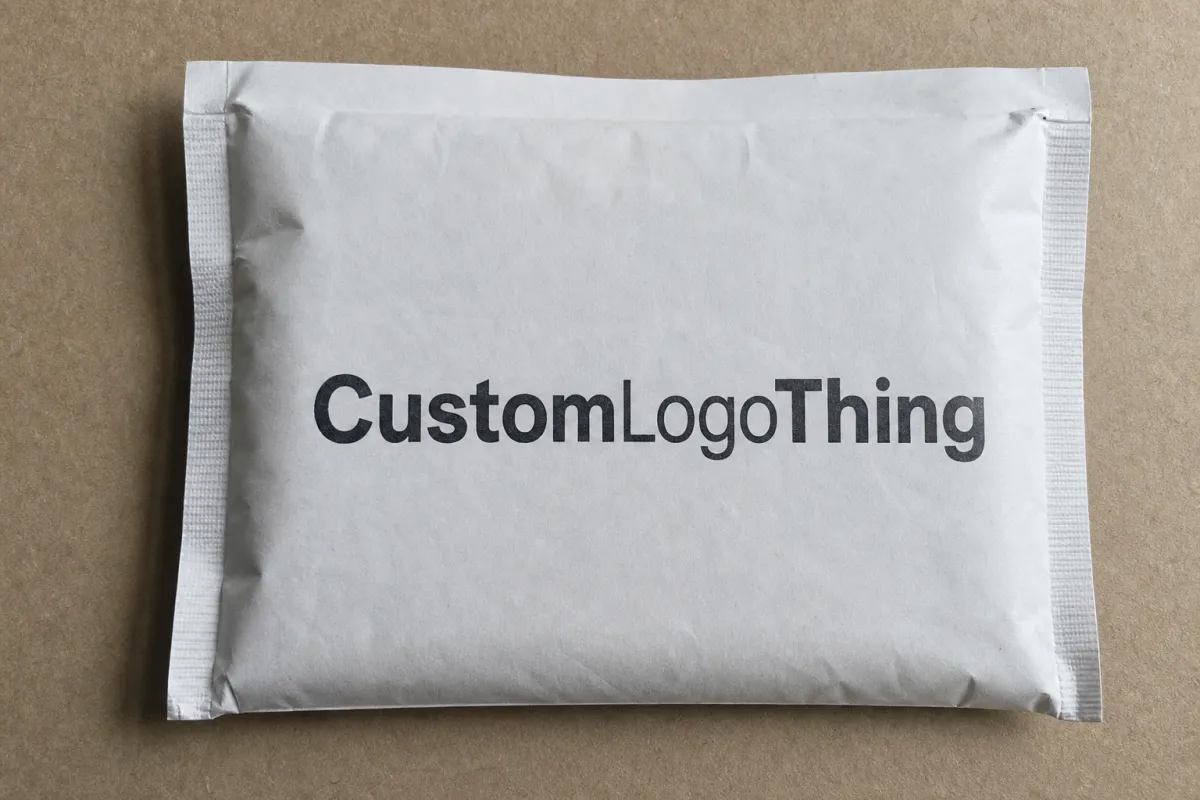
Jewelry packaging gets expensive because small items invite overbuilding. Someone wants more structure. Someone else wants a better unboxing moment. Then the package grows a layer at a time until finance starts asking awkward questions. Printed Padded Mailers for jewelry packaging unit cost breakdowns usually look better once the whole system is compared, not just the logo line.
The first savings bucket is weight. A padded mailer usually weighs less than a carton-based setup, so parcel spend stays lower over time. The second bucket is labor. Fewer parts mean faster pack-out and fewer mistakes. The third bucket is cube. A compact mailer stores better, ships better, and takes less shelf space in the warehouse. That matters when orders go out every day.
A practical jewelry mailer might use a paperboard outer, a kraft or uncoated inner, and a cushioning layer that keeps the piece from shifting. That is usually enough for rings, earrings, and slim bracelets without making the package feel bulky. If the route is rough or the jewelry is delicate, the spec can move up to thicker board, stronger edge support, or a more secure closure. The unit cost rises with each of those choices. No surprise there.
None of this means every jewelry item should go into a padded mailer. Heavier chains, fragile stone pieces, and high-value sets may need a different structure. Some products need more crush resistance than a slim mailer can responsibly provide. Still, for a large share of ecommerce orders, a padded mailer hits the sweet spot: enough protection, enough branding, and a cost structure that does not punish the margin.
The real test is straightforward. Can the package protect the piece, present the brand clearly, and move through fulfillment without drama? If yes, the mailer earns its place. If not, it is just a cheaper thing that creates more expensive problems later.
There is a branding upside too. A clean front panel with sharp logo placement gives the buyer a recognizable package without forcing the brand to fund a full rigid box program. That is a useful middle ground for labels that want something better than a plain envelope but are not ready to put a premium retail box into every order.
Seasonal drops and smaller collection launches benefit as well. One consistent mailer size can cover multiple SKUs, which makes forecasting easier and reduces the number of package variants sitting in storage. Fewer variants mean fewer errors. Packaging teams tend to appreciate that.
Printed Padded Mailers for Jewelry Packaging: Product Details
A printed padded mailer is a compact protective structure with an outer printed surface, an internal cushioning layer, and a closure that keeps everything in place during transit. Depending on the build, the outer face may be paper-based, film-based, or a hybrid. Each option changes the feel, the print result, and the price. Better materials usually cost more. That part is not controversial.
For jewelry, the most common uses are pretty clear. Rings and earrings fit well with a small insert or card. Bracelets and chain necklaces usually need a longer format so they do not twist into a knot before the customer even opens the package. Pendant sets and small gift bundles also work, as long as the inside size is tight enough to stop movement without crushing the item.
Print options range from simple to premium. Some brands want a single-color logo on kraft or white stock. Others want full coverage, foil, or a restrained premium look with spot color on the front flap. Interior printing is possible too, but that adds setup and usually pushes unit cost up. More coverage almost always means more money. The quote is not being dramatic. It is just math.
Performance still matters more than decoration. Jewelry packaging has to resist scuffing, survive handling, and keep the closure shut from pack-out to doorstep. If the wall is too soft, the contents can get crushed. If the adhesive is weak, the package can open in transit. If the coating wears off before the parcel reaches the customer, the branding did not really do its job.
Postal compatibility also deserves a check before anyone gets attached to a sample. A mailer that looks sharp on a table but tears at the seam or misses dimensional requirements can create problems fast. A sensible spec should fit parcel handling, hold up in transit, and still leave room for an insert card, tissue wrap, or a small thank-you note if those are part of the brand experience.
A practical jewelry format often falls into one of these buckets: a slim 6 x 9 inch mailer for earrings and rings, a 7 x 10 inch mailer for small bracelet orders, or an 8 x 12 inch format for necklace sets and bundled items. A tighter fit usually saves money and reduces movement. A larger size only makes sense if the product really needs it.
Common jewelry fits
- Rings with a small card insert or foam pad
- Earrings with a branded backer card
- Bracelets in a slim protective sleeve
- Chain necklaces with a flat layout that reduces tangling
- Small bundles, such as gift sets or accessory pairings
That list matters because jewelry is not one category. A thin mailer may work perfectly for earrings and fail for a chunky bracelet. A stiffer structure may be the right move for one collection and overkill for another. Real product dimensions beat guessing from a catalog shot every single time.
Specifications That Affect Performance and Unit Cost
Size is usually the first number that changes the quote. A mailer that is just large enough for the piece generally uses less material and packs more efficiently than an oversized format. Oversizing is sneaky. It looks harmless on paper, then it quietly inflates freight and storage. The trick is giving the item enough room for easy insertion without leaving dead space.
Thickness comes next. A thicker wall can improve feel and puncture resistance, but it also raises material use. Padding type matters too. Paper fiber padding, foam-like interiors, and corrugated layers do not cost the same, and they do not behave the same during shipping. One may feel better in hand. Another may hold up better in a rougher lane. The quote needs to reflect that.
A common mid-range build for a jewelry mailer uses a coated paperboard outer, a kraft inner lining, and a narrow cushioning layer that reduces movement without adding much bulk. That kind of structure usually gives a clean print surface and enough protection for light to medium jewelry orders. If the brand wants a softer, more natural look, uncoated kraft can work too, but the print finish changes and fine details may not pop as strongly.
The face stock is another choice that affects both appearance and cost. Kraft works well for brands that want a natural look and predictable pricing. Coated stock can sharpen the print and make color blocks cleaner, but it can cost more. Recycled content may fit sustainability goals, though print behavior and supply should be checked instead of assumed. “Recycled” on a line sheet is not enough. Ask for the actual spec.
Closure style affects speed on the packing line and reliability in transit. Peel-and-seal is common because it is easy to use, but the adhesive has to be consistent. Self-seal strips help high-volume programs move faster. Tamper-evident closures and reinforced flaps add another layer of security, though they can raise the unit price. Pick the version that survives the route and does not force rework.
Print complexity deserves close scrutiny. One logo in one color is simpler than full coverage on both sides. Extra colors, metallic inks, special coatings, and interior decoration all increase setup work. Even artwork placement matters. Multiple print zones and tight registration mean more production effort, which usually shows up in the quote whether anyone likes it or not.
Operational details matter just as much. Can the mailer be packed by hand without slowing the table? Does it stack neatly in storage? Will it travel well inside a master carton to a fulfillment center? A lower unit price means very little if the mailer creates labor drag or damage later. A good spec supports the line instead of making the line babysit it.
Useful spec decisions to lock early
- Exact inside dimensions for each jewelry SKU family
- Number of print colors and whether the back panel is printed
- Closure type and whether tamper evidence is needed
- Padding material and target feel in the hand
- Shipping method, because parcel handling changes protection needs
Locking those choices early keeps quotes cleaner. Leaving them fuzzy does the opposite. The supplier ends up pricing guesswork, then everyone acts surprised when the number changes. Packaging projects are much less annoying when the brief is real before the quote arrives.
It also helps to compare the mailer against other retail packaging and product packaging options side by side. Some jewelry brands want the mailer to be the main presentation piece. Others use it as a shipping outer around a smaller inner box. That setup can make sense for premium orders, gift bundles, or brands that already use custom printed boxes for a separate part of the line.
Cost, Pricing, MOQ, and Unit Cost Breakdown
The cleanest way to read pricing is to split the quote into pieces. A real unit cost usually covers the substrate, padding, print setup, tooling, finishing, folding or converting, carton packing, freight, and any surcharge tied to special inks or coatings. If the quote is clear, the cost drivers are visible. If it is fuzzy, ask for a line-by-line breakdown before you compare anything.
MOQ changes the picture fast. Lower quantities spread setup across fewer pieces, so the unit price climbs. Larger quantities spread the fixed work across more units, so the price usually drops. That is why tiered pricing helps so much. A price at 1,000 units is one story. A price at 5,000 or 10,000 units may be a completely different story.
For jewelry brands, the best run size depends on forecast certainty. If the collection is new and demand is still a question mark, a smaller run can make sense even if the unit cost is a little higher. If the SKU is proven and the order can be folded into annual planning, a larger buy usually gives better economics. There is no magic number. There is only demand, storage space, and patience.
The table below gives buyers a practical way to compare bands. Actual pricing varies by size, print coverage, structure, and material choice, but the structure keeps the conversation tied to landed cost instead of a shiny headline number.
| Quantity Band | Typical Unit Cost Range | What Drives the Price | Best Fit |
|---|---|---|---|
| 1,000 units | $0.52-$1.08 each | Setup spread across fewer pieces; more impact from print prep, packing, and freight | New launches, small assortments, test runs |
| 3,000 units | $0.30-$0.68 each | Better spread on setup; moderate improvement in material buying efficiency | Growing ecommerce lines, seasonal programs |
| 5,000 units | $0.15-$0.24 each | Best balance for standard sizes, simple print, and efficient conversion on repeat orders | Steady collections, repeat SKUs |
| 10,000 units | $0.11-$0.19 each | Lowest spread on setup and stronger purchasing efficiency on common materials | High-volume programs, annual buys |
Those numbers are a working range, not a promise. For a standard 5,000-piece run in a common size like 6 x 9 inches or 7 x 10 inches, printed one color on a basic paperboard build with standard padding often lands around $0.15-$0.24 per unit before freight. Add full bleed print, foil, specialty coating, or a custom interior, and the number moves up. Larger formats or heavier walls do the same.
If a quote lands far outside those ranges, ask why. Maybe the structure is thicker. Maybe the print is more complex. Maybe the finish is custom. Maybe freight was estimated instead of quoted. One of those reasons is real. Another one is laziness.
For buyers trying to improve the printed Padded Mailers for Jewelry Packaging unit cost breakdown, the easiest savings often come from simplification. One-color art usually costs less than multi-color graphics. Standard sizes generally cost less than custom dimensions. Fewer special finishes usually mean a lower unit price. A clean kraft look with a strong logo often does more for the brand than a design crowded with effects.
Quantity alignment matters too. Ordering too little creates repeat setup charges and frequent freight events. Ordering too much ties up cash and fills shelves with dead inventory. The right point sits between those two problems, and the right point changes as sales move. That is why a current forecast matters more than a confident guess.
Items that should be included in the quote request
- Inside dimensions and target finished size
- Print sides, print colors, and artwork coverage
- Padding style and closure type
- MOQ, sample cost, and proofing method
- Shipping destination and whether freight is prepaid or quoted separately
Compliance-minded buyers should ask about testing too. If the mailer is part of a shipping program, check whether performance has been evaluated against recognized standards such as ISTA or ASTM methods. The exact method depends on the package and route, but the principle is the same: test the way the package will actually move. For reference, see the ISTA site, and for broader material and sustainability context, the EPA and FSC sites are useful starting points.
Process, Timeline, and Production Steps
A packaging job usually moves through the same stages: spec review, artwork check, sample or proof approval, scheduling, production, inspection, packing, and dispatch. The sequence sounds boring because it is. That is also why it works. Every messy project starts with a fuzzy brief and a rushed proof. Every good one starts with clarity.
Lead time changes with quantity. A 1,000-unit run does not behave like a 10,000-unit run because setup, conversion, and packing loads differ. Print complexity matters too. A one-color logo is easier to run than a multicolor design with special coatings or interior graphics. Material availability can stretch the schedule if the chosen stock or padding style is not sitting ready.
Proofing is the part that quietly eats time. Missing dielines, sloppy artwork files, and late logo revisions all slow production. The same thing happens when the buyer changes specs after the quote is issued. A size tweak or finish change can trigger a new proof, which pushes the schedule back. That is not the supplier being difficult. That is how production works.
For many custom jobs, a realistic timeline lands around 12 to 15 business days from proof approval for standard builds. If the order needs foil, multiple print passes, special padding, or extra finishing, plan more like 18 to 25 business days. Simple repeat orders may move a little faster. Bigger runs and more complex structures usually need more time. Treat the range as planning, not magic.
Internal alignment matters too. Merchandising wants the branding right. Operations wants the pack-out to stay fast. Finance wants the landed cost under control. When those teams review the same spec sheet early, approvals move faster. When they review three slightly different versions, everybody loses time and patience.
A clear spec sheet saves more time than people expect. Size, print coverage, closure type, and shipping destination should be settled before the first serious quote lands.
For brands running several package types, the same process should apply across the line. A jewelry mailer can be compared with insert cards, outer cartons, and shipping accessories. That side-by-side view usually shows which component is really driving cost and where the practical savings sit.
Why Choose Us for Printed Padded Mailers
Custom Logo Things handles printed mailers the way a packaging buyer should: fit first, finish second, cost under control the whole way through. A logo on a mailer is not enough if the structure is flimsy, the dimensions are awkward, or the closure gives up halfway through transit. The package has one job. It should do that job without drama.
Manufacturing consistency matters here. Tight dimensions make packing easier. Reliable adhesion reduces failures in the field. Clean print registration keeps the branding sharp. None of that is flashy. All of it matters. These are the details that separate a dependable package from a frustrating one, and jewelry brands feel the difference fast.
Transparent quoting is another reason buyers care. You should be able to see what drives the unit cost instead of getting a broad number with no explanation. Once the breakdown is visible, it becomes easier to simplify the right parts. Maybe the artwork can be reduced from full bleed to a focused front-panel mark. Maybe two collections can share one size. Maybe a premium coating can be removed without changing the look customers care about.
Technical guidance matters just as much as pricing. A supplier that understands jewelry packaging can help with size selection, artwork setup, material choice, and the balance between presentation and performance. That support helps whether the job is a simple ecommerce mailer or a more polished structure tied to retail packaging standards. It also helps when the brand wants the mailer to coordinate with other package branding elements, such as insert cards, thank-you notes, or collection-specific launch materials.
Most of the time, the best answer is not the most elaborate one. A clean, printed padded mailer with the right dimensions can beat a more expensive structure that looks great in a mockup and causes problems in fulfillment. That is especially true when brands compare the mailer with custom printed boxes and decide where extra structure is worth paying for and where it is not.
Replenishment deserves attention too. Jewelry collections change. Packaging programs should not fall apart every time the lineup shifts. The strongest programs are repeatable, easy to reorder, and flexible enough to support a new colorway or seasonal launch without forcing a full redesign. Nobody needs that kind of nonsense.
Actionable Next Steps for a Faster Quote
A faster quote starts with a better brief. Gather the basics before you reach out: product dimensions, target quantity, print coverage, closure preference, packing method, and shipping destination. With those details in hand, the supplier can quote a real package instead of guessing and hoping you will not notice.
Send a sample or at least a clear photo of the current pack-out whenever possible. That simple step removes a lot of guesswork. The supplier can see whether the jewelry ships flat, boxed, nested, or on a display card, which tells them more than a vague description ever will. It also helps them judge cushioning, seal strength, and interior space without playing detective.
Ask for tiered pricing. A quote at 1,000, 3,000, 5,000, and 10,000 units gives a better view of the cost curve than a single number does. It also shows where the price drops hard enough to justify a larger buy. If one quantity band is clearly stronger, that may be the smartest planning point for the year.
It helps to settle the goal internally before the quote request goes out. Is the project about improving presentation? Reducing freight? Speeding up pack-out? Supporting a gift-ready unboxing? Each goal pushes the spec in a different direction. If the team skips that step, the quote can still be accurate and still miss the point. Accurate is not the same as useful.
- Measure the jewelry SKU and any insert card or wrap that ships with it.
- Decide whether the mailer is the primary shipper or part of a nested package system.
- Confirm print coverage, closure style, and whether any special finish is truly necessary.
- Set a quantity target that reflects annual demand or a realistic forecast band.
- Request the quote only after the spec sheet is complete.
That last step saves a lot of back-and-forth. Too many packaging projects start with a price request before the size, artwork, or use case is settled. The result is a quote that needs revision after revision. A complete brief gives the supplier a better shot at quoting the right structure and the right cost the first time.
If you are building a program around Printed Padded Mailers for jewelry packaging, the practical takeaway is simple: lock the SKU size, the closure, and the print scope before you talk numbers. That is where the real unit cost starts to make sense, and it is the fastest way to avoid paying for features the package does not need.
Frequently Asked Questions
What affects the unit cost of printed padded mailers for jewelry packaging the most?
The biggest drivers are material construction, size, print coverage, and order quantity. A basic paperboard outer with one-color print will usually cost less than a full-bleed, foil-stamped build with a reinforced closure. Special finishes, custom padding, and heavier board all increase the per-piece price. Freight and packing method can change the landed cost too, especially if the mailers are bulky or the shipment is split into smaller deliveries.
What MOQ is typical for printed padded mailers for jewelry packaging unit cost breakdown quotes?
MOQ depends on the structure and print method, but custom jobs usually price better at higher quantities. A 1,000-piece order is often useful for testing, while 3,000 to 5,000 pieces usually gives a better balance between setup cost and unit cost. Ask for tiered pricing so you can see where the unit cost drops at each band. If the forecast is still fuzzy, it usually makes more sense to quote the annual need than a single initial order.
Which jewelry products work best in printed padded mailers?
Rings, earrings, bracelets, necklaces, and small accessory sets usually work well if they fit securely without too much empty space. Thin chains, studs, and light pendant sets are common fits. Heavier or more fragile pieces may need an insert, a stronger closure, or a different package structure. The right call depends on product size, shipping method, and the unboxing standard you want to keep.
How long does production usually take after artwork approval?
For standard jobs, production often takes about 12 to 15 business days from proof approval. If the order includes foil, special coating, multiple print zones, or custom padding, plan closer to 18 to 25 business days. Repeat runs with locked specs can move a little faster. Clean artwork files and a settled dieline are the quickest way to keep the schedule on track.
Can I reduce the unit cost without changing the mailer style?
Yes. Simplifying print coverage, standardizing size, and increasing order quantity often lower the cost. Choosing a common material and avoiding special finishes also helps. The easiest savings usually come from making the package easier to print, easier to pack, and easier to ship. That keeps the format intact while improving the number on the quote.
For brands comparing several package formats, the best savings usually come from making the package easier to print, easier to pack, and easier to ship. That is the real core of a printed padded mailers for jewelry packaging unit cost breakdown, and it is why a careful spec review is worth the time before the order goes in.


