Buyer Fit Snapshot
| Best fit | Custom Padded Mailers for Jewelry projects where brand print, material claims, artwork control, MOQ, and repeat-order consistency need to be specified before quoting. |
|---|---|
| Quote inputs | Share finished size, material target, print colors, finish, packing count, annual reorder estimate, ship-to region, and any compliance wording. |
| Proofing check | Approve dieline scale, logo placement, barcode or warning zones, color tolerance, closure strength, and carton packing before bulk production. |
| Main risk | Vague material claims, crowded artwork, missing packing details, or unclear freight terms can make a low unit price expensive after revisions. |
Fast answer: Custom Padded Mailers for Jewelry: Sustainable Options should be specified like a repeatable production item. The safest quote records material, print method, finish, artwork proof, packing count, and reorder notes in one written spec.
Production checks before approval
Compare the actual filled-product size with the drawing, then confirm tolerance on folds, seals, hang holes, label areas, and retail display edges. Reserve space for logos, QR codes, warning copy, and material claims before decorative graphics fill the panel.
Quote comparison points
Review material grade, print process, finish, sampling route, tooling charges, carton quantity, and freight assumptions side by side. A quote is only useful when the supplier can repeat the same color, closure quality, and packing count on the next order.
If you are comparing custom Padded Mailers for Jewelry packaging sustainable material options, start with the part most teams underestimate: jewelry usually gets damaged by movement before anything else. Not by the absence of padding. Not by some abstract packaging failure. By sliding, rattling, snagging, and rubbing. A chain drifts inside the mailer. An earring post presses into the wall. A bracelet bangs around and leaves a tiny, expensive mess. That is how a parcel turns into a return.
Jewelry packaging has three jobs. Protect the product. Present it well. And support a material story that still makes sense after a buyer asks what the mailer is made from. Fit matters more than extra fluff. Recycled content matters more than soft eco language. The structure has to match the actual SKU mix, not the nicer version someone imagined in a spreadsheet after one too many coffees.
That becomes obvious fast in real buying scenarios. A DTC brand shipping single rings does not need the same build as a wholesale order with boxed pendants. A subscription box for earrings needs a different interior than a trade-show sample kit. A small jewelry label may want one mailer that handles most orders; a larger catalog often needs two or three structures. The useful question is not, "What sounds green?" It is, "What protects the jewelry, still looks like the brand, and fits the budget without pretending money grows on trees?"
Why Custom Padded Mailers for Jewelry Fail When Fit Is Wrong
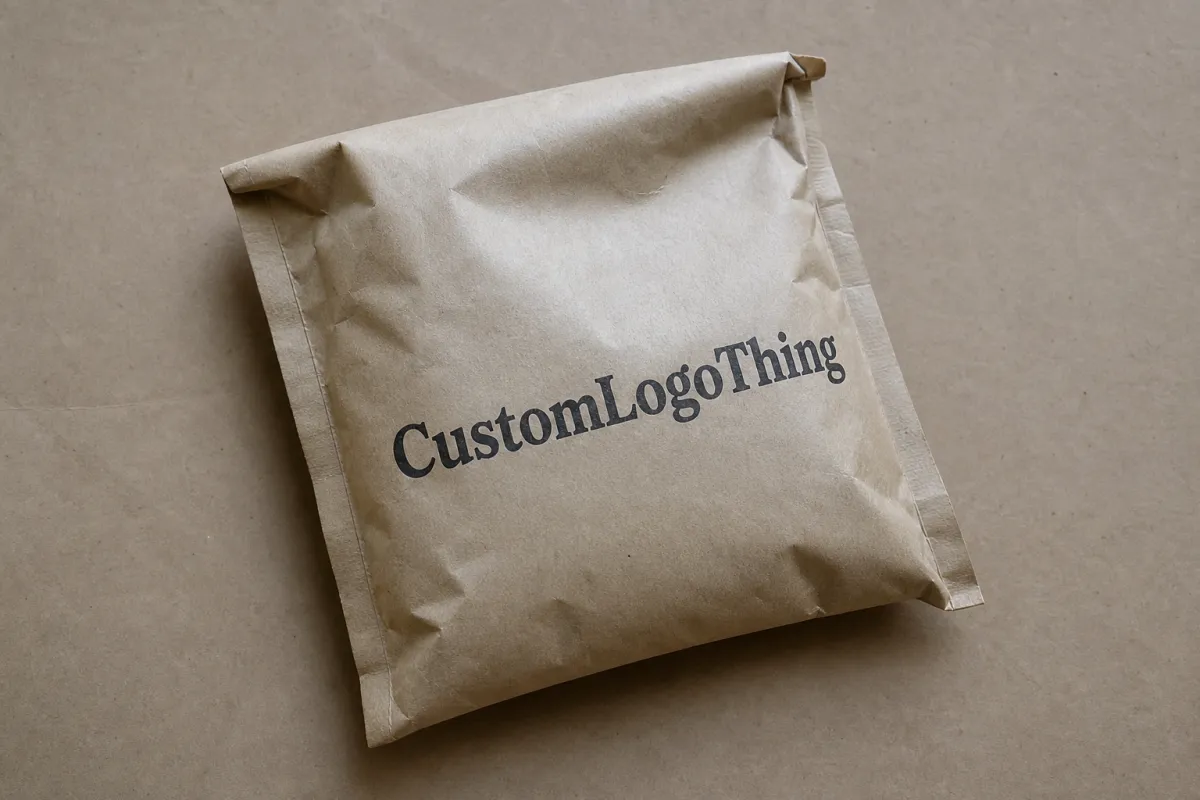
Too much space causes a surprising amount of damage. People assume thicker walls equal better protection. Not really. Movement is the problem. A ring that slides from one side of the mailer to the other can scuff a polished finish. A delicate chain can knot itself into a tiny shipping disaster. A stud earring with a sharp backing can poke at the lining until it punctures through. Nothing dramatic. Just enough friction to create complaints, returns, and those wonderful "felt cheap" reviews everyone loves to receive.
That is why Custom Padded Mailers are not just padded envelopes with a logo slapped on top. They are shipping mailers with a cushioning layer built around the product size, plus print that supports package branding. The goal is simple: keep the jewelry stable and make the unboxing feel intentional. Oversized mailers let the product drift. Over-tight mailers bend, crush, or scuff the item and whatever insert sits inside. That fit balance is the whole game.
Jewelry is a strange category because the risk changes with every SKU. Rings are small, but they can scratch against clasps or stiff inserts. Studs and hoops need anti-tangle support and enough interior friction to stay put. Chains snag, knot, and rub. Bracelets often weigh more than they look like they should, which puts extra stress on the seal once you add a pouch, card, or box. One generic mailer rarely handles all of that well. If your catalog is broad, you probably need two sizes. Maybe three. Maybe a different interior setup for each.
The sustainability piece shows up early for a reason. Brands do not want to replace one waste problem with another. Recycled content, recyclable paper layers, compostable linings, and lighter builds can all work. They do different jobs, though. A recycled kraft mailer gives you a simple paper story. A hybrid paper-film build can improve moisture resistance. A compostable lining can fit a tight disposal message, if customers can actually compost it where they live. The claim has to match reality. Marketing fluff does not keep a package out of a landfill.
"If the product moves inside the mailer, the mailer is too big, too soft, or packed badly. Usually it is one of those three. Rarely is it magic."
For buyers, the real test is usually practical. Which option protects fragile items, keeps presentation intact, and does not waste money on excess material or shipping weight? That is the lens that matters. Fancy packaging mockups are nice. Shipping a damaged pendant is not.
How Custom Padded Mailers for Jewelry Packaging Sustainable Material Options Work
A decent mailer has four parts: the outer shell, the cushioning layer, the closure strip, and the print surface. Each one changes how the mailer performs and how honest the sustainability story can be. The outer shell may be kraft paper, recycled paper stock, or a film-based layer. The cushioning layer can be fiber-based, air-pocket style, or a paper-padded construction. The closure strip matters because a weak seal turns a nice mailer into a flapping nuisance. The print surface controls the look, which matters more in jewelry than it does for a commodity shipment.
Material families usually fall into a few buckets:
- Recycled kraft paper - familiar, easy to explain, and usually the cleanest paper-forward option.
- Recycled plastic film - useful when tear resistance and moisture protection matter more than a paper look.
- Hybrid paper-poly builds - a middle path that can add performance without jumping to a full plastic mailer.
- Compostable film - attractive in theory, but only useful if the disposal message is accurate and the local infrastructure exists.
- Fiber-based cushioning - good for reducing loose fill and keeping the inside neat.
If you want a cleaner paper feel, start with options built around kraft paper and recycled content. That tends to fit jewelry brands that already use paperboard inserts, custom printed boxes, or other paper-heavy retail packaging. For a simple earring card order, a recycled kraft mailer with a 180-220gsm outer layer and a 2-3mm paper-fiber cushion is often enough. For a heavier pendant or a boxed ring, a firmer build makes more sense. If your line includes polished metals, clasp-heavy pieces, or fragile presentation cards, a hybrid structure may protect the item better in transit. If you ship high volume and need fast fulfillment, flat-packed mailers save storage space and make the warehouse team less grumpy.
Protection is not complicated. The right mailer limits movement, absorbs impact, resists punctures, and prevents the jewelry from rubbing directly against the outer wall. Sizing does more work than most people think. A 4 x 6 inch padded mailer may fit a small ring box or a flat bracelet card. A 6 x 9 inch format may suit a pouch, care card, and one or two small pieces. A larger 7 x 10 or 8 x 10 size often works for multi-item orders, especially when a mailer needs to carry tissue, an insert card, and a fold-over pouch without crushing everything flat. The goal is not to cram. It is to create enough compression that the piece stays still without getting crushed.
Branding still matters. A protected package that looks cheap is still a problem. Matte and gloss finishes change the feel immediately. A soft matte paper face reads as premium and modern. Glossy film feels more utility-driven. Print coverage changes the vibe too. A single-color logo placed cleanly can look more refined than a heavy full-bleed design fighting the material. In jewelry, the outer mailer is part of the brand story, not just a shipping shell. Packaging design should sit next to product packaging, not behind it.
For brands already using Custom Packaging Products, a padded mailer can sit inside the same identity system as printed tissue, inserts, and branded tape. If you are comparing structure options, it also helps to look at Custom Poly Mailers because the best choice is not always the one with the most paper on it. Sometimes the cleaner hybrid build with stronger seal performance and less waste is the smarter call.
From an operations angle, padded mailers are easier to stock than rigid boxes. They arrive flat. They take less warehouse space. They usually weigh less than corrugated cardboard. That can reduce dimensional weight charges, which is the kind of boring cost detail that quietly eats margin if nobody pays attention. If your average jewelry order is small and light, a well-sized padded mailer can be a better fit than a box, even if the box looks prettier in a deck.
For sustainability claims, the standards matter. If you are making recycled-content or forestry claims, use documentation. The Forest Stewardship Council is a useful reference for responsible sourcing language, and the EPA recycling guidance is a better place to ground disposal claims than vague marketing copy. For shipping performance testing, the ISTA standards are worth knowing because drop, vibration, and compression tests reveal whether a package survives the trip before your customer becomes the lab.
Some teams also ask about the insert or stiffener that goes inside the mailer. That part matters too. A common setup for lightweight jewelry is a mailer paired with a 350gsm C1S artboard insert card or a 400gsm white board backer. That extra stiffness keeps a necklace card from curling and helps the product sit flat. If the jewelry ships in a pouch, the insert may be less about structure and more about presentation, but the material still needs to hold its shape.
| Material Option | Typical Strength | Brand Feel | Common Cost Range | Best Use Case |
|---|---|---|---|---|
| Recycled kraft paper | Good for light to medium jewelry orders | Natural, paper-forward, easy to explain | $0.15-$0.24 per unit at 5,000 pieces, depending on size and print coverage | Rings, earrings, lightweight necklaces |
| Hybrid paper-poly build | Better moisture and tear resistance | Clean, slightly more technical | $0.22-$0.38 per unit at 5,000 pieces, depending on size and print coverage | Higher-value orders, mixed product lines |
| Compostable film | Variable, depends on construction | Eco-forward, but must be explained carefully | $0.28-$0.52 per unit at 5,000 pieces, depending on size and print coverage | Brands with strong disposal messaging |
| Recycled plastic film | Strong tear and seal performance | Practical, less paper-like | $0.18-$0.32 per unit at 5,000 pieces, depending on size and print coverage | Transit-heavy orders, humid shipping routes |
The table is a frame, not a promise. Pricing shifts with quantity, size, print coverage, and whether the supplier needs special tooling. It still shows the pattern. Recycled paper is often the easiest entry point. Hybrid builds sit in the middle. Compostable options usually cost more. No magical discount hides in the back of the warehouse. There is just a better fit for the order profile you actually have.
Cost and Pricing: What Sustainable Jewelry Mailers Really Cost
Pricing for jewelry mailers comes down to five levers: material choice, size, padding density, print complexity, and order quantity. Add specialty coatings, metallic inks, or unusual closures, and the number climbs again. People are often surprised that a tiny change in print coverage can move pricing almost as much as a size change. Packaging is a system, not a single line item. The math gets ugly when teams pretend otherwise.
Recycled paper mailers are usually the most approachable option on cost, especially for brands that want a paper-based look without overcomplicating the build. Hybrid paper-film mailers usually land in the middle because they balance appearance and performance, but the structure is more involved. Fully compostable solutions can cost more, sometimes much more, because the material itself and the supply chain around it are less forgiving. That does not make them bad. It means the buyer should know what problem they are paying to solve.
MOQ pressure matters. A 250-piece run feels expensive because setup, plate work, and production overhead get spread across fewer units. At 1,000 pieces, the unit cost usually becomes easier to defend. At 5,000 pieces, the curve usually gets more comfortable, especially on simple one- or two-color print. Ask for quotes at 250, 500, 1,000, and 5,000 units. That shows the pricing curve instead of one polished number that only looks good if you squint and ignore the setup fee.
If you are budgeting for branded packaging, do not stop at the base mailer price. Include print charges, sample fees, shipping, and any insert or tissue upgrades. A low-cost mailer can become less attractive once you add a custom fit insert or a better closure system. A mailer that costs a little more per unit may save money if it reduces damage, shortens pack-out time, or replaces a separate outer box.
For many jewelry brands, the sweet spot sits in a range that feels reasonable without pretending to be cheap. At modest volumes, a simple recycled paper padded mailer might land around $0.18-$0.35 per unit. A more branded build with better print coverage or a hybrid structure may run $0.25-$0.50. At 5,000 pieces, a basic recycled option often drops into the $0.15-$0.24 range, while a more detailed print job usually sits a bit higher. Fully specialized compostable builds can push higher. Those are working ranges, not promises. If a supplier gives you one clean number without asking about product weight, finish, and shipment volume, they are probably selling you the wrong level of detail.
The same pricing logic applies to other formats too. A brand weighing custom printed boxes against mailers should look at total shipped cost, not just unit price. A box may look elegant, but if it adds weight, takes more warehouse space, and needs more inserts, the economics can get silly fast. Sometimes a padded mailer is simply the smarter retail packaging choice.
One more thing: ask for actual dimensional information. A mailer that is 6 x 9 inches outside may not have the same usable interior space as another 6 x 9 inch mailer because padding thickness varies. That affects whether your pouch, card, and jewelry fit comfortably. It also affects how much air you are paying to ship. Air is not a premium material. It is a cost leak with branding.
On the print side, a basic one-color logo on kraft usually costs less than a full-bleed design, spot UV, or metallic foil. That does not mean premium finishes are bad. It means they should be used on a SKU where the margin supports them. If a $14 ring set ships in a mailer with a foil stamp, fine. If a lower-price accessory line does it, the math gets weird fast.
Process and Timeline: From Sample to Shipment
The typical workflow starts with a brief, not a design file. Define the product, quantity, and mailing requirements first. Then the supplier confirms dimensions, structure, and material options. After that comes artwork, proofing, sampling, and production. Skip the sizing stage and jump straight to a pretty mockup, and you are basically volunteering to redo work later. That is rarely cheaper.
Delays usually show up in the same places. Missing dielines slow artwork. Specialty material sourcing can stretch the timeline if the supplier needs a specific recycled layer or compostable lining. Artwork revisions add time, especially when the logo has thin strokes or tight registration. If stock is not in hand, everyone waits. Packaging has a way of punishing indecision. Very efficiently, too.
A normal timeline for a standard custom run often looks like this:
- Brief and quote review: 1-3 business days.
- Artwork and structural confirmation: 2-5 business days.
- Sample or proof review: 3-10 business days depending on complexity.
- Production: often 10-20 business days after approval, and often 12-15 business days from proof approval for standard runs with in-stock materials.
- Shipping: depends on origin, destination, and carrier speed.
That is a working framework, not a law of physics. Fast orders can move quicker if the material is in stock and the print spec is simple. A one-color logo on a standard recycled mailer moves faster than a full-coverage design with a special coating. If speed matters, simplicity usually wins. Fancy is lovely. Fancy is also slow.
For jewelry brands, the smartest move is often to lock the dimensions early and keep one backup material in mind. If the first-choice stock runs into supply issues, you can switch without rebuilding the whole program. That backup option matters when launches are tied to a collection drop or a wholesale schedule. It also helps if the mailer has to coordinate with inserts, tissue, or a matching carton for premium orders.
One overlooked step is the pack-out test. Put the actual jewelry in the actual mailer with the actual insert, then shake it, drop it from a realistic height, and check the seal. For lightweight pieces, a 12-18 inch drop test is usually enough to expose a sloppy fit. For heavier items, add a second round with the parcel fully closed and labeled the way it will ship. Do not assume the sample is good because the paper felt nice. Shipping does not care about paper feelings. It cares about whether the structure holds up.
If the order includes printed inserts or folded cards, ask for proofing on those too. A padded mailer can be perfect while the insert card arrives cropped, bent, or the wrong shade of white. One sloppy piece in the stack can make the whole package feel less finished than it should.
Key Factors That Decide the Right Jewelry Mailer
Fit comes first. Always. The mailer should match the jewelry item plus any pouch, tissue, card, or insert. If the piece slides around, the package is not done. You may still have a pretty prototype, but you do not yet have a shipping solution. That distinction matters more than the mockup crowd likes to admit.
Protection thresholds vary by product. Delicate chains need anti-tangle support and a layout that keeps the chain from looping too loosely. Hard edges, like clasps or metal backing, need puncture resistance. Heavier pieces need stronger seals and firmer walls because the closure gets stressed more in transit. A small adjustable bracelet can be more demanding than it looks because the weight concentrates at the closure point. These are the little details that get missed when packaging decisions happen from a desk instead of a packing table.
Sustainability proof points should be verified before anything gets printed. If the material uses recycled content, ask for the percentage and supporting documentation. If you want to use a recyclable claim, confirm what curbside systems actually accept. If you want compostable language, clarify whether it is industrial composting only. These distinctions matter because shoppers are getting sharper about vague eco talk. They should be. A green icon is not the same thing as a real disposal pathway.
Brand experience matters too. The opening feel should match the price point of the jewelry. A low-cost chain and a premium gemstone pendant do not need the same package treatment. Print quality, color accuracy, and stiffness all shape the customer’s impression. A well-made mailer can feel surprisingly premium when the typography is clean, the color is right, and the structure holds its shape. A flimsy one sends the opposite signal even if the artwork is excellent.
Logistics are the last piece, but they are not minor. Storage footprint, mail class limits, and dimensional weight can change total cost more than the mailer itself. If your warehouse team can pack 200 flat mailers in the same space that ten rigid boxes would occupy, that saves space and handling time. If your parcel is small enough to avoid dimensional weight penalties, even better. These are not glamorous benefits. They are the reason the finance person stops staring at shipping reports like they committed a crime.
Brands sometimes compare mailers against corrugated cardboard cartons and assume the box is always more protective. Not always. A well-sized padded mailer can outperform a poorly packed carton for lightweight jewelry, especially if the item would otherwise bounce around inside the box. The right answer depends on the specific product packaging mix, the shipping route, and how much presentation matters on first touch.
- Choose fit before graphics.
- Test closure strength with the real item inside.
- Verify eco claims with documentation, not marketing copy.
- Check pack-out time because speed matters at scale.
- Compare shipping cost alongside unit cost.
Common Mistakes When Choosing Jewelry Mailers
The biggest mistake is choosing by appearance instead of fit. A pretty mailer that lets earrings rattle around is just expensive disappointment. It may still photograph well. It will not perform well. That matters more than most packaging mockups admit.
Another common error is ignoring closure strength. Jewelry mailers that carry a heavier pendant, a boxy insert, or sharp edges need a seal that stays shut under stress. If the adhesive is weak, the package can pop open in a mailbox or during sorting. No one wants to pay for a branded failure that looks like it lost an argument with a conveyor belt.
Overstating eco claims is a bigger risk than many brands realize. If the mailer is only partially recycled, print that accurately. If it is industrially compostable, do not casually imply backyard compost is fine. If it contains a mixed layer that complicates recycling, be honest about that. Good sustainability messaging is specific. Sloppy claims invite complaints and, in some markets, regulatory trouble.
Skipping sample testing is another easy way to lose money. A mailer can look perfect in an approval image and still fail in real-world use. Test drops. Test seal integrity. Test abrasion. Test the exact combination of jewelry piece, insert, and closure your team will use on production day. It is not overkill. It is the cheapest way to find the weak point before customers do.
Ordering the wrong mix of sizes creates avoidable waste. One oversized mailer for every product is a lazy solution. It wastes material, weakens protection, and makes the package feel less intentional. A better assortment is often two or three sizes matched to the actual SKU set. That matters even more for brands shipping rings, earrings, necklaces, and bracelet sets out of the same facility.
Finally, do not forget the rest of the system. If the mailer looks sustainable but the insert is plastic-heavy, the story gets muddy. If the outside is recyclable but the inner components are not, the customer experience gets confusing. Consistency matters across package branding, inserts, and outer packaging. The mailer is part of the system, not a solo act trying to carry the whole brand on its back.
One more mistake shows up in sample approval. Teams approve a flat sample and never check how it behaves with a full pack-out. A mailer that looks perfect empty can crease badly once the jewelry, card, and tissue are inside. That is why you test the whole stack, not the pretty shell.
Expert Tips and Next Steps for Better Jewelry Packaging
Start with your top three jewelry SKUs and build from there. That sounds obvious, which is exactly why people skip it. They design for the entire catalog at once and end up with a compromise that fits none of the important products well. A better move is to identify the pieces that sell most often or have the highest damage risk, then base the mailer choice on those real orders.
Request two material families and at least one size variation so you can compare protection, print quality, and unit cost side by side. For example, compare a recycled kraft version against a hybrid paper-poly build. Then compare a small and medium size if your product mix is uneven. The difference between "good enough" and "actually right" often shows up in how cleanly the item sits inside the mailer.
Ask for spec sheets, recycled-content documentation, and clear guidance on what recycling or composting claim is actually supportable. A supplier who can explain the build clearly is usually easier to work with later. If they cannot tell you what the layers are, what the closure uses, or how the material should be disposed of, treat that as a warning sign, not a minor annoyance.
Build a simple pack-out test. Drop it. Shake it. Seal it. Open it. Repeat with the exact jewelry you ship. If possible, test multiple items: a ring, a chain, and a heavier bracelet. That shows whether the mailer choice works for the range of products you actually sell. Paper specs on a screen do not ship parcels. Physical samples do.
Also think about how the mailer fits into the broader packaging line. If your brand uses cotton pouches, printed tissue, or paperboard inserts, the mailer should feel like part of the same visual system. That is where strong packaging design and branded packaging support the product without trying too hard. Jewelry packaging does not need to shout. It needs to be clear, controlled, and clean.
If you are comparing outer packages across your line, look at how the mailer fits beside other formats such as paper cartons or corrugated cardboard shippers. Some collections need more than one shipping format, especially if you serve both direct-to-consumer and wholesale. A smart packaging system uses the lightest viable structure for each order type instead of forcing everything into one expensive shape.
If you are building a new rollout, lock the print spec early. One-color black or deep green on kraft is usually fast and cost-efficient. Full-bleed art, foil, and soft-touch coatings look nice, but they need more approval steps and they slow the schedule. There is a time for fancy. There is also a time for getting the product out the door without drama.
My short answer: shortlist the materials, request samples, compare quotes, and test the actual pack-out before you buy volume. That is the practical path for Custom Padded Mailers for Jewelry packaging sustainable material options. Not the flashiest path. The one that keeps returns down, keeps the brand polished, and keeps the numbers from wandering into fantasy.
The most useful takeaway is simple: choose the smallest mailer that protects the piece, verify the sustainability claim with documentation, and run a real pack-out test before you place the order. If the jewelry stays still, the seal holds, and the disposal story is accurate, you are in good shape. If any one of those fails, keep adjusting the structure before you scale it.
FAQ
What is the best sustainable material for custom padded mailers for jewelry?
Recycled kraft or recycled-content paper mailers are usually the easiest starting point for brands that want a cleaner look and a simpler recycling story. If protection matters more, a hybrid paper-plus-film design can handle more wear without jumping straight to the most expensive option. The best choice depends on item weight, surface finish, and whether customers can actually recycle or compost the mailer where they live.
Are custom padded mailers for jewelry packaging strong enough for delicate pieces?
Yes, if the mailer fits the product properly and the internal padding stops the jewelry from moving during transit. Chains, earrings, and fine finishes often need inserts, pouches, or tissue to prevent scratching and tangling. Always test the exact combination of mailer, insert, and jewelry piece before ordering a full run.
How much do custom padded mailers for jewelry packaging sustainable material options cost?
Pricing depends on size, print coverage, material type, and quantity, so there is no honest one-number answer. Recycled paper options are often more budget-friendly, with runs around 5,000 pieces often landing about $0.15-$0.24 per unit depending on size and print coverage, while fully compostable or highly branded builds usually cost more. Ask suppliers for pricing at several volumes so you can see where the unit cost becomes reasonable.
What is the usual process and timeline for custom jewelry mailers?
Most projects move from brief to sample, then proof, then production, then shipping. Simple specs can move faster, but custom sizes, specialty materials, and print revisions add time. For standard runs, production is often 12-15 business days from proof approval, though more complex builds can take longer. The fastest way to avoid delays is to finalize dimensions early and approve artwork quickly.
Can I print branding on sustainable jewelry mailers without hurting recyclability?
Usually yes, but the ink, coating, and substrate all matter, so the claim needs to match the actual material build. Simple one-color printing often keeps the recycling story cleaner than heavy coverage or laminated finishes. Ask your supplier which finishes are compatible with the disposal route you want to promote.
What material spec should I ask for if I want a premium but practical look?
For the mailer itself, a recycled kraft outer in the 180-220gsm range with a 2-3mm fiber cushion is a common starting point for lightweight jewelry. If you need a stiffer insert card inside the mailer, 350gsm C1S artboard is a common print spec for clean presentation and better rigidity. That combination gives you a paper-forward look without turning every order into a fragile art project.

