Buyer Fit Snapshot
| Best fit | custom pallet carton boxes for packaging buyers comparing material specs, print proof, MOQ, unit cost, freight, and repeat-order risk where brand print, material, artwork control, and repeat-order consistency matter. |
|---|---|
| Quote inputs | Share finished size, material target, print colors, finish, packing count, annual reorder estimate, and delivery region. |
| Proofing check | Approve dieline scale, logo placement, barcode or warning zones, color tolerance, and any recyclable or compostable wording before bulk production. |
| Main risk | Vague material claims, crowded artwork, or missing packing details can create delays even when the unit price looks attractive. |
Fast answer: Custom Pallet Carton Boxes: Fit, Cost, and Branding should be specified like a repeatable production item. The safest quote includes material, print method, finish, artwork proof, carton packing, and reorder notes in one written spec.
What to confirm before approving the packaging proof
Check the product dimensions against the actual filled item, not only the sales mockup. Ask for tolerance on folds, seals, hang holes, label areas, and retail display edges. If the package carries a logo, QR code, warning copy, or legal claim, reserve that space before decorative graphics fill the panel.
How to compare quotes without losing quality
Compare board or film grade, print process, finish, sampling route, tooling charges, carton quantity, and freight assumptions side by side. A lower quote is only useful if the supplier can repeat the same color, closure quality, and packing count on the next order.
Custom pallet carton boxes are often the difference between a load that reaches the dock looking controlled and a pallet that arrives with crushed corners, loose wrap, and a stack of avoidable problems. Packaging buyers learn quickly that "close enough" is not a design strategy. A carton built around the load pattern, the stacking method, and the brand presentation does more than hold product. It protects inventory, cuts rework, and makes the operation look like someone actually checked the numbers.
Pallet-sized corrugated packaging does not get enough credit. That is strange, because it has a way of deciding whether a shipment arrives intact. A proper design supports cube efficiency, helps warehouse teams load faster, and gives product packaging a more deliberate look. For brands shipping bulk retail, industrial components, or replenishment packs, the carton becomes part of the logistics system and part of the brand signal. Clean print, correct labels, and readable barcodes tell people the inside was handled with care. If you are comparing options, review Custom Packaging Products alongside your pallet program so the carton matches the rest of the packing system instead of fighting it.
The business case is practical. A tighter fit means less filler. Better compression strength means fewer crushed loads. Stronger graphics let the carton do more work at the dock, in storage, and sometimes on the selling floor. Because the box is built around the pallet footprint instead of forcing the product into a stock size that only sort of works, handling gets easier and surprises get rarer. That is the real value of custom pallet carton boxes. They turn a sloppy compromise into a spec that actually holds up.
Why custom pallet carton boxes can outperform generic cartons
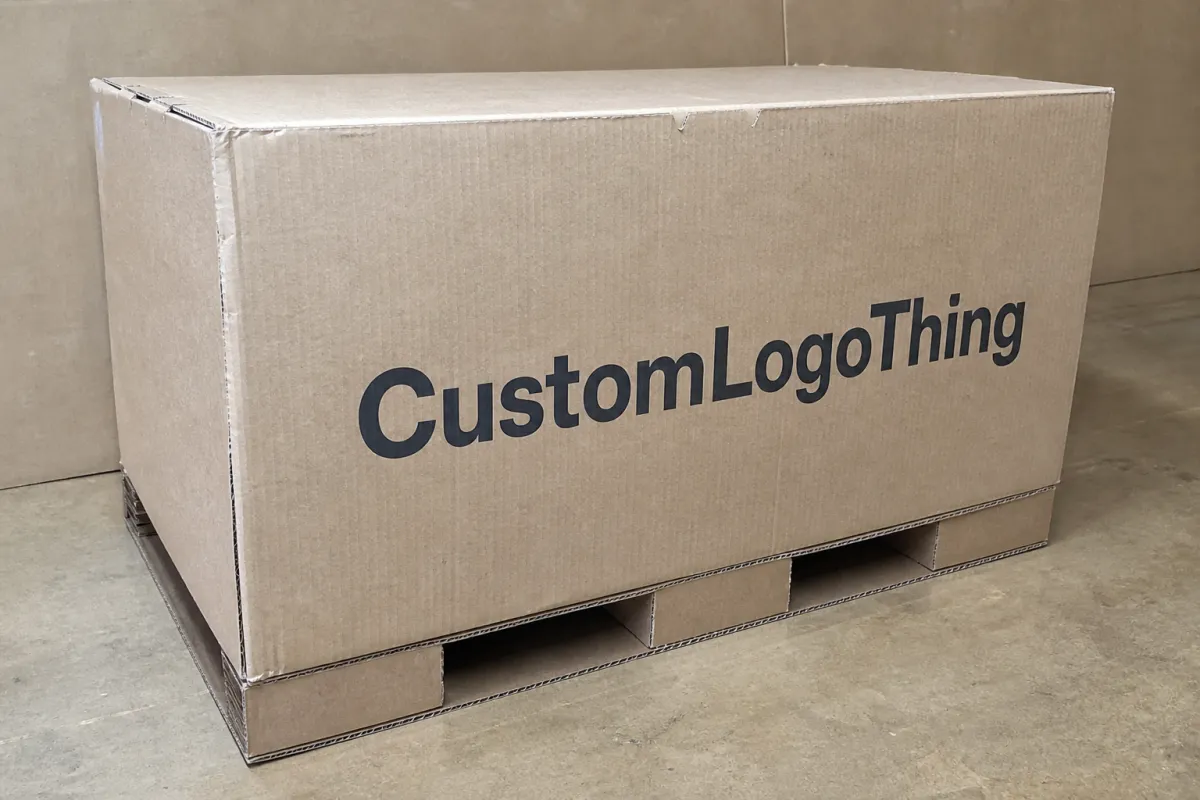
One loose layer on a stacked pallet is enough to cause trouble. The load shifts during stretch wrap, a corner loses support, and the next handling move finishes the job. One crushed edge is annoying. A few crushed edges become a claim, a credit, or a rejected delivery. Generic cartons leave more room for that drift because they are made for convenience, not for a specific pallet pattern or handling path. Custom pallet carton boxes close that gap.
The hidden cost of "good enough" packaging shows up everywhere. Cube waste drags down freight efficiency. Extra void fill eats labor and material. A carton that is a little too large can lose stability under compression. One that is too tight slows loading and turns product insertion into a daily irritation. On a busy line, those seconds add up. Multiply them across hundreds or thousands of cartons and the labor hit becomes obvious before damage even enters the picture.
When the carton is built around the pallet footprint, product dimensions, and handling method, the load behaves more predictably. That matters in warehouse transfers, multi-stop distribution, and long-distance freight where vibration and stacking pressure are part of the ride. Good fit can reduce the need for fillers, corner protectors, or last-minute fixes. It also helps palletizing run faster because operators are not fighting a box that refuses to line up with the load pattern.
There is a branding angle too, and it is not decorative fluff. A carton that looks deliberate on the dock suggests the program behind it is deliberate as well. In package branding, that matters. Clean print, accurate labeling, and consistent geometry make a pallet look managed instead of improvised. For buyers trying to align branded packaging with logistics discipline, that visual control is part of the job, not a bonus feature.
“The cheapest carton is not the cheapest shipment if it creates rework, repacking, or a damage claim.”
That is blunt because it is true. A lower unit price can still lead to a higher landed cost if the carton does not protect the load or slows the operation. The strongest carton is not always the heaviest one. It is the one sized to the pallet, matched to the product, and built for the path it actually travels.
What custom pallet carton boxes are and how they work
At a basic level, custom pallet carton boxes are oversized corrugated cartons or pallet-sized containers made to ship, store, or stage multiple units on a pallet base. Some work as bulk shipper boxes. Others serve as display-ready outer cartons. A few are built for warehouse transfers where protection matters more than shelf appearance. The common thread is scale: these boxes are defined by the pallet footprint and the load they carry, not by a standard mailer size someone found in a catalog and hoped would behave.
The structure matters more than many buyers expect. Board grade, flute type, panel count, and lid style all shape how the carton performs under load. A single-wall carton may be enough for lighter contents or short internal moves. Heavier or more fragile product often needs double-wall construction. Flute profile affects cushioning and stacking strength. Edge crush resistance, compression strength, and moisture resistance are not interchangeable terms, and treating them like they are usually ends in a spec mismatch.
In a well-designed pallet carton, dimensions start with the pallet footprint and build upward. That sounds obvious. It also changes the design logic. Instead of asking the product to fit a random carton, the carton is built to support a planned load pattern. That makes pallet overhang, stack height, and wrap clearance easier to control. It also lowers the odds that the top layer becomes unstable after stretch wrap goes on and tightens everything like an overzealous clamp.
Common use cases include bulk retail replenishment, industrial components, e-commerce back-end fulfillment, seasonal promotions, and warehouse-to-warehouse transfers. In retail packaging, the carton may need to survive shipping and display. In industrial settings, readability and protection may matter more than graphics. For e-commerce replenishment, fast loading and carton consistency often matter more than ornament. The same format can serve all of those cases, but the construction is not identical from one use to the next.
Large printable surfaces are another reason these cartons matter. They can carry logos, handling icons, product counts, compliance notes, SKU identifiers, and barcodes in one place. That makes them useful as shipping containers and as information carriers. A clear exterior can reduce handling errors and speed sorting in the warehouse, especially when the load passes through several touchpoints before final use.
If you are comparing packaging formats, think of these as Custom Printed Boxes on a larger scale, with a much heavier emphasis on compression, stacking, and handling. The printing still matters. The structure does the heavy lifting.
Key factors that shape fit, protection, and brand impact
The best carton design starts with a few hard numbers. Pallet size comes first because the footprint determines the base geometry. Product count per layer follows, then total stacking height, weight per carton, and any clearance needed for wrap, straps, or hand insertion. If those numbers are vague, the box will be vague too. Packaging buyers often find out that a design problem was really a measurement problem wearing a fake mustache.
Protection comes next. Board strength should match the load, not guess at it. A carton carrying dense product through several distribution touches may need a stronger board grade and a higher compression target than a carton used only for internal transfer. Moisture resistance matters more if the load sits in a humid dock, cold storage area, or unconditioned warehouse. Uneven weight distribution may call for inserts or dividers to stop point loading and panel bowing before they start.
Branding helps, but only within the limits of corrugated production. Print area is real estate, and seams, folds, and crush zones cut through it. Color consistency on corrugated surfaces is possible, but it needs to be planned around board texture and print coverage. A big logo on the side panel looks good only if it stays away from critical folds and handling wear. Barcodes need to stay readable, which means placement should avoid corners, tape lines, and high-abrasion zones.
Fulfillment realities matter just as much. A box can pass a design review and still fail in a warehouse if lift-truck handling, hand-sorting, or conveyor transfer was not considered. If the carton gets opened more than once before end use, the closure method matters. If it has to survive several touches, the outer surface needs to tolerate scuffs, labels, and repeated movement. Package branding is only useful when it survives the path the carton actually takes.
Sustainability deserves a practical lens, not a slogan. The goal is not to use the least material in every case. It is to use the right amount of board, in the right construction, so the carton does its job without excess waste. That may mean reducing void fill, trimming unnecessary overbuild, or choosing a format that cuts secondary packaging steps. Organizations tracking waste reduction can also align carton choices with broader recycling goals, and resources from the EPA recycling guidance and FSC certification standards can help frame those decisions responsibly.
For buyers who want a quick filter, these are the variables that usually matter most:
- Pallet footprint and whether overhang is allowed
- Product weight per carton and compression load
- Stacking height and racking conditions
- Humidity exposure and storage duration
- Print coverage, barcode placement, and artwork complexity
- Handling method, including forklift, conveyor, or manual movement
The clearer those inputs are, the less likely the final carton will need revision after the samples arrive and everyone suddenly discovers a number was "about" instead of exact.
One practical detail often gets missed: the best technical spec can still fail if the warehouse team cannot use it consistently. If the carton is too wide for a standard pallet jack route, or too tall for the staging rack, the spec is technically correct and operationally annoying. That is not a small distinction. It is usually the difference between a carton that gets adopted and a carton that gets blamed.
Process and timeline: from brief to shipment
The intake step usually decides whether a carton program stays efficient or becomes expensive. Before design starts, gather the pallet type, footprint, product dimensions, unit weight, target stack height, print requirements, and performance expectations. If the box is replacing an existing format, include photos of the current pack-out and a note on what is failing. That gives the supplier context instead of a bare dimension sheet and a prayer.
Sampling is where good programs separate from hopeful ones. Structural mockups, fit checks, and pallet tests catch issues that are hard to see in a drawing. A carton can look correct on screen and still fail because wrap tension pulls a corner inward or the product shifts under compression. Standards from groups like ISTA can guide how transport testing is approached, especially when vibration, drop resistance, or compression performance are central concerns.
Artwork and approval usually control the schedule more than the machine run itself. Dieline review, proof corrections, color expectations, and sign-off timing all matter. If the carton is print-heavy, the team should confirm which surfaces are printable, where seams interrupt the image, and how much tolerance exists for registration. The earlier that gets sorted out, the fewer last-minute changes will push the schedule sideways.
A realistic timeline depends on complexity. A simple size adjustment with a single-color logo moves faster than a fully custom structure with double-wall board, multiple graphics panels, and special finish requirements. Structural changes can require extra mockups. Print complexity can add proof cycles. Special board specs can affect sourcing and production slots. Rush orders happen, but they usually mean tighter approvals and less room to change your mind after the brief is issued.
Delays usually come from the same handful of problems: missing measurements, unclear stacking rules, late artwork, and last-minute spec changes. None of that is mysterious. The safest approach is to treat the carton like a technical component, not a commodity box. Once the team agrees on dimensions, performance requirements, and artwork zones, the rest gets much more predictable.
A simple milestone list helps keep the work moving:
- Brief
- Mockup
- Test
- Approve
- Produce
- Pack
- Ship
That sequence looks basic because it is. It also prevents the very common mistake of approving graphics before the carton structure is settled. For pallet-sized packaging, structure first is usually the smarter order.
If the carton is meant to travel through multiple distribution nodes, build in time for one extra round of review. That is not a delay for the sake of caution. It is the normal cost of avoiding a field failure after the first production run. A day spent checking the pallet build is usually cheaper than a week spent arguing about damage responsibility.
Cost and pricing: what drives unit cost and MOQ
Pricing for custom pallet carton boxes comes down to scale, structure, and print intent. Size is the first driver because larger cartons use more board and take more material handling. Board grade comes next. A stronger board or multiwall construction costs more than a lighter build, but that extra spend can be justified if the load is heavy, stacked high, or exposed to rough handling. Print coverage matters too: one-color branding is not priced like full-panel graphics with multiple passes and tighter registration requirements.
Special cutting, inserts, and unusual closures can add cost as well. The same goes for moisture-resistant treatments or premium finishing. A buyer looking only at unit price can miss the part where a better carton saves money in labor, damage, or freight efficiency. Landed cost is the number that matters, not just the box price.
Larger cartons can be cheaper per unit in some cases because one setup is spread across a high-value load. They can also become more expensive to ship and store if they eat too much cube. That is the tension at the center of pallet packaging: material efficiency versus logistics efficiency. If the carton is oversized, freight density suffers. If it is too tight, loading labor rises. The least expensive carton on paper is not always the least expensive carton in practice, which is inconvenient but not exactly shocking.
Minimum order quantity usually follows the same logic. Smaller runs carry a higher unit price because setup, plates, and changeovers are divided across fewer boxes. Larger runs bring the per-unit price down, but only if storage, inventory shelf life, and forecast confidence support the volume. A buyer with uncertain demand should ask for tiered quotes. That makes the price curve easier to see instead of pretending one number tells the whole story.
The table below shows how common variables tend to influence both cost and buyer decisions.
| Option | Typical Impact on Unit Cost | Typical Use Case | Buyer Tradeoff |
|---|---|---|---|
| Plain single-wall carton | Lowest | Light loads, internal moves, low print needs | Lower price, but less compression strength |
| Printed single-wall carton | Low to moderate | Branded packaging for moderate loads | Better presentation, modest print setup cost |
| Double-wall custom carton | Moderate to high | Heavier product, longer transit, more stack pressure | Stronger load performance, higher material cost |
| Full-color printed carton | Moderate to high | Retail packaging, visible dock-to-shelf presentation | Stronger brand impact, more proofing and print control |
| Custom-structured carton with inserts | Highest | Fragile product, irregular loads, multi-item kits | Best protection, more design and tooling effort |
Ask for quote tiers at several quantities, and separate pricing for samples, freight, and revisions. That makes the comparison easier. It also shows where the real cost pressure sits. Sometimes the base box price is reasonable, but freight to get oversized cartons to the plant or warehouse is the bigger issue. Other times the sample program is cheap and artwork revisions are not. A clean quote should show those differences instead of hiding them in one tidy number.
One more pricing point: the cheapest quote can become the most expensive option if it ignores performance. If a carton fails compression testing or creates product damage, the savings disappear fast. That is why packaging design should be judged on total system cost, not unit cost alone. For buyers balancing custom printed boxes against structural needs, that is often where the right decision becomes obvious.
A useful purchasing habit is to compare cost against three questions, not one: Will the carton survive the route? Will the warehouse team use it without friction? Will the outside presentation still look intentional after handling? If the answer is no to any of those, the quote is not actually cheap. It is just incomplete.
Common mistakes that undermine durability and branding
The first mistake is measuring only the product and ignoring the pallet system around it. A carton that fits the product perfectly may still fail once wrap tension, pallet overhang, or stacking clearance are added. The pallet footprint is not a detail. It is the base of the design. If it is wrong, everything above it becomes less stable.
Under-specifying board strength is another familiar error. It shows up most often with heavy loads, humid storage, or multi-stop distribution where the carton gets handled more than once. A pack that looks fine in a controlled environment can buckle under real compression. Buyers sometimes find out too late that the carton was selected for price instead of performance. That tradeoff is avoidable if load weight, stack height, and storage conditions are defined early.
Branding can fail in very mechanical ways. A logo that crosses a seam may look distorted. A barcode placed too near a fold may scan badly or not at all. Handling icons can disappear into a scuffed panel if they are printed where forklifts and straps do the most damage. The design problem is not just aesthetic. It is also placement discipline, which is less glamorous than a fancy mockup but far more useful.
Skipping pallet tests is another common miss. Screen approvals are useful, but they do not replace an actual build with actual product. Vibration, compression, and handling pressure expose issues that artwork proofs cannot show. If the box will move through a distribution network rather than a single direct shipment, the test is worth the time.
Approval order matters too. Teams sometimes finalize artwork before confirming structural dimensions or production constraints. That creates rework when the dieline changes or the printable area shifts. The smarter sequence is structural first, artwork second, then final sign-off. That way, the visual design supports the carton instead of fighting it.
For a quick self-check, these are the warning signs that a carton spec needs another pass:
- Product dimensions were measured without wrap or strap clearance
- Board grade was chosen before the load test was defined
- Barcode or logo placement ignores seams and corners
- No sample was loaded onto a real pallet
- Artwork was approved before the dieline was locked
Those five issues account for a ridiculous amount of packaging rework. Fixing them early is cheaper than cleaning them up after production, which is how most expensive mistakes like to introduce themselves.
Another mistake worth calling out is assuming the same spec will work forever. Seasonal humidity, a new warehouse route, or a different pallet supplier can change carton behavior enough to matter. Corrugated board is predictable, but it is not magic. A program that held up last year may need a small spec change after the shipping environment changes.
Expert tips and next steps for a better carton program
The best carton programs usually start with a one-page spec sheet. That sheet should include dimensions, weight, pallet type, print needs, stacking rules, storage conditions, and shipment distance. It does not need to be fancy. It needs to be complete enough that a designer can make decisions without guessing. A clear brief also makes it easier to compare bids from different suppliers without comparing apples to oranges and calling it strategy.
Test one carton on a real pallet with real product before committing to a full run. Then check the things that actually fail in the field: clearance, stability, labeling, handling, and how the carton behaves after wrap or strap tension is applied. If the carton doubles as a retail or display pack, inspect visibility from several angles. What looks strong in a production room can look cluttered on a store floor.
Comparing two or three construction options is often the smartest move. One option may be lighter and cheaper, another may improve compression strength, and a third may support stronger branding. The goal is not to optimize one variable and ignore the others. It is to balance cost, protection, and presentation in a way that fits the shipment. That matters even more for retail packaging, where the outer carton may shape how the product is perceived before anyone opens it.
If the carton program is part of a broader packaging redesign, coordinate it with labels, inserts, and secondary packs. That keeps the whole system aligned. It also stops branded packaging and logistics packaging from working against each other like two departments on different planets. Better results usually come from treating the carton as part of the larger product packaging ecosystem, not as a random purchase order.
Before locking the spec, use a short decision checklist:
- Confirm the loading method
- Confirm storage conditions
- Confirm shipment distance and touchpoints
- Confirm whether the box must also display branding
- Confirm whether the carton needs to support retail or warehouse presentation
Then document the final spec for reorder consistency. That simple step saves time later, especially if the job comes back after a seasonal gap or a supply chain change. The closer the reorder file is to the approved sample, the fewer surprises the next run will produce.
For teams managing more than one facility, keep the approved carton record tied to the exact pallet configuration and storage condition it was designed for. A carton that works in a climate-controlled warehouse may not behave the same way in a hot dock or a cold storage lane. Good documentation prevents those environment changes from turning into somebody else's emergency.
If you are ready to move from concept to purchase, start by collecting measurements and asking for a structural sample. Approve the artwork only after the die line is settled. Lock the production schedule once the tests pass. Keep the final carton record with the rest of your packaging design files so the next run of custom pallet carton boxes is faster, cleaner, and easier to quote.
The most practical takeaway is simple: define the pallet, define the load, define the handling path, then build the carton around those facts. That sequence keeps the box from becoming a compromise with a logo on it.
FAQ
What are custom pallet carton boxes used for?
They are used to ship, store, or stage multiple products on a pallet in a carton sized to the load. Common uses include bulk retail, industrial parts, warehouse transfers, and display-ready shipments. They help reduce shifting, simplify handling, and create a more consistent branded presentation.
How do I measure for custom pallet carton boxes?
Measure the full pallet footprint, not just the product, then add clearance for wrap, straps, and handling. Include product height, stacking pressure, and any inserts or dividers that change the internal size. Share weight per box so the carton can be matched to the right board strength.
What affects the cost of custom pallet carton boxes most?
Size, board grade, print coverage, and quantity have the biggest impact on unit price. Small runs usually cost more per box because setup and tooling are spread across fewer units. Special structures, moisture resistance, and premium graphics can also raise pricing.
How long does it take to produce custom pallet carton boxes?
Timeline depends on whether you need a simple size change or a fully custom structure with print. Mockups, approvals, and artwork review often take longer than the actual run once specs are finalized. Rush orders are possible in some cases, but they usually require tighter approvals and fewer changes.
Can custom pallet carton boxes include branding and barcodes?
Yes, large carton surfaces can carry logos, product details, handling icons, and barcodes. Placement should avoid seams, folds, and high-wear areas so the information stays readable. For best results, confirm print zones early so branding supports both logistics and shelf impact.

