Buyer Fit Snapshot
| Best fit | Custom Pallet Sleeves Wholesale projects where brand print, material claims, artwork control, MOQ, and repeat-order consistency need to be specified before quoting. |
|---|---|
| Quote inputs | Share finished size, material target, print colors, finish, packing count, annual reorder estimate, ship-to region, and any compliance wording. |
| Proofing check | Approve dieline scale, logo placement, barcode or warning zones, color tolerance, closure strength, and carton packing before bulk production. |
| Main risk | Vague material claims, crowded artwork, missing packing details, or unclear freight terms can make a low unit price expensive after revisions. |
Fast answer: Custom Pallet Sleeves Wholesale: Pricing, Specs, Lead Times should be specified like a repeatable production item. The safest quote records material, print method, finish, artwork proof, packing count, and reorder notes in one written spec.
Production checks before approval
Compare the actual filled-product size with the drawing, then confirm tolerance on folds, seals, hang holes, label areas, and retail display edges. Reserve space for logos, QR codes, warning copy, and material claims before decorative graphics fill the panel.
Quote comparison points
Review material grade, print process, finish, sampling route, tooling charges, carton quantity, and freight assumptions side by side. A quote is only useful when the supplier can repeat the same color, closure quality, and packing count on the next order.
Custom Pallet Sleeves Wholesale: Pricing, Specs, Lead Times
Custom Pallet Sleeves Wholesale look simple until a real load hits a real dock. Then the “simple” part disappears fast. Pallets get stacked, nudged, tilted, and sent through humidity, vibration, and forklift driving that would make a calm person mutter into their coffee. Tape and stretch film can hide a weak load for a minute. They do not fix it. Custom pallet sleeves wholesale step in where those shortcuts tap out.
For a packaging buyer, the appeal is pretty obvious once you have seen enough freight damage reports. You get a flat-shipping component you can order in volume, store without eating half the warehouse, and pull into production without turning every pallet into a last-minute rescue job. That repeatability matters. It is the difference between a controlled shipping method and a pile of one-off decisions held together by bad habits and too much wrap.
If your operation already uses branded packaging, custom printed boxes, or other Product Packaging That has to look clean and travel well, a sleeve is usually the missing layer. It gives the load structure. It also gives package branding a larger surface to work with, which beats asking every carton to carry the whole presentation on its back. I have seen plenty of programs try to make the master carton do all the work. It does not end well.
A sleeve should stop movement before it turns into damage. If the outer wall is only there for show, it is underperforming.
There is also a plain operational truth here: warehouse teams like packaging that behaves the same way every time. No surprises. No weird fold sequence. No boxy mystery that only one person knows how to assemble. Custom pallet sleeves wholesale can deliver that consistency if the spec is done properly and the load data is real.
Why Custom Pallet Sleeves Wholesale Beat Piecemeal Packaging
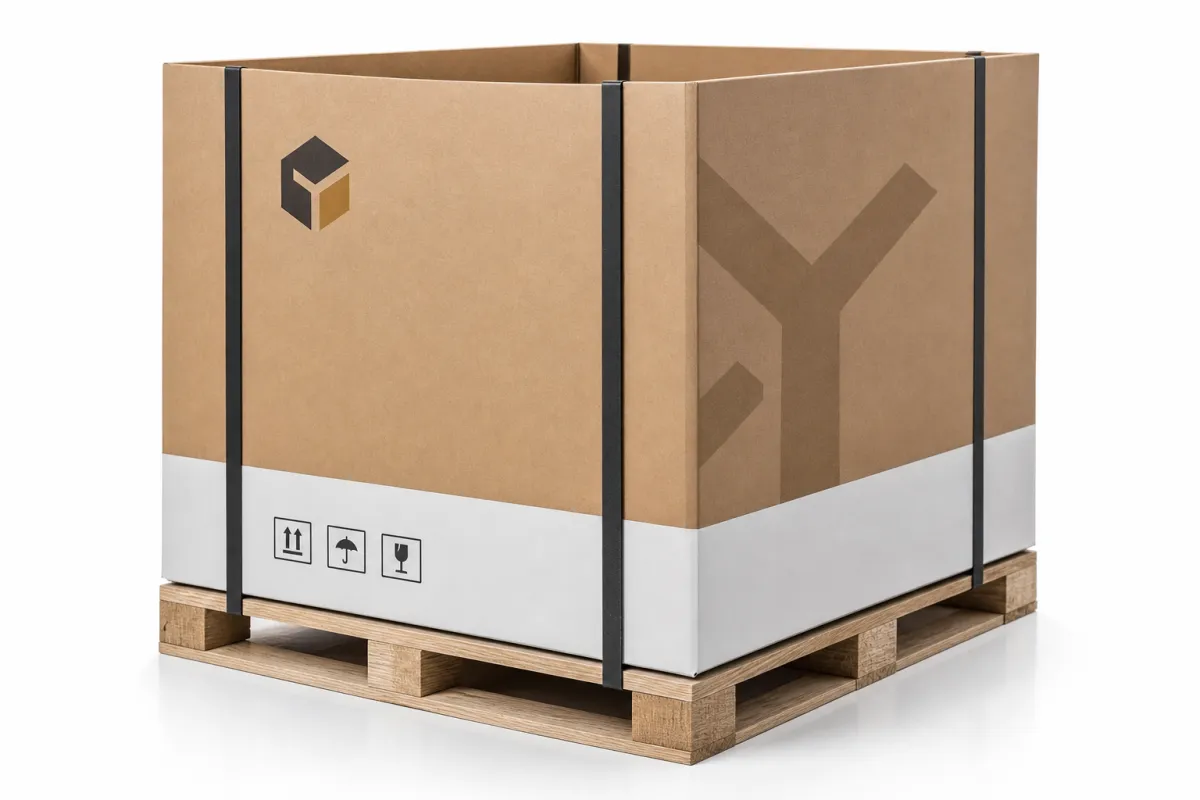
Custom pallet sleeves wholesale beat improvised mixes of wrap, tape, corner pads, and crossed fingers because they create a defined outer shell around the load. That shell does more than one job. It helps hold cartons together, improves the pallet profile, and gives warehouse teams a cleaner unit to move with forklifts and pallet jacks. Multiply that across dozens or hundreds of pallets a day and the payoff gets hard to ignore.
Stretch film gets credit it does not always deserve. It can tighten around a good load. It can also tighten around a bad one and make everyone feel better until transit reminds them otherwise. Irregular product, partial pallet fills, humidity shifts, and side pressure all expose the same problem: film is containment, not structure. Custom pallet sleeves wholesale give the load a more repeatable shape, which is exactly what mixed-SKU freight and retail replenishment usually need.
That distinction matters more than people think. A sleeve does not magically make a poor pallet build good, but it can turn a borderline stack into something much easier to move, scan, and receive. A cleaner outer wall helps reduce snagging. It also makes the pallet easier to sort in a crowded yard. That sounds boring. It is not. Boring is excellent in logistics.
The money side is not subtle either. Fewer loose cartons means less rework. Less rework means fewer interruptions. A cleaner load also means fewer repacks, less scuffing, and a lower chance of rebuilding the whole thing before it leaves the dock. That is why custom pallet sleeves wholesale often beat a cheaper-looking method that keeps charging hidden labor against the operation.
Buying wholesale matters because the savings compound. A single sleeve change can reduce wrap use. A full program can standardize the shipping method across multiple SKUs or facilities. Distributors get easier staging and replenishment. Manufacturers get better protection between plants, warehouses, and retail DCs. The buyer is not just purchasing a sleeve. The buyer is locking in a process that can be repeated without constant tinkering.
Presentation counts too. A load wrapped in random layers of film and tape tells people the operation is improvising. A load protected with custom pallet sleeves wholesale tells them someone thought ahead. That helps in transit, sure. It also helps at receiving, where retail packaging, package branding, and shelf readiness often matter as much as freight survival.
There is another upside that gets missed in quick comparisons: training. If a warehouse has to teach five different workers how to build the same pallet with different wrap patterns, somebody is going to improvise. Not maliciously. Just because that is what people do under pressure. Custom pallet sleeves wholesale reduce that chaos by making the build more predictable. Less guesswork. Fewer bad habits. Fewer calls to the supervisor asking what "close enough" means today.
How Custom Pallet Sleeves Wholesale Are Built for Your Load
Custom pallet sleeves wholesale are usually built from corrugated board or heavy paperboard, scored and folded into a rigid outer wall around a palletized load. Some jobs use the sleeve alone. Others pair it with a lid and base, straps, corner posts, or light film. The point is not to force one format onto every load. The point is to shape the sleeve around the actual shipping problem.
Design starts with the pallet footprint, then the product stack, then the handling path. A standard 48 x 40 pallet shows up often, but plenty of programs run 48 x 48, 42 x 42, or custom dimensions. Loaded height matters just as much as base size. A sleeve that runs too tall wastes board and freight. A sleeve that runs too short leaves the top layer exposed to crush and impact. Custom pallet sleeves wholesale should be sized to the load that actually ships, not the one that looks neat on a sketch.
Good builds usually include score lines for folding, handhold cutouts for safer handling, and seam layouts that fit the way the warehouse assembles the sleeve. Some loads need a fast-open structure. Others need a sleeve that locks into shape and supports stacking pressure from the pallet above it. If the sleeve gets handled repeatedly, score placement and fiber direction start to matter a lot. A few millimeters in the wrong place can turn a useful part into an annoying one.
Mixed loads are where custom pallet sleeves wholesale earn their keep. The sleeve gives a clean outer boundary around cartons that do not all share the same size. That boundary helps keep the load from leaning or buckling. It also makes labeling, scanning, and visual identification easier from a distance, which warehouse teams usually appreciate more than the marketing deck does. One plant manager told me the sleeves cut down on "what pallet is that?" questions almost immediately. That kind of time savings does not look glamorous on a spreadsheet, but it shows up everywhere else.
Some programs use sleeves as one layer in a larger containment setup. A sleeve might sit over a stack stabilized with a base tray or corner posts. Another setup might use the sleeve with very little film, mainly to keep the top surface clean. That kind of flexibility is why custom pallet sleeves wholesale fit export freight, closed-loop supply chains, and plenty of programs in between.
For buyers already using our Custom Packaging Products for boxes, trays, or printed components, sleeves usually become the next sensible move because they solve a different problem: pallet-level structure, not just unit presentation. For repeat orders, our Wholesale Programs keep reordering straightforward once the dimensions and board grade are set.
Here is the part people skip until they get burned: the best sleeve design is the one that fits your actual handling process, not the one that looks clean in a mockup. If the sleeve needs two people to assemble it but the warehouse works one-person turns, that is a problem. If the sleeve folds beautifully but tears at the handhold, that is a problem too. Real-world fit beats pretty renderings every time.
Material, Structural, and Print Specifications to Lock In
Material choice is where custom pallet sleeves wholesale either become dependable or become an expensive lesson. Corrugated board is the usual starting point, but the grade has to match the load weight, stack height, shipping distance, and the environment the pallet will face. A light distribution lane may be fine with a single-wall build. A taller or heavier load usually needs a stronger board combination with better compression resistance. Moisture resistance can matter too, especially for cold storage, humid docks, and export lanes.
The first spec to settle is board strength. That might mean ECT values, burst strength, or both, depending on how the supplier constructs the sleeve. A lighter sleeve can work for a modest load. A tall pallet with serious stack pressure needs a stronger structure. Custom pallet sleeves wholesale should never be quoted on “probably fine.” They should be quoted against the real carton weight, pallet height, and handling conditions.
Geometry comes next. You need the pallet footprint, loaded height, any planned overhang, and the clearance needed for assembly. If the product is packed tightly, the sleeve may need very accurate internal dimensions. If the cartons vary a bit, a small amount of tolerance can help the sleeve install without tearing or bowing. Packaging design stops being decorative right here. A good sleeve is a load interface, not a rectangle with opinions.
Structural details matter just as much. Score placement affects how easily the sleeve folds. Seam style changes assembly speed. Fold direction affects whether the sleeve stands square or springs open. If the load will be stacked, the sleeve needs to resist compression from above. If it ships once and disappears, the design can lean harder toward efficiency and material savings. Custom pallet sleeves wholesale can support either direction, but the build has to match the program.
Print is the part many buyers underestimate. A plain kraft sleeve is usually the cheapest option, but even a single color can make the pallet easier to identify and the brand easier to recognize. Add product codes, handling warnings, orientation arrows, or warehouse sorting marks and the sleeve starts doing real operational work. Buyers already investing in custom printed boxes understand the logic: every printed surface either helps the operation or asks it to compensate.
Print also affects purchasing more than people expect. If your brand team wants a second PMS color and the warehouse only needs a part number, those are not the same job. Combine them only if the extra ink actually pays for itself. Otherwise, you are just decorating a shipping component. Nice, maybe. Useful, not always.
Here is a clean way to compare the options:
| Option | Typical Use | Relative Unit Cost | Strengths | Tradeoffs |
|---|---|---|---|---|
| Custom pallet sleeves wholesale | Mixed loads, stacked cartons, retail replenishment, export pallets | Moderate to higher, depending on size and print | Rigid outer wall, cleaner presentation, better repeatability | Needs correct sizing and board spec |
| Stretch wrap | Simple stable pallets and short internal moves | Low material cost, but labor adds up | Fast to apply, easy to source | Weak against side pressure and poor load patterns |
| Shrink film | Bundled retail units and display-ready packs | Low to moderate | Good visual finish and tight finish around the load | Requires heat equipment and may not suit large mixed pallets |
| Reusable plastic sleeve system | Closed-loop distribution and repeated return cycles | High upfront cost | Long service life and strong containment | Needs return logistics and asset tracking |
That table is why custom pallet sleeves wholesale often make sense even when the unit price is not the lowest number on the page. The right system cuts labor, protects the load, and keeps the operation from paying for the same packaging problem over and over.
One more spec to think about is surface finish. A matte, uncoated kraft sleeve will behave differently than a coated one in damp storage or under friction. If the load is moving through a cold chain or a humid dock, you want to ask how the board responds after a few hours on the floor. Not every failure shows up during the first minute.
Custom Pallet Sleeves Wholesale Pricing, MOQ, and Freight Factors
Pricing for custom pallet sleeves wholesale gets clearer once you break it into the pieces that actually move the number. Raw board cost is one. Converting complexity is another, which includes score patterns, cutouts, seam style, and any print plates or finishing steps. Size efficiency matters too, because larger sleeves consume more board and reduce sheet yield. Freight rounds it out, and freight can matter more than people expect because oversized packaging still has to move from the converter to the warehouse, even if it stores flat.
For broad planning, simple unprinted sleeves in a healthy volume program may land around $1.25 to $2.75 per unit. Larger or printed sleeves with stronger board can move into the $3.00 to $6.00 range or higher. That is a working range, not a promise. Custom pallet sleeves wholesale depend on pallet footprint, board grade, print coverage, and how many design changes happen before approval. Still, those numbers help buyers compare sleeves against the real cost of alternatives instead of a fantasy version of “cheap packaging.”
MOQ follows the same logic. A supplier may be comfortable with a few hundred units on a straightforward size. A larger or more customized sleeve may need a few thousand to cover setup. Print can push the minimum higher, especially if the job needs plates or extra run time. That is normal corrugated converting. The useful part is asking about MOQ early so you do not build a packaging plan your purchasing volume cannot support. Custom pallet sleeves wholesale need to fit the buying rhythm of the facility, not just the pallet dimensions.
Freight is another place where smart buyers save money without forcing the wrong packaging choice. Sleeves ship flat, which makes them far more efficient than pre-assembled rigid containers. Still, large panels take space, and shipping cost climbs if the sleeve dimensions are oversized or the freight lane is far from the converter. A quote should include the delivery address, not just the part size. A sleeve that looks cheap ex works can feel very different once it lands at receiving.
Here is a practical way to prepare a clean quote request for custom pallet sleeves wholesale:
- Provide pallet footprint, loaded height, and product weight.
- Share photos of the current shipping method and any damage points.
- State the estimated monthly or annual volume.
- Note whether you need one-color print, labels, or no print at all.
- Give the target ship date and the warehouse receiving window.
That list keeps the conversation grounded. It also helps the supplier avoid quoting the wrong structure, which is one of the fastest ways packaging programs drift off budget. Buyers who already manage custom printed boxes know the pattern: the cleanest quotes come from exact dimensions, known quantities, and clear expectations about print and freight.
One more thing matters. Sometimes a sleeve looks more expensive than a wrap-only program until labor, rework, and damage are counted. Then the sleeve wins. Sometimes it does not. Honest pricing should include total cost, not only piece price. That is why custom pallet sleeves wholesale need to be judged as a shipping system, not as a sheet of board with a line item.
If you are comparing suppliers, ask for the quote to separate board, converting, print, and freight. That keeps the conversation honest. It also makes reordering easier later because you can see which part of the bill changes if the load size moves or the print changes. Hidden bundles are convenient until nobody can explain why the price jumped 18 percent.
Production Process, Proofing, and Lead Times
The production path for custom pallet sleeves wholesale usually starts with load data, then moves into structure recommendation, then quoting, then proofing or sampling if the design is new. If the sleeve will carry a high-value load, I would want a sample check before full production. A flat mockup can catch folding issues. A real sample tells you whether the sleeve stands square, clears the pallet, and assembles the way the warehouse team expects.
Lead times come down to a few predictable factors. Straightforward repeat orders move faster because the dimensions and print are already approved. New builds take longer because the design has to be confirmed, cut paths need to be set, and artwork needs review. Changes after approval are a classic delay trigger. If the loaded height changes, if the pallet footprint changes, or if the print copy changes, the schedule can shift from “ready” to “not yet.”
A realistic schedule for custom pallet sleeves wholesale often looks like this: a simple repeat order may move in roughly 10 to 15 business days after proof approval, while a new design can take 2 to 4 weeks or more depending on complexity, print, and plant capacity. Larger runs, special coatings, and tight freight windows can extend that. That is not slow. That is production math. Planning beats rushing almost every time.
If the job needs performance validation, the conversation may include ISTA test methods or internal compression and transit checks based on ASTM practices. Buyers who want a more formal packaging review often ask for documentation that aligns with those standards, especially when the shipment sits inside a broader compliance or sustainability review. If you want to see how industry bodies frame transit testing and material choices, these resources are useful starting points: ISTA and FSC. They do not replace your own load testing, but they are good reference points when you want the packaging design to be based on more than a guess.
Approval checkpoints should be exact. Confirm the final pallet dimensions. Confirm the board grade. Confirm the print copy and colors. Confirm the pallet count per shipment. Confirm the receiving window. Once those five items are locked, custom pallet sleeves wholesale are much easier to launch cleanly and repeat without drama. Leave them loose and production ends up carrying the uncertainty, which is never a fun way to spend money.
Keep a photo record of the current load as well. A clear image of the pallet, the top stack, and the side profile often tells a supplier more than a paragraph of description ever will. That matters for mixed loads and retail packaging programs where cartons change from order to order. Real references usually lead to better sleeve specs than generic descriptions do.
From an experience standpoint, this is where most good programs separate themselves from the messy ones. The teams that win are the ones that measure once, verify twice, and do not let a small artwork change sneak in as a "minor update." That kind of drift turns into production delays faster than people admit.
Why Choose Us for Custom Pallet Sleeves Wholesale Programs
At Custom Logo Things, custom pallet sleeves wholesale are not treated like a print job with a shipping label. They are treated like a load-management problem that happens to use board. The goal is to match the packaging to the pallet so the load moves better, looks better, and costs less to handle. That takes judgment. The best supplier asks how the load is handled, where it travels, what the warehouse team is dealing with, and whether the sleeve works alone or needs other components beside it.
That practical view matters because a pallet sleeve is only one part of the system. If the cartons are weak, if the load is top-heavy, or if the route includes humidity and vibration, the sleeve has to be specified with those conditions in mind. A supplier who only talks about board thickness and ignores how the product behaves is missing the point. Custom pallet sleeves wholesale should be engineered around load behavior, not just around a rectangle on paper.
We also know buyers are rarely sourcing sleeves in a vacuum. They are balancing product packaging, retail packaging, warehouse speed, and package branding across more than one family of items. If your operation already buys boxes, trays, or other custom printed boxes, the sleeve program should fit the same approval rhythm and reflect the same level of control. That is where a solid wholesale partner helps: repeat ordering, dimension control, and predictable lead times without turning every request into a special project.
For many teams, the real value of custom pallet sleeves wholesale is quote clarity. You need to know where the price comes from, what changes it, and how the next reorder will behave. You also need answers fast enough to keep the warehouse schedule moving. Clear pricing, consistent dimensions, and direct communication are not extras. They are the basics.
Here is the buyer mindset I run into most often: the load is already expensive to move, so packaging should reduce friction instead of creating more of it. A sleeve that arrives flat, folds correctly, supports the stack, and prints cleanly can save time every single day it is used. A sleeve that needs constant adjustment becomes another problem on the dock. That is why custom pallet sleeves wholesale deserve the same care as any serious packaging design decision.
Ongoing procurement matters too. Forecasting volume, scheduling reorders, and keeping the same dimensions in rotation turns a one-time packaging win into an operating advantage. That is the gap between a decent sample and a real production program. If the sleeve is going to live in your operation, it has to behave on the fiftieth order, not just the first one.
That is also where trust gets built. Not through big promises. Through consistent dimensions, honest lead times, and specs that do not wobble every time the order changes a little. Buyers notice that stuff. They remember it too.
Next Steps to Order Custom Pallet Sleeves Wholesale
The fastest way to move a custom pallet sleeves wholesale project forward is to measure the load honestly. Start with the pallet footprint. Measure the fully packed height. Note the product weight and any overhang. After that, gather photos of the current packaging and decide what the real business goal is: lower damage, reduce wrap use, improve stack stability, simplify handling, or make the load look cleaner at receiving.
That goal matters because custom pallet sleeves wholesale solve different problems depending on how they are built. A buyer looking for a cleaner presentation may choose a printed sleeve with a simple brand mark. A buyer fighting load movement may need stronger board and tighter dimensions. A buyer trying to reduce repacking may need a sleeve that folds faster and pairs cleanly with the current line. The spec should follow the problem, not the other way around.
If you want a quote that reflects reality instead of a rough guess, include monthly or annual volume, shipping location, print requirements, whether you need a sample first, and the timeline you have to work with. From there, a supplier can recommend the board structure, talk through whether a lid or base makes sense, and help you decide whether custom pallet sleeves wholesale are better than another containment method.
For some programs, the next move is simple: request a sample recommendation, compare it against the current pallet build, and test it against the way the warehouse actually handles freight. That test usually shows why custom pallet sleeves wholesale are worth the effort. They do not just cover a load. They define it, protect it, and repeat it with far less guesswork than piecemeal packaging ever manages.
My practical advice is straightforward: do not approve a sleeve until you have checked the load in the same conditions it will face in the building. If the pallet gets pushed across a dock plate or stacked in a humid zone, test for that. If the sleeve is only good in a clean demo room, it is not good enough.
Start with the real pallet, the real route, and the real handling team. That is the quickest path to a sleeve program that works instead of one that looks tidy for a week and then starts drifting. Custom pallet sleeves wholesale are at their best when they are specified for the job you actually have, not the one everyone wishes you had.
What information do I need for a custom pallet sleeves wholesale quote?
Provide pallet footprint, loaded height, product weight, print needs, and estimated annual or monthly volume. Add photos of the current load so the quote reflects real handling conditions instead of ideal dimensions. The more exact the input, the more accurate the custom pallet sleeves wholesale recommendation will be.
What is the usual MOQ for custom pallet sleeves wholesale orders?
MOQ usually depends on size, board grade, print, and setup complexity rather than one fixed number. Larger or more customized sleeves often require higher minimums because the production run has to cover material and converting setup, so it is better to ask early instead of guessing. For many buyers, that is the point where custom pallet sleeves wholesale becomes a planning conversation rather than a quick purchase.
Are custom pallet sleeves wholesale better than stretch wrap?
Sleeves are better when you need a more rigid outer wall, cleaner presentation, and tighter control of stacked or mixed product. Stretch wrap still has a place, but sleeves can reduce rework, improve consistency, and support warehouse handling more effectively, especially on loads that shift easily or need a more finished look.
How do I choose the right board strength for pallet sleeves?
Match board strength to the load weight, stack height, handling method, and whether the shipment will face humidity or long transit times. Heavier or taller loads usually need stronger board grades and a structure that resists side pressure and compression, which is why custom pallet sleeves wholesale should be engineered from real load data rather than a generic pallet size alone.
How long does a custom pallet sleeves wholesale project take?
Timeline depends on how quickly the specs are confirmed, whether a proof or sample is needed, and how complex the structure or print is. Repeat orders can move faster, while new custom builds take longer because they need engineering, approval, and production scheduling. If you want the cleanest path, gather the load details first and let custom pallet sleeves wholesale follow the actual shipping plan instead of trying to force the schedule afterward.

