Buyer Fit Snapshot
| Best fit | Custom Paper Hang Tags with String projects where brand print, material claims, artwork control, MOQ, and repeat-order consistency need to be specified before quoting. |
|---|---|
| Quote inputs | Share finished size, material target, print colors, finish, packing count, annual reorder estimate, ship-to region, and any compliance wording. |
| Proofing check | Approve dieline scale, logo placement, barcode or warning zones, color tolerance, closure strength, and carton packing before bulk production. |
| Main risk | Vague material claims, crowded artwork, missing packing details, or unclear freight terms can make a low unit price expensive after revisions. |
Fast answer: Custom Paper Hang Tags with String: Design & Pricing should be specified like a repeatable production item. The safest quote records material, print method, finish, artwork proof, packing count, and reorder notes in one written spec.
Production checks before approval
Compare the actual filled-product size with the drawing, then confirm tolerance on folds, seals, hang holes, label areas, and retail display edges. Reserve space for logos, QR codes, warning copy, and material claims before decorative graphics fill the panel.
Quote comparison points
Review material grade, print process, finish, sampling route, tooling charges, carton quantity, and freight assumptions side by side. A quote is only useful when the supplier can repeat the same color, closure quality, and packing count on the next order.
Custom Paper Hang Tags with String: Design and Pricing
Custom paper Hang Tags with String do more work than most people give them credit for. A shopper may pick up the tag before they notice the stitching, the fabric weight, or the closure, and that first touch sets a tone that is hard to undo. The tag has to speak for the brand, carry the practical information, and still look like it belongs on the product instead of hanging there by accident.
In packaging work, I have seen plenty of small details carry outsized influence, and hang tags are one of the clearest examples. Serious buyers treat custom paper hang tags with string as part of package branding, not as a throwaway add-on. The same visual logic should run through retail packaging, packaging design, sewn labels, inserts, and even Custom Printed Boxes if they are part of the line. A tag is small in the hand and large in its effect. A good one can make a product feel finished before anyone reads a word.
"A tag that keeps its shape through fittings, shipping, and shelf handling is doing real work. One that curls or tears is just a problem with a pretty face."
Custom paper hang tags with string: what they are and why they matter
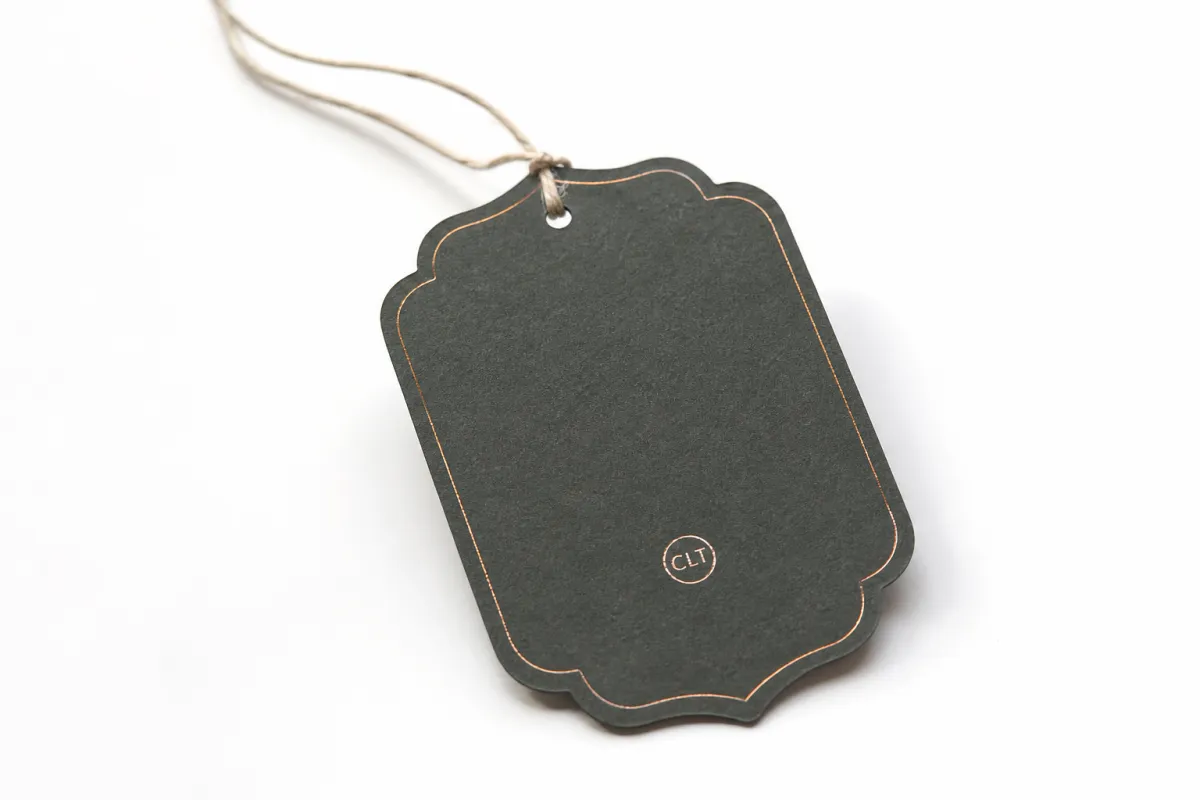
Custom paper hang tags with string are printed paperboard tags that attach to a product through string, twine, ribbon, elastic, or paper cord. Apparel uses them often, but the format shows up just as naturally on gifts, accessories, bottles, home goods, and specialty food packaging. The reason is straightforward: the tag can be removed, but while it is attached, it does two jobs at once. It informs and it decorates.
That split role is what gives the format its staying power. A hang tag can hold size, SKU, barcode, price, care instructions, country of origin, and a short brand message without crowding the product surface. The garment, bottle, or boxed item stays clean and uncluttered while the tag handles the practical details. For brand teams, that means the tag becomes a compact piece of product packaging that can carry voice, tone, and visual identity without requiring a full carton or sleeve.
Sustainability has kept this format in steady demand. Paper-based substrates can be easier to right-size than plastic add-ons, and many buyers prefer recycled fiber, paperboard, or FSC-certified stock because those materials fit current packaging expectations. The material story still depends on the full build. A paper tag with heavy laminate, metallic foil, and polyester string may be harder to recycle than a plain uncoated tag with a paper tie. The full stack matters more than the label on the spec sheet.
Visually, custom paper hang tags with string are one of the most efficient ways to create a premium impression. Thicker stock, a cleaner die cut, and a better knot can shift perception more than many buyers expect. That matters in apparel and gift retail, where shoppers often read the tag as part of the product experience. The tag is not a minor accessory. It sits inside the purchase decision.
A wider branded system works best when the tag feels related to the rest of the line. Shared typography, matching paper tone, and a consistent finish across Custom Packaging Products and related Custom Labels & Tags help the whole presentation feel planned rather than pieced together.
Buyers comparing custom paper hang tags with string to direct printing, sewn labels, or adhesive stickers usually end up thinking about flexibility. Hang tags can be changed without redesigning the product itself. That matters for seasonal collections, limited editions, promotional bundles, and private-label programs where information changes often while the product shape stays fixed. It is a simple advantage, but it is a real one.
There is also a practical merchandising benefit. A good hang tag can be swapped, revised, or localized without changing the underlying product. That gives merchandising teams more room to react when a collection grows, a pricing plan changes, or a retailer asks for a different barcode format. The tag is small. The freedom it buys is not.
How custom paper hang tags with string work in production
The production path for custom paper hang tags with string looks simple at a glance and turns sensitive fast once the details are locked in. Artwork starts the process, but the die line sets the real limits. It determines the shape, corner radius, hole placement, and safe area around text and graphics. A hole too close to the edge can split the tag. A narrow shape can flop strangely on the product. Artwork that ignores the die line can make the finished piece feel cramped even if the print itself is excellent.
A clean file and a confirmed spec sheet usually keep the job moving. The work often follows this sequence:
- Approve the size, paper stock, finish, and string style.
- Build or confirm the dieline with hole placement.
- Print the sheets or rolls, depending on the method.
- Die-cut, trim, and punch the tags.
- Attach the string, cord, or elastic loop.
- Inspect, count, pack, and prepare for shipment.
String attachment is where labor can shift quickly. A pre-tied loop is faster than threading string through every hole by hand. A knotted cord can look more crafted, though it usually adds labor and can introduce inconsistency unless the run is large enough for controlled assembly. Elastic loops work well for some categories, especially where the tag needs to come off and go back on again. Paper cord and cotton string tend to sit in the middle: attractive, easy to explain in sustainability language, and versatile enough for a wide range of retail products.
Variable data changes the production plan again. SKUs, barcodes, QR codes, batch numbers, and limited-edition copy need to be accounted for early. Digital printing makes short runs and variable fields easier to handle. Offset printing often fits long runs better, especially when color consistency and unit economics matter. Anyone comparing custom paper hang tags with string should ask how variable data affects the run, because the answer influences both cost and timing.
Quality control usually centers on five areas: registration, hole alignment, string strength, color consistency, and tear resistance. Those checks sound basic because they are, yet each one changes how the tag behaves on a sales floor. A tag that sits off-center can read as cheap. A weak string can fail on a crowded rack. A tag that cracks around the punch hole after a few handling cycles stops being branding and starts becoming waste.
That is why many packaging buyers treat custom paper hang tags with string the same way they treat labels or cartons: as a production component, not a casual print order. Once that mindset is in place, the rest of the process gets a lot easier to manage. It is less glamorous, sure, but it is also less risky.
In press checks, the difference between a confident spec and a vague one shows up immediately. A tag with the wrong hole placement or too little board thickness may look fine on a screen and then disappoint in the hand. That is the sort of mismatch that costs time, and nobody enjoys discovering it after the print run is already moving.
Material choices and sustainability factors for custom paper hang tags with string
The material conversation around custom paper hang tags with string usually starts with paper stock, though the better answer comes from the mix of paper, finish, and attachment material. Coated paper gives sharper image reproduction and a cleaner feel for fashion or beauty products. Uncoated paper is easier to write on and often reads as more natural. Kraft stock points toward earthier branding. Recycled stock gives a tangible sustainability cue. FSC-certified stock provides a useful sourcing framework when chain-of-custody matters to the brand. For certification context, the FSC system is a solid reference point.
Thickness matters just as much as the paper family. Lighter board can feel economical and flexible, which suits fast-moving items and high-volume basics. Heavier boards, often around 16pt to 18pt or roughly 300gsm to 400gsm depending on conversion, resist curling and bending better. They also feel more substantial in the hand. Buyers often underestimate how much that hand feel shapes perceived value. The leap from a flimsy tag to a sturdy one can change how the whole item is judged.
Finishes bring another set of tradeoffs. Matte coatings cut glare and keep the surface readable under store lighting. Soft-touch lamination adds a velvety finish that can make custom paper hang tags with string feel more upscale, though it may complicate recycling. Embossing and debossing create depth without adding visual clutter, which suits minimalist branding. Foil stamping and spot UV add contrast and shelf impact, but both deserve restraint when sustainability claims are part of the pitch. The cleaner the finish stack, the easier the tag is to explain.
The string choice carries its own signal. Cotton, jute, and paper cord usually read as more natural and easier to fit into a sustainable packaging story. Polyester is stronger and sometimes cheaper, yet it can weaken the eco narrative unless there is a specific reason for choosing it. Recycled-content strings exist, but buyers should confirm consistency and color matching before approving a full run. A tie that snaps during packing is a hidden cost nobody wants to discover late.
End-of-life sorting does not follow one universal rule. Local recycling systems differ, and mixed-material constructions can change whether a tag is recyclable as packaged or only after the string is removed. The EPA recycling guidance is useful because it reminds brands that local rules vary and that clear disposal language beats vague green language. A paper tag is not automatically eco-friendly. It is only as responsible as the total material stack behind it.
From a practical buyer's perspective, the right material mix depends on the product category. Apparel tags need enough strength to survive shipping, hanging, and repeated handling. Gift tags may prioritize warmth and writing space. Luxury retail tags may justify higher finishing costs because the tag is part of a premium package branding system. Custom paper hang tags with string can serve all of those categories, but the spec should match the job.
Transit is part of the material discussion too. If hang tags ship with bulk product or ride inside custom printed boxes, abrasion and compression can damage soft finishes. Standards thinking helps here. ISTA-style transit testing is not excessive when the tag travels with a larger retail setup. A handsome spec on a spreadsheet means little if the tag lands curled, marked, or detached. That kind of failure is avoidable, which is why it deserves attention early.
If a brand is torn between two paper choices, I usually suggest testing both. A sample can reveal more than a spec sheet ever will. One board might hold a crisp edge better. Another might absorb ink in a way that softens the brand tone. That kind of detail is easy to miss until you hold the piece in your hand.
Cost, pricing, and MOQ for custom paper hang tags with string
Pricing for custom paper hang tags with string comes down to a few familiar inputs: paper stock, print method, size, color count, finish, string type, and quantity. The tricky part is that a change that looks small on paper can be expensive in production. A custom die shape may add tooling. Foil can add setup and another production pass. Individual stringing adds labor. Variable data can turn a straightforward run into a more involved workflow.
MOQ, or minimum order quantity, matters because setup costs stay fixed whether the order is 500 units or 10,000. Proofing, plate creation, die-cutting, machine setup, and string attachment all get spread across the run. Smaller quantities therefore carry a higher unit cost. That is not a penalty; it is production math. Buyers who understand that usually make better decisions because they can see where efficiency lives.
Here is a practical frame of reference for custom paper hang tags with string at around 5,000 pieces. Actual pricing changes by region and supplier, but these tiers make quote comparison easier.
| Tier | Typical Spec | Approx. Unit Price | Best Fit |
|---|---|---|---|
| Budget | 14pt uncoated, one-color print, standard cotton string, simple rectangle | $0.06-$0.12 | High-volume basics, promo items, simple retail packaging |
| Mid-range | 16pt coated or kraft, four-color print, custom die cut, pre-tied string | $0.14-$0.28 | Most branded packaging programs, apparel, accessories |
| Premium | 18pt textured stock, foil or emboss, soft-touch finish, custom cord, individual stringing | $0.30-$0.65 | Luxury, gifting, seasonal launches, premium package branding |
That table is useful because it shows where the money goes. A buyer comparing quotes for custom paper hang tags with string should ask whether the price jump comes from a real spec change or from loose quoting. Exact dimensions matter. So do exact stock names, finish details, and string type. A 2 x 3 inch uncoated tag is not the same thing as a 2.25 x 4 inch soft-touch tag with foil and a knotted cord.
Smaller runs often look expensive because the fixed-cost share is higher. A 500-piece order may carry a much higher unit cost than a 5,000-piece order even when the design is identical. If a brand is testing artwork, a small pilot run can still make sense. If the goal is a full retail rollout, it usually pays to lock specs early and place a larger order after the structure is approved. Otherwise, you end up paying for uncertainty twice.
A simple buying rule saves time: request quotes only after the exact size, stock, finish, string material, and quantity are set. Then compare like with like. Otherwise, one supplier may quote a bare-bones version while another quotes a premium version, and the numbers will look competitive for the wrong reasons.
From a commercial point of view, custom paper hang tags with string are often a smart spend because they sit in the visible zone of the product without consuming much material. That is a big reason they show up so often in fashion, giftware, and specialty retail. The unit cost can be modest while the branding effect stays high. That is a strong ratio when the spec is disciplined.
A buyer also needs to be honest about hidden costs. A slightly fancier finish can be worth it, but only if it actually helps sell the product or supports a premium price point. Otherwise, the tag becomes a place to spend without getting much back. That is kinda the difference between deliberate packaging and decorative excess.
Process, timeline, and turnaround for custom paper hang tags with string
Lead time for custom paper hang tags with string usually depends on whether the artwork is final, whether the stock is in hand, and whether the finishing steps are standard or custom. In a smooth run, the timeline may look like this: one to three days for file review and proofing, a few days for sampling or prepress if needed, seven to twelve business days for production after approval, then packing and freight. A clean project can move faster. A complex project can stretch farther.
The slowdowns tend to be predictable. Missing specifications force back-and-forth. Late artwork changes restart proofing. Custom dies take longer than standard shapes. Imported paper stock may wait on replenishment. Manual string assembly can slow the final stage more than anyone expects. If the supplier is coordinating several SKUs, one late approval can hold up the whole job. Retail packaging lives on timing, so deadline discipline matters.
Fast turnaround is realistic when the work is simple and the inputs are ready. Standard shapes, stock materials, final art files, and consistent print coverage usually move the quickest. That is especially true for custom paper hang tags with string that use pre-approved tooling or a common hole position. The more the order behaves like a repeatable production run, the more likely it is to stay on schedule.
Seasonal launches are where planning gaps show up. A clothing line tied to a holiday drop, a gifting program tied to a retail reset, or a food or beverage promotion tied to a trade event leaves very little slack. The tag may be small, but it sits inside a larger packaging system, and that system has to stay synchronized. If the carton, label, and insert are all due at the same time, the hang tag cannot be treated like a separate errand.
It helps to think in checkpoints instead of only dates:
- Brief: size, quantity, stock, finish, string type, and use case.
- Proof: confirm color, hole placement, barcode readability, and legal copy.
- Sample: verify feel, hang behavior, and string strength on the actual product.
- Production: monitor print, cutting, punching, and stringing.
- Packout: count, bundle, and label for downstream use.
That sequence sounds basic because it is. Even so, a surprising number of delays happen because someone skipped a step or compressed two into one email. With custom paper hang tags with string, a ten-minute spec review can save a ten-day delay.
One more practical note: leave buffer time for proof corrections. A buyer may spot a tiny issue with a barcode, a spelling choice, or the thickness of the line around the hole. Catching that early is cheap. Catching it after production starts is not. For retailers with fixed ship windows, buffer time is not padding. It is insurance.
If the schedule is tight, keep the first order simple. That does not mean making it cheap in a bad way. It means choosing a structure that can be produced, checked, and packed without drama. The second run can always get fancier once the team knows how the tag behaves in the field.
Common mistakes to avoid with custom paper hang tags with string
The most common mistake with custom paper hang tags with string is designing for appearance alone. A polished layout on screen can fail in the hand if the stock curls, the color smudges, or the hole tears under normal use. Packaging teams see this often: a tag looks strong in the approval file, then starts looking tired the moment it meets a crowded sales floor. A tag that cannot survive handling is not premium. It is fragile.
Hole placement causes trouble often. If the punch sits too close to the edge, the tag can split. If it sits too high or too low, the tag may hang crooked or twist awkwardly on the product. That sounds minor until it happens across an entire line of custom paper hang tags with string, and then the visual inconsistency shows up immediately on the rack. The fix is simple: verify the die line, not just the art.
Typography failures show up as well. Buyers want logo, price, size, care instructions, barcode, legal copy, and sometimes a short brand story on one small surface. The result can become a crowded tag with weak hierarchy. If every line is equally loud, nothing reads well. On a retail floor, readability beats decorative complexity almost every time. Clear spacing, controlled line length, and a sensible order of information improve the result without increasing cost.
The string can create problems too. Too long, and it tangles. Too short, and the tag sits awkwardly against the garment or bottle. Too thick, and it overwhelms the design. Too thin, and it looks flimsy. With custom paper hang tags with string, the attachment should feel like part of the package, not a random extra. For apparel, a string length in the range of 4 to 8 inches is common, though the right answer depends on the product shape and how the item is displayed.
There is a sustainability trap here as well. A paper tag does not automatically count as an eco-friendly choice if the finish includes heavy film, the foil is excessive, or the string is made from a material that complicates recycling. Buyers sometimes assume the paper base is enough. It is not. A better question is whether the whole tag is honest about its material stack and end-of-life behavior.
Ignoring the relationship between the hang tag and the rest of the system is another mistake. If the product uses premium custom printed boxes but the tag looks generic, the package branding story weakens. If the carton is natural kraft and the tag is glossy neon, the visual language breaks. Custom paper hang tags with string work best when they echo the broader branded packaging strategy rather than fighting it.
Sampling gets skipped more often than it should. A spec sheet can look perfect and still miss the feel of the board, the way the string sits, or the surface quality of the finish. A small sample run can reveal whether a tag dents too easily, whether a knot sits too high, or whether the printed blacks feel rich enough for the product category. Sampling costs money, but so does rework. If a tag is going into a premium line, that sample step is not optional in my book.
One more mistake deserves a mention: overcomplicating the information hierarchy. Brands sometimes try to fit a lot onto one tag because the space is there. The smarter move is to decide what truly needs to be visible on the front and what can move to the back or to a QR code. That keeps the tag calm, which is a rare and useful thing on a busy shelf.
Expert tips and next steps for custom paper hang tags with string
The cleanest way to buy custom paper hang tags with string is to begin with end use, not decoration. Apparel needs durability and good hang behavior. Gifts want a warmer, more tactile feel. Beverage and specialty retail tags often need stronger moisture resistance or a cleaner surface for barcode scanning. A tag spec that works beautifully for jewelry may fail for a heavier garment. Context matters.
Testing two or three stock-and-finish combinations before committing to a full run is a smart move. It sounds like extra work, though paper feel can change perceived value more than many teams expect. A 16pt uncoated tag can feel more honest and premium than a glossy version if the brand voice is restrained. A soft-touch finish can elevate a luxury line, yet it can mute artwork if the visual system depends on bright contrast. Small differences still have real merchandising effects.
A strong tag can do more than hold a price or a barcode. A QR code can link to care instructions, sourcing information, a product page, or a short brand story. That gives the physical tag a digital extension without crowding the surface. For custom paper hang tags with string, a QR code can reduce the need to force too much text into a small space. The tag stays readable, and the buyer still gets the full set of information.
A production checklist keeps quotes comparable and projects on schedule. Before requesting pricing, confirm these items:
- Exact tag dimensions and shape
- Paper stock or board thickness
- Print colors on each side
- Finish type and any special effects
- String material, color, and attachment method
- Quantity, MOQ target, and delivery destination
- Artwork status and deadline
That checklist sounds basic because it is. It removes most of the ambiguity that creates pricing drift. For custom paper hang tags with string, a quote only helps when everyone is talking about the same structure. Otherwise, the numbers can look tidy while describing completely different builds.
If the goal is a retail rollout rather than a one-off sample, coordinate the hang tag with the rest of the packaging stack. The best results usually come from a coherent system: the tag, the carton, the label, and the insert all pointing in the same visual direction. That is where package branding becomes more than a design phrase. It becomes a margin tool, because the product feels better organized and more valuable before the shopper even reads the copy.
For many brands, the next step is straightforward: gather specs, request samples, compare price tiers, and confirm turnaround before the launch calendar hardens. That is the practical way to buy custom paper hang tags with string. Clear inputs, fewer surprises, better shelf behavior.
My honest view is this: the best custom paper hang tags with string are the ones that disappear into the product experience while still doing their job visibly and cleanly. They carry information, support the brand, and make the item feel more finished. That is a lot of value for a small piece of paper, and it is one reason good tagging stays near the center of smart retail packaging. If you start with the product in hand and work backward to stock, finish, and string, you are already ahead of most rushed packaging specs.
What are custom paper hang tags with string used for?
They identify the product and communicate brand value at the point of sale. They can also carry price, size, care instructions, barcodes, or QR codes, which makes them useful across apparel, accessories, gifts, and premium retail items.
Which paper stock is best for custom paper hang tags with string?
Kraft and recycled stocks suit natural or sustainability-led branding, while heavier board works better when the tag must feel premium or resist bending. Uncoated stock is easier to write on, and coated stock usually sharpens image detail. The best stock is the one that fits the product and the handling conditions, not just the mood board.
How much do custom paper hang tags with string cost?
Price depends on quantity, stock, size, print colors, finishes, and the stringing method. Smaller quantities usually cost more per tag because setup is spread across fewer units, so exact dimensions and artwork details are needed for a reliable quote.
How long does production usually take?
Standard timelines depend on artwork approval, material availability, and finishing steps. Simple runs often move faster than custom shapes, specialty finishes, or manual stringing, and it is smart to allow extra time for proofs and corrections before the final slot.
Are custom paper hang tags with string recyclable?
Often yes, if the paper stock and print finish are compatible with local recycling rules. Recyclability can be affected by heavy coatings, foil, laminates, or non-paper string materials, so paper-based or recycled string can improve the sustainability profile. Local rules vary, so the safest answer is to check the full material stack against the disposal guidance where the product will be sold.

