Buyer Fit Snapshot
| Best fit | Custom Paper Void Fill projects where brand print, material claims, artwork control, MOQ, and repeat-order consistency need to be specified before quoting. |
|---|---|
| Quote inputs | Share finished size, material target, print colors, finish, packing count, annual reorder estimate, ship-to region, and any compliance wording. |
| Proofing check | Approve dieline scale, logo placement, barcode or warning zones, color tolerance, closure strength, and carton packing before bulk production. |
| Main risk | Vague material claims, crowded artwork, missing packing details, or unclear freight terms can make a low unit price expensive after revisions. |
Fast answer: Custom Paper Void Fill: What It Is and How It Works should be specified like a repeatable production item. The safest quote records material, print method, finish, artwork proof, packing count, and reorder notes in one written spec.
Production checks before approval
Compare the actual filled-product size with the drawing, then confirm tolerance on folds, seals, hang holes, label areas, and retail display edges. Reserve space for logos, QR codes, warning copy, and material claims before decorative graphics fill the panel.
Quote comparison points
Review material grade, print process, finish, sampling route, tooling charges, carton quantity, and freight assumptions side by side. A quote is only useful when the supplier can repeat the same color, closure quality, and packing count on the next order.
Custom Paper Void Fill: What It Is and How It Works
A carton can look full and still fail the shipment. That is the tricky part with Custom Paper Void Fill: if the empty space inside the box is not controlled, the product still shifts, still takes impact, and still arrives with the kind of wear that makes everyone shrug and then start a return.
For brands shipping fragile goods, mixed-SKU orders, subscription kits, or high-volume retail packaging, custom paper void fill is not just paper tossed into a box. It is a packing method shaped around the actual carton, the actual product mix, and the actual speed of the line. I have seen small operations get away with improvised packing for a while, and I have also seen that same approach fall apart the moment volume rises and nobody has time to fiddle with every carton.
Packaging teams run into the same pattern over and over: a shipment that should have been simple turns into dents, rattling, claims, and customer complaints because the void space was left to chance. That is why custom paper void fill deserves more care than the casual “paper in a box” label it often gets.
The tradeoff is pretty straightforward. You want protection, but you also want packout speed, reasonable material cost, a cleaner presentation, and less plastic in the system. That is the real job. Everything else comes down to getting enough control into the process so the warehouse is not improvising every carton and kinda hoping for the best.
This guide covers how custom paper void fill works, what shapes its performance, what it usually costs, how long sourcing takes, and where buyers make avoidable mistakes. No fluff, no magic language. Just the parts that change the outcome.
Custom Paper Void Fill: Why Empty Space Costs More Than You Think
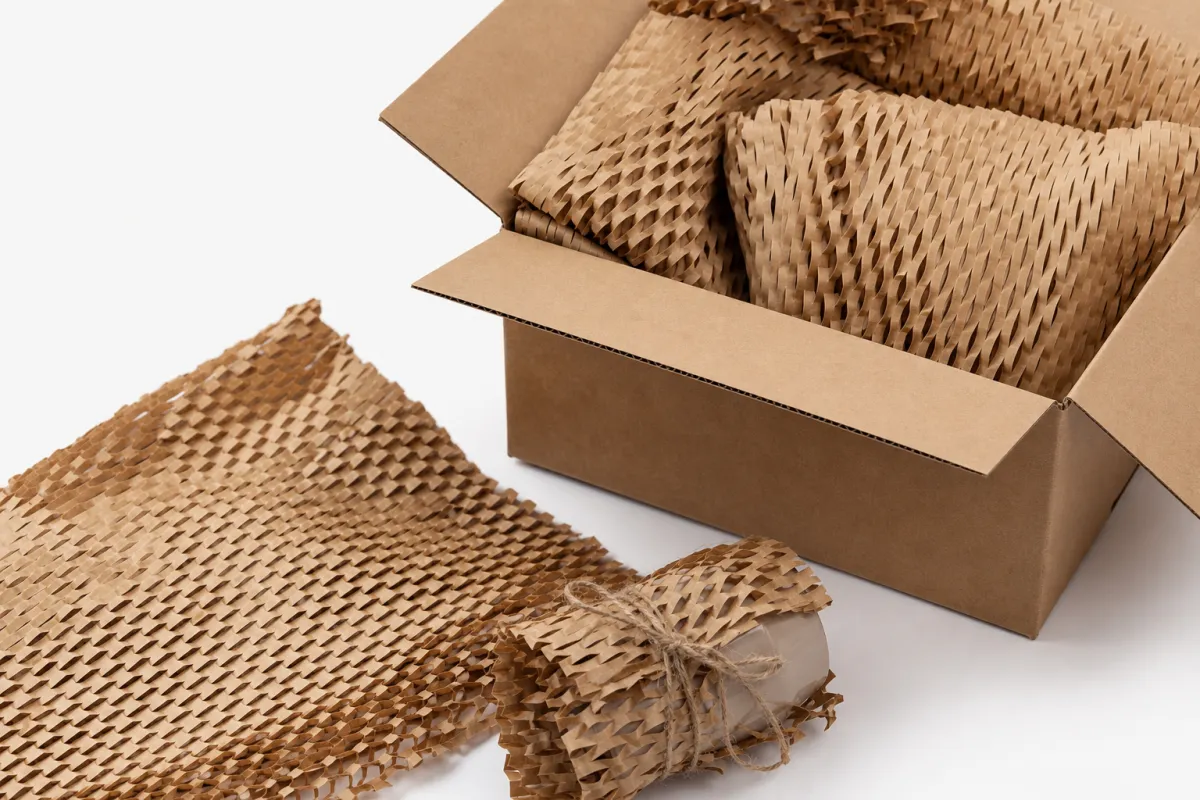
Empty space inside a carton is not harmless. It is room for motion. Motion turns into abrasion, corner crush, scuffed surfaces, and impact damage every time the box gets dropped, stacked, tossed, or compressed. A shipping carton can look fine from the outside and still fail once the product inside starts bouncing around. That is the part people usually learn after the first round of damage, which is not the cheapest time to learn it.
Custom paper void fill exists to control that space with a material and format matched to the job. Instead of stuffing in whatever kraft paper happens to be nearby, the filler is shaped around the box depth, the product geometry, and the handling pattern. That can mean sheeted kraft, crinkle paper, paper pads, or a converted format that dispenses at a predictable rate.
For brands shipping candles, cosmetics, glass bottles, books, home goods, or mixed promotional kits, custom paper void fill does several jobs at once:
- It reduces product movement during transit.
- It lowers the chance of corner and surface damage.
- It creates a cleaner unboxing feel than random stuffing.
- It gives the packing team a repeatable method instead of guesswork.
Presentation matters too. Good custom paper void fill makes a box feel deliberate rather than chaotic. That has real weight in branded packaging, and it shows up even more in retail packaging programs where the inside of the box is part of the customer’s impression. People notice when the interior looks considered. They notice just as quickly when it looks rushed or overstuffed.
From a buyer’s point of view, the true cost of void space is not only the filler itself. It is the claim process, the repack time, the replacement shipment, and the customer service follow-up that comes after damage. Cheap material that underperforms is not cheap. It just hides the expense in a different place.
Organizations like the ISTA focus heavily on transit testing for a reason: shipping damage rarely comes from one factor alone. Drop resistance, vibration, compression, and packout consistency all shape the result. That is the right mindset here too. Test the system, not the sales sheet.
A tidy fill job stays out of the way. A bad one rattles, shifts, and turns into everyone else’s problem later.
The best custom paper void fill programs do more than fill a gap. They reduce variation. That is what gives them their value.
How Custom Paper Void Fill Works in Real Packout
At the simplest level, custom paper void fill is paper shaped to occupy empty space in a carton so products stay in place. The paper may be folded, crimped, layered, or dispensed as a pre-sized sheet or pad. The material does not need to be fancy. It needs to stop movement.
In a manual packing line, the packer pulls the material, places it in the carton, and builds support where the product needs it. Bottom cushioning goes first if the item needs a buffer from the base of the box. Side fill comes next when the product has room to slide left or right. Top fill handles vertical bounce and keeps the lid from pressing directly on the product.
In a machine-fed setup, custom paper void fill is usually introduced through a dispenser that converts paper into a bulkier, springier, or more structured form. Some systems produce a crinkle-like output. Others create pads or layered forms that hold shape more effectively. The goal stays the same: use enough paper to stop movement without wasting labor or material.
Protection and presentation are not the same thing. Protection keeps the product from getting damaged. Presentation shapes how the inside of the carton looks once it arrives. A loose, messy fill might still protect well enough, but it can look sloppy. A better custom paper void fill setup handles both, which is why it shows up in stronger product packaging and more polished packaging design programs.
Here is how the methods usually compare in practice:
| Method | Best For | Typical Strength | Typical Cost Range | Notes |
|---|---|---|---|---|
| Hand-fed paper sheets or bundles | Low to medium volume, flexible pack stations | Moderate | $0.04-$0.12 per packed box | Simple, cheap to start, but slower and more variable |
| On-demand crinkle paper system | Mixed-SKU e-commerce, medium throughput | Moderate to high | $0.06-$0.15 per packed box | Good for void control and presentation if the feed is stable |
| Paper pads or converted cushioning formats | Fragile goods, repeat box sizes, higher volume | High | $0.08-$0.20 per packed box | More consistent shape, often faster once set up properly |
| Loose kraft stuffing | Very light-duty protection, temporary use | Low to moderate | $0.03-$0.08 per packed box | Cheap on paper, but can drive waste and inconsistent pack quality |
The right choice depends on product weight, fragility, box range, and line speed. A 2-ounce accessory kit does not need the same setup as a glass jar assortment in a tall mailer. That sounds obvious in a room full of packers. It gets less obvious once purchasing starts trying to flatten everything into one line item.
Another practical point: custom paper void fill is not always about maximum cushioning. Sometimes the job is simply to keep a product centered so it does not beat up the carton walls. That is a smaller ask, but it still requires the right sheet width, fold behavior, and output density.
If you are buying packaging at scale, it helps to treat custom paper void fill as part of the full packaging system. It sits alongside Custom Packaging Products, box selection, inserts, and labeling. The strongest results usually come when those pieces are designed together instead of chosen one at a time in isolation.
Key Factors That Shape Performance, Waste, and Fit
Not all custom paper void fill performs the same way. The differences are plain on the surface and expensive in practice. Paper grade, basis weight, machine compatibility, box profile, and storage conditions all affect the result.
Paper type and basis weight are usually the first decisions. Lighter stock is easier to dispense and often cheaper. Heavier grades hold shape better and can create more bulk per pull. That sounds great until the heavier paper slows the packer down or adds more cost than the product actually needs.
Box mix matters just as much. A single carton size is easy to standardize. A broad SKU range is not. If the same line handles shallow mailers, deep cartons, and awkwardly shaped kits, then custom paper void fill has to stay flexible enough to work across those formats without causing training headaches. Otherwise the warehouse starts “adjusting” the system by eye, and that usually turns into inconsistency.
Machine compatibility is where many programs stumble. The feed rate, jam risk, and maintenance demands of the equipment matter. A setup that looks perfect in a demo can become a bottleneck if the paper tears, curls badly, or feeds unevenly. Manual packing gives more forgiveness, but it puts more pressure on labor and training.
Sustainability claims deserve a careful look too. Recycled content, recyclability, and reduced plastic use are all real benefits, but only if the material still protects the shipment. There is no environmental win if the box gets damaged and has to go out again. That is just shifting waste around and dressing it up as strategy. If you want a steadier reference point, the EPA recycling guidance is a better anchor than packaging copy.
Then there is the customer experience side. The look and feel of custom paper void fill shape how the entire shipment is perceived. A crisp interior says the brand pays attention. A torn, uneven, or overstuffed fill job says the opposite. That is why it shows up in stronger package branding, not just in damage prevention.
Here is a quick way to think about the fit:
- Light products: lower density fill, faster dispensing, less material per box.
- Fragile products: firmer hold, tighter side support, better top fill control.
- Odd-shaped products: more flexible paper format and wider variability in volume.
- High-volume lines: prioritize feed consistency and low jam risk over fancy extras.
If the operation ships both subscription kits and individual retail packs, custom paper void fill usually needs to be specified for the most common packout pattern first, then adjusted for exceptions. Trying to design for every edge case from day one is a fast way to waste money and create a lot of friction nobody asked for.
Custom Paper Void Fill Cost, Pricing, and MOQ
Money is usually the real question, so it makes sense to address it directly. Custom paper void fill pricing depends on paper grade, width, converting complexity, print or branding requirements, carton count, freight, and whether the order is stock or fully custom. Buyers who only compare material price miss the larger picture. Labor and damage are still part of the bill whether accounting wants them there or not.
A basic stock paper format may land in the range of roughly $0.03-$0.08 per packed unit for light-duty use. More controlled custom paper void fill formats often fall around $0.06-$0.15 per packed unit, while higher-performance paper pads or more tailored converted formats can move into the $0.08-$0.20 range depending on how much paper is used and how the line is configured. Those are practical buying ranges, not marketing promises with glossy photos and perfect lighting.
That said, unit price is only part of the story. The total packout cost includes:
- Material consumption per carton
- Labor seconds added or saved per order
- Damage reduction or damage increase
- Storage space for inventory
- Freight and pallet efficiency
Here is where custom paper void fill often surprises buyers: a slightly higher unit cost can still lower total cost if it speeds the line and cuts claims. If a packer saves 6-10 seconds per order, that adds up fast over thousands of shipments. If the fill creates more consistency and fewer rescues, the value gets clearer very quickly.
MOQ matters too. Custom widths, branded formats, and special converting usually require a minimum order quantity. Stock formats are easier to trial because the supplier is not setting up a unique run for one small order. A common mistake is asking for a highly tailored custom paper void fill solution on a tiny test budget and then acting surprised when the quote reflects the setup involved.
Ask for quotes in a format that actually supports comparison:
- Per-unit price at stated volume
- Case or pallet pricing
- Minimum order quantity
- Lead time by quantity
- Any setup, tooling, or conversion fees
- Freight assumptions
If your team buys other packaging components too, this is the moment to compare it with Custom Packaging Products so the filler does not get priced in isolation. A cheaper filler can cost more if it forces a bigger box, slows packing, or drives returns. That kind of false economy keeps showing up because the spreadsheet only tracks one column at a time.
For buyers focused on sustainability, there is usually a workable middle ground: recycled-content paper, simple converting, and a format that avoids plastic while still protecting the shipment. That is often a cleaner choice than paying extra for a complicated system the warehouse barely uses.
Custom Paper Void Fill Process, Timeline, and Lead Time
The sourcing process for custom paper void fill should be straightforward, but only if the buyer brings enough information to the table. A good supplier can help shape the spec, though they cannot see your shipping operation from across the internet. Sadly, that part still matters.
A normal process looks like this:
- Fit review: Identify box sizes, product weights, fragility level, and pack speed.
- Sample selection: Choose one or two paper formats that match the use case.
- Spec confirmation: Finalize width, basis weight, roll or sheet format, and any custom converting.
- Quote approval: Review price, MOQ, freight, and lead time.
- Production: Run the order and confirm QC.
- Delivery and trial: Test the material in the actual packout flow.
Lead time depends on how custom the order is. Stock custom paper void fill formats can move quickly. Fully custom widths, printed elements, special cores, or unusual converting requests take longer. If the design changes after samples are approved, the timeline stretches again. That is not a surprise. That is manufacturing.
In practical terms, a simple stock trial can move fast enough for urgent needs, while a custom converted program usually needs a longer runway. The smart move is to ask for a realistic timeline up front rather than pretending a tailored packaging program should ship on a miracle schedule.
This is also the point where transit testing matters. If the shipment is fragile or high-value, run a small pilot and evaluate the result through a shipping test plan. Standards and test methods from groups like ISTA exist because packaging failure is easier to prevent than to explain after the fact.
To avoid wasted time, give the supplier this information before asking for a quote:
- Box dimensions and common carton types
- Typical product weights and fragile points
- Current damage rate or complaint rate
- Pack station speed target
- Storage constraints and reorder timing
Custom paper void fill works best when the rollout is treated as an operations project, not a one-line purchase. The warehouse needs to know how to load it, where to store it, and when to reorder it. Otherwise the first delivery goes fine and the second one disappears into the usual chaos drawer.
Common Mistakes When Buying Custom Paper Void Fill
The first mistake is buying on price alone. Cheap custom paper void fill that collapses, tears, or requires double the volume is not saving money. It just hides the cost in labor and damage. Packaging teams see this pattern all the time: the material line looks low, but the system as a whole gets worse.
The second mistake is forcing one filler spec across every box. A small carton and a deep shipper do not need the same fill behavior. If the material is too bulky in small boxes, it wastes space and product. If it is too light in large boxes, the product still moves. That is not a design system. That is a compromise pretending to be one.
The third mistake is ignoring machine fit and storage before the order arrives. Some custom paper void fill formats need more floor space, more feed clearance, or more humidity control than buyers expect. Paper behaves differently in damp conditions. If the warehouse is humid or the stock sits too long, feed quality can change. That is especially frustrating when nobody tested under real conditions.
The fourth mistake is overcustomizing too early. If the packaging program is still changing every few weeks, locking into a highly specific setup can be a waste. Standardize first if the business is still learning its shipping profile. Then customize where the data shows it matters.
The fifth mistake is using sustainability as decoration. Recyclable paper is a real advantage, but only if the material actually protects the goods and the customer can access local recycling options. The point is not to collect eco-friendly vocabulary. The point is to make a better shipping system. That is a lower-drama goal and a smarter one.
Good custom paper void fill should reduce friction, not add it. If every pack station needs a cheat sheet to remember how to use the material, the spec is probably too complicated. Simpler is usually better, especially in operations with turnover, seasonal hiring, or mixed shifts.
One more thing: do not ignore the unboxing experience. A filler that protects well but looks sloppy can still hurt the brand. For custom printed boxes, premium mailers, and cleaner retail packaging, the inside has to match the outside. Otherwise the whole package feels off.
Expert Tips for Smarter Custom Paper Void Fill Use
Start with real products. Not dummy blocks. Not “close enough” test loads. Real items. That is the only way to see whether custom paper void fill actually holds the product in place under the pressures that matter. A filler can look perfect in a sample carton and still fail once the actual SKU, actual weight, and actual box geometry show up.
Standardize around a smaller number of box sizes and filler formats if you can. That one decision often saves more money than chasing a slightly cheaper paper. Fewer setups mean fewer packing mistakes, fewer training steps, and less inventory sprawl. That is especially useful for brands with evolving packaging design or seasonal line changes.
Measure a few things before and after the switch:
- Damage rate by SKU
- Seconds per packout
- Material used per carton
- Returns tied to transit damage
- Feedback on presentation
If you cannot measure the change, you are mostly guessing. And guesses get expensive when they repeat at scale. A good custom paper void fill decision should show up in numbers, not just in vibes and internal enthusiasm.
Ask suppliers for samples in the actual sizes you ship. Then run them through the real packout flow, not a lab fantasy. Use the box sizes that create the most trouble. Use the worst-case product mix. If the material performs there, it will usually perform elsewhere. If it fails there, stop pretending it is fine.
Also, ask specific questions:
- What basis weight do you recommend for this carton range?
- What is the expected output per roll or case?
- How does the material behave in humid storage?
- What is the jam risk on your dispenser or machine?
- Can the format support a cleaner presentation for branded packaging?
This is where good suppliers stand out. They do not just say the material is strong. They explain how custom paper void fill performs, where it saves labor, and where it does not. That kind of honesty helps. The opposite is sales copy wearing a hard hat.
If your product line includes premium kits or giftable sets, the inside of the box is part of the brand. A controlled fill job supports package branding in a way that loose kraft stuffing never will. No one brags about chaotic packaging. They just live with it until a better option shows up.
Next Steps: Spec, Test, and Roll Out Custom Paper Void Fill
The cleanest way to move forward is simple: map the boxes, product weights, and current damage points before talking to a supplier. That gives you a real baseline for custom paper void fill instead of a wish list. If you know which SKUs are failing, you can size the solution to the actual problem.
Then request samples in the sizes you really ship. Run a small batch through the actual packout process and compare it with your current method on cost, labor, presentation, and damage reduction. Do not judge it on one perfect carton. Judge it on a realistic mix.
At that stage, compare the numbers honestly. If custom paper void fill costs a little more but cuts repacks, speeds fulfillment, and lowers returns, it is probably worth it. If it adds complexity without improving the shipment, keep looking. That is the value of testing before rolling it out across the whole operation.
Once you choose a format, lock in the boring but necessary pieces: reorder points, storage location, packer notes, and who approves changes. That is what keeps the system from drifting after the first few deliveries. Most packaging programs do not fail because the spec was impossible. They fail because nobody maintained the spec.
If you want the short version, here it is: custom paper void fill is worth it when empty space is causing movement, damage, or sloppy presentation, and when the chosen format fits your box mix and line speed without creating more work than it solves.
That is the buying test. Not hype. Not guesswork. Just whether custom paper void fill improves the shipment enough to justify itself. If it does, spec it properly, test it in the real packout, and move on. If it does not, do not force it because the sales sheet looked tidy.
FAQ
What is custom paper void fill used for in shipping?
It fills empty space inside a carton so products do not slide, settle, or take impact during transit. Custom paper void fill works best for mixed-SKU shipments, fragile goods, and boxes with extra headspace that needs controlled cushioning.
Is custom paper void fill cheaper than air pillows?
Not always on a per-unit basis, but it can be cheaper overall if it cuts damage, speeds packing, or reduces returns. Paper often wins when brands want better presentation or fewer plastic materials in the box, which is why custom paper void fill stays popular in branded mailer programs.
How do I choose the right paper grade for custom paper void fill?
Start with product weight, box size, and how much shape retention you need in transit. Heavier or denser grades usually hold better, while lighter grades may be fine for low-risk, high-volume packing. The right custom paper void fill spec is the one that protects without slowing the line.
What is the lead time for custom paper void fill orders?
Stock formats can move quickly, while custom widths, print, or special converting usually take longer. Ask for a firm production timeline, freight estimate, and sample approval step before you commit to custom paper void fill at scale.
Can custom paper void fill improve unboxing experience?
Yes, if it is dispensed cleanly and sized properly, it makes the inside of the box look intentional instead of messy. It also helps brands avoid the cheap, overstuffed look that turns a decent shipment into a headache. That is one of the easier wins custom paper void fill can deliver.

