Buyer Fit Snapshot
| Best fit | Custom Paperboard Cartons Wholesale projects where brand print, material claims, artwork control, MOQ, and repeat-order consistency need to be specified before quoting. |
|---|---|
| Quote inputs | Share finished size, material target, print colors, finish, packing count, annual reorder estimate, ship-to region, and any compliance wording. |
| Proofing check | Approve dieline scale, logo placement, barcode or warning zones, color tolerance, closure strength, and carton packing before bulk production. |
| Main risk | Vague material claims, crowded artwork, missing packing details, or unclear freight terms can make a low unit price expensive after revisions. |
Fast answer: Custom Paperboard Cartons Wholesale: Specs & Pricing should be specified like a repeatable production item. The safest quote records material, print method, finish, artwork proof, packing count, and reorder notes in one written spec.
Production checks before approval
Compare the actual filled-product size with the drawing, then confirm tolerance on folds, seals, hang holes, label areas, and retail display edges. Reserve space for logos, QR codes, warning copy, and material claims before decorative graphics fill the panel.
Quote comparison points
Review material grade, print process, finish, sampling route, tooling charges, carton quantity, and freight assumptions side by side. A quote is only useful when the supplier can repeat the same color, closure quality, and packing count on the next order.
Custom Paperboard Cartons wholesale can look simple on a quote sheet and still cause trouble once the job hits the packing table. A clean mockup will not fix a weak score line, a glue seam that lifts, or a carton that leaves too much empty space around the product. The smartest way to Choose the Right carton is to treat fit, print quality, and repeatability as one decision, because those three things shape how the package protects the product, how it presents on shelf, and how much labor it takes to run in volume.
Brands comparing custom paperboard cartons wholesale usually find that the real question is not whether to use a carton. It is whether the board stock, carton style, finish, and dieline all work together across thousands of units without drifting out of spec. A package that looks polished in a sample room can still stumble in retail packaging, in warehouse handling, or on a filling line if the structure was never planned around the actual production process.
In practical terms, custom paperboard cartons wholesale is not one product category. It is a set of structures, print methods, and finishing choices built around the product, the pack-out, and the sales channel. A carton for a serum bottle has different needs than one for a supplement container, a small electronics accessory, or a retail kit with inserts. The earlier those details are settled, the easier it becomes to get a fair quote and a carton that behaves the way it should. That part is kinda unglamorous, but it saves headaches later.
Why custom paperboard cartons wholesale matters before the shelf test
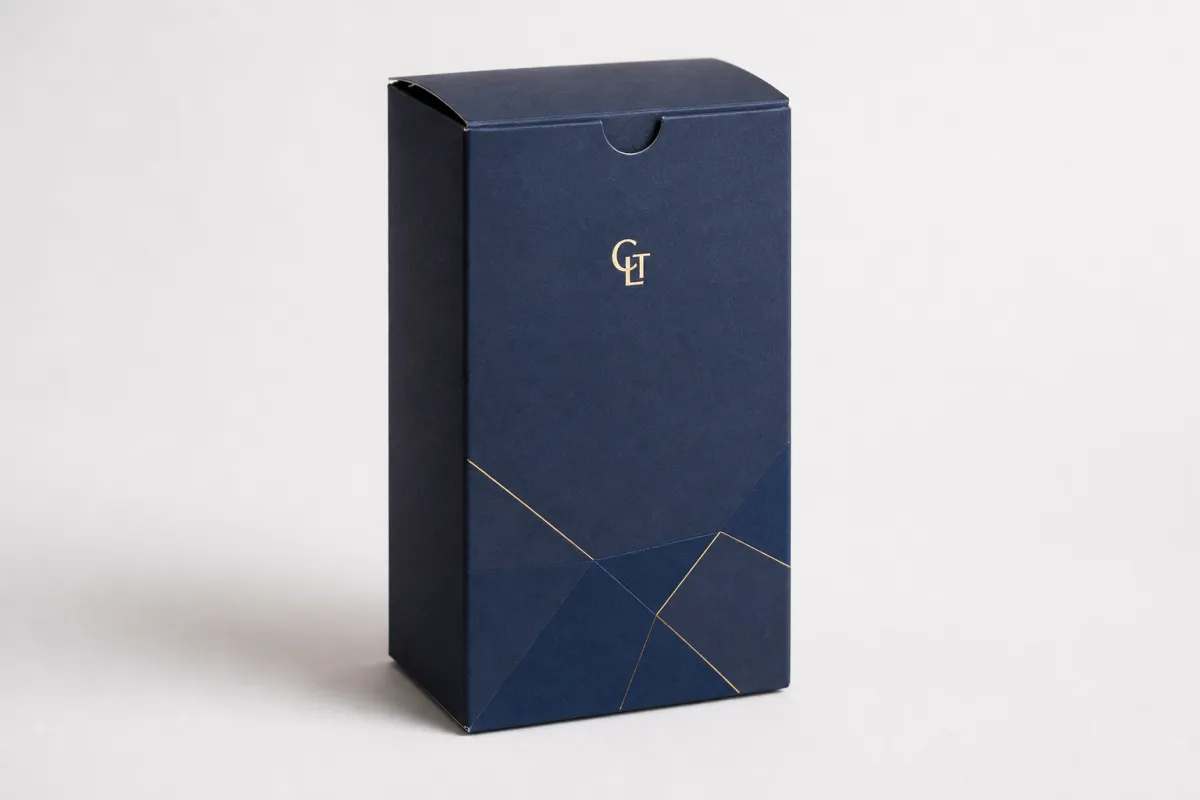
A carton can look great in a digital proof and still fail once it gets folded, filled, and handled by real people. I have seen that pattern more than once: the colors are on brand, the artwork is sharp, and the sample photographs beautifully, yet the score cracks, the product rattles, or the tuck flap starts to open after a few handling cycles. Custom paperboard cartons wholesale has to be judged against production reality, not only against the design file.
Wholesale buying changes the decision because you are no longer approving one proof or one sample. You are asking a carton to repeat the same performance across a large run, and that means board caliper, print method, finish, and carton style all need to support stable output. A loose spec can make a low-cost carton expensive in practice once crews slow the line to correct fit issues or sort rejects.
From a packaging buyer's point of view, the value is easy to see. Better carton design can sharpen shelf presentation, reduce damaged units, and cut down the labor spent fixing folds or adjusting glue flaps. Custom paperboard cartons wholesale also gives a brand a stronger surface for storytelling than many secondary packaging formats, because the carton itself becomes part of the product's visual identity instead of just a protective shell.
A carton that folds cleanly, holds its square shape, and prints evenly is worth more than a slightly cheaper quote that creates hand-work on the line.
That is why custom paperboard cartons wholesale should be evaluated as a production system. The board, the scoring, the finishing, and the final pack-out all influence each other. If one element is off, the rest of the package has to absorb the problem, and that usually shows up as slower packing, higher waste, or a retail box that feels less polished than it should.
For brands selling through retail, e-commerce, or club channels, the carton also affects how the product survives the trip from warehouse to shelf. A well-built structure keeps the item centered, supports the printed face panels, and stacks neatly with other units. A weak one dents easily, crushes at the corners, or opens during replenishment. That makes custom paperboard cartons wholesale as much an operations decision as a design decision.
Custom paperboard cartons wholesale product details and carton styles
Paperboard cartons are folded paper-based packages made from cut, scored, and glued sheets of board. In custom paperboard cartons wholesale, the most common formats include folding cartons, tuck-end boxes, sleeves, display cartons, and paperboard structures that carry a more premium presentation feel without the weight of a true rigid box. Each format brings different strengths, different assembly demands, and different opportunities for print and finish.
Folding cartons, sleeves, and display styles
Folding cartons are the workhorse of retail packaging. Straight tuck, reverse tuck, auto-lock bottom, and crash-lock bottom styles each solve a different problem. A straight tuck carton often gives a clean front panel and straightforward assembly, while a reverse tuck box can be more economical for some product sizes. Auto-bottom and crash-lock structures add strength where product weight or filling speed matters more. In custom paperboard cartons wholesale, the structure should match the product weight and the line method, not only the artwork layout.
Sleeves work well when the primary package already provides some protection and the brand wants more visible package branding. They are common for apparel accessories, small electronics, cosmetics kits, and promotional packs. Display cartons improve shelf visibility, and a window patch can show the product without giving up too much board surface for graphics. For many brands, custom printed boxes need to balance what the shopper sees with what the filler needs during assembly, which is why structure carries so much weight in the decision.
Board choices and finishing choices
Board selection shapes the feel of the finished carton. SBS delivers a bright, smooth face and is often favored for premium retail packaging. C1S and C2S provide coated surfaces that support crisp print and strong color contrast. Recycled board and kraft-look stock lean more natural and can support brand stories that favor a grounded, less processed look. For custom paperboard cartons wholesale, the right board usually comes down to print coverage, fold performance, and the visual effect the brand wants on shelf.
Decoration changes perception quickly. CMYK printing works well for full-color graphics, while PMS spot colors help lock in brand-critical hues. Foil, embossing, debossing, soft-touch coating, aqueous coating, matte finish, and gloss finish each change how a carton reads in the hand and under retail lighting. A carton for premium skincare may use soft-touch lamination and foil accents; a carton for a nutrition product may call for a cleaner matte coat that resists scuffing. The best custom paperboard cartons wholesale specification is the one that supports the product and the budget without adding avoidable friction.
Dimensions matter just as much as decoration. A well-designed carton should fit the product with enough clearance for easy loading, but not so much extra space that the item slides around. Shelf height, shipping carton packing, and hand assembly versus automated packing all affect the final spec. Even small changes, such as the depth of a tuck flap or the width of a glue flap, can affect line speed and how the box stacks in transit. That is why custom paperboard cartons wholesale works best when the carton style is chosen alongside the pack-out plan.
Specifications that affect print quality, durability, and fit
Good cartons start with measurable details. In custom paperboard cartons wholesale, the most important numbers usually include finished dimensions, board caliper, bleed, score position, glue flap size, and dieline accuracy. If those values are loose, everything downstream becomes guesswork. If they are locked in, the printer, die cutter, and packer all work from the same technical target.
- Finished dimensions: the exact internal or external size needed for the product, not a rough estimate.
- Board caliper: the thickness of the sheet, which affects crush resistance, fold behavior, and print feel.
- Bleed and safe area: the artwork allowance that prevents white edges or clipped text.
- Glue flap size: enough bonding area to hold the seam without crowding graphics.
- Score placement: the difference between a crisp fold and a cracked panel.
- Dieline tolerance: how closely the final carton matches the approved drawing.
A clean dieline becomes even more useful when multiple SKUs share one carton family. A brand may need the same structure for three bottle sizes, or the same outer box with different language versions. A tidy spec keeps registration aligned and keeps the production run predictable. That matters in custom paperboard cartons wholesale, because repeatability is one of the main reasons buyers move to bulk quantities in the first place.
There are also performance checks that buyers should ask about before approving the run. Crush resistance matters for cartons stacked in secondary packaging. Crease memory matters for boxes that are opened and closed more than once. Scuff resistance matters for high-gloss art that can rub during transit. Color consistency matters across print runs, especially if a brand expects the same look across reorder cycles. Custom paperboard cartons wholesale should never mean hoping the line sorts out the details later.
Compliance can enter the conversation too. Food-contact requirements may call for a specific paperboard or coating choice. Tamper-evident features may be necessary for certain categories. Child-resistant constructions are used in regulated products where access control is part of the retail packaging spec. For transport validation, many teams reference ISTA methods, while fiber sourcing claims can be checked against FSC chain-of-custody guidance. A solid custom paperboard cartons wholesale project makes those requirements visible early instead of treating them as add-ons after the artwork is finished.
One practical buying habit saves a lot of time: lock the specification sheet before comparing prices. If one supplier is quoting a 20pt SBS carton with matte aqueous coating and another is quoting a looser structure with different print coverage, the numbers are not truly comparable. In custom paperboard cartons wholesale, apples-to-apples quoting only works when the spec is fixed first.
Custom paperboard cartons wholesale pricing, MOQ, and unit cost
Custom paperboard cartons wholesale pricing comes down to a few core factors: board type, carton size, print coverage, special finishing, die complexity, assembly method, and order quantity. Quantity is often the biggest lever, though not the only one. A simple sleeve in a standard board can price very differently from a full-color carton with foil stamping, embossing, and a window patch, even if both jobs use the same overall sheet size.
Setup charges and tooling usually sit in the background of the quote, and that is why very short runs can look more expensive on a per-unit basis than buyers expect. The die, press setup, proofing, and finishing steps need to be paid for somewhere. In practical terms, the unit cost often drops as volume rises, but not in a straight line. The first bump from 1,000 to 3,000 units may matter far more than the next bump from 10,000 to 15,000 units, depending on the carton style and finish stack.
| Carton style | Typical board | Common MOQ range | Indicative unit cost | Best fit |
|---|---|---|---|---|
| Straight tuck folding carton | 18pt-24pt SBS | 3,000-5,000+ | $0.18-$0.32 | Cosmetics, supplements, small retail items |
| Reverse tuck carton | 18pt-24pt C1S/C2S | 3,000-5,000+ | $0.16-$0.30 | General product packaging with efficient assembly |
| Auto-lock bottom carton | 20pt-28pt SBS | 2,000-4,000+ | $0.28-$0.55 | Heavier items, faster filling, better bottom strength |
| Sleeve | 14pt-18pt SBS or kraft-look board | 2,500-5,000+ | $0.12-$0.24 | Secondary branding, kits, accessory packaging |
| Window display carton | 20pt-24pt SBS with patch | 5,000+ | $0.30-$0.60 | Retail packaging that benefits from product visibility |
Those numbers are only a starting point, because print coverage and finishing can move a carton into a different price band quickly. A one-color kraft sleeve for a simple line may sit near the lower end of the range, while a fully printed box with matte lamination, foil accents, and a window patch can move toward the upper end. That is why custom paperboard cartons wholesale should be quoted against a final spec sheet, not a rough estimate.
MOQ, or minimum order quantity, also varies. A smaller, simpler carton may allow a lower minimum because the setup is efficient and the board is easy to source. More complex shapes, tighter tolerances, or specialty finishing usually raise the minimum. For a buyer planning stock levels, it helps to compare MOQ against forecasted reorder volume and storage space. Custom paperboard cartons wholesale makes the most sense when the production run fits the sales rhythm, not only the target price.
Here is the simplest buying framework I recommend: compare quotes by total spec value. Look at board weight, print method, finishing, waste rate, dieline complexity, and freight destination together. The lowest line item is not always the cheapest carton if it creates more damage, slower packing, or extra handwork. A well-built custom paperboard cartons wholesale program often saves money by reducing those hidden costs.
Ask every supplier to separate setup, printing, finishing, and freight. That makes it easier to see what is fixed, what scales with quantity, and where savings are realistic. A transparent quote also helps the buyer avoid surprise adjustments later if the artwork changes or the structure needs another revision. In custom paperboard cartons wholesale, clean pricing usually begins with a clean spec.
Custom paperboard cartons wholesale process and lead time
The order flow for custom paperboard cartons wholesale should stay clear and practical. It usually starts with a product brief, moves into a quote, then into dieline review, artwork checking, proof approval, production, finishing, quality control, and shipping. Each step has a job to do. If one step is rushed or skipped, the rest of the project tends to carry the risk.
- Brief: provide finished dimensions, product weight, quantity target, and the carton style you want if you already know it.
- Quote: compare board, print, finish, and freight as separate line items.
- Dieline: confirm the drawing before artwork begins.
- Artwork review: check bleed, safe area, Pantone targets, barcodes, and legal text.
- Proof approval: review a digital proof or physical mockup before release.
- Production: print, cut, score, glue, and finish the cartons.
- QC and shipping: inspect pack-out, carton count, and transit readiness.
The most common delays are not mysterious. Late artwork changes, missing dimensions, unconfirmed spot colors, and repeated approval loops stretch a timeline quickly. A buyer can save days by sending complete product information on the first pass. In custom paperboard cartons wholesale, the calendar often moves faster when the buyer is precise.
Lead time is easier to manage when it is discussed by stage rather than as one big number. Some projects spend most of their time in artwork approval because legal text and retail labeling need extra review. Others slow down because a structural sample has to be adjusted for a new product shape. As a rough working range, simple cartons with final artwork can often move through production in about 10-15 business days after proof approval, while more complex custom printed boxes with foil, embossing, or a window patch may need 15-25 business days or more depending on load and material availability. Custom paperboard cartons wholesale is usually faster when the structure is simple and the artwork is finalized early.
Rush orders can sometimes be possible, but only if the structure is straightforward and the artwork is already clean. A rushed carton with unresolved spec issues creates more risk than it saves time. Freight planning should also happen alongside production, not after the cartons are finished and waiting on the dock. If the cartons are ready but the shipping window is missed, the schedule advantage disappears quickly. That is another reason custom paperboard cartons wholesale needs a production plan, not just a target ship date.
If the sample fits, the artwork is approved, and the freight plan is set, production is usually far calmer than buyers expect.
That calm matters. A stable process protects both the product and the schedule, and it gives the buyer a clearer path to reorder without starting from scratch. In wholesale packaging, predictability is often worth as much as a slightly lower carton price.
Why choose us for custom paperboard cartons wholesale
Brands choose a packaging partner for the same reason they choose a production line: they want repeatable results. With custom paperboard cartons wholesale, that means clean structural engineering, stable color control, and guidance that helps the buyer avoid spec changes that would otherwise create cost and delay. A reliable partner should be able to explain why a carton needs a certain caliper, why one fold direction works better than another, and how finish selection affects durability.
At Custom Logo Things, the most useful support stays practical. That means reading a dieline carefully, checking that the product actually fits, and flagging artwork issues before they reach production. It also means being honest about what the carton can do within the target budget. A good supplier does not promise everything; a good supplier explains the tradeoffs clearly so the buyer can make a smart decision on custom paperboard cartons wholesale.
Experience shows up in the small details. A folder-gluer issue on a seam, a crease that wants to crack, a bright color that shifts when the coating changes, or a carton that feels too loose in the hand are all things that can be prevented when the spec is reviewed properly. That is why buyers often prefer a team that talks about fold memory, scuff resistance, and line-speed implications instead of only talking about artwork. In custom paperboard cartons wholesale, those details are not minor; they are the difference between a smooth run and a frustrating one.
The right partner also helps a brand grow without redesigning the carton every time demand changes. One pilot SKU can turn into a family of sizes, a seasonal assortment, or a full wholesale replenishment program. If the carton architecture is sound, the brand can keep the same visual language while adjusting quantity, insert format, or shipping plan. That flexibility matters a lot in custom paperboard cartons wholesale, especially for teams balancing retail packaging with inventory control.
For brands that want to compare options or build a broader packaging system, our Wholesale Programs page is a useful place to start, and our Custom Packaging Products page shows additional formats that can work alongside carton work. The goal is not to flood a brand with choices. The goal is to match the right structure to the right product, then keep the execution tight from proof to delivery.
Honestly, the strongest carton supplier is usually the one that can talk about board, glue, scoring, and freight in plain language. That is especially true for custom paperboard cartons wholesale, where the buyer needs a package that looks sharp, packs cleanly, and stays within a price point that still leaves room for healthy margin.
Next steps to order custom paperboard cartons wholesale
If you are ready to move forward with custom paperboard cartons wholesale, the easiest path is to send a complete brief. The most useful items are finished dimensions, product weight, target quantity, print requirements, coating preferences, and any regulatory or labeling needs. A photo of the current package, a rough sketch, or an old sample carton can also speed up the review because it gives the supplier a real-world reference instead of a guess.
- Finished dimensions: include height, width, and depth, plus whether the size is internal or external.
- Product weight: help determine the board strength and carton style.
- Target quantity: the order size changes the pricing structure and MOQ discussion.
- Print details: note CMYK, PMS, inside printing, and any artwork limits.
- Finish preferences: matte, gloss, soft-touch, foil, embossing, or a simple aqueous coat.
- Compliance needs: food, tamper evidence, labeling, or retail channel requirements.
It also helps to ask for a quoted spec sheet, dieline, and lead time range before artwork approval. That simple step catches fit issues earlier and prevents painful revisions later. Two quotes can look very different on paper, but once both are reduced to the same board, same structure, same finish, and same destination, the decision becomes much clearer. That is the cleanest way to compare custom paperboard cartons wholesale offers without confusion.
For buyers managing a broader packaging program, this is also the point where a carton family can be planned intelligently. A single structure may support a primary SKU, a smaller travel size, and a display-ready promotional version with only minor changes to graphics or insert layout. That kind of package branding consistency helps the shelf look organized while keeping production manageable. In custom paperboard cartons wholesale, consistency is often what keeps a brand from reworking the same project again and again.
So the practical next step is simple: gather the dimensions, the quantity, the print plan, and the finish preference, then send everything in one clear request. If the spec is tight, the quote will be tighter too, and the whole process moves with less back-and-forth. Use custom paperboard cartons wholesale as the starting point for a straightforward conversation about fit, print quality, MOQ, and timing, then move directly into a quote request that reflects the actual carton you need.
What do I need to request a custom paperboard cartons wholesale quote?
Provide finished product dimensions, product weight, target quantity, and the carton style you want if you already know it. For custom paperboard cartons wholesale, it also helps to share print details such as the number of colors, PMS targets, coating preferences, and whether the carton needs inside printing. If your product has regulatory or retail channel requirements, include those too so the structure can be quoted correctly the first time.
How does MOQ usually work for custom paperboard cartons wholesale?
MOQ depends on carton size, board stock, print complexity, and whether the project needs custom cutting dies or special finishing. Smaller and simpler cartons often have lower minimums than larger or heavily decorated cartons because setup is more efficient. The best way to judge MOQ in custom paperboard cartons wholesale is to compare it against your forecasted reorder volume and your available storage space.
What drives custom paperboard cartons wholesale unit cost the most?
Material choice, print coverage, special finishes, die complexity, and total quantity are usually the biggest cost drivers. Very short runs can carry higher unit costs because setup and tooling are spread across fewer cartons. A cleaner spec sheet often reduces wasted time and helps the quote reflect the real production needs behind custom paperboard cartons wholesale.
How long is the typical custom paperboard cartons wholesale timeline?
Timeline depends on art approval speed, proof needs, board availability, and whether a sample or mockup is required. Production lead time should be reviewed separately from sampling time so the total schedule is realistic. Simple cartons with final artwork move faster than projects that need multiple rounds of revision, which is why custom paperboard cartons wholesale works best when the spec is locked early.
Can custom paperboard cartons wholesale include inserts or special finishes?
Yes, cartons can often include inserts, windows, foil, embossing, soft-touch coating, matte or gloss finishes, and other branding details. The key is confirming that the added feature still works with the board caliper, assembly method, and target price. Special features should be reviewed early so they do not create delays during proofing or production, especially in custom paperboard cartons wholesale programs where timing and unit cost both matter.

