Buyer Fit Snapshot
| Best fit | Custom Paperboard Cartons with Logo projects where brand print, material claims, artwork control, MOQ, and repeat-order consistency need to be specified before quoting. |
|---|---|
| Quote inputs | Share finished size, material target, print colors, finish, packing count, annual reorder estimate, ship-to region, and any compliance wording. |
| Proofing check | Approve dieline scale, logo placement, barcode or warning zones, color tolerance, closure strength, and carton packing before bulk production. |
| Main risk | Vague material claims, crowded artwork, missing packing details, or unclear freight terms can make a low unit price expensive after revisions. |
Fast answer: Custom Paperboard Cartons with Logo: Board, Finish, Dieline, and Unit Cost should be specified like a repeatable production item. The safest quote records material, print method, finish, artwork proof, packing count, and reorder notes in one written spec.
Production checks before approval
Compare the actual filled-product size with the drawing, then confirm tolerance on folds, seals, hang holes, label areas, and retail display edges. Reserve space for logos, QR codes, warning copy, and material claims before decorative graphics fill the panel.
Quote comparison points
Review material grade, print process, finish, sampling route, tooling charges, carton quantity, and freight assumptions side by side. A quote is only useful when the supplier can repeat the same color, closure quality, and packing count on the next order.
Custom Paperboard Cartons with Logo: A Practical Guide starts with a simple idea that tends to hold up in real production: a carton can say a lot about a product before anyone reads the copy on the side panel. In a matter of seconds, custom paperboard cartons with logo can show whether a brand is careful, consistent, and worth trusting. Buyers who treat the carton as part of package branding usually end up with better shelf response, cleaner unboxing, and fewer surprises once the order moves into production.
For a lot of teams, custom paperboard cartons with logo sit in a middle space that gets underestimated. They are not the heavy corrugated shipper meant for pallet abuse, and they are not just a decorative wrap meant to look pretty for one photo. They are product packaging with three jobs at once: present the item clearly, protect it during handling, and make the brand easier to recognize and remember. In retail packaging, that work gets judged fast. In e-commerce, it gets judged after the order is already paid for. Either way, the carton is doing real work.
Many buyers begin by looking at Custom Packaging Products and focusing on the print treatment first. That usually puts the cart before the horse. The three decisions that shape the whole project are structure, print method, and budget. Once those are set with care, custom paperboard cartons with logo become easier to order, easier to reorder, and much simpler to scale across multiple SKUs without constant redesign.
Why custom paperboard cartons with logo stand out on shelf
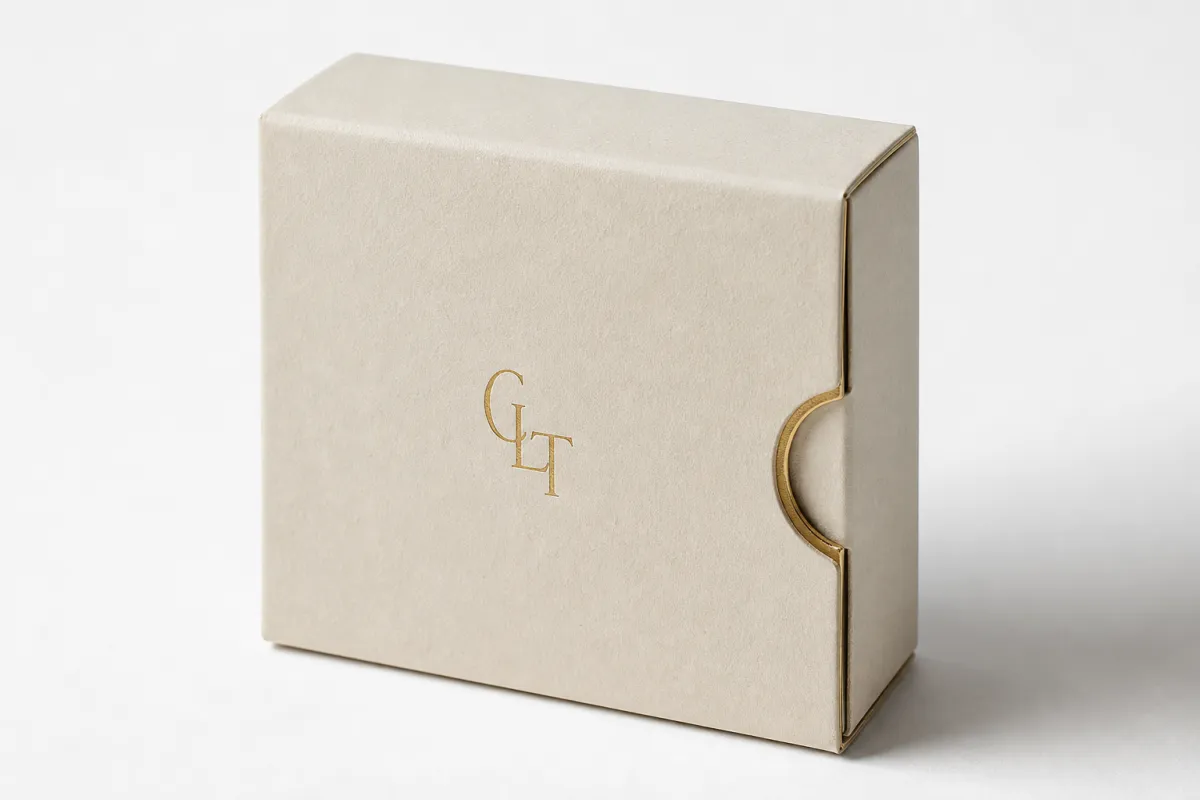
A carton can do more brand work in three seconds of handling than a long product description does in three minutes of reading. That may sound dramatic, but it is true in the aisle, on the packing bench, and in the customer's hands. A shopper sees the pack, feels the pack, and decides whether the brand looks deliberate. Custom paperboard cartons with logo shape that judgment before a single line of copy is read.
Paperboard cartons are lightweight, printable structures used to present, protect, and differentiate a product without the bulk of corrugated shipping boxes. That makes them a strong fit for cosmetics, supplements, fragrance cartons, sample packs, small electronics accessories, confectionery, and premium subscription kits. In each of those categories, custom paperboard cartons with logo are less about brute protection and more about controlled presentation and repeatable brand identity.
From a packaging buyer's point of view, the logo is not decoration. It is a repeatable brand asset that should appear with the same spacing, color, and placement from run to run. Custom paperboard cartons with logo signal to retailers, distributors, and end customers that the product belongs to a system rather than a one-off project. The visual signal is subtle, but it matters. Consistent logo placement tells people the brand understands packaging design, pays attention to traceability, and respects the small details that shoppers actually notice.
That matters even more in categories where the product itself is hard to see. A supplement bottle, a soap bar, a cosmetic tube, or a sample pack often sells before the user ever opens the box. Custom paperboard cartons with logo create a face for the product. They can make a $12 item feel disciplined and complete, or make a $60 item feel unfinished if the carton is weak. The carton becomes a kind of silent pricing signal.
There is also a practical side that buyers sometimes overlook. Custom paperboard cartons with logo can simplify line sorting, improve SKU recognition in fulfillment, and reduce picking mistakes if the printed front panel is designed clearly. That is not glamorous, but it is where branded packaging earns its keep. In a lot of operations, the carton is part of the workflow, not just the marketing.
I have opened enough cartons that looked perfect in a PDF and then caught on a tuck flap, scuffed at the corner, or read poorly under warehouse light. The copy on the pack may matter later, but the carton speaks first. A clean logo, the right board finish, and a layout with room to breathe often do more than a dense block of claims. Custom paperboard cartons with logo are proof that the first layer of marketing can be physical.
Three early questions usually decide whether the carton will perform well:
- Does the structure fit the product and the handling environment?
- Will the print method reproduce the logo cleanly at the chosen quantity?
- Is the budget aligned with the finish and setup work the design actually needs?
Get those wrong, and custom paperboard cartons with logo become an expensive lesson. Get them right, and the package can carry brand consistency across shelf display, shipping, and repeat purchase without trying too hard.
How custom paperboard cartons with logo are made: process and timeline
The production path is more orderly than it looks from the outside. Custom paperboard cartons with logo usually move from measurement to structural design, then to artwork placement, proofing, printing, finishing, die-cutting, folding, and final packing. Each step is small on its own. Together, they decide whether the carton looks deliberate or improvised.
The dieline is the quiet gatekeeper. If the product dimensions, flap depth, tuck length, and glue area are wrong, the logo can be beautifully printed and still land in the wrong place. That is why custom paperboard cartons with logo should never be treated as a graphic-only project. The shape has to be locked before the artwork is finalized. A few millimeters matter more than most people expect, especially near folds, trim lines, and lock tabs.
Artwork preparation matters just as much. Logos should be supplied as vector art whenever possible, ideally AI, EPS, or editable PDF. Spot colors should be defined early if brand consistency matters. If the job uses process color, then custom paperboard cartons with logo need careful color control because paperboard absorbs ink differently from coated label stock or flexible film. If there is a special effect such as foil, embossing, or spot UV, confirm it before the press run starts rather than after the proof is approved.
The schedule is usually driven by approvals more than by machine speed. A straightforward straight-tuck carton may move from proof to shipment in 10-15 business days after approval, while more complex work with inserts, windows, or specialty coatings often needs longer. The reason is simple: custom paperboard cartons with logo depend on a chain of decisions, and one delayed approval can hold everything behind it.
Sampling helps separate guesswork from reality. Structural samples answer fit questions: does the insert hold the product, does the tuck close correctly, does the carton sit flat? Printed proofs answer color and placement questions: does the logo read clearly, are text elements legible, does the finish behave as expected? For custom paperboard cartons with logo, those two checks solve different problems, and both are worth doing on anything beyond the simplest project.
Here is the sequence most buyers find useful:
- Confirm the product dimensions, weight, and handling conditions.
- Select the carton style and closure method.
- Place the logo and other artwork on the dieline.
- Review a structural sample or mockup.
- Approve the printed proof.
- Run production, then inspect the first cartons off the line.
That sounds basic because it is. Even so, projects still skip one of those steps and then wonder why the cartons look right on screen but wrong in hand. Custom paperboard cartons with logo reward disciplined prep far more than heroic fixes later.
A logo is not the finish line. It is one checkpoint in a longer process. If the structure, color, or assembly are off, the carton still feels unfinished.
For buyers who want deeper context on packaging practice, the Institute of Packaging Professionals at packaging.org is a useful reference point, and fsc.org is the place to verify forestry and chain-of-custody language before making sustainability claims. Those references do not replace a supplier conversation, but they help keep custom paperboard cartons with logo grounded in real standards instead of marketing shorthand. If a supplier cannot support a sustainability statement with documents, the claim should stay off the carton.
Cost, pricing, and MOQ for custom paperboard cartons with logo
Price is never just price. With custom paperboard cartons with logo, the final number usually reflects board thickness, carton size, total print coverage, number of colors, finishing effects, and whether inserts or windows are included. A simple carton in a common size can be efficient. A carton with heavy coverage, foil, embossing, and a custom insert is a different animal entirely.
Setup cost and unit cost pull in opposite directions. Short runs tend to carry more setup overhead per carton because the press prep, die, and finishing work are spread across fewer pieces. Larger runs reduce unit cost because the fixed pieces of the job get diluted across more cartons. That is why custom paperboard cartons with logo often look expensive in a small test order and much more reasonable at scale.
Minimum order quantity matters because it changes the economics. Some brands want 500 cartons for a launch test, others need 10,000 for a national retail rollout. Custom paperboard cartons with logo can usually be ordered in small quantities, but the unit cost is often noticeably higher. If the project is exploratory, that may still be the right call. If it is for a stable SKU, a higher MOQ can make more sense than paying repeated setup costs.
To compare quotes fairly, ask suppliers to quote the same dimensions, board grade, finish, print method, and shipping assumptions. Otherwise, you are not comparing custom paperboard cartons with logo at all; you are comparing different jobs that happen to have similar artwork. One quote may include a coated board, another may not. One may include a printed insert, another may leave it out entirely. That is where budget confusion starts.
Hidden variables can move the number more than many buyers expect. Rush charges, extra proof rounds, freight, tool changes, and sample fees can quietly add up. If the supplier says custom paperboard cartons with logo will cost $0.24 each, ask whether that includes setup, packaging for shipment, and delivery to your warehouse or fulfillment center. The cheapest quote is not always the least expensive order.
| Scenario | Typical Quantity | Typical Unit Range | Best Fit | What Drives the Price |
|---|---|---|---|---|
| Simple straight-tuck carton | 5,000+ | $0.18-$0.35 | Light retail goods, samples, supplements | Standard board, limited ink coverage, basic finish |
| Full-color branded carton | 5,000+ | $0.28-$0.55 | Cosmetics, premium branded packaging, gift sets | CMYK print, larger sheet coverage, matte or gloss coating |
| Special finish carton | 3,000+ | $0.45-$0.95 | Luxury retail packaging, launch programs, limited editions | Foil, embossing, spot UV, soft-touch lamination, complex die-cutting |
| Prototype or test run | 250-1,000 | $0.65-$1.20 | Early-stage product packaging, pilot sales, market tests | Short-run setup, digital print, revision risk, lower economies of scale |
Those ranges are not promises. They are a practical way to think about how custom paperboard cartons with logo behave in the market. If you add a window patch, a custom insert, or a specialty coating, the number can move quickly. If you simplify the structure and keep the print area efficient, the price usually settles down.
MOQ also affects risk. Small runs let a brand test multiple SKUs or seasonal artwork without committing to a warehouse full of cartons. Large runs improve the economics but require confidence in the final spec. For a lot of buyers, the sweet spot is a mid-size order that balances cash flow and repeatability. That is especially true for custom printed boxes used in fast-moving product lines.
Material, structure, and finish choices that change the result
Board choice changes the first impression faster than almost anything else. SBS board gives a clean, bright canvas for print-heavy custom paperboard cartons with logo. Kraft board leans warmer and more natural, which can help with organic, artisan, or eco-positioned products. Recycled board can support sustainability goals, but it is worth checking print sharpness and consistency before a large order goes live.
Structure matters just as much. A tuck-end carton works well for lightweight retail goods. A reverse tuck can be easy to assemble in fast packing environments. A sleeve adds a premium feel, while a reinforced bottom helps with heavier products or repeated handling. Custom paperboard cartons with logo should match the product's real use, not just the mood board.
Finish choices change both appearance and performance. Matte tends to feel restrained and premium. Gloss lifts color intensity and can make graphics pop under store lights. Soft-touch creates a tactile feel that many brands like for high-end product packaging, although it should be tested for scuff resistance. Aqueous coating is often a practical middle path because it adds some protection without pushing cost too far.
| Material or Finish | Visual Effect | Handling Performance | Typical Use Case |
|---|---|---|---|
| SBS board | Bright, crisp, premium | Strong print clarity | Beauty, supplements, branded packaging |
| Kraft board | Natural, earthy, understated | Good structure, visible fiber texture | Natural products, artisan retail packaging |
| Recycled board | Muted, practical, credible | Can vary more in tone and finish | Eco-positioned lines, value-conscious programs |
| Matte coating | Soft, controlled, quiet | Usually resists glare well | Premium custom paperboard cartons with logo |
| Gloss coating | Bright, energetic, reflective | Often easier to wipe clean | Retail packaging that needs strong color impact |
| Soft-touch | Velvety, luxurious, tactile | Needs scuff testing in real handling | Higher-end custom paperboard cartons with logo |
Logo treatment is where the design either clicks or becomes forgettable. Full-bleed branding can feel modern and bold. A centered mark can read as controlled and premium. Edge-to-edge color blocks can give custom paperboard cartons with logo a stronger shelf presence, especially in categories with crowded facings. Embossing and foil do not automatically make a carton better, but they can add depth if they support the product story rather than compete with it.
The tradeoff is straightforward: appearance versus durability. A beautiful finish that scratches during packing, smears in humid conditions, or folds badly is not a luxury item. It is a packaging problem. Custom paperboard cartons with logo work best when the finish can survive real handling, not only a photo on a monitor.
If the carton will be displayed under harsh retail lighting, handled by a fulfillment team, or stacked in cases for weeks, I would be cautious about choosing a finish only because it looks impressive in the sample room. A calmer, more durable spec often performs better. That is one of the less glamorous truths of retail packaging and custom printed boxes: the nicest-looking sample is not always the best-running package, and sometimes the smarter choice is kinda plain on purpose.
Step-by-step ordering for custom paperboard cartons with logo
Start with a product audit. Confirm exact dimensions, weight, fragility, shelf requirements, and shipping conditions before you ask for a spec. Custom paperboard cartons with logo are easier to buy when the product facts are fixed. If the product changes after the carton is quoted, the carton usually needs to change too.
Choose the structure before the decoration. Lock in the carton style, opening direction, and closure method first, then place the logo where it will actually be seen. This sounds obvious, yet a lot of packaging design problems begin when a logo is positioned beautifully on a flat file and awkwardly on a folded form. Custom paperboard cartons with logo need their artwork mapped to the geometry, not the other way around.
Prepare production-ready files. Send vector artwork, define brand colors, identify legal copy, and leave room for barcodes or regulatory text if needed. If the carton needs an ingredient panel, storage instructions, or a batch code area, those should be planned in advance. That is where package branding meets compliance, and there is very little room for improvisation once the press run starts.
Request a prototype or proof before full production. For custom paperboard cartons with logo, this is the moment to check fit, fold quality, print clarity, and logo placement. If the cartons will be handled by a fulfillment team, ask someone who actually packs products for a living to look at the sample. They usually spot issues that design reviews miss, like a tuck that catches too tightly or a panel that opens the wrong way for the line.
Plan the launch like a production buyer, not just a designer. Confirm approval timing, production slot, delivery window, and inspection steps for the first shipment. A brand launch does not fail only because the artwork is wrong. It also fails when cartons arrive late, or when a good spec is approved too late to meet the sell-in calendar.
One practical way to think about the order flow is this:
- Quote against a fixed product spec.
- Approve the structure.
- Review the printed proof.
- Run a small pilot if the SKU is new.
- Scale only after the first cartons pass inspection.
That approach keeps custom paperboard cartons with logo from turning into a guessing game. It also makes it easier to compare suppliers if you are gathering multiple bids for Custom Packaging Products and want to know which vendor is quoting the same quality level.
Common mistakes with custom paperboard cartons with logo
Measuring the product incorrectly is the most expensive beginner error. A carton that is too tight can crush a product or slow down assembly. A carton that is too loose can create movement, noise, and a cheap feel. Custom paperboard cartons with logo cannot compensate for a bad fit. They can only reveal it sooner.
Placing critical branding too close to folds, glue panels, or trim areas is another common misstep. Once the carton is die-cut and folded, a logo that looked centered on the screen can end up cropped, skewed, or interrupted by a crease. Custom paperboard cartons with logo need safe zones just like any printed package. That means respecting the dieline, not fighting it.
Choosing a finish for looks alone can backfire. Highly reflective coatings may reduce readability under bright lights. Delicate surfaces can scuff during packing and transport. In some cases, the best-looking sample is simply not the best performing carton. Product packaging and retail packaging stop being presentation-only jobs the moment the line starts moving, and then durability has to carry part of the brand message.
Another error is treating cost as a single line item. The quoted carton price is only part of the story. Setup, freight, proof rounds, and rush changes can reshape the final budget. Custom paperboard cartons with logo are easiest to manage when the buyer asks about total landed cost, not just the per-unit number on page one of the quote.
The end user matters too. If the carton opens awkwardly, resists assembly, or ships poorly, the packaging undermines the product inside. I have seen brands spend more on print effects than on opening behavior, and the customer feels that imbalance immediately. Packaging should feel considered. If it feels fussy, that irritation gets attached to the brand.
Here are the most common failure points to watch for:
- Wrong internal dimensions.
- Logo too close to a fold.
- Finish selected without scuff testing.
- Quote compared without matching specs.
- No plan for assembly speed or fulfillment workflow.
If the project involves regulated claims, recycled-content language, or sustainability messaging, check the wording carefully. ASTM and ISTA are useful standards families for performance and transit testing, but they do not replace legal review or supplier documentation. A carton can look right and still carry the wrong claim, which is a problem nobody wants to discover after printing. If the wording is not backed by certificates or test reports, it should stay off the panel.
Expert tips and next steps for better cartons
Test the carton where it will actually live. Under store lighting, in a fulfillment line, inside a shipping case, or in a customer unboxing moment, the carton behaves differently. Custom paperboard cartons with logo should be evaluated in those environments, not only under controlled studio light. A subtle gloss may look great in a sample room and overly shiny on shelf. A soft matte may read as elegant and then show handling marks too quickly in a busy packing area.
Ask for both a structural sample and a printed proof if the project has any complexity. One confirms fit. The other confirms how the logo will read. That combination is especially useful for custom paperboard cartons with logo because structure and print usually fail in different ways. A tight fit can pass a print proof and still be a bad carton. A perfect fold can still miss the brand color by a noticeable margin.
Build in SKU flexibility early. If seasonal graphics, regional language, or product variations are likely, design the base carton so only the printed panel needs to change. That keeps custom paperboard cartons with logo more economical over time and avoids starting from scratch every time a formula or promotion shifts. For brands with a growing line, that matters more than it sounds.
Think like a production buyer, not only like a designer. Line speed, packing labor, storage footprint, and pallet efficiency all influence whether the carton performs well. A slightly smaller carton may save warehouse space. A carton with an easier closure may cut assembly time. A finish that resists scuffing may reduce rejects in final inspection. The best custom paperboard cartons with logo are not just attractive; they are efficient.
If a carton slows the line by even a few seconds per unit, the cost shows up somewhere. Labor does not disappear just because the packaging looks polished.
There is also a strategic angle. Brands that keep their carton system consistent usually have an easier time expanding into new channels. A design language that works for shelf display, DTC shipping, and wholesale presentation can travel farther than a one-off package ever will. That is why custom paperboard cartons with logo often become the quiet backbone of branded packaging: they are flexible enough for multiple channels, but specific enough to feel like the brand owns its presentation.
Your next steps are practical. Gather dimensions, define material and finish preferences, request comparable quotes, approve a sample, and launch a pilot run of custom paperboard cartons with logo. If the first run performs well, scale it. If the sample exposes a problem, fix the structure Before You Order thousands of pieces. That sequence is boring in the best possible way.
Custom paperboard cartons with logo reward careful planning far more than rushed decisions. The brands that treat them as real product packaging, not just printed shells, usually end up with stronger shelf presence, cleaner fulfillment, and a better customer experience. The cleanest path is simple: lock the dimensions, approve the structure, test the print and finish, and only then commit to volume.
How long do custom paperboard cartons with logo usually take from proof to delivery?
A straightforward project can move quickly once artwork is approved, but sampling, revisions, and special finishes often extend the schedule. For custom paperboard cartons with logo, the biggest timing variables are proof approval, tooling complexity, and whether the carton needs inserts, windows, or nonstandard coatings. If the timeline is tight, lock measurements and artwork early so production does not sit idle waiting for sign-off.
What affects the cost of custom paperboard cartons with logo the most?
Size, board grade, print coverage, finishing, and order quantity usually drive the largest swings in price. Short runs tend to have higher unit cost because setup work is spread across fewer cartons. Comparisons only make sense if the specs match exactly, including material, quantity, and any post-print effects.
Can I order custom paperboard cartons with logo in small quantities?
Yes, but the unit cost is often higher because setup expenses are not spread across many pieces. Small runs are useful for launches, seasonal tests, or limited SKUs where flexibility matters more than the lowest price. Ask whether the supplier offers prototype quantities or low-MOQ options before committing to a larger run.
What file format works best for the logo artwork?
Vector files such as AI, EPS, or editable PDF are usually best because they scale cleanly without losing edge quality. If raster images are unavoidable, keep them high resolution and confirm the size at which they will be printed. Outline fonts, define colors early, and ask for a proof so logo placement is checked before production starts.
Which finish is best for custom paperboard cartons with logo?
Matte works well for a quiet premium look, while gloss makes color feel brighter and more energetic. Soft-touch can feel more luxurious, but it should be tested for scuff resistance if the carton will be handled often. Choose the finish based on product category, handling conditions, and how much visual contrast you want the logo to have.

