Buyer Fit Snapshot
| Best fit | Custom Paperboard Sleeves Wholesale projects where brand print, material claims, artwork control, MOQ, and repeat-order consistency need to be specified before quoting. |
|---|---|
| Quote inputs | Share finished size, material target, print colors, finish, packing count, annual reorder estimate, ship-to region, and any compliance wording. |
| Proofing check | Approve dieline scale, logo placement, barcode or warning zones, color tolerance, closure strength, and carton packing before bulk production. |
| Main risk | Vague material claims, crowded artwork, missing packing details, or unclear freight terms can make a low unit price expensive after revisions. |
Fast answer: Custom Paperboard Sleeves Wholesale: Pricing & Specs should be specified like a repeatable production item. The safest quote records material, print method, finish, artwork proof, packing count, and reorder notes in one written spec.
Production checks before approval
Compare the actual filled-product size with the drawing, then confirm tolerance on folds, seals, hang holes, label areas, and retail display edges. Reserve space for logos, QR codes, warning copy, and material claims before decorative graphics fill the panel.
Quote comparison points
Review material grade, print process, finish, sampling route, tooling charges, carton quantity, and freight assumptions side by side. A quote is only useful when the supplier can repeat the same color, closure quality, and packing count on the next order.
Custom paperboard sleeves wholesale can change the way a carton reads on shelf without forcing a brand to rebuild the whole package system. That matters because retail decisions happen fast, and a sleeve with the right structure, print, and finish can move a product from plain to polished in one production cycle. Brands that manage several SKUs, seasonal launches, or compliance updates often find custom paperboard sleeves wholesale to be one of the most practical packaging choices available because it protects the base carton, keeps inventory flexible, and keeps spend under control.
From a packaging buyer's perspective, the approach is pretty straightforward: keep the structure that already works and refresh the outer message. The result is less waste, fewer structural revisions, and a cleaner path from packaging design to retail execution. Custom paperboard sleeves wholesale also makes repeat ordering easier because the sleeve can carry new graphics, updated claims, or region-specific language without forcing a full retool of the package. In a lot of categories, that difference saves time, budget, and a fair amount of stress.
Why Custom Paperboard Sleeves Wholesale Wins at Shelf Level
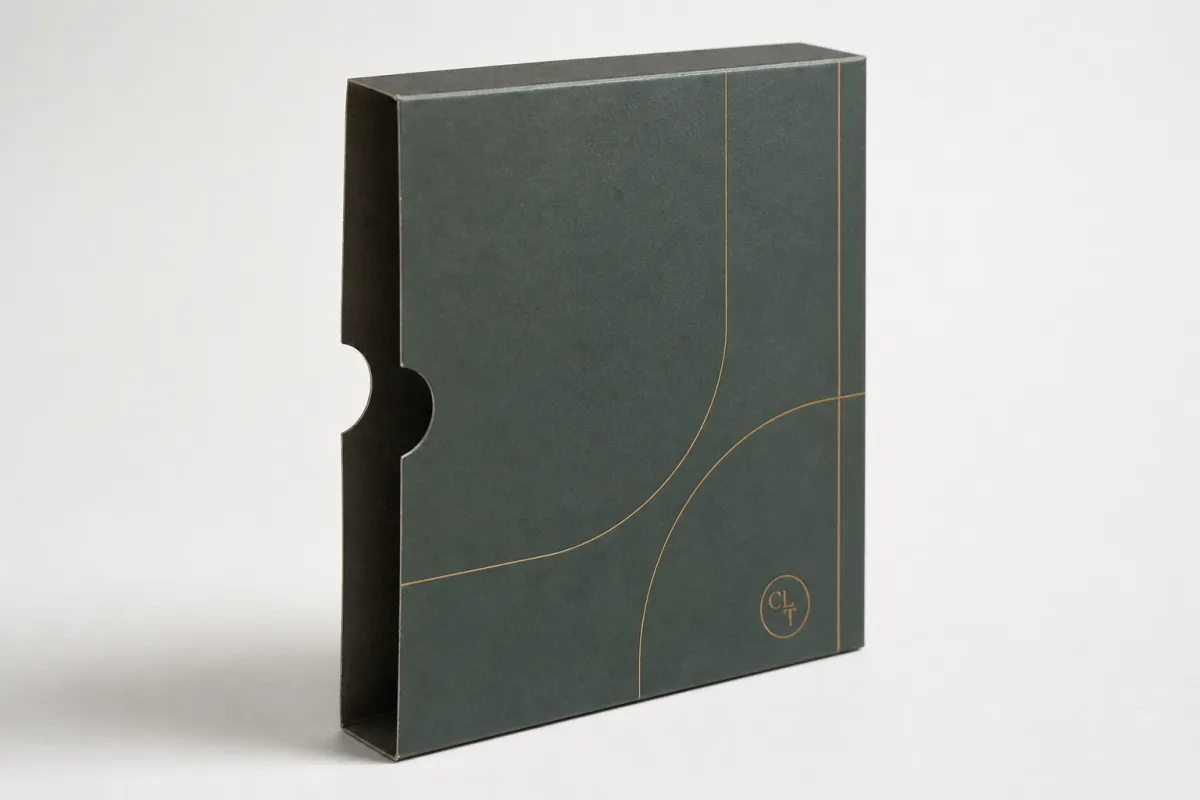
Custom paperboard sleeves wholesale earns its place because it changes the first impression faster than almost any other carton component. Shelves do not give brands much room to explain themselves. Shoppers scan shape, color, hierarchy, and trust signals in seconds, and the package has to do its work in that narrow window. A sleeve can turn a plain box into packaging that feels more complete, more organized, and more deliberate.
That speed helps newer brands, and it helps established lines just as much. A company with a stable structural carton can use custom paperboard sleeves wholesale to refresh branding for a holiday run, a line extension, or a price-point shift. The base box stays in place. The sleeve becomes the changeable layer. That is a cleaner commercial model than rebuilding Custom Printed Boxes every time marketing wants a new story told.
Cost is part of the appeal, but not in a shallow way. For multi-SKU programs, sleeves let teams standardize the carton and vary the graphics. One structure, many looks. That reduces duplication in procurement, simplifies inventory in operations, and gives sales a way to present something new without paying for a completely new rigid build. It is a practical advantage, not a decorative one.
Custom paperboard sleeves wholesale works especially well when the packaging has to carry several jobs at once. A sleeve can add a premium visual band, call out a promotion, reserve space for a barcode, or hold legal copy that changes by region. It is not the right fit for every pack, yet for many launches it is the least disruptive path forward. That is why buyers compare it so often with full box printing, labels, and shrink alternatives.
“A sleeve is often the smartest spend in the pack: enough surface area to change the story, not so much material that the economics fall apart.”
For teams comparing wholesale packaging programs, that balance is the point. Custom paperboard sleeves wholesale can improve shelf blocking, strengthen visual consistency across a range, and support promotional timing without dragging the brand into a one-off structural redesign.
Custom Paperboard Sleeves Wholesale: Product Details and Use Cases
The product itself is simple to describe. A sleeve is a printed paperboard wrap that slips over or around a primary carton. In some jobs it hugs a straight box. In others it bridges a folding carton. It can also work as a band that focuses attention on one face of the package. Custom paperboard sleeves wholesale performs best when the base carton already has a useful structure and the brand mainly needs a stronger visual layer.
That makes it useful across a wide range of categories. Cosmetics brands use sleeves to separate shades or seasonal themes. Food brands use them for multipacks, gift sets, and controlled claims. Candle companies use them to create a more premium feel without changing the jar carton. Supplements use sleeves for language variants and dosage updates. Apparel accessories, tech accessories, and curated gift boxes all benefit from the same logic: keep the structure stable, change the presentation.
Custom paperboard sleeves wholesale also fits regional programs. A brand can keep one primary carton and adjust the sleeve for a different market, a different warning copy, or a different regulatory callout. That is one reason sleeves show up so often in packaging programs that move through several retail channels. They let operations and marketing share a platform while still tailoring the message.
Common sleeve structures include open-ended sleeves, wrap-around sleeves, and formats that pair with crash-lock cartons. An open-ended sleeve can slide over the box with clean edges visible at both ends. A wrap-around style can create a more complete visual band. For some cartons, the sleeve can be built to clear a tuck flap or avoid a glue panel, which helps the finished piece sit square and look intentional.
Custom paperboard sleeves wholesale also helps with merchandising. It can improve shelf blocking by creating stronger color continuity across a range. It can move the barcode onto a cleaner panel. It can isolate a promotional message so the base carton stays usable for future runs. That separation matters in packaging design because the permanent structure and the temporary message do not need to compete with each other.
For brands testing a new line, sleeves reduce risk. A lower-volume launch can go out, sell-through can be studied, and artwork can be revised on the next run. The carton does not need to be scrapped just because the message changed. I have seen otherwise solid programs get bogged down because teams tried to solve an artwork issue with a full structural redesign, and that is usually the more expensive path by a long shot. Custom paperboard sleeves wholesale gives buyers a way to stay nimble without looking temporary.
If you are comparing broader support for Custom Packaging Products or trying to standardize a buying program, sleeves deserve a serious look. They are not the loudest item in packaging. They are often the most economical one.
Specifications for Custom Paperboard Sleeves Wholesale Orders
Good quotes start with clear specs. Custom paperboard sleeves wholesale is not difficult to buy, but it is easy to mis-specify. The most important inputs are finished dimensions, paperboard caliper, print area, fold direction, and the way the sleeve is meant to travel over the carton. If those five items are vague, pricing shifts and fit risk rises.
Size comes first. Buyers should provide the exact finished carton dimensions rather than a rough estimate. A difference of even 1-2 mm can change how smoothly the sleeve slides, especially on tight retail packaging. If the sleeve has to fit over a carton with a tuck flap, a glued corner, or a raised insert, that detail belongs in the brief from the start. Custom paperboard sleeves wholesale often succeeds or fails on small dimensional details.
Board choice is the second spec. Common options include SBS, C1S, kraft, recycled paperboard, and coated premium stocks. SBS is often chosen when print clarity and bright white faces matter. C1S gives a printable front with a more natural backside. Kraft supports a more earthy look and pairs well with packaging built around recycled claims. Recycled board can help with sustainability goals, but it still needs to match the visual and structural needs of the job. Not every recycled substrate behaves the same on press or in finishing, so material selection should be tied to the actual use case instead of a trend.
Print and finish decisions matter just as much. Custom paperboard sleeves wholesale can be printed in CMYK for full-color graphics or expanded with spot colors if brand standards call for tighter color control. Finishing options usually include aqueous coating, soft-touch coating, embossing, debossing, foil, and matte or gloss lamination. Each finish changes the look, the feel, and the price. A soft-touch sleeve can read as premium. Foil can pull the eye to a focal point. Both add handling and complexity, so the buyer should decide whether the effect justifies the unit cost.
Functional details deserve equal attention. Die-cuts, perforations, tuck features, and window openings can all be built into custom paperboard sleeves wholesale if they serve a purpose. A perforation may help with tamper evidence. A window can expose part of the base carton or the product itself. Barcode-safe zones are essential if scanners need a clean panel. If the sleeve carries legal copy, the copy area needs enough room to remain readable at final size, not just on a design screen. I have seen a barcode get pushed too close to a fold and cause extra hand-scanning at fulfillment, which is the kind of headache nobody wants twice.
Quality and compliance checks should sit inside the order brief. Food packaging needs careful review if the sleeve could come into direct or indirect contact with a product. If claims depend on FSC sourcing, ask for documentation tied to the material chain. If transport performance matters, look at recognized test methods such as those described by the ISTA organization or comparable ASTM drop and distribution standards. That is risk control, not overkill. For sourcing claims and responsible forestry references, the FSC site is the right starting point.
Fit tolerance is another issue that tends to be ignored until samples arrive. Custom paperboard sleeves wholesale should be tested against the real carton, not only a flat dieline. Some sleeves need a little drag to feel secure. Others need a smoother glide so line workers can assemble them quickly. The goal is not just correct dimensions. The goal is usable dimensions.
Helpful specification checklist for buyers:
- Finished carton dimensions and sleeve target dimensions
- Board grade, caliper, and recycled-content preference
- Print method, color count, and finish selection
- Barcode, legal text, and quiet-zone placement
- Fold direction, glue area, and assembly method
- Sample approval needs and fit tolerance requirements
Those details shorten quote cycles and cut down revision rounds. In procurement, that is money well spent.
Cost, Pricing, MOQ, and Quote Drivers
Pricing for custom paperboard sleeves wholesale depends on more than quantity, though quantity still drives the conversation. The smallest runs carry the highest per-unit cost because setup, die-making, proofing, and press time are spread across fewer pieces. Once volume climbs, the unit price usually falls quickly. That is normal in packaging production, and it is one reason MOQ never has a single universal answer.
The biggest cost drivers are board grade, size, print coverage, finish complexity, and total order volume. A small sleeve in simple CMYK on standard SBS will price very differently from a large sleeve with foil, embossing, and a specialty coating. Custom paperboard sleeves wholesale can be efficient, but only if the spec set stays disciplined. Every extra finishing step adds handling, and every extra handling step adds risk.
Here is a practical range many buyers use as a planning tool. These are not fixed quotes, but they help frame budget conversations.
| Order Size | Typical Unit Price | Common Setup Factors | Best Fit |
|---|---|---|---|
| 1,000-2,000 sleeves | $0.45-$0.85 | Higher setup share, smaller press efficiency | Test launches, regional trials, short promotions |
| 5,000 sleeves | $0.18-$0.32 | Balanced setup cost, better production efficiency | Core retail packaging, seasonal runs, standard reorders |
| 10,000+ sleeves | $0.11-$0.22 | Lower unit cost, stronger sheet utilization | National programs, multi-SKU brands, recurring wholesale orders |
Those ranges can move up if the design is heavily embellished or if the sleeve needs a specialized substrate. They can move down if the print area is simple and the dieline is efficient. Custom paperboard sleeves wholesale becomes more competitive once the run size crosses production thresholds where press sheets, cutting, and finishing line up more efficiently.
MOQ is often misunderstood. It is not a number pulled from thin air. It reflects machine setup, waste allowance, and labor spread. If a supplier says the MOQ is 3,000, that may mean anything lower becomes inefficient on that press or finishing line. Custom paperboard sleeves wholesale buyers who need a smaller test run should ask whether a digital short-run option exists, or whether a simpler finish can bring the order into range.
Hidden costs deserve attention. Ask about plates, die charges, proofs, sample rounds, freight, and rush fees. Some suppliers quote a low base price and add charges later. Others present a higher unit price and fewer surprises. When comparing custom paperboard sleeves wholesale quotes, compare the full landed cost, not just the headline unit price.
One useful rule: request the quote with exact dimensions, artwork status, target quantity, finishing requirements, and delivery zip code. That makes the numbers comparable. A quote without those details is a starting point, not a purchase decision. For buyers building repeat purchasing programs, that discipline pays off quickly.
If your company already manages Wholesale Programs, it may be worth standardizing the quote template so every supplier receives the same inputs. The result is cleaner comparisons and less back-and-forth.
Process, Timeline, and Lead Time Expectations
The ordering process for custom paperboard sleeves wholesale stays fairly simple once the files are ready. It usually starts with spec review, then quotation, then artwork handoff, then proofing, sampling, approval, production, and shipment. Each step has a purpose. Skip one, and the risk usually shows up later as a fit issue, a color mismatch, or a missed freight window.
Artwork readiness is the biggest schedule variable. If the buyer already has a dieline and print-ready files, the job moves faster. If the supplier has to create or correct the dieline, the schedule stretches. Missing bleed, unoutlined fonts, low-resolution images, and unconfirmed Pantone values are common reasons a sleeve job slows down. Custom paperboard sleeves wholesale can look simple on paper and still become slower in prepress because of one overlooked file detail.
Lead time also depends on the finish list. A basic sleeve with straightforward CMYK print can move relatively quickly. Add foil, embossing, specialty coating, or a complex die-cut and the timeline gets longer. A realistic planning range for many jobs is 12-15 business days after proof approval for standard runs, though that can extend to 18-25 business days for larger quantities or more complex finishing. Freight and receiving time sit on top of that. Custom paperboard sleeves wholesale is only done when the inventory is actually available at the warehouse.
Sampling is worth the time. Digital proofs are useful for layout and text review, but they do not prove physical fit. A short-run sample or prototype helps confirm how the sleeve slides, how the board feels, and how the graphics land on the finished object. If the sleeve has to sit flush in retail packaging, that sample can prevent a costly correction later. For many buyers, a sample costs less than a production mistake.
Receiving matters too. In a real distribution flow, production completion is not the endpoint. Freight booking, transit, dock scheduling, and inbound inspection all affect when the product can be packed and shipped to stores or fulfillment centers. That is why custom paperboard sleeves wholesale should be planned as part of the full supply chain, not as a disconnected print order.
A simple timeline framework:
- Day 1-2: spec review and quote alignment
- Day 3-5: dieline and artwork prep
- Day 5-7: proof review or sample approval
- Day 8-20: production, depending on finish and volume
- Final step: freight transit and warehouse receiving
That model is not universal, but it is close enough for planning. Buyers who treat custom paperboard sleeves wholesale like a procurement project, not a design afterthought, usually avoid the worst delays.
Why Choose Us for Custom Paperboard Sleeves Wholesale
Custom Logo Things is built for buyers who want Packaging That Works in the real world, not just in a presentation deck. For custom paperboard sleeves wholesale, that means clear communication, consistent quality control, and repeatability across reorder cycles. Those qualities matter because a sleeve that fits well on the first run should fit well again six months later. Consistency is part of the product.
The strongest wholesale programs do three things well. They keep print registration stable. They cut accurately. They hold finish quality from sample to shipment. custom paperboard sleeves wholesale depends on all three. A sleeve with slightly off-center graphics or uneven lamination can undermine the entire pack, even if the underlying carton is fine. That is why production discipline matters as much as design intent.
Flexibility matters too. Some buyers need high-volume production for national retail packaging. Others need lower-volume runs for launches, region-specific versions, or testing. A good supplier should be able to support both without changing the process every time. That is especially useful for brands that use sleeves as an on-ramp before scaling into full custom printed boxes or broader branded packaging systems.
Custom paperboard sleeves wholesale also benefits from practical prepress support. If a buyer does not have a dieline, the team should explain what is needed. If the artwork is dense, the supplier should flag potential readability issues. If the board choice may affect fit, that should be discussed before production begins. The goal is fewer surprises, not more meetings.
There is a sustainability angle here too. Sleeves can use less material than a full structural redesign, which helps brands reduce waste and keep the base carton in circulation longer. If a buyer wants FSC-backed material, recycled content, or a lower-impact package strategy, custom paperboard sleeves wholesale can fit that goal better than many alternatives. The advantage is not that sleeves are magical. It is that they are efficient, and that efficiency matters in both procurement and production.
For teams comparing support options, our Custom Packaging Products range can help align sleeves with cartons, labels, and other packaging components. That matters when the packaging system has to stay visually consistent across the shelf, the warehouse, and the e-commerce box.
Here is the blunt truth: custom paperboard sleeves wholesale works best when the supplier understands production realities as well as visual goals. Good packaging design is not just about style. It is about structure, repeatability, and cost control. That is the combination buyers are really paying for.
Next Steps to Order Custom Paperboard Sleeves Wholesale
If you are ready to move, start with the spec sheet. Gather the exact carton dimensions, target quantity, preferred board grade, finish choices, artwork files, and required delivery date. Custom paperboard sleeves wholesale quotes are only as accurate as the information behind them. A complete brief saves time and keeps pricing realistic.
If the sleeve has to fit tightly, carry legal text, or match an existing brand system, request a sample or prototype before final approval. That matters even more for products where shelf presentation is critical or where the carton must slide in a very specific way. Custom paperboard sleeves wholesale is a procurement decision, but it is also a fit-and-function decision. Both matter.
A simple decision path helps:
- Confirm dimensions, quantity, and board preference
- Review a quote with unit price, setup, tooling, and freight separated
- Approve the dieline and artwork proof
- Validate a sample if the fit is tight or the copy is regulated
- Schedule production, transit, and receiving
That process keeps the buying cycle controlled. It also helps teams compare custom paperboard sleeves wholesale across suppliers without getting distracted by vague language. One supplier may appear cheaper until freight, tooling, and proofing are added. Another may price higher but include more support. The only fair comparison is a complete one.
For brands that manage multiple SKUs, sleeves can become a repeatable system rather than a one-off purchase. That is where the value compounds. A standardized sleeve platform can support seasonal editions, regional text changes, promotional packs, and shelf refreshes with far less disruption than rebuilding the entire package each time. In practical terms, custom paperboard sleeves wholesale helps product teams move faster without giving up control.
If you want the most accurate starting point, send the spec sheet first. That lets us match custom paperboard sleeves wholesale pricing to the real job, not a rough estimate. The better the brief, the cleaner the quote, the fewer surprises later. That is the takeaway worth acting on right away: start with exact dimensions, a clear board choice, and a real-world fit requirement, then build the rest of the order around those three anchors.
FAQ
What is the typical MOQ for custom paperboard sleeves wholesale?
MOQ usually depends on size, print method, and finishing complexity rather than one fixed number. Larger runs lower the unit price because setup costs are spread across more sleeves. If you need a small test run, ask whether a digital or short-run production option is available.
How do I get an accurate quote for paperboard sleeve wholesale pricing?
Send finished dimensions, quantity, board preference, print coverage, and any special finishes. Include artwork status and whether you already have a dieline, since missing files can change the estimate. Ask the supplier to separate unit price, setup charges, tooling, and freight so you can compare quotes fairly.
What file format should I send for custom sleeve artwork?
Vector files such as AI, EPS, or PDF are usually best because they preserve text and cut lines cleanly. Embed fonts or outline them, and provide linked images at print resolution. If you do not have a dieline, ask for one before placing artwork so the layout matches the sleeve structure.
Can paperboard sleeves fit different products without changing the base carton?
Yes, as long as the base carton dimensions stay within the sleeve tolerance range. This makes sleeves useful for line extensions, seasonal packaging, and regional label changes. Fit testing is still important because a few millimeters can affect slide performance and shelf appearance.
What turnaround should I expect for wholesale paperboard sleeves?
Turnaround depends on artwork readiness, sampling needs, order size, and finishing steps. Simple runs move faster than jobs with foil, embossing, or custom die-cuts. Ask for both production time and shipping time so you know when inventory will actually arrive.
Custom paperboard sleeves wholesale gives buyers a practical way to improve shelf presence, manage SKU variation, and control packaging spend without overbuilding the structure. Used well, it supports branded packaging, retail packaging, and product packaging programs with less waste and fewer moving parts. If you already know the carton dimensions, target quantity, and finish preferences, send the spec sheet first and let custom paperboard sleeves wholesale pricing reflect the real job.

