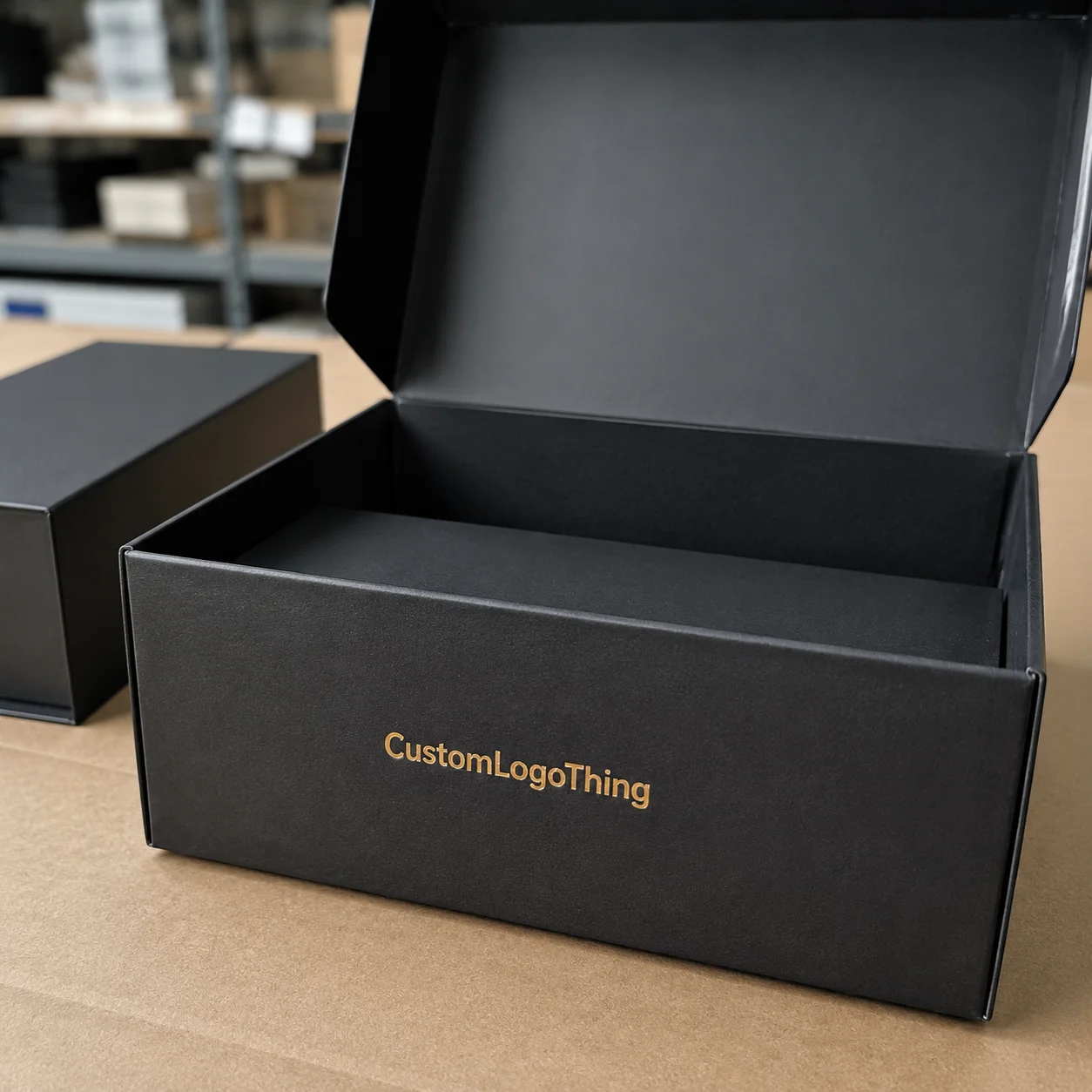
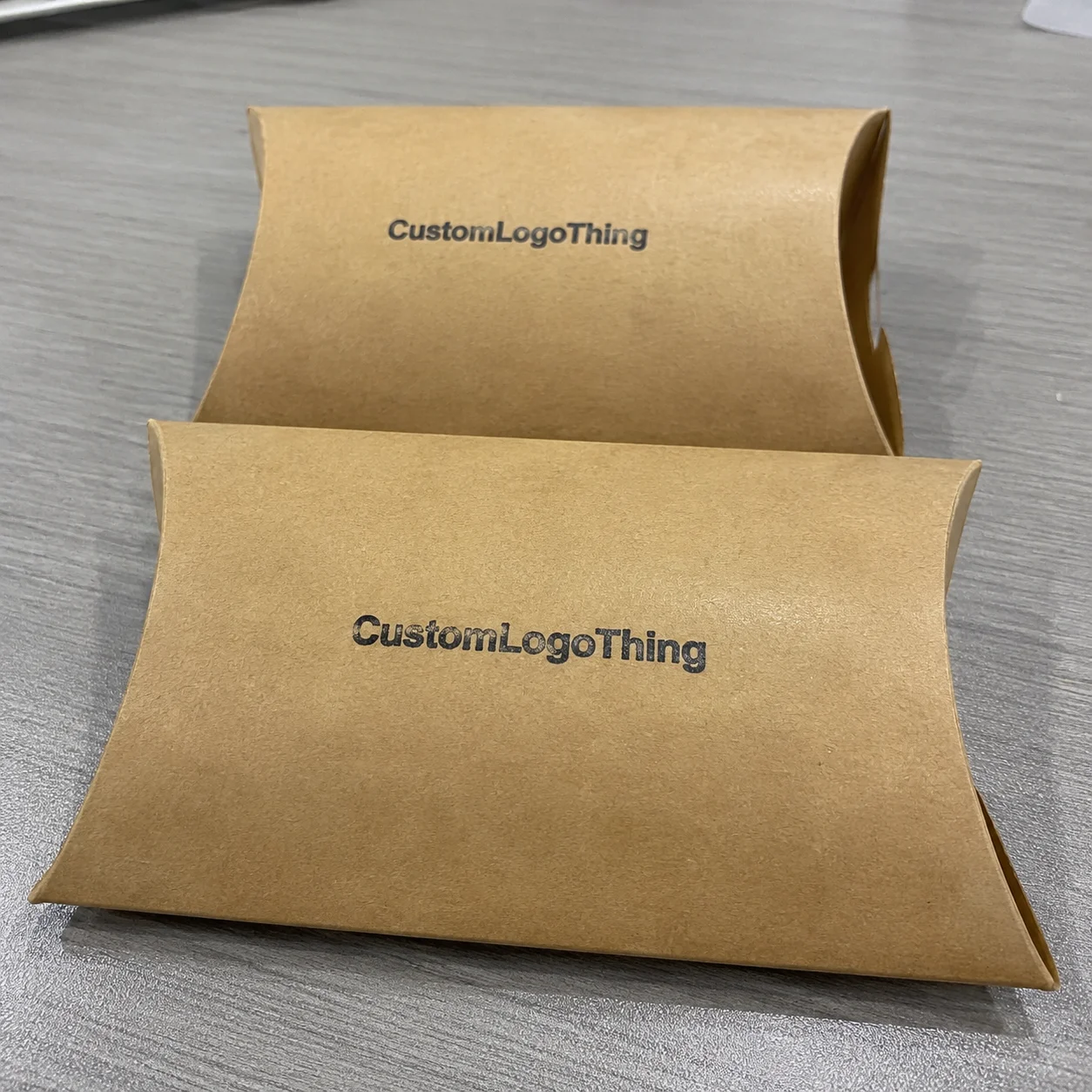
Buyer Fit Snapshot
| Best fit | Custom Pearlescent Boxes with Logo Wholesale projects where brand print, material claims, artwork control, MOQ, and repeat-order consistency need to be specified before quoting. |
|---|---|
| Quote inputs | Share finished size, material target, print colors, finish, packing count, annual reorder estimate, ship-to region, and any compliance wording. |
| Proofing check | Approve dieline scale, logo placement, barcode or warning zones, color tolerance, closure strength, and carton packing before bulk production. |
| Main risk | Vague material claims, crowded artwork, missing packing details, or unclear freight terms can make a low unit price expensive after revisions. |
Fast answer: Custom Pearlescent Boxes with Logo Wholesale should be specified like a repeatable production item. The safest quote records material, print method, finish, artwork proof, packing count, and reorder notes in one written spec.
Production checks before approval
Compare the actual filled-product size with the drawing, then confirm tolerance on folds, seals, hang holes, label areas, and retail display edges. Reserve space for logos, QR codes, warning copy, and material claims before decorative graphics fill the panel.
Quote comparison points
Review material grade, print process, finish, sampling route, tooling charges, carton quantity, and freight assumptions side by side. A quote is only useful when the supplier can repeat the same color, closure quality, and packing count on the next order.
I’ve spent enough time on factory floors in Shenzhen and Dongguan to know one thing: custom pearlescent boxes with logo wholesale can make a product look expensive before the customer even touches it. I remember standing in our Shenzhen facility beside a candle client while the pearlescent stock caught the overhead LEDs; the box looked like it had a $4 retail upgrade built into it, even though the material change was only about $0.12 to $0.18 per unit on a 5,000-piece run. That is the kind of packaging trick buyers pay for, and honestly, it works because it does not scream for attention. It just looks better.
For brands that sell cosmetics, jewelry, skincare, wellness sets, and seasonal gifts, custom pearlescent boxes with logo wholesale are a practical way to improve product packaging without jumping straight into premium rigid-box pricing. I’m not talking about fairy dust. I’m talking about actual paper behavior, print contrast, and the way a soft shimmer changes perceived value under warehouse lighting, boutique LEDs, and even phone-camera flash. If your packaging is fighting for shelf space, your box has a job. It either helps sell or it sits there being ignored.
That is also why so many buyers pair pearlescent stock with branded packaging strategies that stay tasteful rather than loud. A subtle shimmer, a clean logo, and the right board thickness can do more for conversion than an overbuilt package with too many finish layers. I’ve seen a plain-vanilla skincare carton get passed over dozens of times, then watch the sales team light up after switching to a pearlescent version with a single foil mark. It sounds small, but packaging changes are often won or lost in those small details.
Why custom pearlescent boxes with logo wholesale sell better
Custom pearlescent boxes with logo wholesale sell well because they create visual depth with very little decoration. The surface has a soft glow, not the harsh reflectivity of metallic foil, and that matters in retail aisles in Los Angeles, London, or a pop-up market in Singapore. A matte box can disappear in a crowded display, while a pearlescent finish gives your brand enough lift to feel premium without looking like it tried too hard. I’ve seen this in client meetings with skincare brands that were switching from plain white carton packaging to shimmer stock; the samples looked cleaner, more giftable, and more expensive even before we added ink.
The business case is simple: better unboxing, higher perceived value, stronger giftability. Those three things move product, especially in categories where the buyer is making a judgment in under five seconds at a counter in Miami or on a Shopify product page. Custom pearlescent boxes with logo wholesale are especially strong for retail packaging because the finish does a lot of work for you. You are not paying for full gold foil on every panel just to get noticed. You are getting a softer, more controlled sheen that photographs well and feels deliberate. That middle ground is exactly why a lot of buyers keep coming back to it after trying louder options.
Here’s what most people get wrong: they assume pearlescent means “fancy” and stop there. No. The finish is only useful if the box size, artwork, and decoration level make sense for the order volume. If you want custom pearlescent boxes with logo wholesale at sane pricing, you have to design around the production process. A 3-color logo on a standard dieline is one thing. A full-wrap illustration, foil border, embossing, and a custom insert is another thing entirely. That second version is prettier, sure. It is also more expensive, and on a 10,000-piece run the difference can easily move from $0.24 per unit to $0.95 per unit depending on the structure and finish stack.
I had a cosmetics buyer in Southern California once insist on adding spot UV, embossing, and a two-piece rigid structure to a product that sold at a $22 retail price. I told her the box was trying to outdress the product. We simplified the build, kept the pearlescent wrap, used a clean front-panel logo, and saved roughly $0.38 per unit on a 5,000-piece run. That money went into a better insert and improved freight packaging. Sensible packaging wins more often than decorative excess, especially when your target landed cost needs to stay under $1.50 per unit. That’s not a glamorous answer, but it’s the one that keeps a project on budget.
Custom pearlescent boxes with logo wholesale work best for:
- Cosmetics and beauty sets
- Candles and home fragrance
- Jewelry and accessories
- Skincare kits and wellness products
- Seasonal gift packaging
One more practical point. Wholesale pricing only makes sense when the order is aligned around volume, finish, and print method. If your artwork is still changing, if your dimensions are rough, or if you do not know whether you need inserts, the quote will jump around. That is normal. Custom pearlescent boxes with logo wholesale are a production category, not a magic price list. Good specs save money. Bad specs create headaches. A buyer who sends final measurements like 112 mm x 78 mm x 34 mm will always get a cleaner quote than someone who says “around medium size.”
For buyers comparing branded packaging options, pearlescent stock sits in a useful middle ground. It has more personality than plain folding cartons and less cost than full premium rigid gift boxes with heavy decoration. I call it the “quiet premium” option. That is not marketing fluff. That is how buyers actually use it when they want package branding that looks polished without burning cash on unnecessary finish layers, especially in orders ranging from 3,000 to 20,000 pieces.
Custom pearlescent boxes with logo wholesale: box styles and print options
There are several ways to build custom pearlescent boxes with logo wholesale, and the style you choose should match both your product weight and your selling channel. Folding cartons are the workhorse. Rigid boxes are the premium choice. Sleeve boxes and tuck-end cartons sit in the middle. Magnetic closure styles are the “I want this to feel like a gift” option. They each behave differently in production, in shipping, and on the shelf, whether the destination is a DTC warehouse in Texas or a retail distributor in Toronto.
I’ve walked into enough packaging lines in Shenzhen and Dongguan to know that clients often fall in love with the structure before they understand the economics. A rigid box with pearlescent wrap, EVA insert, and foil logo can cost several times more than a basic folding carton, depending on quantity. That is not a problem if the margin supports it. It is a problem if the product margin is thin and you are selling through discount channels. Custom pearlescent boxes with logo wholesale should support the sale, not sabotage it. If a box makes the item look luxury but wipes out the margin, it is doing the opposite of its job.
Common box styles
Folding cartons are the most efficient for higher-volume runs. They ship flat, reduce freight, and usually keep unit cost lower. If you need custom pearlescent boxes with logo wholesale for skincare tubes, candles, or small wellness kits, folding cartons are often the first thing I price. On a 5,000-piece order, a well-specified folding carton in 350gsm C1S artboard can land around $0.15 to $0.29 per unit before freight, depending on print coverage and whether you add spot UV.
Rigid boxes bring more weight, more shelf presence, and more protection. A 2.0 mm grayboard wrapped in pearlescent specialty paper feels substantial, especially when paired with a satin ribbon pull or a molded pulp insert. That is why gift sets and jewelry brands use them. They also cost more to make and more to ship. Fancy does not come free, and a rigid setup from a factory in Dongguan or Huizhou will almost always require more handwork than a folding carton line.
Sleeve boxes are useful when you want a pearlescent outer layer with an inner tray or secondary carton. They are common in branded Packaging for Cosmetics and seasonal sets because they let you keep the exterior premium while controlling the material usage inside. A sleeve over a plain inner tray can also reduce total cost by $0.08 to $0.20 per unit compared with a fully wrapped rigid build.
Tuck-end boxes are practical for lightweight products. They can still carry a pearlescent finish and logo print, but they are better suited to lower-cost products or mid-range items where the box must look good and still stay efficient. If the product weighs under 300 grams, tuck-end cartons are often the most sensible starting point, especially when shipping in master cartons of 24 or 48 units.
Logo placement and decoration choices
For custom pearlescent boxes with logo wholesale, the logo can go on the front panel, lid top, inside lid, side panel, or full wrap. Each choice has a cost and a visual effect. A simple logo on the lid top is usually the cleanest option. Full-wrap print gives more branding control but raises the risk of color inconsistency on reflective stock. If you want a minimalist premium look, keep the decoration restrained. If you want a louder package, the surface can take more, but do not assume more ink means better results, especially on pearlescent paper sourced from Guangdong mills.
There are several print and finishing methods that work well on pearlescent stock:
- Foil stamping for metallic accents and logos
- Spot UV for contrast on selected elements
- Embossing for tactile brand marks
- Debossing for a recessed logo impression
- Full-color offset printing for detailed graphics
One thing to watch: pearlescent surfaces can change how ink reads. A pale blue that looks crisp on coated white board may shift slightly on shimmer stock. That is why I always recommend vector files, strong brand colors, and a physical proof. When I visited a supplier in Dongguan years ago, the client’s pastel lavender logo looked washed out on the first press proof. We shifted to a deeper tone and cleaned it up fast. Good packaging design is not just art. It is material behavior, paper coating selection, and ink density working together on the same sheet.
If you are comparing decoration levels, use this simple rule. Minimal branding is safer for reflective stock. Full-surface graphics work better when the artwork is high contrast and the finish is controlled. For custom pearlescent boxes with logo wholesale, a clean logo plus one premium detail often beats a crowded layout. Buyers notice clarity faster than decoration volume, whether they are reviewing a sample in Shanghai or photographing the box for an online listing.
| Box style | Best use | Typical cost impact | Notes |
|---|---|---|---|
| Folding carton | Skincare, candles, lightweight retail products | Lowest | Ships flat; good for volume |
| Rigid box | Jewelry, gift sets, premium cosmetics | Highest | Best shelf presence and unboxing |
| Sleeve box | Brand sets, promotional packaging | Mid-range | Good exterior branding control |
| Tuck-end carton | Lightweight products, retail packaging | Low to mid | Fast, practical, efficient |
For buyers who want more structure options, our Custom Packaging Products page is a good place to compare formats. If you are planning volume purchases, our Wholesale Programs page explains how larger runs are handled. And yes, custom pearlescent boxes with logo wholesale are one of the most requested formats for a reason, especially among brands shipping from California, New York, and Ontario.
Specifications for custom pearlescent boxes with logo wholesale
Specifications decide whether custom pearlescent boxes with logo wholesale are easy to produce or a string of small problems. Exact dimensions matter. Exact material choice matters. If the product is 78 mm wide, 42 mm deep, and 118 mm tall, the box should not be “roughly that size.” Rough estimates cause inserts to miss, shipping cartons to waste space, and retail packaging to look sloppy. That is not me being fussy. That is me trying to avoid a line of avoidable mistakes that can add $0.06 to $0.14 per unit in waste and rework.
The most common board choices depend on structure. Folding cartons often use 250gsm to 400gsm paperboard, with 300gsm being a common middle point, and a very practical spec for many buyers is 350gsm C1S artboard when the box needs a crisp print surface and solid fold memory. Rigid boxes typically use 1.5 mm to 3.0 mm grayboard, then wrap it with pearlescent specialty paper or printed coated paper. For custom pearlescent boxes with logo wholesale, the outer paper quality affects both the finish and the print sharpness, especially on small logos under 12 mm wide.
Material options often include:
- Coated paperboard with pearlescent laminate or surface treatment
- Specialty shimmer paper for a more visible pearlescent effect
- White base stocks for cleaner color reproduction
- Grayboard wrap constructions for rigid premium builds
- Lined interiors using paper, velvet-touch paper, or printed inserts
Finishing options should be chosen with the surface in mind. Gloss lamination will amplify reflection. Soft-touch lamination gives a smoother hand-feel but can mute the sparkle a little. Hot foil stamping on pearlescent stock can look beautiful if the logo size is not too tiny. Spot UV works best when the contrast is obvious. In other words, your finishes should talk to each other instead of fighting in the same square inch. A gold foil mark on a pale silver pearlescent board can look excellent in Guangzhou lighting and still photograph too bright if the artwork is overworked.
For custom pearlescent boxes with logo wholesale, inserts are often where a lot of cost gets added without buyers realizing it. EVA foam, molded pulp trays, paperboard inserts, and PET blisters all have different pricing and sustainability implications. A molded pulp insert may be more eco-friendly and cost-effective in some cases. EVA gives a cleaner premium fit for delicate items. I once had a candle client switch from custom foam to paperboard dividers and saved nearly $0.22 per unit on a 10,000-piece order. Small change. Big impact, especially when the cartons were shipping to a fulfillment center in Chicago.
Build details also matter:
- Window cutouts for product visibility
- Ribbon pulls for gift-style opening
- Magnet strength in closure boxes
- Glue line width for rigid assembly strength
- Board flatness tolerance to avoid warped lids
Artwork readiness is another issue people underestimate. Send AI, PDF, or SVG files when possible. Use bleed, keep safe areas respected, and specify Pantone colors if brand color matching matters. Custom pearlescent boxes with logo wholesale are more forgiving than some specialty packaging, but they still need disciplined files. A pixelated logo on shimmer stock looks worse, not better, because the eye catches the flaws faster, especially on a reflective surface viewed at arm’s length.
On sustainability, ask for FSC paper where relevant, recyclable paperboard, soy-based inks, and reduced-plastic construction. Not every pearlescent finish is fully recyclable in every region, and I am not going to pretend otherwise. If sustainability is a priority, ask for material data upfront. For standards and general packaging guidance, I also point buyers to the packaging industry resources, and for shipping or recycling-related considerations, the EPA site is useful background reading.
Pricing and MOQ for custom pearlescent boxes with logo wholesale
Let’s talk money. Custom pearlescent boxes with logo wholesale are priced from several components, not one magic number. The structure, print method, finish, insert, and shipping all matter. If a supplier gives you a single tidy number without asking about dimensions or artwork, they are either guessing or preparing to surprise you later. I have seen both, and the second version usually arrives as a freight bill or a reprint charge.
For simple folding cartons, pricing can start around $0.15 to $0.42 per unit at 5,000 pieces, depending on size, board thickness, and print complexity. For example, a 5,000-piece run using 350gsm C1S artboard, a single front-panel logo, and no insert can sometimes land near $0.15 to $0.21 per unit before freight if the dieline is standard and the artwork is clean. For rigid pearlescent gift boxes, a realistic wholesale range might land between $1.10 and $3.80 per unit at moderate volumes, again depending on board, wrap, and finish choices. Add foil, embossing, or custom inserts, and the number moves up. That is not inflation talk. That is production reality from factories in Guangdong, Jiangsu, and Zhejiang.
Here is a practical pricing framework for custom pearlescent boxes with logo wholesale:
| Cost element | Typical impact | What drives it | How to control it |
|---|---|---|---|
| Box structure | High | Rigid vs folding, magnet closures, sleeves | Choose a simpler style where possible |
| Print method | Medium to high | Number of colors, full-wrap print, registration | Use fewer colors and clean artwork |
| Special finish | High | Foil, embossing, spot UV, soft-touch | Limit premium effects to one or two areas |
| Insert | Medium | EVA, molded pulp, paperboard, PET | Reuse tooling or simplify the fit |
| Freight | Variable | Box size, shipping method, destination | Standardize dimensions and pack efficiently |
MOQ changes by style. Folding cartons may allow lower minimums, sometimes starting around 1,000 to 3,000 pieces depending on size and print setup. Rigid boxes and specialty finish boxes usually need higher quantities because the hand assembly and wrap processes take more labor. For custom pearlescent boxes with logo wholesale, the MOQ is not a punishment. It is the cost of setting up a line that prints cleanly and finishes consistently, whether the work is done in Shenzhen, Dongguan, or a contracted plant in Foshan.
Sample costs are worth discussing separately. A digital or flat sample might cost $25 to $80, depending on complexity. A full physical prototype for a rigid box can run higher, especially if a custom insert is involved. Some buyers hate sample charges. I get it. But one bad mass run costs a lot more than one sample. I had a brand once skip a prototype on a two-piece box. The lid fit was too loose. They paid twice: once for the bad run, once to rework the style. That is how “saving money” gets expensive, and in that case the correction alone added nearly $1,200 in labor and materials.
What pushes cost up?
- Complex dielines with multiple folds
- Two or more print colors with tight registration
- Hot foil and embossing on the same panel
- Custom inserts with precise cutouts
- Rush production or air freight
What lowers cost?
- Standardized size ranges
- Cleaner logo placement
- One premium finish instead of three
- Larger order quantities
- Reusing existing tooling for inserts
If you want smart pricing on custom pearlescent boxes with logo wholesale, ask for two quote versions: one cost-efficient and one premium. That comparison shows the real spread. It also helps buyers defend the purchase internally because they can see exactly what each upgrade costs. Packaging design should be clear. So should the invoice. A quote that shows $0.19 per unit for a clean carton and $0.63 per unit for a foil-and-emboss version is much easier to approve than a vague “premium option” line.
Process and timeline for custom pearlescent boxes with logo wholesale
The order process for custom pearlescent boxes with logo wholesale should follow a clean sequence. Quote first. Artwork review next. Dieline confirmation. Sample approval. Bulk production. Inspection. Packing. Delivery. If a supplier skips steps or blurs them together, you usually find out later, and never in a fun way. In our Shenzhen and Dongguan workflows, that sequence is how we keep misprints and fit errors from turning into a warehouse problem.
Here is the standard flow I use when buyers want predictable timelines:
- Send product dimensions, quantity, and target finish.
- Review quote options for structure and decoration.
- Approve the dieline and placement of the logo.
- Check the digital proof for spelling, layout, and size.
- Approve a physical sample for color and fit.
- Begin mass production after written sign-off.
- Inspect finished goods before shipping.
Timing depends on the style. A folding carton sample might take 5 to 10 business days, then bulk production could run 12 to 18 business days after approval, depending on volume. Rigid boxes usually need more time. A sample can take 7 to 15 business days, and bulk production may require 18 to 30 business days or more for complicated finishes. For custom pearlescent boxes with logo wholesale, finish complexity matters almost as much as quantity, and a foil-stamped lid in a 10,000-piece run may add 2 to 4 extra business days compared with a plain logo carton.
Shipping adds another layer. Ocean freight may be cost-effective, but it can add weeks. Air freight is faster and more expensive. Customs clearance and destination handling can also change the delivery date. I have had a launch schedule shift by nine days because the buyer forgot to include final carton count in the shipping booking. One line item. Nine days of drama. That is why I always tell clients to plan inventory around launch dates, not wishful thinking, especially if the goods are moving from Yantian Port to a West Coast warehouse.
What slows orders down?
- Late artwork revisions
- Color changes after proof approval
- Structural changes after tooling starts
- Unclear product dimensions
- Missing shipping details
Approval should happen in layers. First the digital proof. Then the physical sample. Then the mass production sign-off. If a buyer wants to change the shade of white after the sample is approved, I will usually advise against it unless there is a strong reason. Pearlescent stock responds to lighting and ink differently than standard coated board. You need a real sample in hand to judge it properly, ideally under daylight, warm LED, and the showroom lights you actually use.
For buyers who care about transit performance, shipping tests matter too. ISTA methods are commonly used to evaluate packaging under vibration, drop, and compression conditions. If your packaging is going into e-commerce or export channels, checking whether your structure can survive transit is not optional. The ISTA site is a solid reference point for testing standards.
Why buyers choose us for custom pearlescent boxes with logo wholesale
We work as a manufacturer, not a broker. That matters because custom pearlescent boxes with logo wholesale get cheaper and easier to control when the people quoting you are the people who actually know the line speed, paper stock, and finishing limits. I’ve spent enough time negotiating with paper mills in Fujian and coating suppliers in Guangdong to know that cost control starts with material sourcing, not sales talk.
When I visited a pearlescent paper supplier in South China, we spent half a day comparing coating consistency across three batches under different light angles. That sounds tedious because it was. But that is how you catch the subtle variations that affect brand consistency. If the coating shifts from batch to batch, the box color changes, and your package branding starts looking uneven. That is the kind of problem that shows up on a retail shelf in Manila or Melbourne and quietly hurts confidence.
We check a few things that buyers usually care about more than flashy promises:
- Board flatness so lids sit correctly
- Color tolerance so branding stays consistent
- Glue integrity so boxes do not split in transit
- Print registration so logos stay sharp
- Transit-ready packing to reduce damage on arrival
I remember one negotiation with a rigid-box vendor where I pushed them to hold a tighter tolerance on the lid wrap because the client’s embossed logo was too close to the edge. They wanted to call it “acceptable variation.” I called it “a return risk.” We changed the board spec and fixed it before production. That is the difference between selling packaging and actually managing packaging, and in that case we held the lid-to-base fit within a 1.5 mm tolerance.
Custom pearlescent boxes with logo wholesale also benefit from fast quote turnaround and direct structural guidance. If a buyer sends a product size and says “make it nice,” that is not a spec. That is a wish. We help turn that wish into something printable, foldable, and shippable. We also coordinate samples without making the process weirdly slow, because no one likes waiting ten business days for a basic answer when a 48-hour proof review would solve the issue. That part matters more than people admit.
If you need broader packaging support, our team can map out custom printed boxes, branded packaging, and other product packaging formats that match your channel and margin. The goal is not to make the prettiest box on earth. The goal is to make a box that sells product, fits budget, and survives shipping. Fancy only counts if it is functional, and the best builds are usually the ones that balance a 350gsm board, a clean logo, and a realistic freight plan.
How to order custom pearlescent boxes with logo wholesale
Ordering custom pearlescent boxes with logo wholesale is easier when you send the right details upfront. Start with the product dimensions, not the box estimate. Then share the quantity, logo files, finish preference, and destination address. If you have a target launch date, include that too. A good quote depends on real data. Guesswork gives you pricing that changes later. Nobody likes that surprise, especially when the ship date is tied to a trade show in Las Vegas or a product launch in Austin.
Before you place an order, compare these points from each supplier:
- MOQ
- Sample cost
- Production lead time
- Freight terms
- Decoration options
- Insert availability
I always recommend asking for two versions of the same box. One should be cost-efficient with a restrained logo treatment. The other should show the premium upgrade path with foil, embossing, or a richer insert. That way you can decide whether the extra spend actually earns its keep. Sometimes it does. Sometimes it is just expensive decoration pretending to be strategy, and a $0.27 unit carton can become a $0.68 unit carton very quickly if every finish box is checked.
If you want to move faster, do three things. Approve the dieline quickly. Keep artwork in vector format. Confirm the carton dimensions before the sample is made. Those steps save days, sometimes more. For custom pearlescent boxes with logo wholesale, speed comes from decisions, not hope. A buyer who replies within 24 hours usually gets a faster production slot than one who sends revisions over a full week.
Custom pearlescent boxes with logo wholesale make sense when the product, price point, and packaging design all line up. If you need help selecting the structure, matching the finish to your product, or figuring out how much a better box will actually cost, start with a quote request and a sample plan. That is the cleanest way to get real numbers instead of vague promises. Once you have a sample in hand, the decision usually gets a lot easier, because the box either fits the product and the brand or it doesn’t.
Custom pearlescent boxes with logo wholesale are one of the best ways I’ve seen to give product packaging a premium feel without turning the budget into a mess. The practical takeaway is simple: lock your dimensions, choose one finish direction, and request a sample before bulk production. Do that, and you’re far more likely to land a box that looks sharp, holds up in transit, and stays inside the number your margin can handle.
FAQ
What is the MOQ for custom pearlescent boxes with logo wholesale?
MOQ depends on the box style, size, and decoration complexity. Folding cartons usually allow lower minimums than rigid gift boxes, and specialty finishes like foil or embossing can increase the minimum order quantity. For custom pearlescent boxes with logo wholesale, a realistic MOQ might range from 1,000 pieces for simpler cartons to 3,000 pieces or more for premium rigid styles, with many factories in Guangdong quoting best pricing at 5,000 pieces and above.
Can I print a full-color logo on pearlescent packaging?
Yes, but contrast can vary because pearlescent stock reflects light. Vector logos and strong, simple color palettes usually print best. A physical sample is the safest way to check color accuracy before bulk production, especially for custom pearlescent boxes with logo wholesale where the finish can slightly shift visual tone. In many cases, a 4-color offset print on 350gsm C1S artboard gives cleaner results than trying to force too many gradients onto shimmer paper.
How long does production take for custom pearlescent boxes with logo wholesale?
Timing depends on structure, quantity, and finish choices. Sample approval usually happens before bulk production starts, and bulk lead time can range from about 12 to 30 business days depending on the box type. For many folding carton jobs, production is typically 12 to 15 business days from proof approval, while rigid boxes may take 18 to 30 business days. Rush jobs are sometimes possible, but they usually increase cost for custom pearlescent boxes with logo wholesale.
Are pearlescent boxes recyclable?
Many paperboard pearlescent boxes can be recyclable if they use paper-based materials and minimal plastic lamination. Inserts and coatings may change recyclability by region. If sustainability matters, ask for the exact material specification before ordering custom pearlescent boxes with logo wholesale. FSC-certified paper, soy inks, and reduced-plastic structures are common requests for brands shipping into the EU and North America.
What do I need to place an order for custom pearlescent boxes with logo wholesale?
Provide product dimensions, box style, quantity, logo files, and finish preferences. Confirm whether you need inserts, windows, foil, or embossing, and share the delivery location so freight and timeline can be quoted accurately. That is the cleanest starting point for custom pearlescent boxes with logo wholesale. If possible, include your target landed Cost Per Unit, such as $0.35 or $0.80, so the structure can be matched to your margin from the start.