Buyer Fit Snapshot
| Best fit | Custom Perforated Boxes for Promotions projects where brand print, material claims, artwork control, MOQ, and repeat-order consistency need to be specified before quoting. |
|---|---|
| Quote inputs | Share finished size, material target, print colors, finish, packing count, annual reorder estimate, ship-to region, and any compliance wording. |
| Proofing check | Approve dieline scale, logo placement, barcode or warning zones, color tolerance, closure strength, and carton packing before bulk production. |
| Main risk | Vague material claims, crowded artwork, missing packing details, or unclear freight terms can make a low unit price expensive after revisions. |
Fast answer: Custom Perforated Boxes for Promotions: Board, Finish, Dieline, and Unit Cost should be specified like a repeatable production item. The safest quote records material, print method, finish, artwork proof, packing count, and reorder notes in one written spec.
Production checks before approval
Compare the actual filled-product size with the drawing, then confirm tolerance on folds, seals, hang holes, label areas, and retail display edges. Reserve space for logos, QR codes, warning copy, and material claims before decorative graphics fill the panel.
Quote comparison points
Review material grade, print process, finish, sampling route, tooling charges, carton quantity, and freight assumptions side by side. A quote is only useful when the supplier can repeat the same color, closure quality, and packing count on the next order.
Custom Perforated Boxes for Promotions: A Practical Read
A box that opens with a clean tear does more than expose a product. It creates a pause, a small bit of theater that ordinary cartons rarely manage. That is why custom perforated boxes for promotions can feel more valuable than their board price suggests. The opening is part of the message, part of the display, and part of the memory the customer carries away.
For a packaging buyer, the appeal is practical as much as it is visual. Promotional packaging has to survive freight, stacking, and handling, then change jobs the moment it reaches the shelf, the mailer, or the sampling table. Built well, custom perforated boxes for promotions can turn a plain carton into retail packaging with a reveal, a coupon drop, a sample window, or a shelf-ready access point. Built poorly, the same carton looks torn by accident and feels cheap before the product is even seen.
I have watched teams spend weeks perfecting artwork only to discover that the opening panel was asking too much of the board. That is usually where the budget leaks start. The print looked fine, the colors were on spec, and the promo copy was polished. Then the first prototype opened like a ripped cereal box. Not ideal. The structure has to earn its keep first.
The sections that follow examine structure, shelf behavior, pricing, production timing, and the mistakes that turn a planned reveal into a damaged box. If you are comparing custom printed boxes for a launch, preparing branded packaging for a store reset, or shaping product packaging around a limited-time offer, the structural details below will help before artwork gets locked.
Custom perforated boxes for promotions: what they are and why they work
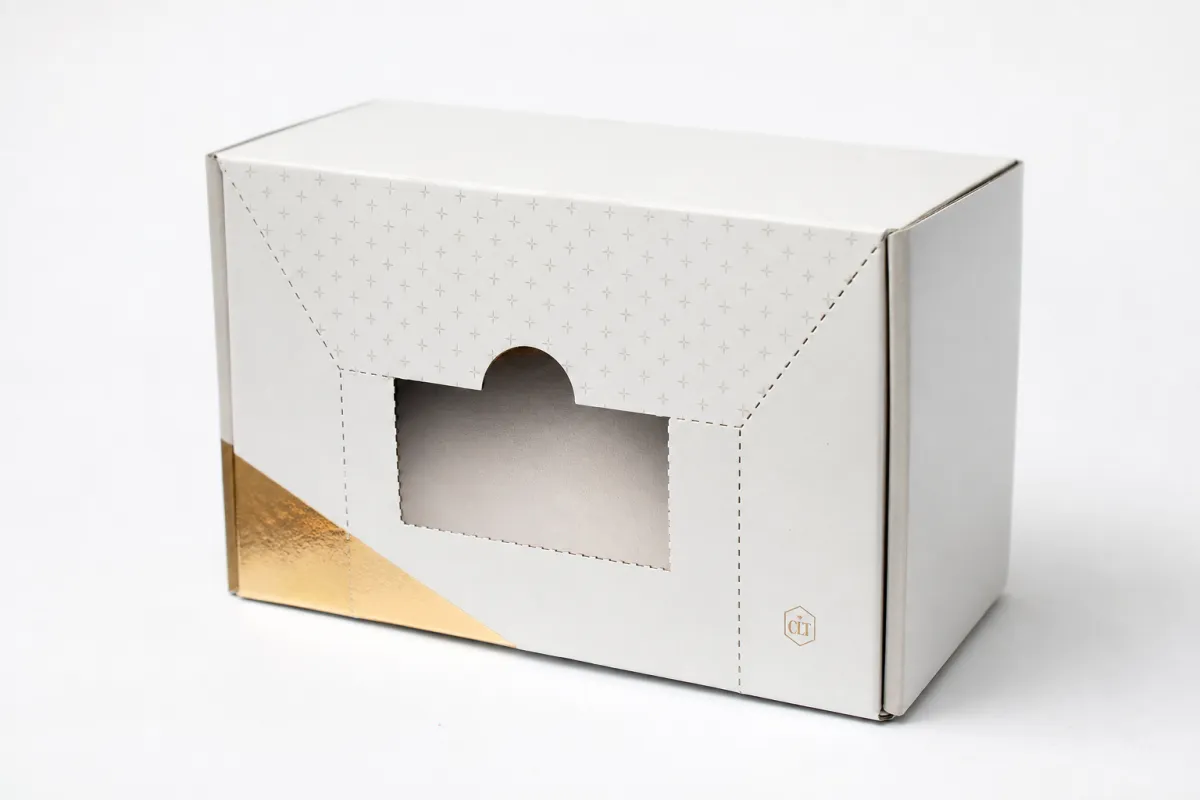
At the simplest level, custom perforated boxes for promotions are cartons, sleeves, trays, or shippers built with a controlled tear line. That line may be a dotted cut, a set of micro-bridges, or a punch-out panel that opens in one predictable direction. The idea is old; the execution has improved. Instead of forcing the consumer to wrestle the package, the structure guides the hand and frames the reveal.
That guidance changes how the pack is read. A perforated promo box feels deliberate even before the contents are visible. The tear path tells the shopper that the brand planned the opening moment, and that matters. In practice, custom perforated boxes for promotions often outperform their material cost because they make the reveal feel designed rather than improvised.
There is also a quiet psychological shift at work. People trust what looks intentional. A carton with a clear opening mechanic suggests the brand knows how the product will be used, where it will sit, and what moment should matter most. That kind of certainty is subtle, but it helps. Shoppers do not usually describe it that way, of course. They just say the box “felt right.”
Common uses tend to fall into a few clear categories:
- Seasonal promotions that need quick activation and strong shelf presence.
- Influencer mailers where the reveal matters as much as the product itself.
- In-store sampling packs that staff need to open in seconds.
- Contest or giveaway kits with a coupon, QR code, or insert hidden until opening.
- Bundle offers and limited-time launches where the packaging supports urgency.
That list matters because custom perforated boxes for promotions are not a single format. They are a structural approach. A tray with a tear-away lid does one job; a mailer with a rip strip does another. A display box with a perforated front panel behaves differently again. Good packaging design starts with the action you want from the shopper or store associate, then works backward from that point.
The strongest promotional box does not make people think about the mechanics. It gives one obvious move, and the reveal feels inevitable.
That also explains why this format can outperform heavier decoration. Customers may forget a color choice, but they remember how a package opened. In branded packaging, that opening is a conversion moment. In retail packaging, it can shape whether the product looks easy to shop, easy to sample, and easy to trust. A tear line is a small thing. Its effect is not small.
A useful first question is simple: what should happen in the first three seconds after the box is touched? If the answer is "a strip tears away to reveal the product" or "a panel pops out to expose the coupon," then custom perforated boxes for promotions are probably the right structural lane.
How custom perforated boxes for promotions work on the shelf
The mechanics matter more than they look on a dieline. A perforation is a controlled weakness, but it has to be weak in the right place and strong everywhere else. Too easy, and the box opens in transit. Too resistant, and the shopper tears the wrong edge or gives up. In well-built custom perforated boxes for promotions, the tear path uses tiny die-cut bridges or slits to guide the break without compromising the rest of the structure.
A few patterns show up again and again:
- Full tear strips create a clean opening line and work well for mailers or sample kits.
- Partial punch-outs expose a product view or coupon without removing the entire panel.
- Rip-and-reveal windows let the user remove a branded face and uncover a second message underneath.
- Open-face display panels convert the shipper into a shelf-ready access point.
Each structure changes the tone of the promotion. A tear strip is direct and fast. A punch-out feels a little more theatrical. A rip-and-reveal layout can strengthen package branding because it gives you two visual layers: what the shopper sees before opening and what they discover after opening. That layered reveal is one reason custom perforated boxes for promotions often feel more premium than standard cartons with no built-in opening event.
There is also a shelf-side benefit. A box can stay intact during freight, then convert into a display or access format at the exact moment the promotion goes live. That helps with retail sampling, where staff may need to activate dozens of units quickly. It also helps with bundle offers, because the tear line can expose the item in a way that still looks deliberate after the customer has opened it.
Done well, custom perforated boxes for promotions can reduce labor. A store associate does not need to open and repack every unit by hand. They do not need a blade, a tape gun, or a second person to hold the carton steady. They tear, fold, and place. That matters because the hidden cost in promotion work is often labor, not board. If the box saves 30 seconds per unit across a few thousand units, the math stops being decorative and starts being real.
If the promo depends on a coupon, QR code, or callout, the reveal zone should be treated as part of the message hierarchy. The opening action should uncover the sale trigger or claim statement, not bury it. That is where custom perforated boxes for promotions become more than product packaging; they become part of the sales path.
For teams that want to compare opening behavior against transport risk, established test references such as ISTA are useful for parcel and transit planning. Those standards do not design the box, but they help frame how the structure should hold up under real handling.
One comparison is worth making here. A standard folding carton might hold up beautifully in a warehouse and still underperform on the shelf because it gives no cue about how to open it. A perforated promo box does the opposite: it asks for a bit more structural planning, but it earns attention at the exact moment the shopper is deciding whether to engage. That trade is usually worth it.
Cost and pricing factors for custom perforated boxes
The first mistake many buyers make is assuming the perforation itself Drives the Quote. It does not always. In custom perforated boxes for promotions, pricing is usually shaped by the full system: board type, print coverage, structural complexity, finishing, insert count, and how much engineering the tear path needs before production can begin.
Material choice has a direct effect. A simple 16pt SBS carton can price very differently from a 24pt board or an E-flute corrugated structure. A lightweight mailer may work fine for sample packs, while heavier retail kits often need more support. If the contents are fragile, the structure may need inserts or partitions, which adds both material and assembly cost. That is why a promo carton that looks simple on screen can still become more expensive than expected once product packaging requirements are added.
Perforation detail is another lever. A basic tear strip is usually easier to set up than a custom-engineered reveal with multiple opening stages. More precise tear paths often require more testing, tighter die work, and a greater chance of prototype revisions. In custom perforated boxes for promotions, that can influence minimum order quantity, setup charge, and whether a short prototype run is worth doing before the full volume is approved.
A practical way to think about the economics: the cheapest box is not always the cheapest promotion. If a slightly more expensive structure cuts labor time, improves shelf conversion, or reduces damaged units, the total promo cost can end up lower. That is especially true in retail packaging, where staff time and display quality are part of the real budget even if they do not show up on the carton invoice.
| Format | Typical volume | Indicative unit price | Best use | Notes |
|---|---|---|---|---|
| Prototype sample box | 250-500 units | $1.20-$2.50 | Structural testing and buyer approval | Higher unit cost, but useful before a full run |
| Retail-ready perforated carton | 2,500-5,000 units | $0.45-$0.95 | Seasonal promotions and sample kits | Balanced for branded packaging and shelf display |
| High-volume simple shipper | 10,000+ units | $0.18-$0.38 | Large campaigns with repeat artwork | Lower print complexity keeps pricing tight |
| Custom engineered reveal pack | 2,500-5,000 units | $0.70-$1.60 | Influencer mailers and launch kits | More setup time, but stronger reveal and package branding |
Those numbers are not universal, and they should not be treated as a quote. Still, they give a realistic frame. A promotional box with a simple tear strip may land comfortably in the lower middle of that range, while custom perforated boxes for promotions with inserts, heavy ink coverage, or a special finish often move upward fast. Soft-touch lamination, foil, spot UV, and complex die-cut features all raise the final number.
When you compare suppliers, ask for a quote split that shows material, print, cutting, glue, inserts, freight, and sampling separately. That makes comparison much easier. It also exposes hidden assumptions, such as whether the supplier is pricing the job with a stock dieline or a fully custom structural pass. If you are comparing custom perforated boxes for promotions across vendors, that breakdown is the difference between a clean decision and a misleading low number.
If you need a broader starting point for substrates, formats, and finishing choices, our Custom Packaging Products page is a practical place to compare structural options before you request quotes. For buyers building a larger line, that can save a lot of back-and-forth.
One more sourcing note: if your brand has fiber stewardship goals, ask about FSC-certified board and paper options. The FSC system is not a design feature, but it is often part of the procurement conversation for retail packaging and custom printed boxes.
Production process and timeline: from approval to delivery
The production flow is usually straightforward, but the order of operations matters more than people expect. With custom perforated boxes for promotions, the schedule typically runs through brief, structural design, dieline approval, prototype, graphics sign-off, prepress, cutting and perforating, assembly, inspection, and shipment. Skip one of those steps, and the risk of a bad tear path or a late launch rises quickly.
In a simple repeat order, a supplier may already have a working dieline and cutting setup, which can move the job fast. A new custom structure is different. The perforation has to be mapped to the board caliper, the fold sequence, the glue pattern, and the final filled weight. That is why a tear line that looks fine on a screen can fail once the physical carton exists.
During sample reviews, I look for three things before anything else: where the tear starts, how the panel behaves after opening, and whether the product shifts after the first pull. The visual side matters, sure, but the mechanics tell the truth. A glossy proof can hide a bad hinge. A prototype cannot.
A practical lead-time frame looks like this:
- Simple repeat format: often 10-15 business days after proof approval.
- New custom structure: often 15-25 business days, depending on sampling rounds.
- Complex promo with inserts or finishing: often 20-35 business days.
- Prototype only: sometimes 3-7 business days if the specification is clear.
Those ranges are useful because they reflect how packaging is actually built. Custom perforated boxes for promotions rarely fail because of one dramatic issue. They usually slip because of small delays that stack up: late artwork, missing dimensions, waiting on compliance copy, or a sample that opens cleanly in the office but behaves differently under load.
That is why milestone checks matter. One structural sample, one print proof, and one pack-out test will catch most of the expensive mistakes. The pack-out test is especially important. Use the real product, the real inserts, and the real closure method. Shake it, stack it, and open it as the customer or staff member will. If the box is meant for parcel distribution, think about an ISTA-style test cycle. If the promo is part of a broader distribution network, many buyers also reference ASTM D4169 as a planning benchmark. The standards do not replace judgment, but they help anchor the review process.
For teams that need more control over sourcing and repeatability, custom perforated boxes for promotions should be specified with the same precision as any other product packaging: board caliper, print method, finish, glue points, opening direction, and desired post-open appearance. The more exact the brief, the fewer surprises at approval.
Step-by-step guide to planning custom perforated boxes for promotions
Start with the campaign goal, not the box style. That is the cleanest way to avoid expensive detours. If the purpose is sampling, the structure should make access easy. If the purpose is social sharing, the reveal needs more drama. If the purpose is coupon redemption, the package should expose the code at the right moment. Custom perforated boxes for promotions work best when the opening behavior matches the business objective.
Next, lock down the product. Fill weight, shape, fragility, and secondary components determine almost everything else. A lightweight packet can sit comfortably in a thinner board, while a glass item or a dense bundle often needs stronger corrugate, better support, or a different closure. In practice, a structure that ignores the fill is where many promo budgets go wrong.
Then build the reveal. Decide exactly what should happen in the consumer's hands. Should a panel tear away to reveal a product face? Should a coupon drop from an internal pocket? Should a top flap convert into a display lid? Once that action is clear, the tear line, window, and panel placement can support it. For custom perforated boxes for promotions, the tear line should serve the reveal, not fight it.
After that, set the graphics. This order matters. Strong artwork supports the opening sequence instead of competing with it. A clear visual cue near the tear line, a color break, or a short instruction can reduce confusion and make the pack feel more premium. Strong package branding usually comes from alignment between structure and copy, not from crowding the front panel with every marketing claim available.
Here is a simple planning sequence that works well in real production:
- Write the promotion goal in one sentence.
- List the exact contents and their fill weight.
- Choose the opening behavior you want.
- Confirm the board type and closure style.
- Request a structural sample before final artwork.
- Run a pack-out test with real units.
- Approve artwork only after the tear path behaves correctly.
That sequence saves time because it puts the hard decisions first. It also keeps the conversation grounded in product packaging, not just visuals. I have seen teams spend days polishing graphics on a box that had the wrong tear strength for the product. With custom perforated boxes for promotions, that is backwards. Structure first. Artwork second. Final approval last.
If your team is choosing between multiple formats, compare how each one will behave after opening. Will it still look intentional on a shelf or counter? Will it protect the product during transit? Will staff understand it without training? Those are the questions that separate ordinary branded packaging from promo packaging that actually earns its keep. If you need a broader range of custom printed boxes and inserts, the Custom Packaging Products catalog can help you compare formats before you commit to a final dieline.
One practical rule: never approve custom perforated boxes for promotions without seeing the real product inside the prototype. Even a small change in board thickness or glue placement can alter how the tear initiates. A box that opens beautifully empty can behave very differently once it is packed.
Another useful habit: photograph the prototype after opening, then compare that image to the shelf plan or mailer storyboard. If the box looks awkward once torn, the consumer will notice it too. Packaging teams sometimes forget that the second half of the experience matters almost as much as the first. That is especially true in promotions, where the opening moment is supposed to do some heavy lifting.
Common mistakes with custom perforated boxes for promotions
The biggest mistake is designing the perforation on paper and trusting it. The problem is not the drawing; it is the physics. A tear line that is too weak can fail during transit. A tear line that is too strong can frustrate the user and wreck the reveal. With custom perforated boxes for promotions, the entire value of the format lives inside that balance.
Another common miss is ignoring product shape. A promo carton that works beautifully for flat sample packs may buckle when the contents are taller, heavier, or awkwardly arranged. That is especially true for bundles with inserts, mini bottles, or mixed SKUs. The board has to carry the load before, during, and after opening. If it cannot, the box is not really a promotional tool; it is a liability.
Overcomplicated graphics cause trouble too. If the tear area is buried under dense copy, the consumer may not know how to open the box or where the opening starts. Simple cues usually work better: a color shift, a short instruction, or a visual arrow near the tear edge. In branded packaging, clarity often beats decoration. That is one reason custom perforated boxes for promotions benefit from cleaner layouts than people expect.
Supply-chain reality can also sink a launch. A structure that needs hand assembly, specialty inserts, or multiple approval cycles can miss the retail window even if the design is good. Buyers tend to underestimate the time required for revisions. A one-day delay in artwork sign-off can become a week if it lands near a production queue. That is not rare.
Finally, teams sometimes forget the post-opening state. Once the promo is activated, the package still needs to look deliberate. If the interior is messy, torn, or exposed in an awkward way, the brand message weakens. A good opening should leave the consumer with a sense that the experience was designed, not merely tolerated. That is the quiet test for custom perforated boxes for promotions.
Common traps to watch for include:
- Skipping a physical sample and approving only a PDF.
- Using the wrong board for the fill weight.
- Overloading the front panel with copy near the tear line.
- Ignoring how staff will activate the promo in-store.
- Leaving no plan for the box after the opening moment.
When buyers avoid those errors, the promo usually lands better and costs less to manage. That is the quiet advantage of custom perforated boxes for promotions: they can simplify execution as much as they improve presentation, but only if the structure is tested with real handling in mind.
Expert tips and next steps for a stronger launch
Use contrast to guide the hand. A visual cue near the tear line, a small arrow, or a secondary color block can reduce hesitation and make the opening feel intentional. It sounds minor, but minor cues matter in retail packaging because the shopper is making a split-second decision. In that context, custom perforated boxes for promotions should never force the user to hunt for the opening point.
Think like a merchandiser, not only a designer. The box has to work on the shelf, during the opening, and after the reveal. That means you are not just building packaging design; you are building a sequence. The best structures support the shelf face, protect the contents, and still look good once activated. That is the difference between ordinary product packaging and a promo that feels planned from the start.
Ask for a structural sample before approving artwork changes. People often assume graphics are the risky part, but perforation spacing and board caliper can affect performance more than a new color palette ever will. A sample tells you whether the carton opens where you expect, whether the panel returns the way you want, and whether the tear stays clean. For custom perforated boxes for promotions, that sample is worth more than a polished mockup.
If the campaign is tied to a sales window or media launch, consider a small pilot. Even 100 to 250 units can reveal packing friction, assembly delays, or retail handling problems before the full rollout. That pilot may feel like an extra cost, but it often prevents a much larger waste later. In real production, testing is cheaper than apologizing.
For teams mapping the next round of custom printed boxes, a one-page brief is often enough to start a useful vendor conversation. Include:
- Finished dimensions and fill weight.
- Quantity and launch date.
- Retail setting or mailer route.
- Desired opening behavior.
- Any insert, coupon, or QR code requirement.
- Target board type and finish, if known.
That brief keeps the conversation focused and helps suppliers quote realistically. It also makes it easier to compare custom perforated boxes for promotions against other structures that might cost less in material but more in labor or schedule risk. If you want a wider view of available formats, our Custom Packaging Products page is a sensible starting point for evaluating options before you finalize the dieline.
My practical view is simple: if the opening is part of the pitch, then the box deserves as much attention as the product inside. The right structure can lift shelf impact, improve sampling, and support package branding without adding unnecessary complexity. That is exactly why custom perforated boxes for promotions continue to earn a place in retail packaging plans, especially when the brief is clear and the testing is honest.
What products work best in custom perforated promo boxes?
Lightweight sample packs, gift sets, coupon bundles, and compact retail kits usually perform best because they are easier to protect and easier to reveal. Heavier or fragile products can still work, but they often need stronger board, inserts, or a less aggressive tear pattern. If the goal is sampling or a reveal moment, choose products that benefit from immediate visibility rather than items that need heavy protective packaging.
How do custom perforated boxes for promotions differ from standard cartons?
Standard cartons are built mainly for containment and transport, while perforated promo boxes are engineered around a controlled opening action. The perforation changes how the customer interacts with the pack, turning the opening into part of the marketing message. They also need more testing because the tear line must work reliably without damaging the product or display structure.
What affects the quote for custom perforated boxes the most?
Material choice, print complexity, perforation detail, insert requirements, and order quantity usually have the biggest effect on pricing. Prototype rounds and structural revisions can add cost, especially if the campaign needs a specific reveal or shelf-ready format. Freight and assembly should also be included in the comparison, because the lowest unit price is not always the lowest total cost.
How long does production usually take for a perforated promotion box?
Simple repeat orders move faster than fully custom structures because less engineering and fewer proofing rounds are needed. A new design usually needs time for structural approval, sample testing, artwork review, and final production scheduling. If the launch date is fixed, ask about lead time early and build a buffer for revisions or shipping delays.
What should I test before ordering custom perforated boxes for promotions?
Test the tear path, product fit, shelf appearance after opening, and whether the box still protects the contents during transit. Check how the box behaves after repeated handling, because retail staff and consumers may open it differently than expected. If the promo includes a coupon, QR code, or reveal message, confirm that the print stays visible and readable at the moment of opening. Custom perforated boxes for promotions work best when the structure, artwork, and pack-out all behave the way the campaign needs.
Takeaway: choose the opening behavior first, then design the board, graphics, and pack-out around it. If the tear line can survive transit, open cleanly, and leave the product looking intentional afterward, custom perforated boxes for promotions will do exactly what they are supposed to do: make the reveal part of the sale, not an afterthought.

