Buyer Fit Snapshot
| Best fit | Custom Perforated Boxes Manufacturer projects where brand print, material claims, artwork control, MOQ, and repeat-order consistency need to be specified before quoting. |
|---|---|
| Quote inputs | Share finished size, material target, print colors, finish, packing count, annual reorder estimate, ship-to region, and any compliance wording. |
| Proofing check | Approve dieline scale, logo placement, barcode or warning zones, color tolerance, closure strength, and carton packing before bulk production. |
| Main risk | Vague material claims, crowded artwork, missing packing details, or unclear freight terms can make a low unit price expensive after revisions. |
Fast answer: Custom Perforated Boxes Manufacturer: Board, Finish, Dieline, and Unit Cost should be specified like a repeatable production item. The safest quote records material, print method, finish, artwork proof, packing count, and reorder notes in one written spec.
Production checks before approval
Compare the actual filled-product size with the drawing, then confirm tolerance on folds, seals, hang holes, label areas, and retail display edges. Reserve space for logos, QR codes, warning copy, and material claims before decorative graphics fill the panel.
Quote comparison points
Review material grade, print process, finish, sampling route, tooling charges, carton quantity, and freight assumptions side by side. A quote is only useful when the supplier can repeat the same color, closure quality, and packing count on the next order.
Custom Perforated Boxes Manufacturer: What to Know
A Custom Perforated Boxes manufacturer does much more than print a carton and ship it off. The real job is to build packaging that opens in a controlled way, protects the product while it moves through the supply chain, and still feels clean and intentional in the hand when the customer tears it open. If the perforation is off by even a small amount, the opening can drift into the wrong panel, split a corner, or leave a ragged edge that makes the whole product packaging experience feel underdone. That is why a custom perforated boxes manufacturer has to think about board grade, cut pattern, flute direction, and end use together, not as separate choices.
For brands that care about retail packaging, display presentation, tamper evidence, or an easy-open shipping experience, that detail work matters a lot. A good custom perforated boxes manufacturer is balancing print quality, structural strength, and package branding at the same time, which is exactly where many buyers underestimate the project. The carton may look simple on a flat sample, but once it is filled, stacked, taped, shipped, and opened by a customer, the structure has to behave the same way every time. That is the standard worth expecting from a custom perforated boxes manufacturer.
If you are comparing options for Custom Packaging Products or trying to understand the team behind the work on the About Custom Logo Things page, it helps to start with the basics: what the perforation does, how the box is built, and where the tradeoffs usually live. A custom perforated boxes manufacturer should be able to explain those tradeoffs in plain language, because the best packaging decisions usually come from a clear understanding of how the carton will actually be used. No mystery, no hand-waving, just practical information you can build on.
What a custom perforated boxes manufacturer actually builds
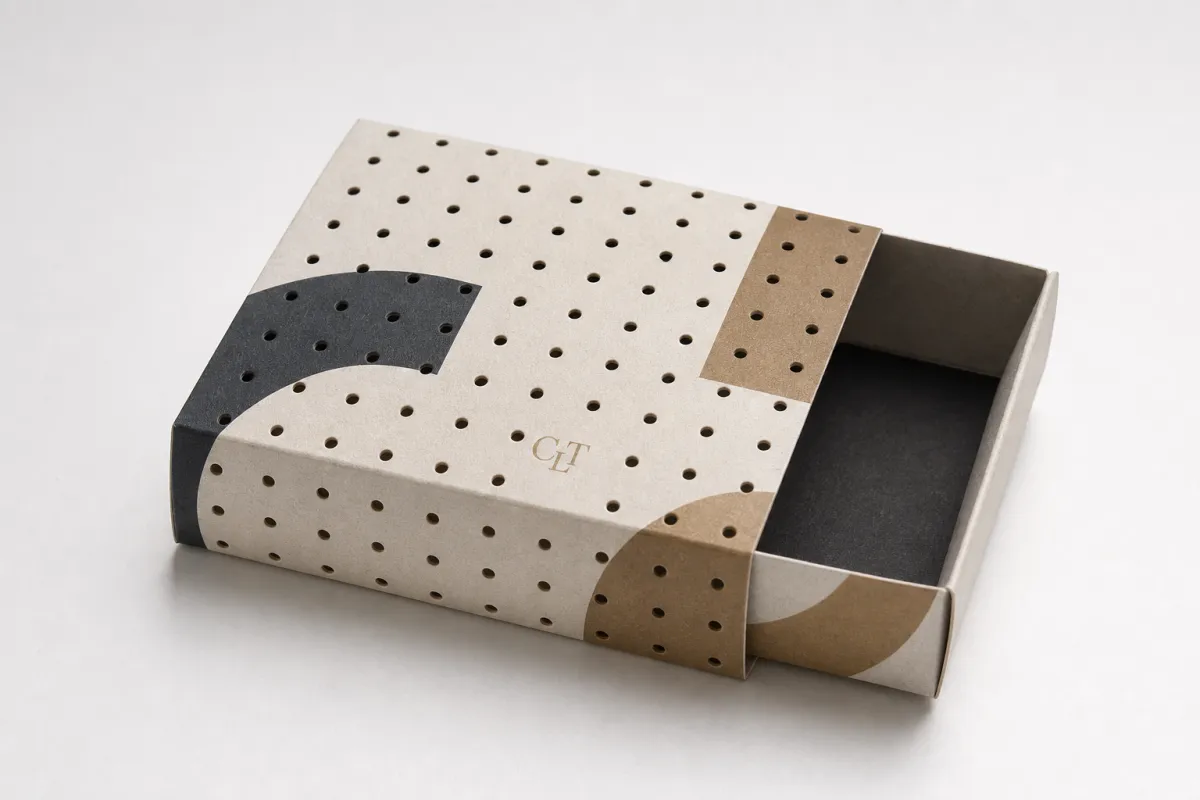
Picture a shelf-ready tray sitting in a warehouse: the product is packed, the case is sealed, and the customer is expected to open one section with a clean pull. That simple action depends on a custom perforated boxes manufacturer getting a surprising number of details right. The perforation might be a tear strip, a reveal panel, a knock-out section, or a tamper-evident access point, but in every version the goal is the same: controlled separation without damaging the rest of the carton. A custom perforated boxes manufacturer is not just cutting tiny holes in board; the team is engineering how the fiber will separate under hand force.
In plain terms, perforated boxes are cartons with a controlled line of tiny cuts or holes that let the user tear a section away by hand. That section might open the top of a mailer, expose a display face, or create a clean access path for refill packs and subscription inserts. A custom perforated boxes manufacturer also has to decide whether the tear should happen once, in stages, or only after a tab is lifted. That is where Custom Printed Boxes become more than decoration. The print layout, the perforation layout, and the fold structure all have to work together so the box looks intentional from the outside and functions properly in use.
Common use cases include easy-open shipping cartons, display-ready packaging, sample kits, and retail packaging that should open without scissors or a knife. I also see them used for multipacks and promotional cartons where the buyer wants a neat reveal without weakening the rest of the structure. A custom perforated boxes manufacturer will usually recommend the tear path based on the product itself, not just the artwork. A light skincare kit and a heavier hardware bundle should never get the same perforation pattern, even if the box size looks similar. The material may look similar on a quote sheet, but in the hand, they behave very differently.
Here is the part many buyers miss: the manufacturer is not only printing a box. A custom perforated boxes manufacturer is balancing the board grade, the score depth, the perforation length, the flute direction, and the stress points created by folding and glue. That is why one sample can tear beautifully while another tears too easily or not enough. In practice, the best results come from a packaging design that respects the material instead of fighting it. That is also where branded packaging starts to feel professional, because the opening experience matches the brand promise instead of feeling improvised.
For a buyer, that means the right vendor should ask specific questions: How heavy is the product? Will the carton ship flat or pre-filled? Does the opening need to be tamper-evident? Will the end user open it from a warehouse shelf or at home? A seasoned custom perforated boxes manufacturer will want those answers before suggesting board type or line spacing, because the answer changes the structure more than most people expect. I have seen projects where one missing detail about how the box is packed changed the tear design completely, and saved the brand from a pretty embarrassing failure later on.
A few real-world categories usually come up again and again:
- Easy-open mailers for e-commerce shipments that should tear cleanly without a blade.
- Display cartons that turn into retail-ready trays after opening.
- Sample and subscription kits where the reveal matters as much as protection.
- Tamper-evident cartons that show whether a package has been opened before delivery.
Each of those needs a slightly different engineering approach, and that is the work a custom perforated boxes manufacturer earns its keep on. It is not glamorous work, but it is the kind of detail that separates packaging that merely looks good from packaging that actually behaves the way it should.
Custom perforated boxes manufacturer process and timeline
The cleanest projects usually follow a simple sequence, and a good custom perforated boxes manufacturer should be able to walk you through it without making the process sound mysterious. It starts with the brief: product dimensions, product weight, opening requirement, print coverage, shipping method, and any retail or fulfillment constraints. From there, the structural concept is built, the perforation placement is mapped, and a dieline is created so the tear path and the fold sequence work together. That part matters because a custom perforated boxes manufacturer cannot fix a bad opening path with artwork alone, even if the graphics are gorgeous.
After the dieline comes sampling. Sometimes that means a flat proof, sometimes a white sample, and sometimes a printed prototype if the structure is tricky or the tear feature needs real-world testing. A custom perforated boxes manufacturer will often use this stage to adjust score pressure, cut depth, or the distance between perforation bites. Small changes there can make the difference between a smooth tear and a carton that starts ripping in the wrong direction. If the box will be used in custom printed boxes programs or branded packaging launches, this is also where print placement should be checked against the tear path so artwork does not get damaged during opening.
Timeline depends on complexity. A simple perforated mailer with standard graphics might move through proofing and production fairly quickly, while a new carton format with coatings, multiple panels, or unusual board stock will need more review. In a typical project, a custom perforated boxes manufacturer may spend a few business days on structural work, several more on sampling and approval, and then move into production once the details are locked. If the project requires custom tooling, special die changes, or artwork revisions, the schedule stretches. That is normal, and it is usually better to spend a little more time upfront than to rush a structure that tears wrong on day one.
Lead-time drivers tend to be the same from one project to the next:
- Artwork readiness - final files ready for print reduce back-and-forth.
- Board availability - specialty stocks or FSC-certified material can affect timing.
- Tooling and die creation - new structures need setup time before production starts.
- Sample revisions - the tear line may need adjustment after the first test.
- Press scheduling - the printing window matters when color matching is tight.
From a buyer's point of view, the biggest delays usually happen when the sample is not tested on actual product or when artwork approval drags out while the box waits in the queue. A custom perforated boxes manufacturer can move faster when the customer gives one clear approval path instead of several rounds of uncertain feedback. In my experience, that is where the most predictable packaging projects stay predictable. The projects that wander usually do so because someone keeps changing the rules halfway through.
For transit performance, many teams also reference industry testing methods such as ISTA procedures or ASTM-style compression and vibration checks, especially if the carton will ship through parcel networks. Those standards do not replace field testing, but they do give the custom perforated boxes manufacturer a common language for handling, compression, and drop expectations.
A perforation that looks neat on a flat sample can still fail under stack load, vibration, or a slight twist from a warehouse picker. That is why a custom perforated boxes manufacturer should test the box the way it will actually be used.
Custom perforated boxes manufacturer pricing, MOQ, and quote factors
Price is where many buyers start, but a custom perforated boxes manufacturer will usually give a better quote when the technical details are complete. The biggest variables are board type, box size, print coverage, perforation complexity, finishing, and total run quantity. A small folding carton with a simple tear line is not priced the same way as a larger mailer with full-color print, soft-touch lamination, and a custom reveal panel. The more structure and finishing the box carries, the more setup work the custom perforated boxes manufacturer has to absorb before the first unit ships.
Minimum order quantity, or MOQ, affects the math in a real way. Short runs usually carry a higher per-unit cost because setup, die work, proofing, and material waste get spread across fewer cartons. Longer runs usually lower the unit price because the fixed costs are diluted. A custom perforated boxes manufacturer can often explain the break points clearly, and that conversation is worth having before you settle on a quantity that looks cheap on paper but expensive per box. The same logic applies to package branding: if the carton is meant to carry a premium retail image, a slightly better board or print finish may be worth more than shaving a few cents off the unit price.
To make quotes easier to compare, buyers should ask for line-item detail wherever possible. That helps separate structural cost from print cost and from finishing cost, which is especially useful when one custom perforated boxes manufacturer quotes a basic spec and another quotes a more complete, more durable build. The lowest number is not always the best value if the tear feature fails under handling or the board stock feels flimsy in the hand. A quote that looks tidy but leaves out a required coating or an extra dieline revision can get expensive fast.
| Run size | Typical unit range | Common build | Best fit |
|---|---|---|---|
| 1,000-2,499 units | $0.70-$1.20 | Simple board, limited print coverage, basic perforation | Pilot launches, small retail tests, internal evaluation |
| 2,500-4,999 units | $0.42-$0.78 | Standard custom printed boxes with one tear feature | Growing SKUs, e-commerce programs, seasonal packaging |
| 5,000-9,999 units | $0.26-$0.48 | Better economies of scale, more stable print setup | Established product packaging and repeat orders |
| 10,000+ units | $0.18-$0.34 | Lower setup burden per box, stronger pricing leverage | National rollouts, retail programs, steady replenishment |
Those ranges are illustrative, not a promise, because the exact price from a custom perforated boxes manufacturer depends on the board grade, the box dimensions, and how much ink, coating, or finishing is involved. A 350gsm C1S carton with a simple tear line will behave very differently from a corrugated mailer in E-flute or B-flute. If FSC-certified stock is required, that can also influence the final quote, especially on smaller runs. The underlying point is simple: a custom perforated boxes manufacturer needs the full picture before pricing the job accurately.
Here is a practical quote checklist that helps buyers compare apples to apples:
- Exact dimensions of the product and finished carton.
- Product weight and whether the weight is centered or uneven.
- Print coverage, including inside and outside surfaces.
- Opening behavior expected from the tear feature.
- Shipping environment such as parcel, pallet, or shelf display.
- Board preference if you already know the material family.
When that information is complete, a custom perforated boxes manufacturer can usually narrow the quote much faster and with fewer surprises. That is a better use of time than chasing the lowest unit number and discovering later that the structure needs a redesign. I have seen teams save more money by preventing one bad revision than they ever would have saved by shaving pennies off the first estimate.
How a custom perforated boxes manufacturer designs for strength and clean tear
Good perforation design is a balancing act. A custom perforated boxes manufacturer has to make the tear line easy enough for the customer to open, but not so weak that the carton fails during stacking, warehouse handling, or transit vibration. That sounds simple until you start looking at the details. Perforation spacing, cut depth, liner strength, board caliper, glue placement, and fold direction all influence how the tear behaves. Change one of those, and the tear pattern can change with it. That is why a custom perforated boxes manufacturer usually tests multiple versions before settling on the final spec.
The line itself matters. If the perforation bites are too long, the tear may run too freely and split into adjacent panels. If the bites are too short or too dense, the consumer may have to fight the box open, which defeats the point of the feature. A skilled custom perforated boxes manufacturer studies where the tear starts, where it should stop, and whether a starter notch or pull tab will improve control. That kind of thinking is especially useful for retail packaging and shelf-ready cartons, where the opening has to look clean after the first tear and still hold the product properly.
Board direction is another detail that gets overlooked. Fiber orientation affects tear behavior more than many first-time buyers realize. When the tear runs with the grain, it may travel differently than when it cuts across the grain. If the perforation lands too close to a fold or seam, the box can split in a way that looks sloppy and weak. A custom perforated boxes manufacturer will often reposition the tear path to keep it away from glue seams, corner crush zones, and heavy load points. That is not overengineering; that is how strong custom packaging is actually built.
Product weight matters too. A light item near the tear line might open beautifully, while a heavier item can press against the panel and force an accidental split during shipping. In those cases, a custom perforated boxes manufacturer may reinforce the panel, shift the opening point, or change the perforation style so the carton opens only after the right amount of pull. This is especially important for custom printed boxes used in subscription kits, refill packs, or multipacks where customers expect a pleasant opening experience rather than a struggle. If the box is meant to be opened by a customer in a hurry, the tear still has to feel deliberate, not fragile.
Print and coatings play a role as well. A high-gloss coating, soft-touch finish, or heavy ink coverage can slightly change how the board fibers separate during folding and tearing. That is one reason a custom perforated boxes manufacturer should test a printed sample, not just a blank structural sample, before the design is finalized. If the box will carry premium package branding, the finish must support the opening feature instead of interfering with it.
From a sustainability point of view, many buyers also ask about recycled fiber content or responsibly sourced paperboard. If that matters to the project, a custom perforated boxes manufacturer should be able to discuss material options that align with chain-of-custody goals and board performance. Resources from organizations like FSC can help buyers understand certified sourcing, especially when the carton is part of a broader brand commitment to better materials. The honest caveat is that recycled content and high tear performance do not always arrive in the same package, so the spec has to be chosen with care.
In short, a custom perforated boxes manufacturer is trying to solve a three-part problem: the box must hold, the box must tear in the right place, and the box must still look like the brand meant it that way. That is the difference between a carton that merely exists and one That Actually Works in the field.
Step-by-step guide to ordering from a custom perforated boxes manufacturer
If you are placing your first order with a custom perforated boxes manufacturer, the process is easier when you treat it like a packaging project instead of a simple print order. Start with the product itself. Measure the item carefully, note the weight, and think about how it will be packed, opened, stored, and displayed. The opening feature should serve a real use case, whether that is access, display, or tamper evidence. A good custom perforated boxes manufacturer will use that information to build the first structural concept rather than guessing at it.
The next step is to prepare a spec sheet. Include dimensions, material preferences, print coverage, target quantity, loading direction, and any line speed or fulfillment restrictions. If the carton is part of a larger product packaging system, mention the other components too, such as inserts, inner trays, or tape closures. The better the brief, the more precise the response from the custom perforated boxes manufacturer. Buyers often think they are saving time by leaving details out, but the opposite is usually true. A vague brief just creates more back-and-forth later, and nobody enjoys that.
- Define the use case - access, reveal, tamper evidence, or display.
- Gather measurements - product size, carton size, and weight.
- Share the print plan - colors, finishes, outside and inside coverage.
- Review the dieline - check tear path, folds, and glue areas.
- Test the sample - open it, stack it, ship it, and inspect the edges.
- Approve or revise - make the changes before full production begins.
When the sample arrives, test it like a real user would. Check the force needed to start the tear, the cleanliness of the edge, and whether the tear line behaves the same way every time. A custom perforated boxes manufacturer should care about repeatability, not just one lucky sample. If the box will run through a packing line, test it there. If it will be opened by consumers, open it in a consumer-like setting. That is where handling issues show up fast, and sometimes the fix is smaller than you expect.
A useful sample review also includes practical checks:
- Does the tear start where it should?
- Does the tear stop cleanly or wander?
- Does the carton still stack after the opening feature is added?
- Does the print survive folding without cracking on the score?
- Do operators find the opening path intuitive?
Once the sample passes, the decision is straightforward: approve the prototype, request small adjustments, or move into pilot production. A strong custom perforated boxes manufacturer will welcome that discipline because it protects both sides from expensive surprises later. If the box performs the same way every time in testing, the full run is much less stressful.
As a practical note, many teams write down acceptance criteria before final approval. That can include tear force, edge appearance, compression strength, and the maximum allowed variation between samples. It sounds formal, but it helps a custom perforated boxes manufacturer and a buyer stay aligned when the order moves from prototype to production. That written target also keeps the conversation grounded when everyone is under pressure to move quickly.
Common mistakes when working with perforated box packaging
The first mistake is making the perforation too aggressive. A custom perforated boxes manufacturer can cut a line that opens very easily, but if that line is too weak for real shipping conditions, the carton can fail before it reaches the customer. I see this most often when someone focuses only on the unboxing moment and forgets about pallet pressure, parcel vibration, or warehouse handling. A good custom perforated boxes manufacturer will always ask how the box travels before recommending a tear pattern.
The second mistake is ordering from drawings alone without testing the filled product. A box that looks fine in a CAD file may behave differently once a real item, insert, or refill pouch is placed inside. Weight distribution changes the tear force. Corners press differently. Folding stress shifts. That is why any custom perforated boxes manufacturer worth working with will want a sample of the actual product or at least a very accurate mockup. Packaging design gets far more reliable when real mass and real geometry are part of the conversation.
The third mistake is ignoring tear direction, fiber orientation, and the fold sequence. If the tear runs against a seam or across a stressed panel, the result can be jagged edges, split corners, or a tear that escapes into the wrong area of the carton. A custom perforated boxes manufacturer should check the grain direction before finalizing the dieline, especially on corrugated structures where the flute direction can influence performance. That kind of check is routine for a careful manufacturer, but it is still one of the easiest things to miss when a project moves too quickly.
The fourth mistake is sending a vague quote request. If the manufacturer does not know product size, weight, print coverage, and opening behavior, the estimate will be broad and the revision cycle longer than necessary. A custom perforated boxes manufacturer can only price the project accurately when the brief is accurate. Otherwise, the first quote may look attractive and the second quote may feel like a surprise. That is not the vendor trying to be difficult; it is usually a sign the job was under-specified from the start.
A few other avoidable problems show up often:
- Overcrowded artwork near the tear line, which makes the final opening look messy.
- Wrong board choice for the product weight or shipping route.
- No line testing before launch, which hides operator issues.
- Weak approval process that lets a sample pass without real-world use.
Working with a custom perforated boxes manufacturer is much smoother when the project is treated as an engineered structure, not a decorative shell. That mindset saves money, shortens revision cycles, and usually produces a better customer experience too.
Expert tips and next steps with a custom perforated boxes manufacturer
If you want a better result from a custom perforated boxes manufacturer, test the carton in the same environment where it will actually live. If the box is packed on a fulfillment line, test it there. If it ships by parcel, include a shipping test. If it sits on a shelf, check how the opening looks under retail lighting. A flat sample can hide problems that only show up once the carton is compressed, stacked, or handled quickly. That is one of the oldest lessons in packaging work, and it still saves people from expensive rework.
I also recommend writing down the acceptance criteria before the first full run. Define what a good tear looks like, how much opening force is acceptable, and what the edge quality should be. If the box must carry premium package branding, decide what visible damage is unacceptable after opening. A custom perforated boxes manufacturer can work to a clear standard much more effectively than to a vague feeling of "looks okay."
Another smart step is to ask for a small sample kit, a dieline review, and a short production plan before placing the full order. That is especially helpful for custom printed boxes that will be used at scale or in a retail rollout. A custom perforated boxes manufacturer should be able to show where the tear starts, where the tear stops, and how the board behaves after the opening feature is added. If they cannot explain those pieces clearly, the project probably needs more review before anyone commits to a run.
For buyers comparing vendors, it helps to think in terms of value instead of unit cost alone. The better question is not, "Which custom perforated boxes manufacturer is cheapest?" The better question is, "Which custom perforated boxes manufacturer can deliver the cleanest tear, the right board strength, and the fewest surprises on the line?" That framing usually leads to better quotes, better samples, and fewer headaches after launch. It also keeps the conversation on performance, which is where the real cost of packaging usually shows up.
Here is a practical next-step checklist:
- Collect product dimensions, weight, and photos.
- Decide whether the opening is for access, display, or tamper evidence.
- Request a dieline and sample from the custom perforated boxes manufacturer.
- Test the sample with real product and real handling.
- Compare the final quote against board quality, finish, and performance.
That process is straightforward, but it works. A thoughtful custom perforated boxes manufacturer will appreciate a buyer who brings clear specs, realistic testing, and a practical view of what the box has to do. For brands investing in branded packaging, that kind of partnership usually pays off in fewer claims, better shelf presence, and a much cleaner opening moment for the customer. And if the first sample is a little stubborn, that is not a failure; it is just the carton telling you what needs tuning before the run goes live.
What does a custom perforated boxes manufacturer do differently from a standard carton supplier?
They engineer the tear line, board choice, and panel layout together instead of treating perforation as a simple add-on. A custom perforated boxes manufacturer also tests how the box opens under real handling so the tear is controlled, not random. In practice, that means the manufacturer is balancing print, strength, and manufacturing speed so the carton performs in shipping and at the point of use.
How do I know if my product needs custom perforated boxes packaging?
Choose perforated packaging when the customer needs a clean open, a display reveal, or a tamper-evident access point. It is a strong fit for retail-ready cartons, sample kits, refill packs, and shipping boxes that should open without a knife. If the contents are heavy or fragile, a custom perforated boxes manufacturer should engineer the tear path carefully so the opening feature does not weaken transit strength.
What should I send for an accurate custom perforated boxes manufacturer quote?
Send exact product dimensions, product weight, target quantity, print requirements, and the way the box will be filled or opened. Include photos or samples if the carton must wrap around odd shapes or protect sensitive edges. Share any must-have details like board preference, shipping environment, and whether the perforation should open once or in stages so the custom perforated boxes manufacturer can price the job correctly.
How long does a custom perforated box project usually take?
Timeline depends on how new the structure is, whether tooling is needed, and how fast artwork and sample approvals move. Simple structures can move faster, while new formats with custom print and perforation testing need extra proofing time. The fastest way to protect the schedule is to approve dielines and samples quickly and give complete specs at the start, which helps the custom perforated boxes manufacturer keep the job on track.
Why do perforated boxes sometimes tear unevenly or too easily?
The perforation may be too deep, too close together, or placed against the grain of the board. Uneven tearing can also happen when the box is loaded too heavily near the tear path or folded in a way that stresses one side. A better custom perforated boxes manufacturer will adjust cut pattern, board grade, and tear placement after sample testing instead of forcing a one-size-fits-all design.
A custom perforated boxes manufacturer is at its best when the job is treated like a practical engineering problem with a branding outcome, not just a print order. If you bring clear specs, test the sample honestly, and ask for the structure that fits the product instead of the cheapest shape on paper, the finished box will usually hold up better, open cleaner, and represent your brand far more professionally. That is the real takeaway: the right opening feature should feel obvious to the customer and well-protected in transit, and getting both right starts long before production begins.

