Buyer Fit Snapshot
| Best fit | Custom Pillow Boxes Order Online projects where brand print, material claims, artwork control, MOQ, and repeat-order consistency need to be specified before quoting. |
|---|---|
| Quote inputs | Share finished size, material target, print colors, finish, packing count, annual reorder estimate, ship-to region, and any compliance wording. |
| Proofing check | Approve dieline scale, logo placement, barcode or warning zones, color tolerance, closure strength, and carton packing before bulk production. |
| Main risk | Vague material claims, crowded artwork, missing packing details, or unclear freight terms can make a low unit price expensive after revisions. |
Fast answer: Custom Pillow Boxes Order Online: Pricing, Specs, Timeline should be specified like a repeatable production item. The safest quote records material, print method, finish, artwork proof, packing count, and reorder notes in one written spec.
Production checks before approval
Compare the actual filled-product size with the drawing, then confirm tolerance on folds, seals, hang holes, label areas, and retail display edges. Reserve space for logos, QR codes, warning copy, and material claims before decorative graphics fill the panel.
Quote comparison points
Review material grade, print process, finish, sampling route, tooling charges, carton quantity, and freight assumptions side by side. A quote is only useful when the supplier can repeat the same color, closure quality, and packing count on the next order.
If you want to custom pillow boxes order online, start with the spec sheet, not the artwork. Size, board, print coverage, and finish need to be defined before anyone can quote with confidence. Skip that step and the numbers get fuzzy fast. For a small retail line, a gift set, or a promo kit, pillow boxes have a lot going for them: they ship flat, assemble quickly, and do not hog storage space. The catch is simple. Light packaging can hide a lot of cost variables when the details are vague. Send complete information up front and you get a cleaner price, a faster proof, and a better shot at packaging that actually fits the product.
Ordering online gives buyers more control than the old email-and-hope method. You can compare material options side by side, see how finishes change the look, and avoid the long back-and-forth that starts with a rough sketch and ends with three revisions nobody planned on. The shape may be simple. The pricing logic is not. Print coverage, specialty finishes, shipping footprint, and quantity all affect the final number. Online quoting works best when the project is defined clearly from the start.
Why Custom Pillow Boxes Order Online Can Be Easier
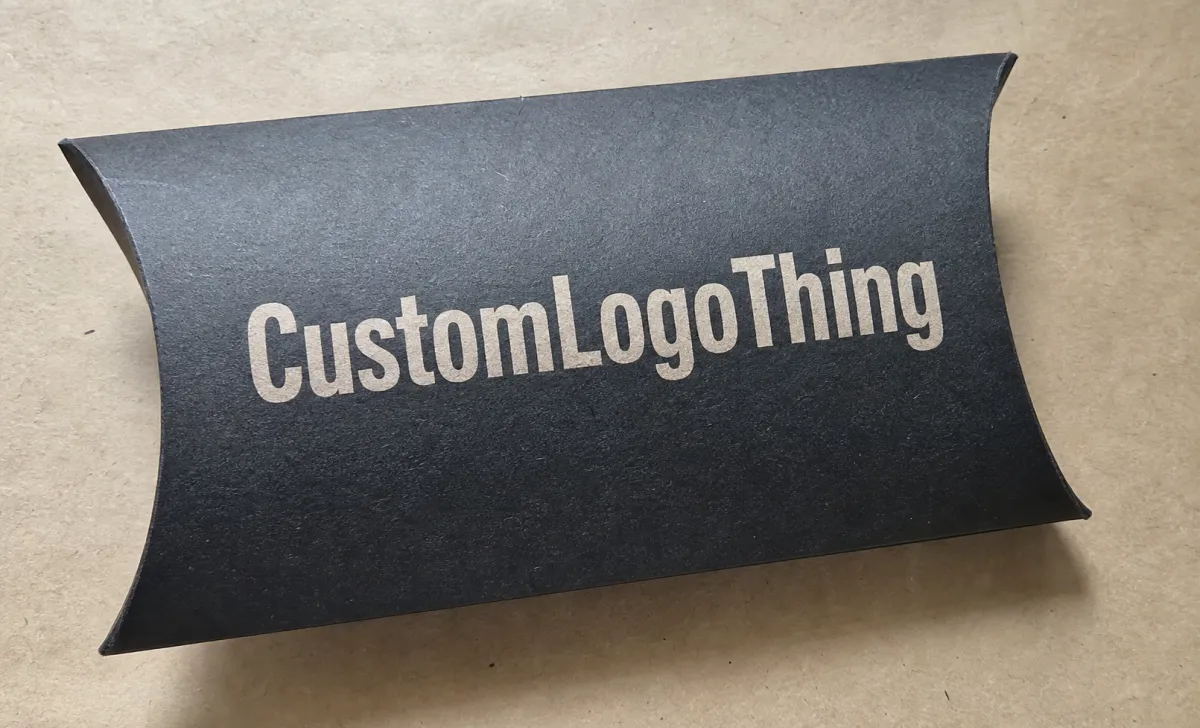
From a packaging buyer's point of view, online ordering gives control without the phone-tag nonsense. You can compare plain kraft-style board against coated stock, then see how much matte coating or soft-touch lamination changes the quote. That matters because pillow boxes often look inexpensive to make at first glance. They are not. Paperboard weight, print area, finishing, setup, and quantity usually drive the real cost. Once those pieces are visible, the buying decision gets much easier to explain to finance, marketing, or anyone else who wants the short version.
Speed matters too. If the artwork, dimensions, and shipping destination are ready, a quote can come back in a format that is easy to compare with other Custom Printed Boxes. That helps with retail packaging programs, seasonal gift sets, and small product lines where the clock matters just as much as unit cost. Marketing wants the box to look right. Sourcing wants landed price. Operations wants a carton that folds and fills without drama. A good online order process has to satisfy all three.
Many first-time buyers are surprised by what actually moves the price. A larger box uses more board, sure, but a small box with full-bleed art, foil, inside print, or a specialty coat can cost more than a bigger plain box. Freight can also shift the total because flat-packed cartons still take up volume, and volume charges are real. The cleanest quote is the one built from real specs, not guesswork.
A clean pillow box quote starts with exact dimensions, finish, and quantity. Without those three, every number is just a placeholder.
If you are comparing structures for a broader launch, the Custom Packaging Products page is a useful way to review related carton styles before you settle on one format. If the job will need repeat runs, the Wholesale Programs page helps with reorder consistency and unit-cost planning from the start.
Custom Pillow Box Product Details That Affect Fit and Finish
A pillow box is a curved, foldable carton that closes at both ends and lies flat before assembly. It works well for light retail goods such as gift cards, apparel accessories, small cosmetics, confectionery, jewelry, sample kits, and event giveaways. The format does a useful job: it looks polished without asking the buyer to deal with a rigid setup box or a bulky mailer. That makes it a smart middle ground for brands that want something more distinctive than a sleeve and less expensive than a rigid presentation carton.
Fit comes first. A pillow box is built around the product, so the dimensions need to include the item plus any wrap, tissue, insert, or protective layer. Too tight, and the curve bows or wrinkles. Too loose, and the product shifts around and the carton looks underfilled. Small favor-style boxes often sit around 2.5 x 2.5 x 0.75 inches. Larger accessory or apparel pieces often move closer to 8 x 5 x 2 inches. Those numbers are working examples only. The product should drive the size, not the other way around.
Finish changes the impression just as much as size. A one-color kraft sheet gives a natural feel and works well for simple package branding. A full-color CMYK box on coated board reads more like premium product packaging. Matte aqueous coating softens the surface without pushing cost too hard. Gloss makes the color pop and gives shelf presence. Soft-touch lamination adds a velvety hand feel that many brands use for beauty kits, holiday sets, and premium gift packaging. Foil stamping and spot UV are less common on plain utility cartons, but they do pull weight when the goal is to signal value quickly at the point of sale.
Inside print is another choice that changes both cost and impact. Most jobs print outside only. That keeps the budget under control and still gives enough room for shelf presentation. Inside print makes sense when the opening moment matters, when the interior stays visible after unboxing, or when the brand wants the box to do more than wrap a product. That option should earn its place. It should not be added just because it exists.
Product weight and edge shape matter too. Pillow boxes are excellent for light or moderately light items, but they are not the best choice for sharp metal parts, heavy glass, or products that need serious transit protection. A dense item can press against the curved ends, which makes the carton harder to assemble and less stable in shipment. If the package needs to move through distribution, ask whether an insert, a wrap, or a different carton style is a better fit. Good packaging starts with how the box will be used, not how pretty it looks in a flat sample.
Material selection matters here as well. A 12 pt stock can work for very light gifts. 14 pt and 16 pt board are more common for retail programs because they give the box better body and a stronger hand feel. An 18 pt stock adds stiffness for premium presentation, but it also changes folding behavior and cost. If procurement needs a sustainability claim, ask whether the sheet is FSC-certified instead of assuming every kraft-look board qualifies. That small check avoids a compliance headache later.
Specifications to Lock In Before You Order
Before anyone prices the job, lock in the dimensions. A pillow box depends on product size more than many buyers expect, so even a small error in length or depth can waste board, slow packing, or force a redesign. The first thing to define is whether the measurement is finished size or internal size, because suppliers do not always use the same wording. Once that is clear, the rest of the quote becomes much easier to compare.
- Dimensions: finished length, width, and depth, with internal size called out if that is how the product is measured.
- Stock: 12 pt, 14 pt, 16 pt, or 18 pt folding carton board; kraft-look board; or an FSC-certified sheet if that is required.
- Print: CMYK, one-color, or PMS spot colors; outside only or inside and outside; single-SKU or multiple-SKU artwork.
- Finish: matte aqueous, gloss, soft-touch lamination, spot UV, foil stamping, or a plain uncoated look.
- Files: PDF, AI, or EPS artwork; outlined fonts; linked images at print resolution; and 0.125 inch bleed where the design requires it.
- Logistics: delivery zip code, carton count, pallet preference, and any labeling or receiving rules.
Print details deserve the same attention. If the artwork uses PMS color matching, say so early. If the design is built for full-bleed coverage, confirm the bleed and safe area before proofing. If the box needs to repeat across several SKUs, know whether the only change is a product name or whether each size needs a separate dieline and file set. Those choices affect setup time and cost, especially on custom printed boxes that have to stay consistent across a product family.
The dieline is not a throwaway file. A clean dieline shows where the folds, tucks, and curved edges land, which cuts down the odds of artwork drifting into a seam or closure. If the structure needs a window cutout, an insert, or a special closure style, those details need to be built into the setup before the proof is approved. Fixing the dieline after proofing can cost more time than a premium finish.
For shipping-sensitive programs, standards help set expectations. General material and recovery context is available through packaging.org, and ISTA guidance is useful when the package must survive transit instead of sitting only on a shelf. If the pillow box sits inside a larger retail packaging program, those references help buyers judge whether the format should serve as presentation packaging, a gift carton, or a secondary pack that supports another layer of protection.
Do not let the quote start until the dieline is confirmed. A corrected dieline after proofing can cost more time than a premium finish.
Custom Pillow Boxes Pricing, MOQ, and Unit Cost
Pricing for pillow boxes comes down to a few clear variables: size, stock weight, print coverage, finishing, quantity, and freight. The shape itself is not usually the expensive part. A small unprinted box can be surprisingly affordable. A premium box with heavy coverage, lamination, and foil can land in a very different cost band. Buyers who understand that split compare quotes more accurately and avoid choosing the wrong supplier because one line item looked lower on the page.
MOQ matters because setup costs need a place to go. Lower quantities almost always carry a higher unit cost, while larger runs spread tooling, proofing, and production overhead across more boxes. For a brand testing a new SKU, a lower MOQ can be the right call even if the per-unit price is higher. For an established item with repeat demand, ask for several quantities and see where the price curve starts to flatten. That is usually where the real savings show up.
| Run size | Typical use | Common spec | Illustrative unit price |
|---|---|---|---|
| 250-500 units | Small launch, sampling kit, seasonal gift box | 14 pt board, one-color or CMYK, basic matte or no coating | $1.05-$2.40 each |
| 1,000-2,500 units | Steady retail line, boutique product packaging | 16 pt board, CMYK outside print, standard finish | $0.48-$1.20 each |
| 5,000+ units | Established SKU, promotional program, repeat reorder | 16-18 pt board, CMYK, soft-touch or spot UV on select areas | $0.24-$0.78 each |
Those figures are illustrative, not a fixed price sheet. A narrow box with simple artwork may land lower, while a larger format, heavy ink coverage, or special finishing can push higher. Freight changes the total too, especially if the project ships long distance or needs palletized delivery. The right way to compare quotes is to confirm whether the number includes setup, proofing, die cutting, finishing, packing, and freight. If one supplier includes those items and another does not, the lower quote can turn into the higher real cost.
A practical sourcing team often saves more money by simplifying the build than by chasing the cheapest per-piece number. Reducing print coverage, dropping a second-sided design, or choosing a matte aqueous coat instead of soft-touch lamination can bring the budget back into range without hurting presentation. Standardizing sizes across several SKUs can also improve pricing because the same die and production setup can be reused. That is a useful move for branded packaging programs that need a consistent shelf look across products.
One more pricing habit helps a lot: ask for multiple quantities. A quote at 500, 1,000, and 5,000 units usually shows where the real breakpoints sit. For low-volume runs, that can justify a test market order. For larger programs, it can reveal whether a small jump in volume produces a much better unit rate. The savings can be meaningful, especially on custom printed boxes that get reordered through the season.
Order Process, Timeline, and Production Steps
The cleanest order flow is straightforward. Share the dimensions, stock choice, quantity, artwork, and shipping destination. Receive pricing. Review the proof. Approve only after checking size, copy, and color direction. Then move into production and shipping. That sequence sounds basic, but it prevents most of the mistakes that slow down packaging jobs, especially when a buyer is juggling retail launch dates, fulfillment, and marketing.
- Request the quote: send the box size, product use, material preference, print details, and destination ZIP code.
- Review the estimate: check whether setup, finishing, packaging, and freight are included.
- Submit artwork: provide the dieline file, vector art, PMS notes if needed, and a contact for approvals.
- Check the proof: verify dimensions, fold lines, copy placement, barcode sizing, and finish callouts.
- Approve production: only sign off once the proof reflects the real box, not just the concept.
- Receive and inspect: confirm count, print quality, board feel, and carton condition on arrival.
Delays usually show up in a few familiar places. Artwork cleanup can drag if fonts are not outlined, images are low resolution, or the file arrives in a format that does not match the dieline. Proof revisions can slow things down when a brand is still deciding on copy or color. Late approvals are another common bottleneck. The production floor cannot move until the proof is signed off, so one delayed decision can push the whole schedule.
On a straightforward order with approved artwork and standard stock, a typical lead time is often 12 to 15 business days after proof approval, not counting freight. Jobs with specialty finishes, heavier coverage, or more complicated structural changes can move into the 15 to 25 business day range. If the project needs foil tooling, unusual inserts, or very tight color matching, build in a little extra time so there is room for a proper check. Rush service may be possible, but it depends on material availability and the production calendar.
Behind the scenes, the work usually follows a familiar path: file preparation, die setup, printing, finishing, converting, packing, and dispatch. That order matters because each stage has its own risk. Printing handles color and alignment. Converting handles folds, trims, and the actual carton shape. Packing protects the finished boxes from shipping damage. A supplier that explains those steps clearly tends to be easier to trust because the process stays visible instead of hidden behind a vague promise.
For buyers managing several packaging programs at once, a little planning saves days. Keep a standard file folder, store approved color references, and document the exact stock and finish from the last run. That way, a reorder does not start as a brand-new conversation. It starts from a known spec, which is faster and less likely to drift.
Why Buyers Choose Us for Online Pillow Box Orders
Buyers usually come back to a packaging partner that helps them avoid mistakes early. That means checking dimensions against the dieline, pointing out when the artwork is asking too much of a light stock, and suggesting a simpler finish when the budget or timeline calls for it. That kind of help is practical, not flashy. It keeps the project moving and reduces the chance that the box needs correction after proofing, which is where costs tend to creep upward.
Clear communication matters as much as low pricing. A useful supplier answers the core questions quickly: will the design print cleanly, what does the box cost landed, and what needs to be fixed before production starts? Buyers want a quote they can trust, a proof they can read, and a delivery window they can plan around. That is especially true for retail packaging where launch dates tie directly to merchandising, inventory, and promotion calendars. A small delay can ripple through the whole program.
Technical guidance matters too. A lot of pillow box projects look simple until the details get checked carefully. The box might need a different board weight for better fold memory. The print file might need a deeper safe area so the copy does not sit too close to the curve. A foil accent might need to move so it does not fight with a seam. Feedback like that helps the final box perform better on the shelf and in the hand, which is the point of good package branding in the first place.
Repeatability is another reason buyers value a reliable source. Reorders should match the first run in color, board feel, and finish. If a brand plans a seasonal rerelease, a line extension, or a staggered rollout across several SKUs, the files need to stay organized and the specs need to stay consistent. That consistency keeps the packaging design coherent over time and protects the brand look from one order to the next.
If you need a broader buying path, our Wholesale Programs page is a good place to start for recurring quantities and cleaner unit pricing. If you are still deciding on materials, finish, or file preparation, the FAQ page is a practical next stop before you submit anything. If you want to compare pillow boxes with other formats, the Custom Packaging Products catalog makes that comparison easier without starting from scratch.
How to Place Your Custom Pillow Boxes Order Online
The fastest way to get a useful quote is to send the whole picture at once. That means dimensions, stock, finish, quantity, artwork, and shipping destination. When buyers send only one part of the spec, the supplier has to guess at the rest, and guesses slow everything down. A complete request is easier to price accurately, easier to compare against other suppliers, and easier to move into production without revisions.
Here is the simplest path:
- Measure the product: decide whether the box is display-only, gift-ready, or exposed to shipment handling.
- Choose the board: select the stock weight and surface that match the look and the budget.
- Define the print: note one-color, CMYK, PMS, inside print, or outside-only print.
- Gather files: send vector artwork, logo files, any barcode or ingredient copy, and the correct dieline.
- Set the quantity: request one price at the needed volume and another at a higher count for comparison.
- Confirm delivery details: include the ZIP code, receiving hours if relevant, and any freight preference.
From there, the ordering process gets easier to manage. Request the quote, check the proof closely, and make sure the size, copy, and color callouts match what the product actually needs. Only approve when the carton is right in the proof stage. That is the point where small corrections cost the least and the final run is still easy to steer. Once approval happens, the work moves into production with much less risk of delay.
If you are comparing suppliers, ask one simple question: does the quote include everything needed to finish the job properly? A transparent quote should show the basics, but it should also make it clear whether artwork setup, finishing, packing, and freight are covered. That one check can save a lot of time, especially when several quotes are being compared for the same launch.
For a clean starting point, prepare the specs first and then request the online quote. If you want to custom pillow boxes order online with fewer revisions and a faster path to production, send the size, board, finish, quantity, and artwork together so the first estimate is already close to the final order. That is the simplest way to move from idea to retail-ready packaging without unnecessary backtracking.
How do I get an accurate custom pillow boxes order online quote?
Send the exact box dimensions, quantity, stock preference, print details, finish, and delivery ZIP code. If possible, include the artwork file or at least a clean draft so the quote reflects real production requirements. Also ask whether the price includes setup, proofing, finishing, and freight so you can compare offers fairly rather than comparing incomplete numbers.
What is the typical MOQ for custom pillow boxes online?
MOQ depends on the print method, board, and finishing, so the minimum can change from one job to the next. Lower quantities usually cost more per box because setup costs are spread across fewer units. If you expect repeat orders, ask for pricing at several quantities so you can see where the unit cost starts to improve.
How long does it take to receive custom pillow boxes after ordering online?
Timing starts after artwork and proof approval, not after the first quote request. Simple orders with approved files move faster than jobs with specialty finishes, detailed color matching, or custom structural changes. Rush options may be available, but they depend on material availability and the production schedule at the time of order.
Can I print on both sides of custom pillow boxes?
Yes, many pillow box projects can be printed inside and outside if the structure and artwork support it. Double-sided printing adds cost and may affect production timing, so it should be confirmed early in the quote process. If the inside is visible when the box opens, ask for a proof that clearly shows both panels.
What file format should I use when ordering custom pillow boxes online?
Vector files such as AI, PDF, or EPS usually work best for print accuracy. Keep fonts outlined, images at high resolution, and colors labeled clearly if PMS matching is required. If you are unsure about the file, send what you have and ask for a review before production starts so corrections happen before the job is locked in.
If you are ready to custom pillow boxes order online, the next move is practical: write down the finished size, board, print method, finish, quantity, and ship-to ZIP before you Request a Quote. Add the use case too, because a display-only carton and a box that has to survive distribution are not the same job. That single sheet usually cuts the first round of revisions and gets you to a carton that fits the product, holds up in production, and looks like it belongs on the shelf.

