Custom Plastic Grocery Bags look straightforward from a distance. Then the order lands on a buyer’s desk and the real variables show up: film thickness, handle style, print coverage, carton count, freight, and whether the bag actually works at a busy register without slowing the line. The low quote is usually the easiest number to get. The hard part is getting a bag that holds up in daily use and still fits the store’s budget.
That is why packaging buyers tend to think about these bags in layers. They are carryout items, yes, but they are also part of the checkout process, part of the brand presentation, and part of the labor equation. If a bag opens badly, tears at the handles, or looks weak in the customer’s hand, the store pays for that in ways that never show up cleanly on the invoice.
A useful way to approach the category is to treat it as retail packaging with a job to do. That means clear specs, realistic load expectations, and honest discussion about what the bag needs to carry. Public material guidance and recycled-content claims from organizations like the EPA can help keep the language precise, especially if sustainability statements are going on the print itself.
What Custom Plastic Grocery Bags Actually Are
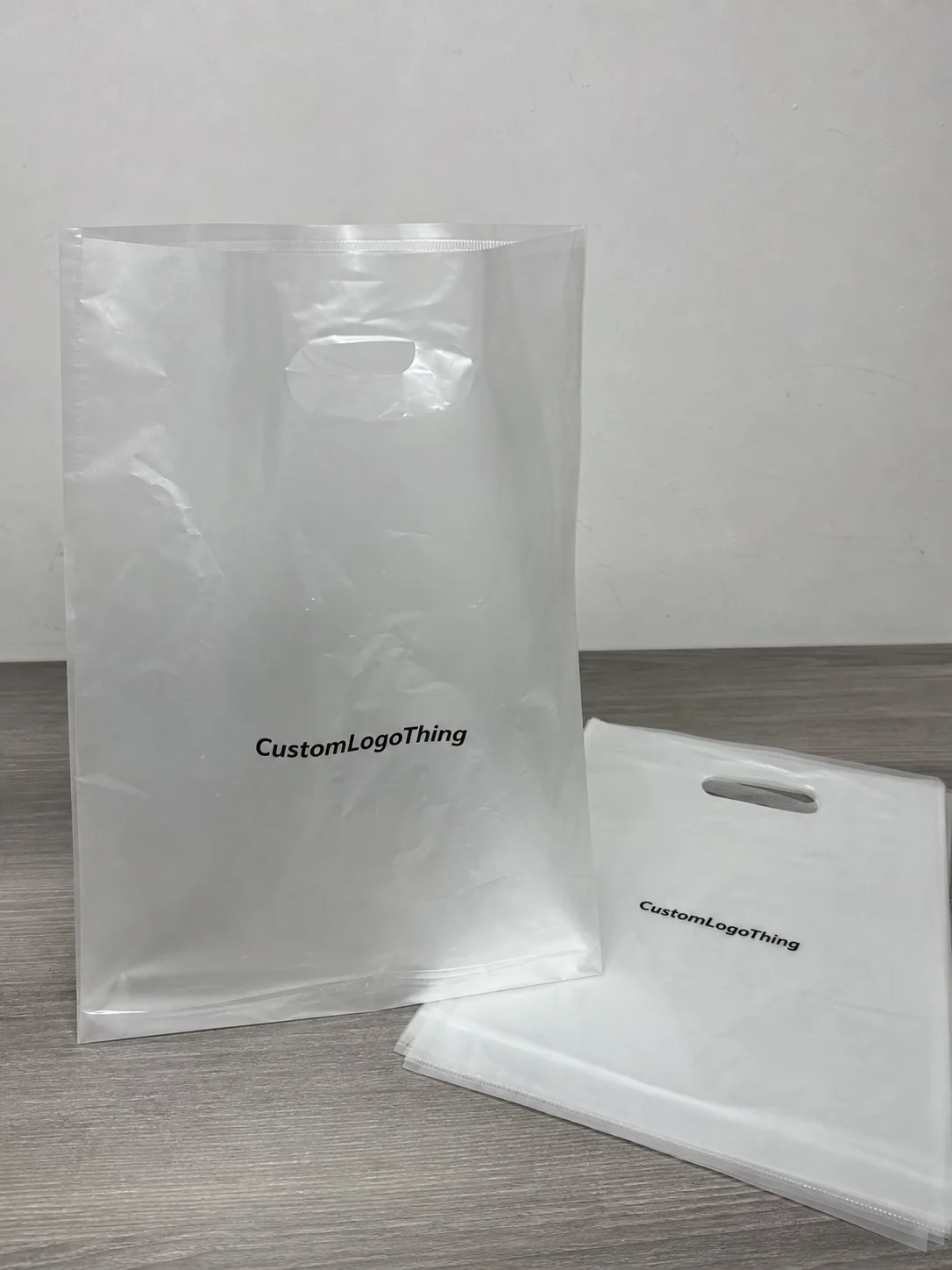
Most buyers work with four familiar formats: t-shirt bags, patch-handle bags, loop-handle bags, and simpler merchandise bags. Each one suits a different kind of checkout flow.
T-shirt bags are the fast-moving workhorse of grocery and convenience retail. They dispense well, open quickly, and are easy for cashiers to use in volume. Patch-handle bags reinforce the grab point with an added area of material, so the hand is not pulling directly on the thinnest part of the film. Loop-handle bags feel more polished and are a better match for specialty retail or higher-value orders. Merchandise bags are the lighter-duty option, usually reserved for small items, pharmacy orders, or short transactions where the contents do not need much structure.
Material choice changes the feel right away. HDPE gives a thinner, crisp bag that dispenses cleanly and works well for high-volume use. LDPE is softer and more flexible, which is why it often appears in thicker or more premium carryout styles. Neither resin is inherently better. The right choice depends on the bag’s weight target, how it will be packed, and whether speed or presentation matters more.
For buyers considering recycled content, the practical question is not whether the claim sounds good. It is whether the blend still performs at the required load and whether the print and film quality remain consistent across the run. Recycled material can be a good fit, but it should be tested, not assumed. A bag is still only as useful as it is reliable.
The branding side matters too. A bag gives the store one of the few physical touchpoints that leaves the register and keeps moving through the customer’s day. That is a lot of visibility for a small format. A clean one-color logo on a strong bag usually does more for the brand than a crowded design on a flimsy film that wrinkles as soon as it is loaded.
A good grocery bag does three things at once: it opens fast, carries the load, and still looks intentional after the customer leaves the store.
That balance is the real reason buyers spend time on the spec. The bag is not just packaging. It is part of the checkout system, part of the customer experience, and part of the store’s operating rhythm.
How the Printing and Bag Construction Process Works
The process starts with resin, which is formed into film and wound into rolls. From there the film is printed, cut, sealed, folded, and packed for shipment. The flow sounds simple. The quality outcomes are not. Film gauge, seal temperature, print registration, and handle placement all show up later in the finished bag.
Flexographic printing is the most common method for custom plastic grocery bags. It is efficient, especially for repeat orders and one-color or two-color work. Simple logos can look sharp and clean under flexo. Designs with fine detail, gradients, or too many colors become more expensive and less predictable. For most grocery programs, that means a restrained artwork approach is usually the smartest one. A large logo, strong contrast, and a short line of copy often outperform a complicated graphic that loses clarity once it is printed on thin film.
Plastic behaves differently from paper, and that catches some buyers off guard. A color that looks strong on screen can appear lighter on translucent film. Thin type can disappear. Artwork near the edge of a seal can distort. If the bag is glossy, color can look sharper but also more reflective under store lighting. Matte films read differently again. The proof needs to reflect the actual material, not just the artwork file.
Construction details matter just as much as print. Gussets give the bag room to expand. Seal location affects strength. Handle geometry changes how the load sits in the hand. A bag can have enough film thickness on paper and still fail early if the seams are poorly placed or the handles are not reinforced where the load pulls hardest. This is where a practical buyer asks for more than a price: ask how the bag is tested, where the weak point usually is, and whether the supplier has seen that style fail under real grocery loads.
For quality checks, common references include dart impact and tensile-style testing such as ASTM D1709 and ASTM D882. Not every vendor will quote those tests on every order, but the discussion helps separate real performance data from vague claims. If a supplier cannot explain how they measure strength, they may not have much beyond a standard sales sheet.
Material, Thickness, and Handle Choices That Change Performance
The three spec choices that shape performance most are material, thickness, and dimensions. Change one of them and the bag behaves differently. Change all three without checking the use case, and the bag may look correct while performing poorly at the register.
Thickness is usually measured in mil or gauge. As a practical reference, lighter checkout bags often land around 0.4 to 0.7 mil, while heavier grocery or loop-handle styles commonly move into the 0.8 to 1.5 mil range and sometimes beyond. That is not a hard rule. A thicker film is not always the better answer if the store needs a bag that opens quickly and dispenses cleanly. More thickness can help with strength, but it can also make the bag stiffer, slower to open, and more awkward for staff who are handling dozens or hundreds of bags a day.
T-shirt bags work well in high-volume grocery settings because they are familiar and fast. Loop-handle bags feel more refined and are often a better choice when presentation matters or when the customer is carrying a more valuable order. Patch-handle bags are a sensible middle ground when the load is heavier and the store wants a stronger grab point without moving to a full premium structure. The right choice depends on the mix of products being carried, not on a generic idea of “better.”
Size selection is just as important as material. A bag that is too small stretches at the top and encourages overfilling. A bag that is too large wastes film and can make the print area look awkward. The best size is usually based on the real basket mix, not the biggest possible order. If a store mostly bags a carton of eggs, a few produce items, pantry goods, and an occasional gallon item, that mix tells you a lot more than a theoretical maximum basket ever will.
Buyers often ask for “stronger” bags without defining what that means. Strong against what? Wet produce, boxed goods, cans, sharp corners, or just a larger volume of lightweight items? Those are different loads. A bag for a pharmacy counter does not need the same construction as one for a full grocery run, and a convenience-store format should not be forced into a grocery spec just because it is easier to reorder. Good product packaging matches the use case closely enough to avoid waste, but not so tightly that one busy day becomes a failure point.
| Bag Type | Typical Use | Common Spec Range | Approx. Unit Cost at 5,000 pcs | Buyer Takeaway |
|---|---|---|---|---|
| T-shirt HDPE | High-volume grocery checkout | 0.4 to 0.7 mil, one-color print | $0.04 to $0.08 | Fast dispensing, lowest practical cost |
| Merchandise bag | Pharmacy, small retail, light items | 0.4 to 0.6 mil, simple logo | $0.03 to $0.07 | Works well for lightweight orders and short runs |
| Loop-handle LDPE | Premium grocery, specialty retail | 0.8 to 1.5 mil, one to two-color print | $0.12 to $0.25 | Better hand feel and stronger presentation |
| Patch-handle | Heavier customer carryout | 1.0 to 2.0 mil, reinforced handle zone | $0.18 to $0.35 | Useful when load strength matters more than unit count |
The important point is not the exact number in the table. It is the pattern behind it. As film gets heavier, print gets more complex, and handle structures get stronger, the price climbs. That is normal. A buyer who understands the tradeoffs can choose where to spend and where to simplify.
Cost, Pricing, and MOQ: What Drives the Quote
Price is shaped by a small set of variables: size, thickness, resin, handle style, print colors, packing format, and total quantity. If the order includes recycled content, a premium film blend, or a special carton setup, the quote moves accordingly. There is no hidden formula. The cost simply reflects how much material, setup time, and production control the bag requires.
MOQs, or minimum order quantities, exist because setup costs have to be spread over the run. Printing plates or cylinders, machine changeover, startup waste, and inspection all happen before the first usable bag is packed. Small orders look expensive per bag because those fixed costs have fewer units to sit on. Larger runs generally lower the unit cost, but only if the spec stays stable. Change the size or the print after quoting and the economics change with it.
It helps to compare quotes carefully and resist the temptation to treat every line as interchangeable. Check the printed dimensions, film thickness, handle style, carton count, freight terms, and whether tooling is included. If one quote is dramatically lower, look for the missing part. Sometimes the answer is thinner film. Sometimes it is a smaller print area, fewer colors, or lighter packaging. Sometimes the quote is simply missing freight or setup.
There is also a practical value question. A better handle can be worth the upgrade if the bag is used all day by staff and touched by every customer. A cleaner print may matter more than a decorative layout if the bag carries the store’s name in public. For stores focused on packaging design, the bag should fit into the visual system rather than feeling like a leftover item from a different supplier. It does not need to be fancy. It does need to be consistent.
Common price ranges at a high level often look like this:
- Small custom runs: often $0.08 to $0.20 per bag, especially when setup is spread over only a few thousand pieces.
- Mid-size runs: often $0.04 to $0.12 per bag for simpler grocery formats.
- Premium carryout bags: often $0.15 to $0.35 per bag depending on structure and print.
Those ranges move quickly if the order adds more colors, thicker film, reinforced handles, or special packing. For custom plastic grocery bags, the better question is not “what is the cheapest quote?” It is “which spec change is driving the cost, and does that change actually improve the bag for this store?”
Production Steps, Timeline, and Approval Milestones
Most orders follow the same basic route once the spec is set. Artwork review comes first, then the proof, then tooling or plate prep, then printing, bag forming, sealing, packing, and shipment. Straightforward one-color jobs move faster. Multi-color artwork, unusual dimensions, or custom material requests take longer. That is normal, and it is better to plan for it than to hope production will bend around a rushed deadline.
A realistic timeline for a simple order is often 12 to 15 business days from proof approval, plus freight. More complex jobs can take 15 to 20 business days before they ship. Freight time then adds another 3 to 10 business days depending on route, destination, and carrier conditions. If a store has a hard opening date or a seasonal reset, the clock should include both production and transit from the beginning.
The slowdowns are usually ordinary. Blurry logo files, missing dielines, unclear print placement, last-minute quantity changes, or a size adjustment after the proof has already been approved can all push the schedule. A clean approval cycle saves time. So does one person making the final call. When too many people keep revisiting the artwork, a simple order turns into a long one for no useful reason.
Receiving should be part of the plan as well. Large bag orders arrive palletized, and backroom space can disappear quickly. If storage is limited, say so early. Carton count, pallet configuration, and delivery timing all change when the warehouse is tight. A good order is not just one that ships on time. It is one that arrives when staff can receive it without scrambling.
For recurring buyers, the real value comes from keeping records. Track how many bags are used per week, whether the handle style works in actual checkout conditions, if the artwork stays readable under store lighting, and whether the bag depth suits the standard basket mix. Those notes make the next order more precise. Over time, the purchase becomes a controlled spec instead of a fresh guess every season.
Common Mistakes That Make Bags Fail Early
The most common mistake is under-specifying thickness. Buyers trim a few cents off the unit price and then discover the film is too light for canned goods, wet produce, or packages with hard edges. That is not a mystery. It is simply a load mismatch. If the store handles mixed baskets, the bag needs enough structure to survive the mix without staff double-bagging as a workaround.
Print placement is another frequent problem. Artwork too close to a seal, handle, or fold can look fine on the proof and still land badly on the finished bag. Plastic is less forgiving than many buyers expect. The bag geometry matters, so the proof should show the actual working area rather than a loose image floating on a white page.
Some buyers shop for appearance only. A shiny, attractive bag that is hard to open or awkward to dispense slows down the line and frustrates staff. In a grocery environment, speed matters as much as presentation. If the bag does not feed well from the rack or dispenser, the checkout team will tell you immediately, usually without being diplomatic about it.
Unit price can be a trap too. A cheap quote may hide a lighter film, weaker handles, smaller print coverage, or looser packing that increases damage in transit. Those savings can disappear once the store starts double-bagging or dealing with customer complaints. The lowest number on paper is not the lowest cost in use.
Sample testing solves a lot of this. Even a basic sample answers practical questions quickly: how the bag opens, whether the handles feel secure, whether the logo sits in the right place, and how the bag behaves when loaded with the store’s normal items. Five minutes of testing is enough to catch a poor fit before the full run starts. That matters most with custom plastic grocery bags, because the product is simple enough to encourage shortcuts and visible enough that mistakes get noticed right away.
If the bag will carry environmental claims, keep the wording tight and accurate. Avoid broad language unless the material spec supports it. Public guidance from the EPA recycling information can help prevent vague or overstated claims from ending up on the print.
Practical Next Steps to Order the Right Bag
Start with a real spec sheet. Include the target size, expected load type, handle style, print colors, quantity, delivery ZIP, and whether the bags will be used at front-of-house checkout or behind the counter. Clear information gets clearer quotes. Vague requests usually trigger a long chain of follow-up questions and quotes that are hard to compare.
Ask for a sample or a detailed proof before production. Then handle it like the bag will be used in the store. Open it quickly. Fill it with the mix of items it is meant to carry. Check whether the top has enough room to close without strain. See whether the bag feels comfortable in the hand. If the sample feels awkward, the final run will feel awkward too.
Keep related packaging pieces aligned. If the store also uses inserts, labels, or matching cartons, the visual system should feel deliberate rather than stitched together from separate orders. That is especially true for package branding and broader product packaging, where the bag is one piece of a larger customer-facing set. A bag that clashes with the rest of the package system looks like an exception, not a program.
For repeat orders, document the quiet details. How many bags were used per month. Which format customers preferred. Whether the print stayed sharp. Whether the bag was too wide for the lane or too narrow for regular orders. Those notes are not glamorous, but they are how a good purchasing process improves over time.
That is the practical mindset behind buying custom plastic grocery bags well. Treat the first order as a working spec, then tighten it after real use. That approach reduces waste, keeps the checkout line moving, and produces a bag that does its job without calling attention to itself for the wrong reasons.
How do I choose the right size for custom plastic grocery bags?
Start with the basket mix you actually see at checkout. The bag should fit common orders without overfilling at the top or leaving too much empty space. Width and gusset matter most because they control how the load sits once the bag is filled.
What thickness should custom plastic grocery bags be for heavy groceries?
Heavier loads usually need a thicker film, often around 0.8 to 1.5 mil depending on the bag style and resin. Wet produce, cans, and packages with hard edges put more stress on the film and the handle area, so the spec should be set from the actual load, not from price alone.
How much do custom plastic grocery bags usually cost?
Price depends on size, thickness, print colors, handle style, and quantity. Smaller runs usually cost more per bag because setup gets spread over fewer units, while larger runs lower the unit price. Simple grocery formats can land in the low cents at volume, while premium carryout styles cost more.
How long does it take to produce custom plastic grocery bags?
Simple orders often take about 12 to 15 business days after proof approval, with freight added on top. More complex jobs can take 15 to 20 business days or more. Artwork revisions and shipping distance can both extend the schedule.
What artwork do I need for custom plastic grocery bags?
Send a clean logo file, preferred print colors if you have them, and clear notes on size and placement. If the artwork is still being developed, the proof stage is where the fit and print area should be checked against the actual bag dimensions.
Are custom plastic grocery bags worth ordering in a branded format?
Yes, if the bag is part of the customer-facing experience. A branded bag supports the store’s package branding, keeps the checkout presentation more deliberate, and carries the store name beyond the register. The value drops quickly if the bag is flimsy or poorly printed, so the construction has to match the branding.