Custom Plastic Popcorn Bags: What Buyers Need to Know
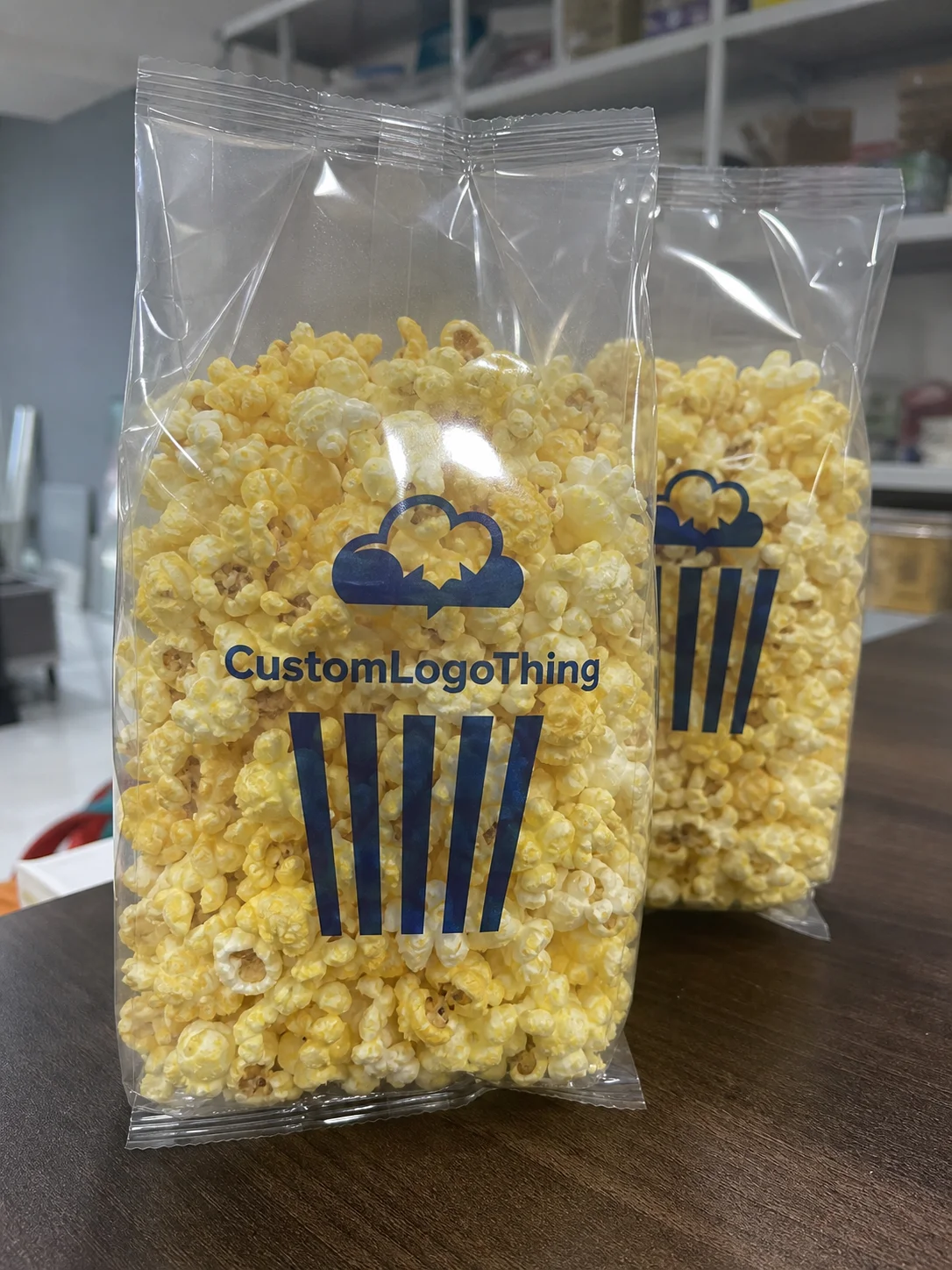
Custom plastic popcorn bags usually fail for boring reasons. Weak seals. Wrong film. A size picked from a template instead of the actual fill weight. The artwork gets blamed because it is visible. The real problem is usually buried in the spec sheet.
What buyers are actually ordering is a printed snack package that has to protect product, survive handling, and still look good on a shelf or counter. That means the bag is doing three jobs at once. If one of those jobs is off, the whole package feels cheap, even if the graphics are sharp.
Plastic makes sense for a lot of popcorn applications because it handles moisture better than paper in many cases and keeps its shape under stacking and transit. That matters for retail packaging, concessions, gift sets, and promotional runs where the bag itself is part of the brand presentation. A popcorn bag does not need to be fancy. It does need to hold up.
There is a tradeoff. Better barrier performance and better print presentation do not erase sustainability concerns. If the end-of-life story matters, the structure should be chosen with that in mind from the start. Retrofitting a recycling claim onto the wrong format is not a strategy. It is packaging theater.
How the Bag Structure Affects Seal, Shelf Life, and Look
The structure matters more than most buyers expect. Film layers, thickness, seal width, and finish all affect freshness, oil resistance, and how the package looks after it has been filled and moved around. If you have ever seen a bag wrinkle strangely, puff unevenly, or leak at the seal, the issue was probably structural, not visual.
Three formats show up most often. Pillow bags are simple and cost-conscious. Gusseted bags stand better and tend to look more deliberate on shelves. Flat pouches are useful when footprint and carton efficiency matter more than display height. Each one changes the way the popcorn settles and how the design reads once the package is full.
Finish changes perception too. Gloss usually increases color pop and gives the artwork more contrast. Matte can look more restrained and premium, but it can also flatten weak artwork and make small text harder to read. A matte bag with low-contrast typography is a common bad decision. It looks elegant in a mockup and muddy in production. That lesson usually arrives at the buyer's expense.
“If the seal is weak, the print does not matter. Nobody admires a beautiful popcorn bag that leaks oil into the carton.”
Barrier performance is the technical core of the job. Popcorn is light, oily, and vulnerable to moisture pickup. If the film is too thin or the seal is inconsistent, the package can stale faster, stain, or feel soft and underbuilt. A good structure balances seal integrity, puncture resistance, and the visual clarity needed for branded packaging.
Do not stop at the outer shape. Ask what the film is, how wide the seals are, and whether the package is meant for short-run giveaway use or actual retail placement. The outside silhouette is only part of the story. A nice-looking mockup is not the same thing as a workable production spec.
Size, Film, and Print Choices That Change the Outcome
Start with fill weight, not outside dimensions. This sounds basic, but it gets skipped constantly. Popcorn expands differently depending on kernel style, oil level, and portion size. A bag that looks perfect empty can look awkward once filled if there is too much headspace or not enough room for the top seal.
Film thickness affects both cost and performance. Thinner film usually lowers the unit price, but thicker material improves stiffness, seal strength, and puncture resistance during packing and shipping. For lighter concession use, a thinner structure may be acceptable. For retail or shipment-heavy programs, a slightly heavier gauge often pays for itself by reducing damage and repacking.
Printing method matters more than buyers think. It affects color count, registration, edge sharpness, and how well the graphic survives scuffing. Fine text, small logos, and tight alignment around windows or borders raise the production risk. If the artwork depends on hairline detail, the press has to be capable of holding it. If not, the proof will lie.
Artwork should be locked early. Bleed, safe zones, white ink usage, and contrast all matter, especially when the bag includes transparent areas or dense copy. Flexible packaging is unforgiving. What looks clean on a screen can vanish once the film is folded, sealed, and handled by people who are not looking for your brand message.
Practical spec choices
- Film thickness: common snack packaging specs often sit around 2.5 mil to 4.0 mil, depending on stiffness, puncture resistance, and seal performance.
- Print coverage: full-coverage artwork costs more than simple one- or two-color layouts because it increases setup time and ink use.
- Special features: windows, hang holes, and reseal features improve retail usefulness, but each one adds cost and inspection points.
- Compliance: ask for food-contact documentation and confirm whether the bag is intended for direct food use or secondary packaging.
For buyers building a broader packaging line, it helps to keep the bag spec aligned with the rest of the Custom Packaging Products range. A popcorn bag that looks polished but sits beside generic cartons and inserts weakens the shelf story. Consistency is not a luxury. It is how the brand looks intentional instead of assembled from leftovers.
For industry references, two sources are useful in practice: the Packaging School and industry resources at packaging.org for packaging fundamentals, and the ISTA test standards for transit and distribution testing. If sustainability claims are part of the brief, the EPA's plastics and recycling guidance at epa.gov/recycle is a useful reality check.
Pricing, MOQ, and Unit Cost
Pricing comes down to five levers: bag size, film structure, print colors, special finishes, and whether the run needs custom tooling or plates. If a quote looks dramatically cheaper than the others, one of those levers is probably being simplified, omitted, or quietly assumed away. Cheap quotes are often cheap because they are incomplete.
Minimum order quantities are not random punishment. They exist because setup, color matching, proofing, and machine preparation are fixed costs. Spread those costs over 500 bags and the unit price looks bad. Spread them over 10,000 bags and the numbers settle down. That is how packaging math works.
Here is a practical comparison buyers can use as a sanity check. Actual pricing will shift with artwork, film, and freight, but the ranges below are typical for printed snack packaging.
| Option | Typical MOQ | Approx. Unit Cost | Best For | Tradeoff |
|---|---|---|---|---|
| Simple pillow bag, limited print | 5,000-10,000 pcs | $0.08-$0.16 | Promotions, concessions, short retail runs | Less shelf presence, fewer design options |
| Gusseted bag, 4-color print | 10,000-20,000 pcs | $0.14-$0.24 | Retail packaging, better display, higher perceived value | Higher setup and tighter artwork control |
| Premium film with matte finish or window | 10,000+ pcs | $0.18-$0.32 | Gift sets, brand launches, specialty product packaging | More complex production and more inspection points |
Compare quotes on total landed cost, not just the lowest unit price. Setup, shipping, freight class, sampling, carton counts, and revision policies all affect the real number. A quote that looks cheaper on page one can end up higher once the missing pieces show up.
For buyers weighing custom plastic popcorn bags against other formats, it is also worth comparing them with Custom Packaging Products that use paperboard or rigid structures. Sometimes Custom Printed Boxes are a better fit for gift bundles, while the bag format wins on freshness, line speed, and per-unit cost. There is no universal winner. There is only the better fit for the product and distribution path.
Production Process and Lead Time
The production flow is simple on paper and annoyingly sensitive in real life. It starts with spec confirmation. Then comes the dieline or layout review. After that, artwork gets approved, a sample or proof is created, the order moves into production, quality checks happen, and the finished goods are packed and shipped. Skip a step and the schedule tends to punish you later.
Lead time is not a single fixed number. Sampling may take only a few days if the file is clean and the structure is standard. Full production usually takes longer because material sourcing, print complexity, and quantity all change the schedule. A realistic timeline is measured in business days, not hopeful guesses.
Most delays come from predictable sources. Missing vector files. Late color changes. Revising the bag size after approval. Changing the finish because someone had a better idea after production already started. Those are common schedule killers, and they are nearly always avoidable.
The best way to keep things moving is to lock the quantity early, send clean artwork, and approve proofs quickly. Keep the spec stable. If the construction changes after the quote is issued, expect the clock to reset. That is not a supplier trick. That is manufacturing.
For shipping-sensitive programs, ask whether the carton configuration has been tested against handling stress. ISTA methods are useful here because damage often appears during transit, not on the press floor. A bag can be perfectly printed and still arrive looking tired if the outer case and pallet plan were never thought through.
Common Buying Mistakes That Waste Budget
The first mistake is buying by outside dimensions alone. Popcorn volume changes with kernel style, expansion rate, and how tightly the bag is packed. A bag that measures correctly can still look wrong once filled. That is why fill weight and a physical sample matter more than a spec line with one neat dimension on it.
The second mistake is ignoring grease and heat exposure. Popcorn is not dry filler. Oil migration can stain the film, soften seals, and make the package look old before its time. If the bag will be held warm, stacked tightly, or handled by customers with greasy fingers, the structure needs to be chosen for that abuse.
The third mistake is forgetting freight and carton count. Flexible packaging is light, but it is still bulky. A low unit price can get eaten by oversized cartons, inefficient palletization, or a shipping plan that was never calculated properly. That is one of the easiest ways to make a quote look good and perform badly.
The fourth mistake is overcomplicated artwork. Tiny text, weak contrast, and crowded layouts tend to print worse than expected. They also raise the chance of reprint because flexible packaging shows every flaw. Simplicity is not boring here. It is how the job stays legible.
Do not treat sustainability language as a substitute for engineering. A compostable claim on the wrong structure does not fix weak seals or bad distribution performance. The package still has to protect the popcorn. After that, the environmental positioning can matter. Before that, it is just copy.
Expert Tips and Next Steps Before You Request a Quote
Before requesting pricing, build a short spec sheet. Keep it simple: target size, fill weight, finish, print colors, quantity, and required delivery date. A good quote depends on good inputs. If the brief is vague, the estimate will be too.
Ask for a mockup or sample reference so the team can verify scale, color balance, and seal placement before full production. That one step saves a lot of waste. It is much cheaper to fix a proof than to discover a layout problem after thousands of bags have already been printed.
Compare quotes on total landed cost, not just the lowest unit price. Include setup, shipping, freight class, sampling, and any rework risk already visible in the proof stage. Sometimes the more expensive quote is actually the cheaper one once all the missing items are counted.
For brands building a fuller retail line, keep the popcorn bag aligned with the rest of the package branding system. If the bag, carton, and display unit all share the same visual logic, the product looks more deliberate and more expensive. That matters whether the buyer is moving fast on a shelf or scanning a trade show table.
My practical recommendation is simple: confirm the spec, approve the proof, and order a sample run of custom plastic popcorn bags before scaling up. That is the cleanest way to avoid an expensive lesson.
What size custom popcorn bags should I choose for my portion size?
Choose by fill weight first, not by bag dimensions alone, because popcorn volume changes a lot with kernel style and expansion. Ask for a physical sample or fill-line reference so you can check how the bag looks when it is actually packed.
Are custom popcorn bags safe for oily, buttery snacks?
They should use food-safe materials and inks suitable for snack packaging, with seals that hold up under oil exposure. Request compliance documentation from the supplier instead of assuming every printed plastic bag is automatically food-safe.
How much do custom plastic popcorn bags cost per piece?
Unit cost depends on quantity, bag size, film structure, print colors, and whether you add windows, zippers, or premium finishes. Lower quantities usually cost more per bag because setup and prep costs are spread across fewer units.
What is the normal turnaround for custom popcorn packaging?
Timeline usually includes proofing, sampling, production, quality checks, and shipping, so the total schedule depends on how fast approvals move. Rush orders are possible in some cases, but they usually cost more and leave less room for artwork or color corrections.
What artwork files work best for custom popcorn bag printing?
Use vector artwork when possible, with outlined fonts, clear bleed, and Pantone references if exact color matching matters. Avoid tiny copy and low-contrast details, because flexible packaging is unforgiving once it is folded, sealed, and handled.