Buyer Fit Snapshot
| Best fit | Mailing Bags Custom Printed projects where brand print, material claims, artwork control, MOQ, and repeat-order consistency need to be specified before quoting. |
|---|---|
| Quote inputs | Share finished size, material target, print colors, finish, packing count, annual reorder estimate, ship-to region, and any compliance wording. |
| Proofing check | Approve dieline scale, logo placement, barcode or warning zones, color tolerance, closure strength, and carton packing before bulk production. |
| Main risk | Vague material claims, crowded artwork, missing packing details, or unclear freight terms can make a low unit price expensive after revisions. |
Fast answer: Mailing Bags Custom Printed: Artwork Proof, Packing Count, and Landed Cost should be specified like a repeatable production item. The safest quote records material, print method, finish, artwork proof, packing count, and reorder notes in one written spec.
Production checks before approval
Compare the actual filled-product size with the drawing, then confirm tolerance on folds, seals, hang holes, label areas, and retail display edges. Reserve space for logos, QR codes, warning copy, and material claims before decorative graphics fill the panel.
Quote comparison points
Review material grade, print process, finish, sampling route, tooling charges, carton quantity, and freight assumptions side by side. A quote is only useful when the supplier can repeat the same color, closure quality, and packing count on the next order.
The first time I watched a press check for mailing bags custom printed, the proof looked immaculate on screen, the color bars were clean, and everyone had that brief, dangerous confidence that settles in before reality gets a vote. Then the first sample landed on the inspection table and the seal area had nudged the logo by 8 millimeters on a 5,000-piece run out of Shenzhen. Tiny shift. Very large consequence. A mark that should have felt centered suddenly looked slightly adrift, and that is the sort of detail that separates ordinary packaging from something that feels intentional.
I have seen the same pattern in apparel plants in Leicester, skincare runs in Seoul, and contract packing rooms in Manchester, where the product itself was straightforward but the packaging had to carry the first impression. Mailing bags custom printed are not just plastic envelopes with ink on them; they sit inside product packaging, retail packaging, and parcel branding, especially for e-commerce teams that need speed at the bench and consistency once the parcel leaves the dock. Honestly, that first touch matters more than most brands admit. People remember the thing they open, even when they pretend they do not, especially if the film is 70 microns thick and the logo lands square on the front panel.
Most buyers begin with price, which is understandable, but the sharper question is how the bag is built, how it will run on the line, and how the artwork lands on the real seal panel rather than the tidy mockup. If you are weighing mailing bags custom printed against plain poly mailers, branded cartons made from 350gsm C1S artboard, or Custom Printed Boxes, the value shows up in packing speed, shipping consistency, and how much brand presence you gain before the customer even touches the item. That tiny interval between courier scan and first cut with scissors? It is loaded with expectations and, in a warehouse moving 600 orders per shift, a lot of measurable time.
What should you check before ordering mailing bags custom printed?
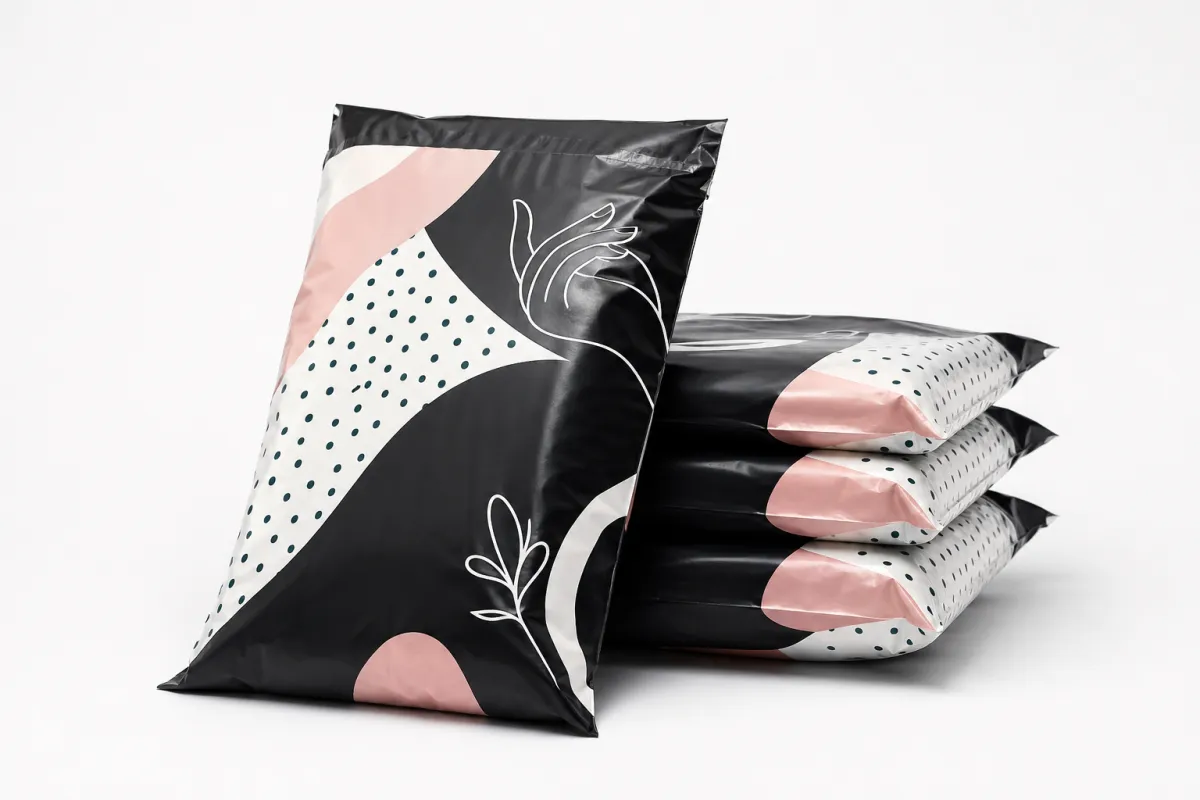
Start with the bag dimensions, the product weight, the seal area, and the print method. Those four details shape almost everything that follows, from the proof to the pallet count. If one of them is vague, mailing bags custom printed become harder to approve, harder to price, and far more likely to miss the mark once production starts. A clean spec sheet usually does more for schedule control than a long design meeting ever will.
There is a simple reason for that. Packaging is physical before it is visual. The bag has to close, ship, survive handling, and still look like the brand meant it. A beautiful logo on the wrong format is just expensive confusion.
What Mailing Bags Custom Printed Are and Why They Stand Out
In practical terms, mailing bags custom printed are flexible shipping bags made from film, usually LDPE or a co-extruded structure around 60 to 90 microns thick, with your logo, product copy, care icons, or pattern printed directly on the surface. A plain poly mailer usually needs a sticker or label to feel branded; a printed mailer carries the brand from the start, so the packer seals and ships in one motion. That matters when a table is processing 600 units a shift in a Nottingham fulfillment room and every extra touch slows the flow. Add enough extra touches and, frankly, a neat little packaging idea turns into a slow-motion headache.
I still remember a cosmetics client in the Midlands who was using generic grey sacks with adhesive labels. Humidity sat at 72 percent that week, the labels softened after 24 hours, bubbles kept showing up, and the unboxing felt flat. Once we switched them to mailing bags custom printed in white 65-micron LDPE from a supplier in Dongguan, the process tightened immediately: fewer labels, cleaner presentation, less wasted motion at the bench. That is the quiet strength of this format. It does not need to shout. It just needs to work, and work predictably, on Monday morning and on the last pallet of Friday afternoon.
Mailing bags custom printed also stand out because they carry brand language without adding bulk. A mailer can look sharp and still occupy far less warehouse space than rigid cartons, which matters for subscription kits, accessories, lightweight parts, folded apparel, and plenty of retail packaging programs. I have seen small fashion labels in Bristol use a single-color black print on white film and end up looking more polished than higher-budget packs, simply because the spacing, margins, and logo placement were disciplined to within 3 millimeters. Good packaging is a lot like good editing: the smart choices are often the ones nobody notices immediately, which is exactly the point.
Common uses include T-shirts, swimwear, beauty samples, phone accessories, small hardware kits, and lightweight replacement parts that weigh under 1.5 kilograms. If the item is soft, slim, and not prone to crushing, mailing bags custom printed often beat overbuilt shippers. A product that needs real protection is a different story, and that is where Custom Packaging Products such as cartons, inserts, or mixed-format sets may serve better. I have watched teams overpack a simple garment order into a box with 350gsm C1S artboard and a corrugated outer, as if a paper fortress could compensate for a plain design. It usually cannot.
One mistake I see often is treating the mailer as an afterthought. A brand team will spend days refining custom printed boxes and then leave the shipping bag to the last minute, as if it has no effect on perception. It does. For many DTC brands, the mailer is the first physical surface a courier handles and the only exterior branding a customer sees before the parcel is opened, often for only 12 to 20 seconds on a kitchen counter. That is a lot of responsibility for one piece of film, which is probably why weak mailers feel especially sloppy.
How Mailing Bags Custom Printed Move from Artwork to Warehouse
The path from artwork to pallet is more mechanical than most buyers expect. With mailing bags custom printed, the workflow usually begins with file prep, then film selection, press setup, color approval, printing, curing or drying, slitting, bag forming, carton pack-out, and palletizing for dispatch. The sequence sounds neat on paper. On a real floor in Guangzhou or Ningbo, a missing bleed, an unclosed outline, or a low-resolution PNG can stall the whole job. The machine will not care that the marketing team is in a rush. Machines are rude that way, especially when the line is already set for a 20,000-piece order.
At our Shenzhen facility, I watched a run of mailing bags custom printed slow to a crawl because the buyer wanted a metallic silver callout on the front panel, but the art file never clarified whether that should be a solid ink or a foil effect. The plates were ready, the film was loaded, the operator had already set the ink train, and nobody could approve the target with confidence. That sort of delay is common, and it is almost always avoidable when the brief is specific from the beginning. I have a low tolerance for vague briefs now, learned the hard way in a room where every unclear sentence cost 45 minutes and one very patient press operator.
Different plants use different print methods, and that changes speed as well as minimums. Flexographic presses are common for repeat runs and efficient color work in Dongguan and Foshan. Gravure can be strong for long runs with consistent ink transfer, especially above 50,000 units. Digital can make shorter runs more workable when a design is still being tested or when tooling needs to stay low. If a supplier is quoting mailing bags custom printed, ask which process they use, whether they print in Shenzhen, Zhejiang, or Ho Chi Minh City, and how many colors the line can hold without a second pass. That one question reveals a lot about setup cost, waste rate, and how fast repeats can move. It also reveals whether you are dealing with a supplier who knows the machinery, or one who is just reading a line from a brochure.
Lead time usually breaks into three pieces. The first is proofing, where the printer checks layout and confirms copy. The second is tooling, such as plates or cylinders, which can take 3 to 6 business days depending on the plant and the number of colors. The third is production and finishing, which can move quickly once the line is set. A first run of mailing bags custom printed typically takes 12 to 15 business days from proof approval, while a repeat order can often move 2 to 4 days faster if the tooling is already on file and the film spec has not changed. That range is broad for a reason: packaging is part precision, part queue management, and part who forgot to approve what on Thursday afternoon.
Delays usually come from four places: low-resolution logos, missing dielines, unclear PMS targets, and late copy changes after proof approval. I have seen a client add a compliance line the morning before press, only to trigger a reproof because the text landed too close to the heat-seal zone by 4 millimeters. One extra hour in the design stage often saves a full day later. That is especially true for mailing bags custom printed, where print area, seam, and seal edge all compete for room. The bag does not expand for your convenience, and the film will not forgive a layout that ignores a 10-millimeter safe area.
For teams that like hard standards, I recommend checking shipping expectations against ISTA test methods instead of relying only on visual approval. If the bag has to survive parcel handling in a 3A drop test or make it through a conveyor network in Rotterdam or Chicago, a nice mockup is not enough. Transit testing matters more than a perfect render. If you are printing on recycled-content film or packing finished bags in paper cartons, local recycling guidance is useful for internal handling and customer-facing disposal conversations, especially when procurement wants the same language used in New York and Manchester.
What Drives Cost and Pricing for Mailing Bags Custom Printed
If a buyer asks why mailing bags custom printed cost more than plain mailers, I usually start with the same answer: setup carries a lot of the weight. Film costs money, yes, but so do plate or cylinder work, proofing, make-ready time, press waste, and finishing. The bag may look simple in the shipping room. The price structure behind it is built on machine hours, waste percentages, and control of the 5 to 8 percent spoilage that can appear during startup, plus all the tiny decisions that never show up on a tidy quote line.
The biggest cost levers are material gauge, bag size, print coverage, number of colors, closure style, and any specialty finish. A 2.5 mil white LDPE mailer with one-color print is a very different job from a 4 mil co-ex mailer with full-panel coverage and matte lamination. If your brand wants mailing bags custom printed with a high-opacity white base, the film spec alone can move pricing by a meaningful amount. That is the part many teams miss: they think the artwork Drives the Cost, but the structure often drives it first, especially if the bag needs a 40-micron white outer layer and a recycled inner layer.
Setup costs matter most on small runs. Plates or cylinders can dominate unit price when the order volume is low, which is why a 5,000-piece trial often carries a much higher per-bag cost than a 25,000-piece repeat. On a recent quote comparison, I saw a one-color 3 mil run land at $0.15 per unit for 5,000 pieces, then drop to $0.08 per unit at 20,000 pieces and around $0.06 at 50,000 pieces once the fixed costs were spread across the larger run. That pattern is normal for mailing bags custom printed. It is also the reason people sometimes think packaging pricing is irrational, when really it is just brutally honest.
Freight changes the picture too. Mailing bags are light individually, but they are bulky in cartons, and air shipping can erase a good factory price very quickly. A 10,000-piece shipment from Shenzhen to London might save money by sea at roughly $0.02 to $0.04 per bag equivalent, while an urgent air shipment can push landed freight far higher, sometimes to $1.20 or more per kilogram. A buyer who looks only at unit cost may miss the true landed cost, which includes carton count, pallet density, storage space, and the route from factory to warehouse. For brands ordering mailing bags custom printed every quarter, storage planning can matter as much as the press quote. I have seen a “cheap” order become expensive the moment it occupied half a receiving bay for six weeks in Leeds.
| Option | Typical Run Size | Approximate Unit Cost | Best Fit | Tradeoff |
|---|---|---|---|---|
| Plain poly mailer with label | Any volume | $0.05-$0.12 | Very lean operations and short-term tests | Extra labeling step, weaker brand presence |
| Short-run digital mailing bags custom printed | 1,000-5,000 | $0.15-$0.30 | Launches, seasonal campaigns, pilot products | Higher cost per bag, fewer material options |
| Flexographic mailing bags custom printed | 5,000-50,000 | $0.07-$0.18 | Repeat e-commerce programs and stable artwork | Tooling cost, stricter setup requirements |
| Gravure mailing bags custom printed | 25,000+ | $0.05-$0.12 | High-volume, color-consistent programs | Highest tooling commitment |
A clean comparison uses three figures side by side: unit price, tooling cost, and landed freight. That tells you far more than a polished headline quote. If two suppliers both offer mailing bags custom printed, but one has a lower unit cost and the other has a lower landed cost because the cartons ship from Guangdong instead of northern Jiangsu, the second quote may be the better deal even if it looks higher at first glance. Paper quotes are seductively neat; real budgets are less polite and usually include a line for carton count, pallet wrap, and customs clearance.
One more detail: if the bag spec includes a matte surface, metallic effect, or specialty adhesive strip, the cost profile can rise because the finish affects both material and process control. I have seen teams save money by simplifying to a white film with strong color contrast instead of building a premium look from three special effects that add $0.03 to $0.07 per unit without improving performance. That is an honest conversation worth having before you sign off on mailing bags custom printed. I am all for a beautiful pack, but beauty that slows production is just expensive decoration, especially on a 30,000-piece reprint.
Material, Size, and Finish Choices That Affect Performance
Material choice is where the practical side of packaging shows up. Mailing bags custom printed are often made from LDPE because it is flexible, tough, and cost-effective, but co-extruded films can improve puncture resistance and help balance the outer feel with the inner seal layer. A common spec might be 60-micron LDPE for light apparel, 80-micron co-ex for heavier soft goods, or 30 percent PCR content if the sourcing plan is stable. Recycled-content poly is becoming more common for brands that want a lower virgin-plastic footprint, while compostable options using PLA/PBAT blends exist for certain applications, though they do not suit every shipping lane or storage condition. I like to be blunt here: a sustainable spec that fails in transit is not sustainable, it is just a sad story with a green label.
The wrong film gauge can ruin an otherwise smart design. Too thin, and the bag may split on a sharp corner or a folded zipper pull. Too heavy, and you are paying for material that never gets fully used. I have seen a clothing brand choose a 55-micron mailer for denim returns, and the first week of pack-out made the problem obvious: the bags were scuffing, stretching, and creating rework. For mailing bags custom printed, the right thickness should match product weight, edge shape, and parcel handling, not just the buyer's wish for a lighter spec. A pair of boots needs a different answer from a T-shirt, and a 900-gram item does not behave like a 180-gram sample pack.
Size matters more than people expect. The bag should allow the product, any insert card, and the seal margin to fit without crowding the edges. If the bag is too large, the item shifts around and the presentation feels loose. If it is too tight, the logo may sit too close to a seam or fold. A good packaging design keeps artwork and structure in the same conversation, which is true for mailing bags custom printed as much as it is for custom printed boxes or retail packaging sleeves. I still think too many teams size a bag by eyeballing a folded garment on a desk instead of measuring a 280 x 340 millimeter bundle with 20 millimeters of slack. That method is charmingly approximate, which is a polite way of saying unreliable.
Finish choice is another place where appearance and function meet. White film usually gives better color accuracy, while frosted or translucent film can soften the look and hide small contents. Clear windows can work for sample packs, but they need careful placement so the view panel does not weaken the print story. A 30 x 50 millimeter clear panel can help for cosmetic refills, but it should not sit where the seal line flexes. High-contrast layouts often perform better than busy graphics because the shipping carrier, warehouse staff, and customer can read the bag quickly. With mailing bags custom printed, quick readability is not a luxury. It is the point. If a courier has to squint, the whole system has already lost a little speed.
Here is a simple way to think about material selection:
- LDPE: flexible, familiar, cost-effective, good for standard apparel and soft goods, often at 60 to 70 microns.
- Co-extruded film: better balance of toughness and print surface, useful for higher handling stress and 80-micron plus programs.
- Recycled-content poly: useful for sustainability goals if the supply chain and quality control are stable, especially with 30 percent PCR or more.
- Compostable film: only for programs where the disposal path and storage conditions are clearly understood, often with PLA/PBAT blends.
For the outer shipping cartons that hold the finished bags, I also pay attention to paperboard sourcing and supplier declarations. If you need cartons or printed inserts with certified paper, a reference like FSC-certified paper standards can help procurement ask sharper questions, and 350gsm C1S artboard is a useful benchmark when comparing rigid inserts or mailer sleeves. A strong packaging system is rarely one item alone; it is the bag, the carton, the insert, the label, and the routing plan working together. That kind of coordination is less glamorous than branding decks, but it is what keeps the warehouse from improvising on a Thursday afternoon in a 4,000-square-foot bay.
Step-by-Step: Ordering Mailing Bags Custom Printed Without Delays
If you want mailing bags custom printed without surprises, start with the spec sheet rather than the artwork. I ask clients to prepare bag dimensions, product weight, shipping destination, and any hard limits on color or finish before the quote goes out. That small discipline cuts back-and-forth and makes the first proof far more useful. It also prevents the very common “we assumed you meant the other size” conversation, which never ages well, especially when a 12,000-piece order is already scheduled in Dongguan.
The best order process usually looks like this:
- Confirm the bag type, closure, and film spec.
- Submit vector artwork with PMS references and copy notes.
- Review the digital proof with seal lines and bleed visible.
- Approve a printed sample if the run is color-sensitive.
- Lock the production date and freight plan.
- Receive pack-out photos or a pre-shipment check if the order is large.
When I worked with a subscription accessories client in Manchester, the difference between an on-time run and a delayed one came down to one sheet of information: seal orientation. They had designed the front panel beautifully, but the back seal zone was not mapped correctly, so the logo drifted into the fold by 5 millimeters. Once we corrected the dieline and pinned down the safe area, the next batch of mailing bags custom printed ran cleanly, and the line stopped wasting time on manual inspection. One small correction, huge sigh of relief, and no one had to reprint 8,000 bags because of a tiny rotated panel.
Proof review is where a production manager mindset pays off. Check bleed, safe area, barcode legibility, seam placement, and whether any text sits too close to the heat seal or adhesive strip. If your branding uses a thin font, inspect it at actual size, not zoomed in on a monitor. What reads beautifully on a screen can disappear on a bag once the film is stretched and the ink settles. That is one reason I insist on viewing mailing bags custom printed under the same lighting the warehouse uses, ideally 5000K LED strips, not under a designer's desk lamp. Bright creative spaces are lovely; they are just not where shipments get packed.
Realistic timelines help everyone. A straightforward repeat order with existing tooling may only need a short proof check and a few production days. A new job, especially one with special colors or a new closure style, often needs a longer window for film sourcing, plate work, and sample approval. In practical terms, a buyer can often approve the structure in a day, approve the art in 1 to 2 days, and still need another week or more for production depending on method and quantity. That is normal for mailing bags custom printed, not a warning sign. The only warning sign is pretending a new packaging spec behaves like a reorder from last quarter.
"The best packaging job is the one that never surprises the packing table." I have said that to more than one buyer in a factory office in Shenzhen, usually while we are standing over a sample with a ruler in one hand and a marker in the other. It sounds plain, but it saves money on a 10,000-unit launch and again on the 60,000-unit reorder. It also saves people from pretending a bag can be fixed with hope and a sticker.
If you are also reviewing other pack formats, it can help to compare mailing bags custom printed with Custom Poly Mailers and with broader Custom Packaging Products before the final sign-off. That makes it easier to decide whether you need a lighter shipper, a more premium finish, or a different structure for the product line, whether that line is shipping from Leeds, Bristol, or a warehouse outside Birmingham. Comparisons are tedious. They are also where bad assumptions go to die.
Common Mistakes That Cause Weak Results or Late Delivery
The biggest mistake is designing for a flat artboard instead of the actual bag panel. A layout that looks centered on a screen can land awkwardly once the seal area, gusset, or fold enters the picture. I have watched a brand lose an entire afternoon because the logo sat 6 millimeters too close to the side seal, which meant the visual balance was wrong and the pack could not be approved. For mailing bags custom printed, the dieline is not a suggestion. It is the packaging shape. Ignore it and the result looks vaguely off in a way that no one can fully explain, which is somehow worse than obvious failure.
Another common problem is choosing film that is too light for the product. Soft goods are forgiving, but items with corners, hardware, or dense inserts need more puncture and tear resistance. I once saw a footwear accessory launch use a 50-micron bag because the buyer wanted a lower cost, and the first batch came back with scuff marks and split corners after parcel sorting in Rotterdam. The issue was not the print. It was the spec. That is why mailing bags custom printed need to match the real product, not just the forecasted unit price. If the bag fails the first trip through the logistics network, the savings were imaginary.
Artwork chaos causes delays as well. If the brand sends three logo files, two Pantone references, and a copy deck already marked up with late changes, the printer has to stop and clarify before the run can be set. Last-minute edits after proof approval are especially expensive because they force a recheck of placement, spacing, and registration. The cleaner the file, the cleaner the schedule for mailing bags custom printed. I have seen a whole afternoon disappear because a designer uploaded “final_final_v7_reallyfinal.ai.” That filename should be banned by international treaty, or at least by every production manager in Guangzhou.
Inventory mistakes are the last easy trap. Some buyers order only enough bags for the first shipment and forget about spoilage, sample pulls, and future replenishment. Others leave no room for overages, which is risky when press waste is part of production reality. My advice is simple: keep a small safety buffer of 5 to 8 percent, especially if the bag is tied to a seasonal drop or a retailer launch window. A few hundred extra units can keep a second urgent order of mailing bags custom printed from turning into a freight headache. A tiny cushion beats a panicked air shipment every single time, particularly when the next boat from Ningbo is already full.
Expert Tips and Next Steps for Your First Order
If you are ordering mailing bags custom printed for the first time, ask for a printed sample, not just a digital proof. A screen can hide ink gain, opacity problems, and alignment issues that become obvious the minute the film comes off the press. I also tell teams to keep one master art file in a shared folder with version control, because nothing slows a packaging program like renamed files and mystery edits from four people. I have been in that meeting in a plant outside Shenzhen, and it was not elegant, especially once the operator had already loaded the cylinders.
Build a decision checklist before you approve the run. Compare material, price, lead time, print coverage, closure style, and freight in the same document so procurement, operations, and marketing are all reading from the same page. That matters because mailing bags custom printed sit at the intersection of cost control and brand presentation, and those two goals only stay aligned when the spec is clear. If the teams are making different assumptions, the bag will show it long before the postmortem does, usually in the first 2,000 pieces and always in the wrong room.
Approving color under consistent lighting is another small habit that pays off. A bag checked under warm office bulbs can look different from the same bag under warehouse LEDs or daylight. I learned that lesson on a long night shift in a converting plant where the client kept approving a blue that looked right in the office but went slightly dull under production lighting. Since then, I compare samples where the packers actually work, because mailing bags custom printed should be judged in the environment where they will be used. Packaging is not artwork for a gallery wall. It has a job, and that job happens under 4000K or 5000K light, not under a designer's desk lamp.
Here is the short version of what I would do tomorrow morning:
- Measure the product and the insert together, then add 10 to 15 millimeters of clearance.
- Gather vector artwork, PMS references, and copy notes in one file set.
- Ask for landed pricing, not just factory pricing, including freight from Shenzhen or Dongguan.
- Confirm whether the printer uses flexographic, gravure, or digital setup.
- Ask for sample photos or a physical proof before release.
- Set a reorder point before inventory gets thin, ideally at 20 percent of the next quarter's volume.
Used well, mailing bags custom printed give a brand a tidy, efficient, recognizable shipping format that supports the packaging system around it. They are not a magic trick, and they are not always the right answer, but when design, film spec, and production schedule are aligned, they can outperform a lot of fancier Packaging Ideas That look strong in a pitch deck and struggle on a packing line. I like that kind of practicality. It has a backbone, whether the order is 5,000 units from Guangzhou or a 50,000-piece repeat run from a plant in Ningbo.
The takeaway is simple: lock the spec, the artwork, and the freight plan before you approve production, because that is what keeps mailing bags custom printed looking sharp and arriving on time instead of becoming a late-stage correction. If the bag will live or die on a warehouse bench, judge it there, not on a glossy mockup.
Frequently Asked Questions
How much do mailing bags custom printed usually cost?
Cost depends on bag size, film thickness, number of colors, closure style, and whether the artwork covers one panel or both. A 5,000-piece one-color run can land around $0.15 per unit, while a 25,000-piece repeat might fall closer to $0.07 to $0.09 per unit depending on the film and freight. I always tell buyers to ask for landed pricing on mailing bags custom printed, not just the factory quote, because shipping from Shenzhen to London, carton volume, and pallet density can change the real number fast. A quote without freight can look beautiful and still be wrong.
What artwork file works best for mailing bags custom printed?
Vector files like AI, EPS, or PDF are usually best because they keep logos sharp at press size. Include PMS references if color matching matters, and add notes for bleed, safe area, and any text that must stay away from the seal or seam. If you send mailing bags custom printed artwork in a flattened JPG, the printer may still use it, but you are giving up precision that could matter at press check, especially on a 2-color layout with a 3 millimeter safe area. That is the sort of compromise that sounds harmless until the proof comes back with a complaint in the margin.
How long does production take for custom printed mailing bags?
Lead time depends on print method, quantity, and whether new plates or cylinders are required. Proof approval, color matching, and material availability are the most common schedule drivers, and repeat orders usually move faster because the artwork and tooling are already on file. For many mailing bags custom printed projects, a first run typically takes 12 to 15 business days after approval, while a repeat can move several days faster if nothing changes. If someone promises a complex first run in 4 or 5 days, I would ask a few more questions before I signed anything.
Are mailing bags custom printed strong enough for shipping apparel and soft goods?
Yes, if the film gauge and seal type are matched to the product weight and handling conditions. For folded apparel and soft goods, co-extruded or heavier LDPE mailers are often a good fit, especially when the pack is not carrying hard edges or dense inserts. If the product has corners, hardware, or a heavy add-on, ask for puncture and tear guidance before you approve mailing bags custom printed. A mailer that survives the warehouse, the parcel belt, and the first doorstep cut is doing its real job.
What minimum order should I expect for mailing bags custom printed?
Minimums vary by print process, material, and the supplier's setup cost structure. Digital or short-run programs may allow lower quantities, while flexographic or gravure runs often need higher volumes to make the economics sensible. If you are testing a new line, ask whether the supplier offers a trial run option before you commit to a large order of mailing bags custom printed. A sensible pilot run of 1,000 to 3,000 pieces is often cheaper than discovering a flaw after 30,000 units are already in a warehouse.

