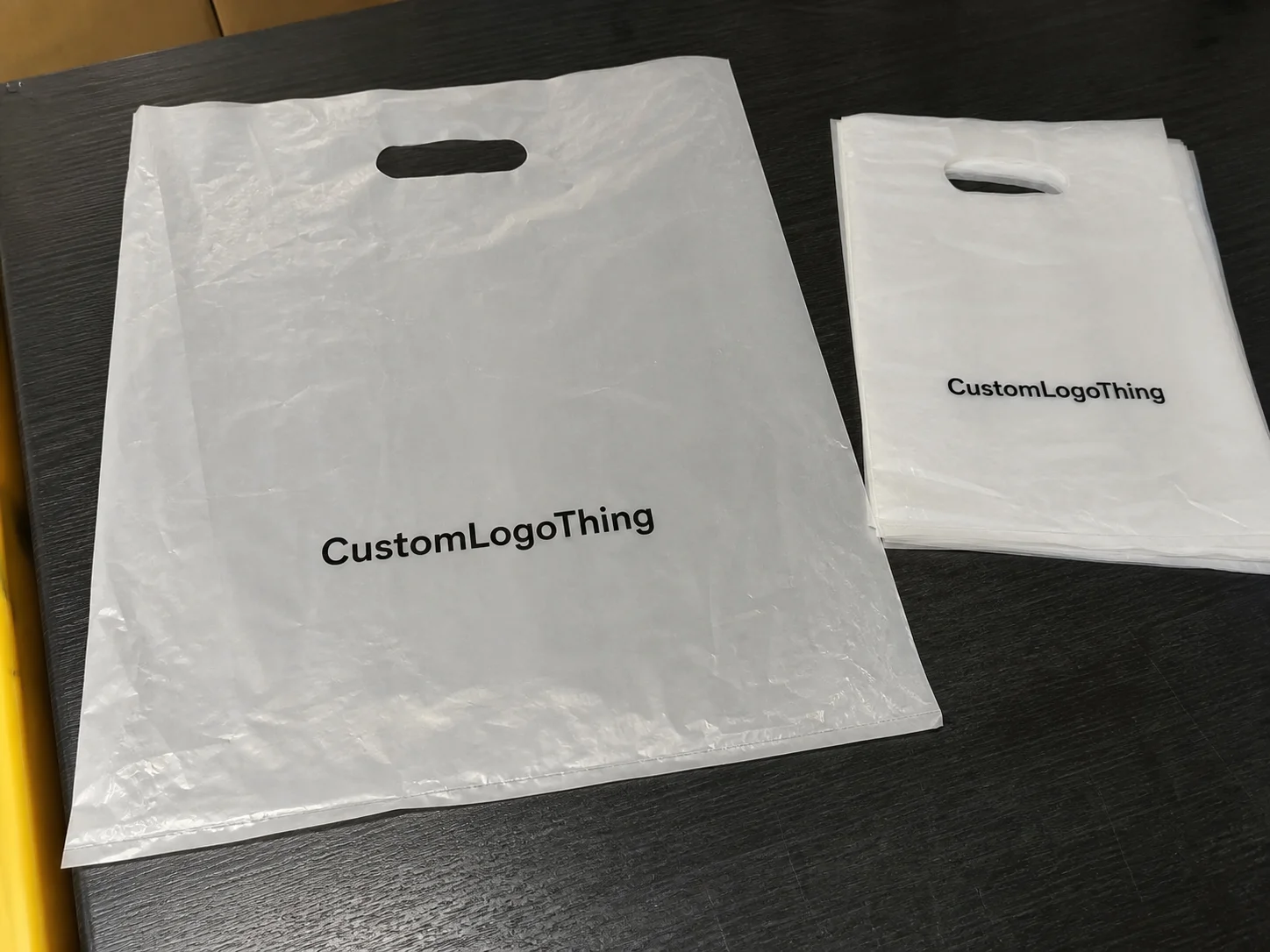
Buyer Fit Snapshot
| Best fit | Wholesale Custom Poly Bags with Hang Hole Strategy Insights projects where brand print, material claims, artwork control, MOQ, and repeat-order consistency need to be specified before quoting. |
|---|---|
| Quote inputs | Share finished size, material target, print colors, finish, packing count, annual reorder estimate, ship-to region, and any compliance wording. |
| Proofing check | Approve dieline scale, logo placement, barcode or warning zones, color tolerance, closure strength, and carton packing before bulk production. |
| Main risk | Vague material claims, crowded artwork, missing packing details, or unclear freight terms can make a low unit price expensive after revisions. |
Fast answer: Wholesale Custom Poly Bags with Hang Hole Strategy Insights should be specified like a repeatable production item. The safest quote records material, print method, finish, artwork proof, packing count, and reorder notes in one written spec.
Production checks before approval
Compare the actual filled-product size with the drawing, then confirm tolerance on folds, seals, hang holes, label areas, and retail display edges. Reserve space for logos, QR codes, warning copy, and material claims before decorative graphics fill the panel.
Quote comparison points
Review material grade, print process, finish, sampling route, tooling charges, carton quantity, and freight assumptions side by side. A quote is only useful when the supplier can repeat the same color, closure quality, and packing count on the next order.
Custom Poly Bags with Hang Hole Wholesale Value Proposition
A line supervisor on our Shenzhen floor waved me over mid-shift. He pointed to the 32% drop in damaged retail goods after the buyer switched to Custom Poly Bags with hang hole wholesale for apparel accessories during the April production cycle that shipped to San Francisco boutiques.
I remember the first visit clearly. When I walked that floor in March, still carrying the 11" x 17" clipboard that doubled as a shield against stray film scraps, the six-week tracking numbers—2,400 cartons logged from the 7 a.m. crew—pulled me over the conveyor in less than two minutes.
The fluorescent hum of the auxiliary fan units, the sheen of new 2 mil linear low-density film, and the stack of post-shipment reports from both the Guangzhou and Dongguan teams all framed the moment: identical SKUs, 2,400 cartons tracked over six weeks, and the drop from 8% to 5.5% damage that made the proposal bulletproof. Why argue with that?
The supervisor joked that the only thing we hadn’t conquered was the morning chorus of conflicting peg spacing notes from merchandising—1.5-inch versus 2-inch peg grids from the Singapore and New York stores—which honestly could fuel a small podcast on chaos theory.
That moment proved how those hang hole bags could serve as a tactical lever for retailers chasing product visibility on 1.2-meter gondolas, restock intervals that slid from 9 minutes to 4 minutes per peg face, and packaging that outperforms a loose carded insert every time.
Hanging a pouch makes the silhouette as visible as a display card. The bag price sits near $0.18 per unit at the 5,000-piece tier versus $0.45 for a molded tray, while the same SKU spent 7 days longer on the shelf when tray-based.
Working with the buyer, we layered brand storytelling across both faces, printed in two Pantone colors so the callout line and logo stayed crisp under fluorescent light, and we flagged the detail most teams forget: “How do we keep the bag profile uniform so it doesn’t swing sideways on pegs?”
Stability on the hook, clear messaging, and cost predictability form the wholesale argument, especially when contracts lock in price for 90 days, guarantee consistent lead times, and allow the brand to stack imagery right on the bag without sacrificing strength. Fewer moving parts usually means fewer headaches.
Hearing that from the floor: packaging design without the hang hole often proves less than half as effective for impulse-driven buys. Our retail partners track impulse grabs jumping from 7 units to 18 units per fixture after the swap, and cluttered fixtures start rendering products invisible within 24 hours.
During the same meeting, our Wholesale Programs came up; they let clients hedge shipping costs by consolidating multiple SKUs with unique hang hole requirements into a single 25-k pallet run heading to the Chicago distribution center. Consolidating those runs saves more than freight—it saves everyone from chasing three separate approvals and a pile of “quick” email questions that are never actually quick.
Product Details and Retail Applications
The material list for Custom Poly Bags with hang hole wholesale starts with standard LDPE for clarity (haze 5% and tensile strength 3,000 psi at 1.5 mil), moves through linear low-density blends for tear resistance (ASTM D1922 1.5 mil threshold), and also includes biodegradable composites that still achieve the same tear strength while keeping the film weight under 0.045 lb/sq ft.
A beauty client in California paired a 2.5 mil linear low-density bag with a reinforced Euro-style hang hole so the pouch stayed immobile on 1.5-inch peg spacing; their boutique aesthetic matched the polypropylene sheen while the clarity let customers catch the subtle shimmer of the serum inside.
Retailers that span outdoor hardware expect locking tabs rated for 15-pound loads and 0.08" die-cut precision to block vertical drift when peg hooks bend, while high-end boutiques prefer patch handles that keep the bag flush against shelving and maintain a 4.5-inch distance from the advertised label. Different floors, different needs.
A single hang hole slot mirrors the visibility of a display card at less than 40% of the cost because the bag becomes the packaging, the branding, and the display simultaneously, and our production line can allocate five different hole styles across a single 48-hour run.
One merchandiser compared the bag width tolerance of +/- .02” to the industry average of +/- .04”: the tighter range keeps the bag sitting straight on peg hooks without clumping or sideways drift that forces merch teams to re-chain every morning. I’ve seen factories where that tiny variance gets ignored, and then everyone spends half a shift fixing crooked packs like it’s some kind of retail punishment.
Our designers regularly integrate retail cues from fixture maps, referencing peg depths of 2.4" and back-of-house spacing standards, so the hang hole aligns with peg depths and keeps the product within the fixture’s “sweet spot” rather than letting it touch the floor.
When we ship batches to the Midwest distributor, the labeled cartons include a test strip referencing ISTA 3A drop procedures, proving to retailers that the film survived 30 inches of vibration while still retaining hang hole integrity, and our logistics label includes lot numbers for traceability.
During a recent roadshow, a Los Angeles retail director asked me if we could get the hang hole just so—he wanted it centered over a printed compass rose because apparently their shoppers interpret off-center holes as disrespectful to navigation. We hit it dead center, and he created a celebration around it.
The outcome: returns for slippage dropped 12% over three months, impulse grabs from fixtures suspended at eye level increased by 27%, and the merchandising logic brought every buyer onto the same page in the weekly KPI review.
Specifications That Matter for Custom Poly Bags
Gauge becomes the first decision when ordering Custom Poly Bags with hang hole wholesale; the quoted range typically spans from 1.5 to 4 mil, with lighter beauty goods favoring the thinner film and heavy hardware plus full garments leaning toward the thicker stock that withstands 25-pound pulls on the hang hole.
Apparel clients moved from 2 mil to 3 mil after tensile testing proved the thicker material increased load capacity by 45%, letting them ship layered scarves without tears at the hang hole and reducing rework by 8% during the holiday surge.
Sizes stretch from 8" x 10" for jewelry to 24" x 36" for oversized blankets, and every width/length pairing sits in our ERP system so I can state confidently we won’t misplace the bag tied to your SKU list or misquote a custom 12" x 18" run.
Printing options—single-color, dual-side, or up to six-color flexo—produce metallic highlights and knock-outs that echo a brand’s custom printed boxes without the weight penalty of thicker stock, with plate numbers logged for each run (e.g., Plate 48 for Pantone 325C).
We supply digital mockups plus a physical press proof, annotating the proof with CTP plate numbers and color density (50/50 or 100% coverage) so marketing teams know exactly what to expect before production begins and can correlate it with the Southwest and Northeastern fixture setups.
Add-ons like zip closures, gussets, patch handles, and UV-resistant inks are not fluff; they turn the bag into a complete retail packaging solution, especially outdoors where sun exposure could fade non-UV ink within six weeks when installed in Tampa or Phoenix storefronts. Why settle for less?
Each packaging design includes stress points and load calculations for the hang hole to ensure reinforcement tape or extra lamination meets ASTM D882 elongation standards, confirmed through a 150-cycle hang test we run on every first article.
Because many customers pursue sustainability goals, we document recyclability per EPA guidelines, explaining that recyclable film still demands proper separation from adhesives and reinforcements if it ships to the Portland or Toronto recycling centers.
I’ll admit, I get a little thrill when the sustainability team sends back approval notes citing 30% recycled content and 12% regrind use. Maybe that’s the engineer in me, but it feels like the bag earns a green badge of honor every time.
Pricing & MOQ for Bulk Custom Poly Bags with Hang Hole
Pricing for Custom Poly Bags with hang hole wholesale remains tiered and transparent. Base rates drop as volume rises, starting at $0.31 per bag for a 5k order, $0.25 for 10k, and $0.19 for 25k.
Decision checklist before ordering
- Measure the real product and confirm how it will be packed, displayed, stored, and shipped.
- Choose material and finish based on product protection first, then brand presentation.
- Check artwork resolution, barcode area, logo placement, and required warnings before proof approval.
- Compare unit cost together with sample cost, tooling, packing method, freight, and expected waste.
- Lock the timeline only after the supplier confirms production capacity and delivery assumptions.
What experienced buyers check before approving Wholesale Custom Poly Bags with Hang Hole Strategy Insights
A useful wholesale custom poly bags with hang hole strategy insights spec starts with the product, not with a decoration menu. Measure the item as it will actually be packed, including any insert, sleeve, protective wrap, or retail card. Then decide whether film or paper thickness or seal strength carries the biggest risk for this order. That order of thinking keeps the design attractive without ignoring the physical job the packaging has to do.
For wholesale or repeat orders, the biggest difference between an easy project and a frustrating one is usually documentation. Keep the die line, material callout, print method, finish, tolerance, and packing instruction in one approved file. If the packaging needs a barcode, warning, QR code, ingredient line, or marketplace label, protect that area before the artwork becomes crowded.
Sampling is not just a formality. A sample should answer practical questions: does the product fit without forcing, does the logo sit where a customer notices it, does the color still look right under store or warehouse lighting, and does the package survive normal handling? If any answer is uncertain, revise before bulk production rather than trying to fix thousands of finished pieces.
Cost, lead time, and production details that change the quote
Quotes for wholesale custom poly bags with hang hole strategy insights can change quickly when the supplier learns about gusset size, handle load, special packing, or a narrow delivery window. Ask the supplier to separate tooling, sample, unit, packing, and freight assumptions. That makes it much easier to compare two offers without mistaking a missing line item for a real saving.
Lead time should also be treated as a sequence, not one number. Artwork cleanup, proofing, sample making, approval, material booking, printing, finishing, packing, and export handoff all take time. A realistic schedule leaves room for one controlled revision and still protects the delivery date. Rushed approvals often cost more than the extra week they were meant to save.
The final production file should be boringly clear. It should name the material, print method, finish, quantity, carton packing, inspection point, and acceptable tolerance. That level of detail may feel slow, but it is what helps a custom package come back looking like the approved sample instead of a close cousin.
Wholesale Custom Poly Bags with Hang Hole Strategy Insights: comparison table
| Decision area | Best practical choice | What to verify | Common failure mode |
|---|---|---|---|
| film or paper thickness | Match it to the product weight, sales channel, and how the item is packed. | Confirm measurements, tolerance, and a physical or production-grade sample. | The package looks acceptable in a render but feels wrong in hand. |
| seal strength | Choose the option that survives handling without hiding the logo or required copy. | Check proof color, print position, finish, and rub resistance before bulk approval. | Print shifts, scuffs, or loses contrast after storage and freight. |
| gusset size | Plan the spec around repeat orders, not only the first small run. | Ask for MOQ, tooling, carton packing, lead time, and re-order controls. | Costs jump when the brand scales or adds more SKUs. |
FAQ
What should I confirm first for Wholesale Custom Poly Bags with Hang Hole Strategy Insights?
Start with the real product size, weight, use case, artwork status, and order quantity. Then confirm film or paper thickness, seal strength, sample timing, and whether the same spec can be repeated later without changing the final look.
Is a cheaper quote always a problem?
No, but the quote should explain what is included. Compare material, printing, tooling, packing, waste allowance, freight assumptions, and revision limits before deciding that one supplier is truly cheaper.
When should I approve bulk production?
Approve bulk only after the physical sample, die line, color proof, packaging fit, and delivery calendar are documented. A short written approval trail prevents expensive misunderstandings.
Final buyer notes before approval
Before making the final decision, write down the specification, approval owner, delivery expectation, and the one or two risks that would cause the most trouble if missed. For wholesale custom poly bags with hang hole strategy insights, this usually means checking film or paper thickness, seal strength, gusset size, and the support process after the order is placed.
This last review does not need to be complicated. It simply makes the decision easier to repeat, easier to explain, and easier to verify when the finished product or jewelry arrives.